
Last updated November 17, 2026
 Wrought iron
 Wood & steel frame
 Farm & ranch
 Sliding driveway gates
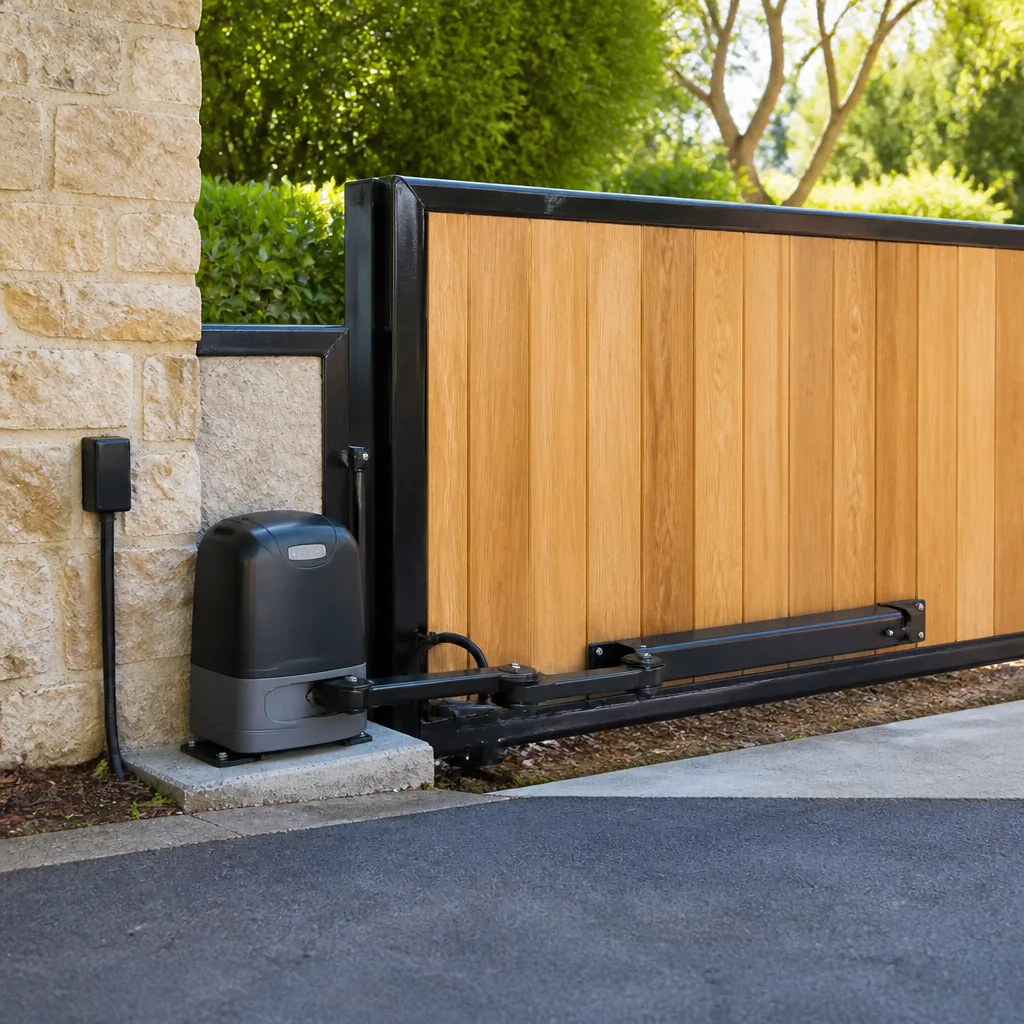 LiftMaster operators
Free on-site gate assessment - hinges, posts, and your LiftMaster or Nice gate operator checked before anything is quoted
The assessment is free and the quote is the invoice.
Get your free estimateGate Repair Warning Signs Every Homeowner Should Know
The number-one thing homeowners say after an emergency gate repair: “It had been making that noise for a while.” By the time a gate fails, the warnings were usually there for months. The gate hesitated when it opened. A higher pitch crept into the motor. A thin crack opened at a weld. Most people have seen at least two of these signals and filed them under “just how it sounds now.” This guide names the specific signals that mean a repair is weeks away, not years, and how Summerlin homeowners can catch them early.
Quick Answer
The seven warning signs of gate failure are grinding or scraping sounds, hesitation clicks, high-pitch motor strain, chain slap, hydraulic hiss, cracked paint at welds, and rust bleeding at anchor points. Post lean under 2°, longer opening cycles, partial opens, and remote lag round out the list. Any two together mean the gate needs professional inspection before it traps a car or stops responding entirely.
Styles & brands we work with
- Wrought iron
- Wood & steel frame
- Farm & ranch
- Sliding driveway gates
- LiftMaster operators
Table of Contents
- The Five Audible Signs a Gate Gives Before It Fails
- Visual Warning Signs Homeowners Dismiss
- Behavioral Signs in Automated Gates
- The Compounding Failure Pattern
- Your 30-Second Weekly Observation Routine
- Common Mistakes to Avoid
- When to Call a Professional
- Frequently Asked Questions
The Five Audible Signs a Gate Gives Before It Fails
Sound is the earliest signal a gate gives. Metal does not complain quietly, but it does complain on schedule. When we pull up to a driveway in Summerlin and hear the gate from the street, we already have a short list of suspects. Here are the five sounds that matter most and what each one usually means.
- Grinding. Metal-on-metal grinding usually points to a worn hinge pin, a dry roller, or a chain rubbing a guard it should not touch. Left alone, grinding turns into gouging and then a bent track.
- Hesitation clicks. A single click before the gate moves is often the opener relay or a failing control board. Repeated clicking with no movement points to a capacitor or a strained motor winding.
- High-pitch motor strain. When the motor pitch climbs an octave during a normal cycle, it is working harder than it should. Common causes are a binding hinge, a sagging post, or a chain that has tightened past spec.
- Chain slap. A slack chain slaps the housing or the gate frame. Slack chains also jump sprockets, and a jumped chain can strip the operator gear in a single cycle.
- Hydraulic hiss. On hydraulic operators, a loud rhythmic hiss during movement usually means a seal is weeping. Low fluid turns into no movement, and no movement turns into a stuck gate in the middle of the driveway.
Any one of these sounds deserves a look. Two or more together deserve a service call. We see hydraulic and chain-style operators every week in Summerlin, and the hiss and slap patterns are the ones most often ignored.
Visual Warning Signs Homeowners Dismiss
Sound gets attention; sight gets ignored. Homeowners walk past their gate a dozen times a day and never look at the joints. But the metal tells the story plainly. Here are the visual signs worth a look, and what each one means in practice.
- Cracked paint at welds. A hairline crack in paint along a weld seam is often the first visible sign of corrosion fracture. The paint cracked because the metal underneath flexed when it should not have.
- A post lean under 2°. A lean that small is easy to overlook. Over a season, though, that lean puts load on the hinge side, then the opener, then the frame. A post that has moved is a structural signal, not a cosmetic one.
- Rust bleed at anchor points. Orange streaks running from anchor bolts or hinge plates mean water is getting into the joint. In Summerlin, monsoon rain and irrigation overspray find those joints every summer.
- Worn hinge pins and gate sag. If the gate catches the ground or the receiver on the far post, the hinges are worn, the post has moved, or both. A dragging gate is a failing gate.
- Frayed safety edges. Rubber safety edges with cuts or flat spots can fail the reversing test. That is both a repair and a safety issue at once.
Our technicians walk the full perimeter of every gate they service, checking each weld, anchor, and hinge plate. That is why gate repair in Summerlin starts with a walk-around rather than a guess.
Behavioral Signs in Automated Gates
Automated gates have a third category of warning sign: how they behave. These are the signals homeowners most often misdiagnose. A remote that needs a second press gets blamed on the battery. A gate that opens slower than it used to gets blamed on the weather. Neither is usually the cause.
- Increased cycle time. If the gate takes noticeably longer to open than it did six months ago, the operator is straining against something. Binding hardware, a tired motor, or a loose chain are the usual suspects.
- Partial opens. A gate that stops partway and returns is tripping its obstruction sensor. That means something is in the way, or the sensor itself is failing.
- Remote lag. Long lag between the remote press and the gate moving is often the operator receiver board, not the remote battery. We see this most with older LiftMaster and Mighty Mule units, where the receiver works fine but the motor takes a second longer to spin up.
- Limit switch drift. A gate that used to stop flush and now stops short, or overshoots, has a limit switch that has slipped. Left alone, the gate body takes the impact.
- Frequent breaker trips. An operator that trips a breaker is drawing too much current. That is a sign of a failing motor, a bad capacitor, or a short in the low-voltage wiring.
When a Summerlin homeowner tells us the remote “feels tired,” we test the operator before we touch the remote. Half the time, the remote is fine.
The Compounding Failure Pattern
Here is the part most homeowners never see coming. A single ignored warning sign rarely fails alone. It puts load on the components next to it, and that load erodes them quietly. This is how a $200 repair grows into a $900 one.
A specific example we see regularly: a binding hinge puts extra load on the opener. The opener works harder, the motor runs hotter, and the capacitor fails. The homeowner replaces the capacitor and calls it fixed. A few weeks later, the gear strips. Then the chain jumps. By the time the gate stops completely, the repair has moved from a hinge replacement to an operator and chain replacement.
The pattern applies to every common failure:
- Worn hinge pin becomes a sagging gate. The sag puts load on the post, which begins to lean.
- Chain slack becomes a jumped sprocket. A jumped chain can bend the gate frame on impact.
- Ignored limit switch drift becomes a bent stop. Repeated impacts bend the post-mounted stop.
- Missed rust at an anchor becomes post failure. Once water is in the anchor, the bolt corrodes and the post loses its footing.
- Partial opens become a burned control board. Repeated obstruction sensing stresses the relay and the board.
In Summerlin, the strong sun and dry heat add a second stressor to every joint. Metal expands and contracts by measurable amounts across the day, and neglected welds crack first. That is why we tell homeowners the cheapest repair is always the one done at the first sign.
Your 30-Second Weekly Observation Routine
You do not need to be a technician to catch most warning signs. You need 30 seconds a week and a repeatable routine. We teach this routine to every Summerlin homeowner we service, and it catches the majority of failures before they become emergencies.
Do this once a week, ideally the same day each week:
- Open and close the gate slowly (manually if your operator allows). Listen for grinding, clicks, or hiss.
- Look at the welds and hinge plates. Check for new paint cracks, rust streaks, or frayed safety edges.
- Push gently against the far edge of the gate. A wobble means the hinges or post need a look.
- Watch one full automatic cycle. Note the time it takes, whether it stops flush, and whether the motor pitch changes.
- Press the remote from where you normally do. A delay over a second is worth a service call.
- Listen at the end of the cycle. Any new sound in the last two seconds is often the operator straining to reach the limit.
Keep a small note on the fridge if it helps. A one-line entry each week (“noise on close – hinge? – 5/14”) is enough to spot a trend. When two weeks in a row flag the same sign, that is your cue to call. Our gate motor & opener service in Summerlin is where most of these early catches land.
Common Mistakes to Avoid
- Greasing everything to silence a noise. Grease quiets a grind for a few days and hides the real problem. A worn hinge pin needs replacement, not a heavier coat of grease.
- Blaming the remote before testing the operator. Most “remote problems” we see in Summerlin are operator receiver or capacitor issues. Replacing the remote first wastes money and time.
- Ignoring a small post lean. A 1° lean looks harmless. Over a monsoon season, it puts real load on the hinge side and the opener.
- Forcing a gate with a partial-open fault. A gate that stops partway should be left alone and inspected. Forcing it moves the damage from the sensor to the frame.
- Painting over cracked welds. Paint hides the crack, but the flexing continues underneath. A weld that has cracked needs welding, not cosmetics.
- Assuming a battery change fixes remote lag. New batteries are cheap, but the operator is what usually needs service.
- Waiting for a full failure to book a service call. Every single call we take in Summerlin that ends in a full operator replacement started with a sign the homeowner had noticed for weeks.
When to Call a Professional
Call a professional if any of these are true: the gate makes a new sound two weeks in a row, it opens slower than it used to, it stops partway through a cycle, a post has moved, a weld has cracked, or a remote that used to work from the driveway no longer does. Any of these is worth a service call. Two or more together mean the gate is closer to failure than it looks.
Call sooner if the gate is a barrier for children or pets, or if the gate is the primary security for the property. A gate that fails open is a security issue; a gate that fails closed can trap a car.
Ironworks Gate Co. Summerlin offers free estimates in Summerlin. We work on nine automation brands, including LiftMaster, FAAC, Elite, and Mighty Mule, so the right fix is made on the first visit. Every job is covered by our written 90-Day Done Right Promise, and our technicians bring up to 13 years of experience to the driveway. Call (866) 623-9848 and a live person will answer, day or night.
Frequently Asked Questions
The first signs are usually audible: grinding hinges, hesitation clicks, motor strain, chain slap, or a hydraulic hiss. Visual signs like cracked paint at welds and rust at anchors follow within weeks. Catch the audible stage and the repair is usually small. Call (866) 623-9848 for an exact quote – estimates are free.
Most residential gate repairs in Summerlin run between $180 and $420, depending on the part and labor. Operator, chain, and motor repairs sit in the higher end of that range; hinge and weld repairs sit lower. We quote and agree the price before any work starts, so there are no surprises on the bill. Call (866) 623-9848 for an exact quote – estimates are free.
Yes. We handle emergency gate repair in Summerlin and can usually get to a stuck or failing gate the same day. A live person answers the phone 24 hours a day, 7 days a week, so you will not be sent to voicemail at 9 p.m. Call (866) 623-9848 and we will get you scheduled.
Yes, if the noise is new or has repeated within two weeks. Occasional noise that becomes regular noise is the classic pattern before a hinge or operator failure. A small repair today is cheaper than a full operator replacement next month. Call (866) 623-9848 to book a look.
We service nine leading brands, including LiftMaster, FAAC, Elite, and Mighty Mule. Being trained on multiple brands matters because the correct diagnostic follows the specific operator, not a generic checklist. If your operator is from one of the major brands, we have seen it before. Call (866) 623-9848 to confirm yours.
Our $89 Seasonal Tune-Up covers a full walk-around of hinges, welds, anchors, and safety edges, a chain or hydraulic check, a limit-switch test, and an operator cycle check. It is the cheapest way to catch the warning signs in this guide before they become a repair. Call (866) 623-9848 to schedule.
Run it only when needed and get it inspected quickly. A grinding gate is already loading the operator and the frame, and continued use accelerates the damage. If the gate is on a slope or near a driveway where a car could be trapped, treat it as urgent. Call (866) 623-9848 and we will prioritize it.
Yes. We offer a permanent 5% Senior and Veteran discount on every job, and standing offers of $50 off any repair over $250. We also offer a free second opinion on any written estimate, so a second quote costs you nothing. Call (866) 623-9848 for details.
The Bottom Line
Gate failure is rarely sudden. It is a sequence of small, observable signs: a new sound, a lean, a crack, a slower cycle. The value of this guide is not that these signs are rare. It is that they are knowable. If you can walk around your gate once a week, listen for the five sounds, and watch for the visual and behavioral signs, you will catch most failures weeks before they happen. If two or more signs show up at once, call a professional. The cheapest repair on any gate is the one done at the first sign, and the most expensive is the one done after the gate traps a car.
If you are in Summerlin and want a second opinion, our gate installation in Summerlin team also handles every repair we describe here, and our Ironworks Gate Co. Summerlin home page has the full list of services. Call (866) 623-9848 for a free estimate. A live person will answer, day or night.
Written by the team at Ironworks Gate Co. Summerlin.
See the difference
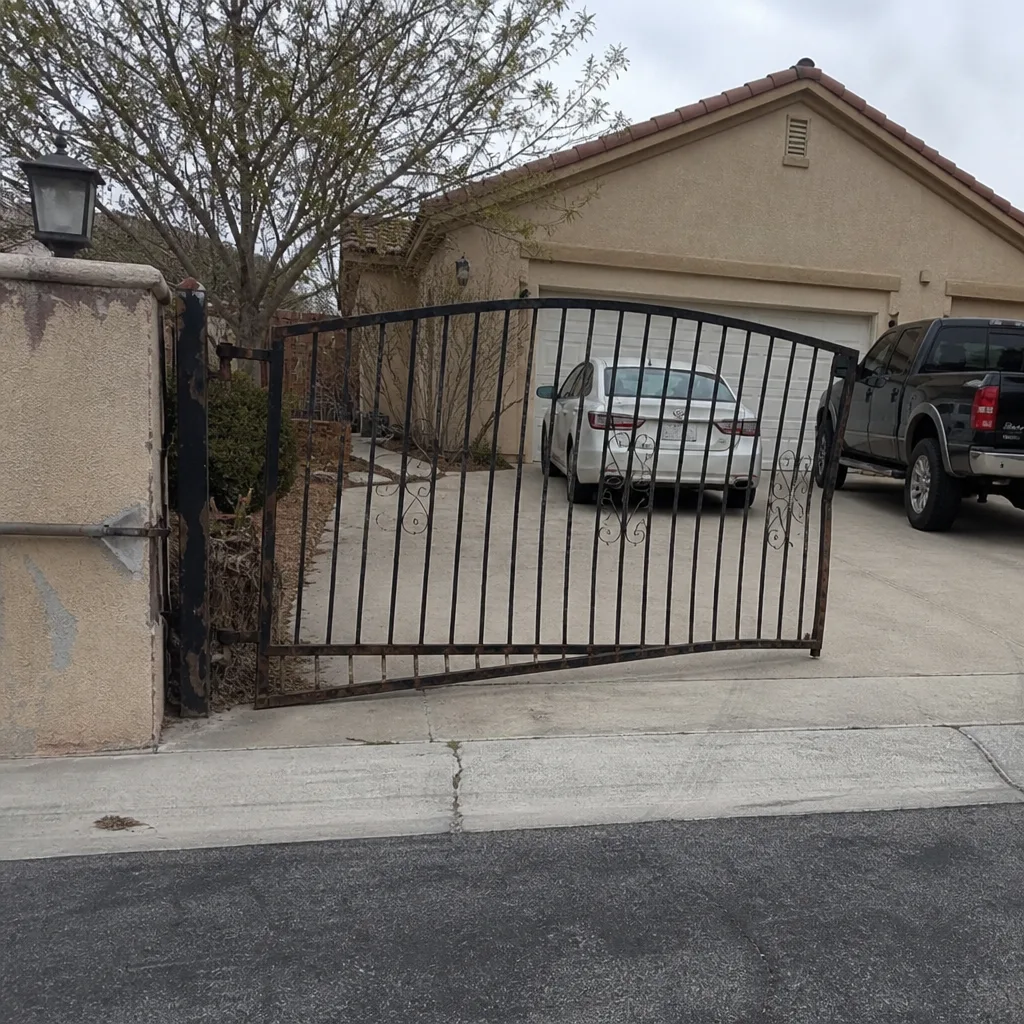 Before
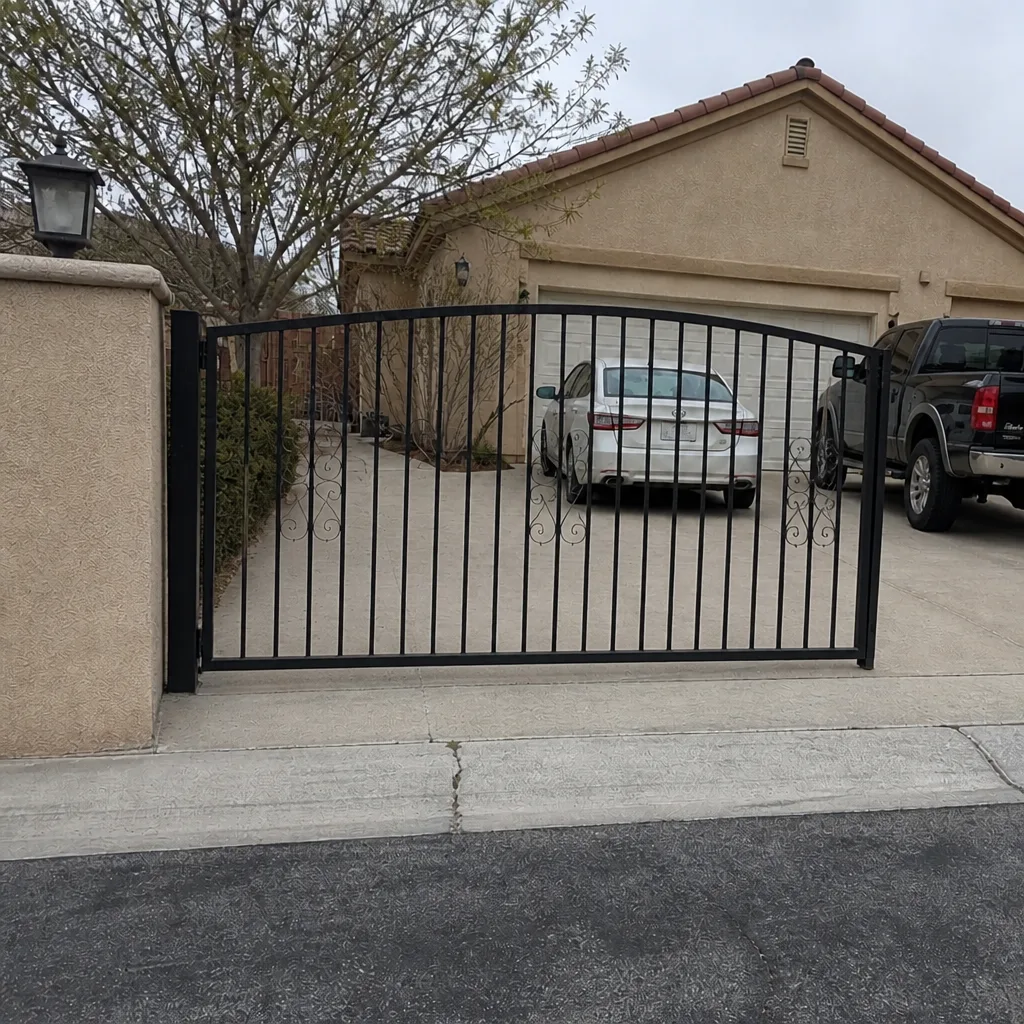 After
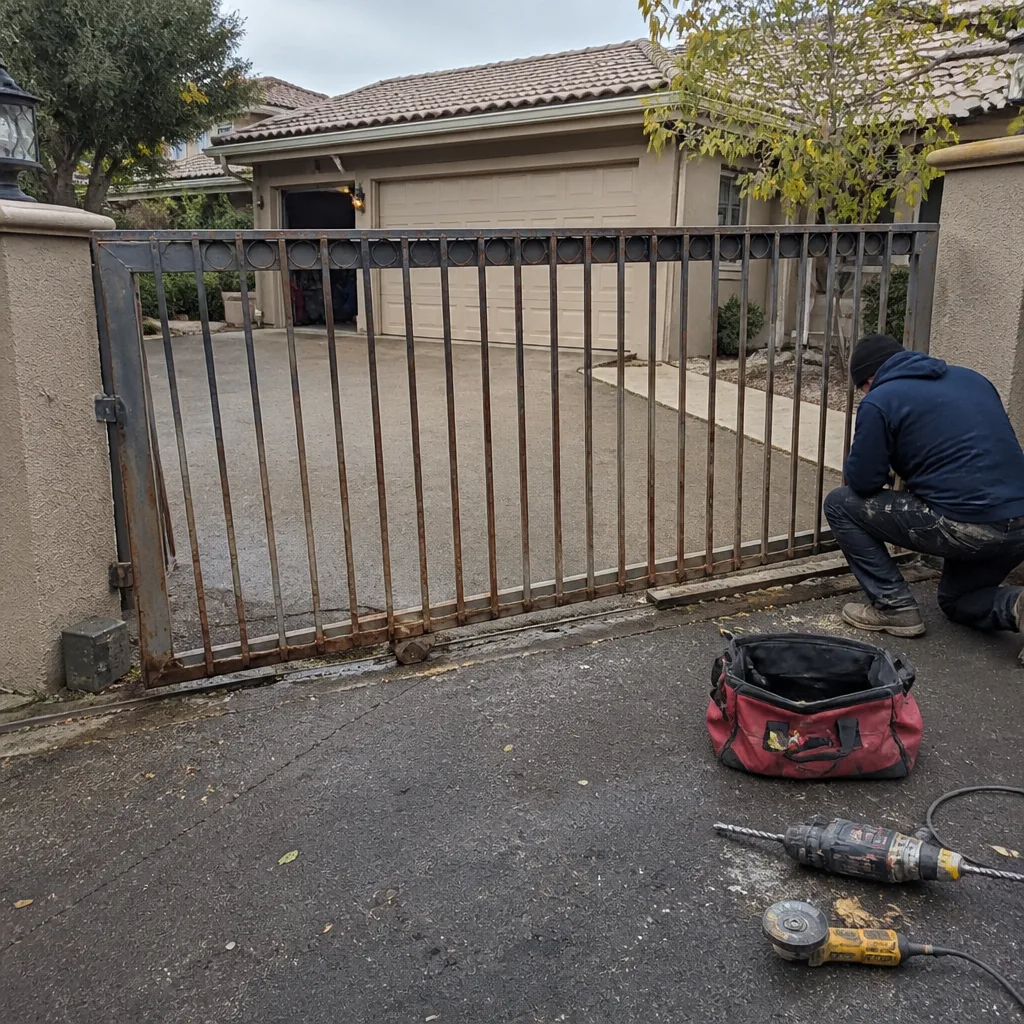 Before
 After
 Before
 After