
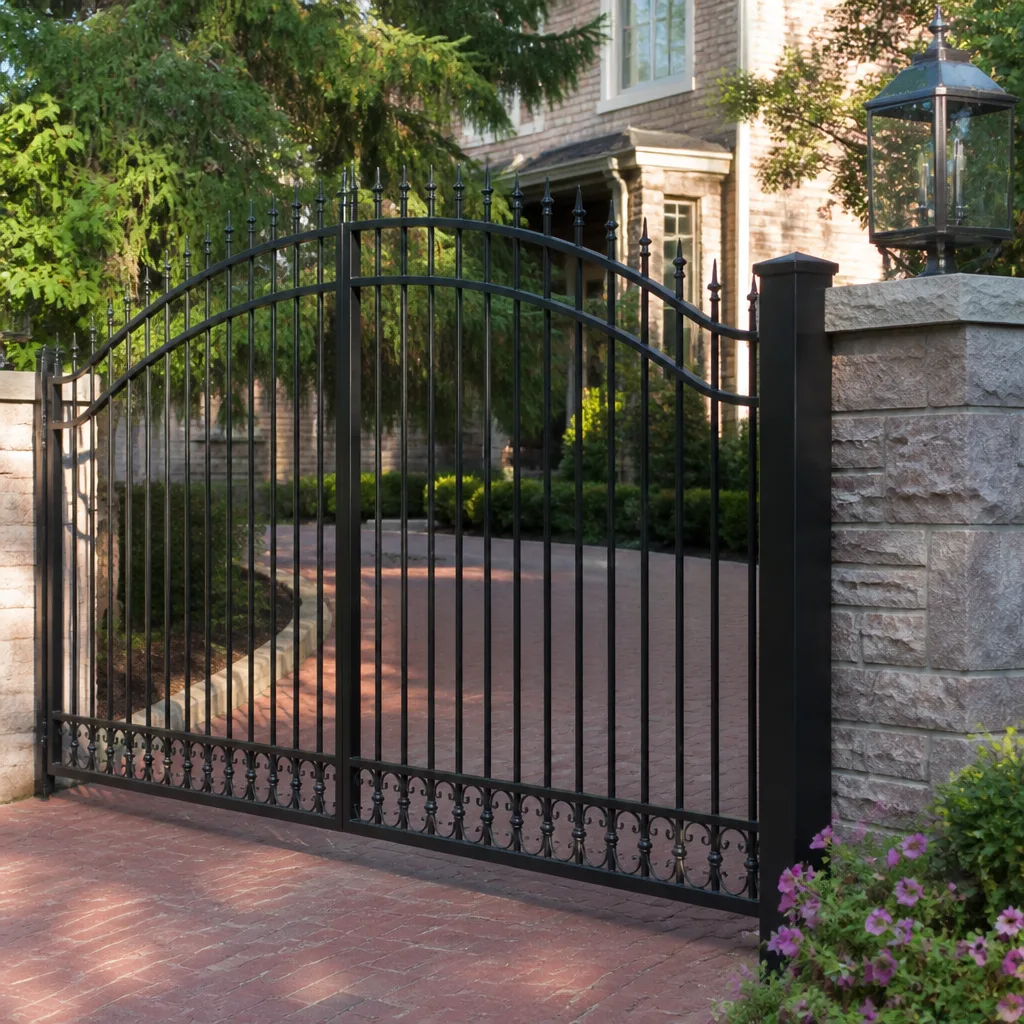
 Wrought iron
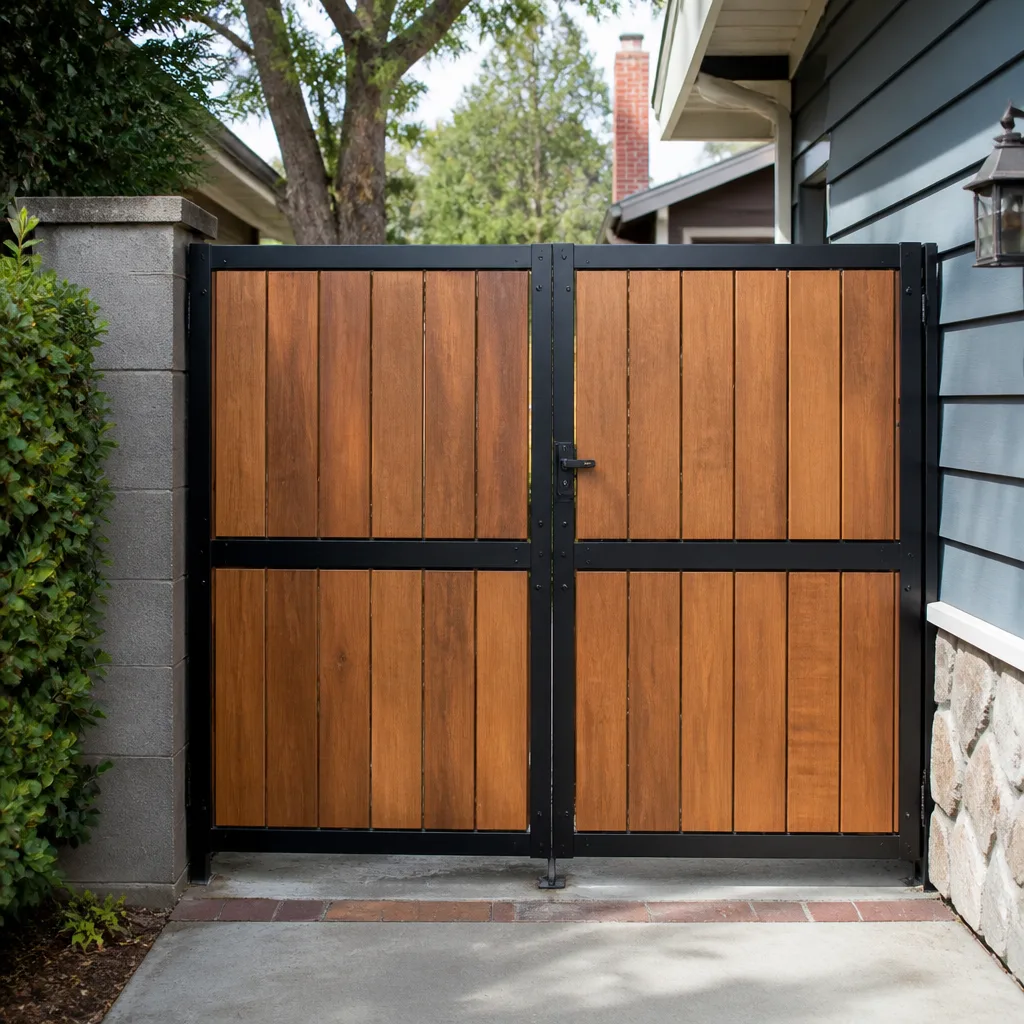 Wood & steel frame
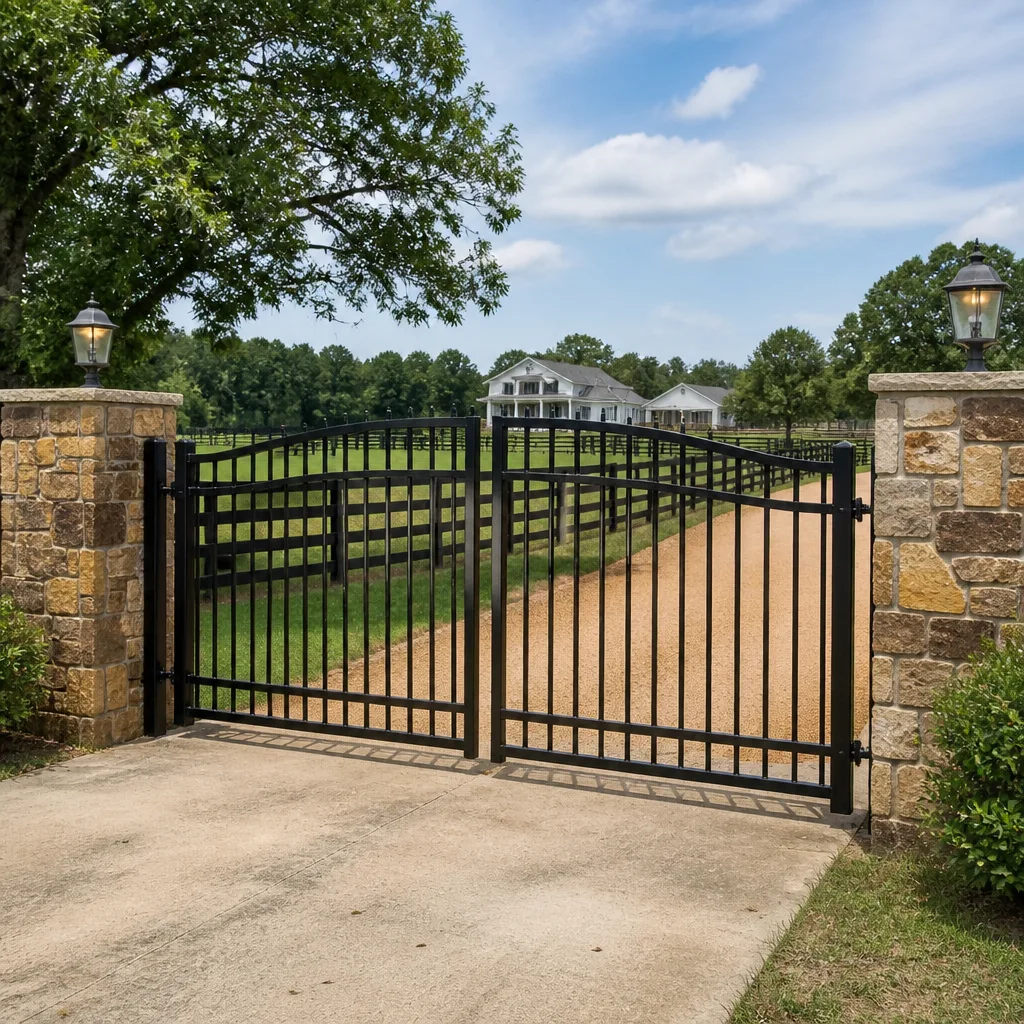 Farm & ranch
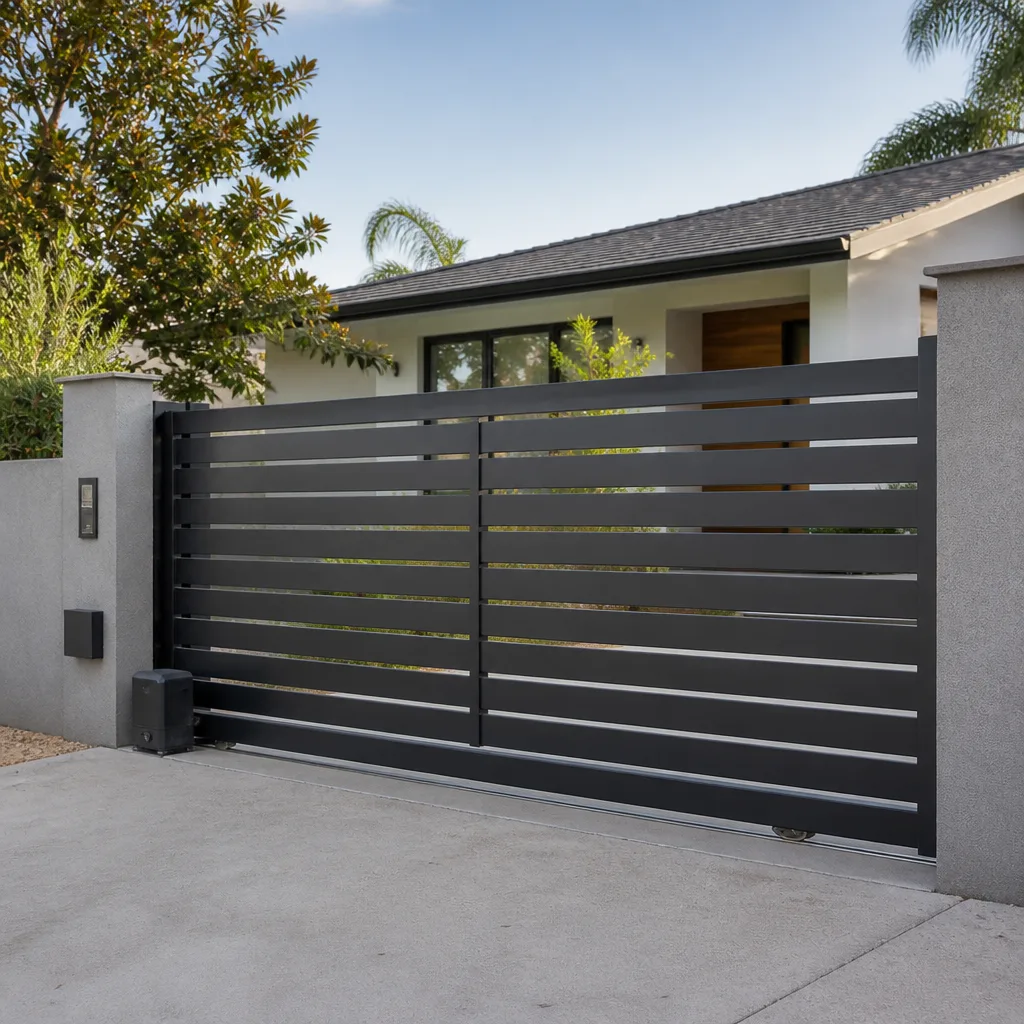 Sliding driveway gates
 LiftMaster operators
Free on-site gate assessment - hinges, posts, and your LiftMaster or Nice gate operator checked before anything is quoted
The assessment is free and the quote is the invoice.
Get your free estimateStyles & brands we work with
- Wrought iron
- Wood & steel frame
- Farm & ranch
- Sliding driveway gates
- LiftMaster operators
See the difference
 Before
 After
 Before
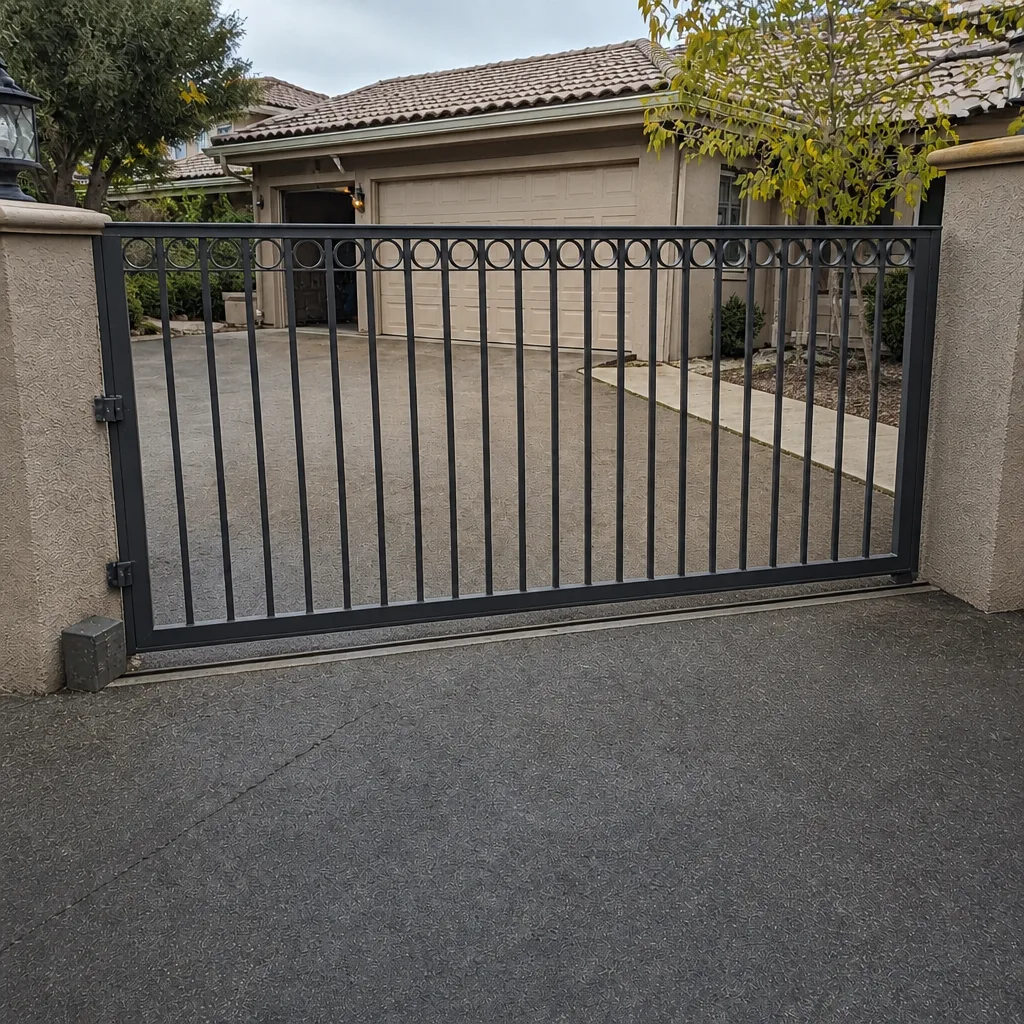 After
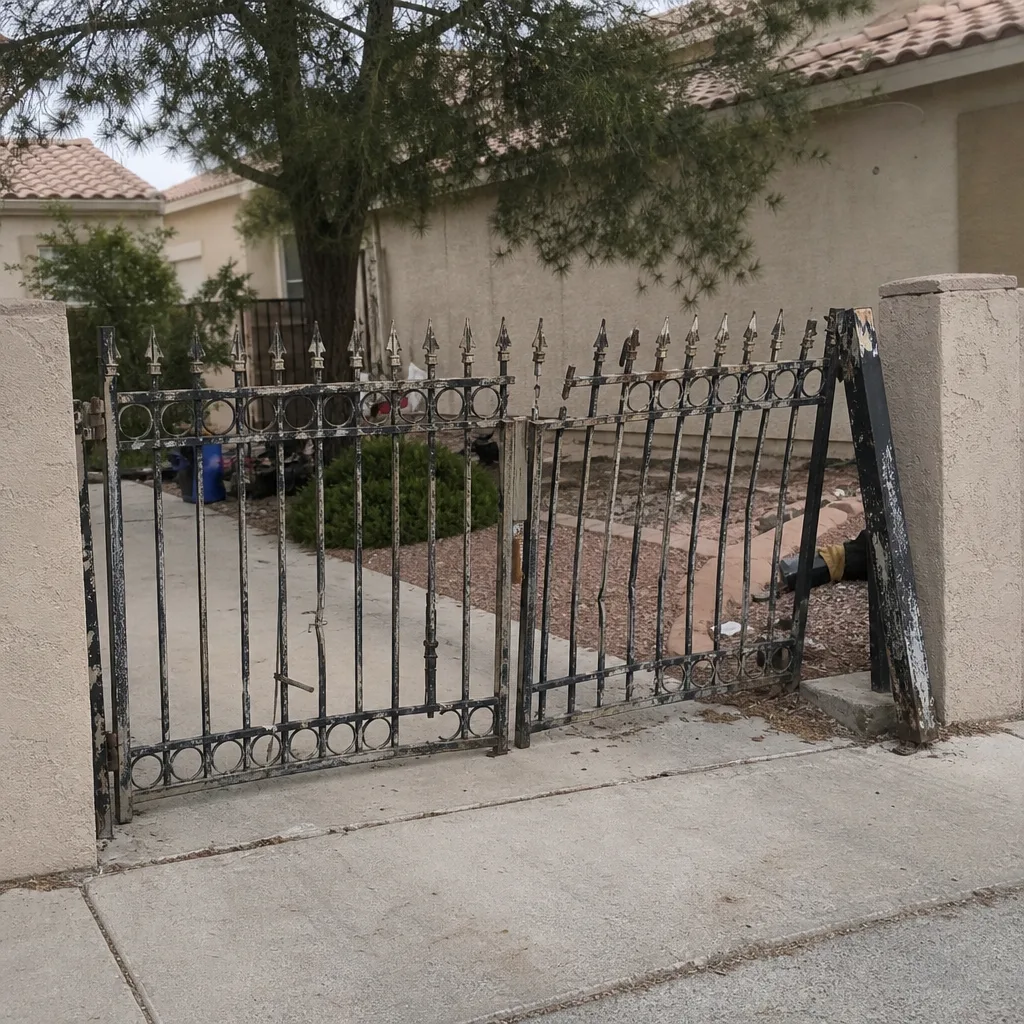 Before
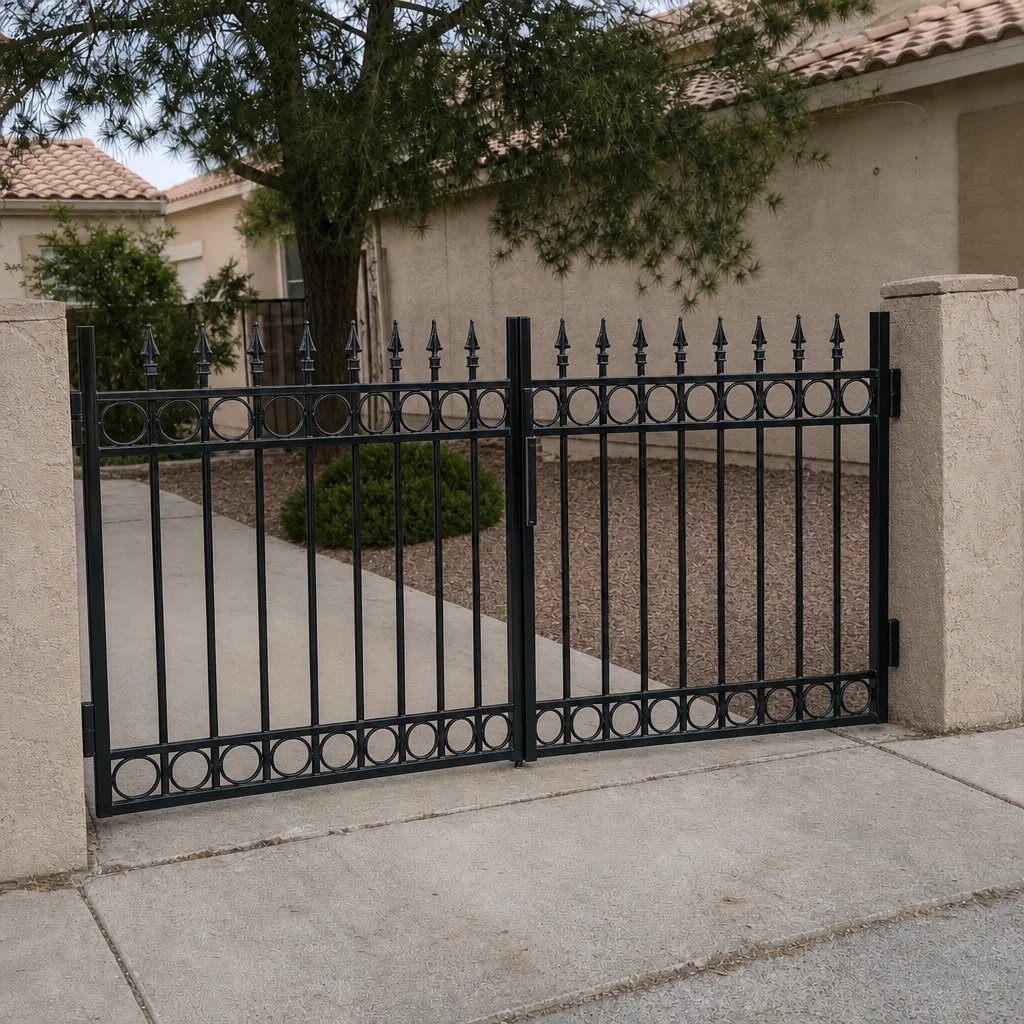 After
Why Won’t My Automatic Gate Open in Summerlin, NV? Start With the Grit, Not the Motor
The most likely reason your automatic gate won’t open in Summerlin is grit, not a dead motor. Caliche dust blowing off Red Rock and the open lots along the 215 packs into the track rollers and the operator chain until the drive can’t turn, and the motor trips its thermal overload to protect itself. That’s why you’ll hear it hum and go nowhere. If your gate is stuck right now, call (866) 623-9848 for a free estimate, and we’ll walk you through the safe checks below while you wait.
Why Desert Gates Fail Differently Than the Guides Say
Most troubleshooting guides floating around online were written somewhere humid, where the enemy is rust and moisture. Summerlin isn’t that place. Here, at the western edge of the Las Vegas Valley against Red Rock, the summer sun is relentless, humidity sits near nothing, and gusty winds rake the Spring Mountains most afternoons. That wind carries fine caliche grit, and grit is abrasive. It works its way into every roller, hinge, and chain link on your driveway gate.
What happens next is predictable. The rollers stop rolling and start dragging. The chain packs with dust and stiffens. The motor keeps getting power and keeps trying to push through the drag, heating up until its thermal overload shuts it down. That’s the hum-without-motion you’re hearing. Ironworks Gate Co. Summerlin sees this failure pattern far more often than a genuinely burned-out motor, and we’d rather you not pay for a motor replacement you don’t need.
One more Summerlin wrinkle worth knowing: many driveways here use decorative wrought iron, steel, and gated courtyard entries rather than wood, especially in The Trails and The Crossing and the newer custom estates around The Ridges. Metal gates are heavier, they conduct heat, and their hardware is what carries the grit load. The upside is that metal gates are built to be cleaned, lubricated, and brought back. The mechanism just needs servicing for abrasive dust instead of moisture.
The Five Most Likely Causes in Summerlin, in the Order We Actually Find Them
Generic guides list causes by mechanical complexity. We list them by frequency in this desert environment, because that’s the order that gets you fixed faster. Here’s the Summerlin order of probability, with a safe check you can do yourself for each.
- Grit-seized rollers or operator chain. This is number one by a wide margin. Check by looking along the track and chain for a pale, powdery film. If you can see dust caked into the roller bearings, grit is your culprit.
- Dust-blinded photocell sensor. The safety eyes near the gate are supposed to see each other. A film of caliche dust on the lens face makes them think something’s in the way, so the gate refuses to move or reverses. Check by looking at the small lens on each sensor and gently wiping it with a dry cloth. Don’t spray anything on it.
- Heat-tripped thermal overload. The motor’s internal breaker trips when it works too hard in summer heat. Check the motor’s power light. If it blinks in a pattern, note the blink count. Most brands print the fault code on the inside of the motor cover, so that count tells you what the motor is complaining about.
- UV-cracked wiring connection. Years of summer sun make wire insulation brittle at the joints, and a cracked connection at the operator or sensor cuts the signal. Check for visible cracking or a loose wire at the low-voltage connections. Don’t pull on anything that’s still attached.
- Logic board fault. This is the least common but the one that sinks a gate that otherwise seems fine. If the power light shows a steady fault pattern even after the mechanism is free and the sensors are clean, it’s time for a trained eye.
If the checks point to the mechanism itself, our Gate Repair team can take it from there. And if an old mechanism has finally given up, Gate Repair in Summerlin covers what a proper repair looks like in this community.
What Not to Do When Your Gate Won’t Open
This is the part that turns a small bill into a big one. When the rollers are seized, homeowners understandably want to force the gate open by hand, and forcing it while the drive is still engaged can bend the track or strip the rack gear. That’s how a straightforward clean-and-lube becomes a track repair.
The safe move is to disengage the drive first. Find the manual release, usually a red cord or handle on the operator, pull it to disconnect the gate from the motor, and only then push the gate by hand. If it still won’t budge with the drive disengaged, the rollers are locked and it needs professional attention, not more muscle. (The same holds for the spring and cable components that counterbalance a gate. Those are under high tension, and anyone other than a trained technician should keep their hands off them entirely.)
The Timing Clue That Points to Heat
Watch the clock. If your gate opens fine in the morning cool but starts failing by mid-afternoon in July, you’re seeing the thermal overload trip from sustained summer heat and a strained mechanism, not a dying motor. That pattern is a gift, because it tells us the fix before we arrive.
What that failure needs is usually either a duty-cycle adjustment or an upgrade to a motor better suited to the cycle your gate actually runs. Replacement is often the last answer, not the first. Get the timing right in your own notes and you’ll save money either way.
What a Summerlin Gate Diagnosis Usually Looks Like
| Service | Typical Range | What It Covers |
|---|---|---|
| Clean, lube, and adjust (grit-seized mechanism) | $180-$320 | Clearing caliche grit, re-lubing for abrasive dust, roller and track adjustment |
| Photocell sensor clean or replace | $120-$240 | Cleaning, realigning, or replacing dust-blinded safety eyes |
| Wiring repair (UV-cracked connection) | $150-$350 | Replacing cracked low-voltage connections at operator and sensors |
| Logic board diagnosis and repair | $220-$500 | Reading blink-code faults and resolving the board fault |
| Motor upgrade for extended heat duty | Quoted on site | Duty-cycle adjustment or upgrade when replacement isn’t the answer |
Those are working ranges for this market, not a bill you’ll see on arrival. We settle an upfront price before a single bolt is turned. Whichever opener is on your driveway (we’re trained on LiftMaster, FAAC, BFT, Linear, Viking, Ghost Controls, DoorKing, Elite, and Mighty Mule), the technician reads that brand’s specific blink-code fault language rather than guessing the generic cause. That’s how most jobs end on the first visit.
Why Reading the Fault Code Matters More Than Guessing
Every one of those nine brands speaks its own language. A given blink pattern on a LiftMaster tells a different story than a similar pattern on a FAAC or a Mighty Mule. When a technician knows the language, the diagnosis stops being a process of elimination. We read what the motor is actually reporting, find the real cause, and resolve it rather than swapping parts until something works.
This is where a quick diagnostic visit beats a weekend of trial and error. And every job we finish is covered by the 90-Day Done Right Promise: if it isn’t right, we come back and make it right. That’s written, and there’s no arguing about it.
Key Takeaways
- In Summerlin, grit-seized rollers and chain cause most stuck gates, not a bad motor.
- You’ll hear a hum with no motion when the thermal overload trips to protect the motor.
- Wipe the photocell lens with a dry cloth and note the motor’s blink count before you call.
- Disengage the red manual release cord before pushing a gate by hand. Never force it while the drive is engaged.
- A gate that fails only in the afternoon points to heat overload, not a dead motor.
FAQs
That is almost always the motor’s thermal overload tripping from sustained summer heat. The motor works harder as the drive strains against grit-laden rollers and chain, and once it gets hot enough it shuts itself off to protect the windings. That pattern usually means a duty-cycle adjustment or an upgrade rather than a replacement. Call (866) 623-9848 for a free estimate and we’ll confirm it on site.
Only after you disengage the drive. Pull the red manual release cord to disconnect the motor first, then push. Forcing the gate while the drive is still engaged can bend the track or strip the rack gear, turning a small clean-and-lube into a track repair. If it still won’t move with the drive disengaged, the rollers are locked and it needs a technician. Give us a call for an upfront quote.
No, and that’s a common mistake. The track and rollers need a lubricant chosen for abrasive dust, not the wet spray that attracts more grit. In this desert climate, the wrong product makes the packing worse. Call (866) 623-9848 and we’ll point you at the right service.
Most Summerlin gates that “won’t open” don’t need a new motor at all. Grit, dust-blinded sensors, cracked wiring, and heat overload account for the majority, and a proper clean and adjustment resolves them. We only recommend replacement when the motor truly can’t handle the cycle. Call (866) 623-9848 for a free second opinion on any written estimate.
If you’d rather have it looked at, Ironworks Gate Co. Summerlin offers a no-pressure assessment in Summerlin. Call (866) 623-9848 for a free estimate. A live person answers every call, 24 hours a day – and standing offers include $50 off any repair over $250, an $89 seasonal tune-up, and a 5% discount for seniors and veterans. Our technicians have up to 13 years of experience, and the phone is answered by a person, not a voicemail.
Written by the team at Ironworks Gate Co. Summerlin, serving Summerlin, NV.