
Last updated November 17, 2026
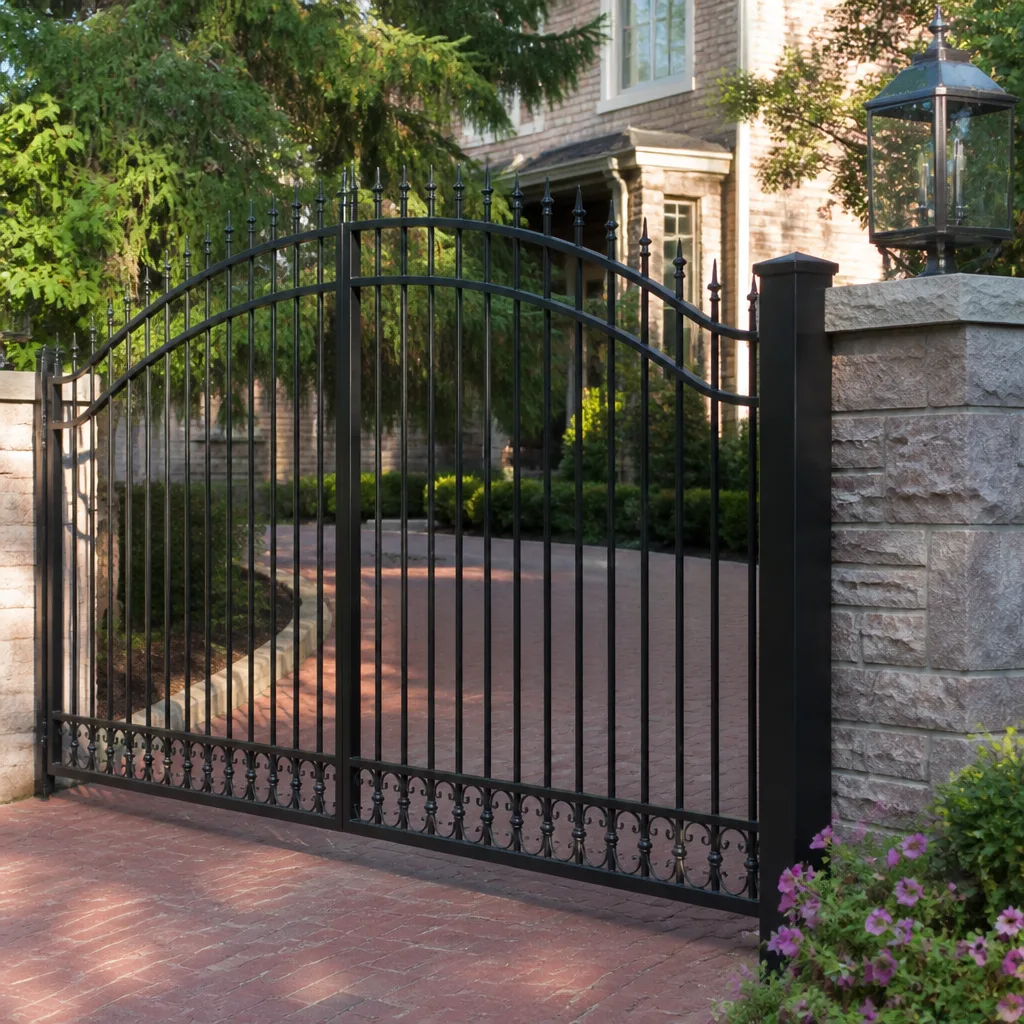 Wrought iron
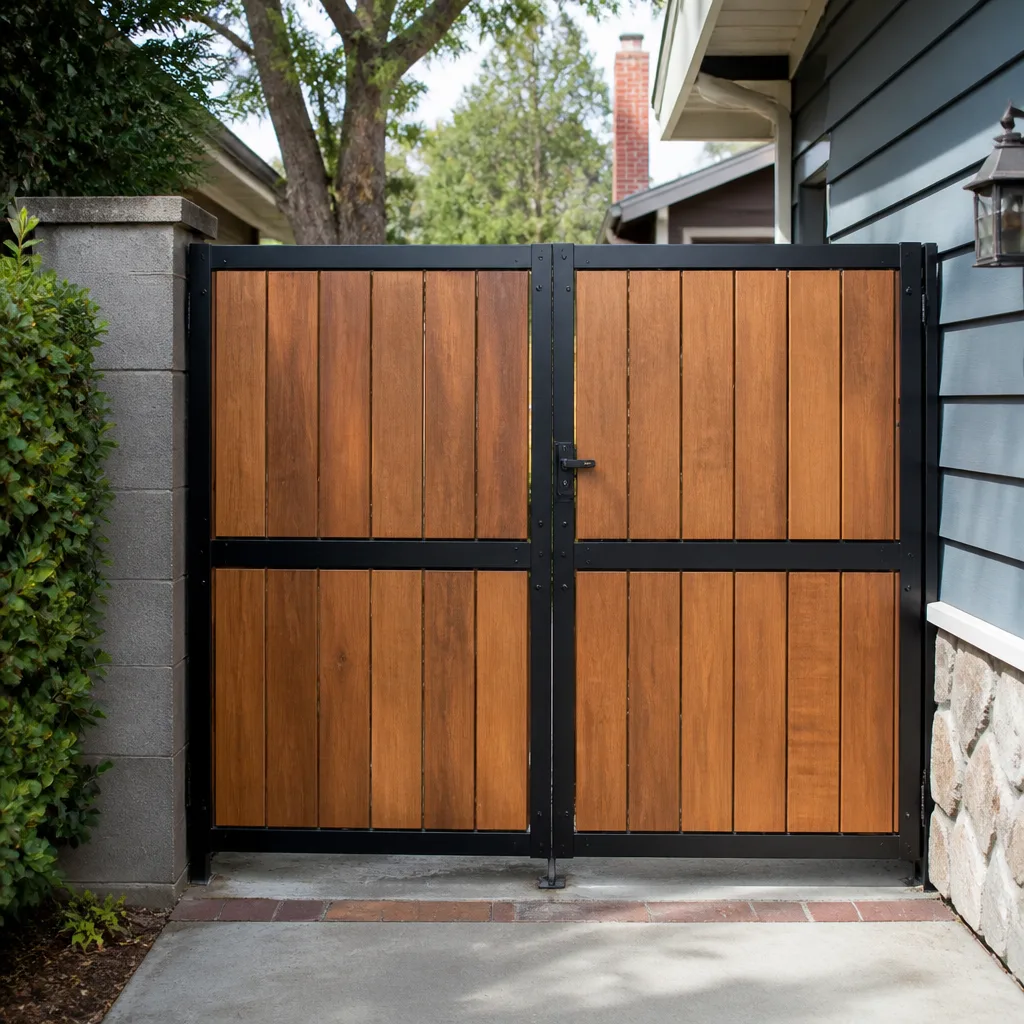 Wood & steel frame
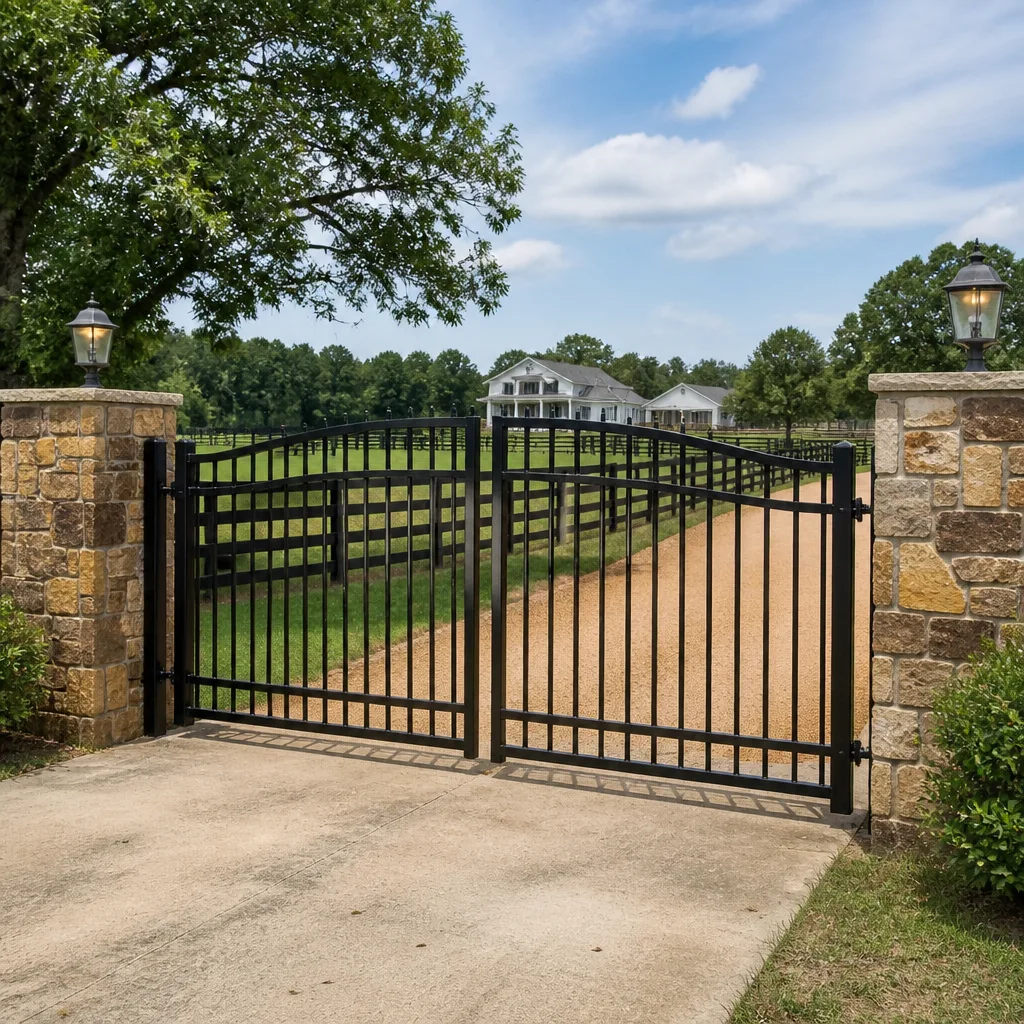 Farm & ranch
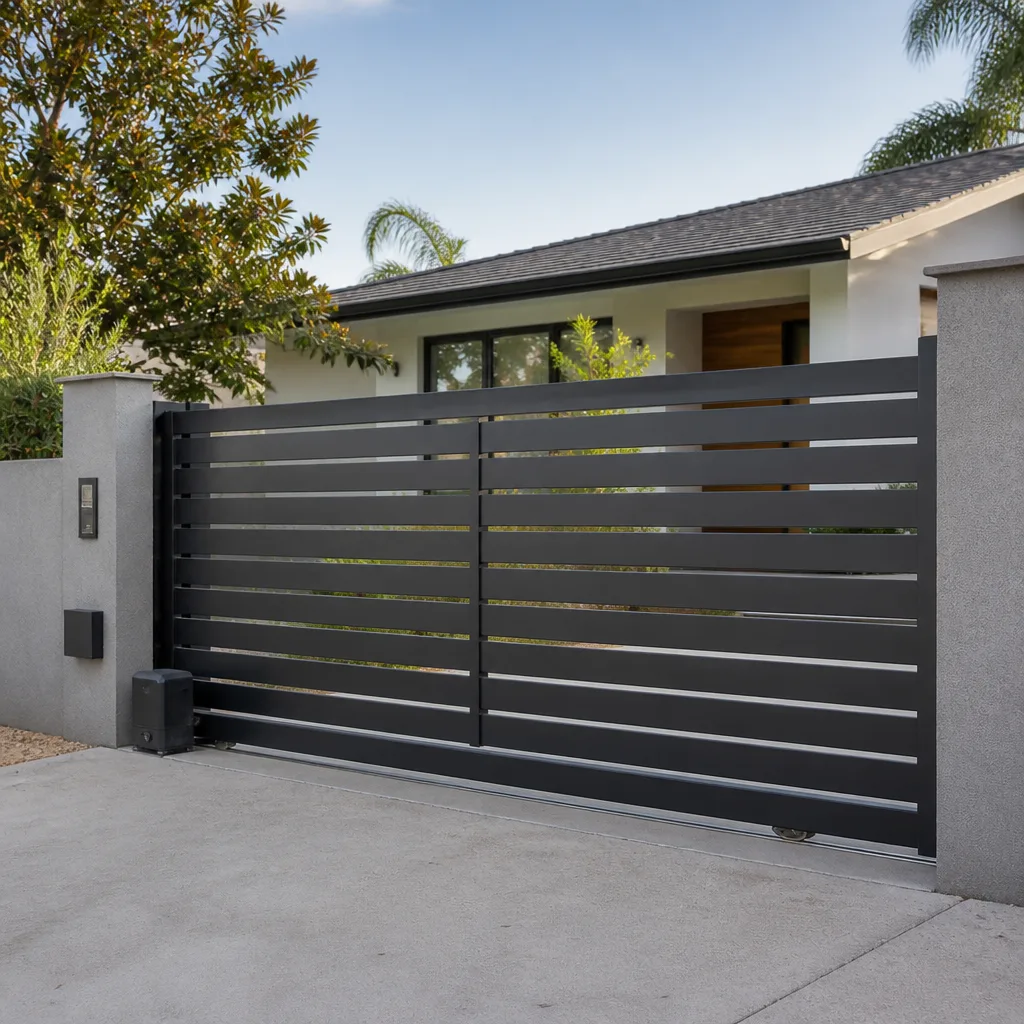 Sliding driveway gates
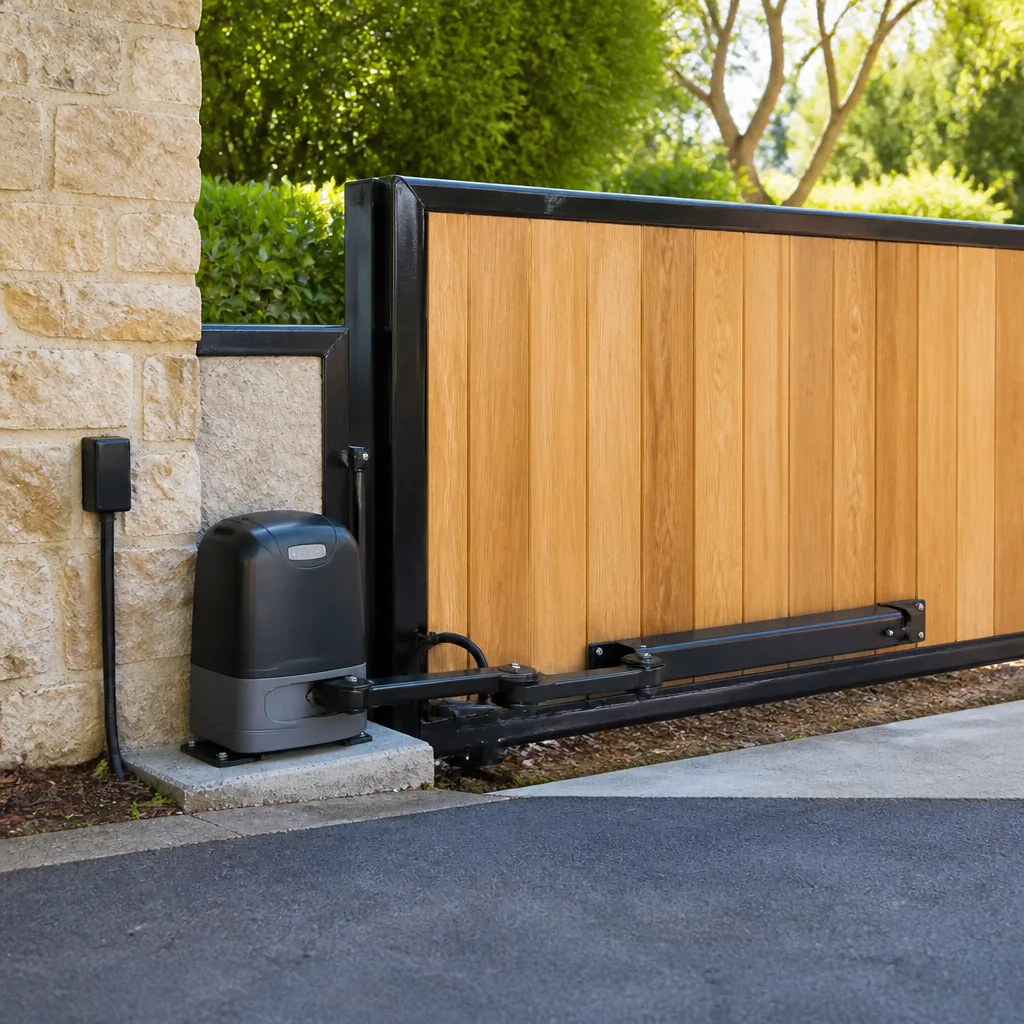 LiftMaster operators
Free on-site gate assessment - hinges, posts, and your LiftMaster or Nice gate operator checked before anything is quoted
The assessment is free and the quote is the invoice.
Get your free estimateGate Repair Troubleshooting: Common Problems and How to Fix Them
A gate that stops mid-swing isn’t necessarily a motor problem. Nine times out of ten, the motor is the last thing to blame, and replacing it before checking the structure and the mechanism wastes hundreds of dollars on a fix that doesn’t hold. In our experience across Summerlin, the driveway gates that fail fastest are the ones where a tired hinge or a sagging post was never addressed, so the operator spent months forcing a swing that was already fighting back. This guide walks the same decision tree a trained technician follows: structural first, mechanical second, electrical last. By the end you’ll know what each sound means, how to test whether the fault lives in your remote or the operator board, and when to stop troubleshooting and call for help.
Quick Answer
To troubleshoot a gate, always rule out the fault in this order: structural (hinges, posts, welds), then mechanical (track, wheels, chain, swing arm), then electrical and automation (power, sensors, limits, board). A gate that opens by hand but not automatically almost always has a safety-sensor or limit-switch problem, not a dead motor. Following the tiers in order saves the money that guessing throws away.
Styles & brands we work with
- Wrought iron
- Wood & steel frame
- Farm & ranch
- Sliding driveway gates
- LiftMaster operators
Table of Contents
- The Three-Tier Fault Tree: Structural, Mechanical, Electrical
- What the Sounds Tell You: Grinding, Clicking, Humming, Silence
- Why a Gate Works by Hand but Not Automatically
- Testing a Dead Remote: Remote, Receiver, or Board?
- Summerlin Conditions That Cause Gate Failures
- The Seasonal Checks That Prevent Most Breakdowns
- Common Misdiagnoses and the Damage They Cause
The Three-Tier Fault Tree: Structural, Mechanical, Electrical
Every gate fault sits in one of three layers, and you have to rule them out in order. A technician who skips straight to the control board is working blind. The structure and the mechanism tell you what the operator has been fighting against, and that story explains most “electrical” failures before you touch a wire.
Tier one: structural. Hinges, hinge posts, and welds. A hinge that has worn a quarter-inch lets the whole leaf drop, and a dropped gate drags on everything downstream. Look for a gate that sags at the latch end, a post that has shifted in the ground, or a weld that has cracked at the frame corner. In Summerlin we see this most on west-facing gates where the afternoon sun works the metal through years of expansion and contraction.
Tier two: mechanical. The track, the guide wheels, the chain, and the swing arm. Rollers that no longer roll flat, a chain with slack, an arm that has slipped its mount. These are the parts that translate the operator’s push into actual motion, and any binding here loads the motor heavily.
Tier three: electrical and automation. Power supply, safety sensors, limit switches, the receiver, and the operator board. This is the tier homeowners jump to first and should reach last.
The order matters for a simple reason: a healthy operator on a binding gate will overheat, trip its limits, and eventually die. Replace the operator and leave the binding in place and you’ll be buying a second motor within a year. When we service gate motors and openers in Summerlin, the first question we ask is always whether the gate moves freely by hand. If it doesn’t, the operator was never the problem.
What the Sounds Tell You: Grinding, Clicking, Humming, Silence
The gate tells you which tier it’s in before you open a single panel. Listen before you look.
- Grinding points to the mechanical tier: worn guide wheels, a dry chain riding a sprocket, or a roller seized flat and being dragged. Something is in metal-to-metal contact that shouldn’t be, and it is loading the operator on every cycle.
- Clicking is usually electrical: a relay on the operator board trying to engage, a limit switch tripping early, or a receiver picking up a signal it can’t act on. One click and nothing moves means the command arrived but the board refused to complete it.
- Humming without motion is the motor receiving power and failing to turn. That’s either a binding gate (back to tier two) or a capacitor at the end of its life. A motor that hums and strains should be shut off at the breaker before the winding overheats.
- Total silence after a command is the simplest tier to check: power, fuse, battery in the remote, and whether the operator is actually receiving current. Silence usually isn’t a motor failure at all.
We’ve had homeowners in Summerlin describe “a terrible grinding” that turned out to be a single seized nylon wheel on a sliding gate, a fix that cost a fraction of the motor replacement they’d already been quoted elsewhere. The sound told us which tier to check first. Grinding never points at the board.
Why a Gate Works by Hand but Not Automatically
If you can swing or roll the gate open smoothly with your own hands but the operator won’t move it, the motor is almost never the culprit. That pattern narrows the fault to three things: the safety sensors, the limit switches, or the operator’s logic board refusing to run.
- Check the safety sensors first. Most slide and swing operators refuse to move if the obstruction sensor is blocked or misaligned. Look for the sensor pair on either side of the opening, wipe the lenses, and make sure nothing has grown into the beam line. Landscaping settling into the path is a frequent cause.
- Check the limit switches second. The limit tells the operator where the gate should stop. If a limit has slipped, the board may believe the gate is already fully open or closed and refuse to run. Manually move the gate to mid-travel and command it again: if it runs from the middle but not from the end, the limit is the fault.
- Check the board last. If the sensors are clear and the limits are set, the logic board is not accepting the command, and that’s a component-level repair.
This exact symptom is why we tell homeowners to test the manual swing before anything else. A gate that moves freely by hand is telling you the structure and the mechanism are fine, and the problem is in the automation tier. That’s a much cheaper conversation than a motor swap, and it’s the reason our free second opinion on any written estimate is worth making the call for.
Testing a Dead Remote: Remote, Receiver, or Board?
When the gate won’t respond to the remote but the wall control works, you have three suspects: the remote, the receiver, or the operator board. You can sort them with only a smartphone and about five minutes.
- Point the remote at a smartphone camera and press the button. The phone’s lens picks up the infrared pulse that many remotes emit, so if you see a faint purple dot on the screen the remote is transmitting. No dot at all points to a dead battery or a failed button.
- Try the wall-mounted control inside. If the gate runs from the wall button, the operator, the receiver’s wiring, and the motor are all healthy and the fault is upstream at the remote or receiver.
- Re-pair a known remote. If a second remote works on the same gate, the receiver is fine and the first remote is the problem. If neither works from the driveway but the wall control does, you’re looking at the receiver or its antenna.
- Look at the receiver antenna. A short length of wire on the receiver; if it’s been knocked loose or curled inside a metal housing, range collapses and the gate ignores the remote from any distance.
We service several brands regularly, and the receiver-and-remote pairing process varies enough between a Linear unit and a Ghost Controls operator that it’s not a guessing game. A remote that’s simply out of sync will behave exactly like a dead one, and re-pairing a single remote is a fraction of the cost of replacing a receiver. If you’re on a schedule and can’t afford the trial-and-error, our gate repair in Summerlin team can have the receiver sorted out on the first visit with the right tool on the truck.
Summerlin Conditions That Cause Gate Failures
Summerlin’s climate gives gates a workout. The high desert swings between triple-digit summer afternoons and cold winter nights, and that daily expansion and contraction works metal joints loose over years. The specific failure patterns we see in Summerlin follow that rhythm.
- UV and heat on plastic parts. Nylon guide wheels and chain tensioners on screen-facing gates age faster here than in milder climates. A wheel that’s cracked but still turning will grind quietly until it seizes flat.
- Dust in the tracks and rails. Dry, windblown dust settles into slide-gate tracks and chain runs, which is why we recommend a clean-and-lube check before the summer heat peaks.
- Monsoon season and standing water. After a heavy rain, water can pool around a gate post’s footing and shift it slightly. A post that’s moved an inch alters the entire swing geometry, and the operator inherited the problem.
- Sun exposure on the operator housing. A west-facing operator runs hotter than a shaded one, and overheating accelerates board and capacitor failure.
We’ve watched gate failures cluster in Summerlin’s neighbor-by-neighbor rhythm, and the fix pattern is consistent: keep the mechanism clean and moving freely, and the electronics last far longer. This is also why the gate installation in Summerlin work we do puts a premium on positioning and post stability, because a gate installed true against Summerlin’s conditions will tolerate the years better than one hung in a hurry.
The Seasonal Checks That Prevent Most Breakdowns
Most gate breakdowns announce themselves weeks before they fail. A short walk-around twice a year catches the small things before they become expensive ones. Here’s the routine we walk homeowners through, and what to look at on a Summerlin gate in particular.
- Walk the gate’s full travel by hand. It should move without a hard spot or a grinding feel. Any binding means the mechanism needs attention before the operator is forced to carry the load.
- Check the hinges and welds. Look at the hinge pin for side-to-side play and at the frame welds for a hairline crack. A hinge that’s wobbling is the earliest warning of a sagging gate.
- Clean and inspect the track, wheels, and chain. Clear the summer dust, check each wheel for a flat spot, and look at the chain for slack or a dry-drum feel.
- Test the safety sensors. Pass a hand through the beam with the gate closing: it should stop and reverse. If it doesn’t, that’s a safety item, not a convenience item.
- Look at the operator housing and the power supply. A loose cover invites dust and insects, and a cracked conduit or a sun-baked connector is the sort of small thing that causes a board fault.
If a single check turns up something you’re not sure about, this is where the $89 seasonal tune-up pays for itself. It’s a routine visit that catches a failing hinge or a dry chain before it takes the motor with it, and it’s cheaper than an emergency repair any day. Above all, if a gate is wobbling on a post or a hinge, or if the automation is behaving erratically, get a trained technician to look at it. Metal under load can drop or swing unexpectedly, and a gate is a heavy moving object that deserves respect.
Common Misdiagnoses and the Damage They Cause
Watching a repair video is a good way to understand your gate. It’s a poor way to fix one. The videos don’t know that your gate is 20 years old with a hinge that’s worn, and the “fix” you apply to the wrong tier creates a second problem.
- Replacing the operator when the gate is binding. The new motor now struggles against the same drag as the old one and will fail sooner than the original. This is the most expensive misdiagnosis homeowners make.
- Disabling or taping over a safety sensor. A blocked sensor is a safety system, not a nuisance, and taping it off turns a gate into a hazard, especially for the children and pets on a Summerlin property.
- Forcing a gate closed on a stuck limit. The operator is built to stop, and forcing it doesn’t reset the limit; it bends the arm and stresses the board.
- Over-tightening a loose hinge or weld. A weld that’s cracked from the inside out doesn’t hold with a bolt through it, and the flag can let go under load. Welding is a trained job.
- Using the wrong battery or a mismatched remote. The wrong remote won’t pair, and a wrong battery spec can damage the board cell. This is where brand knowledge matters: a Linear receiver and a DoorKing receiver don’t behave the same.
We’ve rebuilt more than a few setups that were “fixed” from a video, and the honest pattern is that the wrong tier gets money thrown at it while the real fault sits untouched. On a gate from Ironworks Gate Co. Summerlin, we diagnose the tier before we quote a part, so the fix lands on the actual problem. That’s the square deal: upfront price, settled before a bolt is turned, no surprises on the bill.
Common Mistakes to Avoid
- Assuming the motor is dead when the gate won’t move. Check the structure and the mechanism first. The motor is the last thing to fail, and replacing it without finding the binding wastes money and gives you a second failure.
- Ignoring a sagging gate. A gate that sags at the latch end in Summerlin’s heat is telling you a hinge or a post is worn, and the operator is forced to lift it on every cycle. Fix the sag before the motor pays for it.
- Taping off or bypassing a safety sensor. It stops the gate from closing for a reason, and disabling it makes your gate a danger to everyone who walks through it.
- Forcing a gate that’s stopped. If the operator has stopped on a limit or a fault, muscling the gate can bend the arm or damage the board. Shut it off and let it be diagnosed.
- Testing a remote and declaring the receiver dead too soon. A dead remote and a mispaired remote look the same, and a re-pair is a fraction of a new receiver.
- Cleaning and lubing the wrong parts. Lubricant on the wrong joint attracts summer dust, and dust is what turns a smooth wheel into a grinding one. Clean the track and lubricate the moving contact points, not the whole gate.
- Calling a handyman for automation work. A gate that works by hand but not automatically needs a technician trained on the operator brand. Our team is trained across nine major brands including Linear, Viking, and DoorKing, so the fix is made on the first visit.
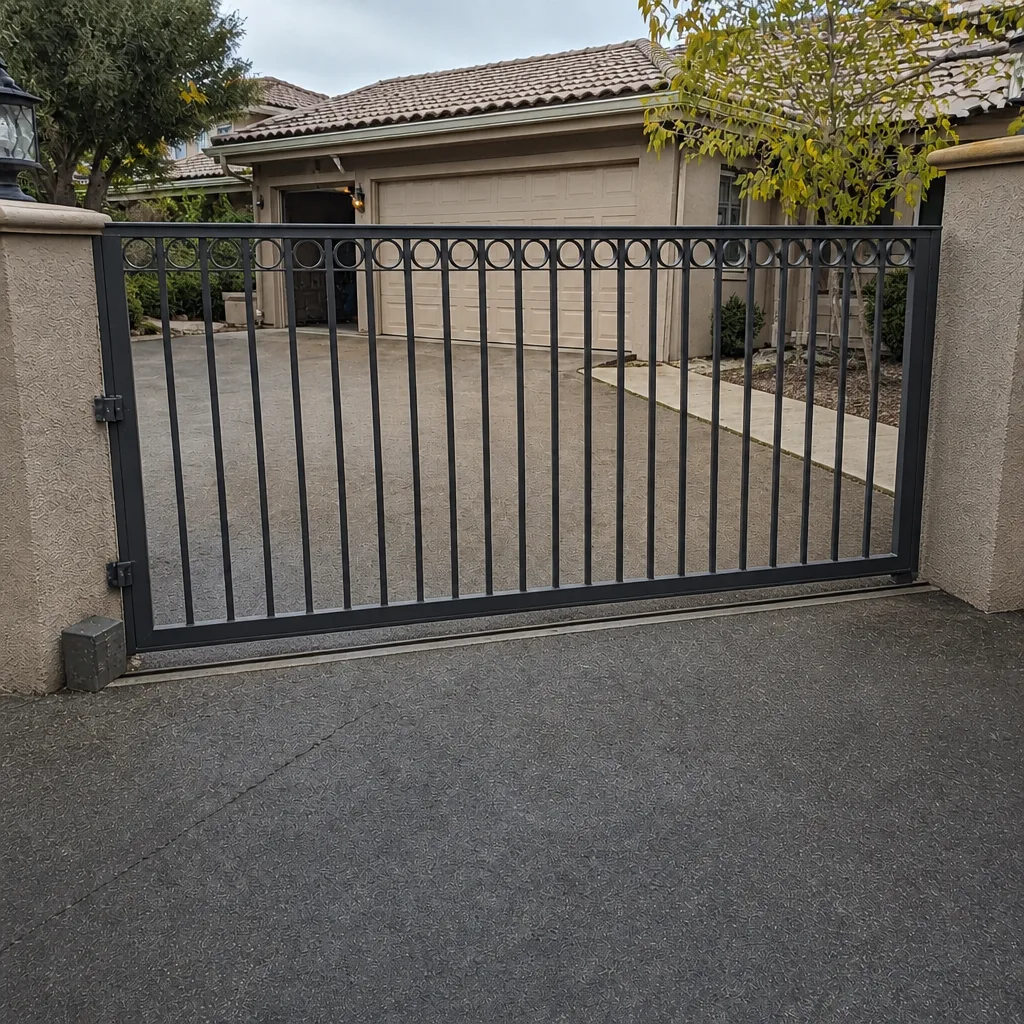
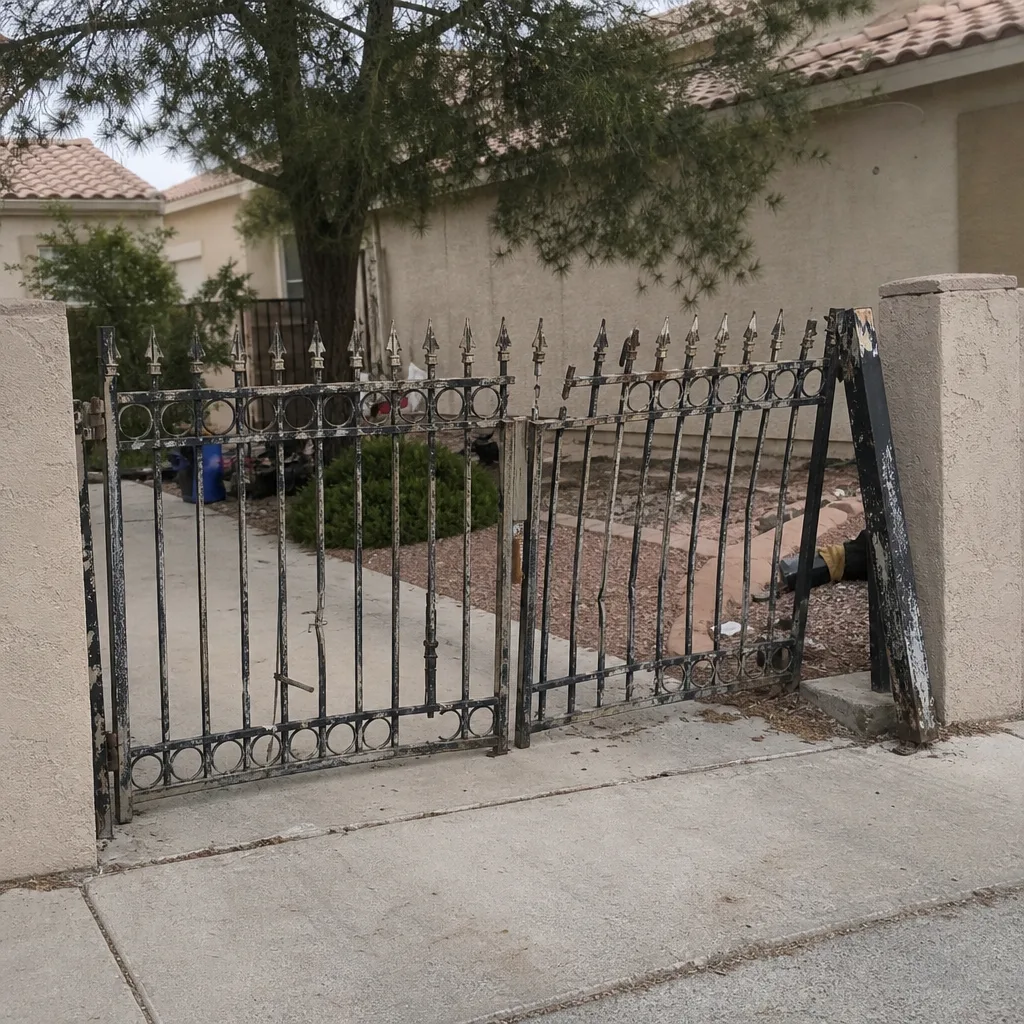
See the difference
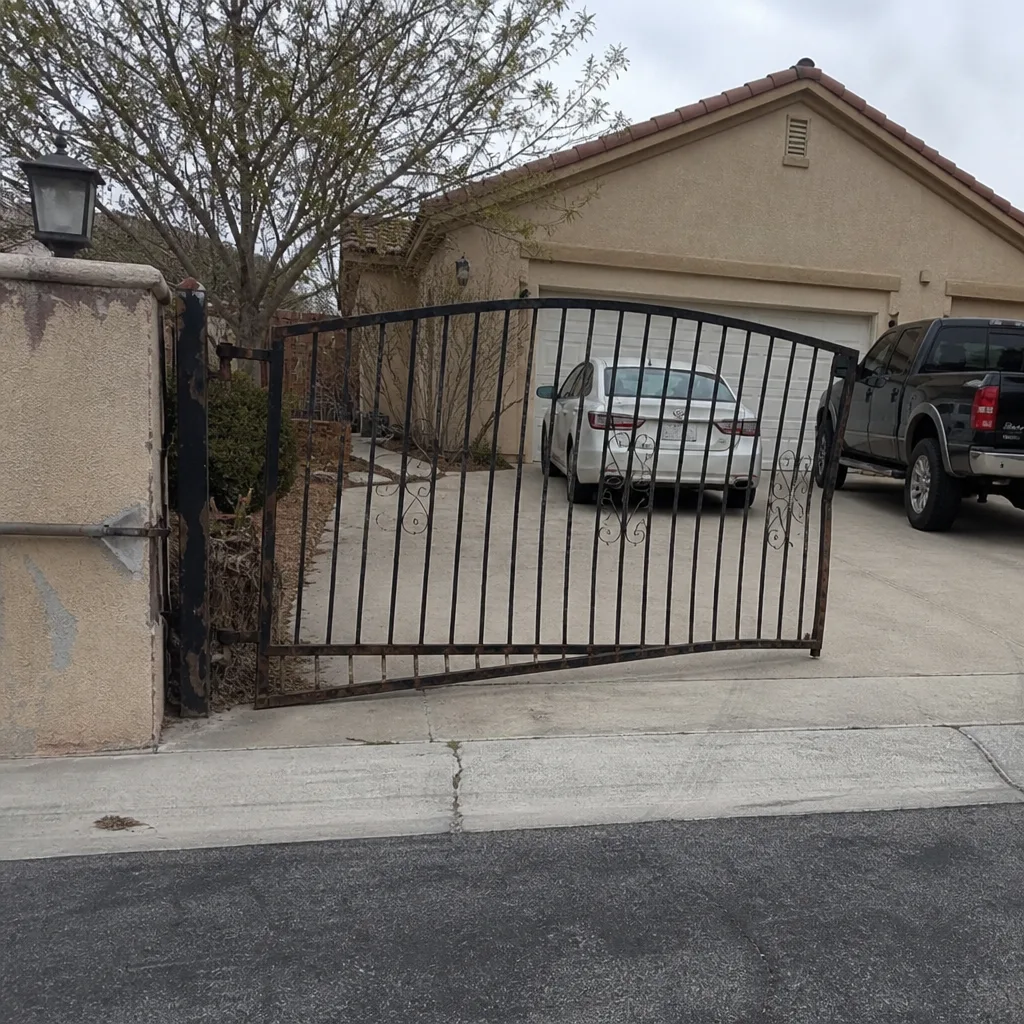 Before
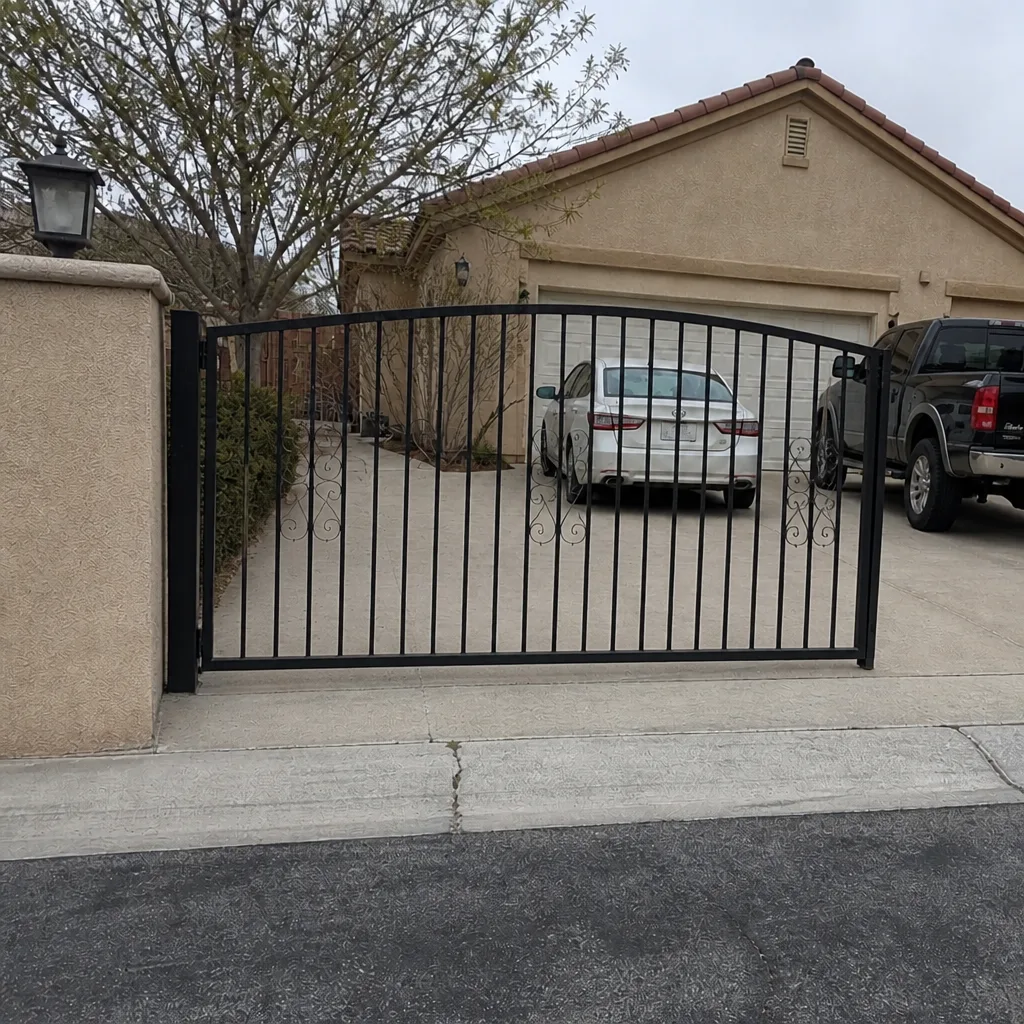 After
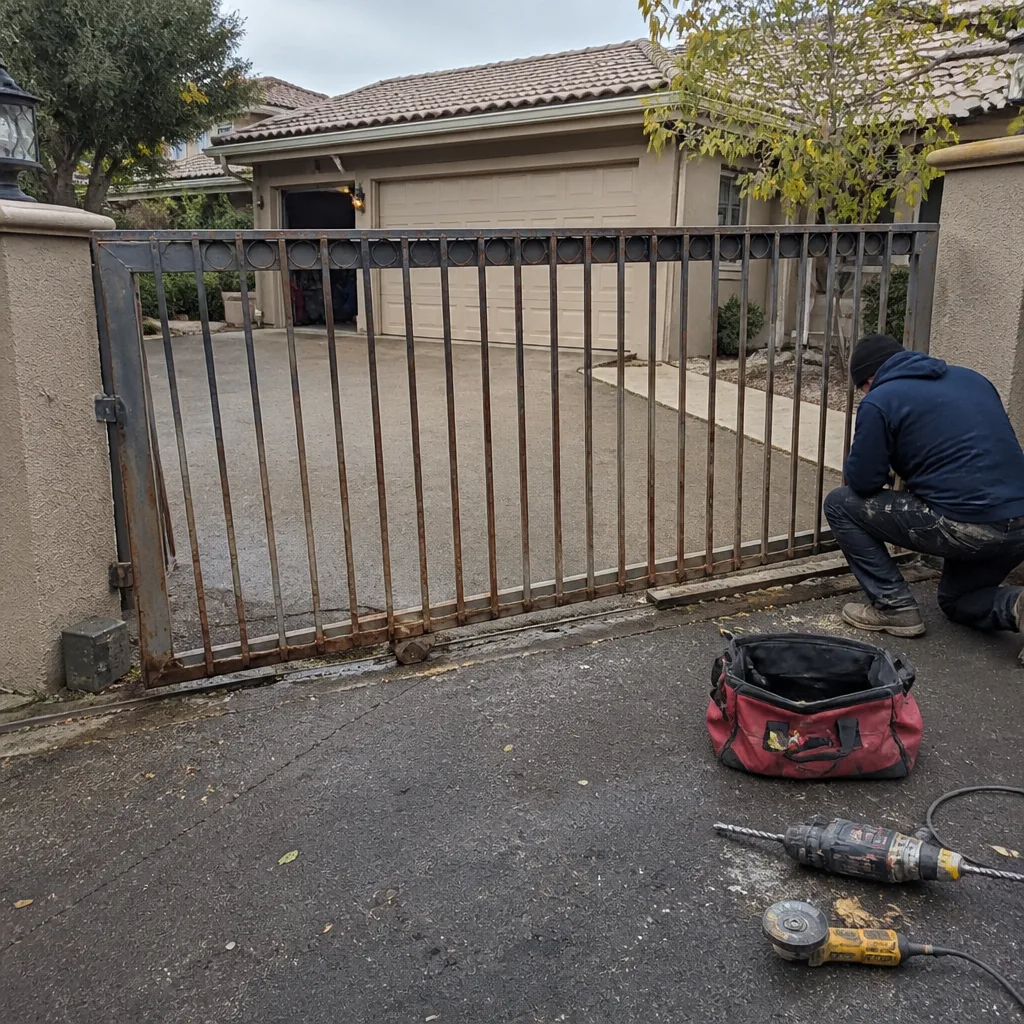 Before
 After
 Before
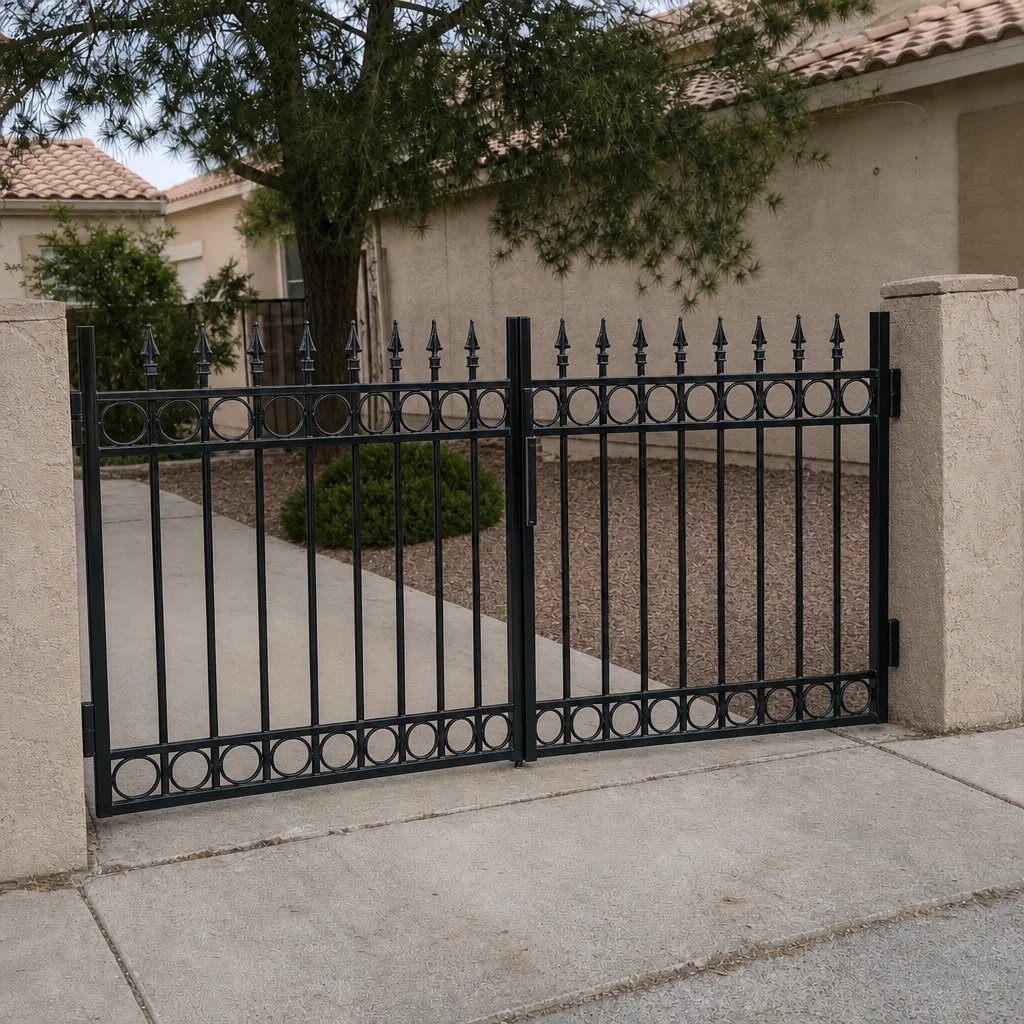 After
When to Call a Professional
Call a professional if the gate sags on a hinge or post, if a weld has cracked, if the operator hums or strains, or if the safety sensors won’t reverse the gate. Those are the situations where continuing to work the gate risks injury or a second, larger repair. It’s also worth calling if the fault sits in the automation tier and you’d rather not buy an operator on a guess: we service nine major brands, so the correct fix is the one on the first visit. Ironworks Gate Co. Summerlin offers free estimates in Summerlin – call (866) 623-9848. A live person answers, day or night, and every job is backed by our written 90-Day Done Right Promise.
Frequently Asked Questions
A gate that opens by hand but not automatically almost always has a safety-sensor or limit-switch problem, not a dead motor. Check the sensor lenses for dirt or blocked beams, then move the gate to mid-travel by hand and try the remote again. If it runs from the middle, the limit has slipped; if it still won’t, the board or receiver needs a diagnosis. Call (866) 623-9848 for a free estimate if you’d rather have it confirmed in person.
A humming motor is receiving power and failing to turn, which usually means the gate is binding somewhere in the mechanism or the capacitor is failing. Shut it off at the breaker before the winding overheats, then check the track, wheels, and arm for binding. If the mechanism moves freely, the capacitor or operator needs a technician. Call (866) 623-9848 and we’ll diagnose it.
Not until the structure and mechanism are ruled out. A gate that stops mid-swing is more often fighting a worn hinge, a sagging post, or a binding wheel than suffering a failed motor. Replacing the motor without fixing the drag gives you a second failure. Our technicians diagnose all three tiers before quoting a part, and the price is agreed before any work starts. Call (866) 623-9848 for a free second opinion on any written estimate.
Twice a year usually keeps a Summerlin gate ahead of its failure points: once before the summer heat and once after monsoon season. The heat and dust here work the plastic wheels, tracks, and chain harder than a milder climate would. Our $89 seasonal tune-up covers the walk-around and catches a failing hinge before it takes the motor with it. Call (866) 623-9848 to schedule.
Yes. We’re trained and equipped on nine major gate-automation brands, including Linear, Viking, and DoorKing, so the correct fix is made on the first visit whatever is on your driveway. We don’t turn work away because the operator came from somewhere else. Call (866) 623-9848 and tell us the brand, and we’ll confirm the repair plan before we come out.
Every repair starts with a diagnosis across all three tiers, a price settled before any work begins, and the fix done right and backed in writing. Most jobs are completed in a single visit, and every completed job carries our 90-Day Done Right Promise. There’s a live person on the line 24 hours a day. Call (866) 623-9848 for a free estimate.
The Bottom Line
The gate that won’t move is usually not telling you its motor is dead. It’s telling you a hinge has worn, a wheel has flattened, a limit has slipped, or a post has shifted, and the operator inherited the problem. Work the tiers in order: structure, then mechanism, then the electronics. Listen for the sound, test the manual swing, and use the smartphone trick before you replace a remote. Everything in this guide is about spending the money where the fault actually lives. When the diagnosis points past what you can safely check, we’ll take it from there and back it in writing.
Contact Ironworks Gate Co. Summerlin for a free estimate: call (866) 623-9848. A live person answers every call, day or night. Most jobs are done in a single visit, the price is agreed before a bolt is turned, and the seat is comfortable because the gate is our only business.
Written by the team at Ironworks Gate Co. Summerlin.