
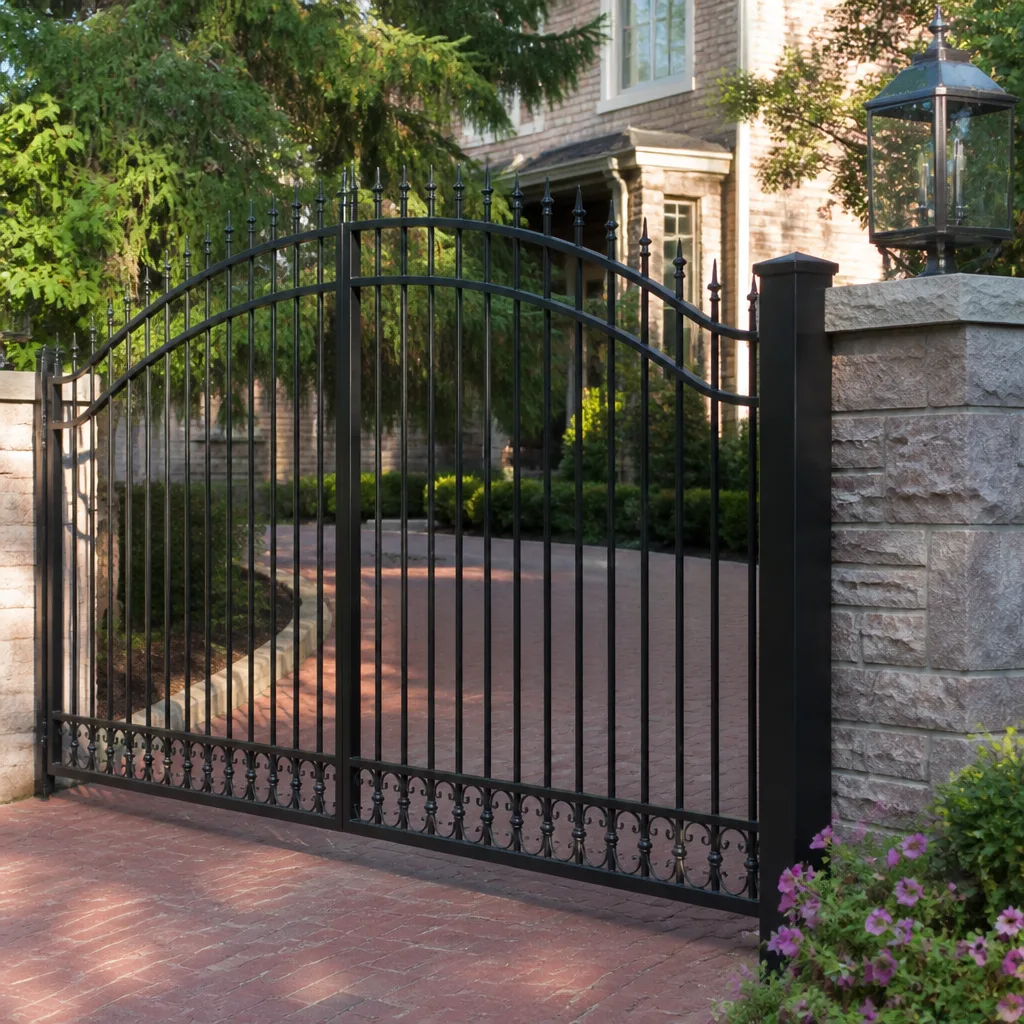
 Wrought iron
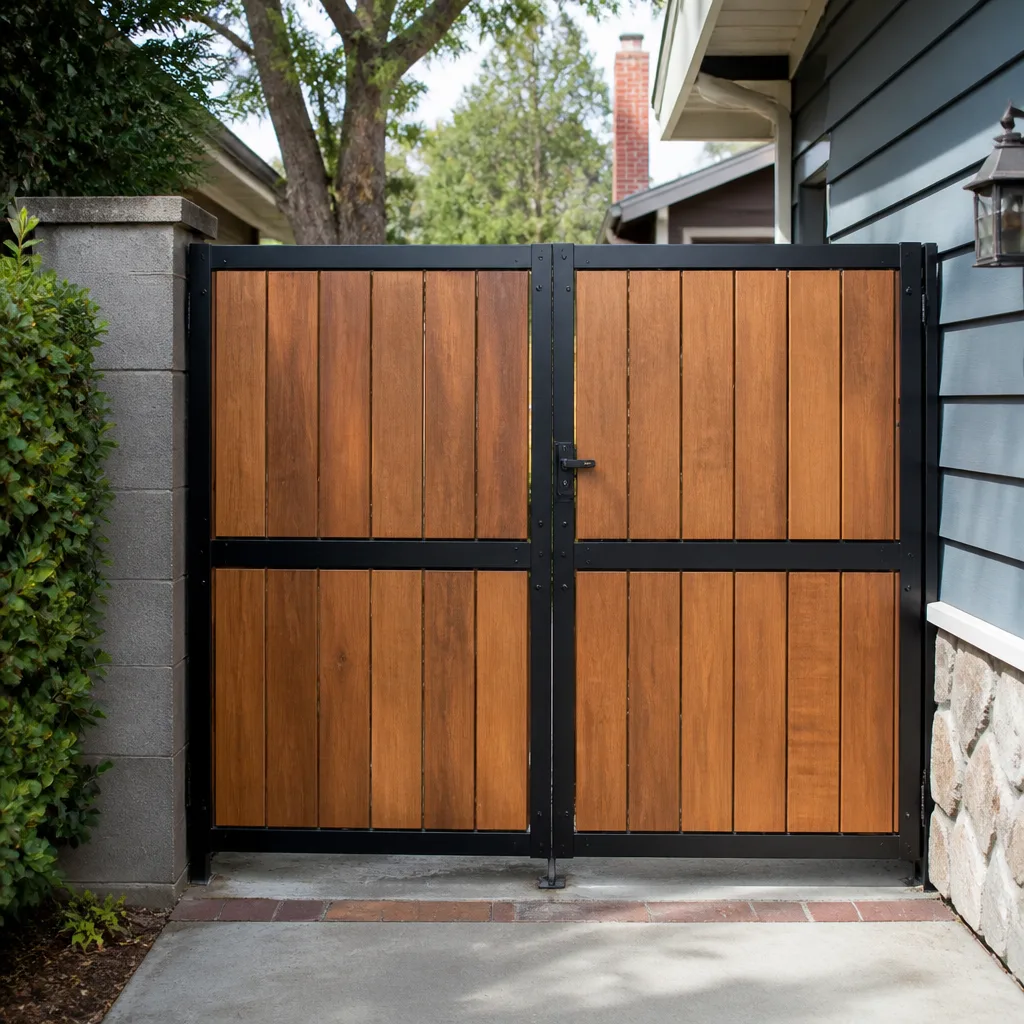 Wood & steel frame
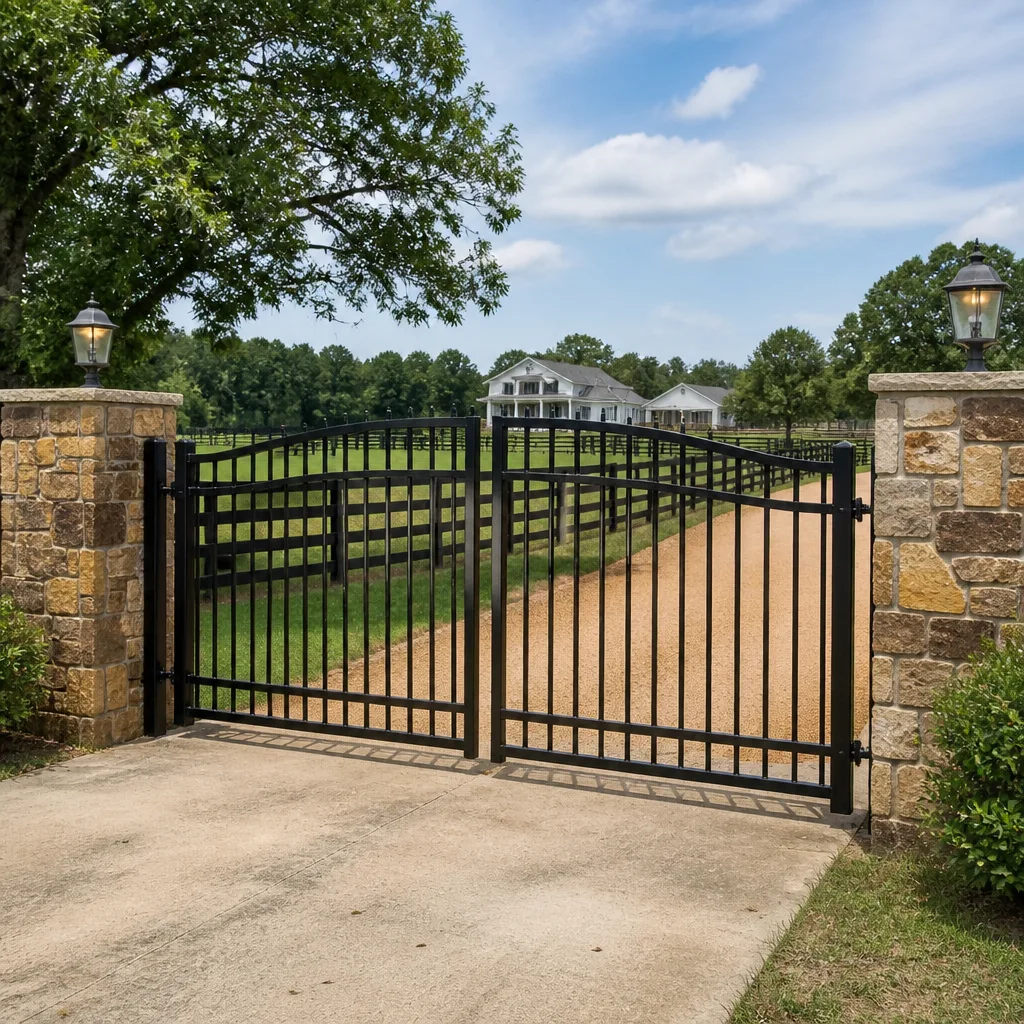 Farm & ranch
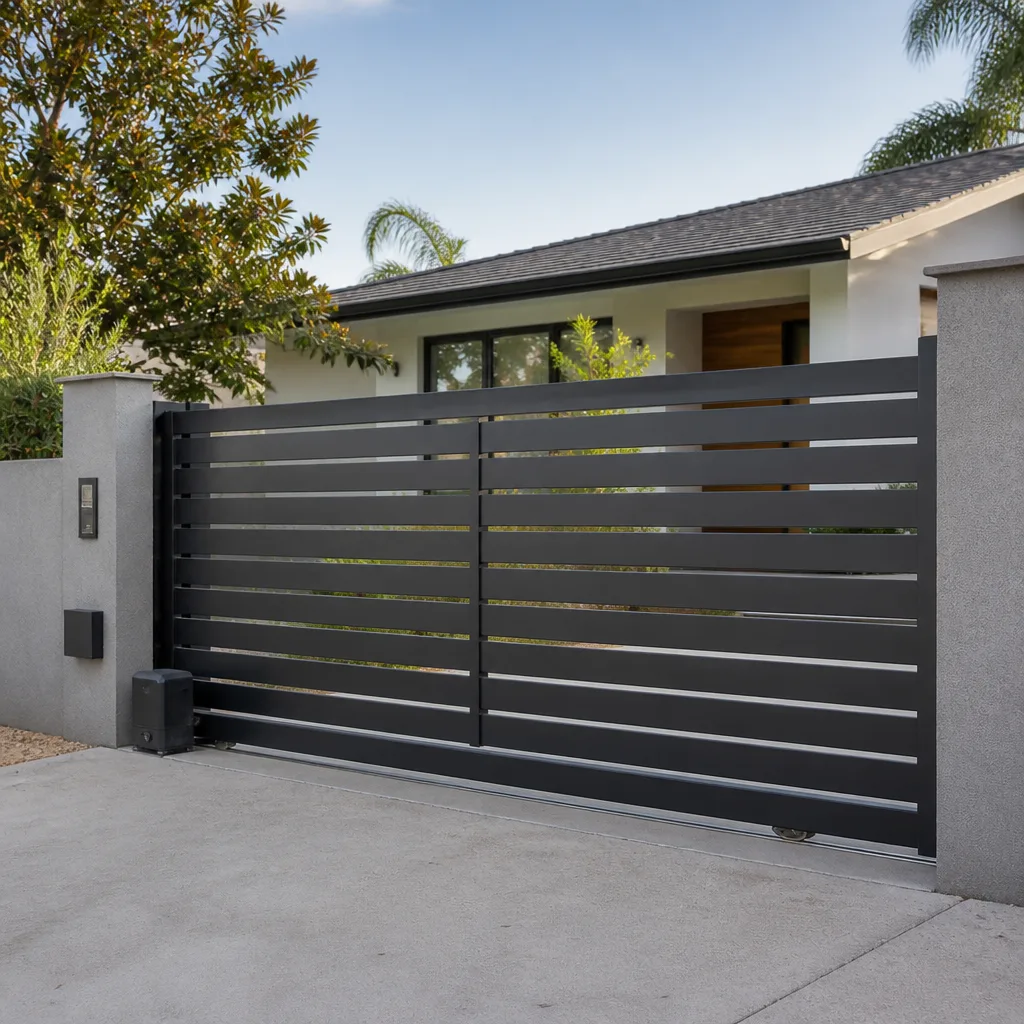 Sliding driveway gates
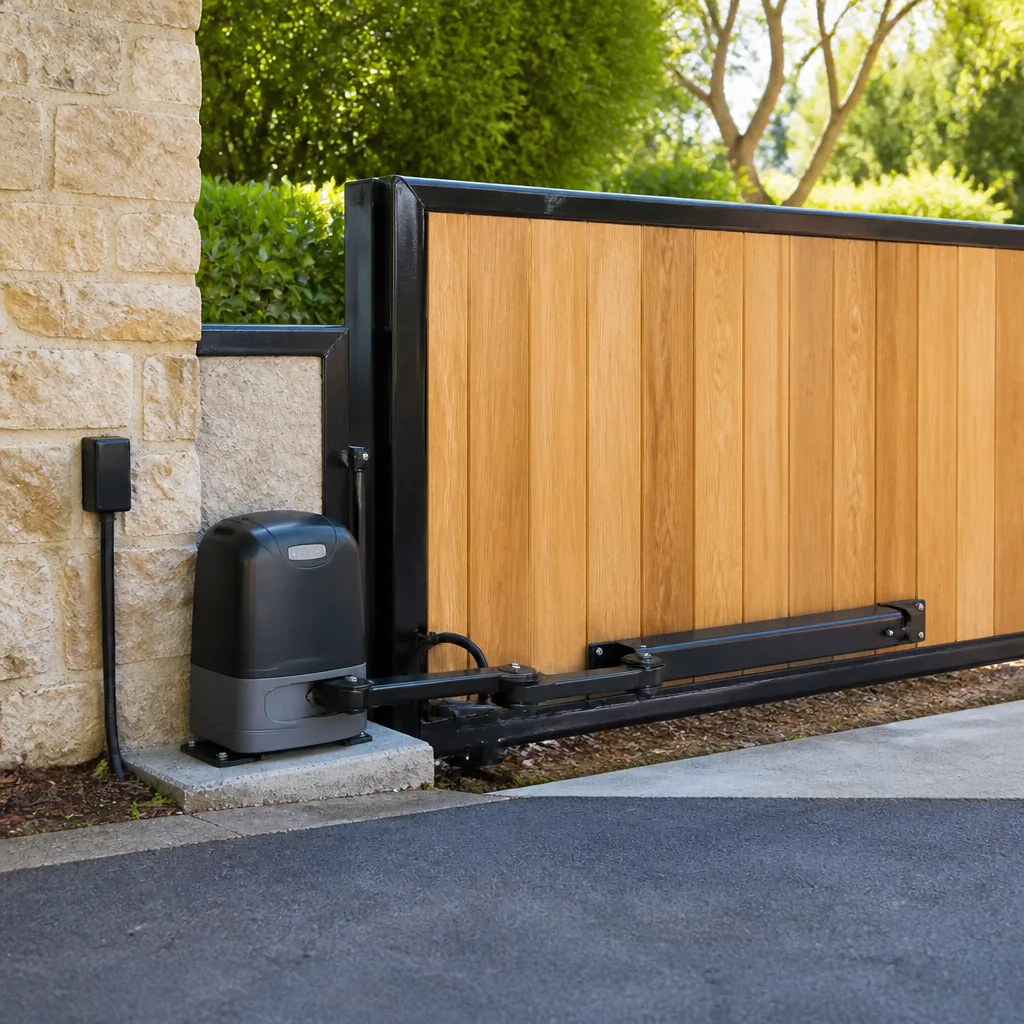 LiftMaster operators
Free on-site gate assessment - hinges, posts, and your LiftMaster or Nice gate operator checked before anything is quoted
The assessment is free and the quote is the invoice.
Get your free estimateStyles & brands we work with
- Wrought iron
- Wood & steel frame
- Farm & ranch
- Sliding driveway gates
- LiftMaster operators
See the difference
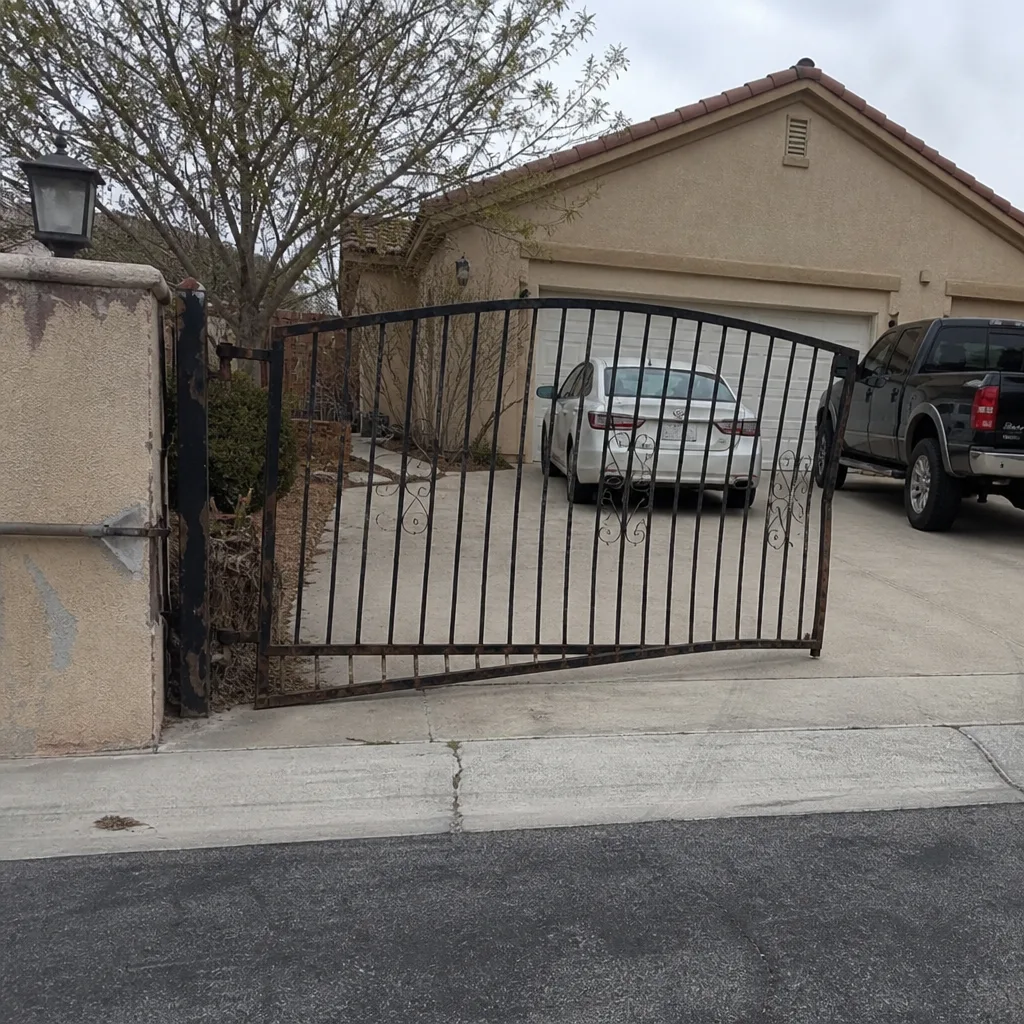 Before
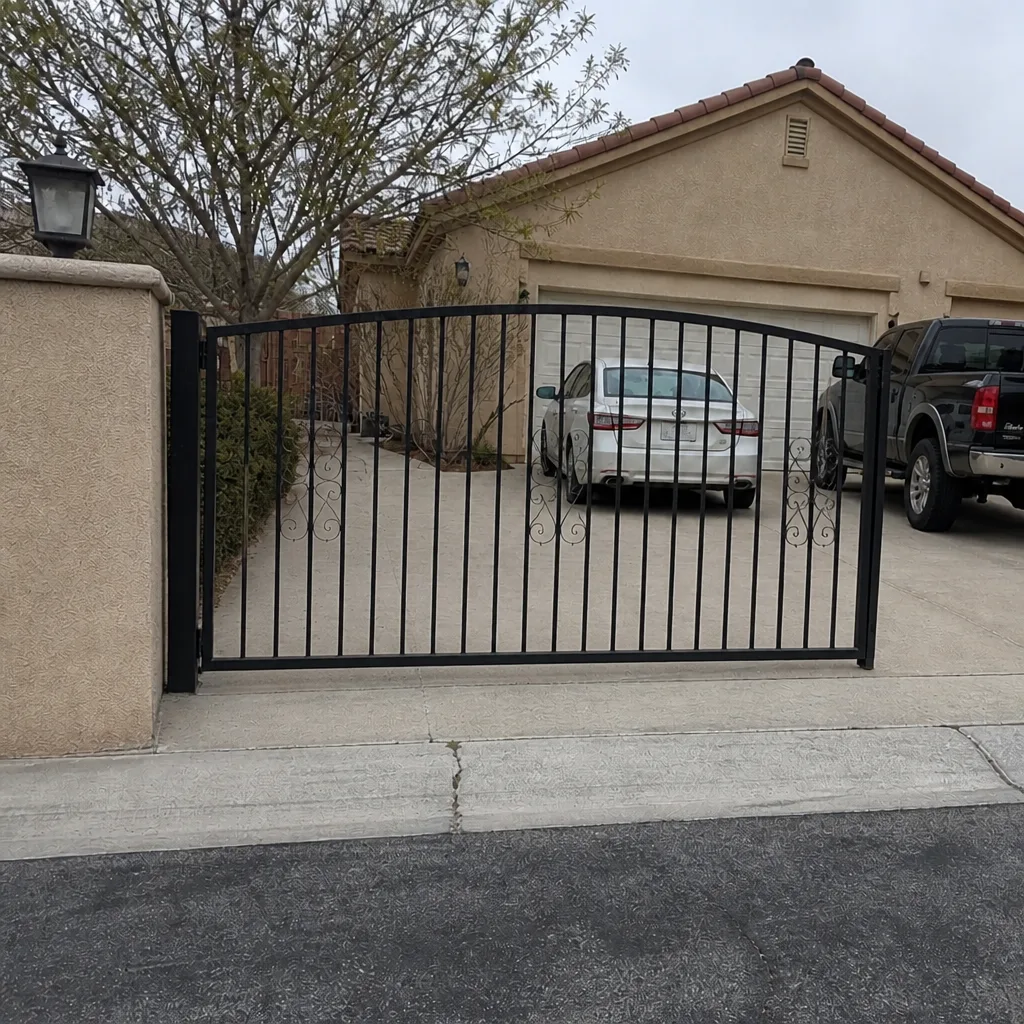 After
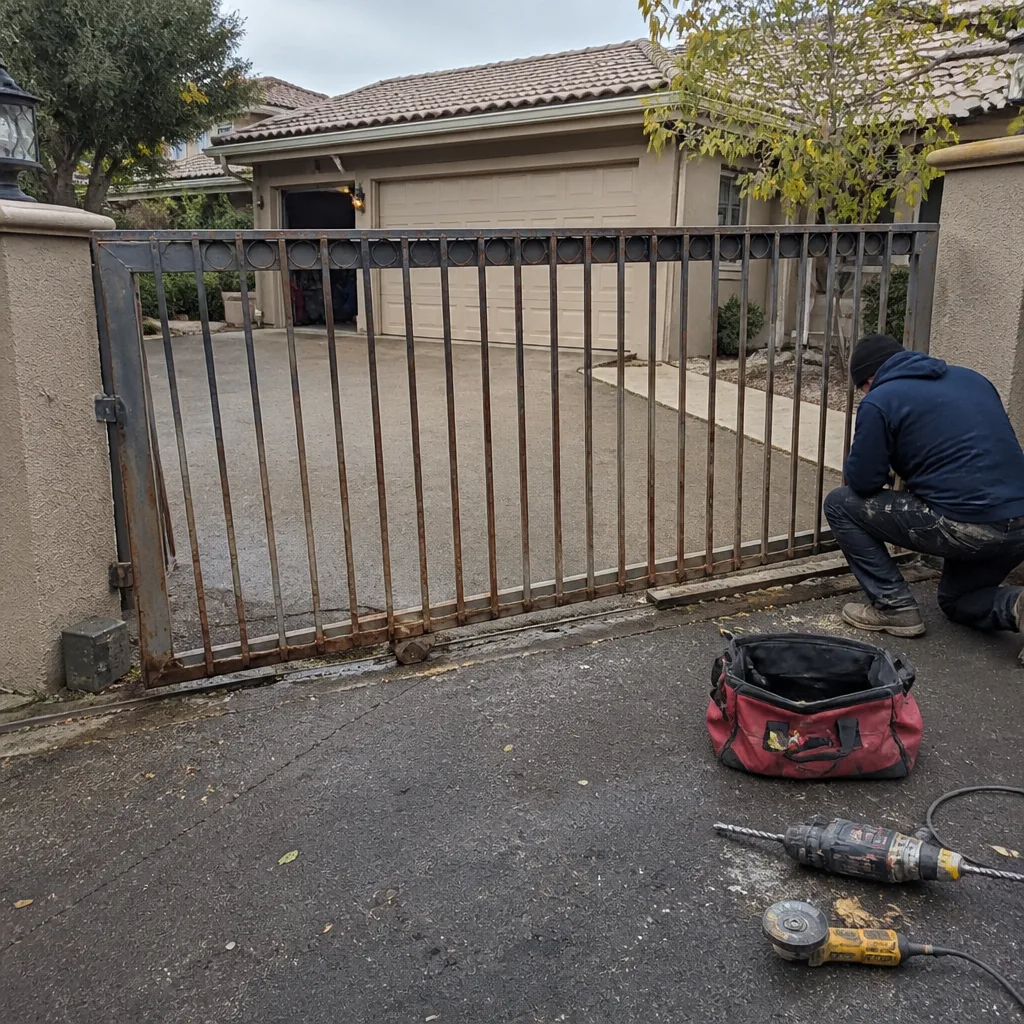 Before
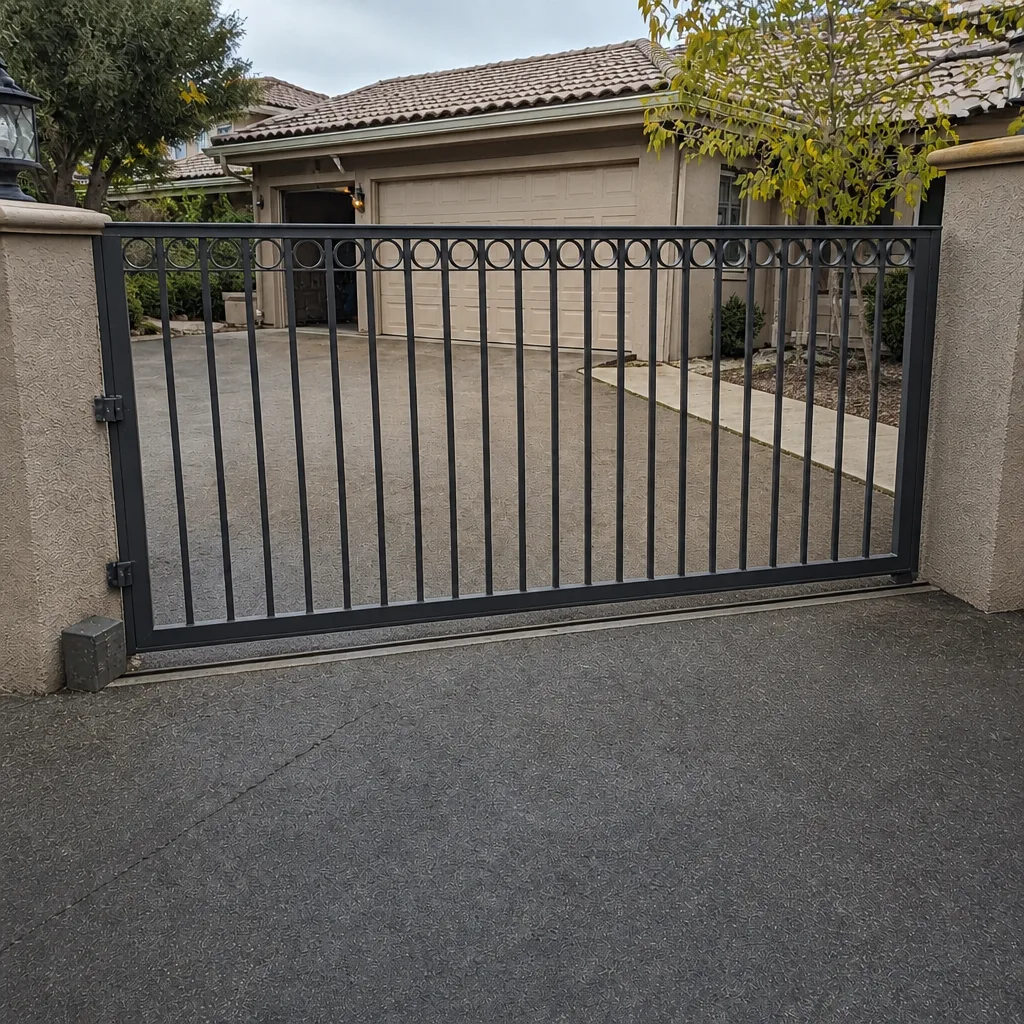 After
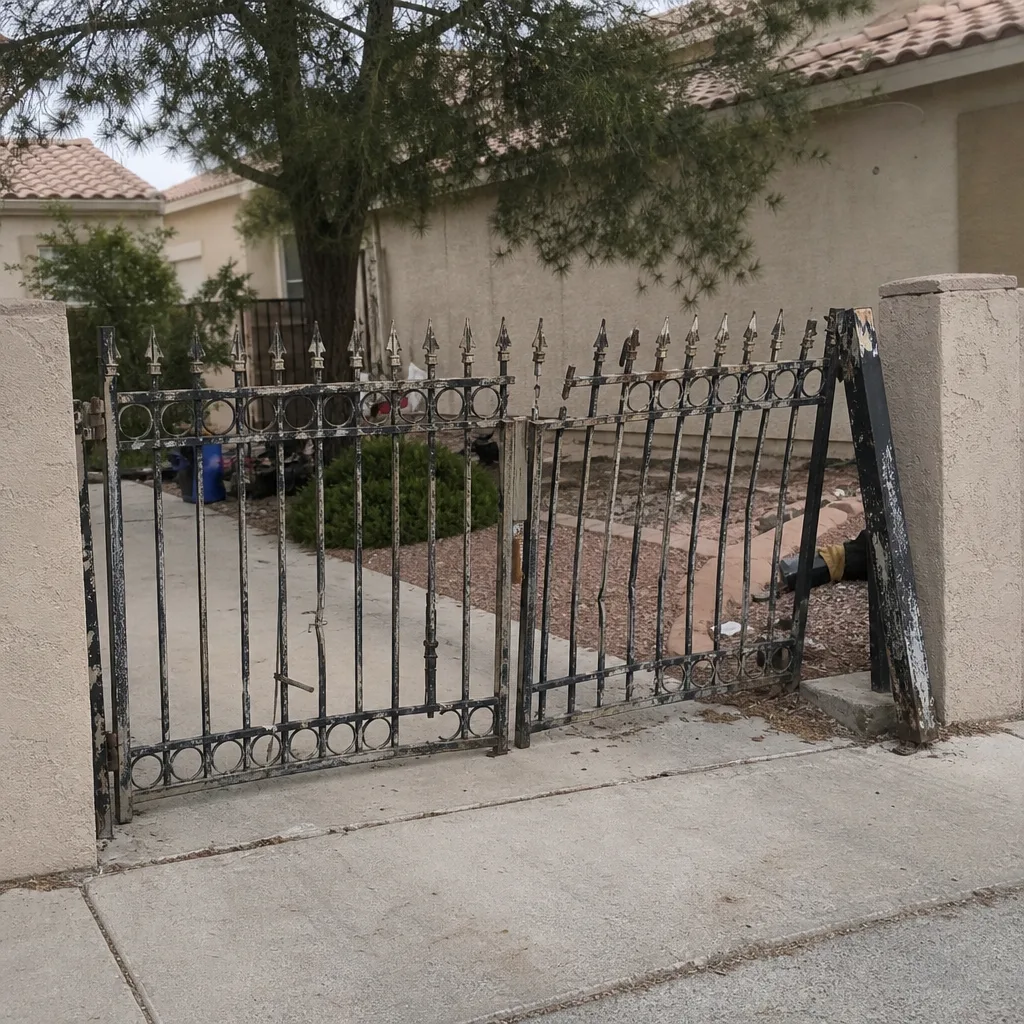 Before
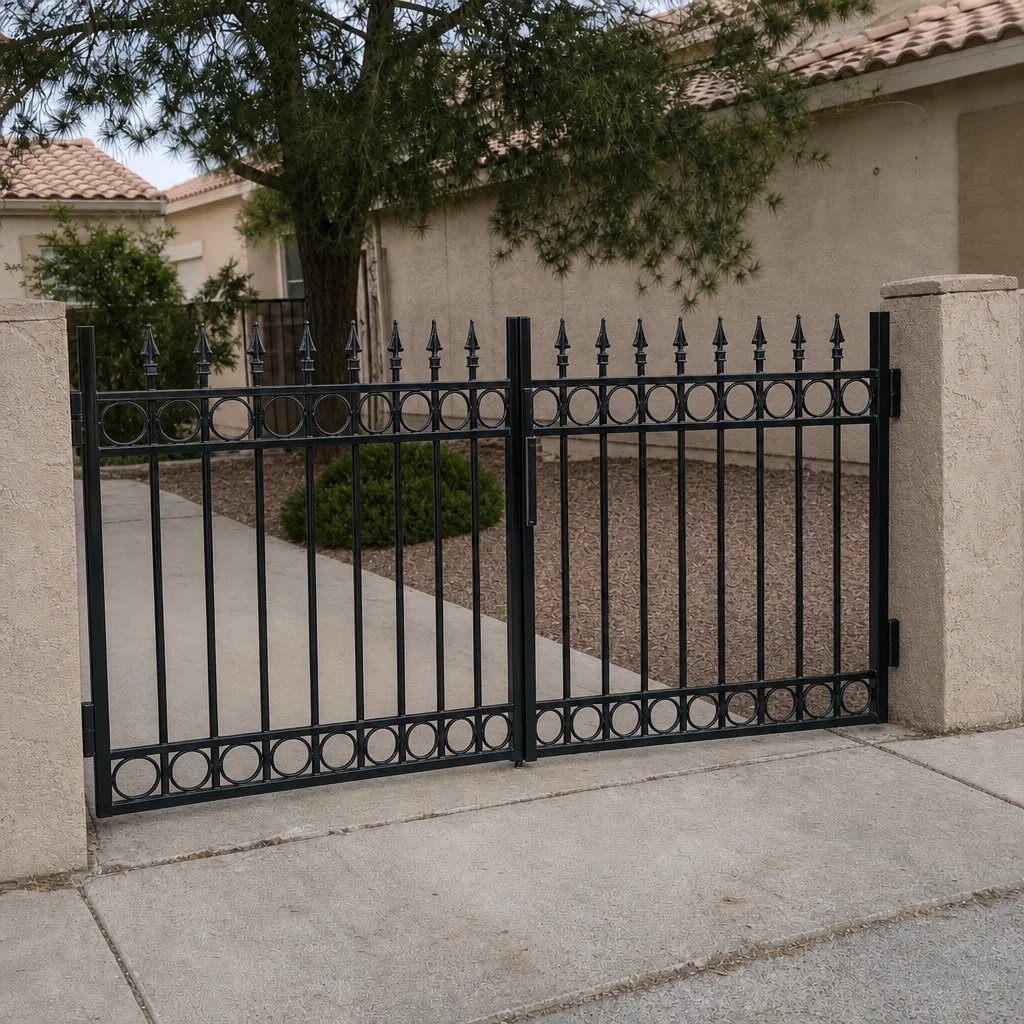 After
How Gate Access Control Systems Work in Summerlin, NV
A gate access control system works in a chain: your keypad, fob or intercom sends a credential to the control board, the board checks the safety devices (inductive loops and photo eyes) to confirm the path is clear, and only then does it command the operator motor to move the gate. If any node in that chain fails to confirm safe conditions, the gate stays put. That’s why a gate that “just stops for no reason” is almost never random – it’s a broken handoff somewhere in the chain. Call (866) 623-9848 if you want that chain tested on your Summerlin driveway.
The Full Signal Chain, Explained Plainly
Most explainers stop at “the keypad sends a signal to the opener.” That leaves out the part that actually matters when a gate misbehaves. In a Summerlin driveway, four nodes have to agree before a single inch of travel happens.
- The credential device. A keypad, remote fob, phone app or intercom captures your code and passes it to the board. If the keypad membrane is sun-cracked or its wiring has corroded at the post, the credential never arrives.
- The control board. This is the brain. It validates the code, checks its own fault log, and decides whether conditions allow movement. Proprietary logic lives here – which is why a LiftMaster board and a FAAC board troubleshoot differently.
- The safety devices. Inductive loops buried in the driveway apron, photo-eye beams across the opening, and edge sensors all report in. If the board reads a vehicle over the loop or a broken beam, it holds the gate open or refuses to close.
- The operator motor. Only after the first three confirm does the board energize the motor. A strained motor, a dragging chain or a binding hinge will trip the board’s overload protection and stop travel mid-cycle.
Understanding that chain changes how you read a symptom. A gate that opens but won’t close is usually a safety node, not a motor. A gate that ignores the keypad but opens from the fob points at the credential device. A gate that stalls halfway is mechanical load or a failing board. Each points a technician to a different part of the chain.
Why Summerlin Gates Fail “Randomly” (They Don’t)
Two local conditions create intermittent failures that look like ghosts in the machine. Both are diagnosable once you know where to look.
Caliche dust and Red Rock grit on the loops
Summerlin sits at the western edge of the valley against Red Rock, and the wind off the Spring Mountains carries caliche dust and fine grit across every driveway apron. That dust settles over the inductive loop coils buried under the concrete. When the coating gets thick enough or the coil’s seal degrades, the loop starts reading a phantom vehicle. The control board interprets that as “car present,” so it refuses to close or holds the gate open for minutes at a time. Homeowners read this as a random failure. It’s a dirty or degraded loop, and a loop tester confirms it in minutes.
Heat cycling in a 115°F summer
Summerlin summers push past 115°F on the apron, and metal expands and contracts with every day-night swing. Wiring connectors at the control board terminals, the plug on the operator, and the splices inside the post all loosen a fraction of a millimeter at a time. Eventually a connection goes intermittent – it works in the cool of morning and fails by 3 p.m. A technician distinguishes this from a failing sensor by wiggle-testing terminals under load and watching the board’s diagnostic LEDs while the gate cycles. A sensor that’s truly dead fails consistently; a heat-loosened connection fails on a schedule.
How the Control Board and the Device Talk Back
The access device and the control board aren’t one-way. On most systems the board reports state – open, closed, fault, loop occupied – and the keypad or intercom reads that state to decide what to allow. This is why a bad loop can lock out a keypad that’s working perfectly. The credential is fine; the board just won’t accept a command while it believes a vehicle is sitting on the loop.
That back-and-forth also explains why brand knowledge matters. LiftMaster, FAAC, BFT, Linear, Viking, Ghost Controls, DoorKing, Elite and Mighty Mule each run their own control logic, their own loop sensitivity defaults, and their own fault codes. A generalist reading a universal wiring diagram will wire it correctly and still misread the fault, because the proprietary timing and sensitivity settings aren’t on that diagram. Ironworks Gate Co. Summerlin is trained and equipped on all nine brands, so the diagnosis matches the board in front of us rather than a generic guess.
What a Proper Diagnostic Actually Checks
Testing every node is what separates a real repair from a parts swap. Here’s the sequence a trained technician runs on a Summerlin gate:
- Loop and photo-eye test with a meter, not a guess – confirming the safety devices report clear when the driveway is empty.
- Terminal and connector inspection under load, looking for the heat-loosened connections that only fail on hot afternoons.
- Control board fault log review to see what the board recorded during the last failures.
- Motor draw and mechanical load check for binding hinges, dragging chains and grit-packed rollers that trip overload protection.
- Credential device verification – keypad output, fob battery and receiver, intercom wiring.
Because the technician arrives stocked for all nine brands, the correct part usually goes on in the same visit. No second trip, no waiting on an order, no “we’ll come back when the board comes in.” That’s the practical value of a single-visit fix, and it’s why every completed job carries our written 90-Day Done Right Promise: if it isn’t right, we come back and make it right.
Key Takeaways
- A gate moves only when the credential device, control board, safety devices and motor all confirm – break any link and it refuses to move.
- Summerlin’s caliche dust coats inductive loops and causes phantom-vehicle holds that look random but aren’t.
- 115°F heat cycling loosens terminals and connectors until a connection goes intermittent on a daily schedule.
- Brand-specific board knowledge is what turns a guess into a diagnosis across all nine operator brands.
- Testing every node on one visit is cheaper and faster than two trips and a return visit.
If the chain matters to you, our guide to Gate Access Control covers the access-device side in more depth.
How much does a gate access control diagnostic cost in Summerlin?
A diagnostic visit in Summerlin typically falls in the range of $95 to $185, and a seasonal tune-up that includes loop and connector checks runs $89 as a standing offer. Many repairs over $250 qualify for $50 off, and free second opinions on any written estimate are always available. Call (866) 623-9848 for an exact quote – estimates are free.
Can you fix my gate the same day in Summerlin?
Most Summerlin gate access jobs are completed in a single visit because the technician carries parts for all nine brands and tests every node before leaving. Same-day service depends on the part needed and the day’s schedule, so the fastest way to know is to call. Call (866) 623-9848 and a live person will give you a straight answer on timing.
Why does my gate open but not close?
A gate that opens but won’t close is almost always a safety device problem – a dirty or degraded loop reading a phantom vehicle, or a misaligned photo eye – rather than a motor failure. Caliche dust on the Summerlin apron is a common culprit. Call (866) 623-9848 for a diagnostic that tests the safety nodes specifically.
Do the nine brands matter for diagnosis?
Yes – each of the nine brands (LiftMaster, FAAC, BFT, Linear, Viking, Ghost Controls, DoorKing, Elite and Mighty Mule) runs its own control logic and fault codes, so correct diagnosis depends on matching the board. A generalist reading a universal diagram will misread the fault. Call (866) 623-9848 to have the right brand knowledge on your driveway.
If you’d rather have it looked at than troubleshoot it yourself, Ironworks Gate Co. Summerlin offers a no-pressure assessment in Summerlin – call (866) 623-9848 for a free estimate. Every job is backed in writing, and a live person answers around the clock.
Written by the team at Ironworks Gate Co. Summerlin, serving Summerlin, NV.