
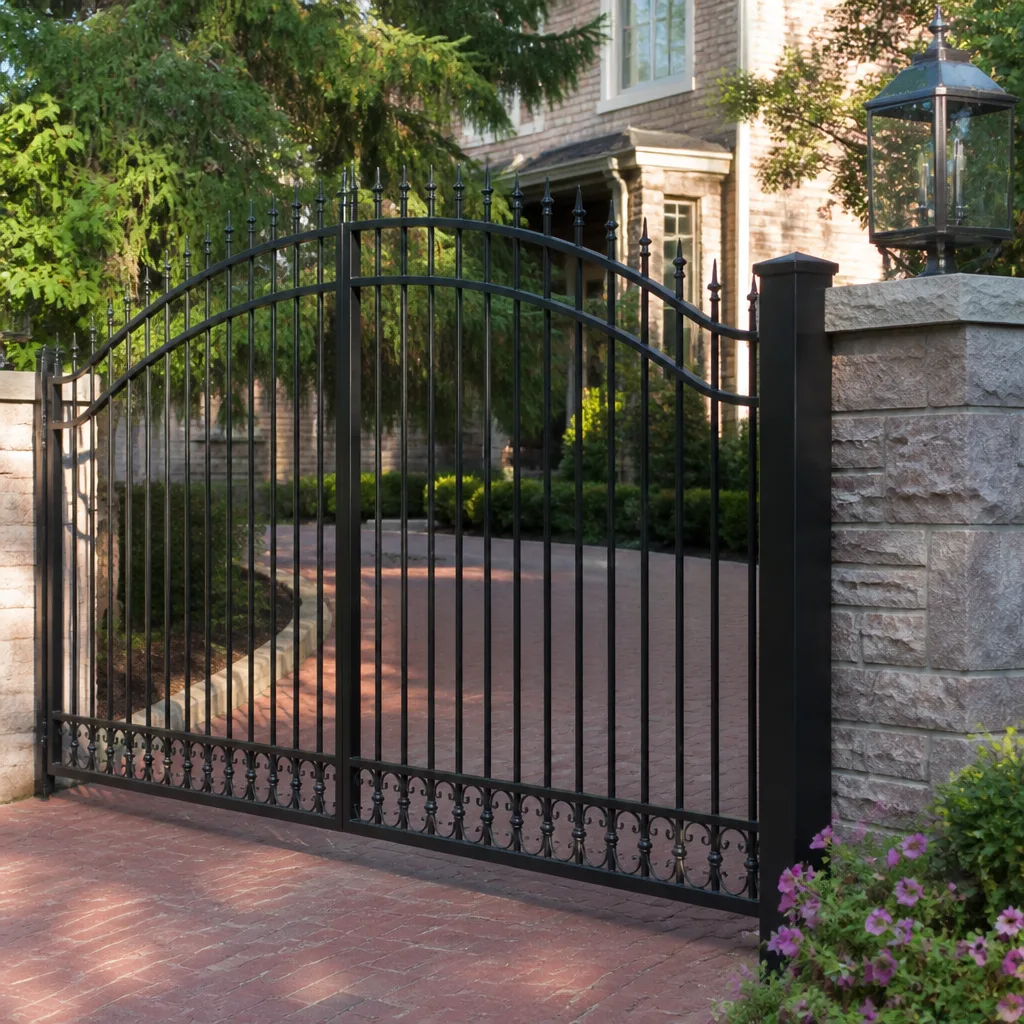
 Wrought iron
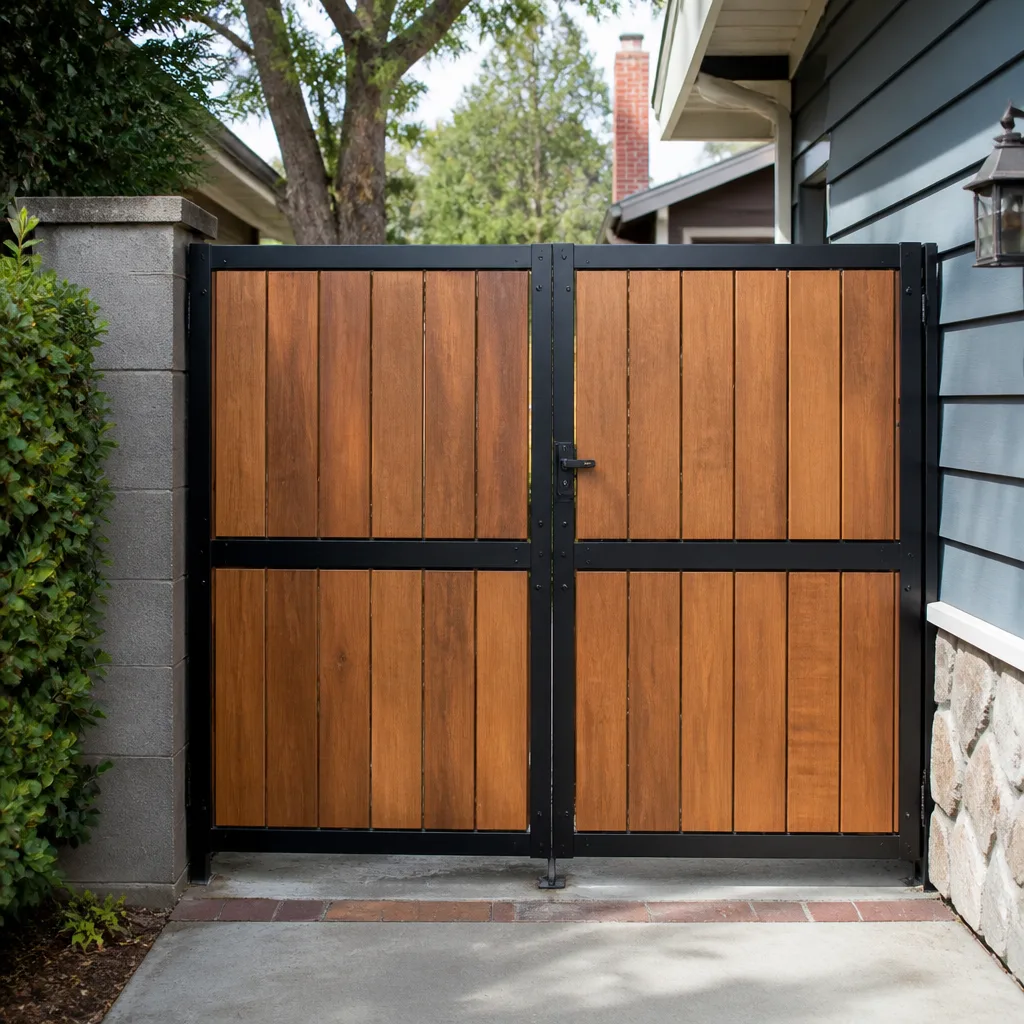 Wood & steel frame
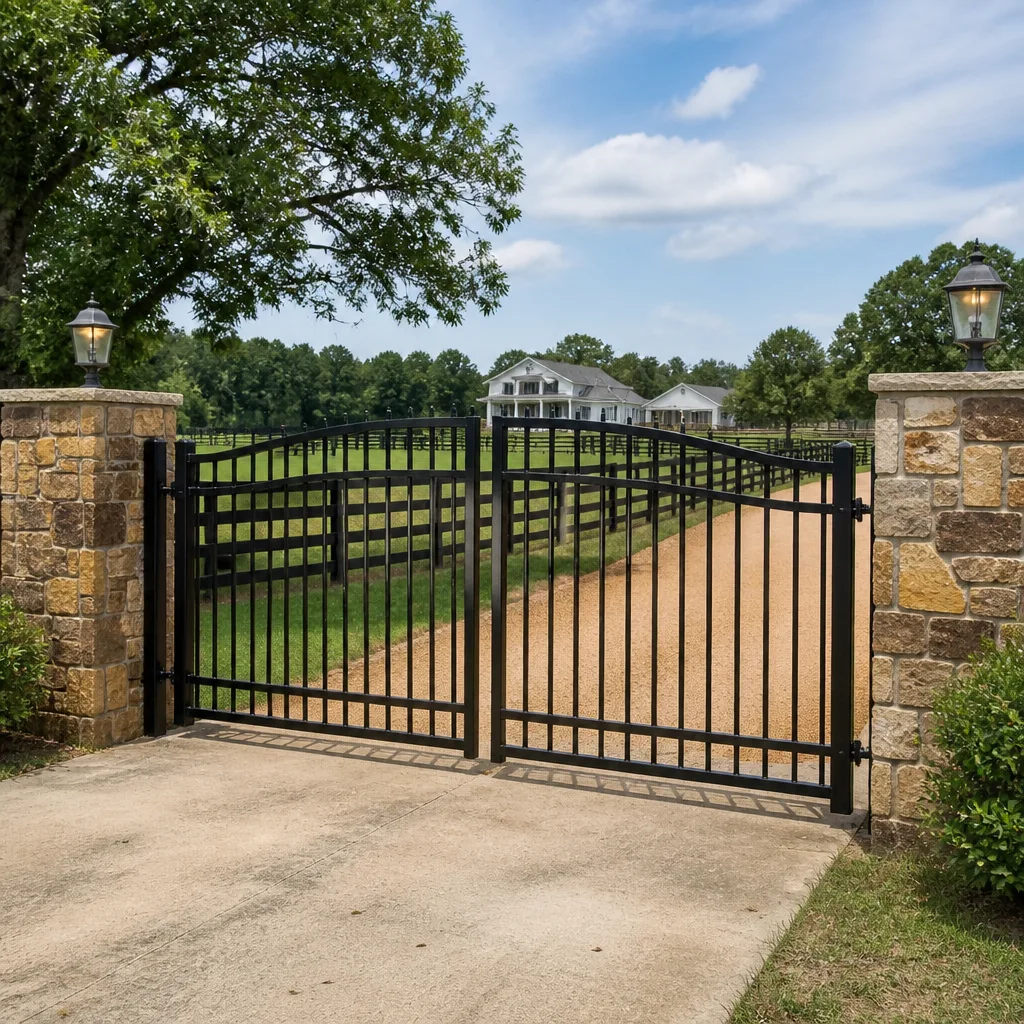 Farm & ranch
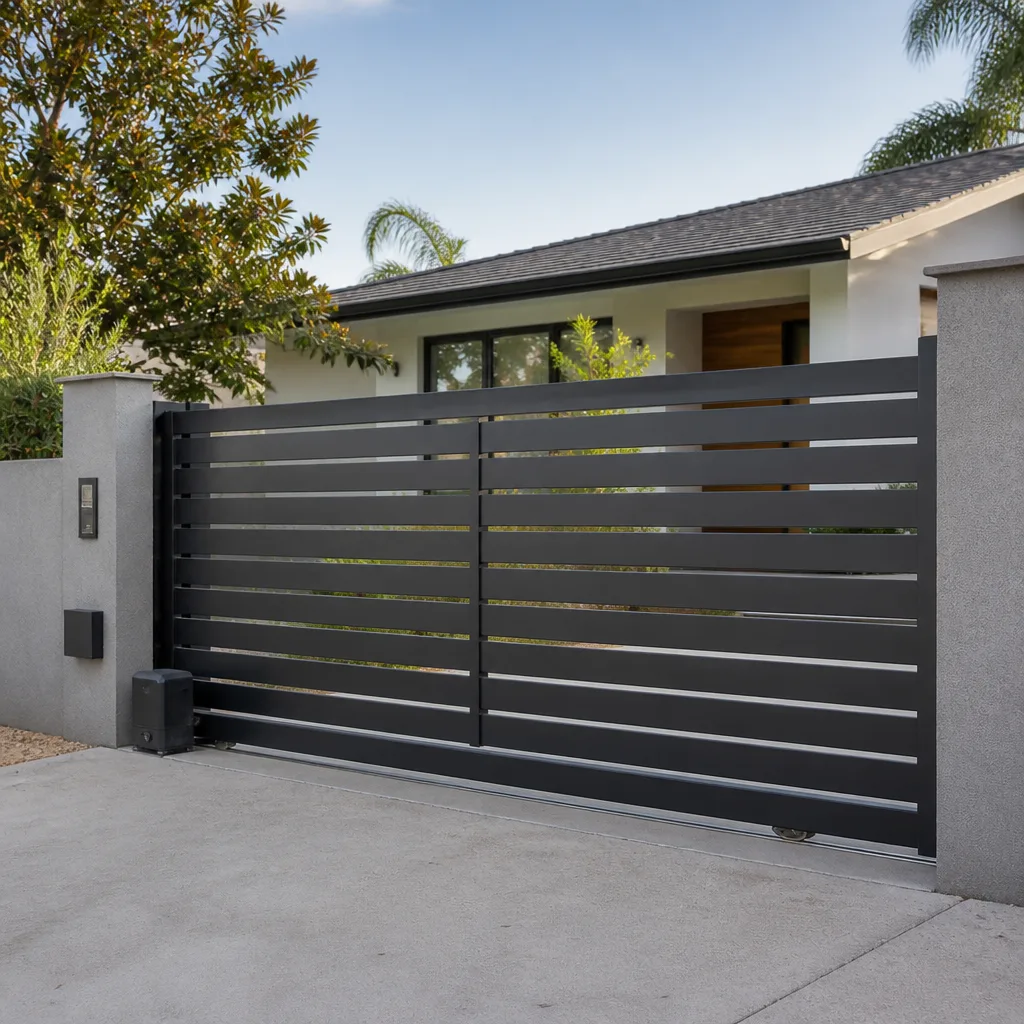 Sliding driveway gates
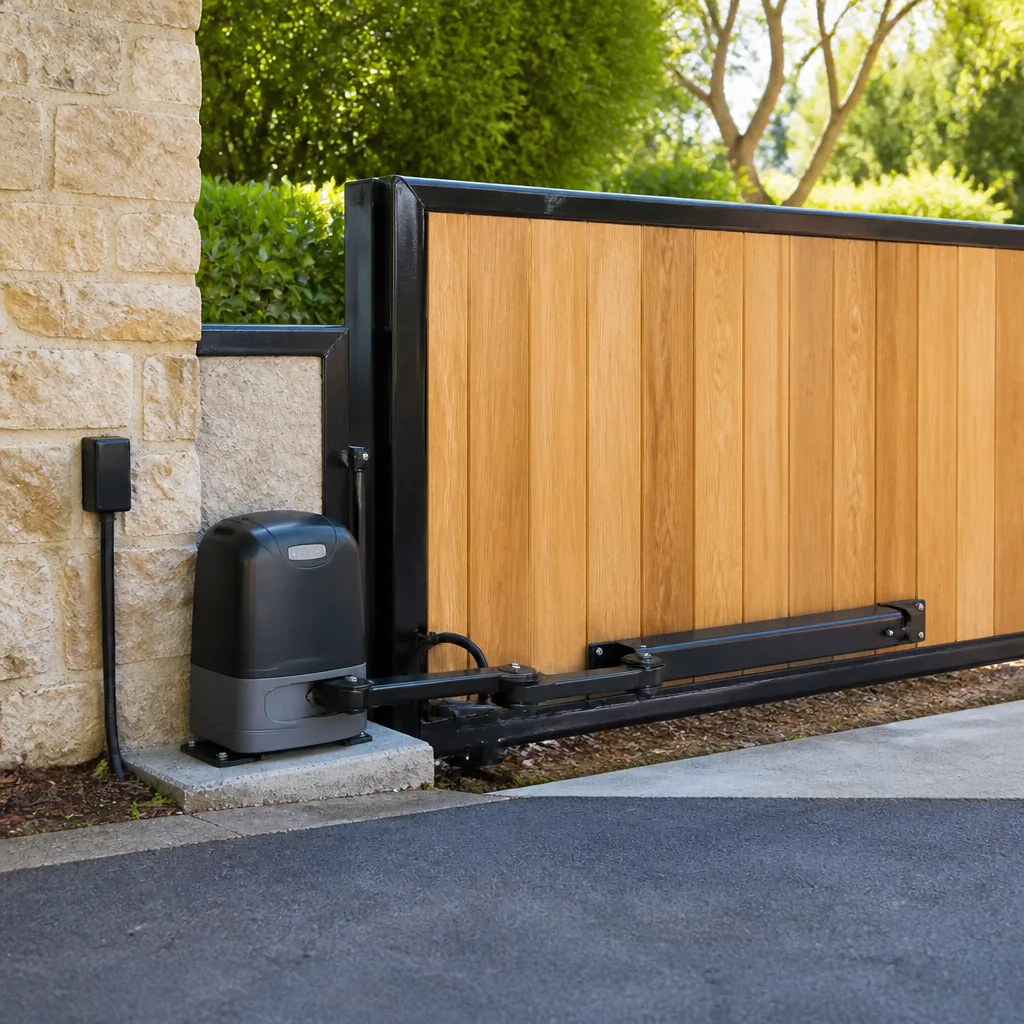 LiftMaster operators
Free on-site gate assessment - hinges, posts, and your LiftMaster or Nice gate operator checked before anything is quoted
The assessment is free and the quote is the invoice.
Get your free estimateStyles & brands we work with
- Wrought iron
- Wood & steel frame
- Farm & ranch
- Sliding driveway gates
- LiftMaster operators
See the difference
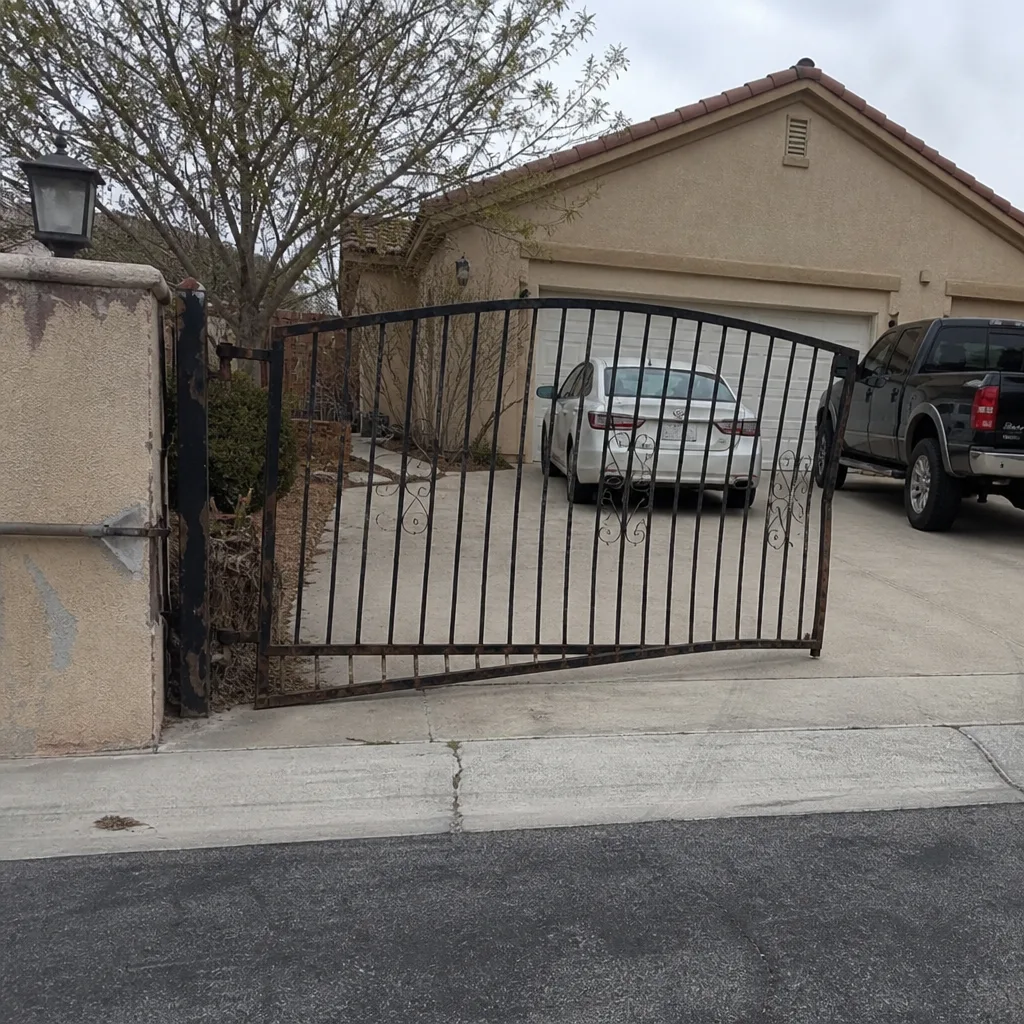 Before
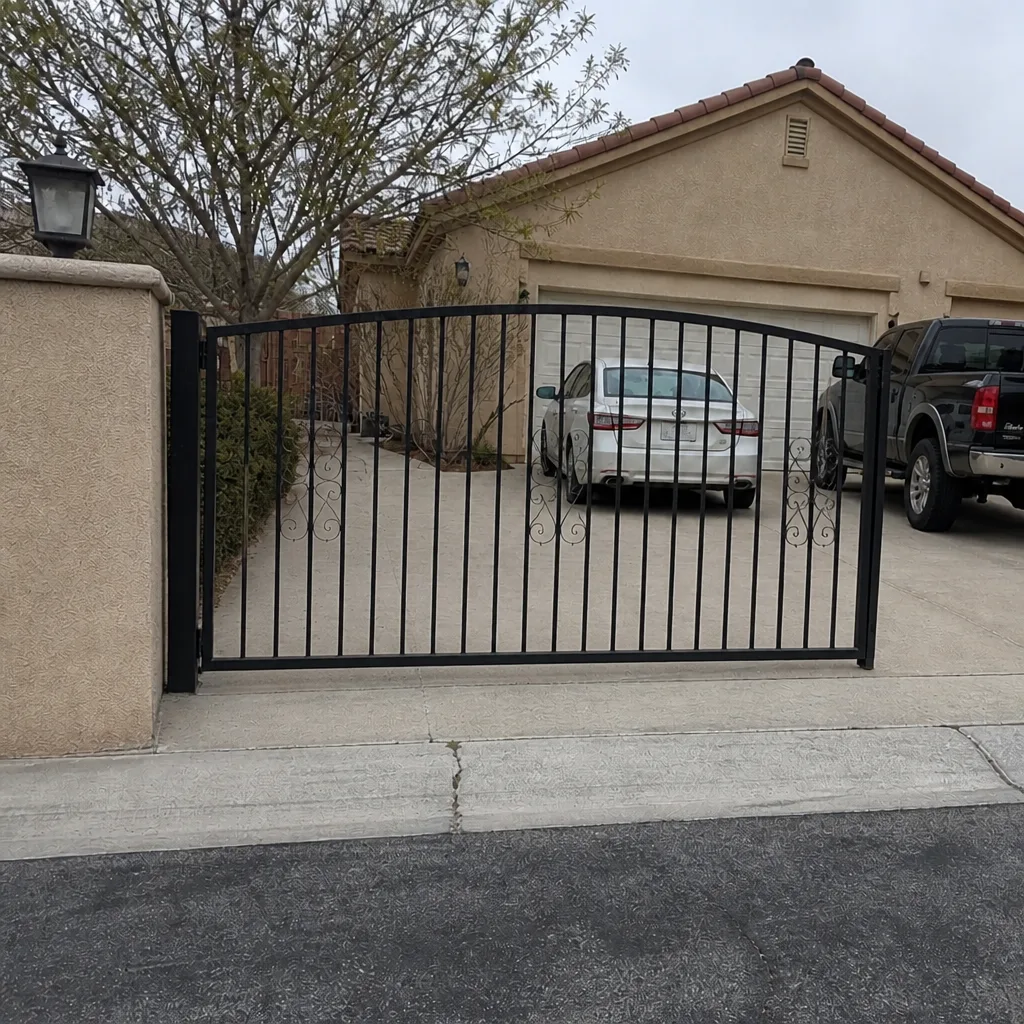 After
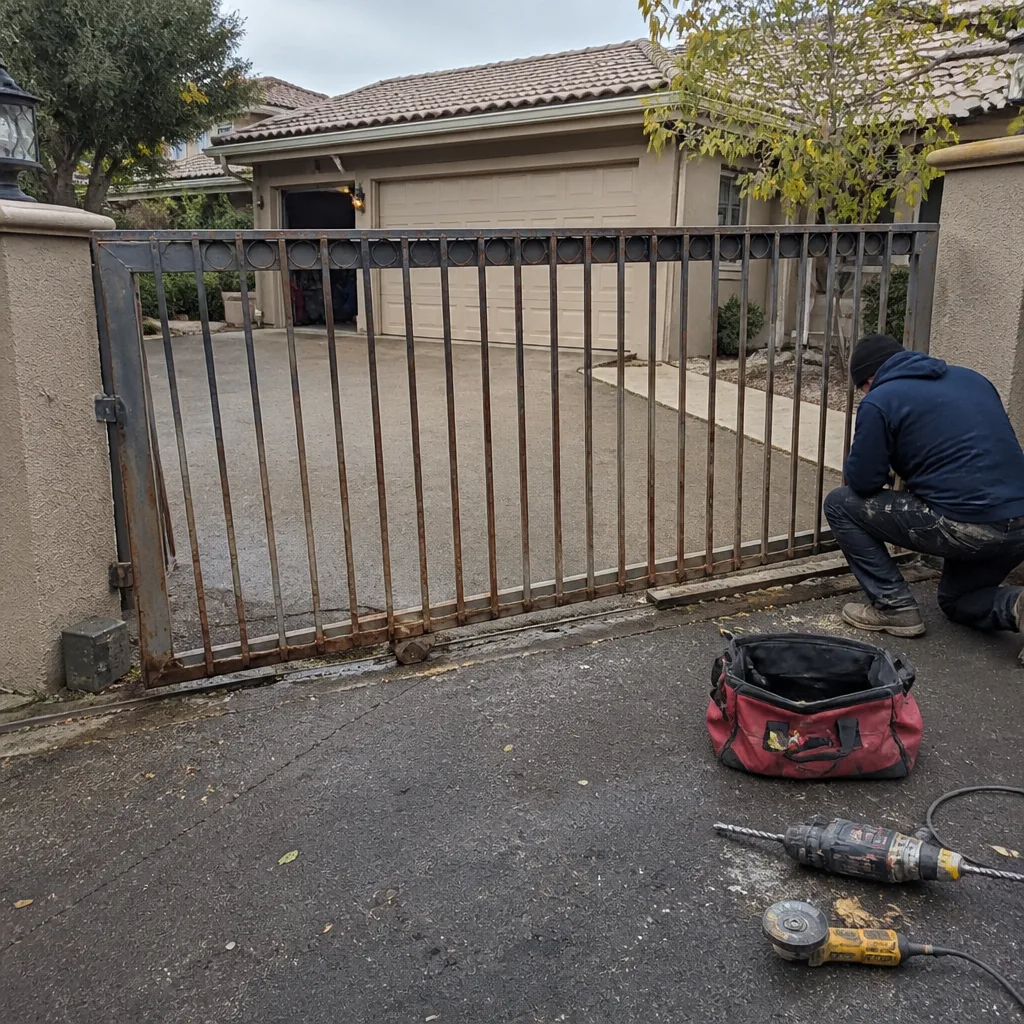 Before
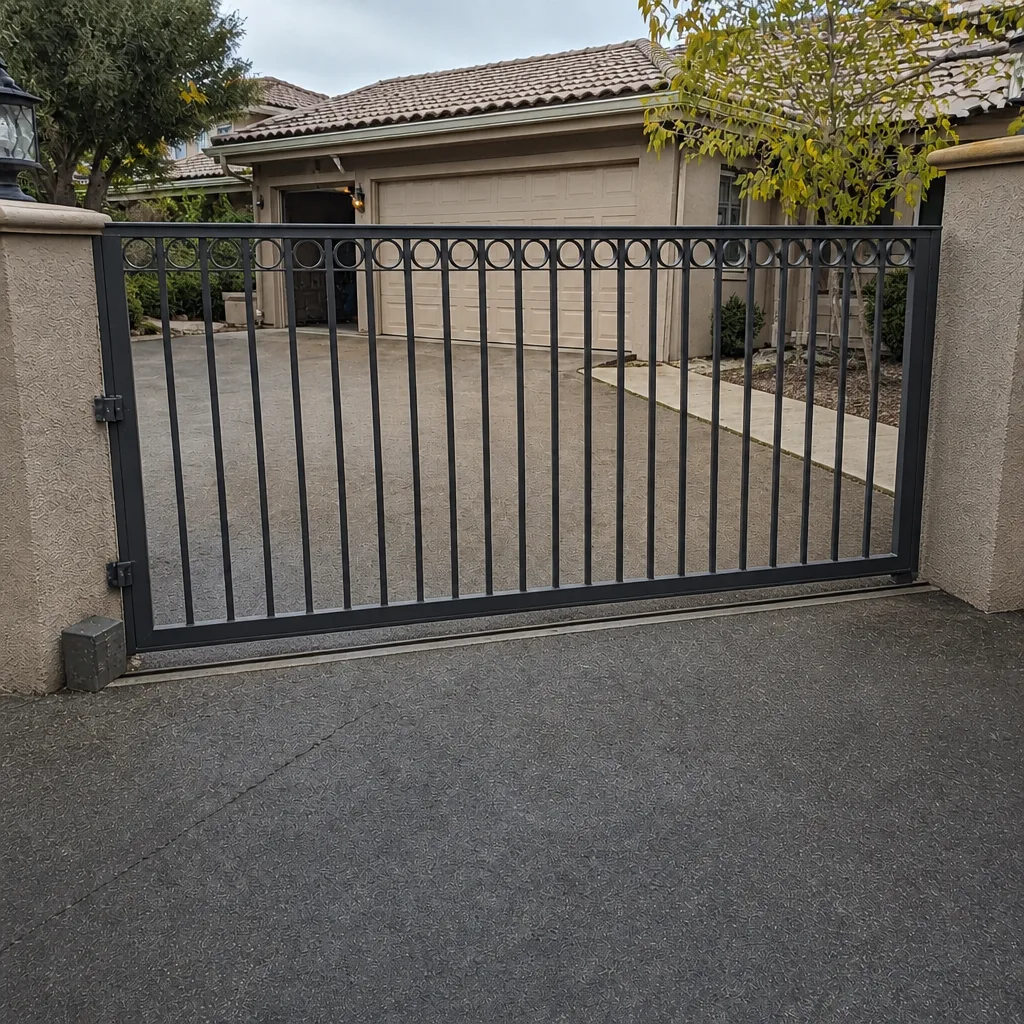 After
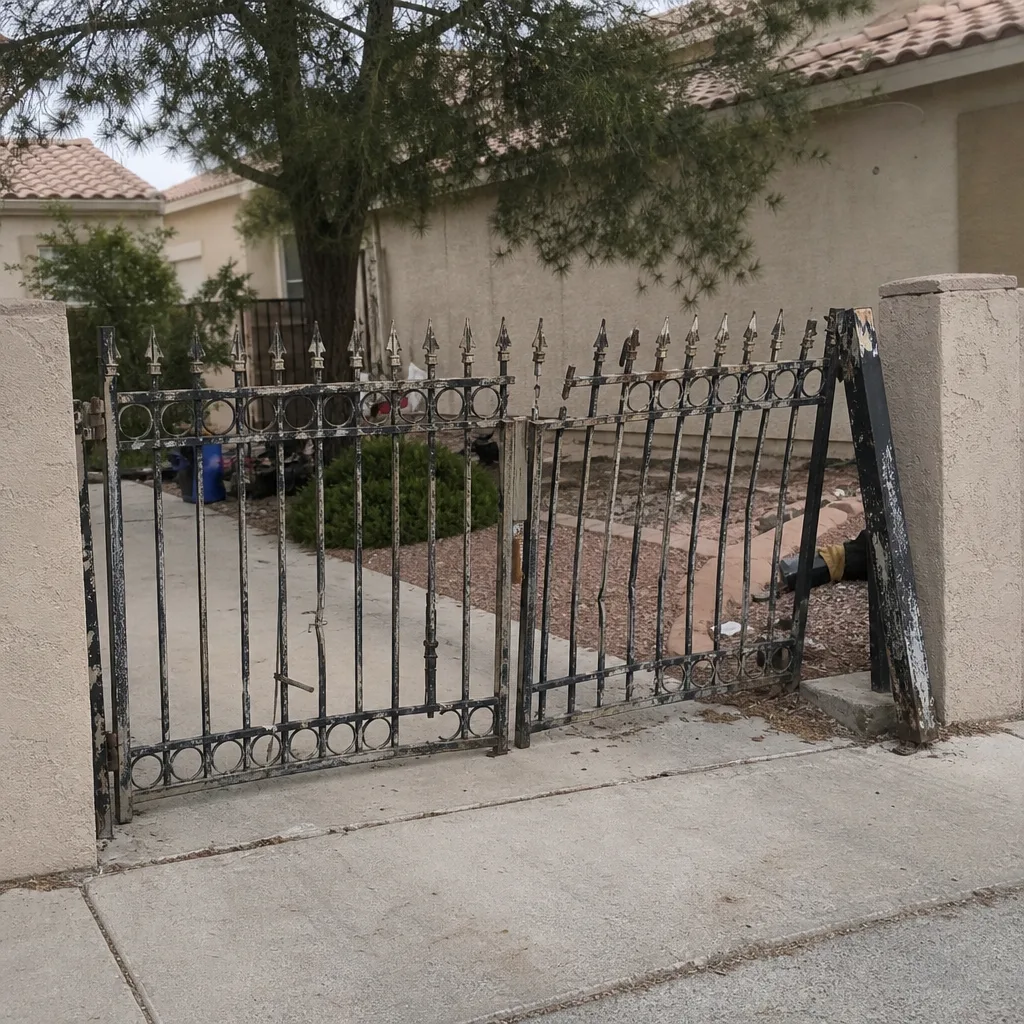 Before
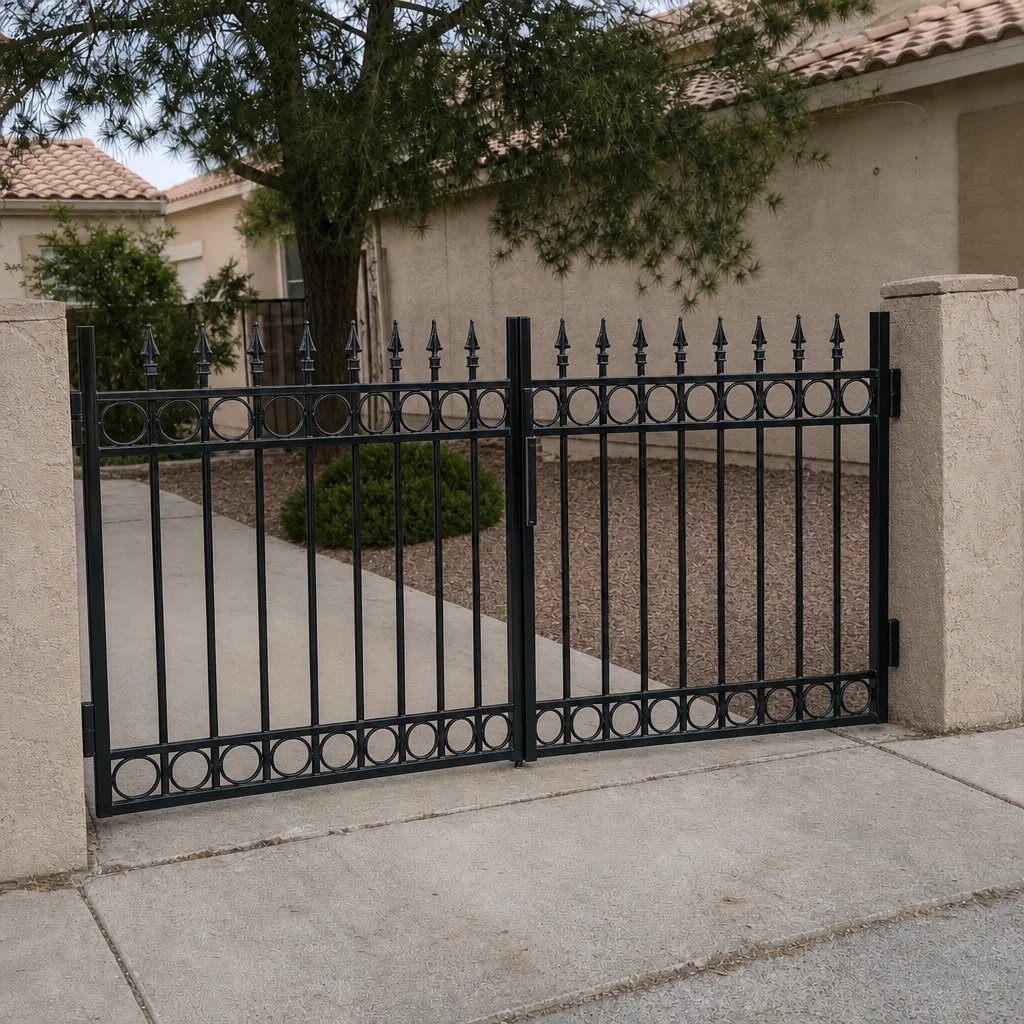 After
Why Is My Gate Motor Not Working in Summerlin, NV? Start With the Capacitor
Your gate motor is not working, but there’s roughly a 40% chance it isn’t actually dead. In Summerlin’s sustained 105°F summers, the start capacitor inside the motor degrades and fails in about 5 to 8 years, well short of the design life the manufacturer assumed. The motor hums, clicks, and does nothing. Replace that capacitor for around $120 and the gate runs again. Ironworks Gate Co. Summerlin can read the fault state on your control board and tell you which of these it is before any part gets ordered. Call (866) 623-9848 for a free estimate.
Here is how to figure out which situation you’re in.
What the Capacitor Does, and Why Summerlin Heat Kills It
Picture a capacitor as the electrical kick-starter for the motor. It stores a charge and dumps it into the windings at the exact moment of start-up, giving the motor the initial shove it needs to begin turning. Once the shaft is spinning, the motor can carry itself. But when the capacitor weakens, the motor still has torque - plenty of it - and simply can’t initiate rotation. So you get a click, sometimes a short hum, and then silence.
Most capacitors are rated for an ambient environment well below what a Summerlin motor actually lives through. An opener housing sitting in direct sun against a west-facing stucco wall in The Ridges or Red Rock Country Club doesn’t read ambient air temperature. It reads the temperature of metal in the sun, which runs 20 to 30 degrees hotter. That heat cycles the electrolyte inside the capacitor every single day of summer, and the component fails faster than the design specs assume. This is why the same motor that runs fifteen years in a coastal climate gives up at year six or seven here. Ironworks technicians, with up to 13 years of experience, have watched this failure pattern repeat across the valley. The motor was never the problem.
Signs You Can Spot Without Opening Anything
You don’t need tools to narrow this down. Watch and listen:
- Click then hum, then quiet. A brief buzz or hum that stops on its own is the classic capacitor signature. The motor tried to start, couldn’t, and the board shut it down.
- It worked intermittently before it quit. A capacitor that’s fading often opens the gate on the third try after two failed ones. That pattern points straight at the component, not the motor.
- The failure started mid-summer. If the gate was fine in April and dead by July, heat is the likely trigger.
- The gate moves freely by hand. With the operator disengaged, the gate should swing or roll without a fight. If it does, the mechanism isn’t binding, which makes the capacitor far more likely.
What you don’t see tells you almost as much. If the board shows no fault code, the limit switches read normally, and the gate travels by hand, you’re looking at a capacitor nine times out of ten.
The Other Summerlin Failure: UV-Cooked Limit Switch Wiring
There’s a second cause that shows up here more than most places, and it looks like a dead motor but isn’t. Limit switches tell the control board where the gate is - fully open, fully closed, somewhere between. The wiring to those switches runs along the gate frame, and in Summerlin it sits in relentless sun. UV breaks down the insulation on that wire over roughly eight to twelve years, and once moisture or grit reaches the conductor, the switch sends a false signal.
What happens next: the board decides the gate is already fully open and cuts power immediately. The motor powers on and powers off in the same breath. Homeowners hear a click and conclude the motor died. The fix is rewiring the limit circuit, not replacing the operator. The desert grit blowing off Red Rock and the open lots along the 215 doesn’t help matters, since it works into the same wiring channels and switch housings over time.
When It Really Is a Dead Motor
True motor failure happens, just less often. These are the situations worth recognizing:
- Failed armature winding from sustained overheating. Usually the result of a gate that’s been mechanically binding for months. The motor kept fighting a dragging hinge or a seized roller until the winding cooked. Sign: a burnt smell and a motor that trips the breaker rather than humming.
- Water ingress after a monsoon storm. Rare here, but when it happens the housing fills slightly and the windings corrode. Sign: visible water staining inside the housing or rust on the shaft.
- Lightning strike to the control board. Summer thunderstorms over the Spring Mountains send surges through the lines. Sign: the board is dead but the motor itself checks out, or multiple functions fail at once.
Each of these has a different fix and a different price. A generalist tech who doesn’t read the control board will default to “you need a new motor” and order one, when the actual fault was a $120 capacitor or a $180 rewire. That’s the whole reason Ironworks trains and equips its technicians across nine automation lines - LiftMaster, FAAC, BFT, Linear, Viking, Ghost Controls, DoorKing, Elite, and Mighty Mule - so the correct repair happens on the first visit, whatever is bolted to your driveway.
What It Costs to Fix in Summerlin
Upfront pricing comes before a single bolt is turned. Here’s roughly what the common fixes run:
| Repair | Typical Cost |
|---|---|
| Start capacitor replacement | $120 - $180 |
| Limit switch rewiring | $150 - $280 |
| Control board replacement | $250 - $450 |
| Motor or operator replacement | $600 - $1,400 (brand dependent) |
| Full diagnostic visit | Free second opinion on any written estimate |
That spread is the reason a proper diagnosis pays for itself. The gap between a capacitor and a new operator is several hundred dollars, and it hinges entirely on reading the fault correctly the first time. When the job’s done, it’s covered by the written 90-Day Done Right Promise - if it isn’t right, we come back and make it right. Current standing offers include $50 off any repair over $250, an $89 seasonal tune-up, and a permanent 5% discount for seniors and veterans.
How to Tell If It’s Worth Calling a Pro
Gate motors and their control boards carry live line voltage, and the internal components hold a charge even after you kill the breaker at the panel. Spring-loaded mechanisms and stored capacitor charge are genuinely dangerous, and poking around inside an operator housing without the right meter and the right knowledge is how people get hurt. This isn’t a job for a homeowner with a screwdriver and a YouTube video. The check you can safely do is the by-hand test with the operator disengaged - everything past that belongs to a trained technician.
Here is what a proper visit looks like:
- Call and describe the symptom. A live person answers 24 hours a day, seven days a week, and can usually tell you which failure family you’re describing before anyone arrives.
- A technician disengages the operator and tests the gate by hand to rule out binding hinges, seized rollers, or a sagging gate frame - the desert wind and heat-cycled metal sag hinges here faster than most places.
- They read the control board’s fault state directly, checking for capacitor failure, false limit signals, or a truly dead winding.
- You get an upfront price before the repair starts, then the fix - usually in a single visit.
Many Summerlin homes also sit under HOA architectural standards, so a replacement operator or gate panel sometimes needs to match the approved iron and finish. That’s a discussion to have before parts are ordered, not after. If you’d rather compare options first, we’ll give you a free second opinion on any written estimate you already have.
FAQs
A humming motor that doesn’t move almost always means a failed start capacitor. The motor has torque but can’t initiate rotation, so it draws current and buzzes without turning the shaft. Replacing the capacitor typically restores full operation for $120 to $180, and in Summerlin’s heat it’s the most common motor fault we see.
Most gate motor repairs are completed in a single visit, yes. Capacitor replacement and limit switch rewiring are quick jobs, and a technician reading the control board directly usually has the right part on hand. Call (866) 623-9848 and we’ll tell you what’s realistic for your gate today.
Repair is almost always the cheaper answer when the fault is a capacitor, limit wiring, or control board. Replacing a $600 to $1,400 operator to fix a $120 capacitor is the most expensive mistake in this trade, and it happens when nobody reads the fault state. Get a diagnosis first - the numbers will make the decision obvious.
About 5 to 8 years under Summerlin’s sustained summer temperatures, versus well over a decade in cooler climates. The motor housing sits in direct sun and runs 20 to 30 degrees hotter than ambient air, and that daily cycle wears the capacitor’s electrolyte faster than the manufacturer’s design life assumes.
If you’d rather have it looked at than guess, Ironworks Gate Co. Summerlin offers a no-pressure assessment in Summerlin - call (866) 623-9848. For related reading, see our guide to picking the right Gate Motor & Opener and how Gate Motor & Opener in Summerlin fits the desert conditions. You can also start at our home page.
Written by the team at Ironworks Gate Co. Summerlin, serving Summerlin, NV.