
Last updated November 16, 2026
 Wrought iron
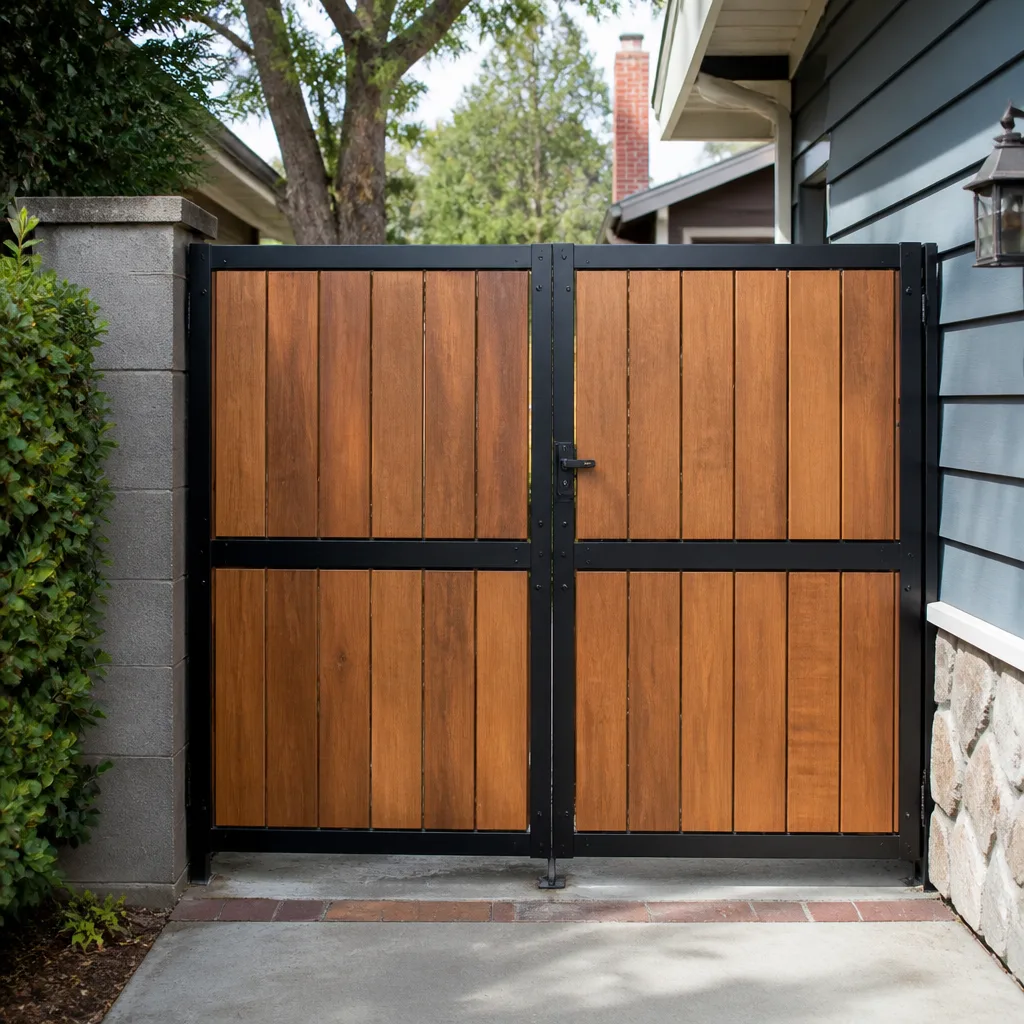 Wood & steel frame
 Farm & ranch
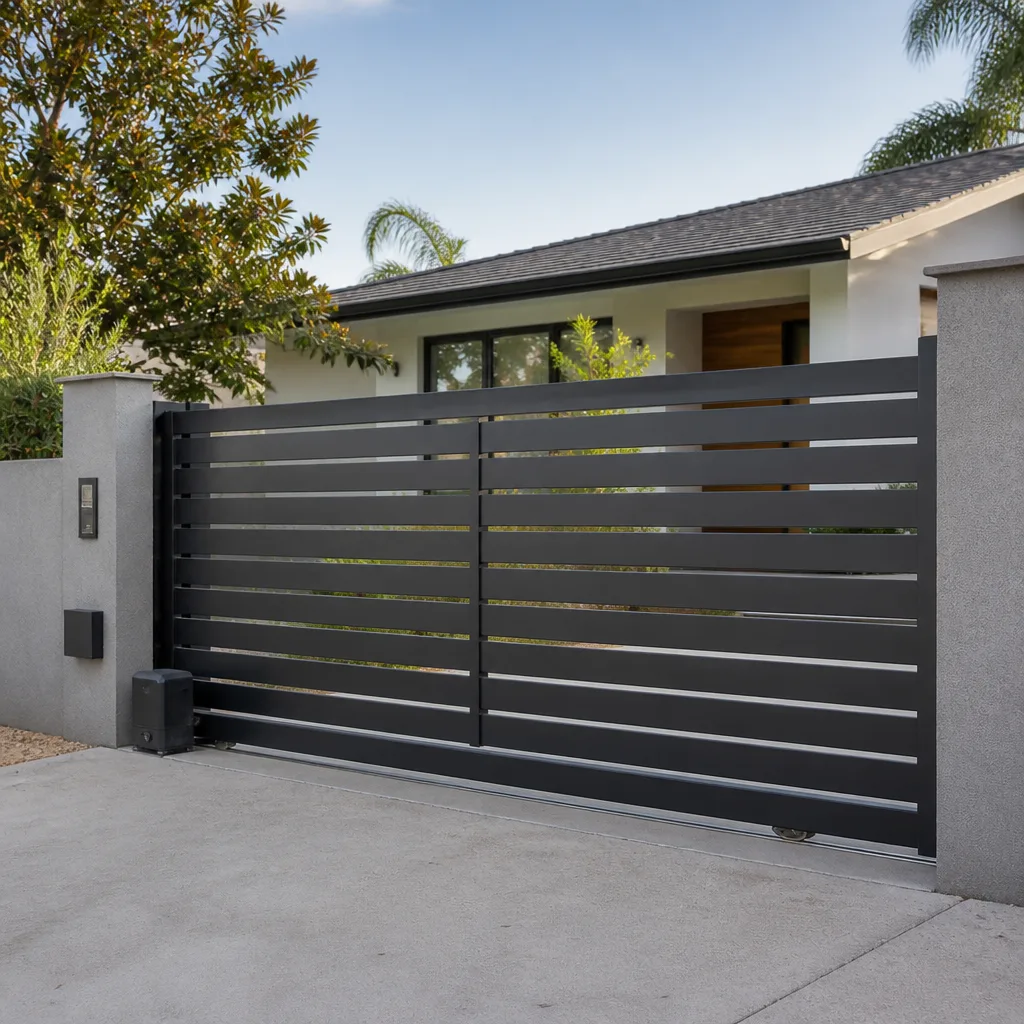 Sliding driveway gates
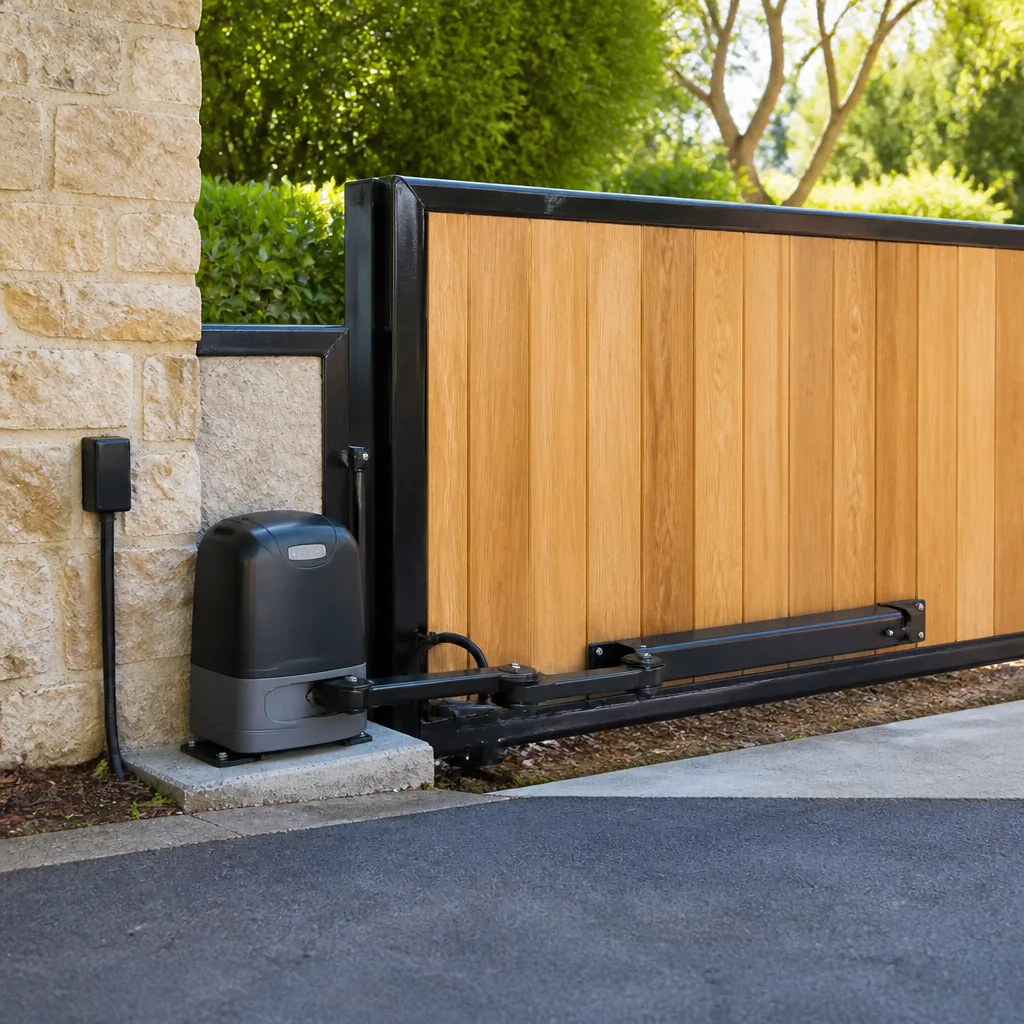 LiftMaster operators
Free on-site gate assessment - hinges, posts, and your LiftMaster or Nice gate operator checked before anything is quoted
The assessment is free and the quote is the invoice.
Get your free estimateSeasonal Gate Repair Care for Summerlin: Year-Round Homeowner’s Guide
Las Vegas recorded 113°F days in three of the last five summers. A gate operator rated to 105°F (which covers most residential units on the market) is technically outside its spec before August even begins. That gap between what your gate was built to handle and what a Summerlin July actually delivers is where most avoidable gate failures begin. This guide replaces generic “four seasons” advice with a maintenance calendar built for the Mojave: a hard push in April, storm watch from June through September, a reset in October, and one cold-weather quirk in January that catches ram-arm gates off guard.
Quick Answer
Gate care in Summerlin runs on two real stress peaks, not four equal seasons: pre-summer heat prep in April, and monsoon readiness from June through September. Summerlin gates fail most often from sustained heat, blowing alkaline dust, and brief heavy rain hitting control boards and photo eyes, so the highest-value work happens before temperatures climb, not after something breaks. A simple gate log plus one spring tune-up and one fall reset prevents the July surprises most homeowners don’t see coming.
Styles & brands we work with
- Wrought iron
- Wood & steel frame
- Farm & ranch
- Sliding driveway gates
- LiftMaster operators
Table of Contents
- Why Summerlin’s Seasons Don’t Divide Evenly
- Spring Prep (April): Getting Ahead of the Heat
- Monsoon Readiness (June – September): Dust, Deluges, and Circuits
- Post-Monsoon Reset (October): The Check Most Homeowners Skip
- Winter Outlier (December – February): The Cold-Weather Issue Summerlin Gates Actually Face
- Building a Simple Gate Log
- When to Call a Professional
- Frequently Asked Questions
Why Summerlin’s Seasons Don’t Divide Evenly
Most gate maintenance advice is written for a climate with a mild spring and a gentle fall. Summerlin has neither. What it has is a long, dry ramp from April into July, followed by a storm season that can drop more rain in an hour than the previous three months combined, then a sharp cool-down in late October. An operator’s rated temperature tolerance is a ceiling, not a comfortable working range, and Summerlin sits above that ceiling for weeks at a time.
That means a calendar that treats every month the same is missing the point. The real question isn’t “what month is it” but “what is the gate about to endure.” We’ve watched homeowners in neighborhoods like The Ridges and Red Rock Country Club discover a failing control board in mid-July, weeks after the damage was done by a dry, overheated stretch they never noticed. The heat didn’t break the gate that day. It broke it slowly, and the failure surfaced when a cycle finally didn’t complete.
So this guide is organized around stress cycles: the pre-summer ramp, the monsoon window, the post-storm reset, and the one real cold-weather issue. Each section stands alone, but together they form a year-round calendar you can actually follow. For the full scope of what we handle on any gate in Summerlin, our Ironworks Gate Co. Summerlin home page lays out the services, but the maintenance thinking lives here.
Spring Prep (April): Getting Ahead of the Heat
April is the single most valuable month on the Summerlin gate calendar. Temperatures are still workable, and anything you address now gets done before the operator is running hot for weeks on end. Think of it as getting your gate ready to survive July, not ready for spring.
What matters most in April:
- Operator settings: Confirm your unit’s rated temperature window against what your gate actually experiences in July. If it’s a 105°F-rated residential operator, the limit gets approached repeatedly. That’s a conversation worth having with a technician who knows the model, not a guess made in the driveway.
- Lubrication changes: Heat thins or cooks greases depending on the product. The wrong lubricant in an April tune-up can leave hinges and rollers running dry by June. Ask what’s going on your gate and why.
- Sensor checks: Photo eyes and safety edges should be tested for clean, full-travel operation now, while a slow or sticky sensor is still easy to adjust. Heat makes marginal sensors drift.
- Battery backup: A hot cabinet ages batteries faster. Check that backup still holds a charge before the season that will test it.
- Hardware torque: Thermal expansion works on every bolt on the gate. A pass over hinge, post, and operator mounting hardware in April saves a sagging gate by August.
In our experience, the April tune-up is where a LiftMaster or FAAC operator gets its best shot at a trouble-free summer. The Gate Motor & Opener in Summerlin service covers exactly this kind of setting and sensor work. And if your gate has been getting harder to close through the spring, it’s worth reading up on Gate Repair in Summerlin before small sticking turns into a stuck gate in July.
Monsoon Readiness (June – September): Dust, Deluges, and Circuits
Summerlin’s storm season behaves differently than the dry heat that precedes it, and it stresses a gate in ways homeowners rarely anticipate. Blowing alkaline dust coats control boards and settles into every crevice. Then a fast, heavy rain turns that dust into a conductive, mildly caustic film across terminals and circuit traces. The combination is harder on electronics than either one alone.
Here’s how monsoon season hits the parts of a gate that matter most:
- Control boards: Dust first, moisture second. A dusty board that gets wet can short or corrode in ways a clean one won’t. Sealed enclosures help; they don’t eliminate the problem.
- Photo eyes: Rain and blown grit scatter light and fog the lenses. A sensor that’s slightly misaligned in June may report a false obstruction all through August.
- Underground conduit: Brief deluges reveal conduit that isn’t draining or sealing as it should. Water following cable into an operator enclosure is a common cause of mystery failures after a storm.
- Hinges and rollers: Rain washes away lubrication that heat already thinned. Grit left behind works like sandpaper on moving parts.
- Gate alignment: Waterlogged ground and thermal flex can throw a gate slightly out of plumb. That misalignment loads the operator, and the operator pays for it.
A BFT or Linear unit that handled last summer fine can still develop sensor and moisture problems this year, because the storms are never identical. The point of a June readiness pass isn’t to fix a broken gate; it’s to close the gaps rain and dust will find. Keep an eye on the sky, and when a storm passes, do a quick visual check of the enclosure and the sensor lenses before the next one arrives.
Post-Monsoon Reset (October): The Check Most Homeowners Skip
October is when Summerlin gets a stretch of calm, workable weather after the worst of the heat and storms. It’s also when the most important inspection happens, and it’s the one that gets skipped because nothing appears broken. A gate that survived the summer is not a gate that came through unscathed. Corrosion, moisture intrusion, and thrown alignment are often silent until the next busy season.
After storm season, work through this list:
- Inspect the control board enclosure and internal wiring for any sign of moisture, corrosion, or grit buildup.
- Test every photo eye and safety edge for clean, full-travel operation, then clean the lenses.
- Check conduit runs and seals at the operator, gate posts, and any below-grade entry points.
- Walk the gate’s full travel and look for sag, rub, or a hinge that’s loosened since spring.
- Re-lubricate moving hardware with a product suited to the coming cooler months.
- Verify the operator’s travel limits and reverse settings still match the gate as it sits today.
- Note anything that changed since spring: a new noise, a slower close, a sensor that blinked more than once.
Doing this in October gives you a head start on any repair before the holidays, when an out-of-service gate is most inconvenient. For the full repair scope, our Gate Repair in Summerlin service picks up exactly where this reset leaves off.
Winter Outlier (December – February): The Cold-Weather Issue Summerlin Gates Actually Face
Summerlin winters are mild, but they’re not nothing, and there’s one cold-weather problem worth planning for: hydraulic fluid thickening in ram-arm operators. Ram-arm gates rely on hydraulic fluid to move smoothly. When overnight temperatures drop into the 30s and 40s, that fluid thickens, and the operator strains to move a gate it handles easily in July. You’ll notice a slow, labored first cycle on a cold morning, or a gate that seems to move in jerks until it warms up.
It’s not a failure in the sense of a broken part, but it’s a warning. Thickened fluid loads the motor and the seals, and repeated cold-morning strain shortens the life of both. A technician can check fluid condition and confirm the operator is suited to the temperature range it’s actually seeing. In our experience, a ram-arm gate that gets a pre-winter check in December runs through January without the morning laboring that makes homeowners worry the motor is failing.
The rest of winter gate care is lighter:
- Keep hardware lubricated; colder temperatures can make marginal grease stiffer.
- Clear dust and debris from sensor lenses; winter wind still carries grit.
- Test the operator’s manual release so you know it works before you need it.
- Check that the gate moves freely by hand (with the operator disengaged) so you can tell a fluid issue from a mechanical one.
Our Gate Motor & Opener in Summerlin service covers hydraulic checks and operator tuning across the cold months, whatever the brand on your driveway.
Building a Simple Gate Log
One small habit makes every future service call faster and less expensive: keep a gate log. A notebook by the door or a note on your phone is enough. The point is to record what you observed and when, so a technician isn’t starting from scratch or guessing at a timeline.
What to log, and why it matters:
- Date and time of anything unusual: A slow close in July, a blink from a sensor in August, a labored first cycle in January. The date tells a technician which season stress was in play.
- Weather at the time: Heat wave, dust storm, first rain of the season. Moisture and heat problems leave different signatures.
- What you noticed and how often: “Stuck once” and “stuck every morning this week” point to different causes.
- What was serviced and when: Tune-ups, sensor adjustments, battery replacements. A record of what was done helps avoid redundant work.
- Any parts replaced: Note the part and brand if you can. Knowing whether a LiftMaster or BFT component was changed matters on the next visit.
With a log in hand, we can often pinpoint an issue during a single visit instead of a diagnostic back-and-forth across several appointments. That’s less time, less cost, and a faster answer. A well-kept log also helps you decide when a repair is worth it and when Gate Installation in Summerlin is the better move for an aging gate.
Common Mistakes to Avoid
- Treating all four seasons equally. Summerlin’s gate stress peaks in summer and again in monsoon, then drops sharply. A calendar that spreads attention evenly misses the two windows where prevention actually pays.
- Skipping the October reset because nothing looks broken. The damage from a Summerlin summer is often invisible: a slightly corroded board, a drifted sensor, a loosened hinge. October is when you catch it, not July.
- Using the wrong lubricant for the season. A product that’s fine in April can run dry by June or stiffen in December. Lubricant choice should match the temperature window the gate actually sees.
- Ignoring the first slow cold-morning cycle. Labored movement from thickened hydraulic fluid in a ram-arm operator is a warning. Left alone, it strains the motor and seals through the winter.
- Forgetting that dust plus rain is worse than either alone. Blowing alkaline dust settling into a control enclosure, then a fast deluge, is a common monsoon failure pattern in Summerlin.
- Never testing the photo eyes or safety edges. Marginal sensors drift in heat and fog in rain. A sensor check now prevents a phantom-obstruction stall later.
- Keeping no record at all. Without a gate log, every service call starts from zero, and patterns that would have pointed to a cause go unnoticed.
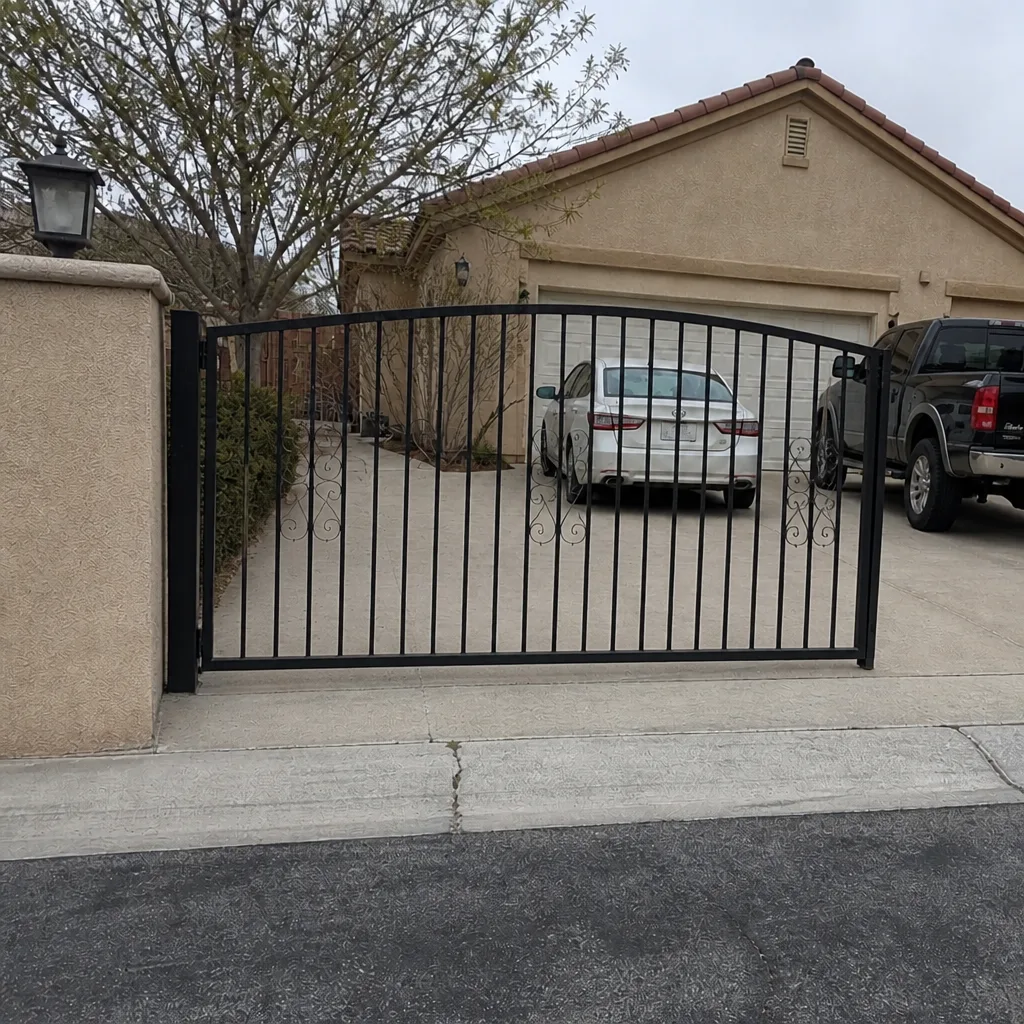
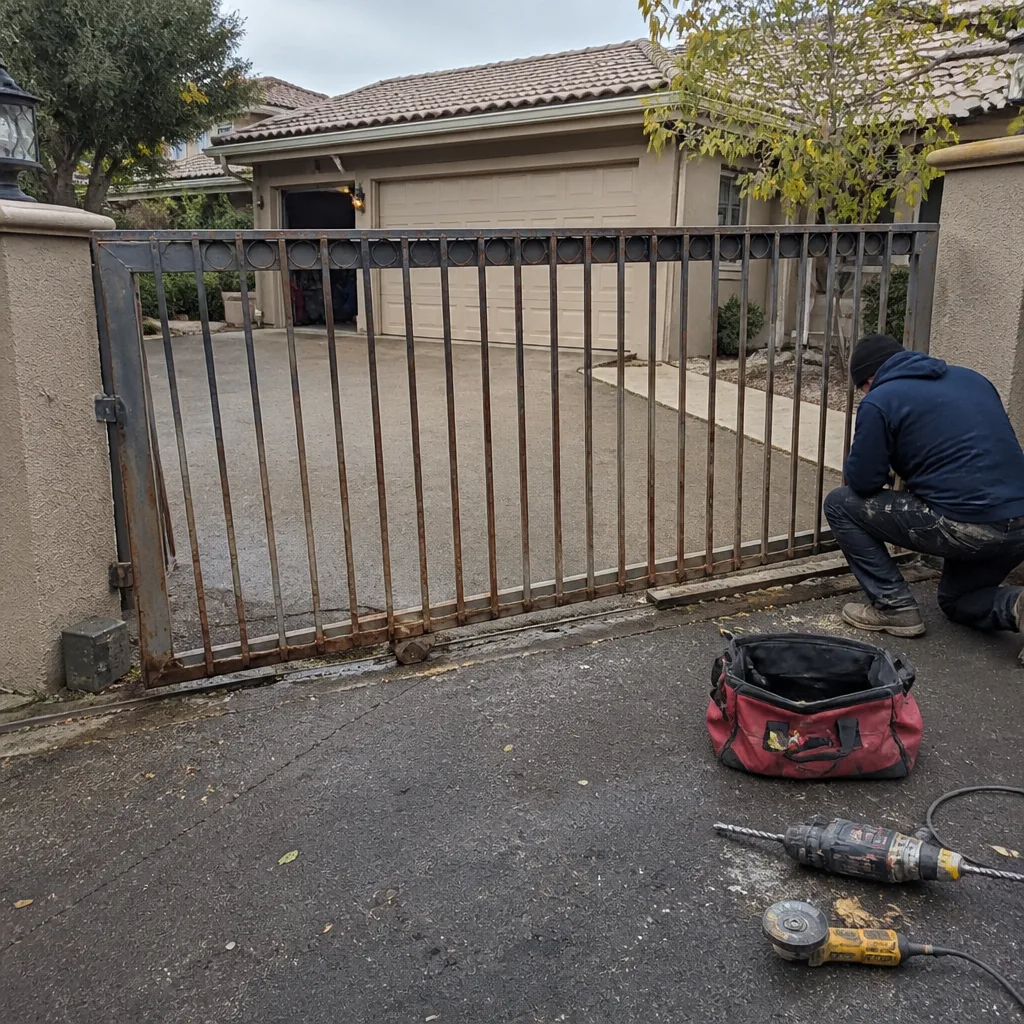
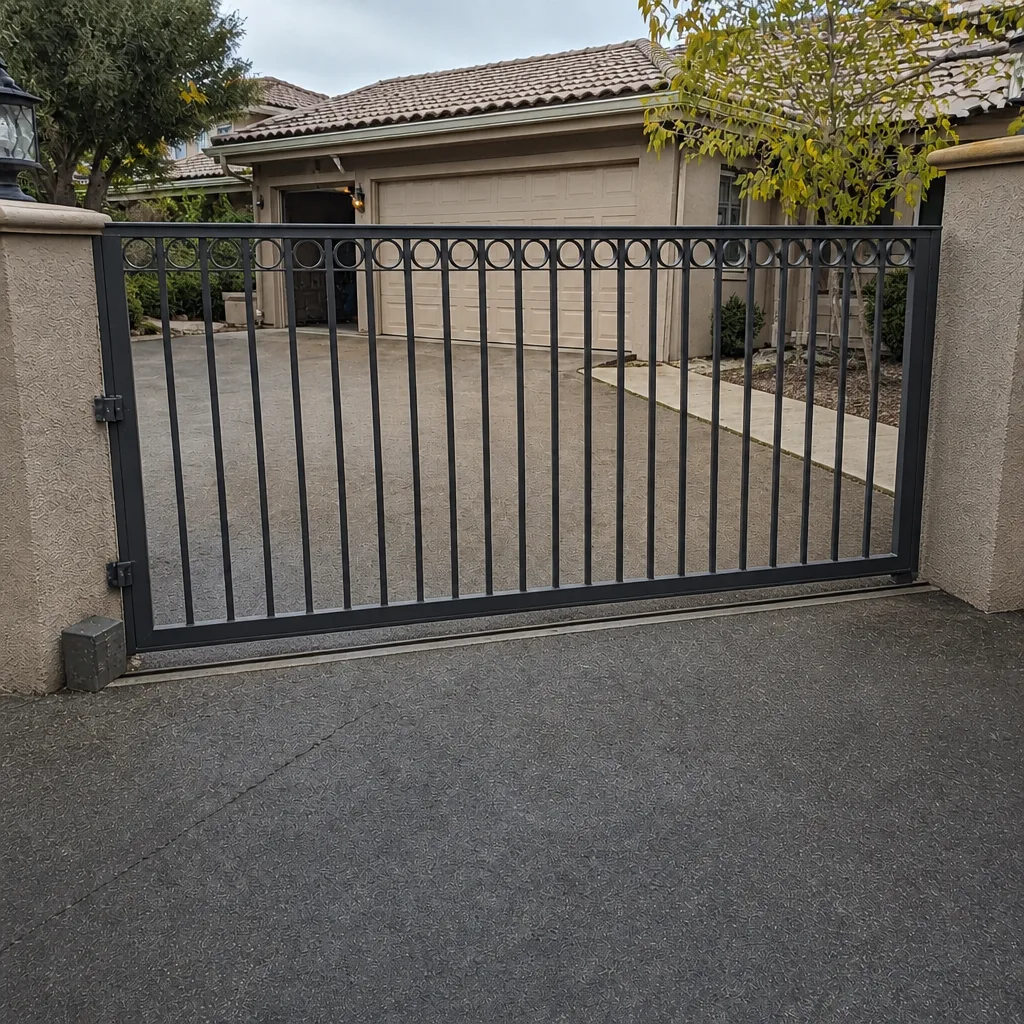
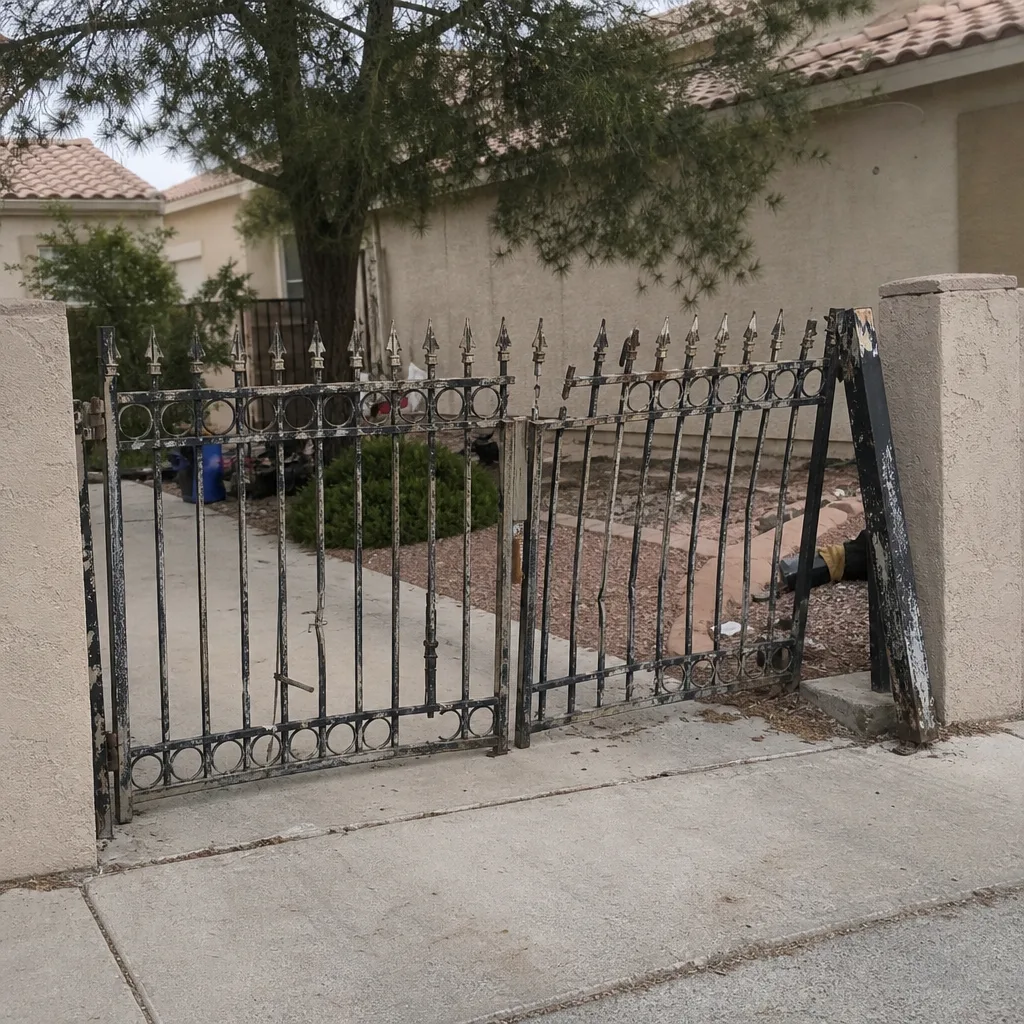
See the difference
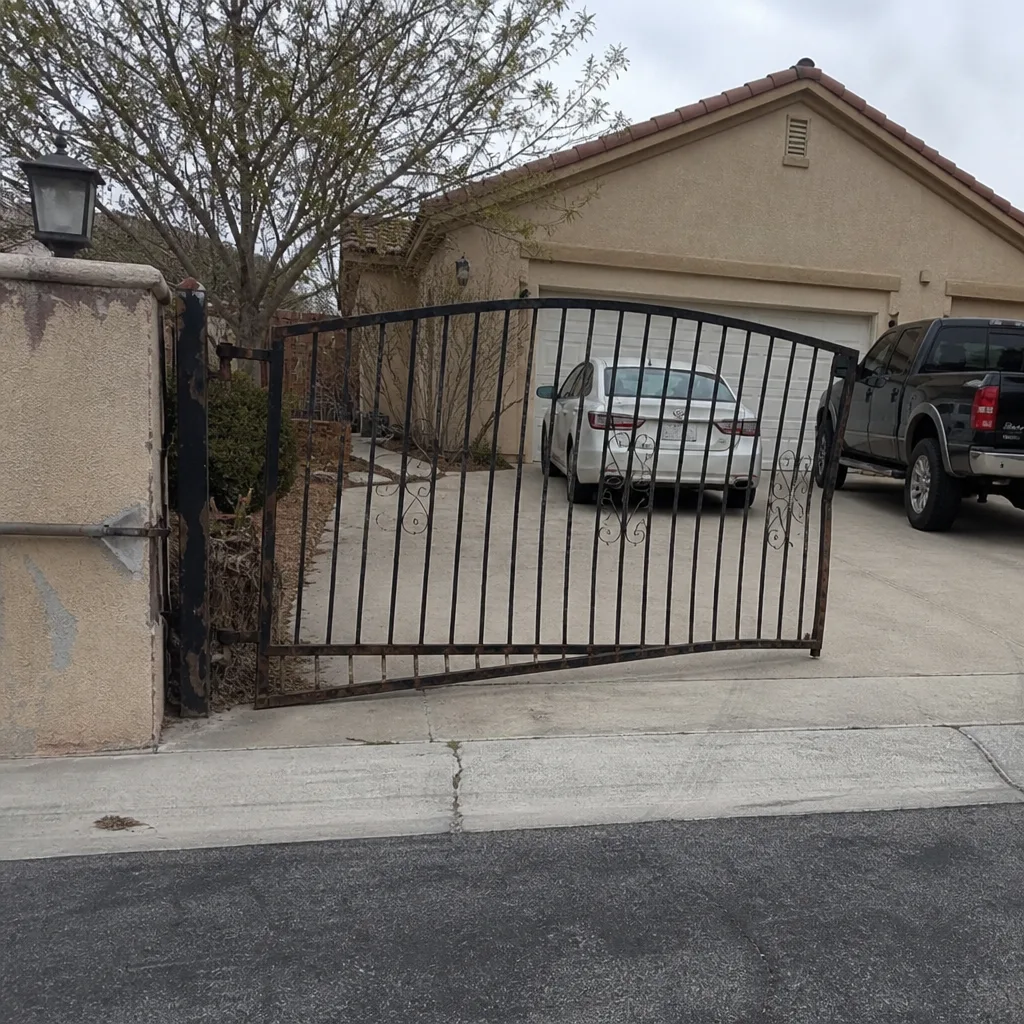 Before
 After
 Before
 After
 Before
 After
When to Call a Professional
Some gate work is a homeowner’s job: keeping the log, clearing debris, checking that the manual release moves freely. Other work isn’t, and getting it wrong is expensive. Call a professional when the operator won’t complete a cycle, when you see repeated sensor faults you’ve already cleaned for, when the gate has sagged or thrown alignment, or when hydraulic fluid in a ram-arm unit is causing labored cold-morning movement. High-tension gate hardware and the electrical side of an operator are genuinely dangerous; those are not driveway repairs. Ironworks Gate Co. Summerlin offers free estimates in Summerlin and serves the neighborhoods where these seasonal issues show up most, from The Ridges to Summerlin West. Call (866) 623-9848 and we’ll take a look, with the price settled before any work begins.
Frequently Asked Questions
April is the highest-value month because it’s your chance to prep the operator, lubrication, and sensors before temperatures climb past a unit’s rated tolerance. A well-done April tune-up prevents the July failures most homeowners don’t see coming. If you only schedule one visit a year, make it April, then add the October reset if you can.
The pattern is blowing alkaline dust first, then a fast, heavy rain, and that combination is harder on electronics than either one alone. Dust coats control boards and settles into crevices, and moisture turns it into a slightly conductive film across terminals. Photo eyes fog and misalign, and underground conduit that isn’t draining properly can let water follow cable into the operator enclosure. A June readiness pass is the best defense.
In Summerlin, the usual cause is hydraulic fluid thickening in a ram-arm operator when overnight temperatures drop into the 30s and 40s. The fluid gets stiffer, so the first cycle of the morning strains the motor and seals. It’s not a broken part, but it’s a warning worth a pre-winter check. A technician can verify fluid condition and confirm the operator suits the temperature range.
Record the date and time of anything unusual, the weather at the time, what you noticed and how often, what was serviced and when, and any parts replaced, including the brand. A short note is enough. With that record, a technician can often diagnose in one visit instead of several, which saves time and money.
You can and should handle the safe basics: keeping the log, clearing debris and sensor lenses, and confirming the manual release works. Anything involving high-tension hardware, gate alignment, the operator’s electrical side, or hydraulic components needs a trained technician. Those are the parts where a mistake is dangerous or costly.
Yes. We offer an $89 seasonal tune-up that covers the operator settings, lubrication, sensor checks, and hardware inspection this guide describes. For a gate that needs more, we also offer $50 off any repair over $250, a free second opinion on any written estimate, and a standing 5% senior and veteran discount. Call (866) 623-9848 for a free estimate, with the price agreed before any work starts.
The Bottom Line
Summerlin’s gate calendar isn’t four equal seasons. It’s a pre-summer push in April, storm readiness from June through September, a reset in October that most homeowners skip, and one cold-weather quirk in January that catches ram-arm gates off guard. Build your year around those stress cycles and you prevent the July failures that surprise whole neighborhoods. Keep a simple gate log, schedule the spring tune-up, and do the fall reset. Done that way, the gate stops being something that breaks at the worst moment and becomes something you trust without thinking about it, season after season, in Summerlin.
Call (866) 623-9848 for a free estimate. A live person answers every call, 24 hours a day, 7 days a week, and every job is backed by our written 90-Day Done Right Promise.
Written by the team at Ironworks Gate Co. Summerlin.