
Last updated November 17, 2026
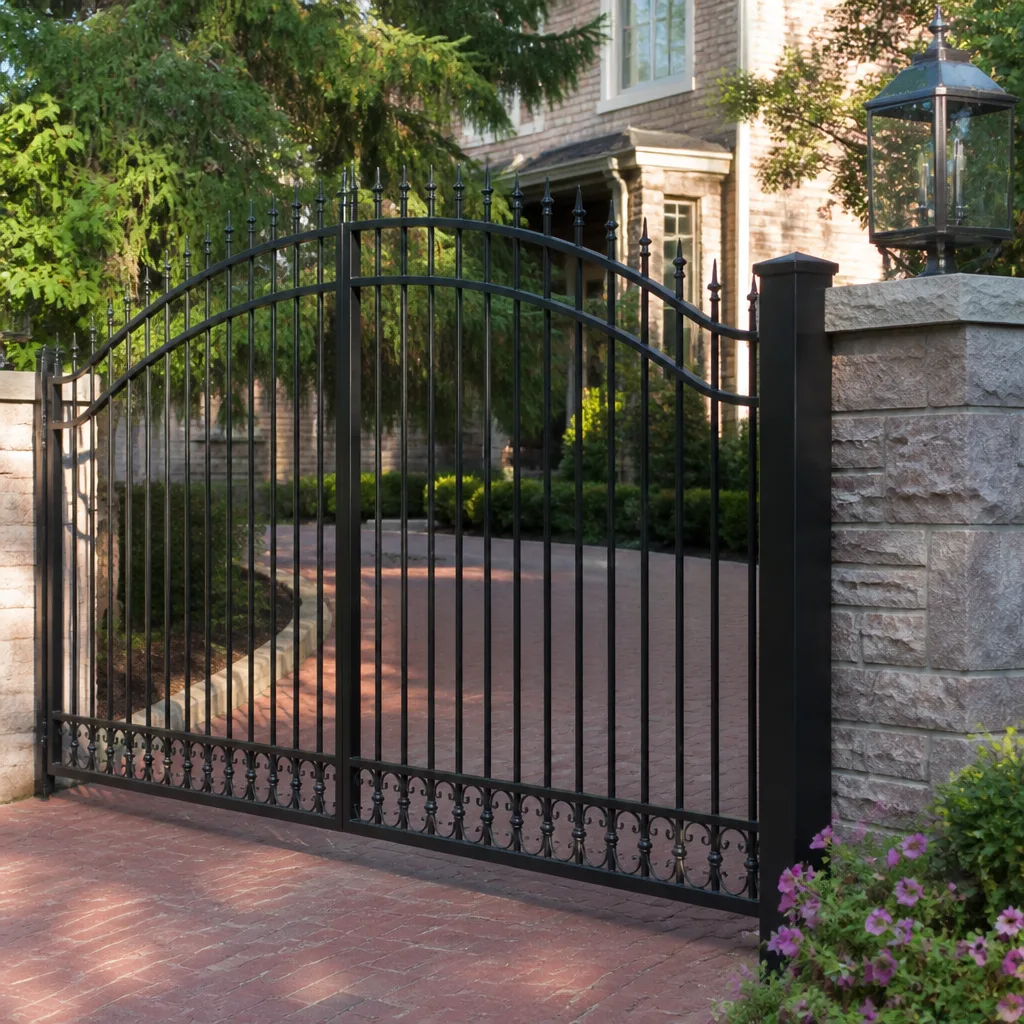 Wrought iron
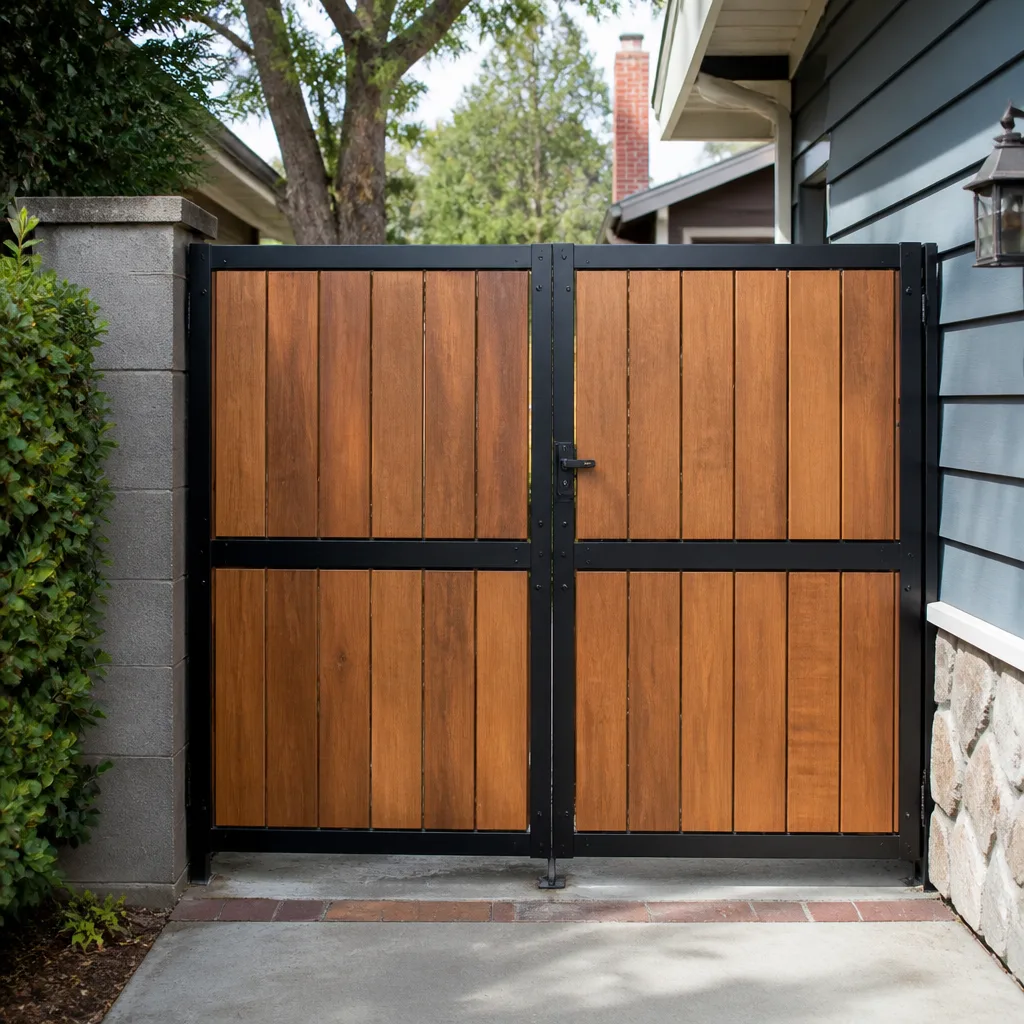 Wood & steel frame
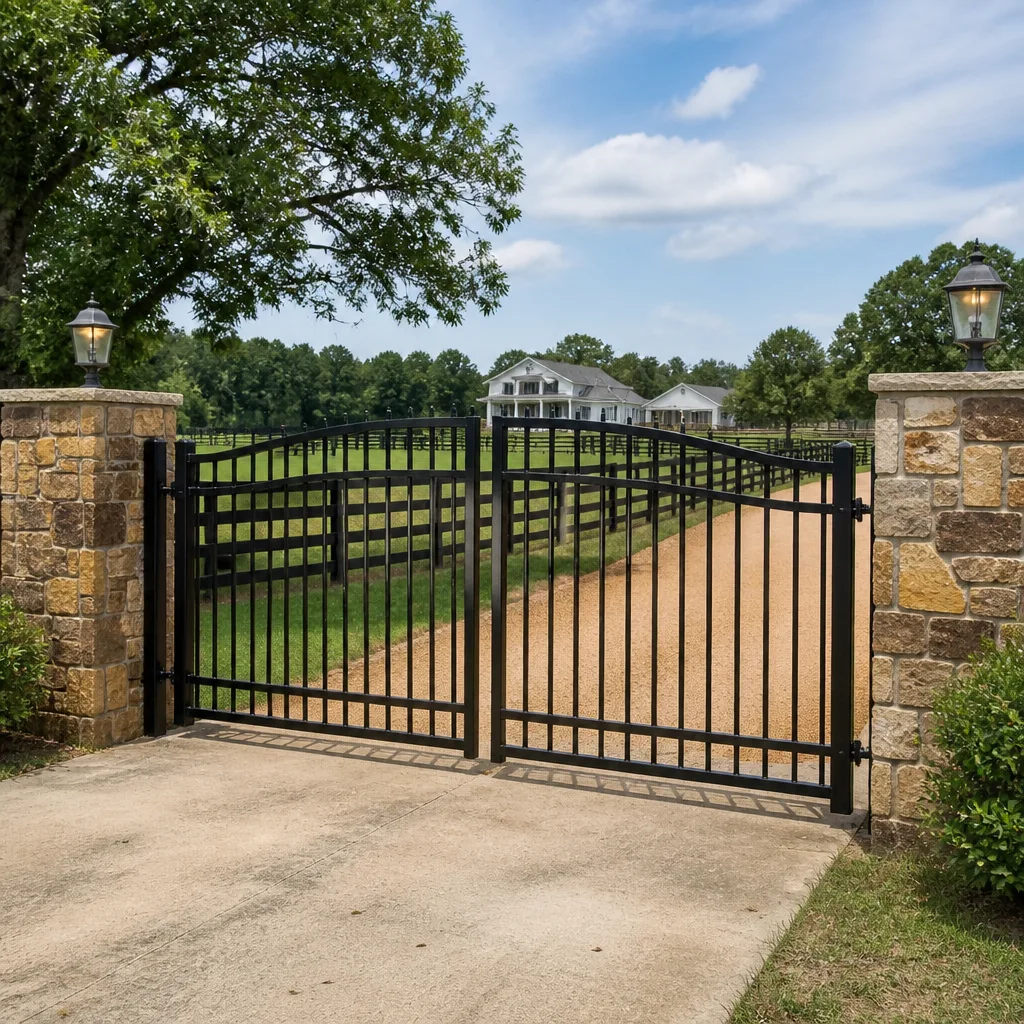 Farm & ranch
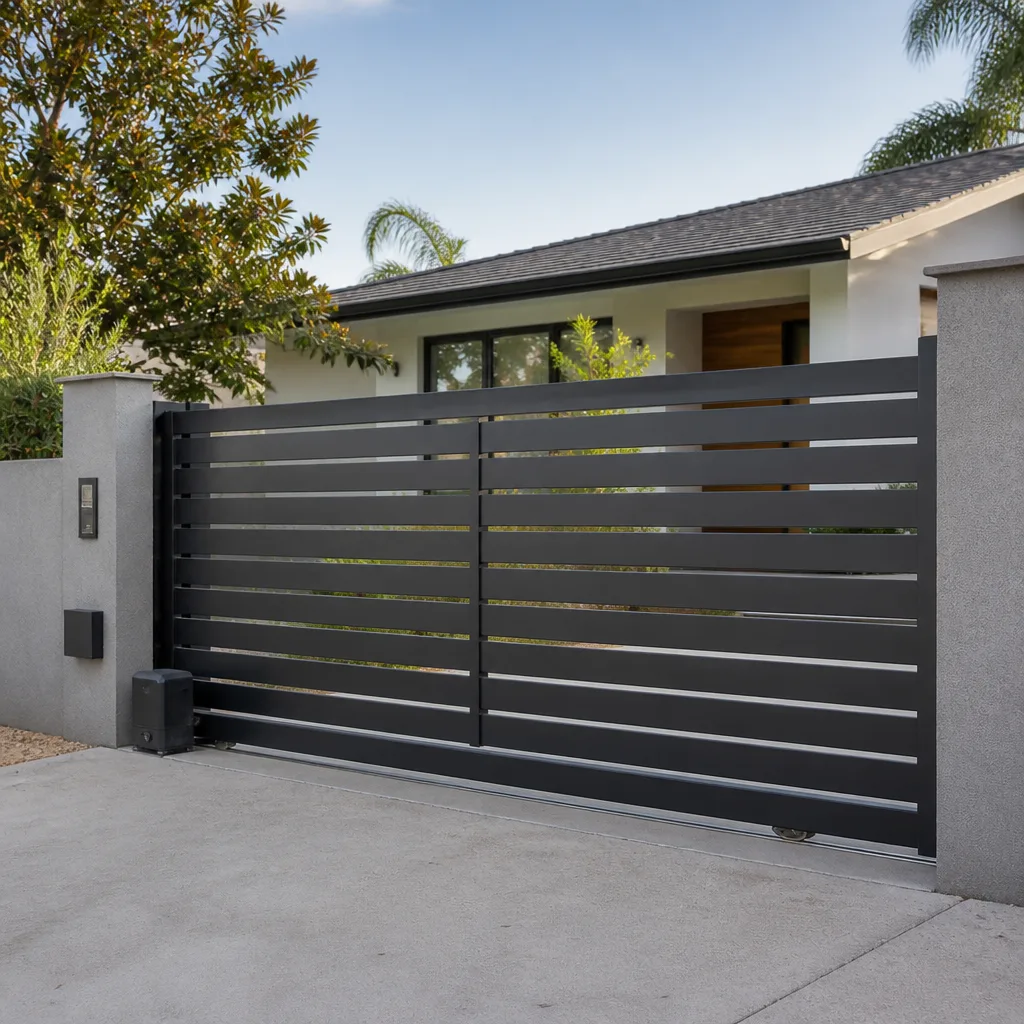 Sliding driveway gates
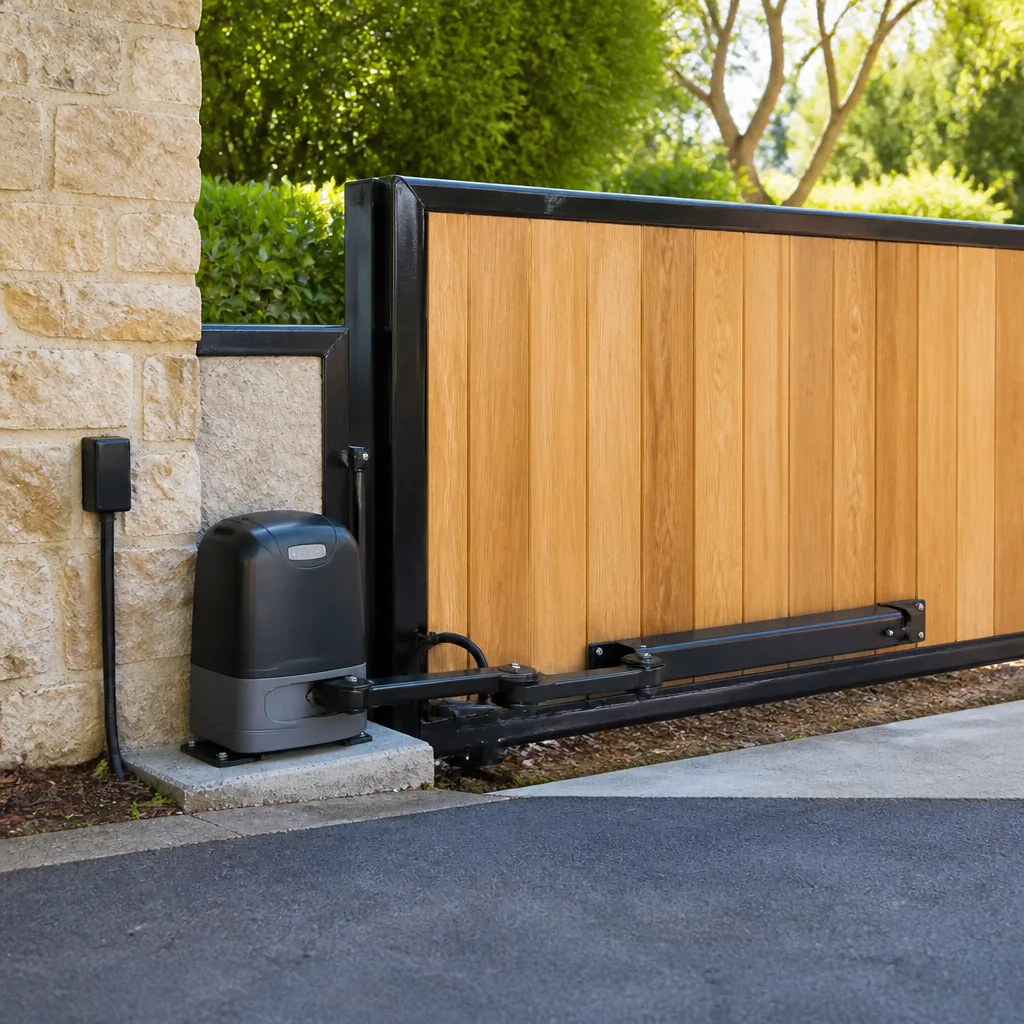 LiftMaster operators
Free on-site gate assessment - hinges, posts, and your LiftMaster or Nice gate operator checked before anything is quoted
The assessment is free and the quote is the invoice.
Get your free estimateThe Complete Gate Installation Guide for Summerlin Homeowners
Summerlin’s caliche hardpan has cracked more gate post footings than any installer error ever has. That layer of cemented soil sits under a lot of this community, and it doesn’t forgive a shallow hole or a weak concrete mix. If your installer doesn’t mention caliche in the first conversation, that’s the first problem. This guide walks through what actually changes a gate installation in Summerlin: reading your HOA’s specification document, engineering footings for caliche and decomposed granite, calculating thermal expansion for iron in a desert swing of 80 degrees, pulling the right Clark County permits, and pre-wiring your automation so you’re not tearing up concrete in three years. We’ve seen what works here and what fails. This is the version we’d want a neighbor to read before signing anything.
Quick Answer
A gate installation in Summerlin typically runs $4,500 to $12,000 for a driveway gate with basic automation, and the job is defined less by the gate itself than by three local factors: caliche and decomposed granite soils that demand deeper, bell-bottom footings, an HOA approval process that can add two to six weeks before a permit is even filed, and thermal expansion math that requires wider gap tolerances than most manufacturers print in their manuals. Get those three right during installation and the gate will work for decades. Get them wrong and you’ll be resetting posts and re-welding hinges within a few summers.
Styles & brands we work with
- Wrought iron
- Wood & steel frame
- Farm & ranch
- Sliding driveway gates
- LiftMaster operators
Table of Contents
- How to Read a Summerlin HOA Gate Specification Document
- Post Footing Engineering for Caliche and Decomposed Granite
- Thermal Expansion: Why Summerlin Gaps Run Wider
- The Clark County Permit Process for Gates
- Automation Pre-Wiring Decisions You Can’t Retrofit Cheaply
- What a Realistic Installation Timeline Looks Like
- Choosing Materials for Desert Conditions
- Common Mistakes to Avoid
How to Read a Summerlin HOA Gate Specification Document
Most Summerlin HOAs maintain a written gate specification that governs the appearance, dimensions, finish, and submittal format of any gate visible from the street or from a neighbor’s property. This document is separate from the Clark County building permit and is often stricter. Reading it before you buy a single piece of steel saves weeks.
What most of these documents actually specify, in order of how often they trip up homeowners:
- Maximum height and width. Many Summerlin associations cap driveway gates at 5 feet above grade, some at 6. Height is measured from finished grade, not from the top of your existing sidewalk.
- Finish and color. Iron or aluminum gates typically have to match an approved palette: usually a flat black, bronze, or dark bronze powder coat. A custom color requires a variance request and takes longer.
- Design elements. Many associations require a specific picket spacing, rail profile, or finial style. Some ban certain materials outright. Aluminum may be permitted where it can be made to look like wrought iron, but the HOA wants the submittal to say so.
- Submittal format. This is the one that catches people. Most Summerlin HOAs want a dimensioned drawing, a photo or rendering of the proposed gate, the finish color with a manufacturer and code, and sometimes a letter from the installer stating conformance. Submit in the format they ask for. A phone photo of a catalog page often gets a rejection.
Plan on the HOA review taking two to six weeks depending on the association and how complete your submittal is. Get the approval letter in hand before we file for a permit. See our Gate Installation in Summerlin page for what we hand over with each HOA package.
Post Footing Engineering for Caliche and Decomposed Granite
Caliche is a naturally cemented layer of soil, usually calcium carbonate, that can be a foot thick or more under parts of Summerlin. Decomposed granite sits nearby and does not hold a footing the way clay or compacted fill does. Neither one is a reason to avoid a gate. Both change what a proper footing looks like.
Here’s what a footing that performs in this soil looks like:
- Depth. In Summerlin, 36 inches is a practical minimum for a swing gate post four feet tall or under, and we routinely go to 42 inches for gates over six feet or any gate carrying a motor. The wider the gate, the more depth you need for the lever force the gate will apply to the post.
- Belling. A bell-bottom or flared footing outperforms a straight cylinder in both caliche and decomposed granite. The flare gives the base of the concrete a shoulder to resist uplift from wind and from the swing arc of the gate, which is exactly the load most Summerlin post failures come from.
- Concrete mix. A 3,000 to 4,000 psi mix is a reasonable target for gate footings in this climate. Ratios weaker than that, and concrete that was mixed too dry, are what we see splitting at the base within a few years.
- Drainage. Caliche doesn’t drain the way you’d hope. Set the top of the footing slightly above grade so water runs off rather than pooling against the post, and keep the top of the concrete smooth and sloped.
If a contractor quotes you a footing and doesn’t say the number out loud, or says “about two feet,” ask them to walk you through the depth and the mix. There’s a reason we’ve re-set more failed posts in Summerlin than we can count, and it’s almost always the footing.
Thermal Expansion: Why Summerlin Gaps Run Wider
Iron and steel expand when they heat and contract when they cool. In a climate that regularly swings from a 60°F morning to a 105°F afternoon, a 12-foot gate can grow and shrink by a visible amount between sunrise and late afternoon. The math is small (about 0.0000065 inches per inch per degree for steel), but the tolerance choice is not.
What that means in practice for Summerlin:
- Gaps between gate sections. Where two leaves meet, or where a gate meets a post, we set wider clearances than the manufacturer default, so the gate doesn’t bind on the hottest day of the year. Installers from cooler climates tend to set the gate tight on a cool morning and then the homeowner calls in July because the gate won’t close.
- Hinge placement. Hinges need a little room to move and should be hung so the gate sits true at mid-temperature, not at the coolest moment. We hang with temperature in mind.
- Motor torque settings. Gate operators from LiftMaster, DoorKing, or Elite are set to a torque and force limit at installation. On an iron gate that will expand, we set the limit with margin, and we program the auto-reverse sensitivity knowing that the gate resistance will change with the temperature.
- Latch alignment. Power latches and strike plates move relative to each other through the day. A latch that works perfectly at 7 a.m. but drags at 4 p.m. was aligned to a single temperature, not a range.
If you take nothing else from this section: a gate hung correctly in Summerlin last week would likely bind here in July. Expect your installer to know that.
The Clark County Permit Process for Gates
Not every gate in Summerlin needs a Clark County permit. Installation of a decorative, manually-operated residential gate under a certain height usually does not. What typically does require a permit: any gate integrated with an automated operator, any gate over a height threshold set by the county, any gate that is part of a fence or wall where a structural footing is involved, and anything the HOA has flagged as structural.
Here’s how the typical permit process goes for a Summerlin gate installation with automation:
- Confirm the HOA approval is in hand. Clark County can request the HOA letter, and a stalled permit is rarely worth the savings of not doing the HOA step first.
- Prepare the submittal. This includes site plan, footing detail with depth and mix, elevation of the gate, and the electrical detail for the operator if you’re adding a hardwired power run.
- File and pay. Typical turnaround for a residential gate permit through Clark County runs a couple of weeks, sometimes longer if the submittal needs correction. Electrical permits for the operator are separate and often filed at the same time.
- Inspection. Footings are usually inspected before the concrete is poured, so plan the pour date with the permit timeline in mind. Electrical inspection comes after the power run and operator installation, before the gate is put in service.
The single most common delay we see on Summerlin gate jobs is a homeowner who hired a contractor to install first and deal with the permit and HOA afterward. If a gate installer doesn’t ask about your HOA and the permit, that’s a red flag on a project of this size.
Automation Pre-Wiring Decisions You Can’t Retrofit Cheaply
Gate automation is where a little planning during installation saves real money later. Once concrete is poured and the trench is closed, retrofitting automation wiring can mean cutting through a driveway.
Decisions to make during installation:
- Conduit sizing. Run a 1-inch conduit at minimum from the power source to the operator location, even if today’s plan is a single low-voltage lead. Adding a second conductor or a low-voltage control line later gets expensive when the conduit is undersized.
- Power supply placement. The operator needs 120-volt power. Placing the power entry near a junction box on the house wall rather than across the driveway saves digging and reduces the amount of exposed conduit.
- Intercom and keypad rough-in. If you may want a DoorKing intercom, a keypad, or a video entry station at the gatehouse someday, run the low-voltage wire now. It’s a few dollars of wire during installation and hundreds in trenching afterward.
- Safety devices. Photo-eye safety sensors and edge sensors are required for a residential automated gate. The wiring for those should be planned with the operator, not after.
- Loop and exit detector wiring. If you want the gate to open automatically when a vehicle approaches from inside, the loop wire needs to be in place before the driveway is poured or the trench is backfilled.
Our Gate Motor & Opener in Summerlin page goes deeper into motor sizing, but if you’re starting from a fresh install, the pre-wiring is where automation should be decided. Gates from Ghost Controls, Elite, and Mighty Mule all need different power configurations, and it’s easier to plan them into the footing phase than to fight them into place later.
What a Realistic Installation Timeline Looks Like
A Summerlin gate installation from first call to working gate typically runs six to twelve weeks, and the gate itself is a small part of that. Here’s a realistic sequence:
- Week 1: Free estimate, site measurement, and soil check. We confirm where the caliche and decomposed granite sit, and whether footings need any adjustment beyond the standard depth.
- Weeks 2 through 5: HOA submittal, review, and approval. This is the longest single phase and varies widely by association.
- Weeks 5 through 7: Clark County permit filing and review. Footing inspection is scheduled once the permit is issued.
- Weeks 7 through 9: Fabrication and scheduling. Metal gates often take two to four weeks depending on the design and finish.
- Weeks 9 through 10: Excavation, footing pour, and inspection. The concrete needs to cure before the gate is hung.
- Weeks 10 through 12: Gate hang, operator installation, wiring, testing, and final inspection.
Shortcuts at any phase usually cost more later. This is scheduled work, not emergency work, so nobody should promise you a gate by Friday. Anyone who does is skipping something.
Choosing Materials for Desert Conditions
Summerlin’s sun and dry air are hard on metal, and this is where material choice matters over a 20-year horizon. Sweeping shifts from 60°F mornings to triple-digit afternoons cause constant expansion and contraction. The finish on the gate has to survive that cycle hundreds of times a year.
What holds up in our experience:
- Powder-coated steel or iron handles the heat and hold their finish longer than most wet-applied paints. A proper powder coat also resists the chips and scratches that lead to rust in a dry climate.
- Galvanized steel at the base and hinges buys years of service life in areas where water sometimes pools at the footing.
- Aluminum is a good option where the HOA allows a wrought-iron look, and it doesn’t rust. It expands more than steel, so gap tolerances need to account for it.
- Stainless hardware is worth the upcharge on hinges, latches, and any fastener that faces the weather.
What tends to fail here is thin-gauge ornamental aluminum sold as wrought iron, and steel that was primed in one coat. Ask what gauge the gate body is and what the finish actually is. A homeowner in Summerlin should get a straight answer on both. If you need repairs down the line rather than a new install, see Gate Repair in Summerlin.
Common Mistakes to Avoid
- Hiring an installer who skips the caliche question. If soil type never comes up in the first conversation, they’re not going to engineer the footing correctly. This is the single most common reason gates heave within a few years in Summerlin.
- Hanging the gate on a cool morning without accounting for expansion. A gate that works in March will bind in July if the gap tolerances weren’t set for the temperature range. Ask your installer what tolerance they’re using and why.
- Skipping the HOA submittal and hoping. Many Summerlin HOAs require submittal in a specific format with a dimensioned drawing and finish code. A rejection can send you back to the drawing board for weeks, and if the gate is already installed, you may be removing it.
- Filing the permit after installation. Clark County can require the gate to come out for inspection of footing and electrical if the work was done without a permit. Sequence the permit before the concrete.
- Forgetting the low-voltage rough-in. Even if you don’t want an intercom or keypad now, run the wire. Retrofitting through a poured driveway is a genuine expense.
- Choosing an operator by price alone. The operator has to match the gate weight, the daily cycle, and the emergency-access requirements. An undersized operator on a heavy iron gate will burn out in a couple of seasons.
- Trusting a single verbal promise. Get the price, scope, and guarantee in writing before any work starts. On this trade the second fear, after the price, is a bill larger than the quote. A written estimate that’s confirmed in advance is how you avoid that.
See the difference
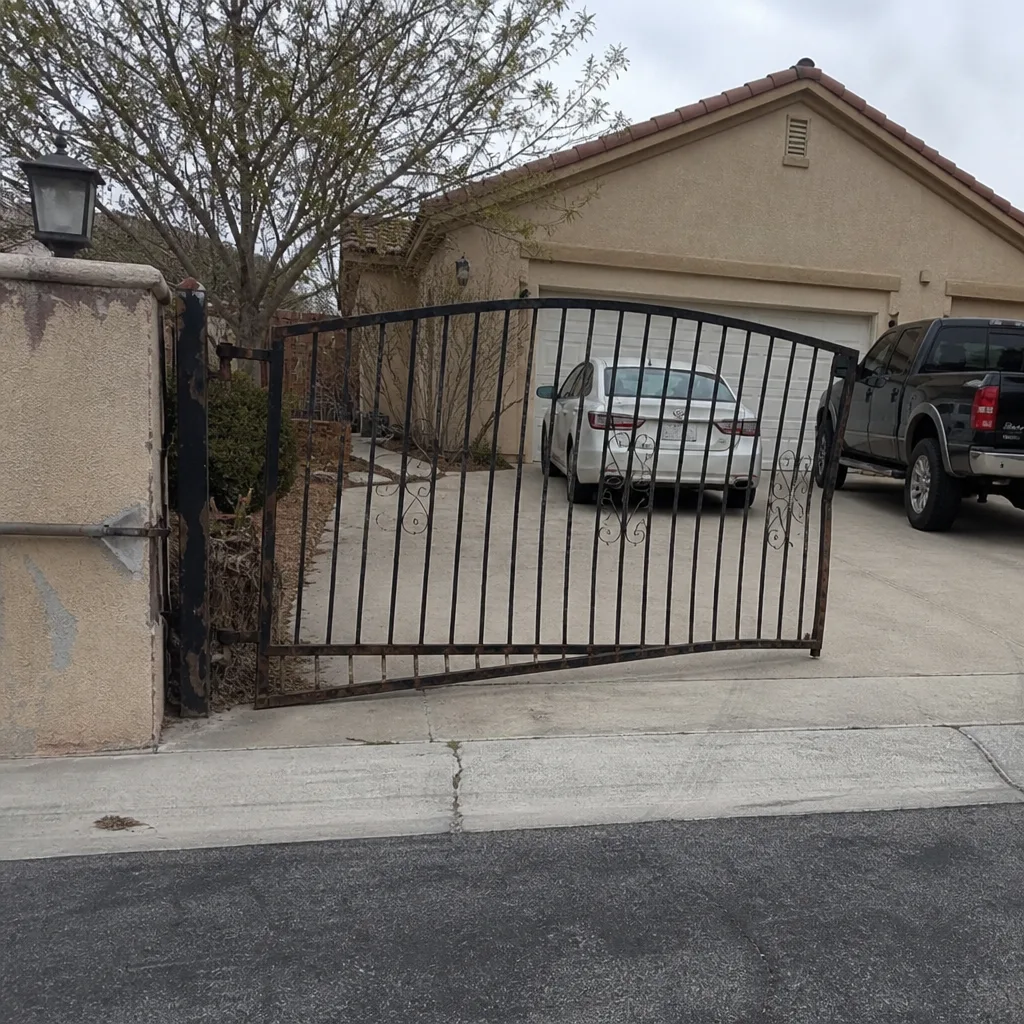 Before
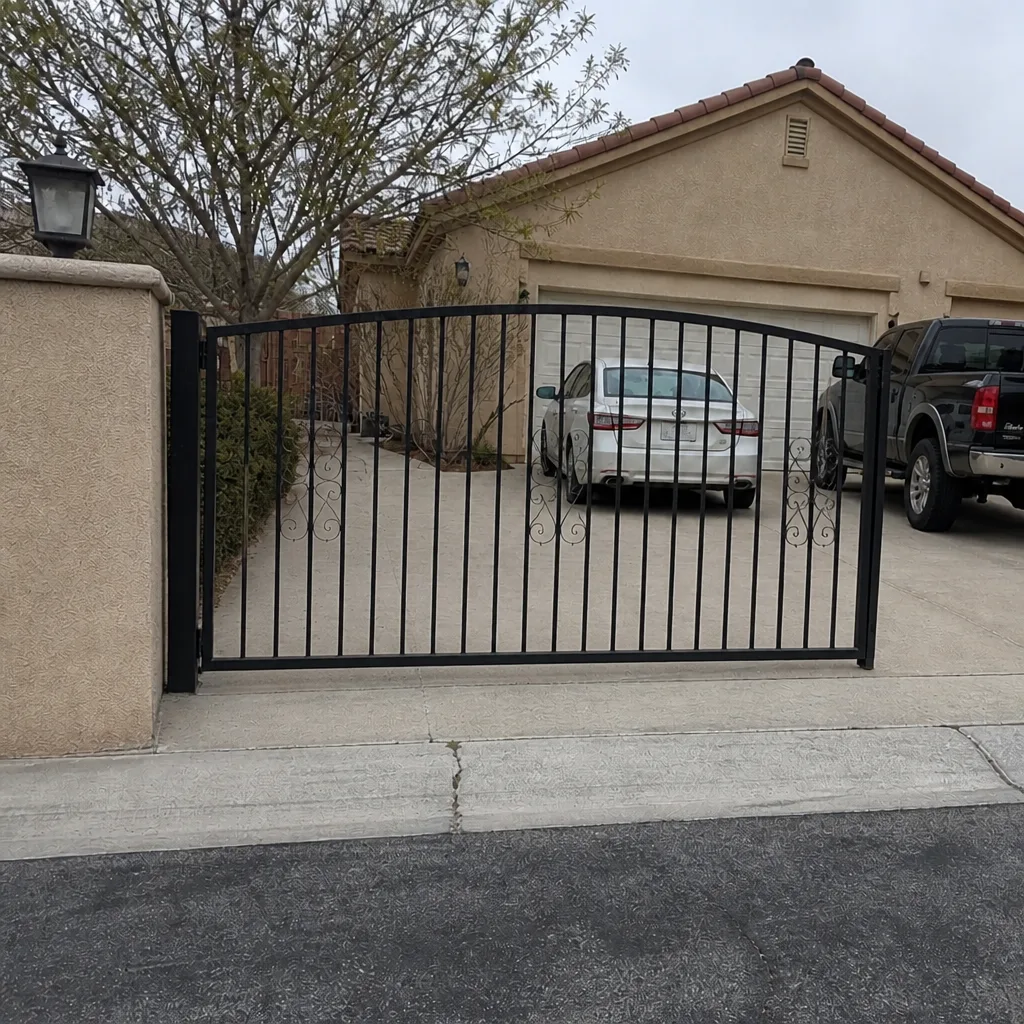 After
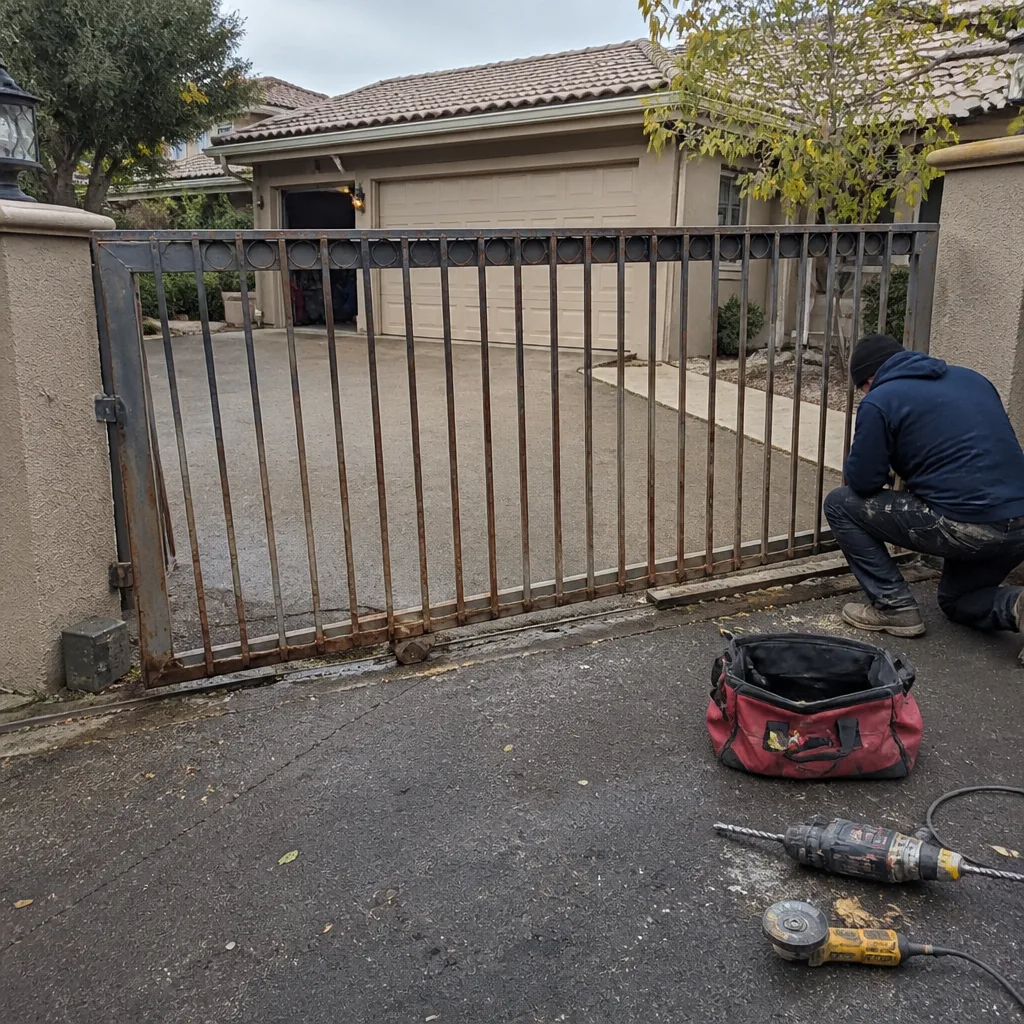 Before
 After
 Before
 After
When to Call a Professional
Some gate work is not a homeowner project. Anything involving high-tension springs, motorized automation with 120-volt power, or a heavy swinging iron gate on a footing is work for someone who does it every day. The post footing alone is a genuine danger if it fails: a swinging gate that comes off a post can hit a car or a person. If your gate is sagging, dragging, or binding, or if the operator is doing anything unusual, don’t try to reset hardware or tighten springs yourself. Call a trained professional who will diagnose the underlying cause before touching anything.
Ironworks Gate Co. Summerlin offers free estimates in Summerlin – call (866) 623-9848. We’ll walk the driveway, look at the soil and the existing gate, and tell you what we see. If you already have a written estimate from another company, the free second opinion offer is there for exactly that situation. Our technicians have up to 13 years of experience in gate installation and automation, and every job is backed by the 90-Day Done Right Promise.
Frequently Asked Questions
A basic manual driveway gate installation in Summerlin typically runs $3,000 to $6,000, and adding automation brings the range to $4,500 to $12,000 depending on gate size, material, and operator. The caliche footing work, HOA submittal, and permit fees are all part of that range. The price is quoted and agreed before any work starts, so there are no surprises on the bill. Call (866) 623-9848 for an exact quote – estimates are free.
Almost always, yes. Summerlin HOAs have written gate specifications covering height, finish color, design details, and submittal format, and they require approval before a permit is filed. Submitting in the format the HOA specifies is what keeps the process on schedule. If you’re not sure what your association wants, ask before you sign a contract. Call (866) 623-9848 and we’ll help you read the specification.
Manual, decorative gates under a certain height often don’t need a permit, but any automated gate, taller gate, or gate with a structural footing usually does. Electrical work for the operator is a separate permit. Typical turnaround for a residential gate permit through Clark County is a couple of weeks, sometimes longer if the submittal needs correction. Call (866) 623-9848 and we’ll confirm what your specific gate requires.
Plan on 36 inches minimum for most residential driveway gate posts, and 42 inches or more for gates over six feet or any gate with a motor. Bell-bottom footings outperform straight cylinders here because the flared base resists the uplift and lever force that caliche and decomposed granite can’t dampen. A 3,000 to 4,000 psi concrete mix is a reasonable target. Call (866) 623-9848 if you want us to look at your soil and recommend a specific depth.
Because Summerlin’s daily temperature swing can run 40 to 50 degrees in a single day, and steel expands and contracts with every degree. A gate hung tight on a cool morning will bind in the afternoon. Wider clearances at the leaf meeting points, at the hinges, and at the latch are set so the gate operates across the full temperature range. Call (866) 623-9848 for a specific recommendation on your gate.
Yes, and we recommend it. Installing the gate and the operator together lets us plan the footing, conduit, and power placement in one pass, which avoids the cost of retrofitting. We’re trained on nine gate-automation brands including Ghost Controls, DoorKing, Elite, and others, so the right match for your gate is available. The price is quoted and agreed before any work starts. Call (866) 623-9848 for a free estimate.
The Bottom Line
Installing a gate in Summerlin is a soil, HOA, and temperature project as much as a metalwork project. Caliche and decomposed granite demand deeper, bell-bottom footings and a deliberate concrete mix. The Summerlin HOA specification document governs appearance and submittal and is not optional. Thermal expansion sets a wider gap tolerance than most manuals print. The Clark County permit and inspection sequence is straightforward if you start it before the concrete, not after. And the automation pre-wiring you do during the install is what keeps the cost of later upgrades reasonable. If you get those five right, the gate works for decades. If a contractor skips any of them, keep looking. Visit our Ironworks Gate Co. Summerlin home page for the full picture of what we do.
Call Ironworks Gate Co. Summerlin at (866) 623-9848 for a free estimate. A live person answers every call, 24 hours a day, 7 days a week. We’ll look at your driveway, your soil, and your HOA paperwork, tell you what we see, and give you a square deal with the price confirmed before any work begins. Every job is protected by the written 90-Day Done Right Promise. Standing offers include $50 off any repair over $250, a free second opinion on any written estimate, an $89 seasonal tune-up, and a permanent 5% senior and veteran discount.
Written by the team at Ironworks Gate Co. Summerlin.