
Last updated November 17, 2026
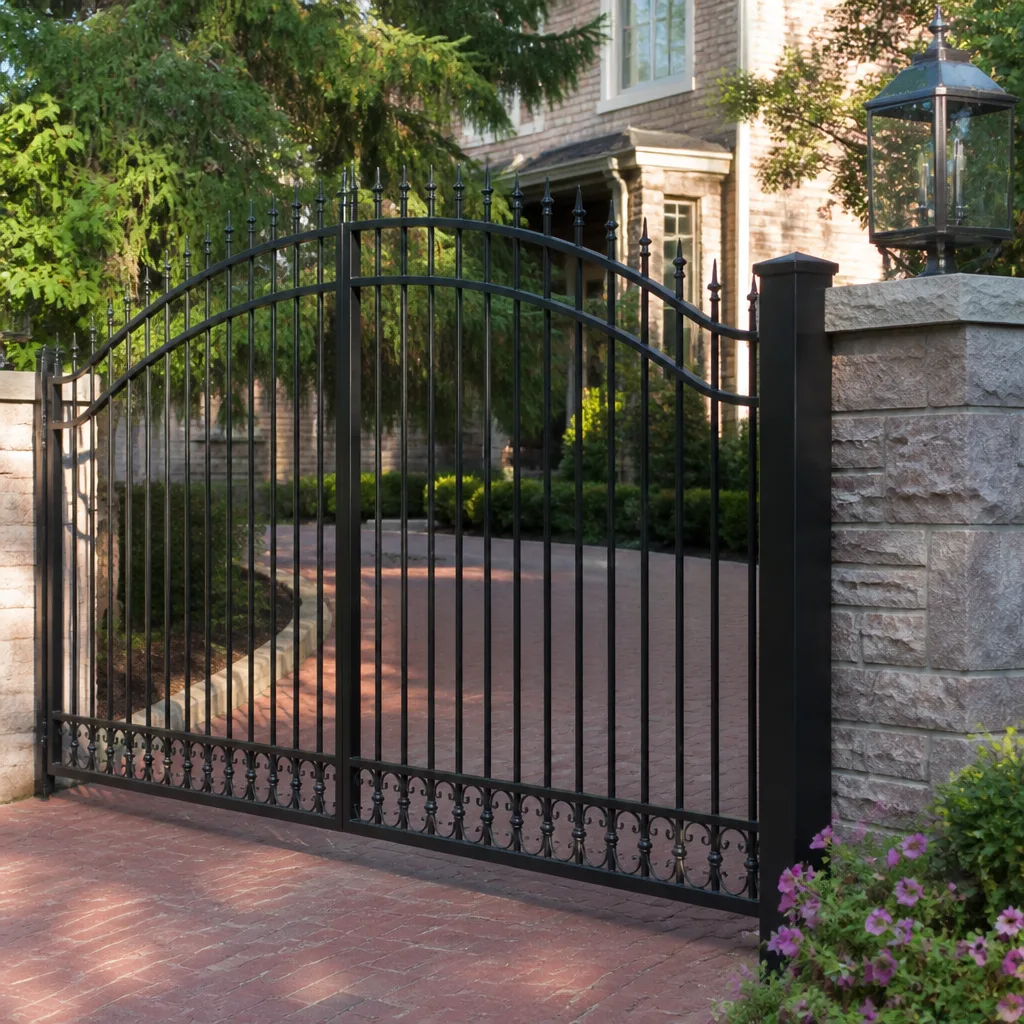 Wrought iron
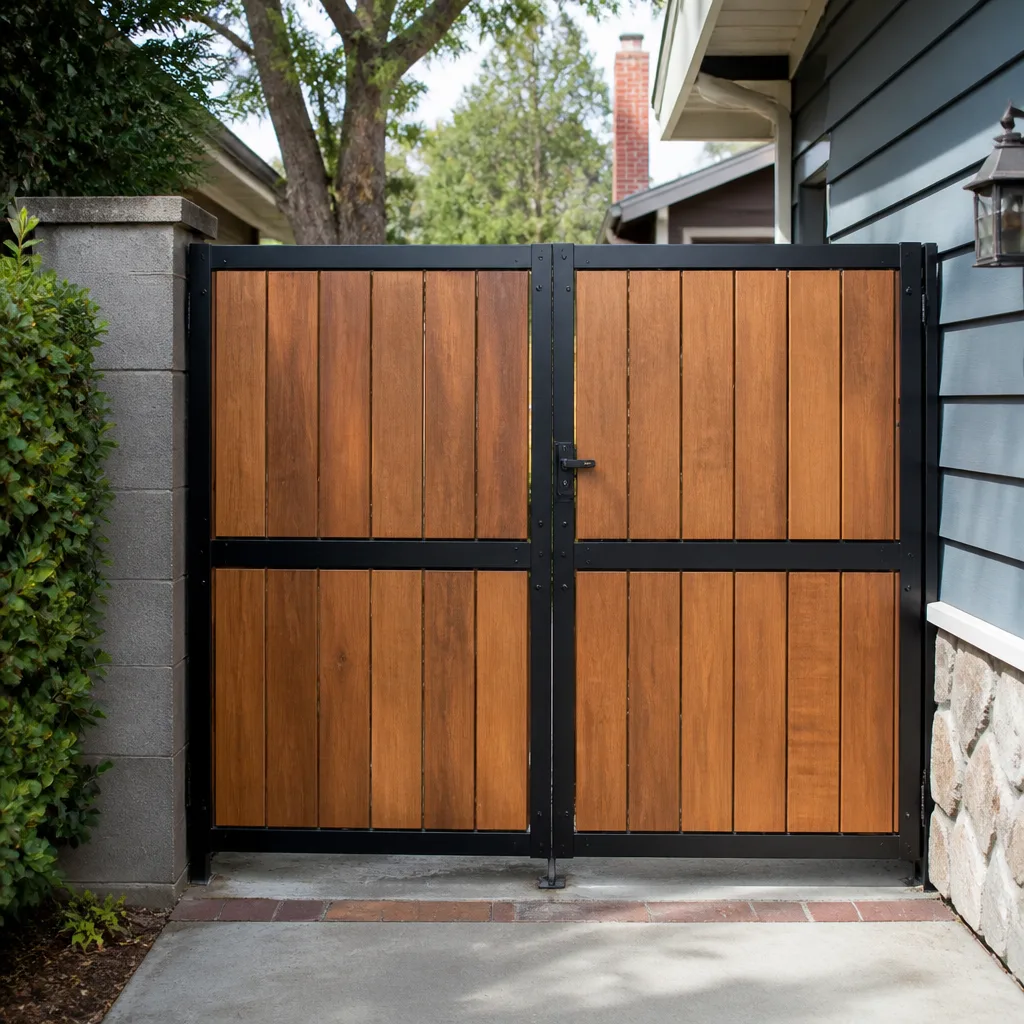 Wood & steel frame
 Farm & ranch
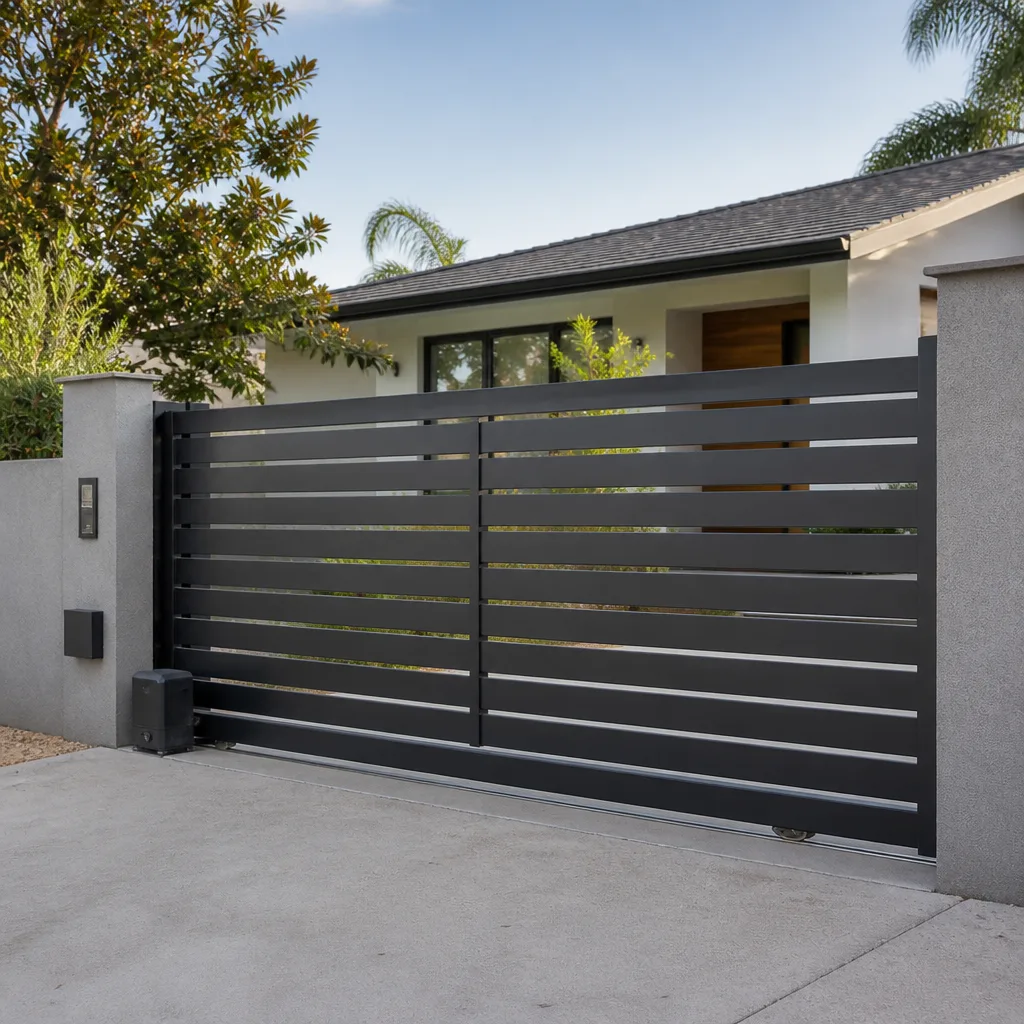 Sliding driveway gates
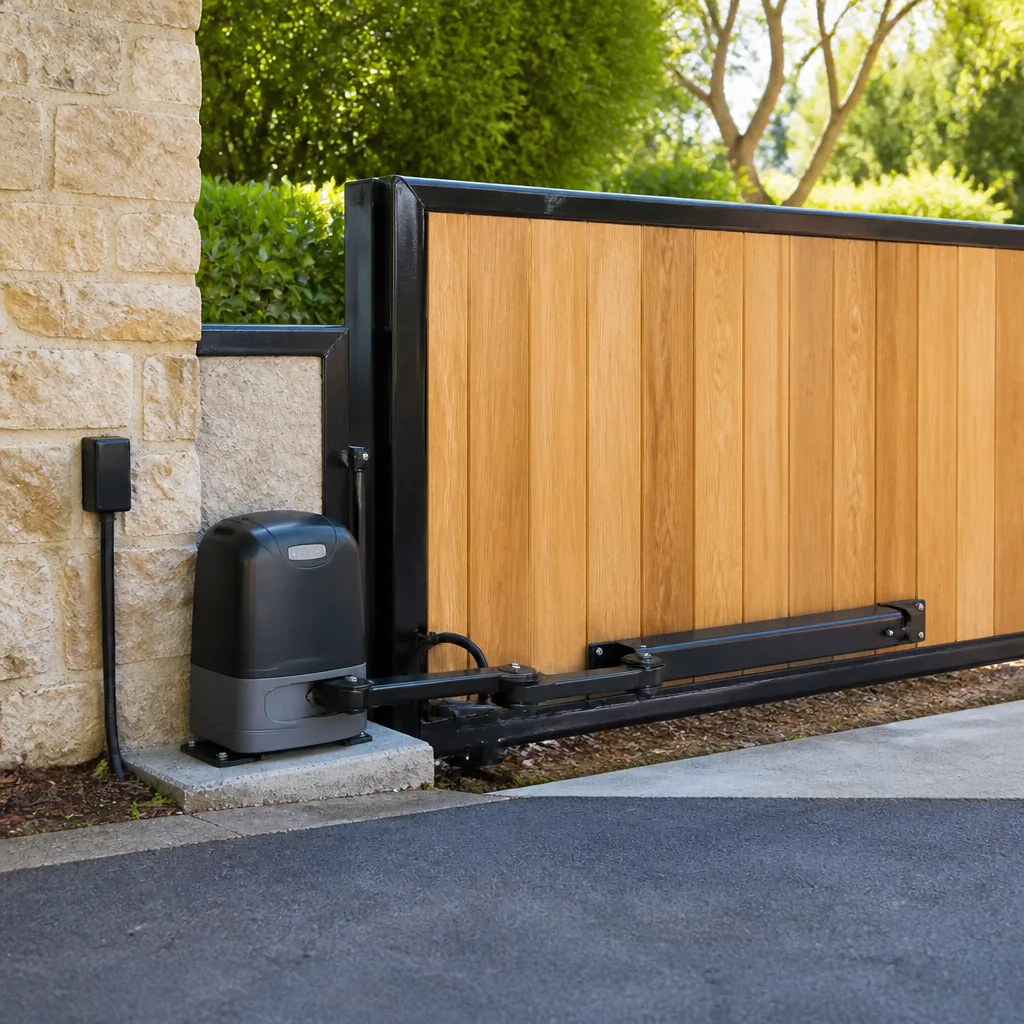 LiftMaster operators
Free on-site gate assessment - hinges, posts, and your LiftMaster or Nice gate operator checked before anything is quoted
The assessment is free and the quote is the invoice.
Get your free estimateGate Repair Warning Signs: A Summerlin Homeowner’s Reference Guide
A gate that reverses for no apparent reason is not glitching. It is reporting an obstruction or a force-limit trip, and the distinction decides whether you clean a sensor or replace a motor. We have watched that one misreading cost homeowners hundreds, and it is the most common one we see in Summerlin. Gates are honest machines. They announce every failure through sound, rhythm, and geometry before the failure becomes expensive. This guide translates that language into plain diagnosis, so you can tell a $200 problem from a $2,000 one, know when to stop using the gate entirely, and describe what you are hearing in a way that gets the right fix on the first visit.
Quick Answer
Gate repair warning signs in Summerlin fall into three groups: mechanical (grinding, sagging, dragging, uneven gaps), electrical and control (random reversing, intermittent operation, phantom openings), and structural (post movement, frame cracks, exposed wiring). Any sign in the third group means stop using the gate and call a professional. Most first-group and second-group signs are cheaper to fix the sooner they are caught.
Styles & brands we work with
- Wrought iron
- Wood & steel frame
- Farm & ranch
- Sliding driveway gates
- LiftMaster operators
Table of Contents
- The Sounds That Tell You What Failed
- Why “Works Fine Most of the Time” Is the Urgent Sign
- Reading Post Movement: The Geometry You Can Measure
- The Three Signs That Mean Stop Using the Gate
- What Summerlin Heat and Winter Cold Do to a Gate
- How to Document a Problem So It Gets Fixed Faster
- A Simple Seasonal Check You Can Do Safely
The Sounds That Tell You What Failed
Where a noise happens in the travel of the gate matters as much as the noise itself. A grind on opening and a grind on closing point at different parts, and getting that distinction right saves a diagnostic visit. In our experience, most homeowners describe both as “it’s making a noise,” and the missing detail is exactly the one that identifies the fault.
Grinding on Open
A grinding or screeching sound as the gate swings or slides open usually implicates chain tension on a sliding gate, or a worn hinge and top-roller on a swing gate. The opener is pushing the gate against a load it was not designed to overcome. Left alone, that extra resistance finds the weakest part of the drive train and wears it down. On a sliding gate running a Linear or Viking operator, a slack chain under load will jump the sprocket and grind, and the fix is a tension adjustment plus a check of the track and rollers.
Grinding on Close
Grinding as the gate closes often means the drive gear or the internal gearbox inside the opener is wearing. It can also mean the gate is dropping on its hinges and dragging across the ground or the guide track near the close limit. The close side is where the gate meets the resistance of the stop, so a small amount of mechanical wear shows up there first. A Ghost Controls swing operator with a failing gearbox will grind on the push, and by the time it gets loud the motor has usually been working harder than it should for months.
Rhythmic Clunks and Squeals
- A clunk once per revolution points to a bent roller, a flat spot on a wheel, or a loose sprocket tooth.
- A regular squeal is usually a dry hinge pin, roller bearing, or track guide crying for lubrication.
- Rattling at the top of travel means loose mounting hardware on the opener arm or the gate frame.
- A single hard bang on start or stop often signals a soft limit or a ramping problem in the control board, not a mechanical part.
None of these require guesswork if you note where the noise happens. That one detail is worth more than any description of the sound itself.
Why “Works Fine Most of the Time” Is the Urgent Sign
A gate that fails every time is easy to diagnose and usually already on its way to being fixed. A gate that fails once a week is the harder case, and the more urgent one. Intermittent failure almost always points at a failing control board, a corroded connection, or a marginal power supply, and each of those can produce a sudden failure with the gate in the closed or open position, not a graceful slowdown.
Here is why the pattern matters. Mechanical wear is progressive: a worn hinge gets worse gradually, and you have warning. Most electronic failure is binary: a control board passes a signal one cycle and misses it the next, and there is no ramp-up. The problem is not that the board is weakening. The problem is that any one of those misses could coincide with the gate in motion and a car underneath it.
What Intermittent Behavior Usually Means
- Failing control board. Heat and age cause solder joints and relays to become temperamental. This is the single most common culprit for a gate that opens fine one day and dead-stops the next.
- Corroded connection. Summerlin’s monsoon humidity and irrigation overspray attack terminal blocks and photo-eye wiring. A corroded connection works until it does not.
- Marginal battery backup or power supply. A supply that dips under load will reset the operator mid-travel.
- Interference on the receiver. A remote that only works when you are close, or only sometimes, points at a receiver or antenna issue rather than the motor.
Do not wait for the intermittent gate to fail outright before calling. The most expensive gate repair we handle is the one scheduled after the gate has already swung into a vehicle or pinned a person. If your gate is doing this, we would rather you call now and let us test it than find out which cycle was the last clean one.
Reading Post Movement: The Geometry You Can Measure
Gate posts move slowly, and the movement is nearly invisible until you know what to measure. A gate that used to close flush and now needs a nudge is telling you the post has shifted. In Summerlin’s soil, that shift is common: the caliche and heavily compacted graded fill in many of the master-planned communities does not anchor a post the way solid native ground does, and a gate post can lean a fraction of an inch per season without anyone noticing.
What to Measure and Where
- The gap at the latch. Measure the distance between the gate frame and the receiving post at the latch side, at the top and the bottom. A gap that is wider at the top than the bottom means the post has leaned.
- The gap at the hinge. Check the gap at the top hinge and the bottom hinge. A closing gap at the top hinge shows the post tilting toward the gate.
- The plumb of the post. Set a level against the post on two faces. Any visible bubble movement is real movement.
- The ground at the base. Hairline cracks radiating from the post base, or a fresh gap between post and concrete, signal that the footing has shifted.
- The travel path. Mark where the gate sits at full open and full close on the ground. If those marks change over a month, the geometry is moving.
Post movement is the one warning sign we treat as a structural issue rather than a mechanical one. A gate hanging from a moving post is not fixable by adjusting the hinges. The post has to be reset, and the gate re-hung, which is straightforward work when caught early and a much larger job when the frame has been stressed for a year. If you suspect movement, stop using the gate and call for an assessment.
The Three Signs That Mean Stop Using the Gate
Most warning signs are a reason to schedule repair. Three are a reason to stop using the gate right now and call before the next cycle. These three all carry a risk of injury, so we frame the check as “what to look for,” not “what to do.” Getting near a high-tension gate spring, a live electrical component, or a gate that is losing its footing is the moment to keep your distance.
- Entrapment risk. The gate’s reverse-on-contact function does not work. Put a foot on the path of a closing gate only if you have confirmed the safety edge and photo-eyes are functioning; if there is any doubt, do not test. A gate that fails to reverse is a gate that can crush a person or a car. The safety devices – photo-eyes, safety edges, force limits – are what keep it from being dangerous, and any suspicion they are not working is a stop-use sign.
- Structural instability. The post is visibly leaning, a hinge plate is pulling out of the gate frame, a weld has cracked, or the gate frame has bent. A gate that is losing its footing can fall, and a gate that falls off a track or a hinge while moving can hit a person or a vehicle. Do not prop it, do not hand-open it against resistance. Keep it still.
- Live electrical exposure. An exposed wire at the operator, a frayed power run, a damaged control box, or any sign of scorching or smell of hot plastic near the electronics. Gate operators run on household voltage, and a fault there is a shock and fire hazard. Do not open the control box and do not touch the wiring. Call us or another licensed professional.
If you are looking at any of these three, call (866) 623-9848 and describe what you are seeing. We can help you decide whether the gate should stay shut until a technician arrives.
What Summerlin Heat and Winter Cold Do to a Gate
Summerlin sits at a high-desert elevation with months of dry, intense heat and a winter that drops below freezing in the pre-dawn hours. Both ends of the year stress gate hardware, and the stress shows up in different components. Understanding the seasonal pattern helps you know what to look at in which month.
Summer: Heat and Sun Load
Powder-coated steel and aluminum frames expand under direct sun, and a gate hung to tight tolerances in the morning can drag on the ground by afternoon. Steel weld seams that were sound in spring can show stress in July. The most common summer warning signs in Summerlin homes we service:
- Chain and hinge lubricant drying out, causing squeals that were not there in spring.
- Control boards and motor housings overheating when the operator sits in full afternoon sun.
- Expansion causing a swing gate to drag on the driveway at the close side.
- Photo-eye lenses clouded by dust and fine sand from desert wind, causing phantom reverses.
- A battery backup in a Linear or BFT operator that will not hold a charge after a hot season.
Winter: Cold Jaw and Contraction
Cold mornings tighten metal, which is why a gate that ran quietly in October can clunk in January. The steel shrinks against the concrete, older hinge pins get stiff, and lubricants thicken. That thickening is exactly when a motor working near its limit will trip the force setting. If your gate reverses on the first cold cycle of the morning but works later, the operator is telling you the force limit is set too close to the actual load, and it should be checked before it fails outright.
This cycle of expand-and-contract is also part of why post movement happens. The post sits in ground that shifts with moisture and temperature, and the repeated stress on the footing finds any weakness. A gate installation in Summerlin that is done right accounts for it. One that was set with a shallow footing will announce itself eventually, and this guide is written so that you catch the announcement early.
How to Document a Problem So It Gets Fixed Faster
Good description shortens the distance between “the gate is acting up” and the correct part. When we arrive on a Summerlin property, the homeowner who can say “it groans on the first open of the morning, then runs quiet, and reverses if I close it with the sun on it” has already done half the diagnostic work. Here is the language that actually helps.
What to Note
- When in the cycle. “On opening,” “on closing,” “at the start,” “at the stop.” Be specific about which part of the travel.
- How often. Every time, most of the time, once a day, once a week, only on cold mornings, only in the afternoon.
- What changed. New remote, power outage, storm, landscaping work near the gate, a new vehicle parked closer to the photo-eye.
- What the gate is doing. Reverses, stops mid-travel, does not move, moves slowly, moves on its own, a click but no movement.
- Any sound. Grind, squeal, clunk, rattle, hum, or silence that should not be silent.
- Safety device behavior. Does the gate reverse when something enters the path? Do the photo-eyes blink?
Do not remove covers, do not adjust the control board by trial and error, and do not spray lubricant into an operator housing. Some fixes are simple, but on a gate with a high-tension spring or live voltage at the operator, the margin for error is zero. A gate technician who has the right description can arrive with the right part, and that is how a job becomes a single visit instead of a return trip. When a remote or the automation itself is the issue, that work sits with Gate Motor & Opener in Summerlin rather than general repair.
A Simple Seasonal Check You Can Do Safely
Most of this guide is about reading a gate that is already talking. There is also a short, safe inspection that keeps the conversation from starting in the first place. Do it every spring and fall, with the power to the operator off, and never reach into a moving gate or a control box.
- Walk the path. Look for drag marks in the driveway or track, and for any gap between the gate’s lower edge and the ground.
- Look at the post bases. Cracks radiating from the concrete, or a visible lean, are worth a call.
- Look at the welds and hinge plates. Rust bloom on a weld, a pulled screw, or a hairline crack in the gate frame is early warning.
- Check the safety devices by eye. Are the photo-eyes clean and aimed? Is the safety edge intact?
- Notice the remote. A remote that needs pressing twice, or works only up close, is a receiver signal, not a gate failure.
When you want the full picture rather than a spot check, an $89 Seasonal Tune-Up covers a professional look at hinges, track, chain tension, limit settings, and safety devices on a gate. It is the cheapest hour we offer. It is also the best chance to catch the $200 problem before it turns into the $2,000 one, and it is the work we do every day for homeowners across Summerlin.
Common Mistakes to Avoid
- Assuming a reversing gate is “just glitching.” A reverse is a safety signal, not a defect. Treat it as a report every time.
- Oiling a chain and calling it service. Lubricant on the wrong part, or the wrong kind, can attract desert grit and accelerate wear. The right lubricant in the wrong place is still the wrong fix.
- Adjusting the force limit to stop a trip. Raising the force setting so a struggling gate will close is the single most dangerous shortcut on this list. It turns a warning into a hazard.
- Waiting for a consistent failure. An intermittent electrical fault is more urgent, not less, than a consistent one. Call on the first random cycle, not the tenth.
- Ignoring a leaning post because the gate still opens. A gate that still opens is a gate that has not fallen yet. Post movement is a structural stop-use sign.
- Fixing a weld with a hobby welder. Gate frames carry load. A weld on a moving gate frame that was not done for that load can look fine and fail under torque.
- Letting the wrong technician touch an unfamiliar operator. A generalist may try to force a fix on a BFT or FAAC system he does not know. The fix is often the wrong one, and you pay twice.
See the difference
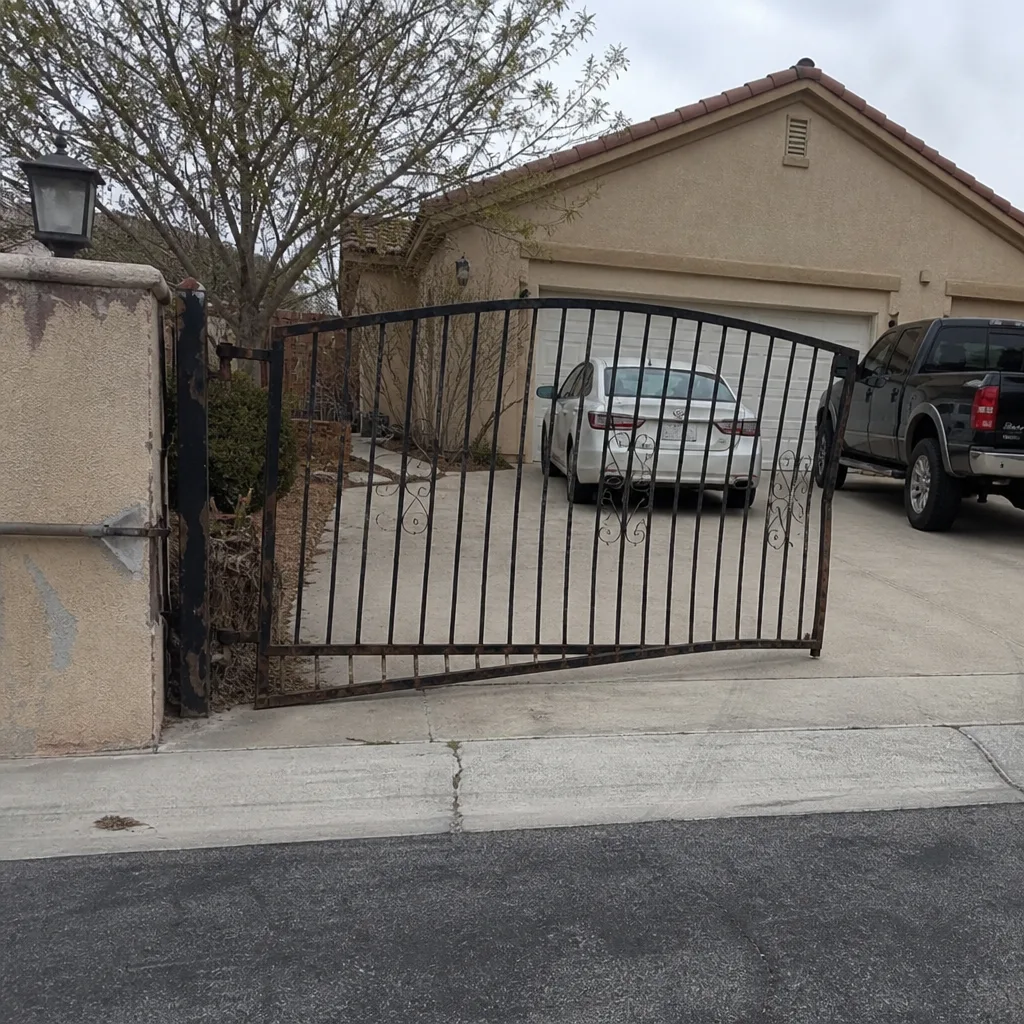 Before
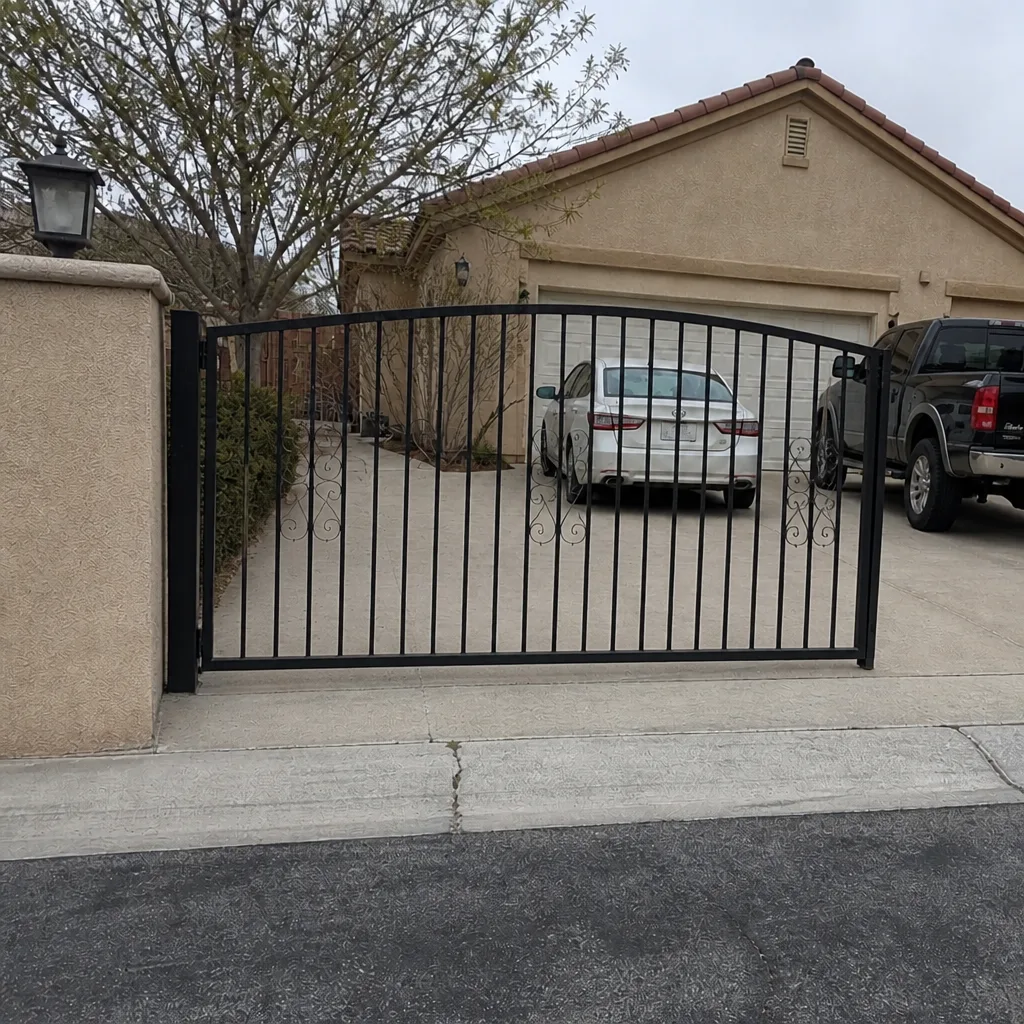 After
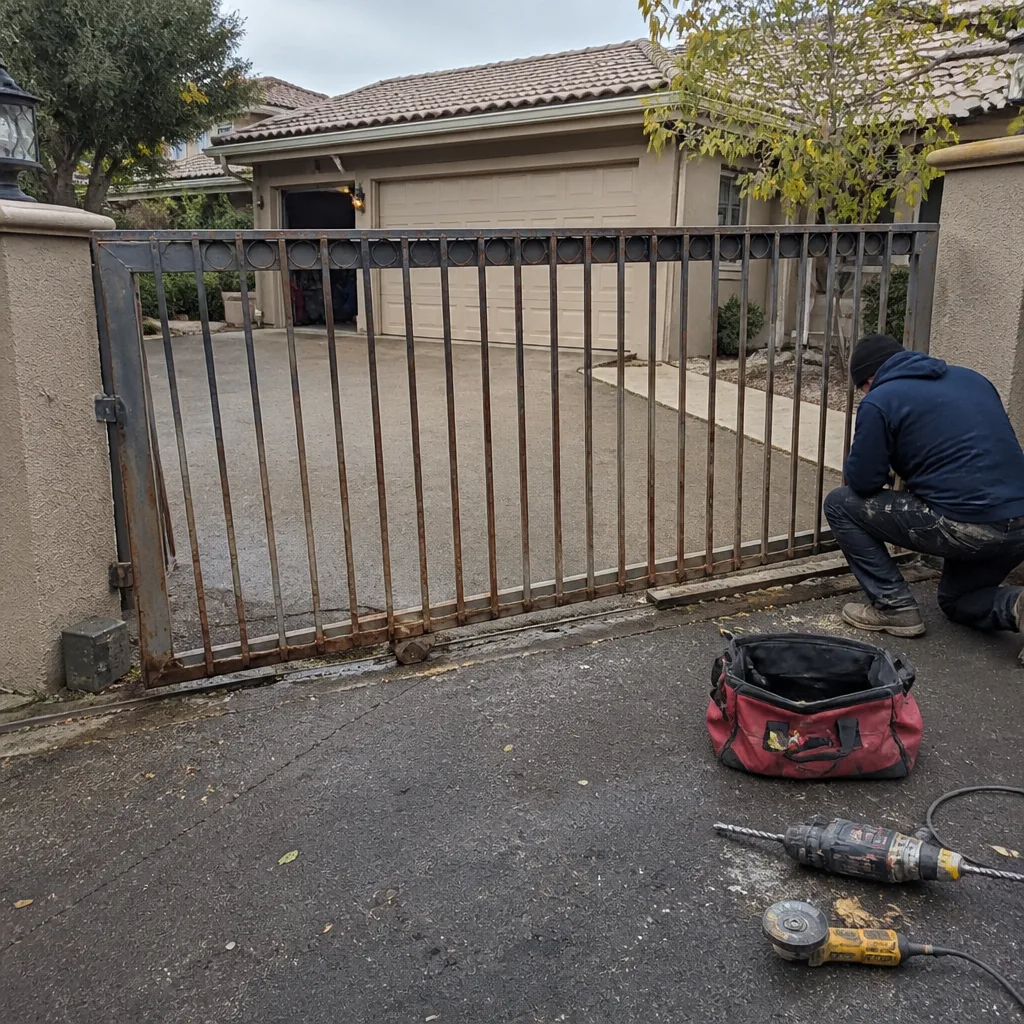 Before
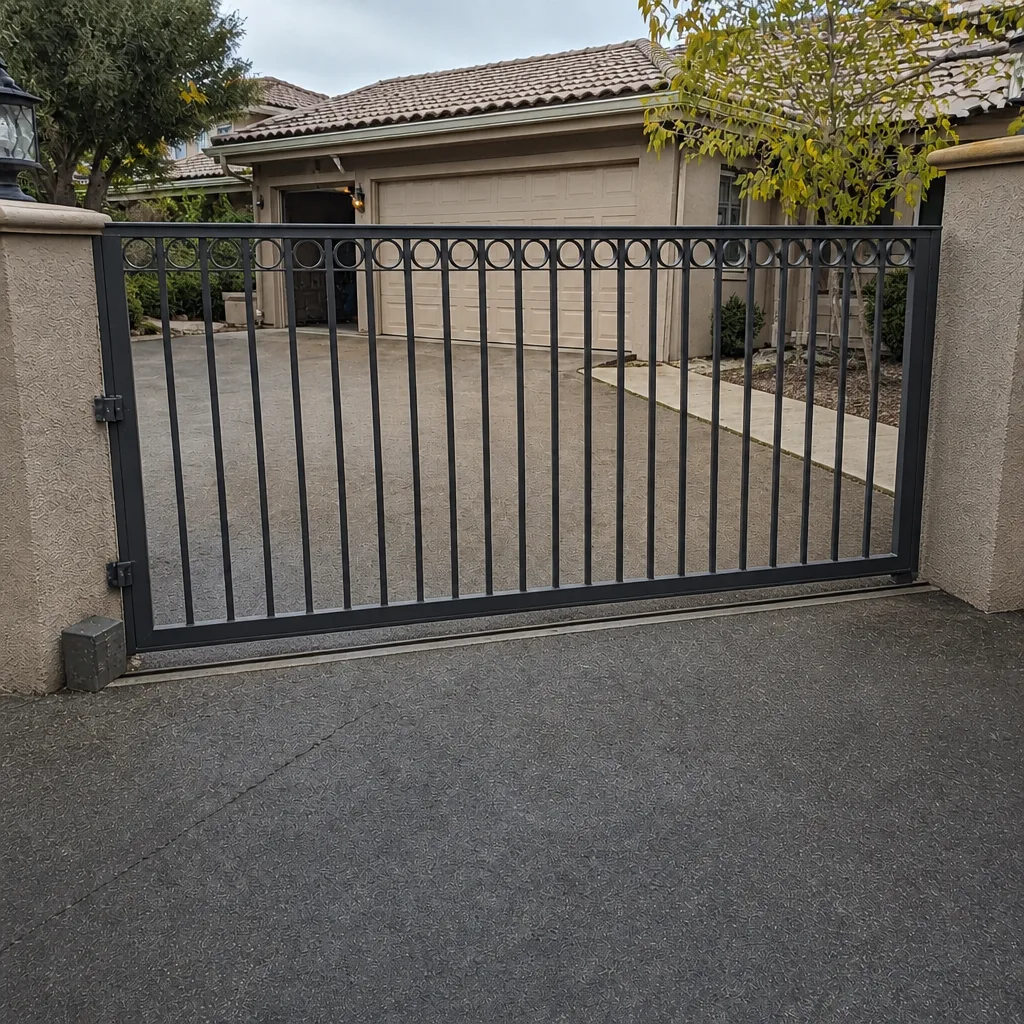 After
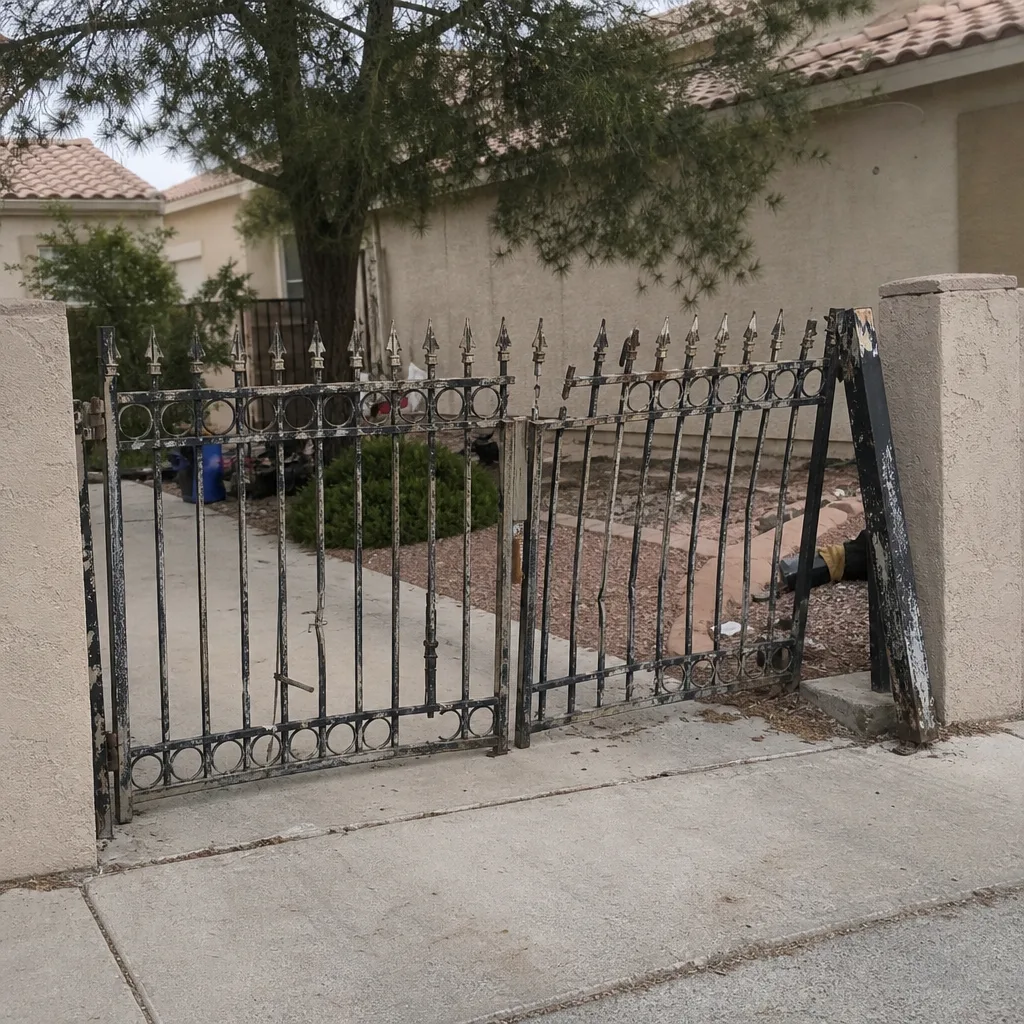 Before
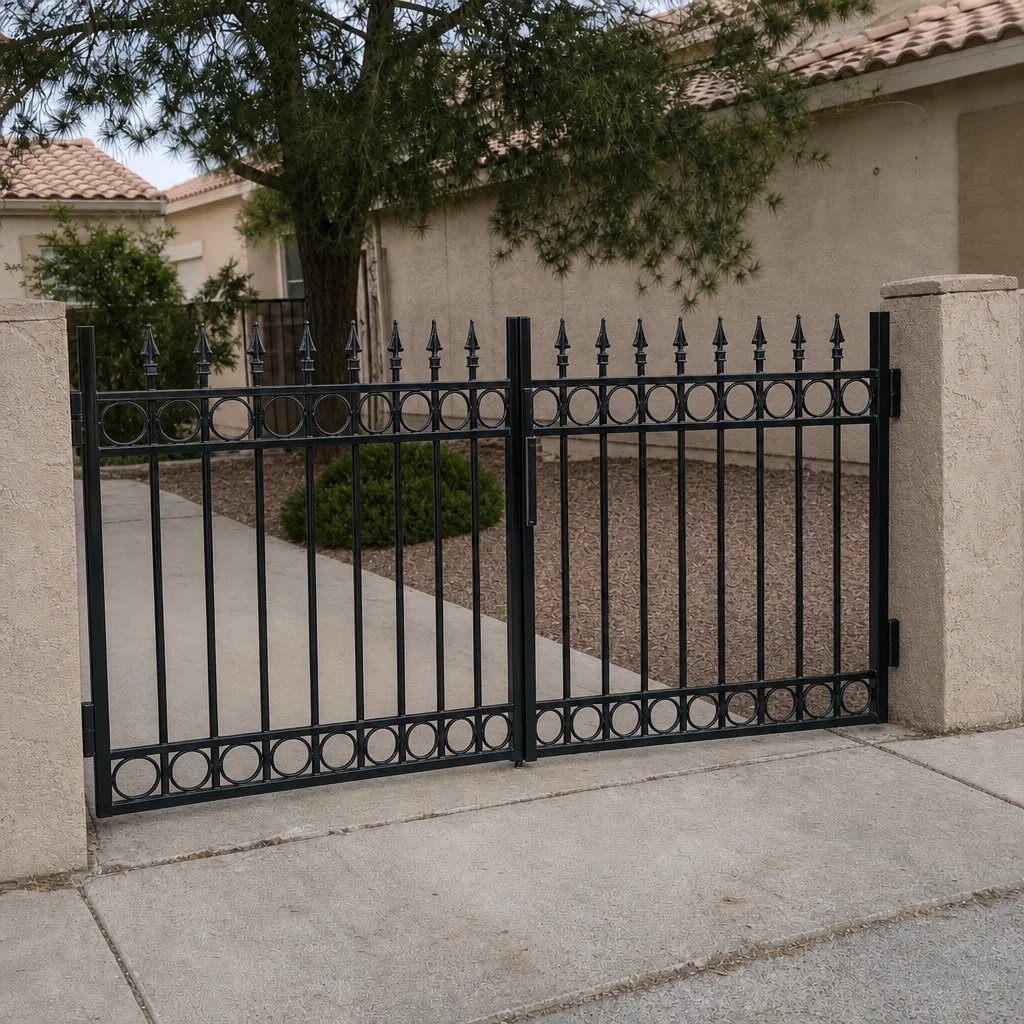 After
When to Call a Professional
Call a professional whenever the warning sign touches a safety device, a weld, the post, or the operator’s electrical side. Those are the four areas where a wrong guess can hurt someone. Call us sooner rather than later if the gate reverses, if it opens on its own, if it is grinding, if the post has moved, or if you see any exposed wiring. Our technicians have up to 13 years of experience and are trained on nine gate-automation brands, including BFT, Linear, Viking, and Ghost Controls, so the correct fix is made on the first visit. Ironworks Gate Co. Summerlin offers free estimates in Summerlin. Call (866) 623-9848.
Frequently Asked Questions
The most common are grinding on open or close, a gate that reverses for no apparent reason, intermittent operation, and a leaning or shifting post. In Summerlin specifically, we also see photo-eye problems from dust and sun, and battery backup failures after a hot season.
Yes, if it is reversing because the safety device is not seeing an obstruction or the force limit is failing. A reverse can also be a normal response to a real obstruction. Either way, it should be tested. Call (866) 623-9848 and let a technician confirm which it is.
Lubricant on a dry hinge is a reasonable first step. But if the grind continues, it is a mechanical fault in the chain, gear, or roller, not a lubrication issue, and the wrong lubricant can attract grit. Call us for a diagnostic before you spray a second time.
Measure the gap between the gate frame and the receiving post at the top and bottom. If the gap is wider at the top than the bottom, or a level shows a lean, the post has moved. Stop using the gate and call for an assessment.
Standard repairs typically run from about $150 to $600 depending on the part and the brand. Motor and control board work runs higher. Your price is quoted and agreed before any work starts, so there is no surprise on the bill.
Every completed job is backed by our written 90-Day Done Right Promise. If the repair is not right, we come back and make it right, no paperwork and no arguing. It applies to every gate job we do.
The Bottom Line
Gates do not fail silently. They report the failure through a grind on open or close, a reverse, an intermittent cycle, a gate that drags, or a post that has shifted a quarter inch. Read those signs and you catch the $200 problem while it is still a $200 problem. And when the sign is a failing safety device, a structural shift, or an exposed wire, stop using the gate and call. That is the whole guide, and it is what we do every day for homeowners across Summerlin. If you want the job done right and backed in writing, call (866) 623-9848 for a free estimate. We will be there when we say.
We offer $50 off any repair over $250, a free second opinion on any written estimate, an $89 Seasonal Tune-Up, and a standing 5% Senior and Veteran discount. For the larger scope, our Gate Repair in Summerlin, Gate Installation in Summerlin, and Ironworks Gate Co. Summerlin home pages cover the full range of what we handle.
Written by the team at Ironworks Gate Co. Summerlin.