
Last updated November 17, 2026
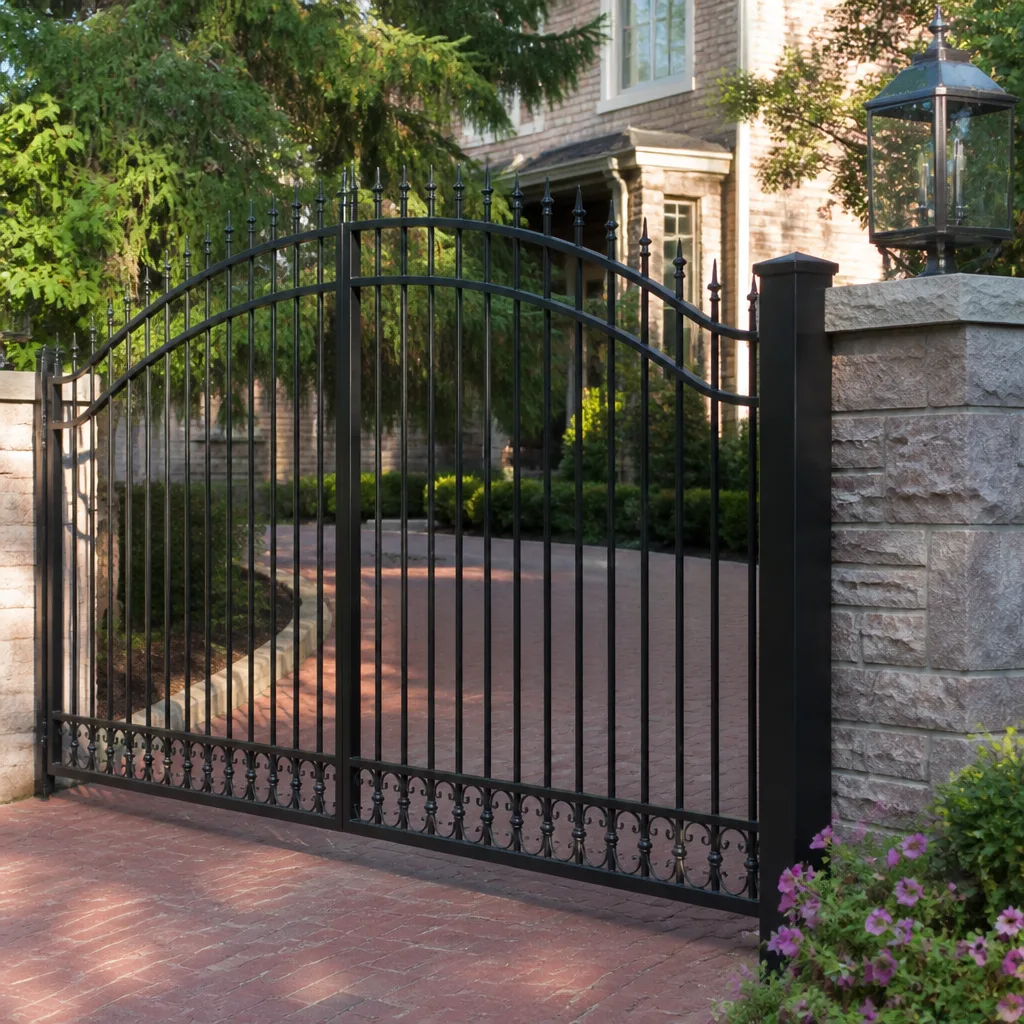 Wrought iron
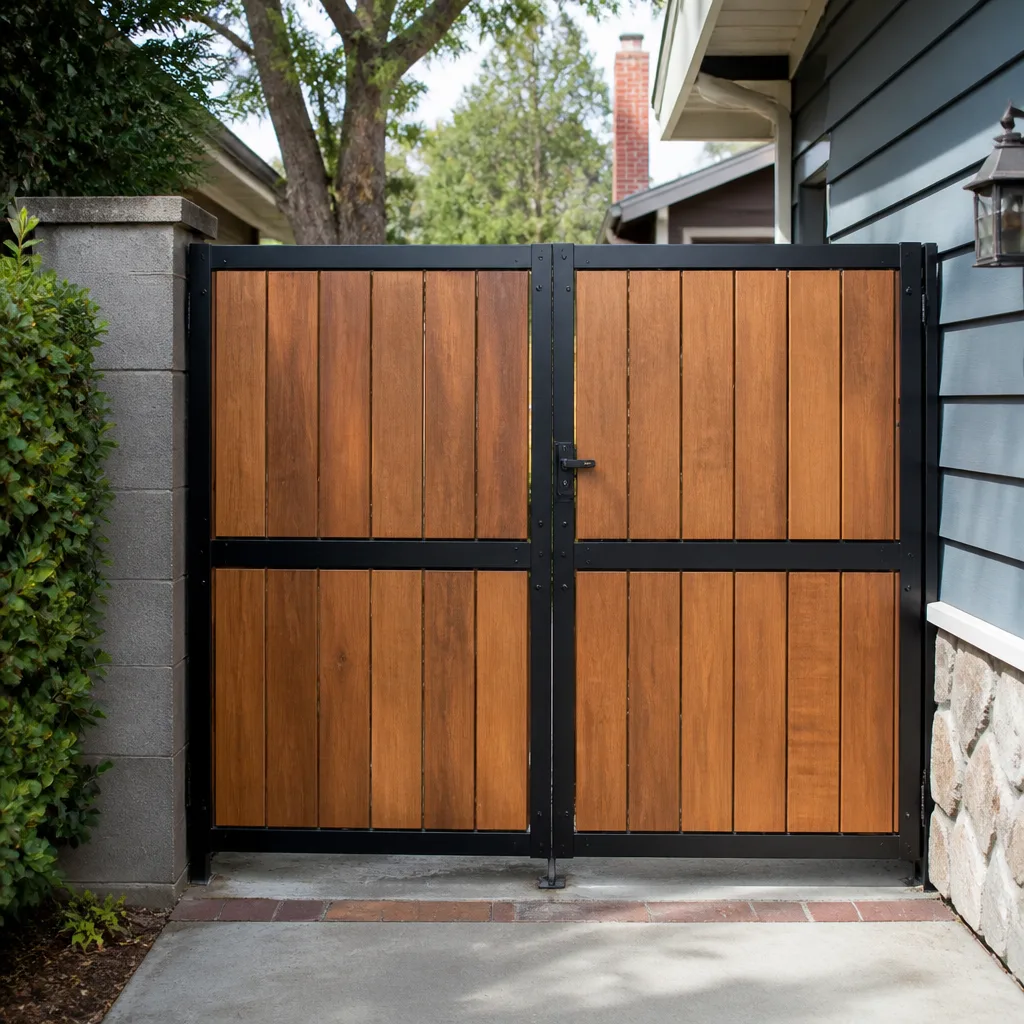 Wood & steel frame
 Farm & ranch
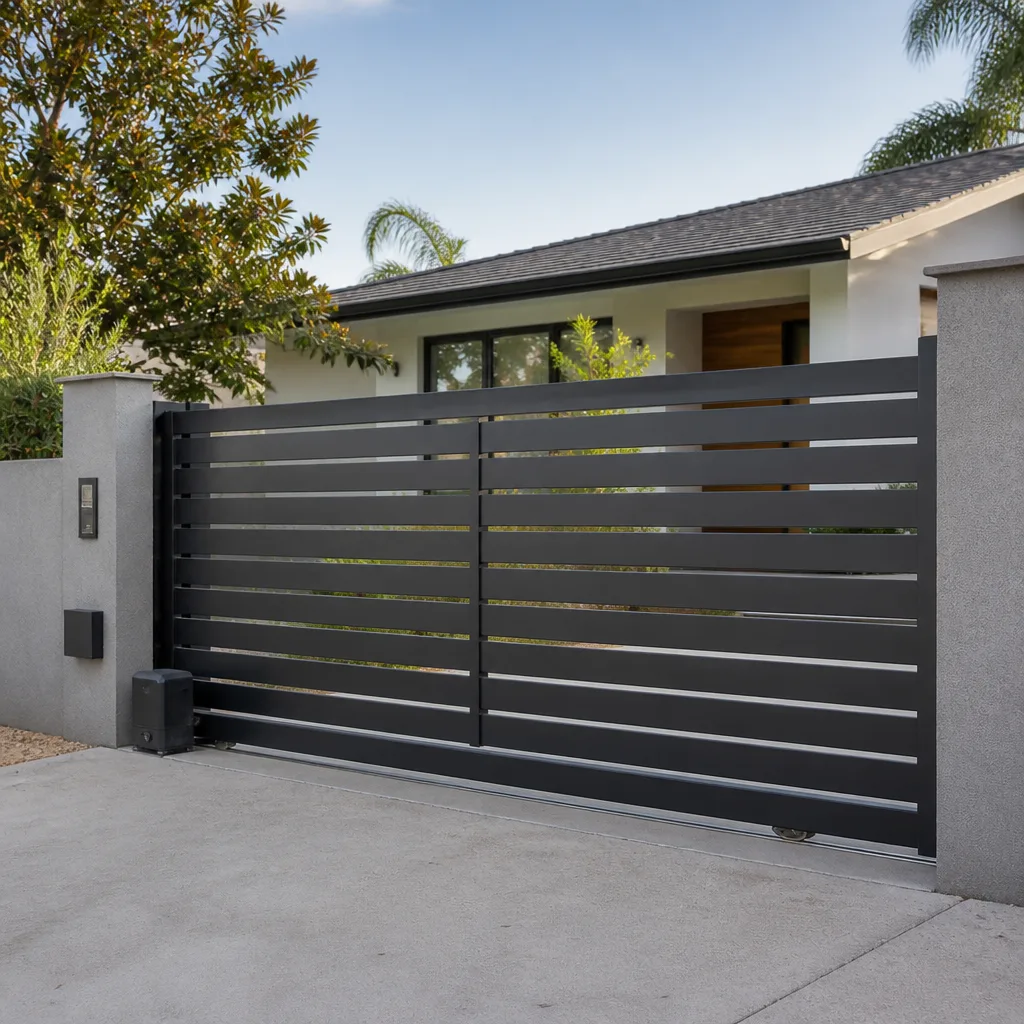 Sliding driveway gates
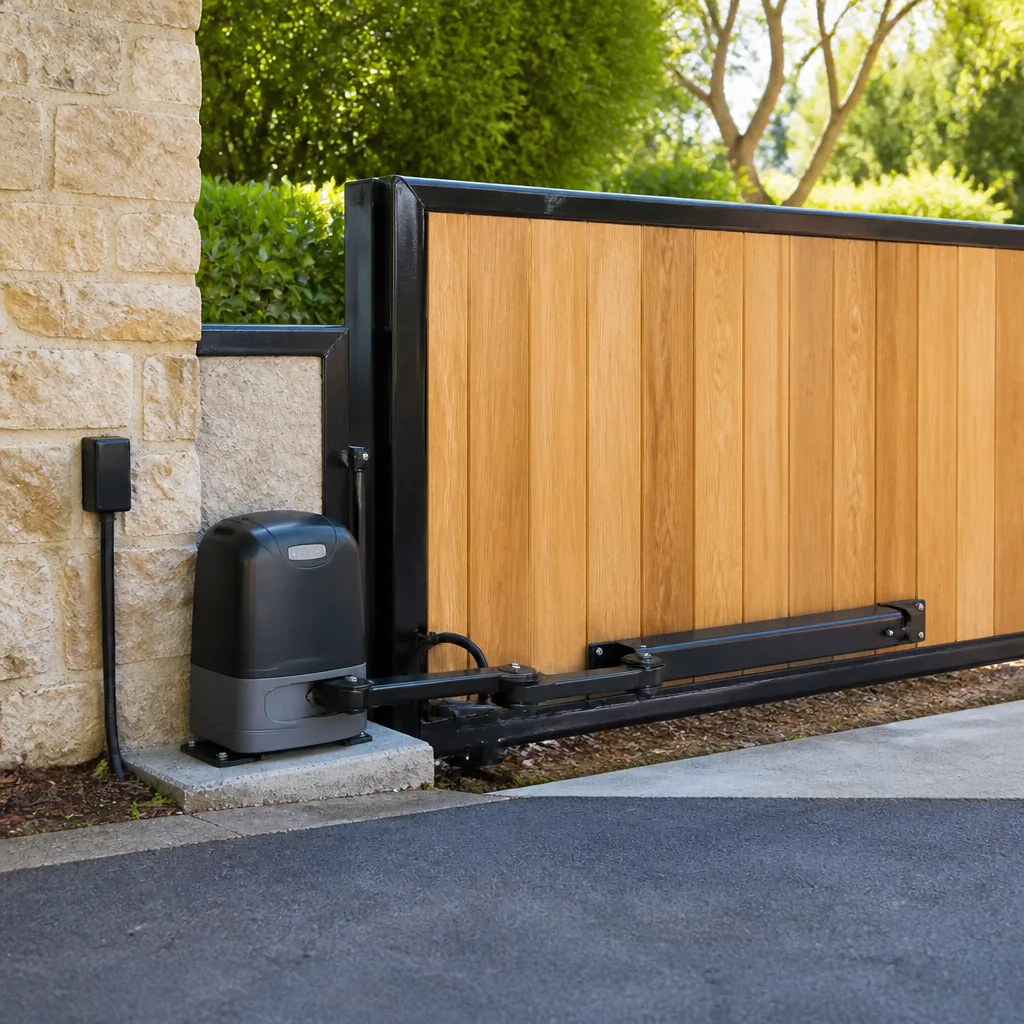 LiftMaster operators
Free on-site gate assessment - hinges, posts, and your LiftMaster or Nice gate operator checked before anything is quoted
The assessment is free and the quote is the invoice.
Get your free estimateGate Installation Troubleshooting: Common Problems and How to Fix Them
Here’s a fact that surprises most homeowners: the gate that will give you trouble in August was almost always installed in April, with tolerances set for April temperatures. That’s especially true in Summerlin, where the swing from a 70-degree spring morning to a 110-degree July afternoon moves every piece of metal in your driveway. New gate problems are rarely bad parts. They’re installation decisions the first heat wave, rain or dust storm uncovers. This guide works backward from the symptoms your new gate shows in its first 90 days to the installation step where the real failure started, so you can describe what’s happening and fix it correctly.
Quick Answer
Most new gate installation problems are caused by pre-installation decisions, not defective components: tolerances set for one temperature and revealed in another, posts that weren’t perfectly plumb, or operator arms mounted at the wrong angle. The first step is identifying which of these three caused the symptom, then having it corrected during the warranty period, which a 90-day settling window is usually meant to cover.
Styles & brands we work with
- Wrought iron
- Wood & steel frame
- Farm & ranch
- Sliding driveway gates
- LiftMaster operators
Table of Contents
- The 90-Day Settling Period: Normal Movement vs. Installation Defect
- Why Automation That Worked at Commissioning Fails Weeks Later
- Diagnosing a Binding Gate: Tolerances, Plumb, or Operator Angle
- What to Collect at Installation Completion
- How to Have a Productive Warranty Conversation
- Summerlin-Specific Installation Challenges
The 90-Day Settling Period: Normal Movement vs. Installation Defect
Every gate settles into its setting. Concrete cures, soil compacts, and steel expands and contracts with temperature. In Summerlin, where a brand-new driveway or gate post can bake in full desert afternoon sun, that settling happens faster and more visibly than in milder climates. Knowing what’s normal keeps you from panicking over a noise that will disappear, and keeps you from shrugging off a warning sign that needs fixing.
Normal in the first 90 days:
- A faint creak or ping in the first weeks, especially as temperatures climb in late spring.
- Minor latch contact adjustment, often a few millimeters, that a technician can dial back in a single visit.
- Slight gate sag on a wide double gate, typically one-quarter inch or less.
- Operator limit switch drift of a small degree as posts finish curing.
Signals of an installation defect:
- The gate scrapes the ground or drags across the driveway.
- A post visibly leans or the gate hangs persistently out of plumb.
- Hinges pull loose from the post in the first weeks.
- The operator reverses or faults repeatedly no matter how many times limits are re-set.
If you see the second group, it’s time to call. Our gate repair service in Summerlin sees these cases regularly, and the difference between a small adjustment and a structural defect comes down to a few measurements taken in the right order.
Why Automation That Worked at Commissioning Fails Weeks Later
A brand-new LiftMaster or FAAC operator running perfectly on the day it’s installed is a common story. So is the same operator failing a month later. The cause is almost always the moving target that is your gate post: it shifts a little as concrete cures, and the operator’s limit switches are set against where the post was at commissioning, not where it is now. That’s why we see operators faulting in Summerlin homes weeks after a spring install, right around the first real heat.
Common failure points on automated gates:
- Limit switches drift. The operator no longer stops at the same point, sometimes stopping short, sometimes reversing before the gate closes.
- Safety sensor misalignment. Dust storms and settling both shift the reflector or photo-eye. In Summerlin, fine dust collects on sensor lenses faster than most homeowners expect.
- Battery backup false faults. Battery terminals loosen slightly from vibration during the first weeks of operation. These are usually a same-visit fix.
- Wiring strain. Cable runs that were tight at commissioning pull further as posts settle, and connections can loosen inside the control box.
If your operator has stopped behaving, it’s worth a service call before you assume the motor is failing. In our experience, most of these cases are adjustment work, not replacement. If a motor or opener does need attention, our gate motor and opener service in Summerlin handles the diagnosis and the fix in the same visit whenever possible.
Diagnosing a Binding Gate: Tolerances, Plumb, or Operator Angle
A binding gate is telling you something. The trick is figuring out which of three installation decisions went wrong: the tolerances set on the metal, whether the post was plumb, or where the operator arm was mounted. Here’s how the diagnosis usually goes.
- Check the temperature correlation first. If the gate binds more in hot weather than cool, tolerances were set too tight for the temperature at install. Metal expands; a gap that closed fine in April can close hard in July.
- Check the post with a level. A post off-plumb by even a fraction shows up as a gate that never swings freely. Trust a level reading over what your eye sees.
- Look at the operator arm angle. A piston arm mounted at the wrong angle forces the gate to fight the operator every cycle. It’ll eventually strip the motor or snap the bracket.
- Watch the gate swing while it’s disconnected from the operator. If it binds on its own, it’s a hinge or post problem. If it swings fine disconnected but strains when connected, the operator angle is the issue.
That third check tells you more than any other single test. In our experience, more than a third of the “motor failures” we see on new gates in Summerlin turn out to be operator arms mounted at an angle that forces the gate to strain.
What to Collect at Installation Completion
The single best thing you can do for your new gate is to get documentation at the end of the install. Without it, every warranty conversation becomes a memory test, and you need hard facts on your side. Any reputable installer should be able to hand over the following without argument:
- As-built measurements. Post spacing, gate width, ground clearance, and the operator mount height. These are the numbers every future technician needs.
- Operator programming codes. Any remote pairing codes, master codes, and where the limit-switch positions are set in the control box.
- Sensor alignment photos. A photo of the photo-eye alignment at commissioning. Without one, the next technician is guessing.
- Hardware and model numbers. The model of every operator, hinge, latch, and access-control unit, on one sheet.
- The written warranty terms. Get the 90-day terms in writing, not just verbally.
When an installer provides this at completion, they’re telling you they expect to come back and fix their work if needed. When they don’t, ask for it. It’s not an unreasonable request, and it costs them very little to provide.
How to Have a Productive Warranty Conversation
The difference between a warranty claim that gets fixed and one that gets argued over usually comes down to how the conversation opens. Homeowners who show up with documentation and specific observations get quicker resolutions than homeowners who say “it’s broken.”
Language that moves a conversation forward:
- “I’d like to report a warranty issue. Here are the facts: the gate was installed on [date], and as of [date] it is binding when the temperature goes above 90 degrees. Here’s a video.”
- “I’ve kept the gate clear and haven’t modified anything. Can you send a tech to inspect this week?”
- “I’d like the inspection findings in writing, and confirmation of whether it’s a warranty adjustment or a billable repair.”
Documentation to bring to the call:
- The written warranty terms from installation day.
- The as-built measurements and operator model numbers.
- A short video of the problem in action, ideally captured during the conditions that trigger it (hot afternoon, cold morning, etc.).
- Dates and times the problem first appeared and how often it recurs.
Most installers respond well to this. If yours doesn’t, a second opinion from another qualified gate specialist is often the fastest route to a real answer. We offer a free second opinion on any written estimate, and our written 90-Day Done Right Promise on our own work is a plain statement of how we handle callbacks: we come back and make it right.
Summerlin-Specific Installation Challenges
Gates installed in Summerlin face a few things that homeowners relocating from elsewhere often don’t expect. The first is temperature swing. Installation tolerances tuned for a mild spring can be too tight by the time August afternoon heat hits the steel. A good installer sets tolerances for the operating range, not just the install-day temperature.
The second is dust. Fine desert dust works into hinges, tracks and sensor lenses faster than in more humid climates. New gates in Summerlin require more frequent cleaning in their first months than most homeowners anticipate, and it’s not a sign of poor installation, just an environmental reality. We see it regularly on gates along the western edge of Summerlin, where the open desert brings more airborne dust.
The third is concrete and soil. Summerlin sits on some hard ground, and post footings sometimes need extra depth or reinforcement to hold through the first year. A gate that starts to lean slightly in the first months is often showing you that the footing wasn’t adequate, not that the gate itself is failing.
Our gate installation team in Summerlin sets tolerances for the local range, and our Ironworks Gate Co. Summerlin home services team stands behind every installation with a written 90-Day Done Right Promise. Our technicians are trained on nine leading automation brands, including LiftMaster, FAAC, BFT and Linear, which means the diagnosis is often settled on the first visit.
Common Mistakes to Avoid
- Setting tolerances for the install-day temperature. This is the single most common cause of an August binding gate in Summerlin, where a mild spring install gives no clue what July will do. Tolerances need to account for the full summer range.
- Skipping the level check on posts. A post off-plumb by a fraction of a degree looks fine until the gate swings under load. Use a level at commissioning and again at the 90-day mark.
- Mounting the operator arm at the wrong angle. A piston arm mounted at the wrong angle forces every cycle to fight the operator. It leads to premature motor failure and broken brackets, which is why it belongs on the install-day punch list, not the repair list.
- Skipping sensor photos at commissioning. Without a photo of the photo-eye alignment, the next technician is guessing. Five minutes with a phone camera saves a service call.
- Adjusting limits without checking posts first. If the post is still settling, re-setting limits just kicks the problem down the road a few weeks.
- Ignoring a minor squeak for months. A small noise in week two can become a stripped hinge in month six. Small noises wait for no one, especially in dry Summerlin heat.
See the difference
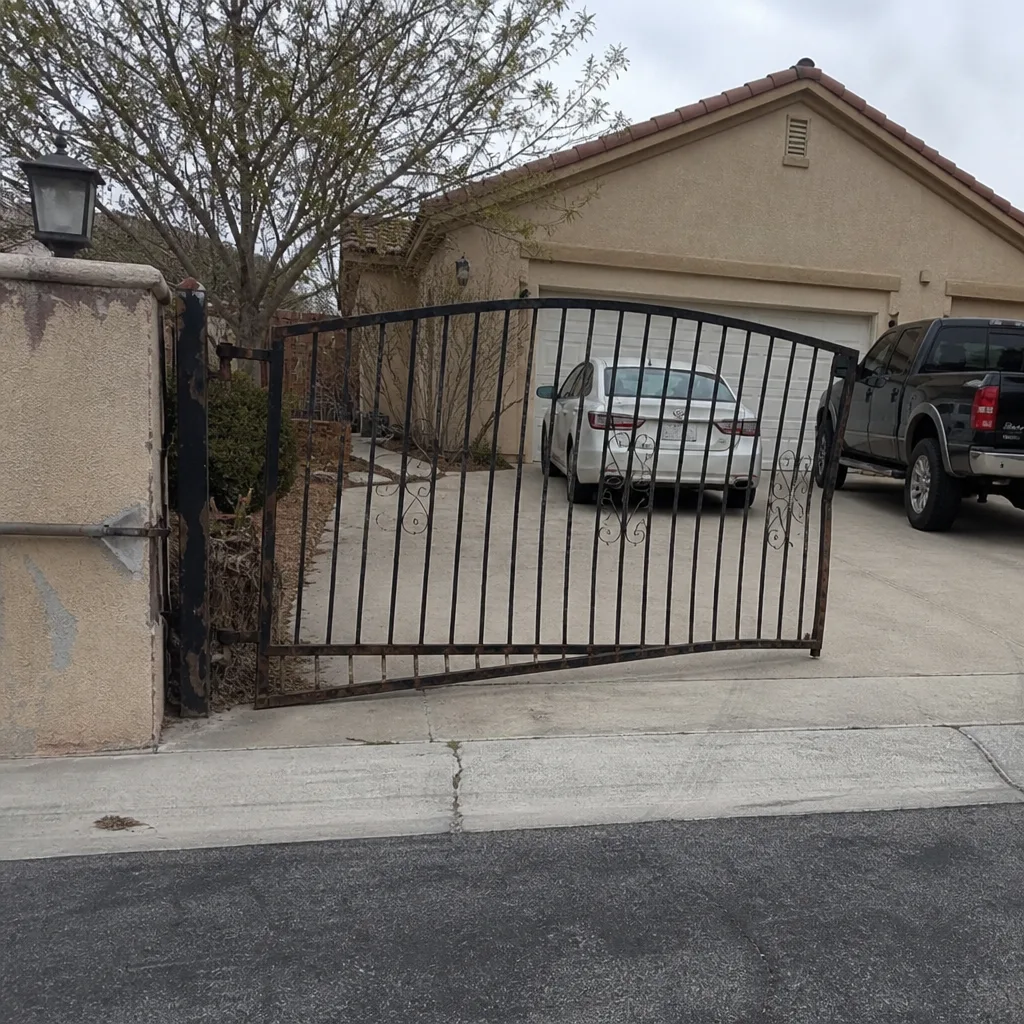 Before
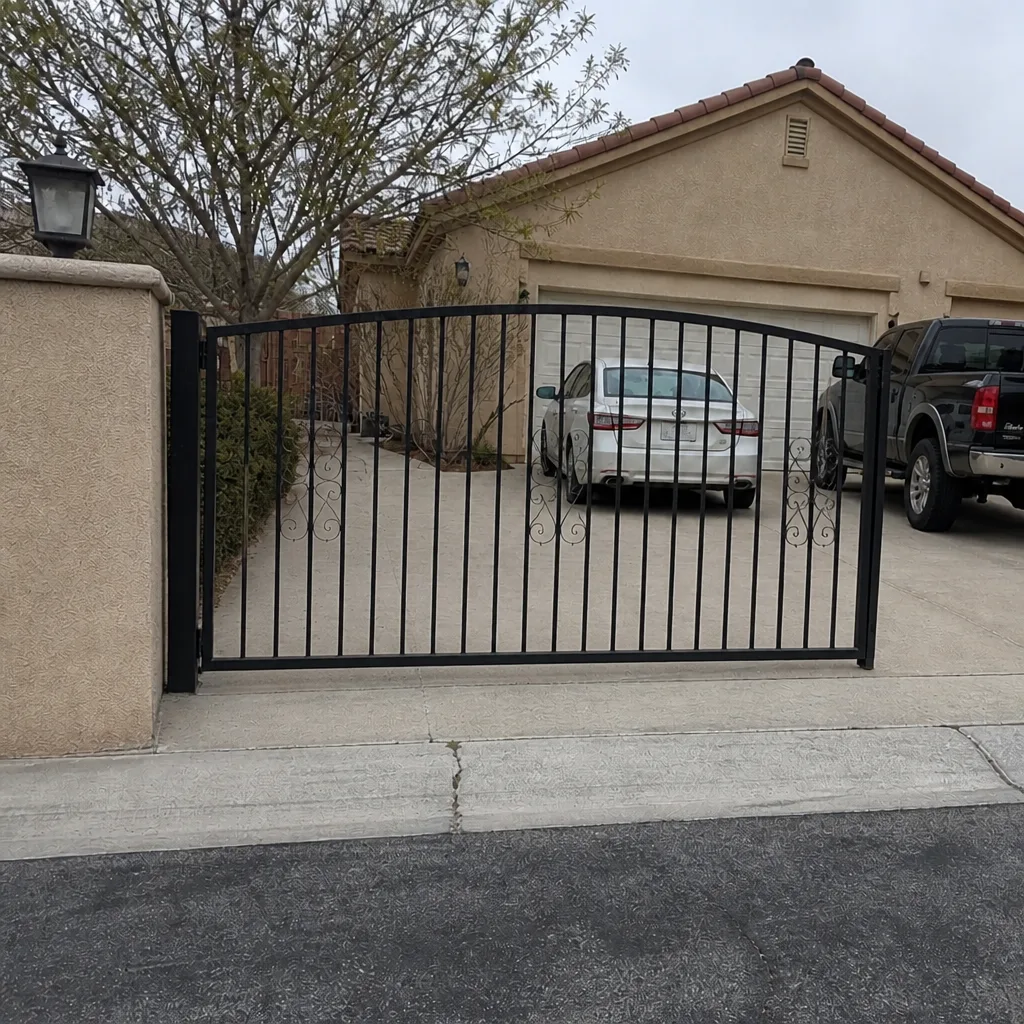 After
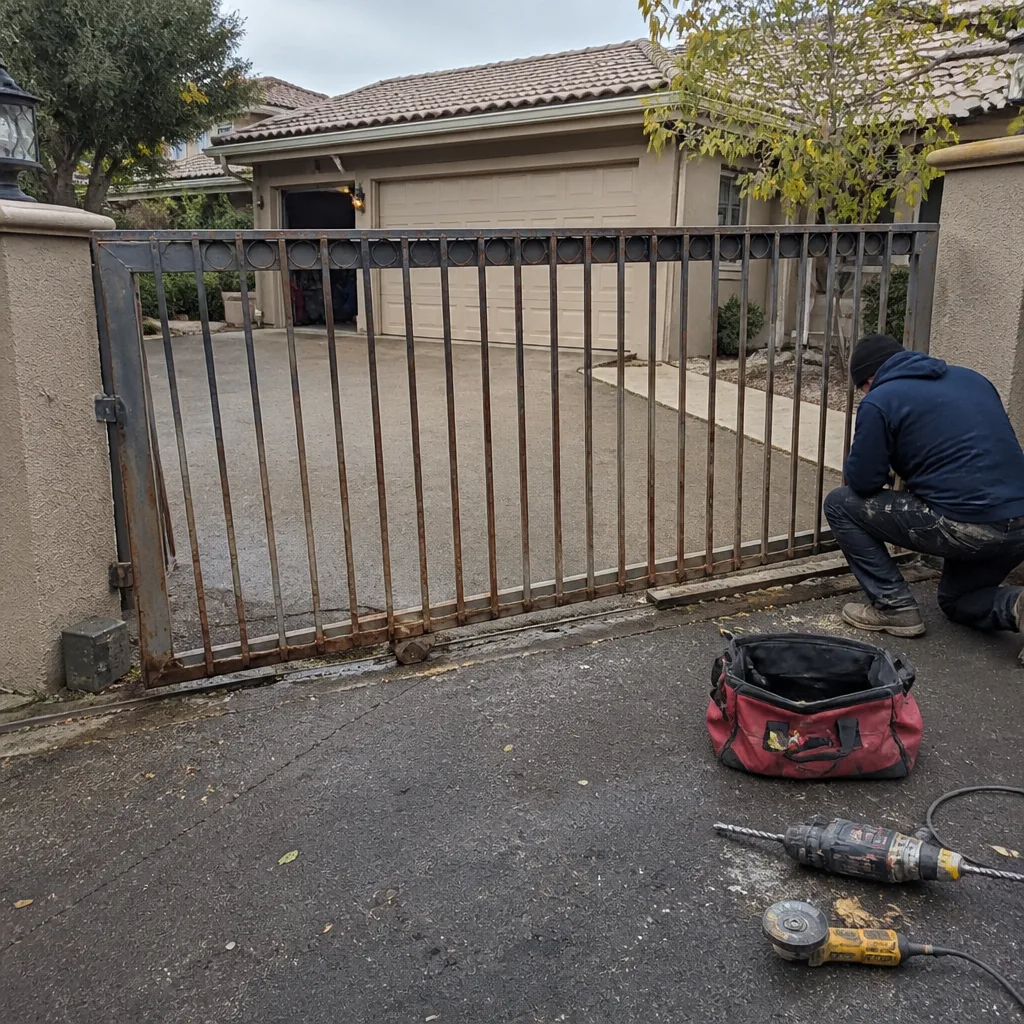 Before
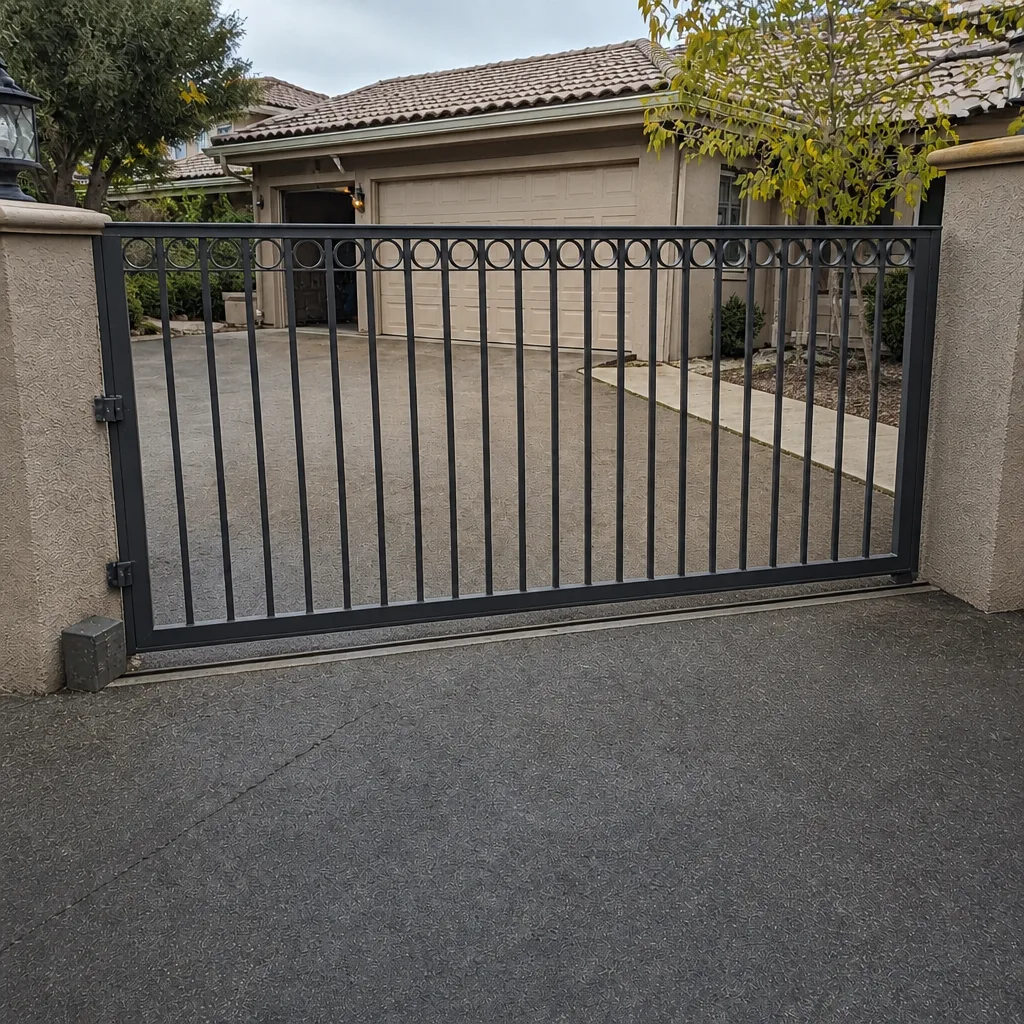 After
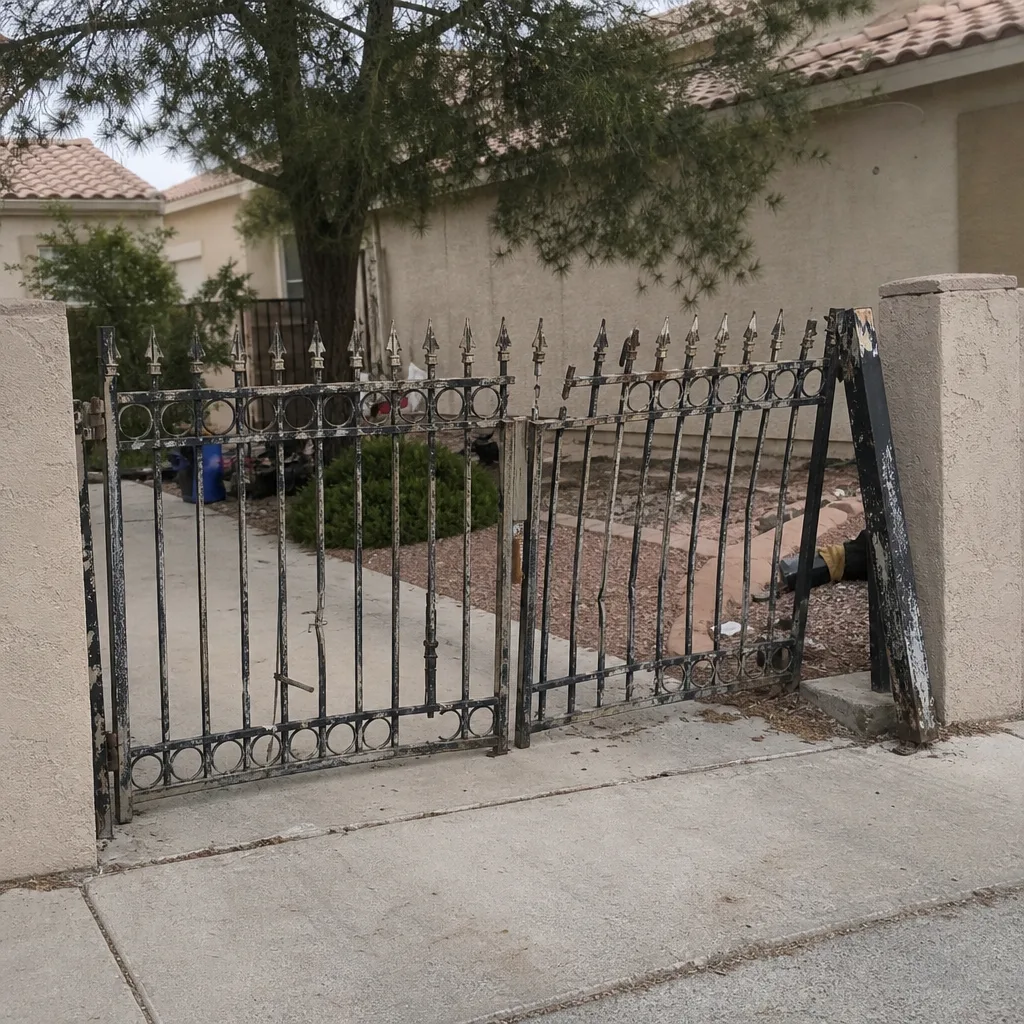 Before
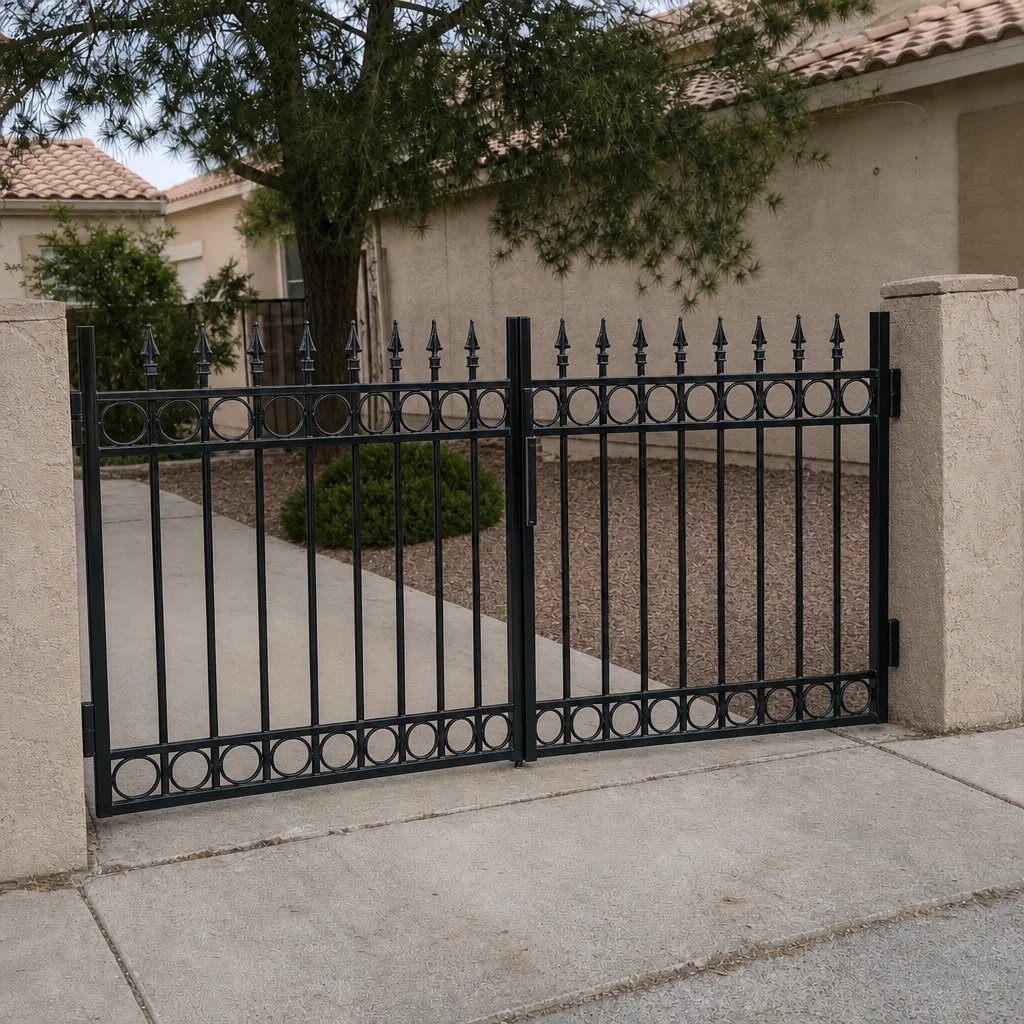 After
When to Call a Professional
Call a professional when the gate binds in heat, when the post visibly leans, when a hinge pulls loose or an operator reverses without a clear reason. These are signs of an installation issue, not a maintenance issue, and they need to be diagnosed correctly. Most can be handled in a single visit when a trained technician is doing the diagnosis from the right starting point.
If you’re in Summerlin, we offer free estimates on the repair. Our technicians are background-checked, uniformed, and trained on the nine leading automation brands. We’ll give you an upfront price settled before a single bolt is turned, and we stand behind the work with a written 90-Day Done Right Promise. Call (866) 623-9848 for a free estimate. A live person answers 24 hours a day, 7 days a week.
Frequently Asked Questions
Most gates settle into their final position within 90 days, with the first month and first big temperature swing showing the most movement. In Summerlin, expect the April-to-July shift to reveal any tolerance problem fast, so the 90-day window is the right stretch to watch closely.
Because the steel and aluminum were sized for the temperature on install day, not the summer peak. In Summerlin, an April install with April tolerances often binds by July. The fix is a professional tolerance adjustment, and it usually takes a single visit.
Not always. A faint creak in the first weeks is normal settling. A scraping sound, a gate that drags the ground, or a hinge that pulls loose is not, and should be corrected under warranty.
We don’t recommend it. Limit switches on LiftMaster and other operators are set against moving post positions, and a wrong setting can damage the motor or the gate. If your operator is drifting, a technician should re-set limits and re-check posts at the same time. It’s a short service call and it saves the larger repair.
As-built measurements, operator programming codes, sensor alignment photos, model numbers for all hardware, and the written warranty terms. Any of these missing at the end of the install is worth asking for before you pay the final invoice.
We do, and our 90-Day Done Right Promise is written and simple: if the work isn’t right, we come back and make it right. Call (866) 623-9848 for a free estimate or to schedule a look at a gate elsewhere in Summerlin that’s giving you trouble.
The Bottom Line
Most problems on a new gate come from installation decisions, not from bad parts. The first 90 days are the window where the temperature, dust and settling reveal whichever choice was made wrong: tolerance, plumb, or operator arm angle. Document the install, watch the first big temperature swing, and don’t shrug off a small noise that could become a big repair. If something’s off, a proper diagnosis from a trained technician is often one visit. Our team at Ironworks Gate Co. Summerlin offers free estimates, upfront pricing settled before work starts, and our written 90-Day Done Right Promise. Call (866) 623-9848 for a free estimate. Live person, 24 hours a day.
Written by the team at Ironworks Gate Co. Summerlin.