
Last updated November 17, 2026
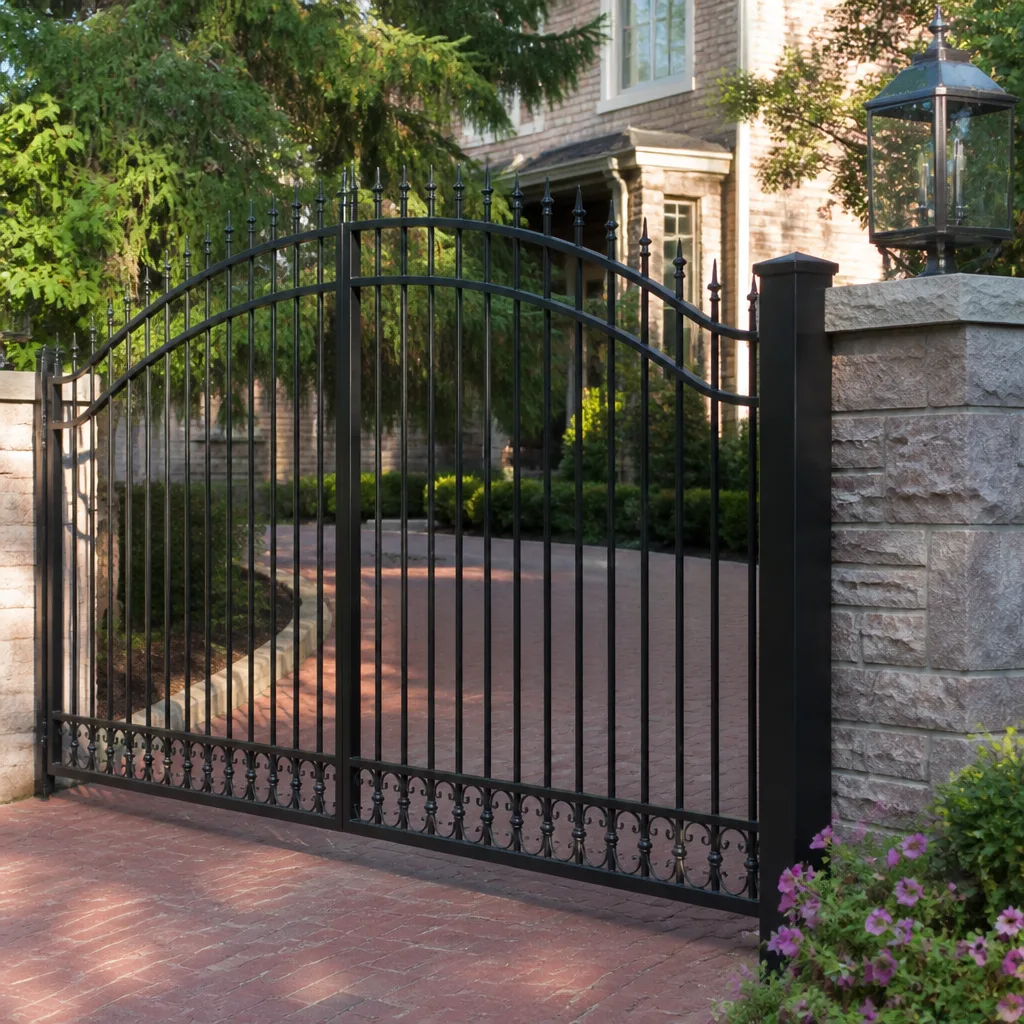 Wrought iron
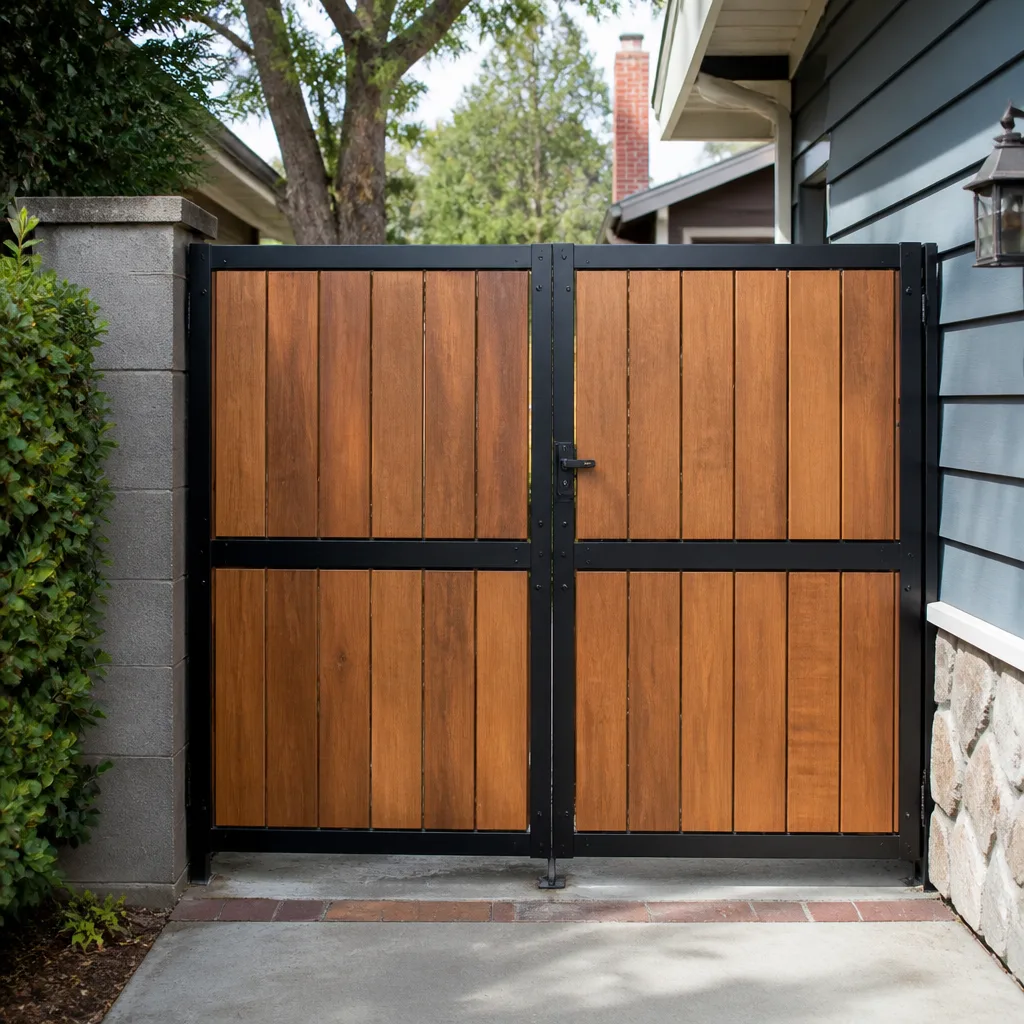 Wood & steel frame
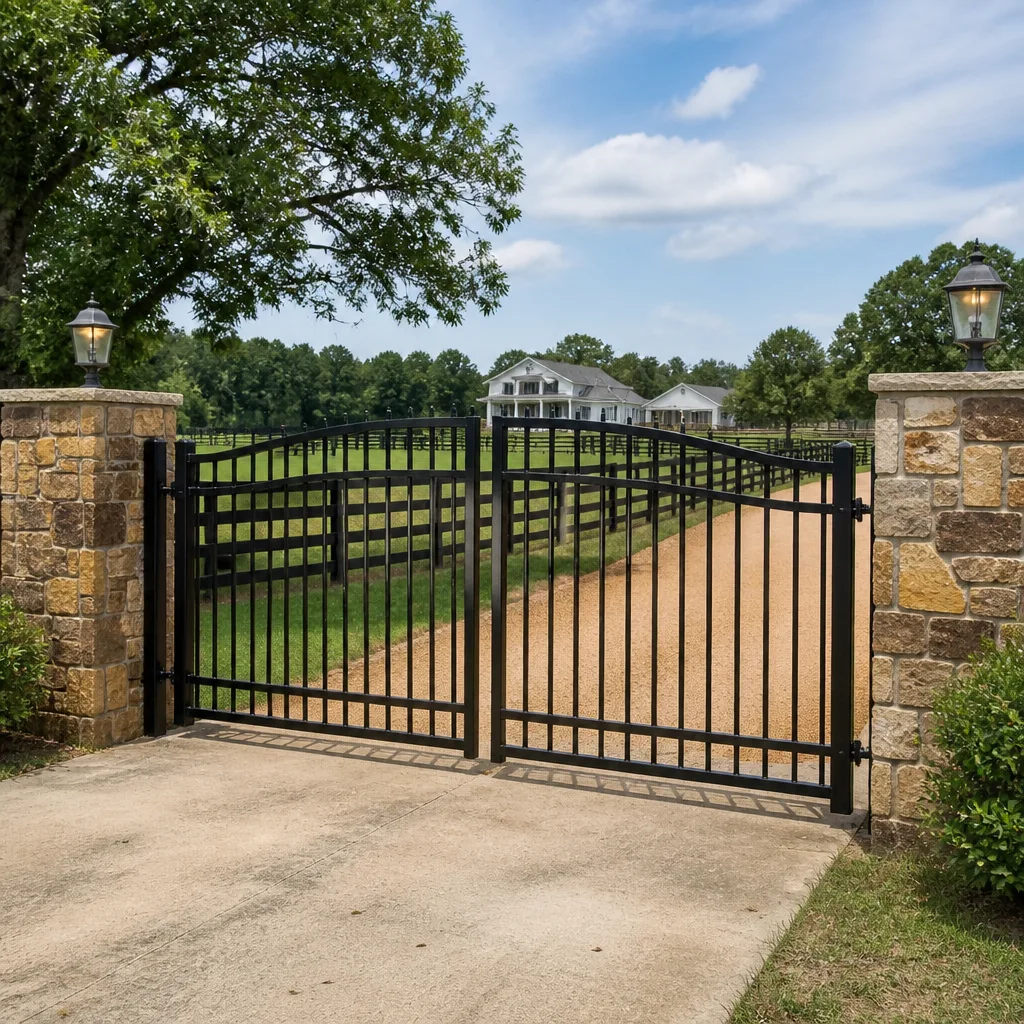 Farm & ranch
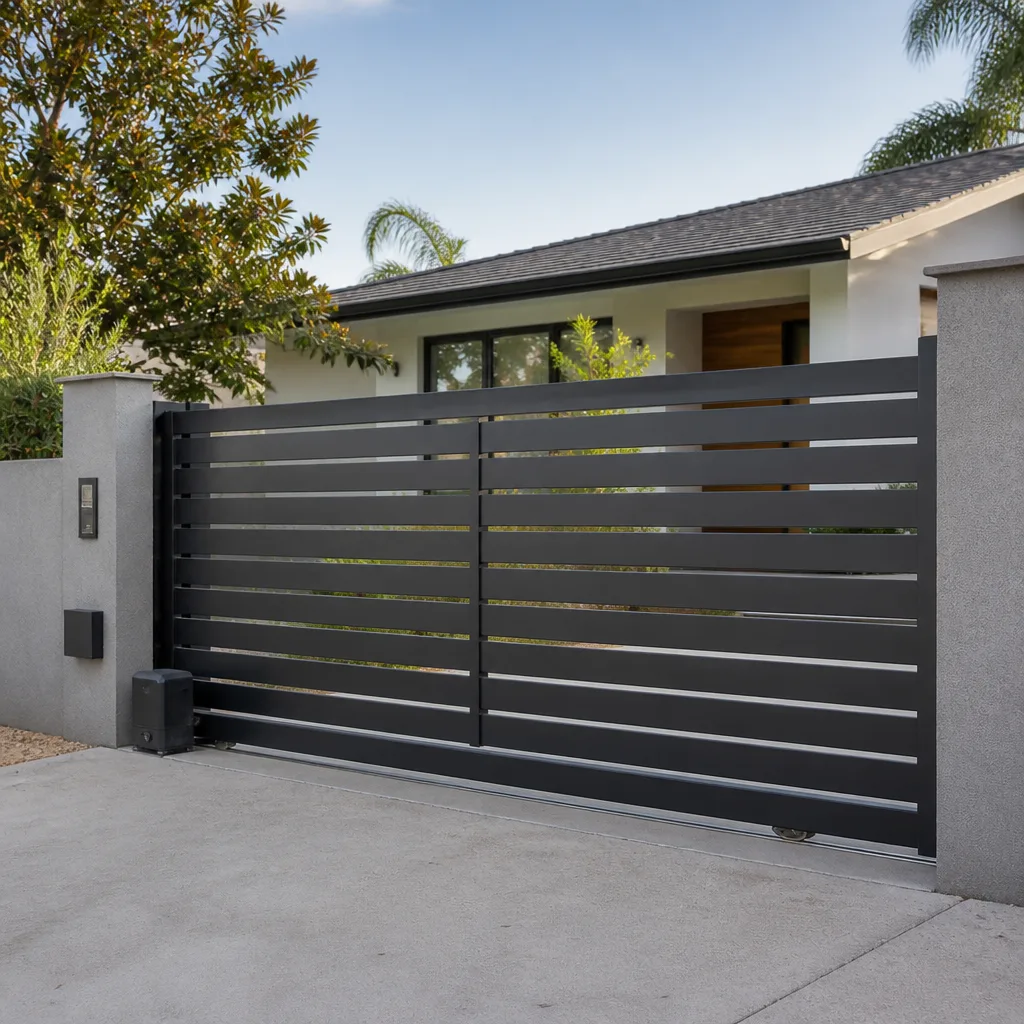 Sliding driveway gates
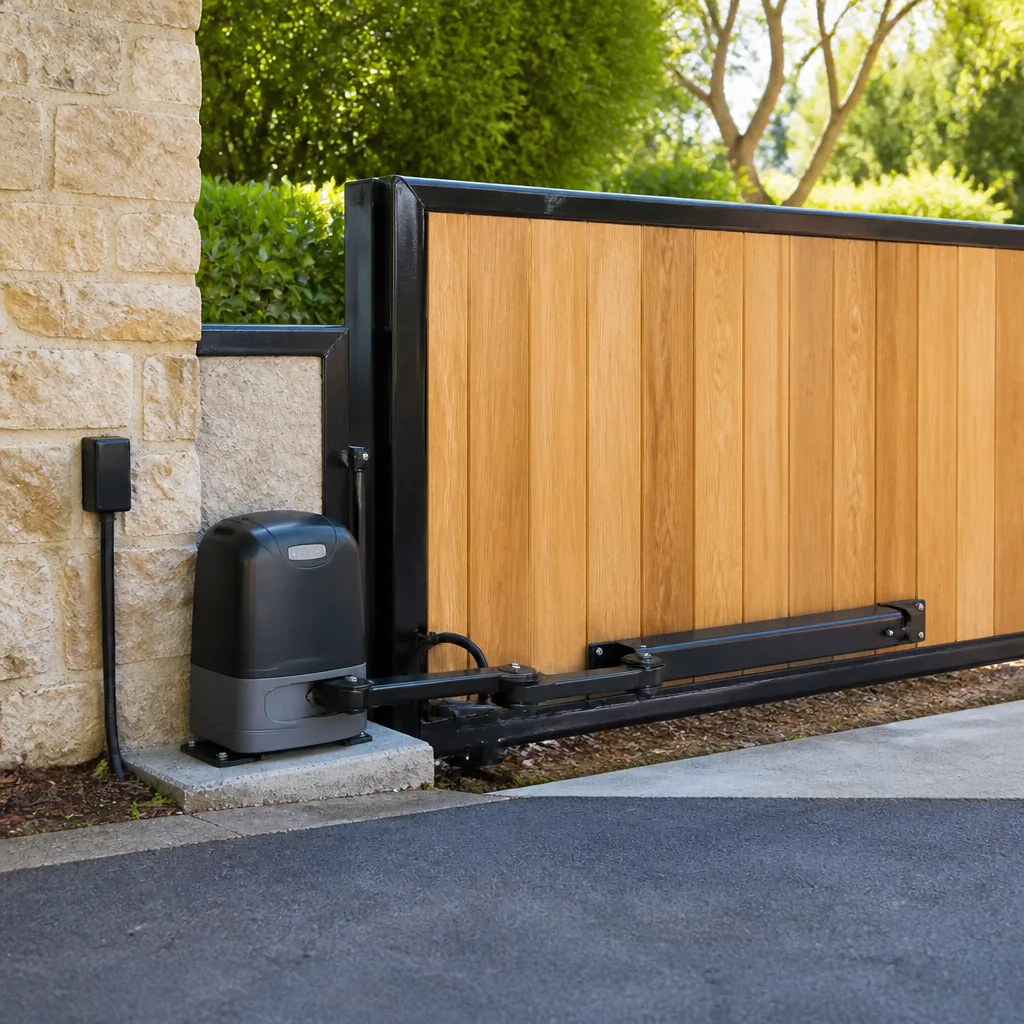 LiftMaster operators
Free on-site gate assessment - hinges, posts, and your LiftMaster or Nice gate operator checked before anything is quoted
The assessment is free and the quote is the invoice.
Get your free estimateGate Installation Warning Signs Every Homeowner Should Know
A new gate that makes a metallic popping sound in the first week isn’t “settling.” It’s telling you the weld points are under stress they shouldn’t be, and the sound will keep coming back every time the gate cycles until someone looks at it properly. We hear the same story in Summerlin again and again: the gate was fine for a season, then the latch dragged, then the opener started straining, and by the time it stopped working the real problem was six months old. This guide teaches you to read the early signals – the ones installers hope you won’t notice – so a repair bill doesn’t replace what should have been a warranty call.
Quick Answer
The clearest gate installation warning signs are a gate that doesn’t swing level at rest, cracked stucco around the post base, a cold-pour grout line, an uneven gap at the latch side, and an opener that hunts for its limits or reverses for no reason in the first week. A proper installation shows none of these. If you see even one in the first 72 hours, document it in writing and call the installer back before the window closes. Early symptoms are evidence, not break-in behavior.
Styles & brands we work with
- Wrought iron
- Wood & steel frame
- Farm & ranch
- Sliding driveway gates
- LiftMaster operators
Table of Contents
- The First 72 Hours: What a Correctly Hung Gate Looks Like at Rest
- Visual Tells of a Rushed Install in Summerlin Conditions
- Automation Red Flags in the First Week
- What a Written Warranty Should Actually Cover
- What to Say When the Installer Calls It “Normal Break-In”
- Footings, Hinges, and the Alignment Problems Baked In on Day One
- How to Document a Problem Before It Becomes Your Repair Bill
The First 72 Hours: What a Correctly Hung Gate Looks Like at Rest
A gate hung right is level, plumb, and quiet. Before you ever touch the remote, spend five minutes watching the gate at rest – open halfway and let go, then closed and latched. A properly installed gate should hold position without sagging, drift, or wobble. If a gate swings open on its own past a certain point, the hinge post isn’t plumb. If it drifts shut from a standstill, the post is leaning the other way. Neither is “just how it is.”
Walk the perimeter with a level or a phone app. Look down the edge of the gate leaf: a straight, even line on both faces means the frame was welded square. A leaf that bows out mid-span, even a quarter inch, will only get worse as it cycles. In Summerlin, the ground moves. The desert caliche under many yards doesn’t settle the way homeowners in wetter climates expect, and a footing poured too shallow will telegraph into the gate within weeks.
Here’s what to check in the first 72 hours:
- Gate at rest, half open: it holds position. No drift, no sag toward the latch side.
- Closed and latched: the latch engages with light pressure, not a shove.
- Gap at the latch side: even from top to bottom, roughly the width of a finger.
- Post bases: no cracked stucco, no hairline fractures radiating out from the corner.
- Hinge hardware: bolts tight, no shiny wear marks where paint has rubbed off in a week.
- Sound: smooth metal-on-hinge sound. Any pop, creak, or click deserves a second look.
If any of these fail, that’s not a break-in period. That’s a footing or hinge alignment issue already baked in. Visit our Ironworks Gate Co. Summerlin home to see how we handle installation calls in your neighborhood.
Visual Tells of a Rushed Install in Summerlin Conditions
Summerlin’s climate is unforgiving to sloppy work. Between the 100-plus degree summers and the monsoon swing from July through September, the ground under a gate post goes through real movement. A footing that wasn’t deep enough, or a post set without proper curing time, will show its hand fast. Here’s what the rush looks like in the desert.
Cracked stucco around the post bases. Stucco is brittle. When a footing shifts even a fraction of an inch, the stucco at the base cracks in a spiderweb pattern. If the installer patched the stucco the same day the gate went up, that patch will crack again within weeks. Cracks radiating from the corner of a base are the fastest tell that the post isn’t stable.
Grout color inconsistency signaling a cold pour. Look closely at the concrete at the base of the post. A fresh pour that cured correctly is uniform in color. If you see a lighter, chalky patch next to a darker, wetter-looking one, the installer mixed or poured in stages and the concrete didn’t set as one mass. A cold joint is a weak joint, and it will separate as the ground moves.
Uneven gap at the latch side. Run a finger down the gap between the gate leaf and the receiver post. It should be even top to bottom. If it’s tight at the top and wide at the bottom, the gate is racked – the post tilted or the leaf is out of square. It will drag on the latch within months.
Paint runs or welding spatter on the hinge side. A welder working too fast leaves spatter. A rushed painter leaves runs. Neither affects function immediately, but both signal the installer was in a hurry – and a hurry on the finish usually means a hurry on the footing too.
For the full scope of what a proper installation includes, see our Gate Installation in Summerlin page.
Automation Red Flags in the First Week
The gate hardware is only half the install. The opener is the other half, and automation problems in the first week are the easiest of all to catch because the motor tells you everything. We service BFT, Linear, Viking, and Ghost Controls units regularly, and the early symptoms are consistent across every brand.
- Opener hunts for its limits repeatedly. A properly programmed opener learns its open and close limits once and holds them. If the gate hesitates, backs up, tries again, and repeats every few cycles, the limits are drifting. Either the gate leaf is moving out of alignment or the travel limits weren’t set correctly at install. Left alone, the opener will eventually time out and stop mid-cycle.
- Remote range shorter than spec. Check the spec sheet for your unit – most driveway openers are rated for 100 to 150 feet. If your remote only works from 30 feet, the receiver antenna is likely pinched, misrouted, or blocked by a metal post. A proper install tests range from the far end of the driveway before the installation day ends.
- Gate reverses without obstruction. The safety edges should only trigger a reversal when something is in the way. If the gate backs off with nothing near it, the safety edge is miswired or the control board is reading phantom resistance – often a sign of a bad splice or an unlevel track. This is a hard safety issue, not a quirk.
- Opener runs hot or trips the breaker. A motor working against a binding gate draws more current. If the opener is warm to the touch after a few cycles or the breaker trips, stop using it and get it looked at.
If the automation was installed alongside the gate, the same crew should fix it. Our Gate Motor & Opener in Summerlin team handles the automation side of the install directly.
What a Written Warranty Should Actually Cover
“Call us if anything goes wrong” is a sentence, not a warranty. In legal terms, it obligates no one to do anything – it’s a verbal courtesy, and it expires the moment the installer stops returning calls. A written warranty names what’s covered, for how long, and what happens if a covered failure occurs. If you don’t have one on paper, you don’t have a warranty.
A real gate installation warranty should cover, at minimum:
- Workmanship: footing, hinge alignment, weld integrity, and level/plumb tolerances for a defined period.
- Automation installation: limit settings, safety edge function, receiver placement, and control board wiring.
- Response commitment: a stated window for coming back to a covered call – not a promise to “get to it.”
- What voids coverage: typically owner modification, vehicle impact, or third-party repair.
- Written terms: a document you can hold, not a conversation you remember.
What it should not do is bury exclusions in language you can’t read. If the warranty page is full of “normal wear and tear” language that covers everything from a broken latch to a snapped weld, the warranty is a marketing document. Ask for the terms in plain English before the crew leaves. Our 90-Day Done Right Promise is written that way: if the work isn’t right, we come back and make it right – no paperwork, no arguing. That standard applies to every job, including the ones we didn’t originally install, through Gate Repair in Summerlin.
What to Say When the Installer Calls It “Normal Break-In”
When you call back with an early symptom, the response you’re most likely to hear is that the gate is “settling in” or “just breaking in.” That’s the moment to switch from conversational to written. Here’s language that works, taken from what we recommend to homeowners in Summerlin who call us for a second opinion.
- Name the symptom and the date. “On Tuesday, the third day after install, the gate made a metallic pop each time it closed. I noted it in the photos I’m sending.”
- Ask for the warranty in writing, by email. “Please send me the written warranty terms for this installation so I can review what’s covered.” If the warranty is verbal only, ask for it in writing.
- Ask them to inspect, not explain. “I’d like someone to come out and inspect the hinge and footing. If it’s normal, I’d like that in writing.” An installer confident it’s normal will put it in writing. One who won’t may be hoping you drop it.
- Give a deadline. “If I don’t hear back by Friday, I’ll be bringing in another company to inspect and will hold the installation invoice.” Most reputable installers move on this.
- Document everything. Photograph the symptom, keep the texts and emails, and note every cycle count. If it ends up in small claims, a dated photo log is the whole case.
If the original installer won’t budge, ask for a free second opinion. We offer one in writing on any estimate, and it’s the fastest way to know whether you’re dealing with a real defect or a real annoyance. A second opinion in Summerlin on a gate installation is usually a short visit.
Footings, Hinges, and the Alignment Problems Baked In on Day One
Most of what goes wrong with a gate was decided the day the footing was dug. The footing is the concrete anchor that holds the hinge post to the ground, and its depth, diameter, and curing time determine whether the gate stays plumb for twenty years or starts drifting in six months. In Summerlin’s caliche and decomposed granite soil, a footing has to be set correctly the first time – there’s no easy re-dig later.
Here’s what a proper footing involves, so you know what to ask about:
- Depth and diameter matched to the gate weight and the soil – a heavier gate and looser soil need a bigger footing, not the same size for every job.
- Curing time before the gate is hung. Concrete reaches workable strength in a few days, full strength in about a month. Hanging a gate the same afternoon as the pour is a shortcut that shows up later.
- Bell-shaped or flared base to resist uplift, especially where the ground swells and shrinks with the monsoon.
- Hinge post plumb in both directions, not just one. A post that’s plumb left-to-right but leaning forward will sag the gate every time.
- Weld quality on the hinge brackets – full penetration, not spot welds.
If your gate came with the house or was installed years ago, we can inspect the footing and hinge alignment as part of a repair visit. That’s the whole point of a gate specialist doing the work: the weld and the footing are the job, not an afterthought. Our technicians have up to 13 years of experience, and the 400th footing gets the same care as the first.
How to Document a Problem Before It Becomes Your Repair Bill
The single most useful thing you can do in the first week is build a record. A dated photo and a short note catch what a memory can’t, and they make the difference between an installer who fixes it and one who claims it was fine when they left. It takes ten minutes.
- Photograph the gate at rest from both sides, at the closed and half-open positions, on installation day.
- Photograph the post bases and latch gap with a coin or tape measure in frame for scale.
- Record a short video of a full open-and-close cycle with sound. The pop, creak, or hesitation is the evidence.
- Note the date and cycle count for every symptom you see. “Day 3, roughly 40 cycles, metallic pop at close” is a record.
- Save the written warranty and invoice in a folder you’ll find again.
- Email the symptom to the installer the day you notice it, so there’s a timestamp in their inbox.
This is the difference between a warranty call and a repair bill. It also kills the “normal break-in” argument on the spot, because you have the footage and the date.
Common Mistakes to Avoid
- Waiting for “the settling period” to end. A gate that’s popping, dragging, or drifting in week one won’t fix itself. Waiting past the warranty window turns a covered call into a paid repair.
- Accepting a verbal warranty. “Call us if anything goes wrong” is legally nothing. Ask for the terms in writing before you pay.
- Assuming the new gate just needs adjusting. A gate that’s racked within a month usually has an out-of-plumb post, not a loose hinge. Tightening the hinge won’t fix a footing problem.
- Not testing the remote range before the crew leaves. Walk to the far end of your Summerlin driveway and push the remote. If it doesn’t work from there, it’s not going to work from there later.
- Ignoring the safety edge check. A gate that reverses without an obstruction is a hazard to pets, kids, and cars. Test it the day of install and again after any storm.
- Letting a general handyman or a one-truck outfit do the automation. A gate opener is a safety device with its own code and its own limits. The crew should be trained on the specific brand on your driveway.
- Not checking the stucco around the post base. In Summerlin, stucco cracks are the earliest and least expensive warning sign you get. Look for them at day 7, day 30, and after the first monsoon.
See the difference
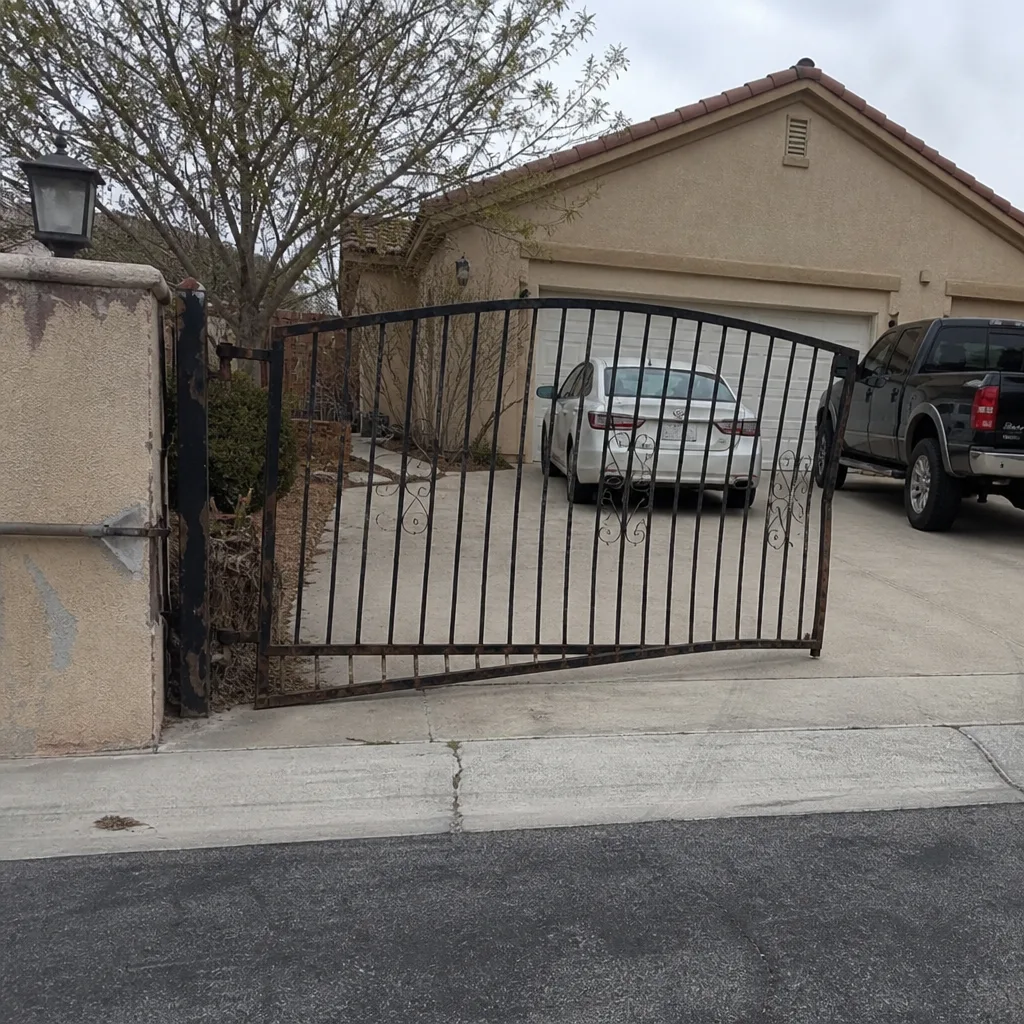 Before
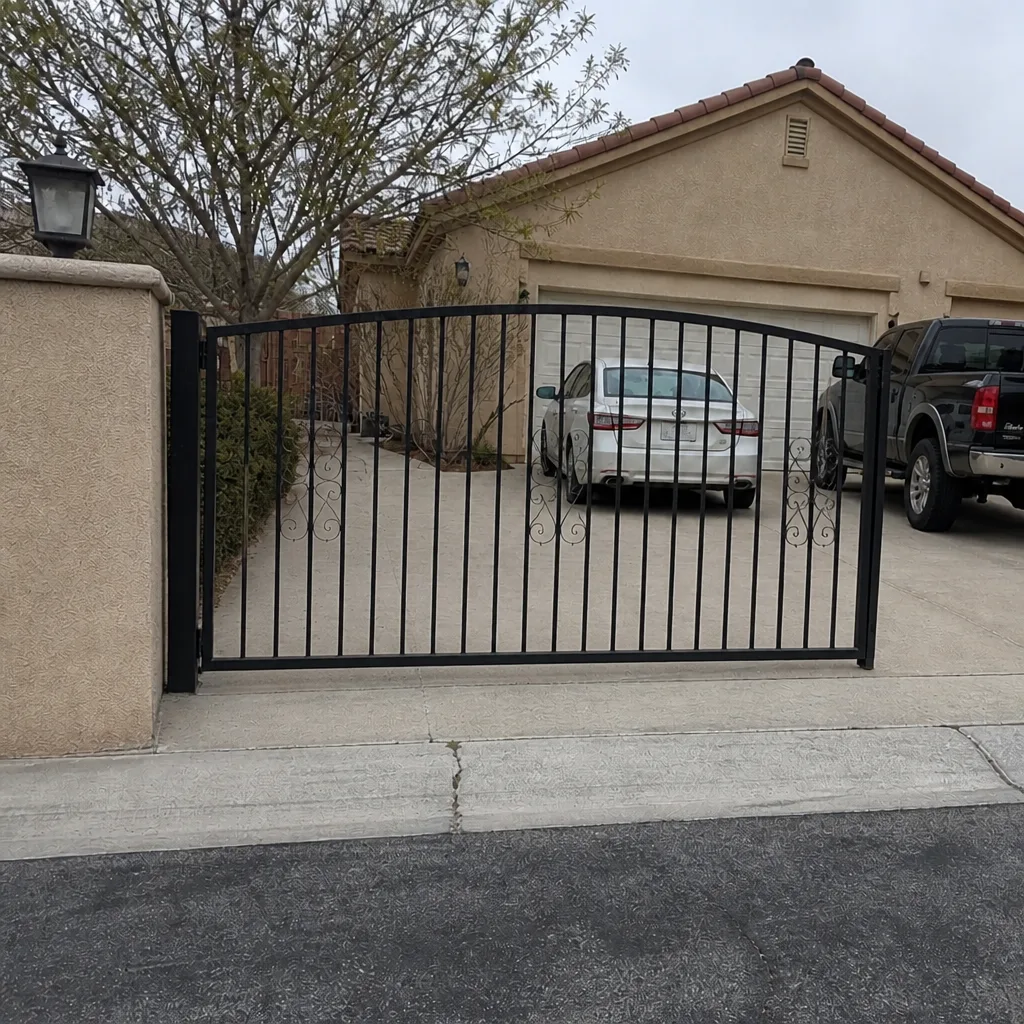 After
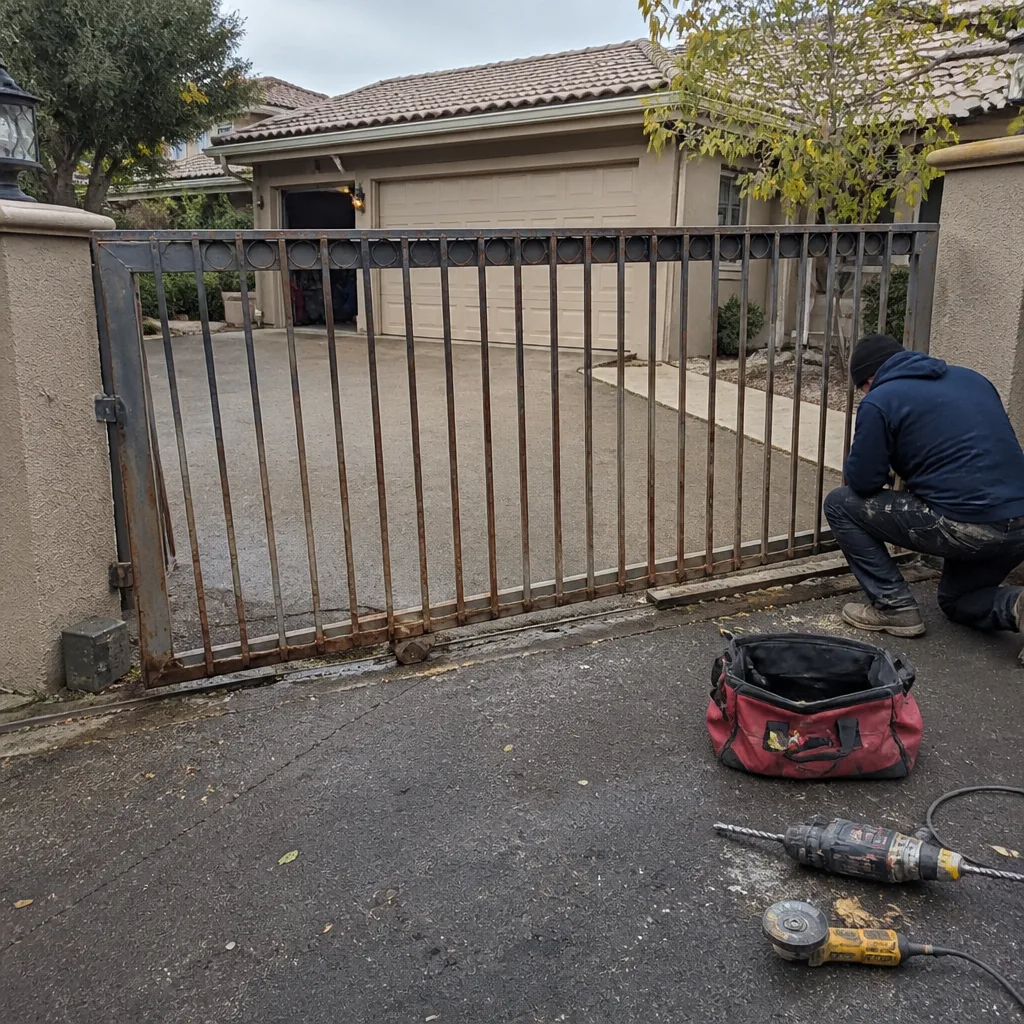 Before
 After
 Before
 After
When to Call a Professional
Call a professional if you see any of the following: a gate that doesn’t hold position at rest, cracked stucco at the post base, an opener that hunts for its limits, a gate that reverses without an obstruction, a remote with a range well under spec, or any metallic pop or creak in the first month of use. These aren’t DIY adjustments – a misaligned footing and a misprogrammed safety edge are the two things that put a gate on a repair schedule that never ends. A trained installer can measure alignment and inspect weld integrity on-site, and our technicians are trained on nine leading gate automation brands, so whatever is on your driveway, the correct fix happens on the first visit. Ironworks Gate Co. Summerlin offers free estimates in Summerlin – call (866) 623-9848. A live person answers, day or night.
Frequently Asked Questions
Real installation problems show up within the first 72 hours if you know what to look for – a pop, a drift at rest, an uneven latch gap, a cracked stucco line at the post base. Anything that shows in week one is almost always installation-related, not wear and tear. If the gate looked and sounded fine for three days and then started misbehaving, that’s the moment to document it and call it in.
Very little. A well-hung gate with a properly programmed opener doesn’t need a break-in period in the way a new pair of boots does. Metal hinges and welded frames are either aligned correctly at install or they aren’t. The one legitimate break-in item is a small settling of the hinge grease, which you’ll notice as slightly quieter operation after a week – not as a pop, a creak, or a drag. Call (866) 623-9848 if you’re not sure what you’re hearing; we’ll tell you straight.
Cracked stucco at a gate post is the clearest visual sign that the footing has moved. Summerlin’s soil swings between dry season and monsoon, and a footing that wasn’t set deep enough will telegraph its failure into the stucco within weeks. It’s an inexpensive thing to check and an expensive thing to ignore, because a footing failure leads to post replacement, not a patch.
No. “Call us if anything goes wrong” is not a legal obligation in any meaningful sense – it names no work, no timeframe, and no remedy. Ask for the warranty in writing, with the workmanship coverage, the automation coverage, and the response window on the page. If you don’t get one, you have a handshake, not a warranty.
It can be. A gate that reverses on its own is often misreading resistance, which means the safety edge isn’t calibrated – and a misread edge can miss a real obstruction. Stop relying on the gate until it’s inspected. Our team services BFT, Linear, Viking, Ghost Controls, and the other major brands on the driveway, so the correct fix is a phone call away. Call (866) 623-9848 for a free second opinion on any written estimate.
Document the symptoms with dated photos and a video, attach the original invoice and any written warranty, and get a second opinion in writing. That gives you the option to either hold the installer accountable or move forward with a repair, and it settles the question of whether it’s a real defect quickly. Call Ironworks Gate Co. Summerlin at (866) 623-9848 for a free estimate and a written second opinion.
The Bottom Line
The install mistakes that cause a gate to fail were made weeks or months before the failure became visible, and nearly every one of them left evidence in the first 72 hours. A correctly hung gate holds position at rest, shows an even latch gap, has clean stucco at the post bases, and runs its opener without hunting, reversing, or a short remote range. A written warranty names the work, the timeframe, and the response – a verbal one names nothing. Document what you see, call it in early, and hold the installer to the terms in writing. Done right, the gate should outlast the warranty by decades. Done wrong, you’ll find out in the first monsoon. Written by the team at Ironworks Gate Co. Summerlin.
Contact
If you’re in Summerlin and any of the signs in this guide sound familiar, call (866) 623-9848 for a free estimate. A live person answers, day or night, and we’ll come out, measure the gate, and give you a written price before any work starts. Done right, and backed in writing by the 90-Day Done Right Promise.