
Last updated November 17, 2026
 Wrought iron
 Wood & steel frame
 Farm & ranch
 Sliding driveway gates
 LiftMaster operators
Free on-site gate assessment - hinges, posts, and your LiftMaster or Nice gate operator checked before anything is quoted
The assessment is free and the quote is the invoice.
Get your free estimateDIY vs Professional Gate Access Control: What’s Safe to Do Yourself
Reprogramming a keypad code is safe to do yourself. Splicing low-voltage wiring at the control board is not, but most YouTube tutorials treat both with the same casual confidence. That gap is where homeowners get hurt, void a warranty, or quietly break a safety system that looks fine from the driveway. The real line in gate access control isn’t drawn at difficulty. It’s drawn at liability. In this guide, we’ll redraw that line honestly for Summerlin homeowners: what you can safely handle, what can corrupt a system that protects your home, and a 60-second test for knowing which side of the line a task falls on.
Quick Answer
Safe DIY tasks involve only what the manufacturer designed you to touch: changing keypad codes, replacing remote batteries, reconnecting the smartphone app, and swapping a dead backup battery. Anything involving wiring at the control board, loop detector tuning, board replacement, or safety-edge adjustments is technician work, because a mistake there can void an insurance claim, leave a gate that fails dangerously, or brick an opener. When in doubt, treat wiring as off-limits and call a professional.
Styles & brands we work with
- Wrought iron
- Wood & steel frame
- Farm & ranch
- Sliding driveway gates
- LiftMaster operators
Table of Contents
- The Real DIY Line: User-Level vs Technician-Level
- User-Level Tasks You Can Do Safely
- Technician-Level Tasks That Should Never Be DIY
- Insurance and HOA Liability in Summerlin Communities
- Why “It Seems to Be Working” Isn’t the Same as Safe
- The Nine Brands We Service and Their DIY Warnings
- The 60-Second Three-Question Test
- Common Mistakes to Avoid
The Real DIY Line: User-Level vs Technician-Level
Gate access control splits into two worlds that look identical on the outside. One is the user interface: the keypad, the remotes, the app, the occasional battery. The other is the control system: the board, the wiring, the loop detectors, the safety sensors. Manufacturers design the first world for you to operate. The second world they seal, warn about, and warranty conditionally.
The confusion happens because both worlds meet at the same keypad housing. A homeowner replacing a keypad and a technician replacing the board behind it both have their hands on the same post. But one is changing a code, and the other is handling mains voltage and a reversing logic that protects anyone standing under the gate.
Here’s the practical split we use when talking with Summerlin homeowners:
- User-level: codes, remotes, app pairing, battery swaps, cleaning, visual inspection.
- Technician-level: wiring, voltage checks, loop detectors, board work, safety sensors, motor adjustments, limit switches.
The test isn’t how hard the task feels. It’s whether a mistake can shock you, void a warranty, or create a gate that closes on someone. Anything that touches a live conductor or a safety circuit belongs to the second group no matter how simple the tutorial makes it look. In master-planned Summerlin communities, where gates guard shared driveways and community entries, that line carries extra weight.
User-Level Tasks You Can Do Safely
These are the tasks manufacturers expect you to handle, and doing them yourself saves a service call without putting anyone at risk. If your opener is a LiftMaster or a DoorKing, the manual shows exactly where each one lives.
- Changing a keypad code. This typically means entering the master code, pressing a programming key, and entering the new code twice. Ten minutes, no tools, no wiring.
- Replacing remote batteries. Open the fob, match the coin-cell number, and replace. Some remotes need a quick re-pair after a battery swap; the manual covers it.
- Reconnecting the smartphone app. If the gate stops responding to the app after a Wi-Fi change, re-adding the device in the app usually fixes it. No hardware involved.
- Swapping the backup battery. Most openers use a sealed backup battery you can slide out and replace. Keep the same voltage and type.
- Visual inspection. Walk the gate, look for sag, listen for a change in the motor’s sound, check the keypad for cracks. You’re not fixing anything; you’re noting what changed.
Anything past this list, and you’re in the other lane. The moment a screwdriver goes near the control box, stop and reassess. Our gate motor and opener service in Summerlin exists precisely because a ten-minute battery swap is fine and a twenty-minute board swap is not.
Technician-Level Tasks That Should Never Be DIY
This is the half most homeowners attempt and most tutorials gloss over. Every task below involves either line voltage, a safety circuit, or a component whose failure mode is dangerous rather than obvious.
- Wiring at the control board. Even low-voltage control wiring sits inches from mains voltage inside the housing. A crossed lead can destroy the board or energize the gate frame.
- Loop detector tuning. Vehicle loops sense metal in the ground and trigger the gate. A mis-tuned loop ghost-triggers at 2 a.m., or worse, fails to detect a car sitting on it.
- Control board replacement. Boards are matched to the motor, the safety edges, and the accessories. The wrong board or a reversed connector can defeat the reversing logic that stops the gate on contact.
- Safety-edge and photo-eye work. These are the components that prevent a gate from closing on a person, a pet, or a car. Adjusting them without the right test equipment means you don’t actually know whether they work.
- Limit switch and travel adjustment. The gate needs to stop at exactly the right points. A few degrees off, and it slams, stalls, or reverses mid-travel.
Our technicians have up to 13 years of experience on these systems, and even they don’t guess at a board. They meter it. That’s the difference between “I think it’s the board” and “I know it’s the board.”
Insurance and HOA Liability in Summerlin Communities
Summerlin’s master-planned structure changes the calculus. Many homes here sit behind shared community gates, and the association’s rules typically require that any modification to access control be done by an insured, licensed trade. Do the wiring yourself, and you may have voided coverage on a shared asset.
Two things are worth knowing before anyone touches a gate in Summerlin:
- Homeowner’s insurance: most policies exclude damage caused by unpermitted electrical work. If a self-wired gate shorts and damages the motor, the policy may decline the claim, and the HOA may bill you for the shared-entry repair.
- HOA rules: in Summerlin communities like The Ridges or Red Rock Country Club, access control is usually a common element. Alterations without association approval and a licensed installer’s documentation can trigger a violation notice and a fine.
That’s not a scare tactic. It’s the practical reason we document every job we complete with a written invoice and a warranty, so when the association asks, the paperwork is ready. A pro job protects you not just from the repair going wrong, but from the paperwork going wrong afterward. If you’re weighing whether an install or a repair is the smarter path, our gate installation in Summerlin page walks through what’s involved.
Why “It Seems to Be Working” Isn’t the Same as Safe
A gate that opens and closes smoothly can still be unsafe. The failures that matter most are the ones that look like success from the driver’s seat.
Take ghost-triggering. A loop detector tuned too hot will open the gate for a passing UPS truck, a motorcycle, or a neighbor’s metal edging. The gate works, so it looks fine. But it means the gate is opening without a real vehicle present, and a child walking behind it can get caught in a closing cycle the system never anticipated. That’s a loop tuning problem, and no amount of keypad retyping fixes it.
Then there’s the fail-safe question. Modern operators are designed so that when a sensor fails, the gate defaults to staying open and safe, not to closing and dangerous. A DIY board swap or a rewired photo-eye can invert that logic. The gate still runs. The safety default is now backwards, and nobody finds out until it matters.
The honest rule: if you can’t test a safety function under real conditions, you can’t say it’s safe. You can say it appears to work. Those aren’t the same, and in Summerlin, where driveways often back onto curving shared streets, the margin for error is thin. Our gate repair in Summerlin work regularly begins with re-testing safety functions a homeowner adjusted months ago.
The Nine Brands We Service and Their DIY Warnings
Every major manufacturer we work with puts a warranty warning on board-level DIY work, and the language is consistent enough to be worth quoting in spirit: unauthorized service voids coverage on the affected components. We’re trained and equipped on nine brands, so we know which ones are strictest about this.
- DoorKing: commercial-grade hardware, and the onboard documentation is explicit that board service is installer-only. We see a lot of these on Summerlin estate entries.
- LiftMaster: consumer-friendly for user tasks, firm on board-level service. Keypad work fine; board swap voids the warranty on the board.
- Elite: heavy-duty swings where an incorrect wiring change can damage the operator and, if it defeats the safety reversals, the installer’s liability shifts to the homeowner.
- Mighty Mule: the DIY-friendly reputation is real for installation, but the control board and safety sensors still carry manufacturer warnings. The friendliness stops at the housing door.
Alongside these we service FAAC, BFT, Linear, Viking, and Ghost Controls. The pattern holds across all nine: user tasks welcome, board and safety work reserved for the trade. That’s not gatekeeping; it’s how the warranties are written, and how they stay valid.
The 60-Second Three-Question Test
When you’re looking at a task and wondering whether it’s yours, ask three questions in order. The first “yes” sends you to a phone, not a screwdriver.
- Does it involve opening the control housing or touching any wire? If yes, it’s technician work. Full stop.
- Does a mistake here affect a safety function, another person’s access, or the warranty? If yes, it’s technician work, because the failure mode isn’t a broken gate, it’s a liability.
- If I get this wrong, do I have a way to prove it’s fixed? If the answer is no, it’s technician work. “It opened when I tried it” is not proof.
If all three come back no, you’re in your lane. Change the code, swap the battery, re-pair the app. If any answer is yes, that’s the moment to call. It’s a simple filter, and it’s saved Summerlin homeowners from more ruined boards than any tutorial.
Common Mistakes to Avoid
- Trusting a tutorial more than the manual. A general video doesn’t know whether you have a LiftMaster or a Viking. The manual does.
- Splicing a photo-eye to “make it work.” Bypassing a safety sensor is the single fastest way to create a gate that’s dangerous and a warranty that’s void.
- Re-tuning a loop detector by ear. Loops aren’t tuned by sound. They’re tuned with a meter, and a mis-tuned loop ghost-triggers for years without anyone noticing.
- Ignoring HOA approval for shared gates. In Summerlin’s master-planned communities, unapproved work on a common element brings a violation notice faster than it brings a fix.
- Assuming a working gate is a safe gate. Reversing functions can fail silently. Test them or have them tested.
- Doing a quick board swap with a generic part. Boards are matched to the operator. A mismatched board can leave the motor and the safety logic out of agreement.
- Skipping the seasonal check. Small problems, like a worn hinge or a loose latch, turn into big ones faster than you’d think in the high desert heat.
Summerlin sits in a desert climate where dust, sun exposure, and wide temperature swings work on metal and electronics year-round. A gate that’s fine in spring can drift out of adjustment by late summer. Our Ironworks Gate Co. Summerlin home page lays out the full scope of what we service.
See the difference
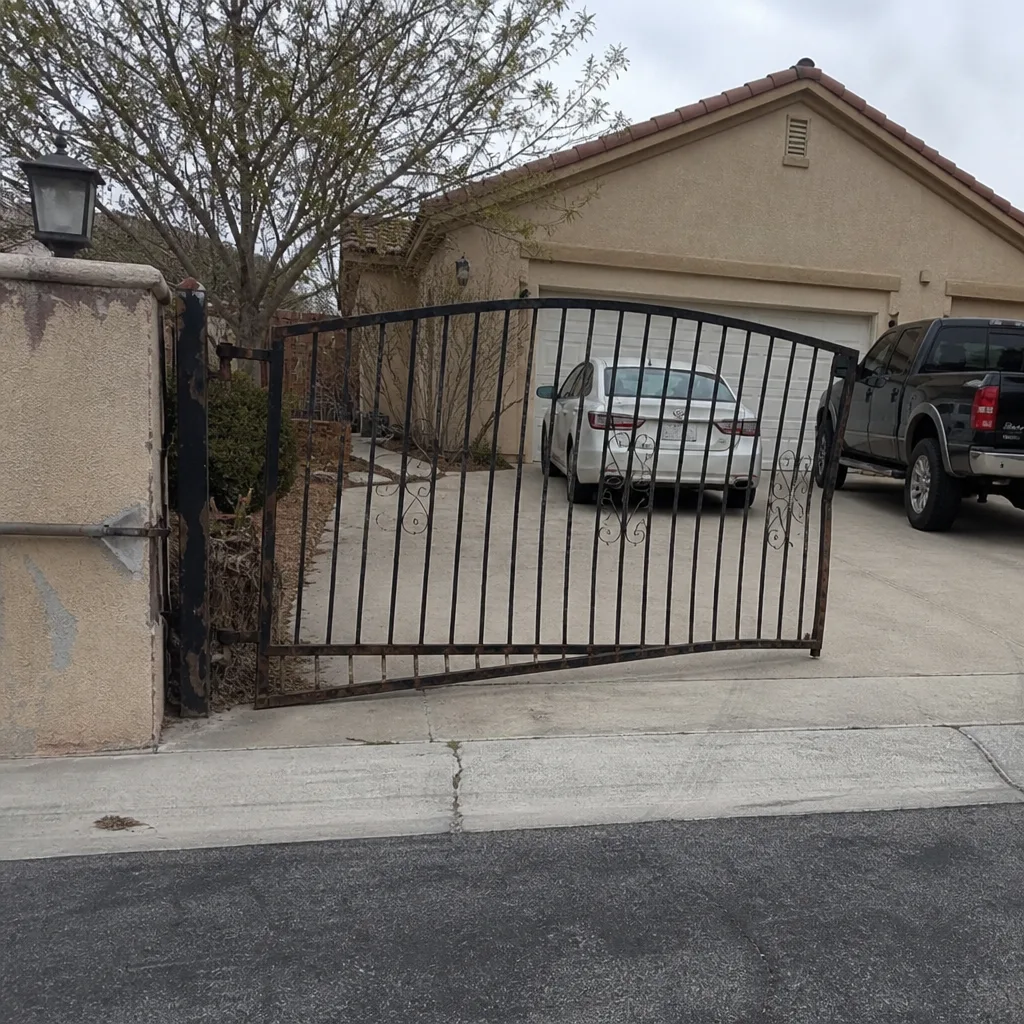 Before
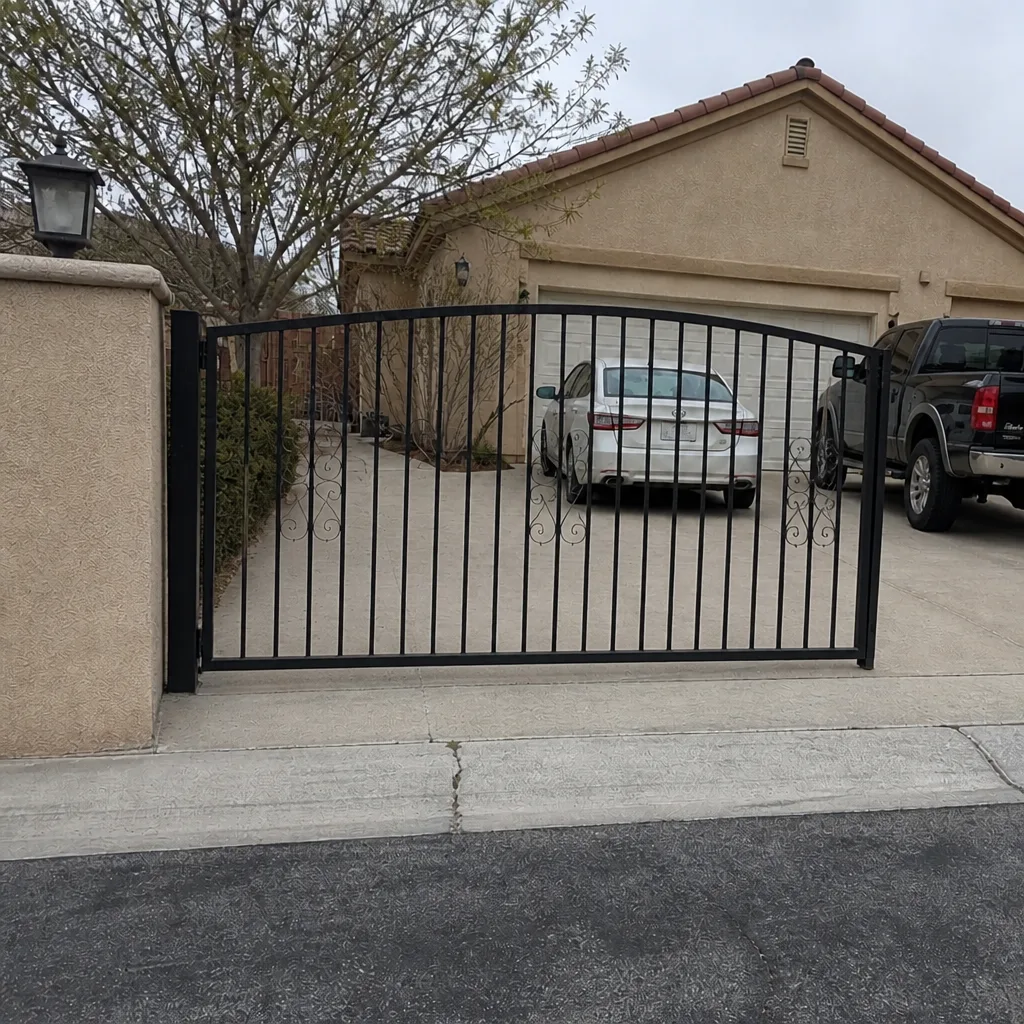 After
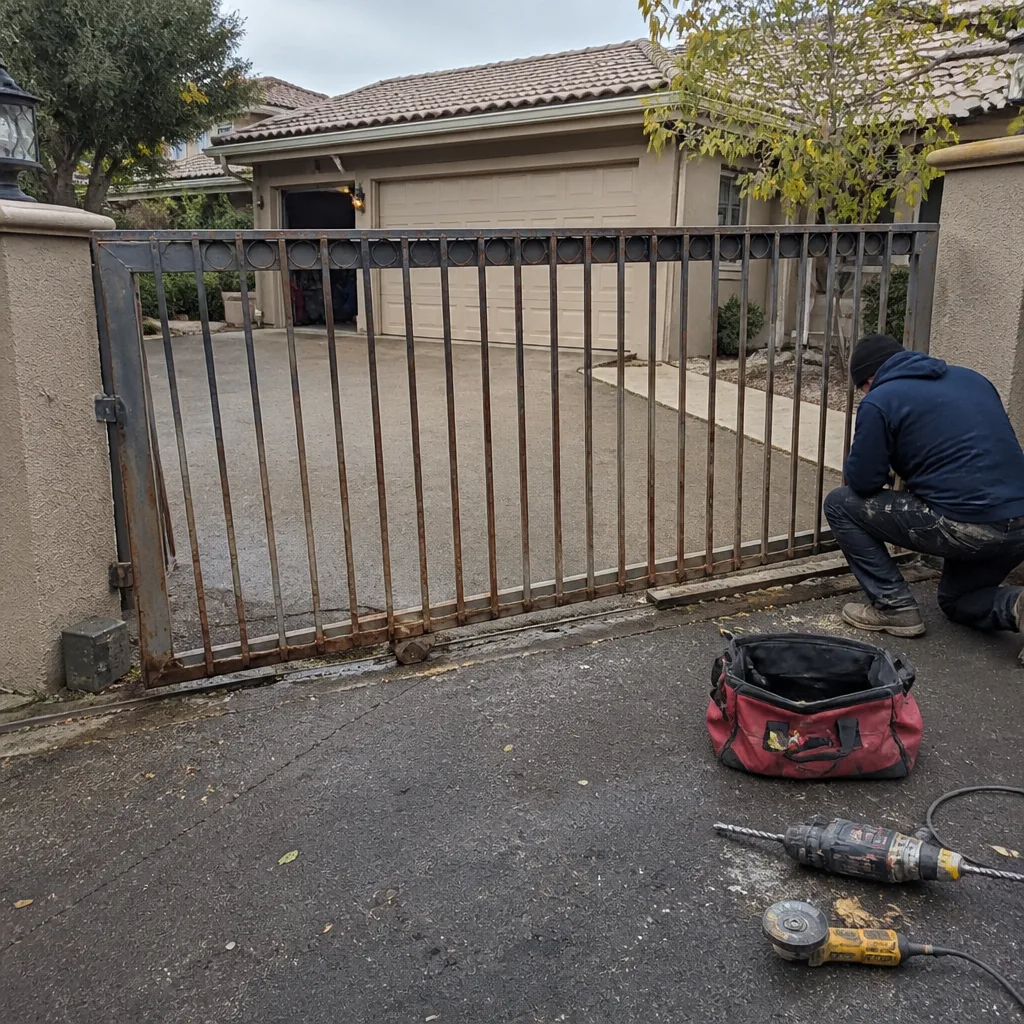 Before
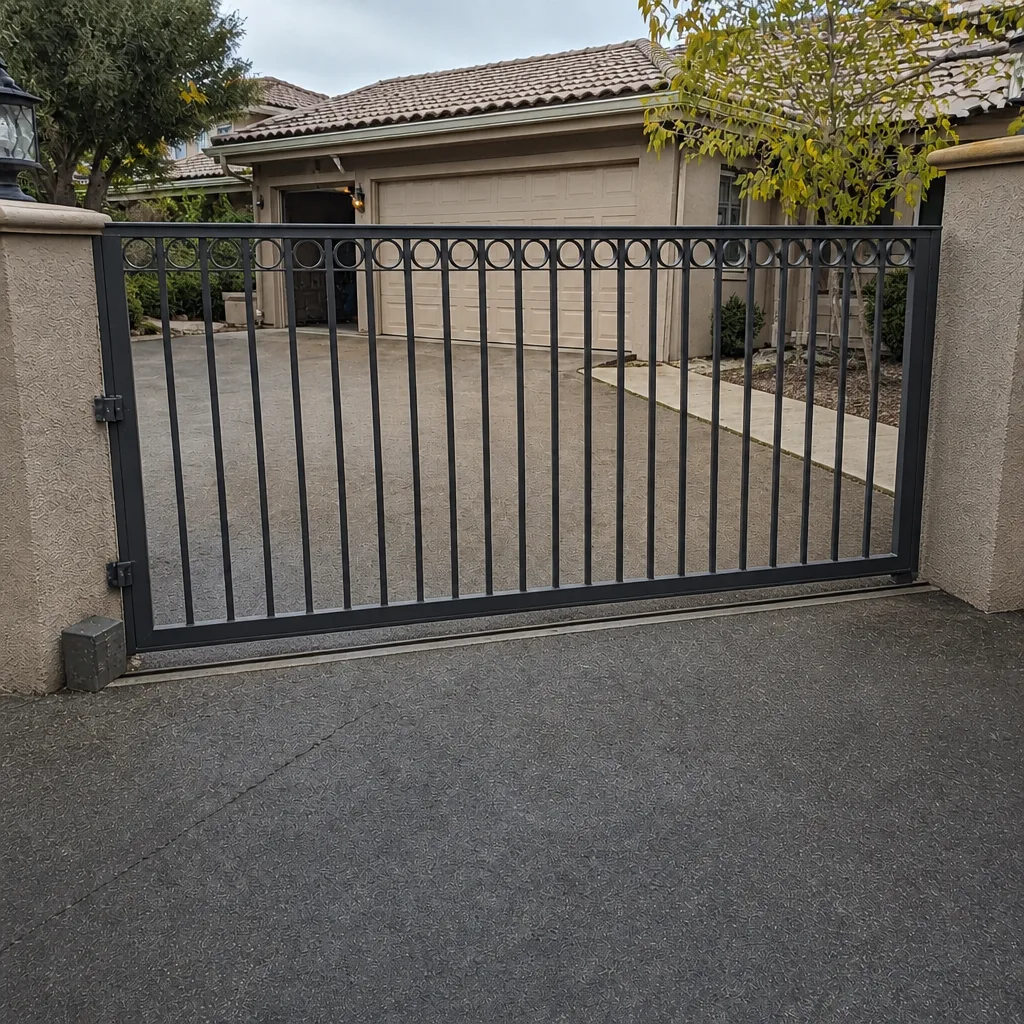 After
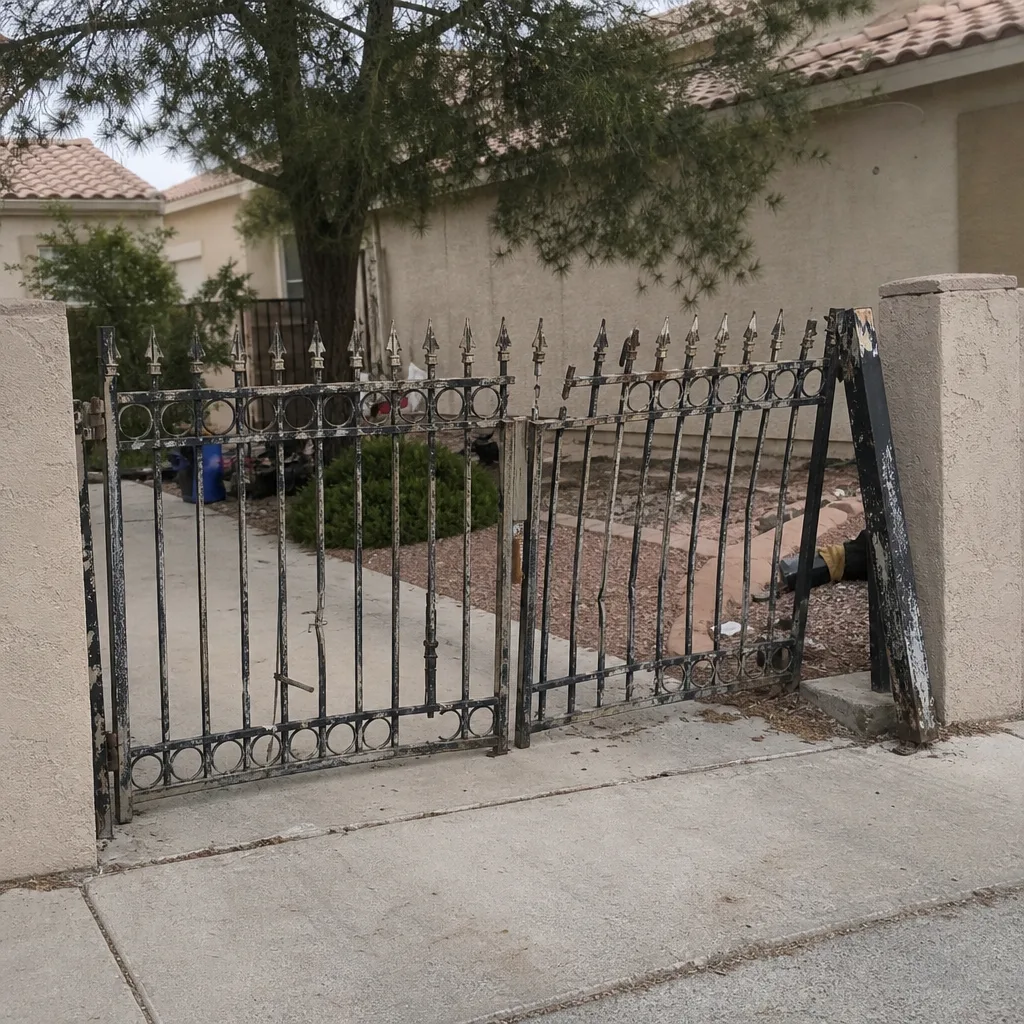 Before
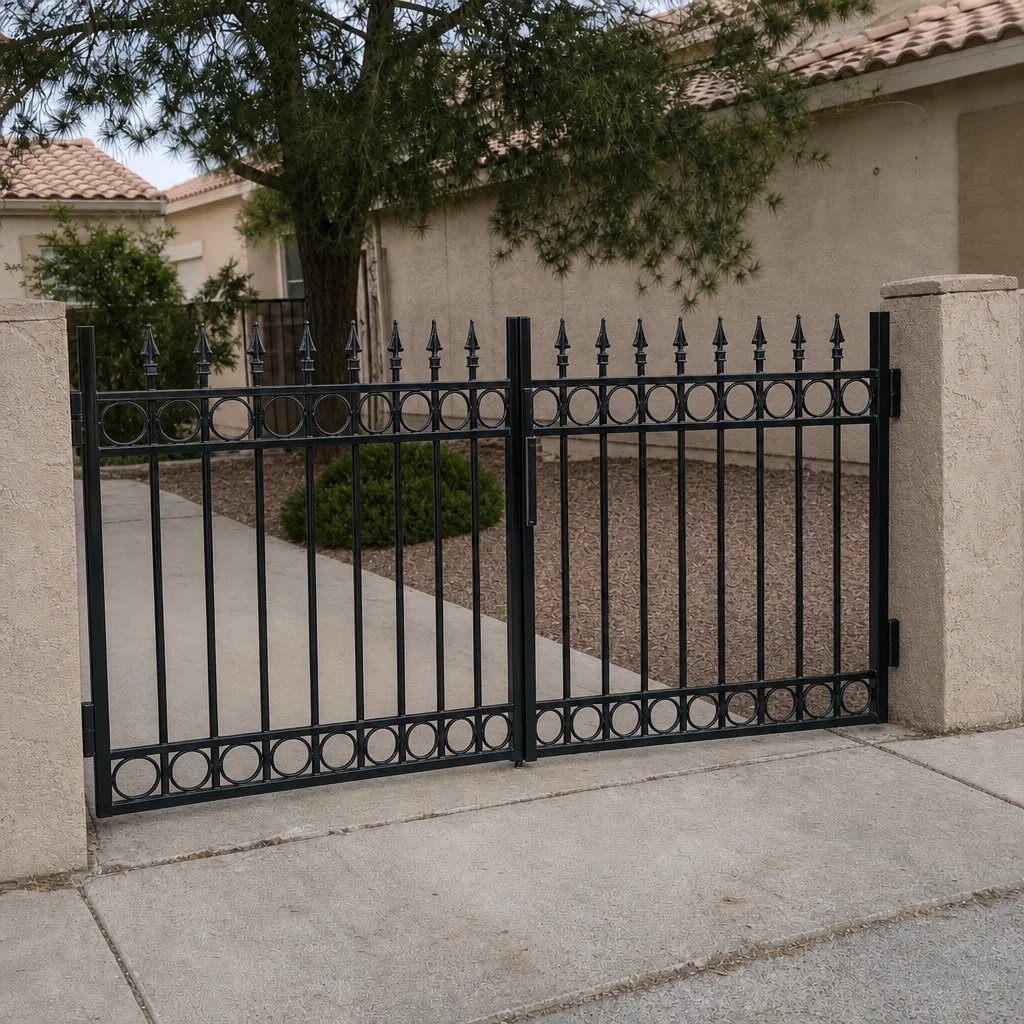 After
When to Call a Professional
Call when the task touches a wire, a board, a safety sensor, or a shared gate in a Summerlin community. Call when the gate behaves differently than it did last month, even if it still works. Call when a keypad or remote has stopped responding after a Wi-Fi change you can’t sort out in the app. Call when the HOA has sent a notice, when the gate chatters or reverses mid-travel, or when you simply don’t want to gamble a warranty on a YouTube guess. Ironworks Gate Co. Summerlin offers free estimates in Summerlin, call (866) 623-9848. Live help answers 24 hours a day, 7 days a week, and every job is backed by the 90-Day Done Right Promise.
Frequently Asked Questions
Yes. Changing a keypad code is a user-level task and safe to do yourself. Enter the master code, follow the programming step in the manual, and set the new code twice. If the keypad won’t take the code, that’s a different question, and calling (866) 623-9848 gets it sorted without touching the wiring.
Yes, a backup battery swap is safe. Match the voltage and type listed on the old battery, slide it out, and seat the new one. If you have to open the control housing to reach it, stop and call; that crosses into technician work. Estimates are free.
It can. Many homeowner policies exclude damage from unpermitted electrical work, and in Summerlin’s master-planned communities, self-wired work on a shared gate may violate the association’s requirements. A licensed, insured, documented repair keeps both the policy and the HOA file clean. Call (866) 623-9848 to talk through your situation.
“Seems fine” isn’t proof. A rewired photo-eye or a swapped board can invert the fail-safe logic so the gate still runs but defaults to dangerous instead of safe. Have it tested by someone with a meter and a safety checklist. Free second opinions on any written estimate are available.
Yes. We’re trained and equipped on nine brands, including DoorKing, LiftMaster, Elite, Mighty Mule, FAAC, BFT, Linear, Viking, and Ghost Controls. That means the right part and the right fix on the first visit, whatever is on your driveway. Call (866) 623-9848 for a free estimate.
A tune-up covers lubrication, hinge and latch inspection, travel and limit check, and a real test of the safety functions. It’s $89 and it catches the small drift that turns into a big repair in Summerlin’s heat and dust. Call (866) 623-9848 to schedule.
The Bottom Line
The DIY line in gate access control is drawn at liability, not difficulty. Codes, batteries, apps, and visual checks are yours. Wiring, loop tuning, boards, and safety sensors are the trade’s, because a mistake there can shock you, void a warranty, or leave a gate that fails the wrong way. In Summerlin’s master-planned communities, the HOA and insurance stakes make that line sharper still. Use the three-question test. When it points to a professional, call Ironworks Gate Co. Summerlin at (866) 623-9848 for a free estimate, and know it’s done right and backed in writing.
Written by the team at Ironworks Gate Co. Summerlin.