
Last updated November 16, 2026
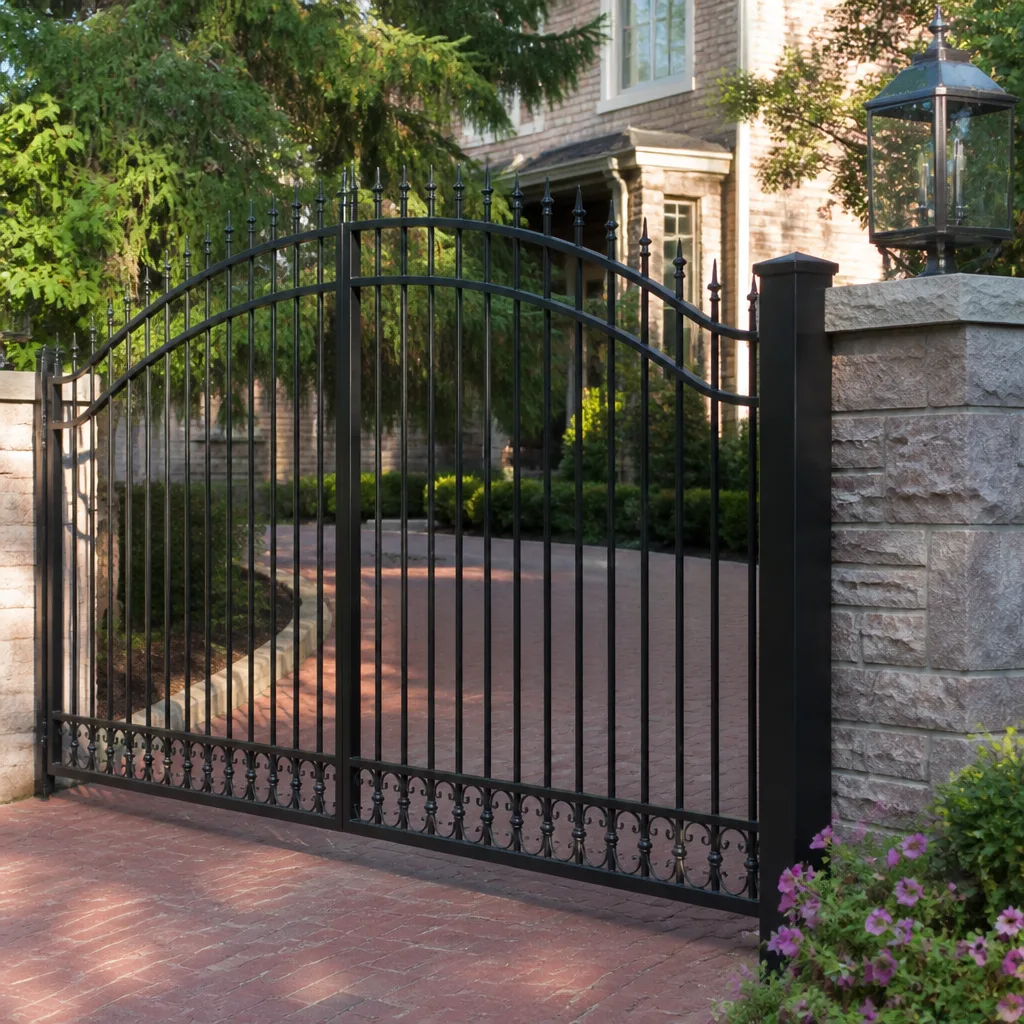 Wrought iron
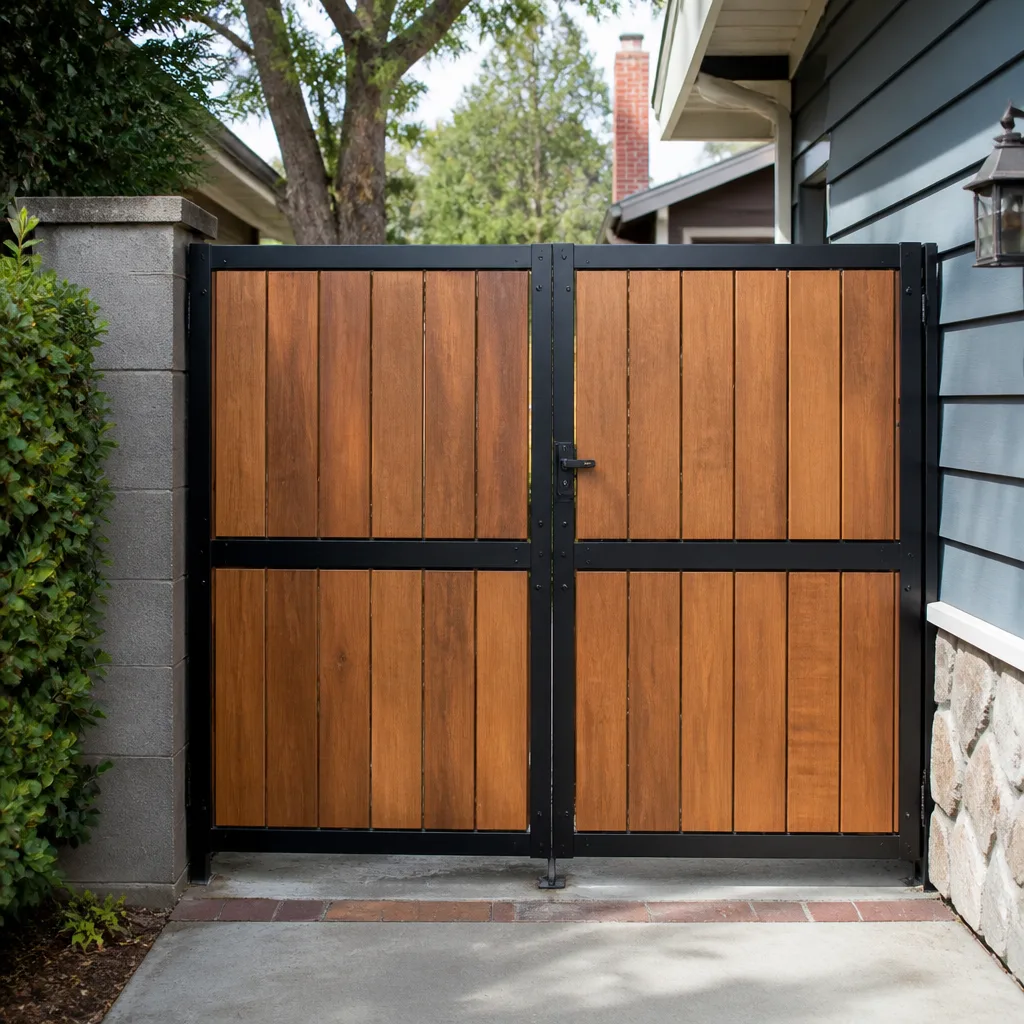 Wood & steel frame
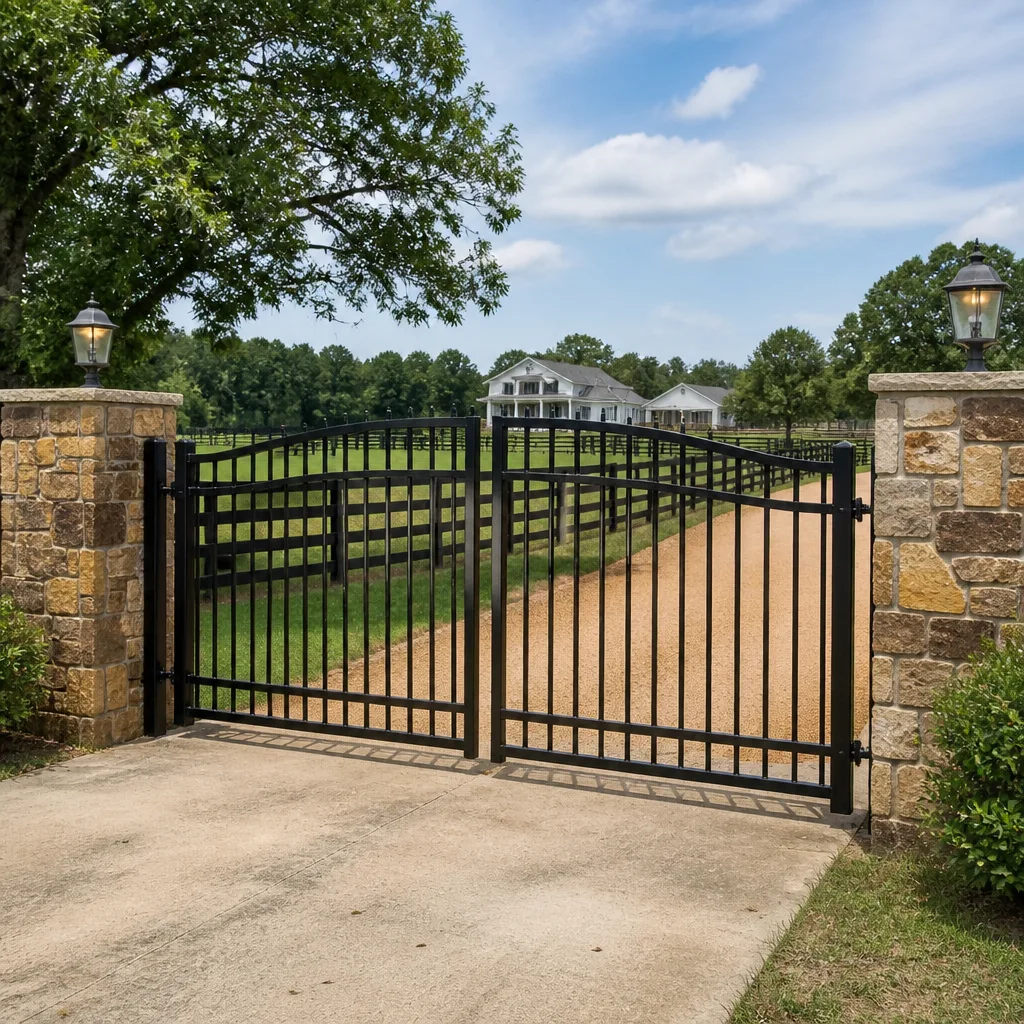 Farm & ranch
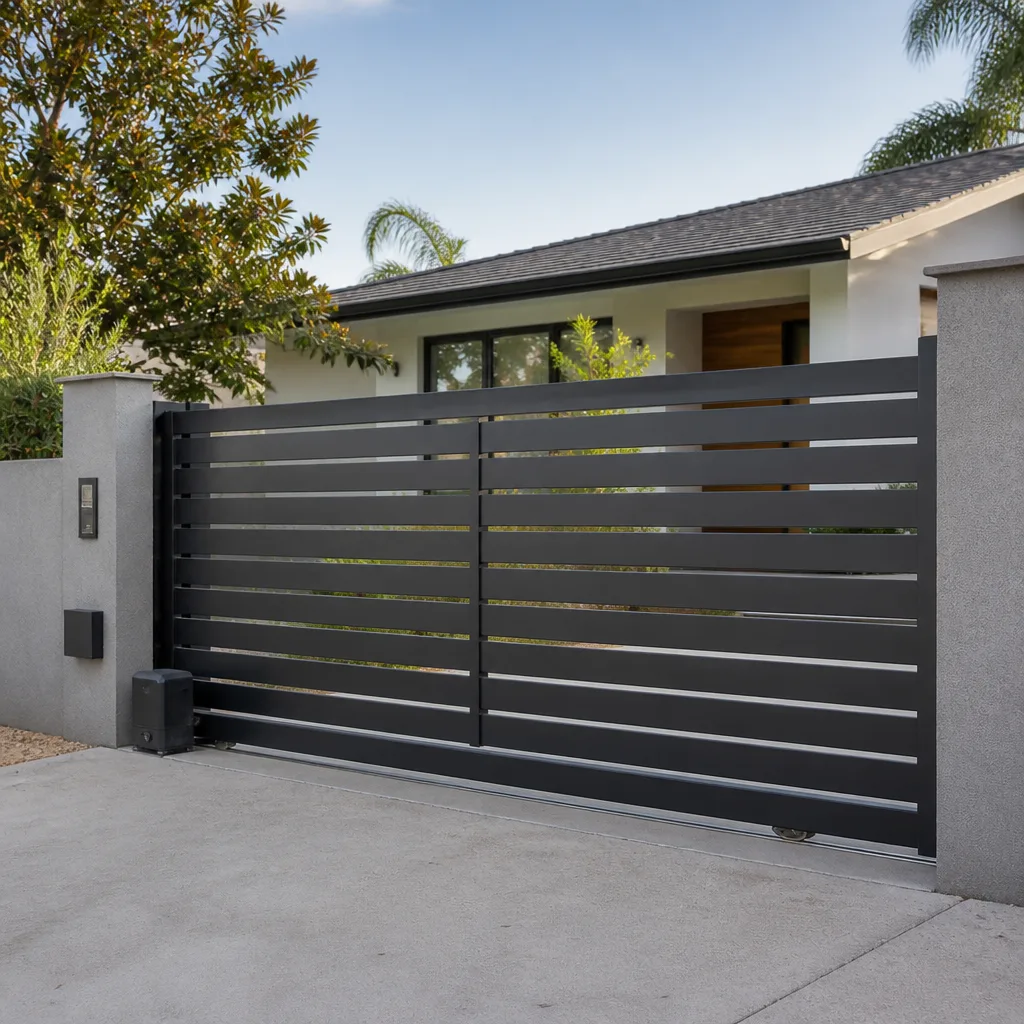 Sliding driveway gates
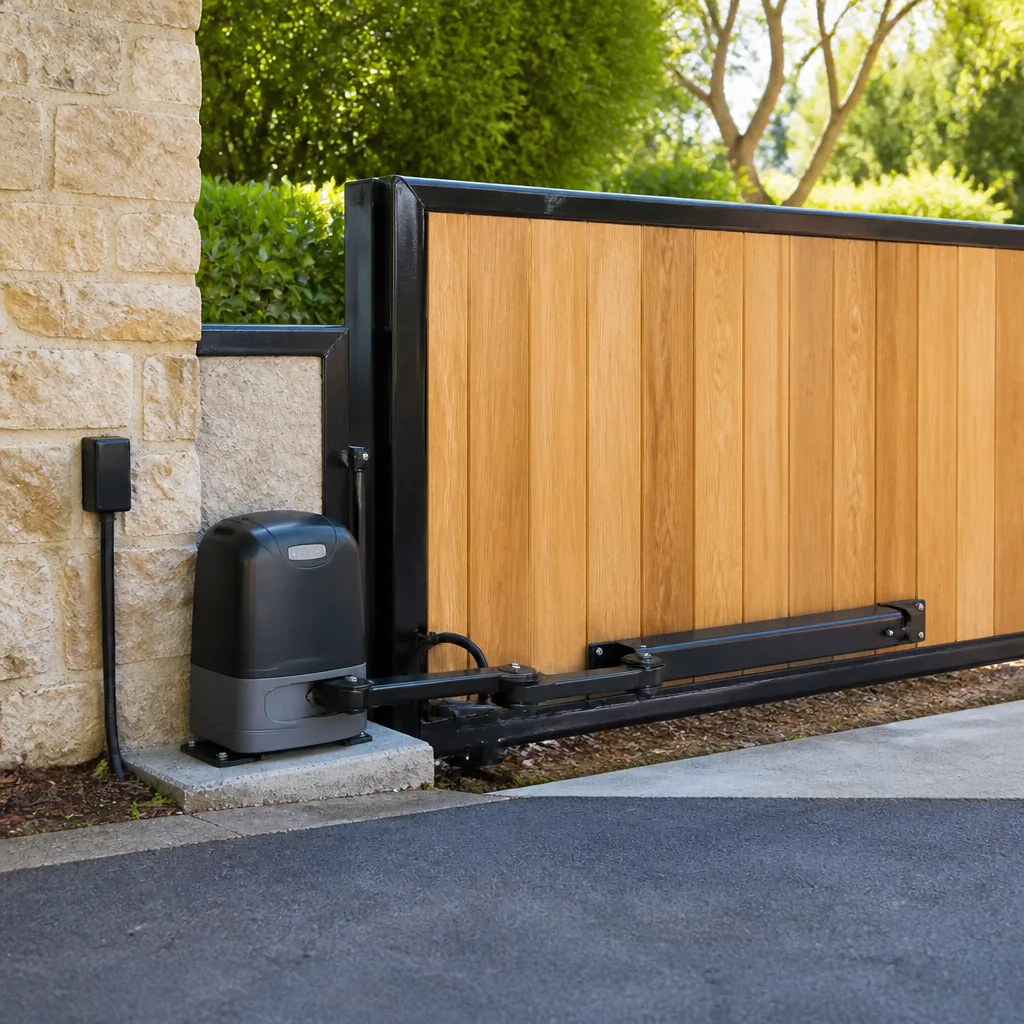 LiftMaster operators
Free on-site gate assessment - hinges, posts, and your LiftMaster or Nice gate operator checked before anything is quoted
The assessment is free and the quote is the invoice.
Get your free estimateThe Complete Gate Parts & Welding Guide for Summerlin Homeowners
Powder coating applied over mill scale is the standard shortcut in budget gate shops, and in Summerlin it starts delaminating within about 18 months. That single detail tells you most of what’s wrong with how gates get built for the desert. The same steel recipes, coatings, and weld schedules that hold up fine in Portland or Seattle fail early in a valley that hits 115°F in July and drops 40 degrees overnight in the shoulder seasons. This guide covers which alloys and gauges actually belong on a Summerlin property, what real surface prep looks like, how proper welds differ from tack-welded shortcuts, and how the valley’s thermal swing stresses a gate that wasn’t built to allow for it.
Quick Answer
Gates in Summerlin need steel alloys and coatings rated for high-UV, high-heat desert exposure, full sandblast and phosphate surface prep before coating, and welds with proper penetration at every hinge, stile, and picket joint. Most premature gate failures here trace back to undersized steel, coating applied over mill scale, and tack welds that crack under thermal cycling.
Styles & brands we work with
- Wrought iron
- Wood & steel frame
- Farm & ranch
- Sliding driveway gates
- LiftMaster operators
Table of Contents
- Which steel alloys and gauges belong in a desert climate
- Surface prep: the difference between a 3-year and a 20-year finish
- Structural weld points and what proper penetration looks like
- Thermal expansion and why gates rack in Summerlin
- HOA requirements in Summerlin master-planned communities
- Parts that fail first in desert heat
- Common mistakes to avoid
- Frequently asked questions
Which steel alloys and gauges belong in a desert climate
Most budget fabricators build residential driveway gates from A36 carbon steel in 14- or 16-gauge wall thickness. It’s cheap, it welds fast, and it holds up fine on a mild-climate property. In Summerlin, that same material is the reason so many gates start sagging and rusting within a decade. Wall thickness is the biggest factor. A 14-gauge tube has walls about 0.083 inches thick; a 16-gauge is closer to 0.065. In a gate that opens and closes twice a day, those thinner walls fatigue faster, especially when the gate has to carry its own weight across a wide double drive opening.
For a residential drive gate in Summerlin we recommend:
- 1/8-inch wall (11-gauge) minimum on the frame and stiles, and thicker on the hinge post. Wide double gates often warrant 3/16-inch on the hinge side.
- Hot-dip galvanized steel for the frame where a painted finish is planned. Galvanizing puts a zinc barrier inside and out, so if a weld does eventually crack, the corrosion doesn’t tunnel through the tube from the inside.
- Powder-coated aluminum for ornamental pickets and infill where weight matters. Aluminum doesn’t rust, but it needs a proper conversion coating before powder to bond to the finish.
- Marine-grade stainless hardware on hinges, latches, and fasteners. Inland desert air is not corrosive, but Summerlin’s summer heat accelerates wear on cheap zinc-plated bolts and hinge pins.
What budget fabricators typically use is 16-gauge A36 tube with thin-wall pickets and zinc-plated hardware. The price difference on a full residential driveway gate between the two approaches is meaningful but not extreme. What is extreme is the repair cost when the cheap version has to be re-framed in five years. If you want to know what a proper replacement looks like on this market, our Gate Installation in Summerlin page walks through what the finished product should include.
Surface prep: the difference between a 3-year and a 20-year finish
Finish is where most gate lifespans are lost. Powder coating over mill scale is the standard shortcut because mill scale looks like clean steel. It isn’t. Mill scale is a hard oxide layer that forms on steel during rolling, and it flakes off in sheets under thermal cycling. When it comes off, the powder coat comes with it, and you get the bubbling and flaking homeowners in Summerlin complain about in year two or three.
Proper prep, in order:
- Sandblast to white metal (SSPC-SP 5 or near-white SP-10). No shortcuts with a wire wheel or a chemical wipe. The surface must be bright and uniform before anything else happens.
- Solvent wash within four hours of blasting. Blasted steel flash-rusts quickly in the desert because of the dry air and blowing dust. The window between blasting and coating is short.
- Phosphate conversion coating on any steel heading to powder. This creates a crystalline layer that the powder chemically bonds to, and it stops any surface oxidation that would otherwise lift the finish.
- Zinc-rich primer on weld seams and interior tubes where powder can’t reach. Powder doesn’t get inside sealed tubes. Primer does.
- Powder coat with a UV-stable polyester or polyester-urethane rated for outdoor exposure and a cure schedule per the manufacturer’s spec. Cheap epoxies chalk and fade in Summerlin’s UV within two summers.
Done this way, a finish lasts 15 to 20 years with routine washing. Done the shortcut way, you’re lucky to get three. The prep work alone is often 30 to 40 percent of the finishing cost, and it’s the first thing a low bid cuts.
Structural weld points and what proper penetration looks like
A residential driveway gate has a handful of critical weld points. Every one of them carries load, and every one of them is where a cheap gate fails.
- Stile-to-rail joints at each corner of the gate frame. These carry the whole gate’s weight and torsional load.
- Hinge reinforcement plates welded to the gate stile and the post. If these are tacked on, the hinge will eventually tear away.
- Picket-to-rail welds on every picket. Skimping here means picked-off pickets and rattling gates after a few seasons.
- Diagonal brace welds (if the design includes one). This is the weld that keeps a wide gate square.
- Post-to-plate welds at the ground plate on a steel or aluminum post installation.
Proper penetration means the weld has fused into the base metal, not just laid a bead on top. A correctly made MIG or TIG weld shows a smooth, slightly crowned bead profile with visible toes blending into the parent metal and no undercut at the edges. A tack weld shows as a small blob with sharp edges and a gap where the two pieces don’t quite meet. Under a magnifying glass or a bead profile test, a properly penetrated weld on 1/8-inch steel is structural; a tack weld is decoration. We rebuild plenty of Summerlin gates where every joint was tacked and the gate lasted five summers before the frame went diagonal. For more on how weld failures show up as sag and drag, see our Gate Repair in Summerlin guide.
Thermal expansion and why gates rack in Summerlin
Steel expands and contracts with temperature at a rate of roughly 6.5 millionths of an inch per inch per degree Fahrenheit. That sounds tiny. On a 16-foot gate in a Summerlin driveway, it adds up. A 40-degree swing from a cool night to a hot afternoon moves the gate length by about a quarter inch. A double gate frame that doesn’t allow for that movement will push against its own hinge posts and the operator arm, and the gate racks. Once it racks, the operator fights it, the hinges wear faster, and the gate starts to bind at the latch.
How a properly built Summerlin gate handles this:
- Slotted hinge plates rather than fully welded hinges, so the gate can move slightly without stressing the weld.
- An expansion gap of at least 1/4 inch between the gate frame and the closed-position stop, and similar allowance on the hinge side of the post.
- Rubber-backed hinge bushings that absorb small thermal movements and reduce the metal-to-metal contact that wears out pins.
- Post foundations that account for soil movement. Summerlin’s caliche and decomposed granite soils hold up well, but post footings still need to be set below the frost-and-movement zone or the gate will rack no matter how good the welds are.
We regularly see Spring Valley-adjacent Summerlin gates, especially ones built in older communities, that racked a half inch over a decade because there was no allowance at all. A half inch is enough to fail to latch reliably and to trip the operator’s obstruction sensor every other attempt.
HOA requirements in Summerlin master-planned communities
Summerlin is a master-planned community, which means most neighborhoods are governed by an HOA with design review requirements. Material and finish choices interact with those requirements more than most homeowners realize until their proposed gate gets kicked back.
What’s typically acceptable:
- Powder-coated steel or aluminum in earth tones and approved neutrals: bronze, taupe, charcoal, and specific dark greens. Bright colors and high-gloss finishes get flagged.
- Traditional ornamental styles: vertical pickets, simple scrollwork, and clean vertical rails. Most Summerlin HOA design guides favor a consistent look across the streetscape.
- Matte or satin finishes rather than gloss. Gloss draws glare and shows dust, and design review often rejects it.
What gets flagged:
- Chain link in visible front-facing locations.
- Bright galvanized (unpainted) finish on ornamental driveway gates.
- Rust showing through a finish. This is treated as a maintenance issue and a design violation.
- Add-ons like privacy panels or mesh inserts that weren’t on the approved plan.
Before you order parts or a finish, get the HOA design guidelines in writing. For The Ridges, Red Rock Country Club, and other Summerlin communities, the design review board has specific finish and style requirements. Knowing these up front prevents a redo. Our Gate Motor & Opener in Summerlin page addresses how automation integrates with HOA-approved designs, including the FAAC and BFT operators many Summerlin HOAs accept.
Parts that fail first in desert heat
Two summers in Summerlin heat will tell you which parts on a gate are worth buying well. Here’s what fails first:
- Operator control boards. Heat is the top killer. A control board in an unshaded operator box can hit 140°F internally, and cheap capacitors on budget boards fail under that. FAAC and BFT operators are common on Summerlin properties because their boards and housings handle the heat better.
- Safety reverse sensors and photo-eye lenses. Lens plastic clouds and yellows in UV, and once it clouds the sensor can’t reliably detect an obstruction. Replace every 5 to 7 years in the desert.
- Battery backup packs. Lead-acid batteries lose capacity faster at high ambient temperature. Expect to replace every 3 to 4 years instead of the 5 to 6 you’d see in a cooler climate.
- Hinge pins and bushings. Metal-to-metal contact plus thermal movement wears these down. Stainless or bronze bushings last longer than zinc-plated.
- Keypads and access control housings. Sun-facing keypads fade and crack. Mount them in shade or use a UV-stable housing.
If your operator is a LiftMaster, Linear, Viking, or any of the nine brands we’re trained on, the failure pattern under desert heat is well known to us. Replacing the right part on the first visit saves two more service calls. See what’s covered on our Ironworks Gate Co. Summerlin home page or call for a diagnosis.
Common Mistakes to Avoid
- Powder coating straight over mill scale. It looks fine on day one and starts flaking within two summers. Always ask your fabricator how the steel was prepped before coating, in writing.
- Using 16-gauge tube on a wide double gate. The gate will sag, and the operator will fight it until the hinges give out. Spring for 1/8-inch minimum on the frame.
- Welding every hinge solid with no expansion allowance. Summerlin’s 40-degree day-to-night swing will rack the gate over the first few years. Slotted plates cost almost nothing extra.
- Skipping the phosphate wash before powder. It’s the step that bonds the finish. Without it, powder sits on the surface and lifts off with thermal cycling.
- Ignoring the HOA design guide until after the gate is built. A finish that’s not on the approved list means a repaint or a redo at your cost.
- Replacing a failed operator board with the cheapest board available. In Summerlin heat, cheap boards fail again in two summers. Buy a board rated for the temperature range.
- Assuming a stuck gate is a motor problem. More often it’s a weld crack, a sagged hinge, or a racked frame putting load on the operator. Diagnose the gate before you replace the motor.
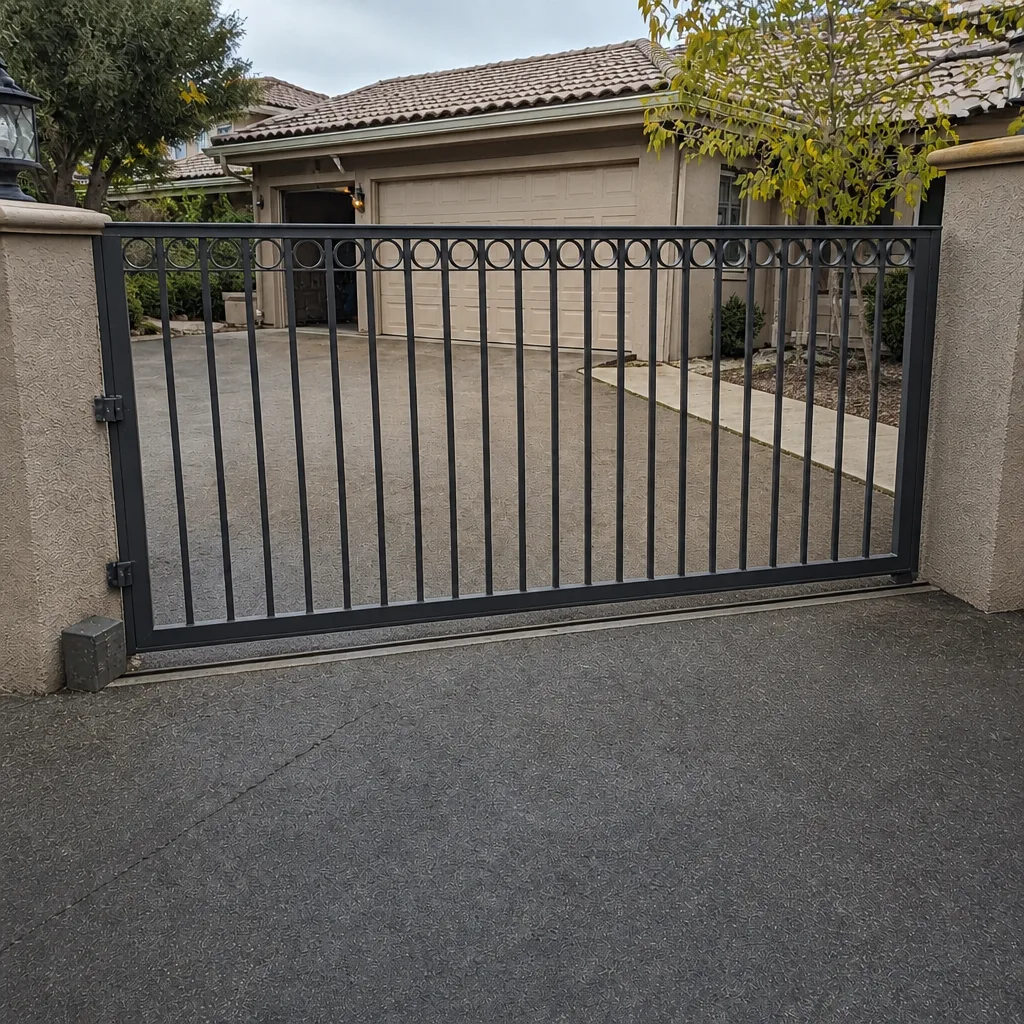
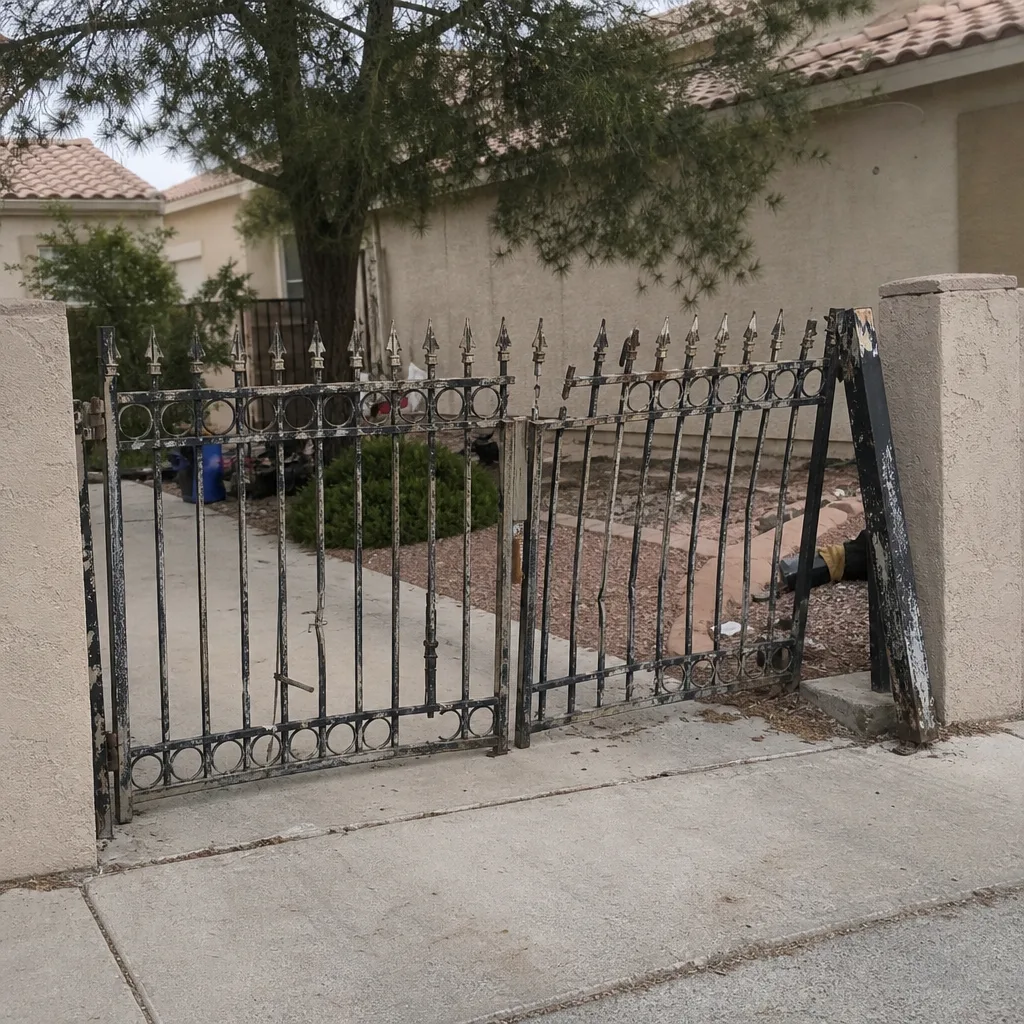
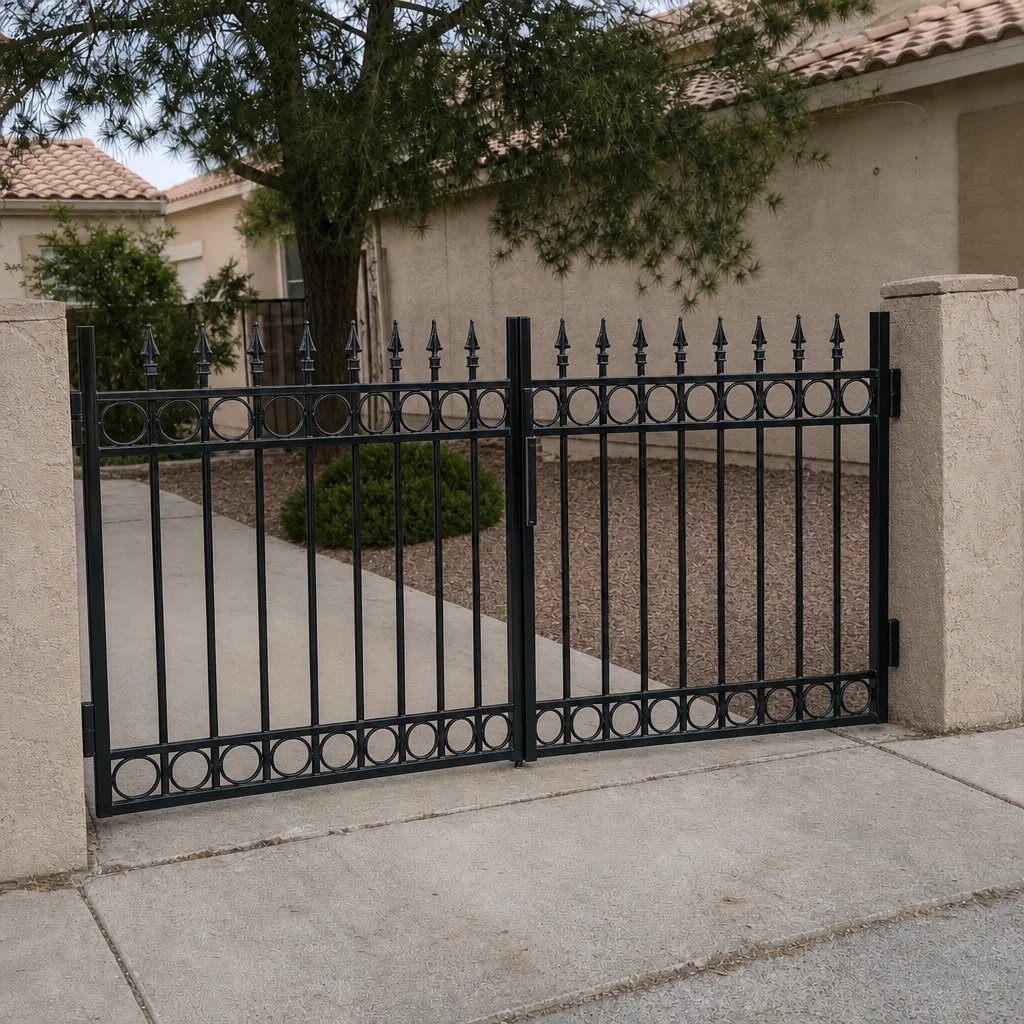
See the difference
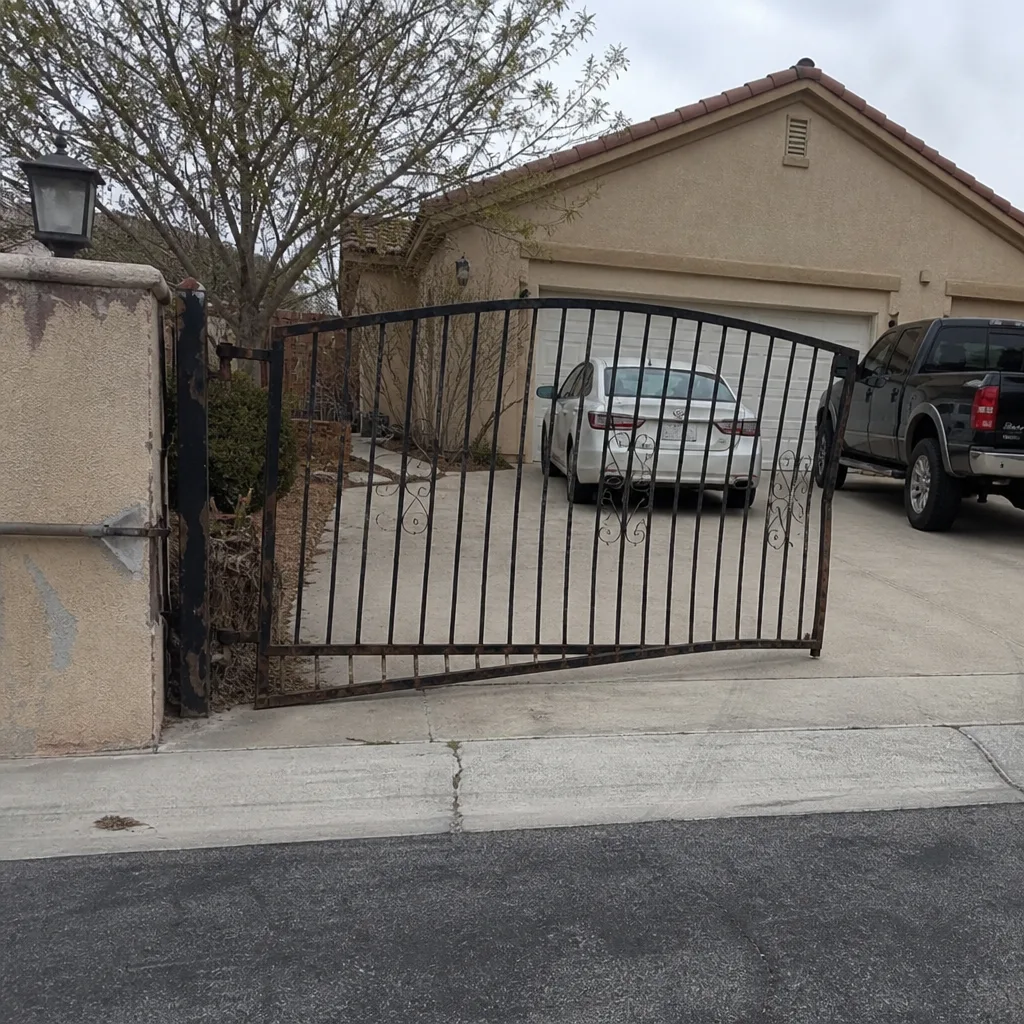 Before
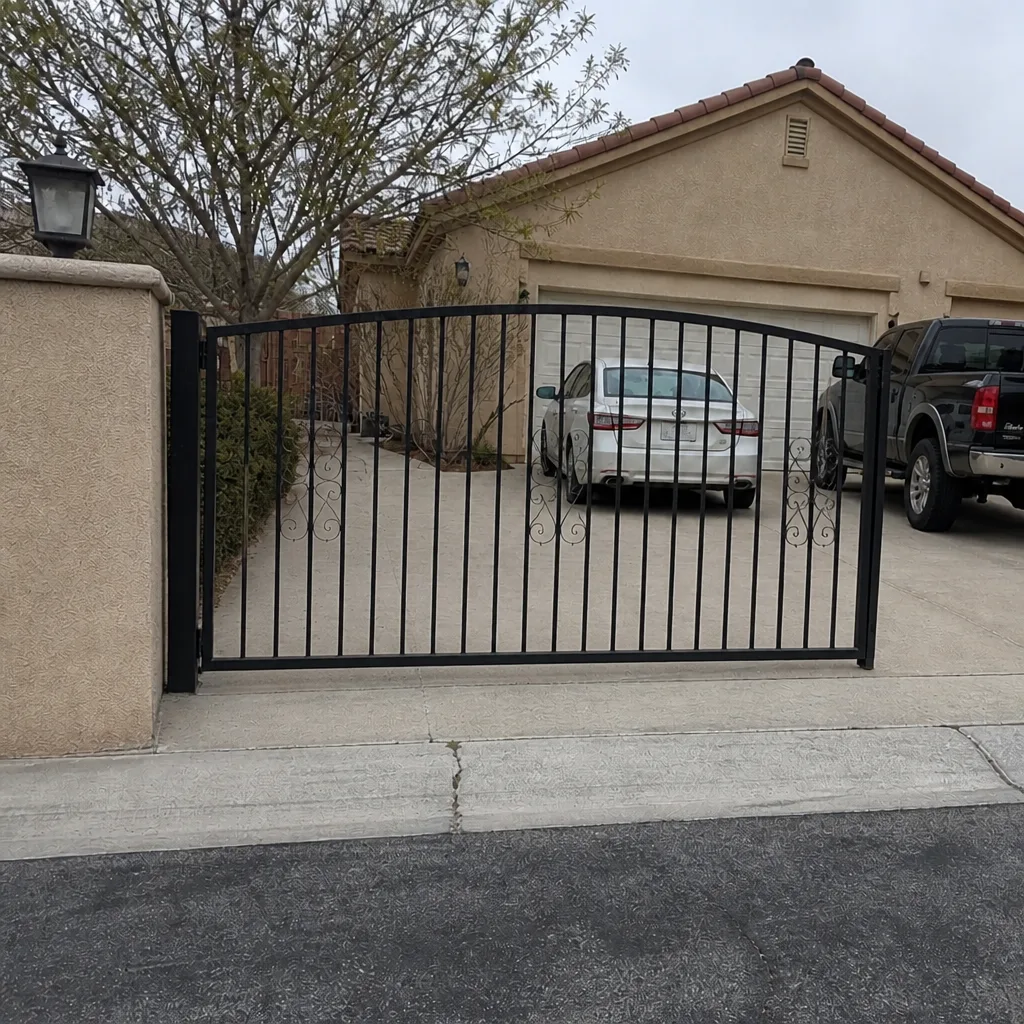 After
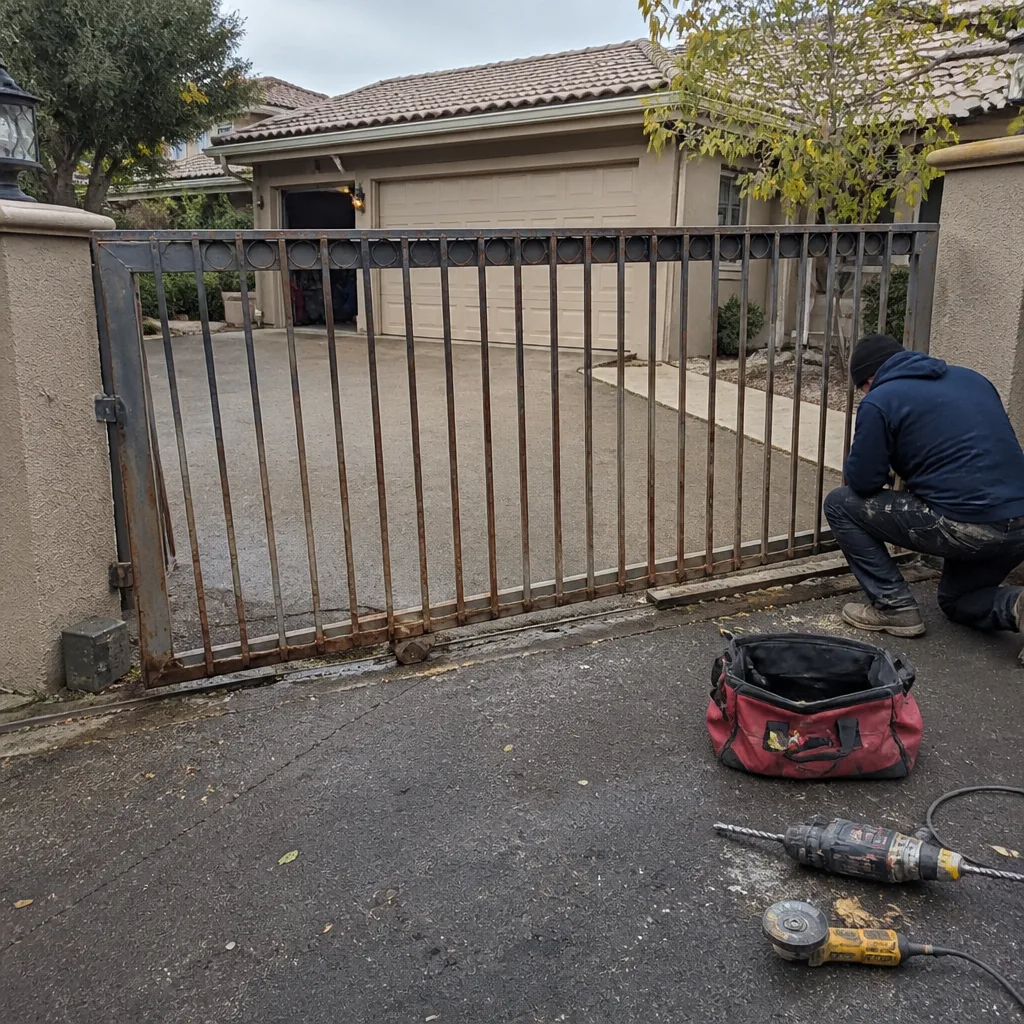 Before
 After
 Before
 After
When to Call a Professional
Some gate issues need a trained eye beyond a visual inspection. Call a professional when a weld shows a visible crack or when you can see daylight through a joint, when the gate has to be forced to latch, when the operator trips its safety reverse repeatedly without an obvious obstruction, when a hinge post moves when you lean on it, or when your gate has never quite worked right after a previous repair. These situations involve real steel under load and real motors under power. A cracked weld that’s re-tack-welded will fail again in the same spot, and an operator with a misdiagnosed problem drains batteries and boards until someone tests the actual current draw. Ironworks Gate Co. Summerlin offers free estimates in Summerlin. Call (866) 623-9848 to schedule one. A live person answers 24 hours a day, 7 days a week.
Frequently Asked Questions
Hot-dip galvanized A36 carbon steel in 1/8-inch (11-gauge) wall or thicker for the frame and stiles, with 3/16-inch on the hinge side of wide double gates, holds up best in Summerlin. Aluminum works well for ornamental infill where weight matters, as long as it’s conversion-coated before powder. Call (866) 623-9848 for a site walk-through – estimates are free.
Almost always because the powder was applied over mill scale, or without a phosphate conversion coating, or without a zinc-rich primer on the weld seams. UV and thermal cycling lift the finish where the bond was weak. Properly prepped steel with a UV-stable polyester powder lasts 15 to 20 years in Summerlin. Call (866) 623-9848 for an assessment – estimates are free.
Most residential driveway gate weld repairs can be done on-site. Small cracks at hinges, picket joints, and rail welds are welded in place with the gate supported and the operator disconnected. Larger structural rebuilds (re-framing a racked gate, replacing a failed hinge post) are sometimes done on-site and sometimes in a shop. Call (866) 623-9848 and we’ll tell you which yours needs – estimates are free.
A properly penetrated weld on 1/8-inch steel has a smooth, slightly crowned bead that blends into the base metal with no visible edge or undercut. If the weld looks like a small blob sitting on top with sharp edges, it’s a tack weld and not structural. A tap test with a wrench handle can also reveal a hollow ring that suggests an unfused joint. Call (866) 623-9848 for a proper inspection – estimates are free.
Yes. Steel handles heat well once it’s properly built; it’s the operator’s control board, battery pack, and sensor lenses that suffer most from Summerlin’s summer heat. Control boards in unshaded boxes can hit 140°F internally, and batteries lose capacity faster at high ambient temperature. FAAC, BFT, Linear, and Viking operators hold up better when the housing is shaded and the footings are correct. Call (866) 623-9848 to schedule a checkup – estimates are free.
Sometimes yes, often no. Most Summerlin master-planned communities approve powder coat in earth tones and approved neutrals (bronze, taupe, charcoal, dark green) and reject bright galvanized, high-gloss, and chain link in visible locations. Get the design review guidelines in writing before ordering parts or finish. Call (866) 623-9848 – estimates are free, and we’ll help you read the guidelines.
The Bottom Line
Summerlin is hard on gates, and the reason almost always comes down to materials and method. Steel needs 1/8-inch walls minimum, hot-dip galvanizing where the frame is painted, and marine-grade hardware. Coating needs full sandblast prep, phosphate wash, and a UV-stable powder. Welds need real penetration at every load-bearing joint, and the gate needs expansion allowance for a 40-degree daily swing. HOA guidelines are part of the spec, not an afterthought. Get these right and a residential gate in Summerlin lasts decades. Get them wrong and you’re rebuilding in five years. If you’d rather be sure than sorry, call Ironworks Gate Co. Summerlin for a free estimate at (866) 623-9848. Every job is backed by our written 90-Day Done Right Promise, and a live person answers 24 hours a day, 7 days a week.
Written by the team at Ironworks Gate Co. Summerlin.