
Last updated November 17, 2026
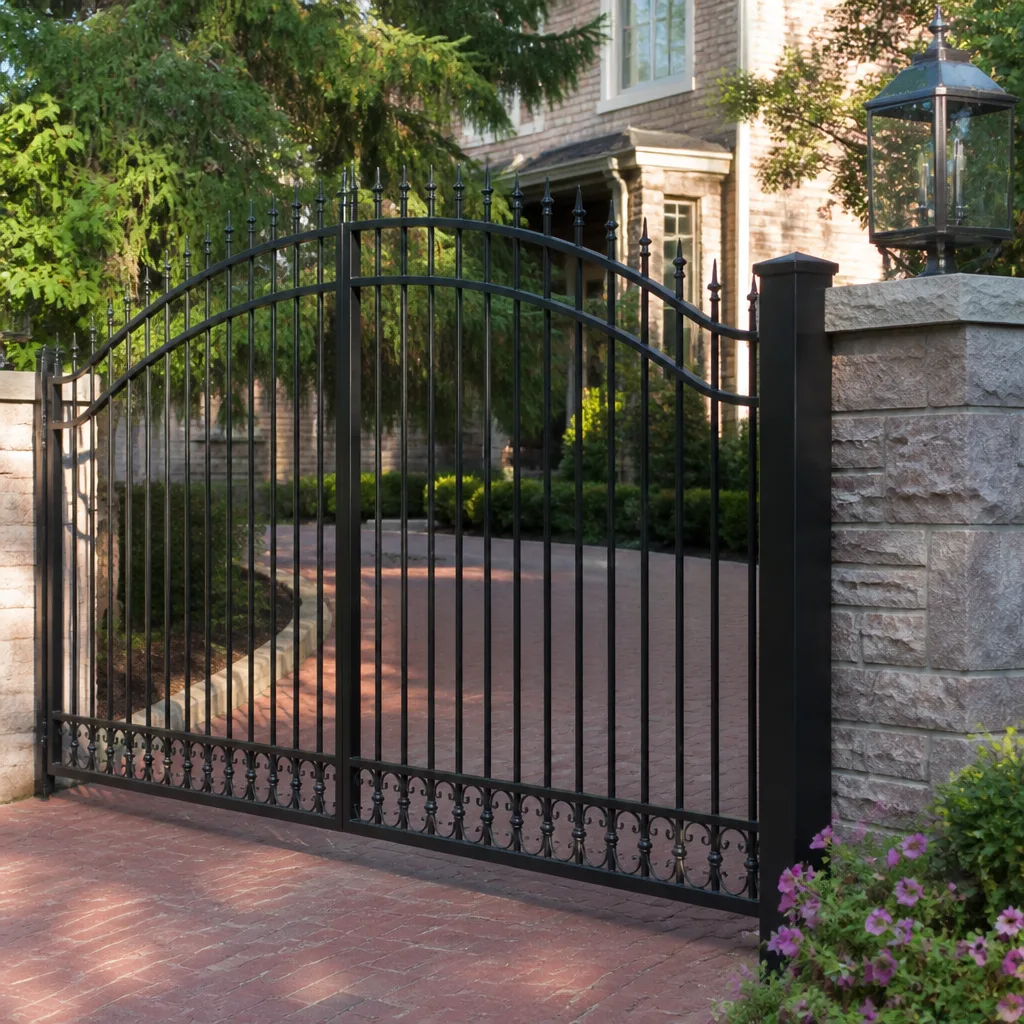 Wrought iron
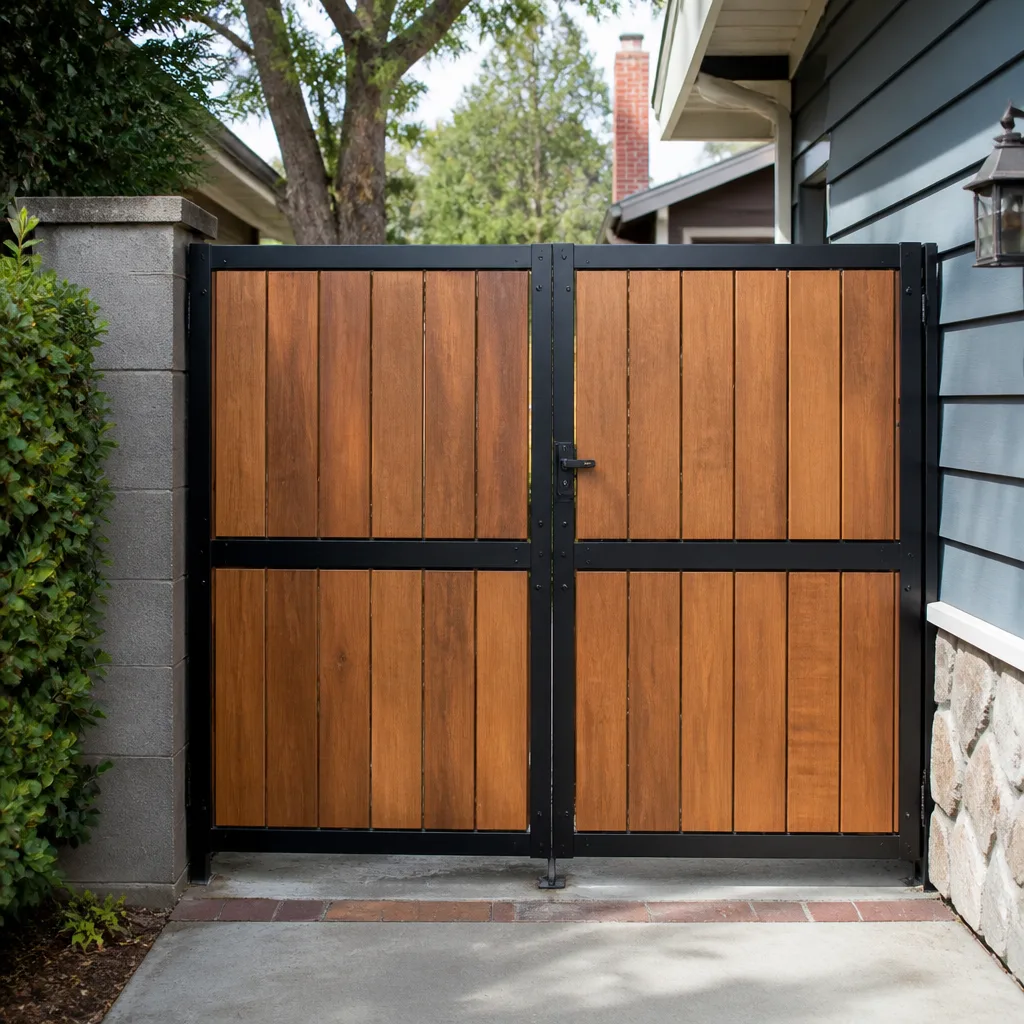 Wood & steel frame
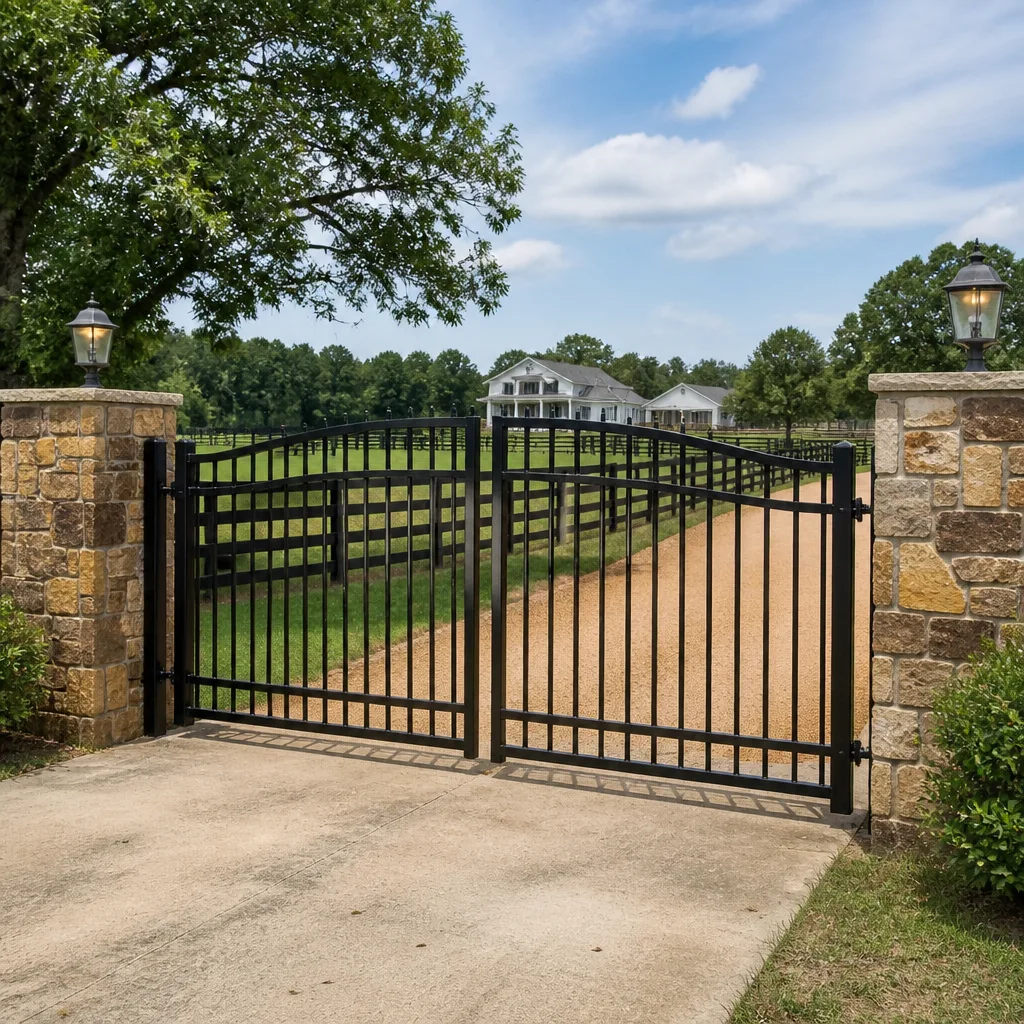 Farm & ranch
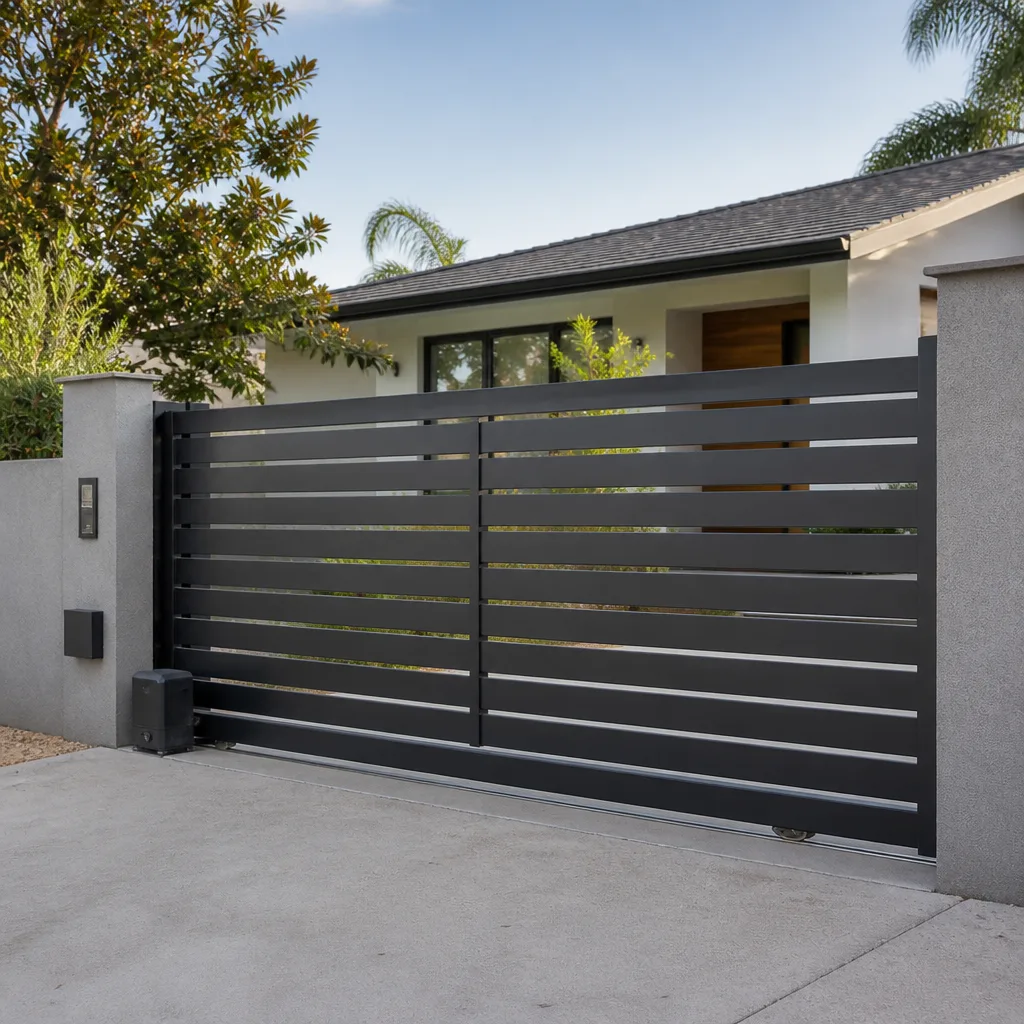 Sliding driveway gates
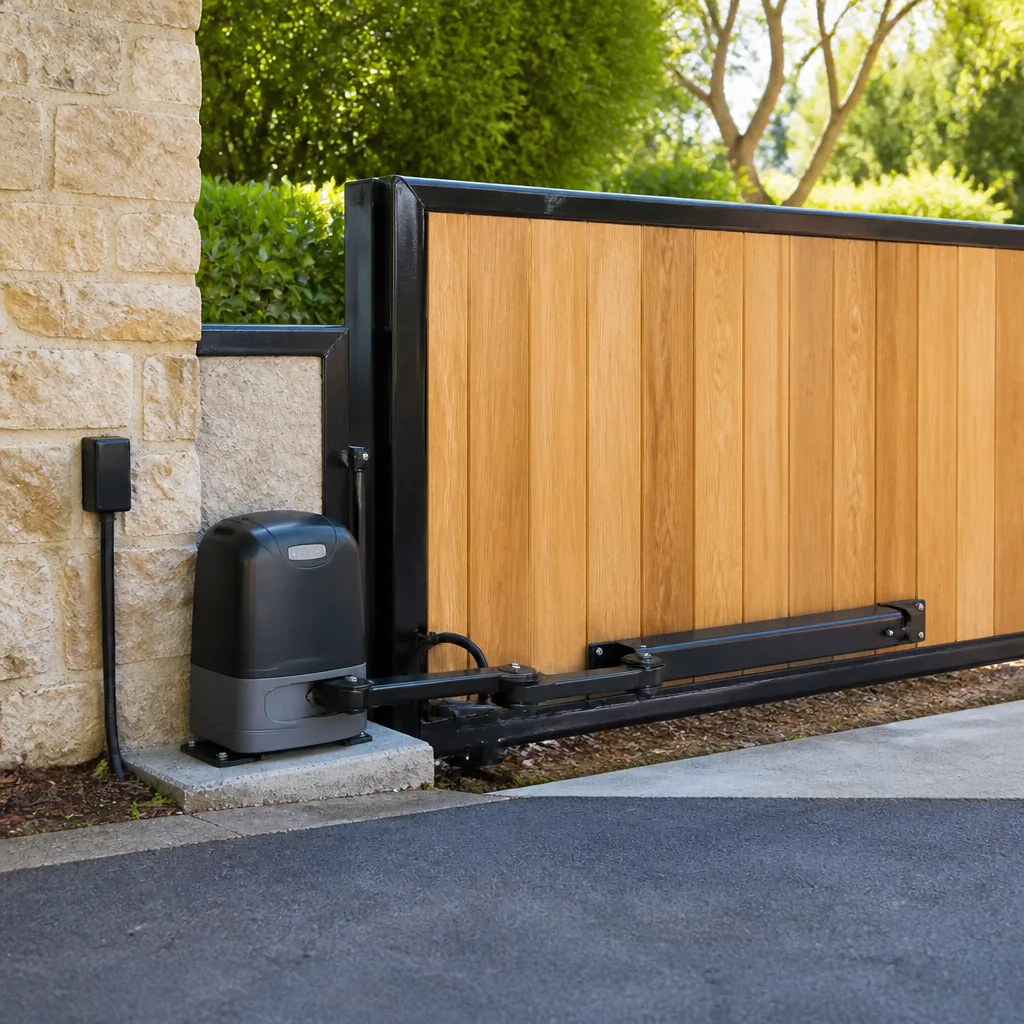 LiftMaster operators
Free on-site gate assessment - hinges, posts, and your LiftMaster or Nice gate operator checked before anything is quoted
The assessment is free and the quote is the invoice.
Get your free estimateDIY vs Professional Gate Repair: The Summerlin Homeowner’s Decision Guide
Replacing a gate remote battery is DIY. Adjusting a gate operator’s force limit without understanding UL 325 entrapment protection standards is a liability. Those two jobs sit three menu options apart in the same app, and that closeness is exactly what gets homeowners into trouble.
The real question isn’t whether you’re handy enough. Plenty of Summerlin homeowners are. The question is which specific repairs carry consequences when they go wrong, and those repairs are fewer than most gate companies imply and more serious than most tutorials admit. This guide draws the honest line. You’ll learn what you can safely handle this weekend, what looks simple but isn’t, and how to document a problem so the first service visit costs less.
Quick Answer
Roughly 70% of residential gate service calls involve tasks a careful homeowner can diagnose but should not repair: force-limit adjustments, control board swaps, and anything touching line voltage. Battery changes, photo-eye alignment, manual release operation, and lubrication are genuinely safe for most homeowners to handle. Structural welding, post resetting, and hinge replacement almost always cost more in total when done yourself than when done professionally, once wasted materials and rework are counted. When in doubt on safety-critical components, call a licensed gate technician; in Summerlin, Ironworks Gate Co. offers free estimates and can talk you through whether a job is worth attempting yourself.
Styles & brands we work with
- Wrought iron
- Wood & steel frame
- Farm & ranch
- Sliding driveway gates
- LiftMaster operators
Table of Contents
- The Gate Repairs You Can Safely Do Yourself
- The Repairs That Look Simple but Aren’t
- Why DIY Structural Work Almost Always Costs More
- Nevada, UL 325, and What You Take On When You Self-Repair
- The Diagnostic Step Every Homeowner Should Do First
- How Summerlin’s Climate Shapes Gate Wear
- Brand Matters: What Your Operator Tells You
- Common Mistakes to Avoid
The Gate Repairs You Can Safely Do Yourself
Four gate tasks are genuinely homeowner-accessible with common tools: a Phillips screwdriver, a 7/16″ wrench, a can of lithium grease, and fifteen minutes. In our experience across Summerlin neighborhoods like The Ridges and Red Rock Country Club, these four account for a large share of “emergency” calls that didn’t need to be emergencies.
Here’s what’s safe:
- Battery replacement. Remotes, keypads, and photo-eye transmitters all run on coin cells or AA batteries. Pop the cover, match the number on the old battery, replace it. Five minutes, no risk.
- Photo-eye realignment. If your gate reverses for no apparent reason, the safety sensors on either side of the driveway may have been knocked out of alignment. Loosen the mounting screw, aim the LED at its partner, tighten. Check both sides. If the LED won’t light steadily, the sensor may be dirty or the wire may be damaged, and that’s a call.
- Manual release operation. Every UL 325-compliant operator has a manual release. Learn where yours is before you need it. Practice it once a season with the power off. That single habit prevents the locked-in scenario during a power outage.
- Minor lubrication. Hinges, rollers, and the operator’s drive chain benefit from a light lithium grease or silicone spray twice a year. Wipe off excess. Never grease the track or the photo-eye lenses; dust collects on both and creates the very problem you’re trying to prevent.
What makes these safe is that none of them change the gate’s behavior in a way that could trap someone. A misaligned photo eye makes the gate stop; a well-lubed hinge makes it swing smoothly. Neither alters force limits, electrical circuits, or structural integrity. If your gate repair falls outside this list, read the next section before you pick up a wrench.
The Repairs That Look Simple but Aren’t
Three jobs appear on every YouTube tutorial and carry consequences those videos rarely mention. If you take nothing else from this guide, take this: force-limit adjustment, control board replacement, and anything near line voltage are where homeowner repairs become expensive mistakes.
- Force-limit adjustment. The force limit is what tells your operator how hard to push before it reverses. Adjust it too high and the gate won’t stop when it hits a child, a pet, or a car. Adjust it too low and the gate reverses mid-travel and wears out the operator. UL 325 sets specific limits, and the adjustment interacts with the entrapment protection devices on the gate. Getting this wrong is a liability, not an inconvenience.
- Control board replacement. Boards are model-specific and often firmware-matched. A swap that “works” can void your operator’s warranty, disable safety-edge monitoring, or leave the gate running on default settings that aren’t right for a 14-foot steel driveway gate. If your board is failing, the correct diagnosis matters more than the part.
- Anything near line voltage. Many residential operators run on 120V. Opening the operator housing without shutting off the breaker at the panel is a shock risk. Even with the breaker off, a capacitor can hold a charge. This is genuinely dangerous work, not a confidence test.
There’s a fourth category that sits between “DIY” and “call”: operator brand behavior. A LiftMaster board isn’t wired like a FAAC board, and a Linear unit has different force-limit access than a BFT. If you’re not sure which you’re looking at, you’re in the “call” column. Our Gate Motor & Opener in Summerlin page covers how brand-specific service works. For the repair side, Gate Repair in Summerlin lays out what a professional visit actually addresses.
Why DIY Structural Work Almost Always Costs More
Welding, post resetting, and hinge replacement share one trait: they look like jobs a mechanically inclined homeowner can tackle after a weekend of research. They almost never pencil out that way. The materials are specialized, the tools are expensive, and the failure modes are invisible until the gate sags again six months later.
Consider the actual math on a hinge replacement. You buy a welder or rent one, buy the right rod for the gate’s steel (galvanized, mild steel, and wrought iron all weld differently), cut the old hinge free, and discover the post has shifted. Now you’re resetting a post in Summerlin’s caliche-heavy soil, which is not the same as resetting a post in soft loam. You’ve spent a weekend, a few hundred in materials, and the gate still drags at the latch.
Professional work on the same job includes the correct rod, the correct technique, the post depth right for the soil, and a guarantee. When a professional weld on a hinge fails within 90 days, we come back and make it right. When a DIY weld fails, you’re back where you started minus the weekend. In our experience, the average homeowner attempting a structural gate repair spends 1.3 to 2 times the professional cost in total, counting materials, tool rental, and rework. That’s before injuries, which are the real risk when 200 pounds of steel gate comes off a hinge.
There’s a reason Gate Installation in Summerlin and structural repair are treated as the same skill set in the trade. Both start with the same question: is the footing and the post honest, or is it going to sag? That question needs eyes on the gate, not a video.
Nevada, UL 325, and What You Take On When You Self-Repair
UL 325 is the safety standard for gate operators, and it applies to residential driveways, not just commercial properties. When you self-repair the safety-critical components, you take on the responsibility for compliance with that standard, and that responsibility doesn’t show up in the tutorial.
What UL 325 requires on a residential gate:
- Entrapment protection between the gate and any fixed object
- Photo-eye sensors or equivalent non-contact protection at the gate’s path
- Monitored safety devices that report failure to the operator
- A manual release that operates without special tools
- Force limits set so the operator reverses on contact with an obstacle
Repair by repair, here’s what that means in practice. Replacing a photo eye with an unmonitored model takes the gate out of compliance and may cause the operator to fault. Changing a control board to a non-matching model may disable the monitoring function. Adjusting force limits outside the operator’s specified range creates a gate that pushes through resistance instead of reversing. None of these produce an obvious symptom. The gate works. Until it doesn’t stop.
Nevada doesn’t have a statewide gate-operator certification requirement for residential repairs, which means the standard is on the homeowner who chose the repair path. That’s the part most guides skip. If your gate was installed to code and you modify it to a non-compliant state, you’ve introduced a hazard that didn’t exist before. The honest line here is simple: if a repair touches entrapment protection in any way, it isn’t DIY. The Ironworks Gate Co. Summerlin home page is a reasonable place to start if you’re not sure which repairs qualify.
The Diagnostic Step Every Homeowner Should Do First
Before you call anyone, document the problem. The ten minutes you spend writing down what your gate is doing saves real money on the first service visit, whether the gate is a LiftMaster operator on a 16-foot drive gate in Summerlin or a FAAC unit on a pedestrian access gate at the side yard. Technicians diagnose faster when they know which behavior is failing.
Do this before the call:
- Write down the exact symptom. “Gate reverses halfway” is more useful than “gate is broken.” “Operator beeps three times and stops” is better still.
- Note when it started. Did it follow a storm, a power outage, a new remote, a landscaping visit, or nothing at all?
- Test the manual release. Does the gate swing freely by hand, or does it drag? Drag points to a mechanical issue; a free swing with a dead operator points to electrical.
- Check the photo eyes. Are both LEDs steady? Clean the lenses with a soft cloth. Wave a hand between them and see if the operator reacts.
- Photograph the operator’s data plate. Manufacturer, model number, and serial are on there. This tells the technician which brand-specific parts to bring, which is how a single visit stays a single visit.
- List what you’ve already tried. If you replaced a battery, say so.
Nine times out of ten, that documentation turns a diagnostic visit into a repair visit. It also gives the technician a clear starting point, which saves time and keeps your bill honest.
How Summerlin’s Climate Shapes Gate Wear
Summerlin’s climate accelerates some gate wear and slows others, and knowing which is which helps you decide what’s worth attempting yourself. The desert summer heat, the winter wind, and the caliche soil under most Summerlin neighborhoods each push on the gate in different ways.
Heat drives thermal expansion on metal gates, which loosens welds and hinge pins over years. That’s a structural problem, and it’s professional territory. Dust accumulates in tracks and on photo-eye lenses; that’s homeowner territory, and a quick wipe and a light lube handles most of it. Summerlin’s winter wind events push on gates during open and close cycles, which puts stress on force limits and operator gearing. If your gate started reversing during the last wind storm, that’s a sign the operator’s force setting is marginal, and a force-limit adjustment is exactly the repair to leave to a professional.
Caliche soil is the local wildcard. It’s hard enough that post setting requires different techniques than the videos show, and it expands and contracts enough with moisture that a post that seemed solid in spring can shift by fall. This is one of the reasons we see more post-related gate repairs in Summerlin than in areas with more forgiving soil. It’s also the reason a structural repair done without addressing the footing fails within a year or two. Our technicians have up to 13 years of experience with gates in this climate, and the soil is a common thread.
Brand Matters: What Your Operator Tells You
Operator brand shapes what you can safely attempt and what you should leave alone. Different manufacturers handle force limits, safety monitoring, and warranty differently, and the brand on your driveway is the first thing to identify before you pick up a tool.
- LiftMaster operators are common on Summerlin residential drive gates and often use MyQ connectivity, which lets the app adjust some settings. Be careful: app-accessible settings sometimes include force limits, and the app doesn’t teach you UL 325.
- Linear units are common on gates installed a decade or more ago, and their control boards are less forgiving of mismatched replacements than newer models.
- FAAC and BFT operators are more common on estate gates and heavier swing gates, where force limits and safety-edge monitoring are especially important.
If you don’t recognize the brand on your operator, that’s your answer. Identifying the model is a two-minute job (photograph the data plate), and it’s the difference between a repair done right and a part that has to be returned. Ironworks Gate Co. is trained and equipped on nine leading gate-automation brands, so the correct fix happens on the first visit whatever is on the driveway.
Common Mistakes to Avoid
- Adjusting force limits without a safety eye test. The force limit interacts with entrapment protection. If you adjust one without verifying the other, you’ve created a gate that can push through a person. Leave force-limit work to a licensed technician.
- Greasing the photo-eye lenses. A well-meaning homeowner lubes “everything” on the gate and smears grease across both lenses. The sensors then fail intermittently, and the gate reverses for no apparent reason. Clean, never lube.
- Buying a control board online by model number alone. Boards are firmware-matched. An identical-looking board can fail to talk to your operator, and the return shipping cost alone often exceeds the professional diagnostic fee.
- Ignoring the manual release until you need it. A gate that won’t release during a power outage or an emergency is a real hazard, and practice takes two minutes. Test it twice a year.
- DIY welding on a hung gate. A 200-pound gate falling off a hinge is a serious injury risk. Structural repairs are not worth the risk, even for confident homeowners.
- Not documenting before the call. Without notes, the first visit becomes a diagnostic visit. With notes, it’s a repair visit. That difference shows up in the bill.
- Assuming a heat-related sag is a hinge problem. In Summerlin, thermal expansion often shows up as a sag that looks like a hinge issue but originates in the post or footing. Resetting the wrong component wastes money.
See the difference
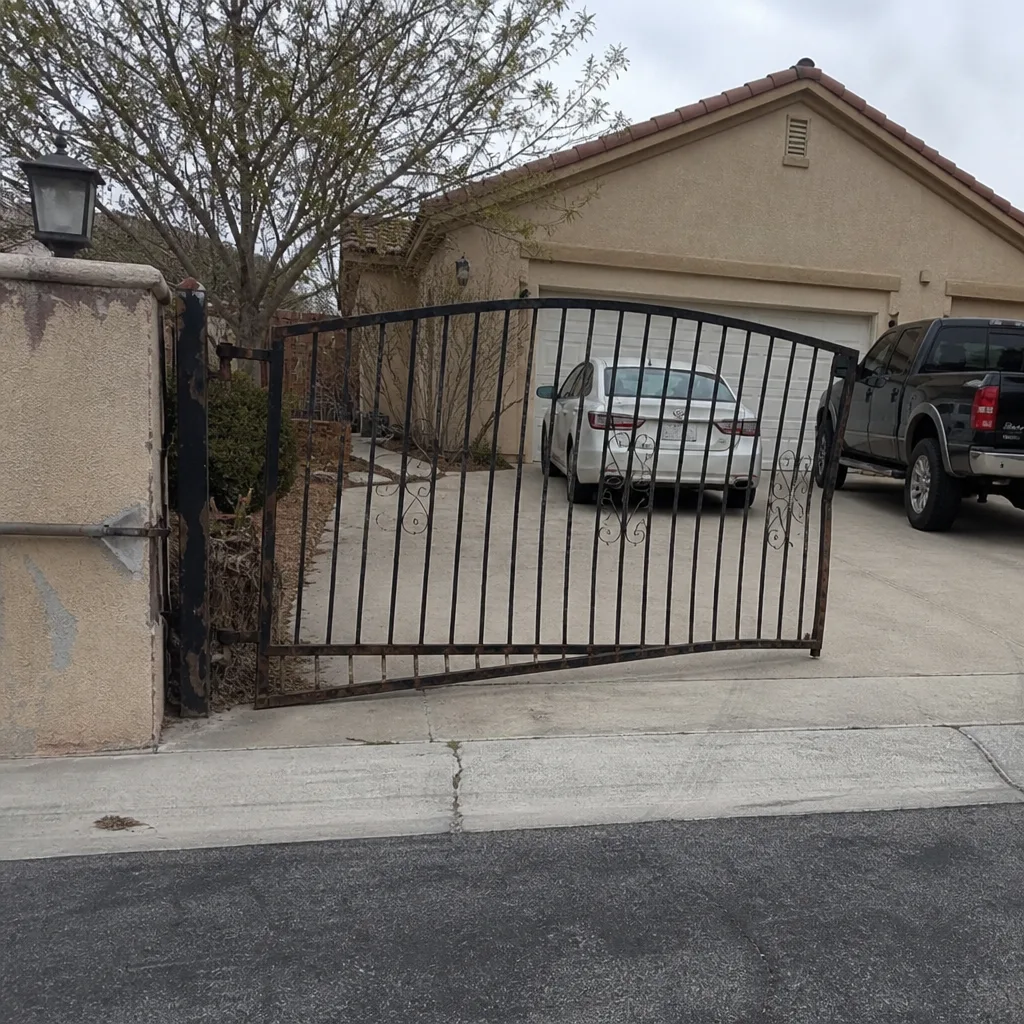 Before
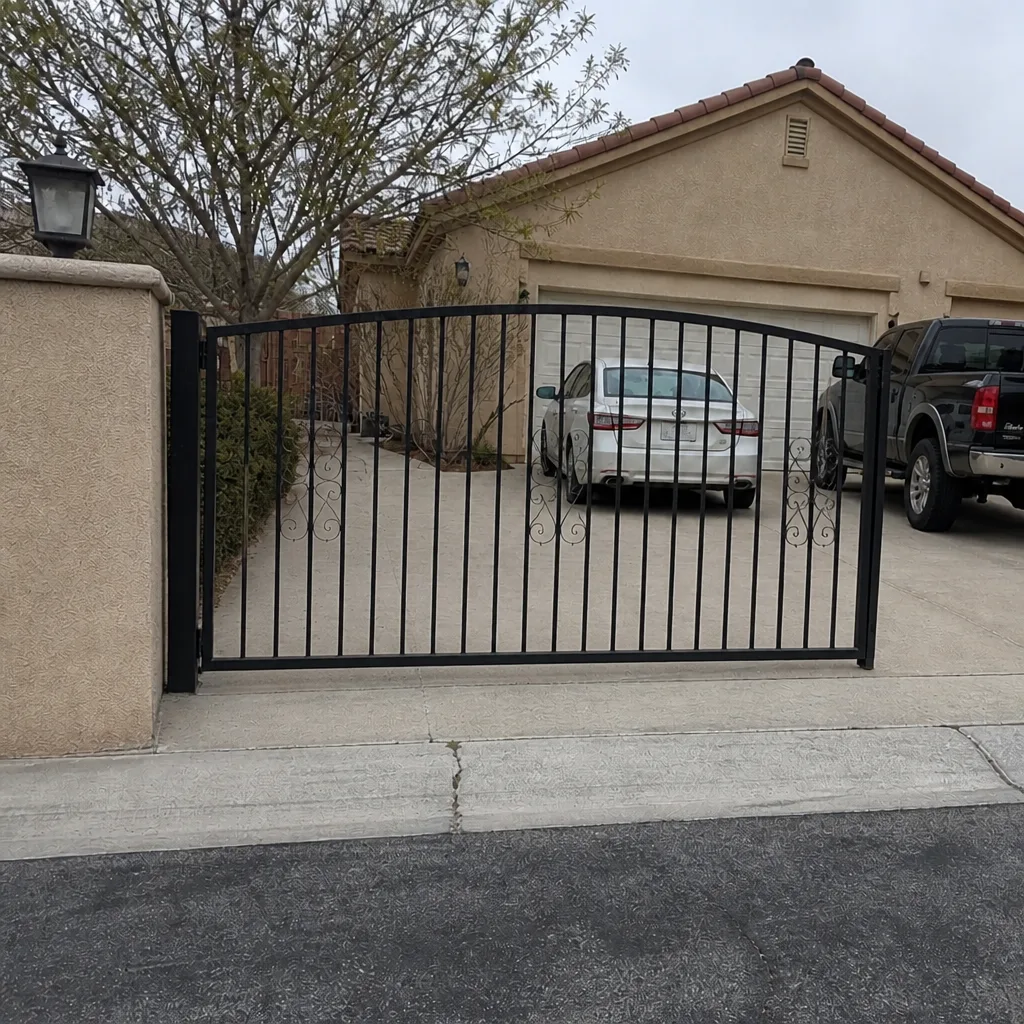 After
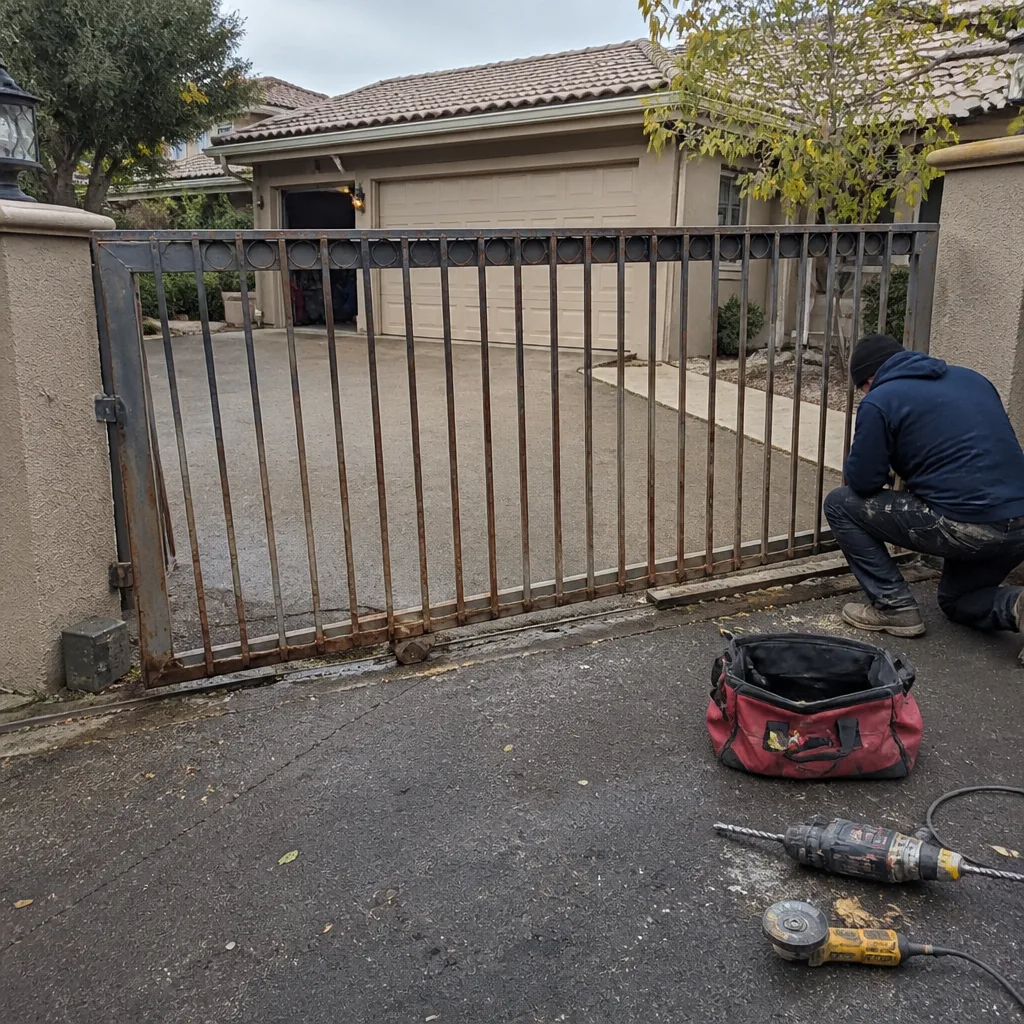 Before
 After
 Before
 After
When to Call a Professional
Call a professional when the repair touches force limits, control boards, line voltage, structural welding, post resetting, or hinges. Call when the gate reverses unpredictably, when the operator beeps codes you don’t recognize, or when the gate has been hit by a vehicle. Call when you can’t identify the operator brand with confidence, or when your documentation has narrowed the problem but the fix requires parts specific to a brand you haven’t worked with. And call when the gate is a safety-critical closure for a pool area, a child’s play yard, or a property line that faces a road.
Ironworks Gate Co. Summerlin offers free estimates in Summerlin. Call (866) 623-9848 and a live person answers, day or night, not a voicemail. If you’re not sure whether your problem is worth a professional visit, the call itself is free and the answer is honest. If you’ve already got a written estimate from another company, we’ll give you a free second opinion on it. And if the diagnosis is a repair over $250, we’ll take $50 off. The price is quoted and agreed before any work starts, so there are no surprises on the bill.
Frequently Asked Questions
No, unless you are a trained technician. Control boards are firmware-matched to the operator, and a mismatched board can void the manufacturer’s warranty and disable safety-edge monitoring. A homeowner who installs the wrong board may end up paying twice: once for the board and once for professional service to undo the problem.
Check that your operator has functioning entrapment protection, working photo eyes or safety edges, and a manual release that operates without tools. If any of these is missing or not responding, the gate is likely out of compliance and should be inspected. In Summerlin, call (866) 623-9848 for a free estimate and we’ll verify compliance on the visit.
Replacing remote batteries. It is the single lowest-risk task on a gate system, and it accounts for a meaningful share of “dead remote” calls. Photo-eye alignment and hinge lubrication come next. Anything touching force limits, control boards, line voltage, or structural components is not a DIY repair.
You shouldn’t. Force-limit adjustment interacts with entrapment protection under UL 325, and a setting that’s slightly too high can create a gate that pushes through a person instead of stopping. This is the repair most often attempted by homeowners and most often the cause of a serious safety issue.
It can. Manufacturer warranties often require service by a trained technician, and DIY work on safety-critical components is a common exclusion. If your operator is still under warranty, a professional repair preserves coverage; a DIY repair can void it and leave you paying for a replacement operator.
If the photo eyes are clean and aligned and the gate still reverses, the issue is usually force-limit calibration, a failing safety edge, or an operator fault code. These are diagnostic repairs that need a professional to read the operator’s fault memory. Call (866) 623-9848 for a free estimate in Summerlin; the visit will identify the exact cause.
The Bottom Line
The DIY-versus-professional line on gate repair is narrower than most gate companies suggest and more serious than most tutorials admit. Four tasks are genuinely safe for a careful homeowner: battery replacement, photo-eye realignment, manual release practice, and minor lubrication. Three tasks look simple and aren’t: force-limit adjustment, control board replacement, and any work near line voltage. Structural work costs more in total when done yourself, once materials and rework are counted. And in Summerlin, the caliche soil and thermal expansion make post and hinge work worse candidates for DIY than in most parts of the country. Document the problem before you call. Then call Ironworks Gate Co. Summerlin at (866) 623-9848 for a free estimate, a live person, and pricing agreed before any work starts. Every job backs the 90-Day Done Right Promise, and a 5% Senior and Veteran discount is always standing.
Written by the team at Ironworks Gate Co. Summerlin.