
Last updated November 17, 2026
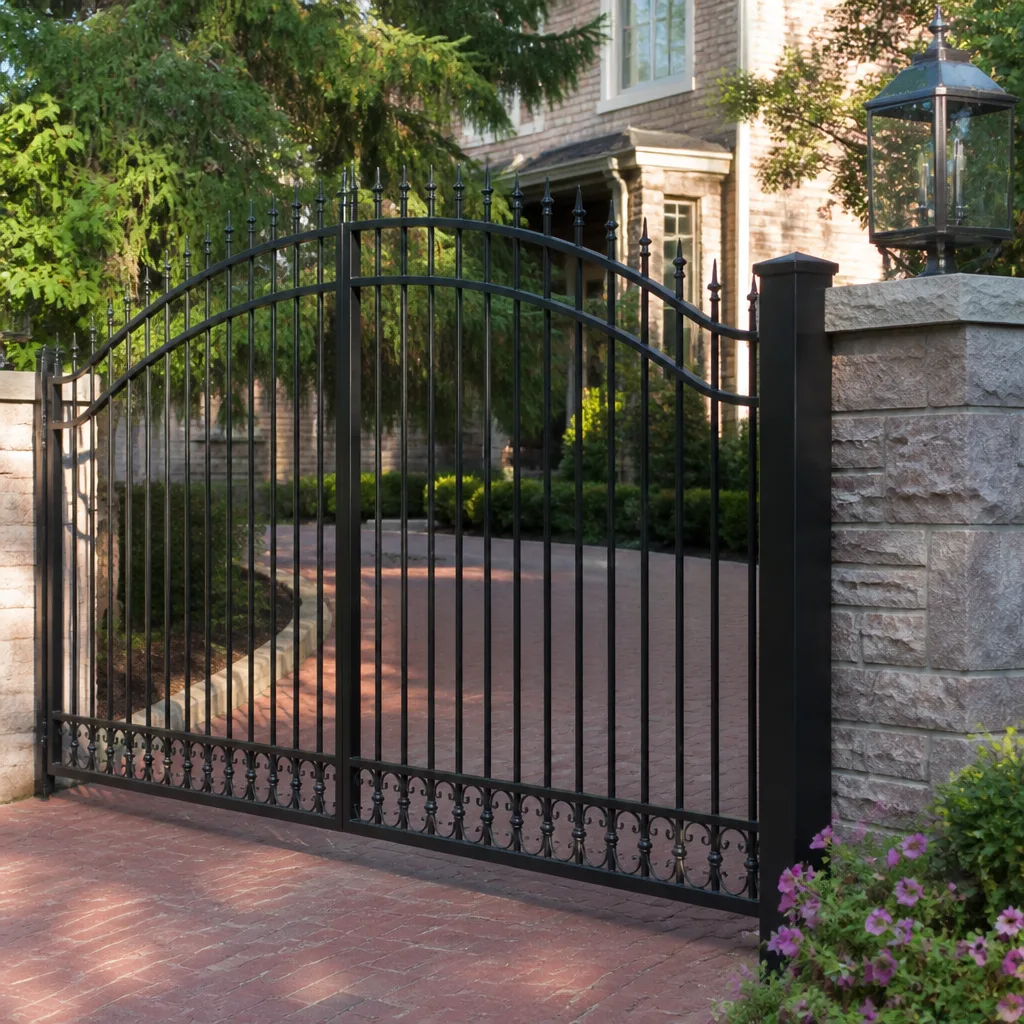 Wrought iron
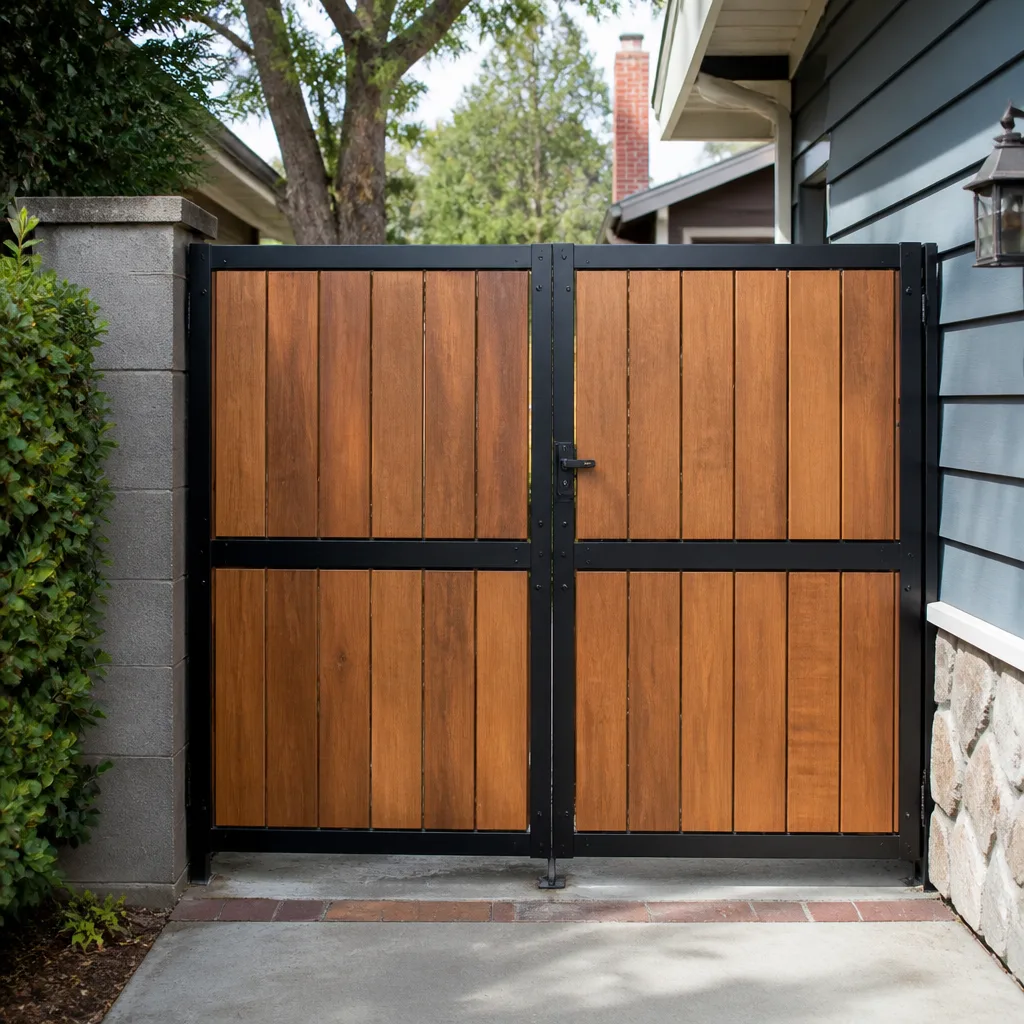 Wood & steel frame
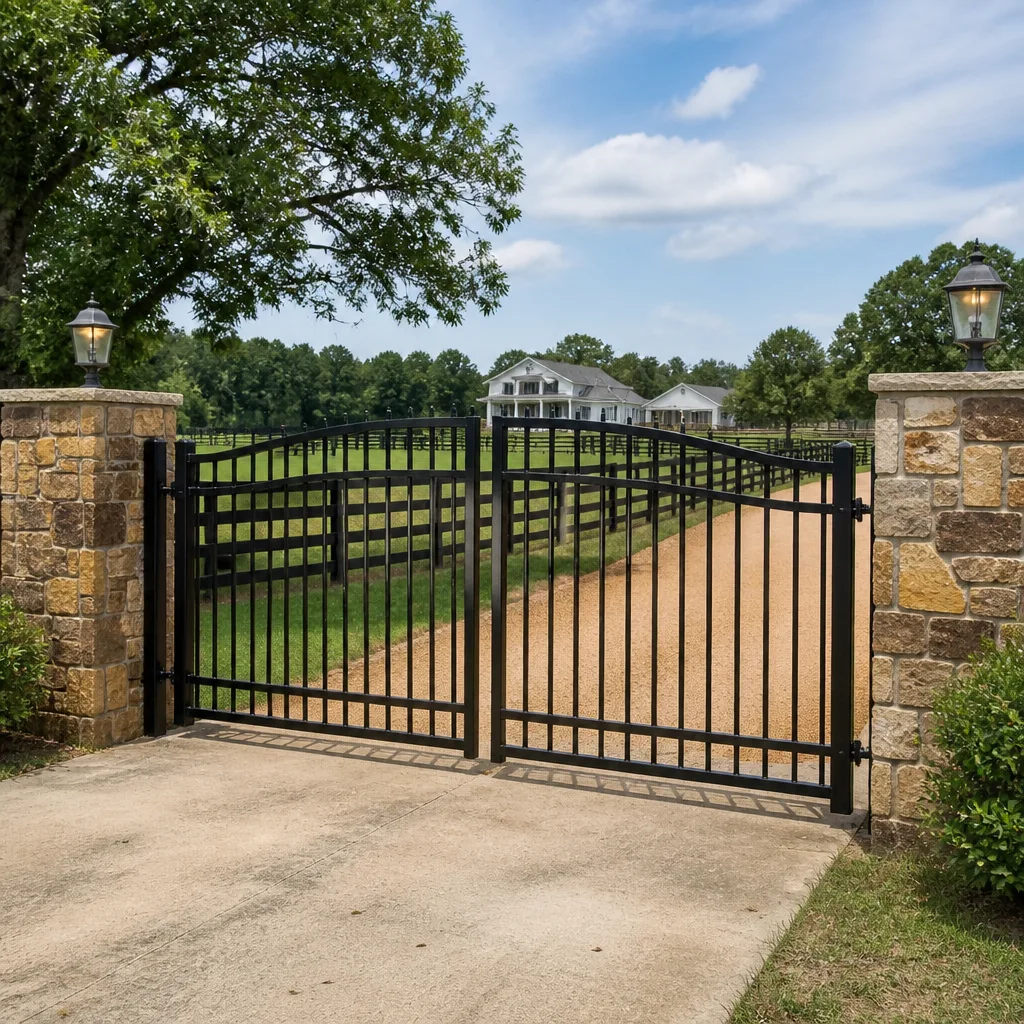 Farm & ranch
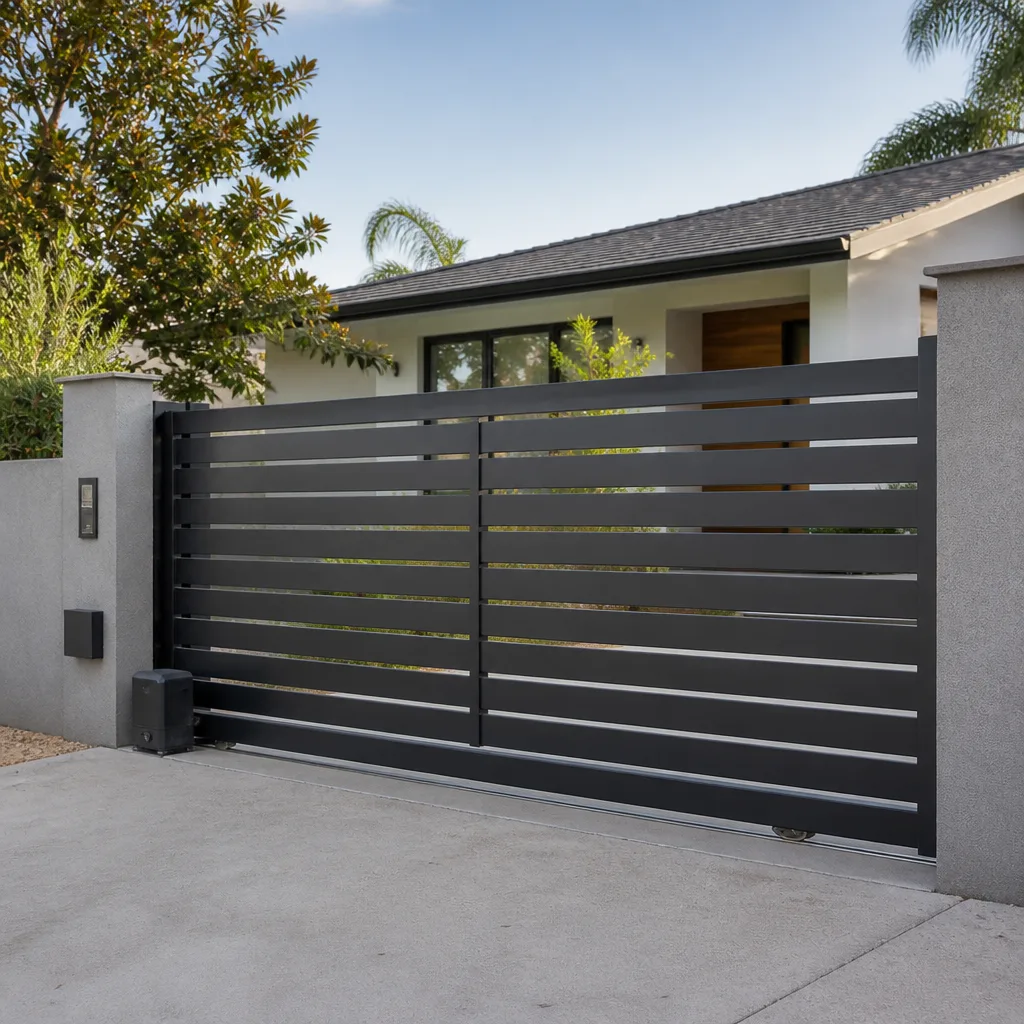 Sliding driveway gates
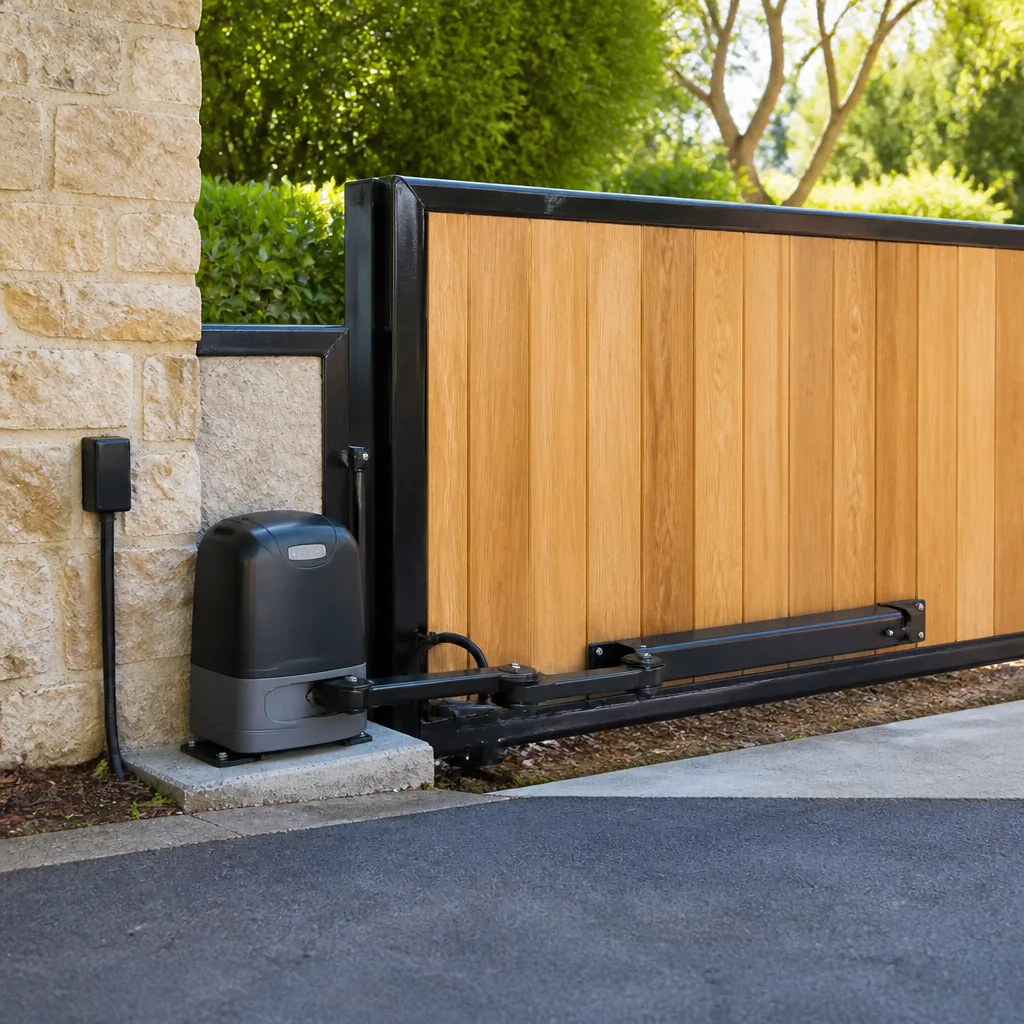 LiftMaster operators
Free on-site gate assessment - hinges, posts, and your LiftMaster or Nice gate operator checked before anything is quoted
The assessment is free and the quote is the invoice.
Get your free estimateGate Parts & Welding Maintenance Schedule: What to Do and When
Here’s what we’ve learned after years of fixing gates across Summerlin: the spot that rusts first is never the flat face you see from the street. It’s the top of the horizontal rails, where monsoon rain sits in a shallow puddle for days after the storm has passed. Most homeowners wash and wax the pretty side and never touch that ledge. By the time the rust bleeds through the paint, the steel underneath has been failing for two seasons. This guide gives you the actual schedule – what to inspect in spring, treat after monsoon season, lubricate in fall, and check in winter – plus the line between work you can do in an afternoon and work that needs a welder.
Quick Answer
A residential iron gate needs about 90 minutes of owner-level work per year, split across four seasonal visits: a pre-summer coating inspection in late spring, a post-monsoon rust spot treatment in September, a hardware lubrication pass in October, and a hinge and weld check before winter. Anything involving rust-through, cracked welds, sagging posts, or a motor that won’t reverse belongs with a fabricator or gate technician, not a homeowner with a spray can.
Styles & brands we work with
- Wrought iron
- Wood & steel frame
- Farm & ranch
- Sliding driveway gates
- LiftMaster operators
Table of Contents
- Why Summerlin Iron Gates Rust From the Top Down
- The Four-Season Gate Maintenance Calendar for Summerlin
- The Five Highest-Wear Contact Points on a Residential Gate
- The Right Lubricant for Each Contact Point
- Paint Film Maintenance: Spotting Delamination Before It Spreads
- The Annual Hardware Torque Check
- Owner Work vs. Welder Work: Where the Line Is
- Common Mistakes to Avoid
Why Summerlin Iron Gates Rust From the Top Down
Summerlin sits at the base of the Spring Mountains, and that geography shapes everything about how a gate ages. The valley gets roughly four to five inches of rain a year, but it arrives in a handful of violent monsoon storms between July and September. Water doesn’t soak in slowly. It sheets off roofs, pools on horizontal surfaces, and finds every open seam in your paint in the space of an afternoon.
The top face of a horizontal rail is a dead-flat shelf. Water collects there, dries in the summer sun, and leaves behind dissolved minerals and dust. Repeat that fifty or sixty times over a decade and the paint film at the edge of that shelf starts to lift. That lift is called delamination, and it’s the actual beginning of the rust problem – the corrosion you see is the end of the story, not the start.
Two more local factors make it worse. Summerlin’s intense UV load breaks down paint binders faster than in milder climates, so a coating that would last eight years in the Pacific Northwest might start chalking in three or four here. And the dust that blows off the desert settles into the top rails, holds moisture against the metal, and forms a mild abrasive paste every time the gate swings. If your gate sits near a landscaped wash or a graded slope in The Ridges or Red Rock Country Club, wind-driven grit accelerates the wear.
The good news: rust that hasn’t perforated the steel is almost always stoppable. Rust that has gone through the wall of a tube is a welding job. The whole point of a schedule is to catch it in the first category.
The Four-Season Gate Maintenance Calendar for Summerlin
This is the exact sequence we walk Summerlin homeowners through. Print it, tape it inside a garage cabinet, and you’ll never wonder when the next task is due.
Late Spring (May): Pre-Summer Coating Inspection
- Walk the full perimeter of the gate in daylight, with a flashlight, looking at the top faces of every horizontal rail.
- Run a fingernail along the top edge. If the paint chips off in flakes, the film has failed and needs spot treatment before summer UV makes it worse.
- Check the bottom of the gate for paint worn through by ground contact or sprinkler spray.
- Photograph any spots you find so you can compare them next season.
September (Post-Monsoon): Rust Spot Treatment
- Wait for a dry week after the last monsoon storms.
- Wire-brush every rust bloom back to bare metal, working past the visible edge by at least an inch.
- Wipe with a degreaser, let it dry fully, and apply a rust-inhibiting primer.
- Topcoat within 24 hours with a matching enamel.
October: Fall Hardware Lubrication
Cooler weather is the right window for lubricant work – it won’t cook off in the sun, and the grease will be at working viscosity when winter settles in. Hit hinges, latches, the operator arm, and the roller or track contact points. More on which product goes where below.
November: Winter Hinge and Weld Check
Before the cold snaps, grab a wrench and check every bolt on the hinges, the hinge plates, and the post anchors. Thermal cycling through the summer has worked them loose. A gate that suddenly sags in January usually had a loose hinge bolt in October that nobody tightened.
If your gate runs on an operator – a FAAC, BFT, Linear, or Viking unit are all common in Summerlin driveways – fall is also the right time to schedule a seasonal tune-up on the automation so the motor isn’t fighting a stiff gate through the winter. Our Gate Motor & Opener in Summerlin service covers that check, including the safety reverse test.
The Five Highest-Wear Contact Points on a Residential Gate
Not every inch of a gate needs attention. These five spots account for the vast majority of failures we see on Summerlin gates, and they’re where your maintenance minutes should go.
- Hinge pins and barrels. The single highest-wear item on any swing gate. Every open-close cycle rotates the pin against the barrel, and dust works in as an abrasive. Under-lubricated hinges wear oval, which is why old gates sag.
- The latch and striker plate. Metal-on-metal contact every single time the gate closes. The striker wears a groove that eventually lets the gate rattle loose in wind.
- The operator arm pivot points. On an automated swing gate, the arm has two pivots that take the full motor torque. They’re the first thing to squeal.
- Hinge-plate-to-post bolts. Not a lubrication point but a torque point – vibration and thermal cycling back these out over a season.
- Bottom guide or track contact (sliding gates). If your gate slides rather than swings, the bottom rollers or guide track carry the full weight of the leaf. They need the most frequent inspection.
Notice that the top rails where rust starts aren’t on this list. That’s because the top rails don’t move – they corrode. Wear and corrosion are two separate schedules, which is why the calendar above alternates between coating work and lubrication work.
The Right Lubricant for Each Contact Point
The biggest myth in gate care is that a can of WD-40 is a maintenance plan. It isn’t. WD-40 is a solvent-based water displacer – excellent for freeing a stuck bolt, terrible as a hinge lubricant because it evaporates within days and leaves the hinge drier than it started. What homeowners actually need is the right product on the right surface.
- Hinge pins and barrels: white lithium grease in a spray can is the workhorse here. It stays put, resists washout, and won’t attract as much grit as heavy grease.
- Latch and striker plates: a dry silicone spray or a light PTFE lubricant. A wet grease here just collects dust and turns into lapping compound.
- Operator arm pivots: follow your operator manufacturer’s spec. FAAC and BFT arms typically want a light lithium grease; Viking manuals are specific about arm-pivot lubrication, so check the sheet.
- Sliding-gate rollers and track: dry silicone spray on the track, grease on the roller bearings themselves.
- Lock cylinders and keypads: graphite or a dedicated lock lubricant, never grease – grease gums up tumblers over time.
One application of the right product in October will outlast six spray-and-forget passes with the wrong one. A quick annual lubrication pass is also included in our Gate Repair in Summerlin seasonal visit, along with a full hardware check.
Paint Film Maintenance: Spotting Delamination Before It Spreads
The single most useful skill in gate maintenance is reading the paint. Delamination is the technical term for the paint film lifting from the metal. It happens at the edges first – the top rails, the bottom edge, the corners of scrollwork – because that’s where water gets underneath.
Here’s how to spot it early. Run your hand along a horizontal rail top in direct sunlight. If a section feels rougher than the surrounding paint, or if the surface looks subtly lighter, the film is lifting. Press a fingernail against the edge of any suspected spot. If it flakes, you’ve got delamination. If it just scuffs, you’re still in good shape.
Once you’ve confirmed a spot, here’s what stops the spread – and what just hides it:
- Stops it: wire-wheel the bare metal past the visible edge of delamination, feather the paint edges smooth, prime with a rust-inhibiting primer, and topcoat with matching enamel.
- Stops it: reaching the source – if water pooled on a horizontal rail, consider a drain hole drilled at the lowest point (a fabricator job on a hollow tube). Just drilling without priming the fresh bare metal will make it worse.
- Does not stop it: painting over the top of a lifting edge. The new paint bridges the gap and looks fine for a season, then peels off in a sheet with the old coat still under it.
- Does not stop it: rust-converter sprays that claim to “stop rust forever.” They convert a thin surface layer to a stable compound but don’t restore paint film integrity around the edges. Useful as a primer step, not as a solution.
If you’ve got a gate needing more than spot touch-up work – say, a quarter of the paint area is delaminating – that’s a strip-and-recoat job. Our Gate Installation in Summerlin team also handles recoat and refurbishment work on existing gates, so it’s one call rather than three.
The Annual Hardware Torque Check
Every metal gate in Summerlin is subject to two opposing forces that work bolts loose. First, thermal cycling: the gate expands in the 105-degree July sun and contracts in the 35-degree January night, thousands of cycles over a year. Second, vibration from every open-close cycle and every motor-driven swing. Together they will back out a hinge-plate bolt that seemed snug last spring.
Here’s the annual check, done in 15 minutes with a socket set and a wrench:
- Check the four (or six) bolts holding each hinge plate to the post. These are the most critical – a loose hinge plate sags the gate.
- Check the bolts through the hinge plate into the gate frame.
- Check the post anchor bolts at the base – on older gates set on masonry, these are notorious for working loose.
- Check the operator mounting bracket bolts if the gate is automated. A loose bracket wears the motor gearbox.
- Check any structural bolts in the frame itself – corners, mid-rail supports.
Torque to the manufacturer’s spec if you have it. If not, err toward snug – snug, not gronked, because overtightening strips threads and cracks welds. If a bolt turns more than a quarter turn to tighten, note it and check it again in 90 days. That’s a sign it’s going to keep backing out and may need a lock washer, thread-locker, or a stripped-thread repair. Our Ironworks Gate Co. Summerlin home team runs this check as part of the $89 seasonal tune-up.
Owner Work vs. Welder Work: Where the Line Is
This is the part that costs homeowners the most money, because knowing which is which prevents both overspending on small tasks and catastrophic deferral of big ones.
Owner-Level Work (90 minutes per year)
- Inspecting top rails for paint failure.
- Spot-treating rust blooms with wire brush, primer, and topcoat.
- Lubricating hinges, latches, arm pivots, and rollers.
- Tightening accessible bolts with a socket wrench.
- Testing the operator’s safety reverse with a standard obstacle test.
- Clearing dirt and grit from top rails after storms.
Welder or Fabricator Work (call a pro)
- Any rust that has perforated a tube or cracked the steel at a joint.
- Cracked or failed welds at hinge plates, corners, or picket joints.
- A post that has shifted in its footing and put the gate out of plumb.
- Sagging hinges that no amount of bolt-tightening fixes – they need replacement welds.
- Any structural modification, like adding a picket section or altering the frame.
What happens when you defer the welder work? A cracked weld on a hinge plate starts as a hairline and propagates under every swing. Six months later the whole hinge pulls free and the gate drops – usually striking a car or a person. What happens when you over-call the welder? You spend $700 rebuilding a joint that only needed five minutes of primer and paint. The honest call is: if the metal is intact, it’s owner work. If the metal is compromised, it’s a welder job.
For gates on automation, the honest complication is that a welder fix and a motor problem can look identical from the outside. A gate that won’t close smoothly might have a failed weld, a mis-aimed operator, or a dying limit switch. That’s why it helps to call a team trained across the major operator lines – FAAC, BFT, Linear, Viking, LiftMaster, and the rest – so the right answer comes on the first visit rather than a second trip after the wrong diagnosis.
Common Mistakes to Avoid
- Using WD-40 as a hinge lubricant. It evaporates in days and leaves the hinge drier than before. Use white lithium grease.
- Painting over a lifting paint edge. The new coat bridges the gap, looks fine for one season, then peels off in a sheet and takes the old coat with it. Wire-brush to bare metal first, every time.
- Ignoring the top rails. The single most-seen failure on Summerlin gates. Homeowners wash the face and never touch the flat top of the horizontal rails where monsoon water pools.
- Overtightening bolts to “be safe.” A hinge bolt torqued until threads strip costs a weld repair, not a wrench turn. Snug is snug.
- Assuming a motor problem is a motor problem. On a Summerlin gate with a FAAC or Linear operator, a stiff hinge or a bent arm is more common than a failed motor. Diagnose the whole gate, not just the operator.
- Skipping the safety-reverse test on an automated gate. That test – put an object in the path, gate reverses – is a life-safety check, and it’s one homeowners routinely defer. Test it every season.
- Letting a small rust bloom go “until it’s worth fixing.” By the time it’s worth fixing, it’s a welding job. Rust that hasn’t perforated costs you a can of primer; rust that has costs a cut-and-weld.
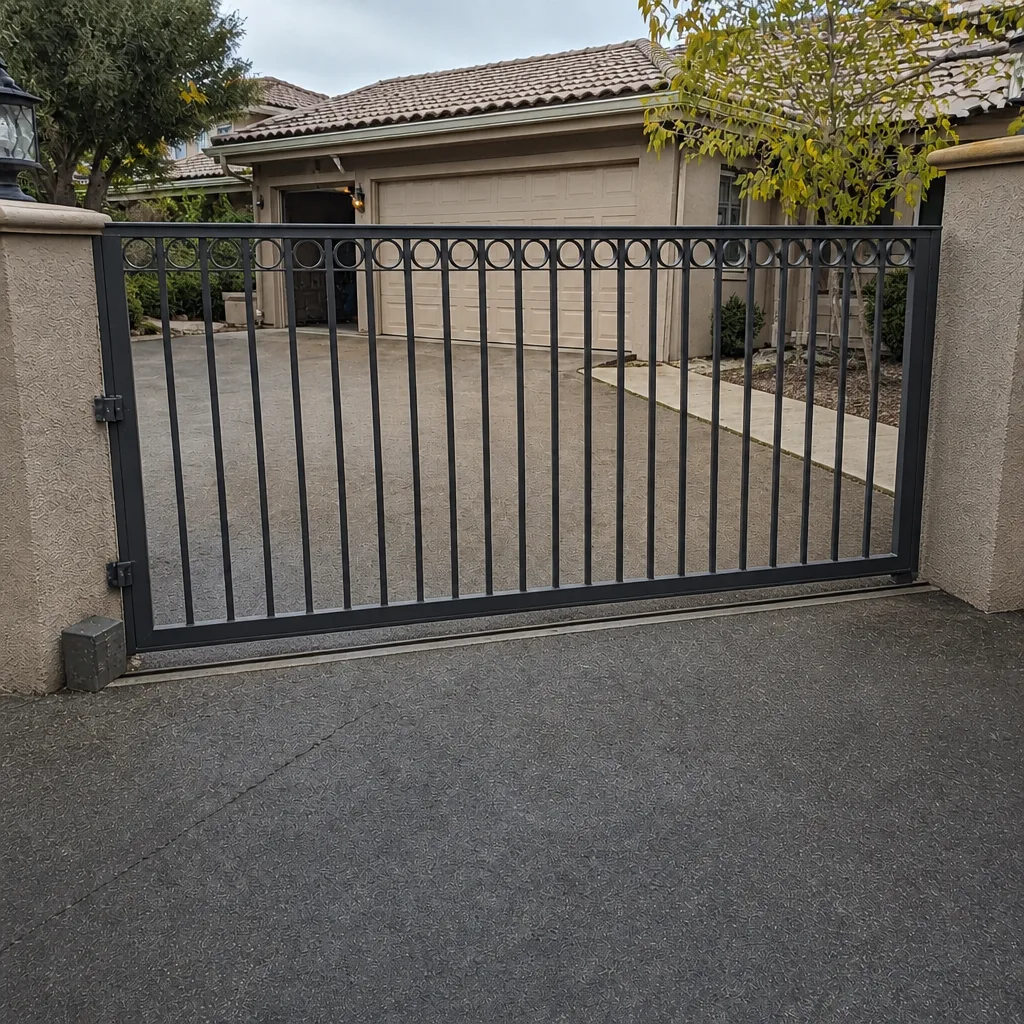
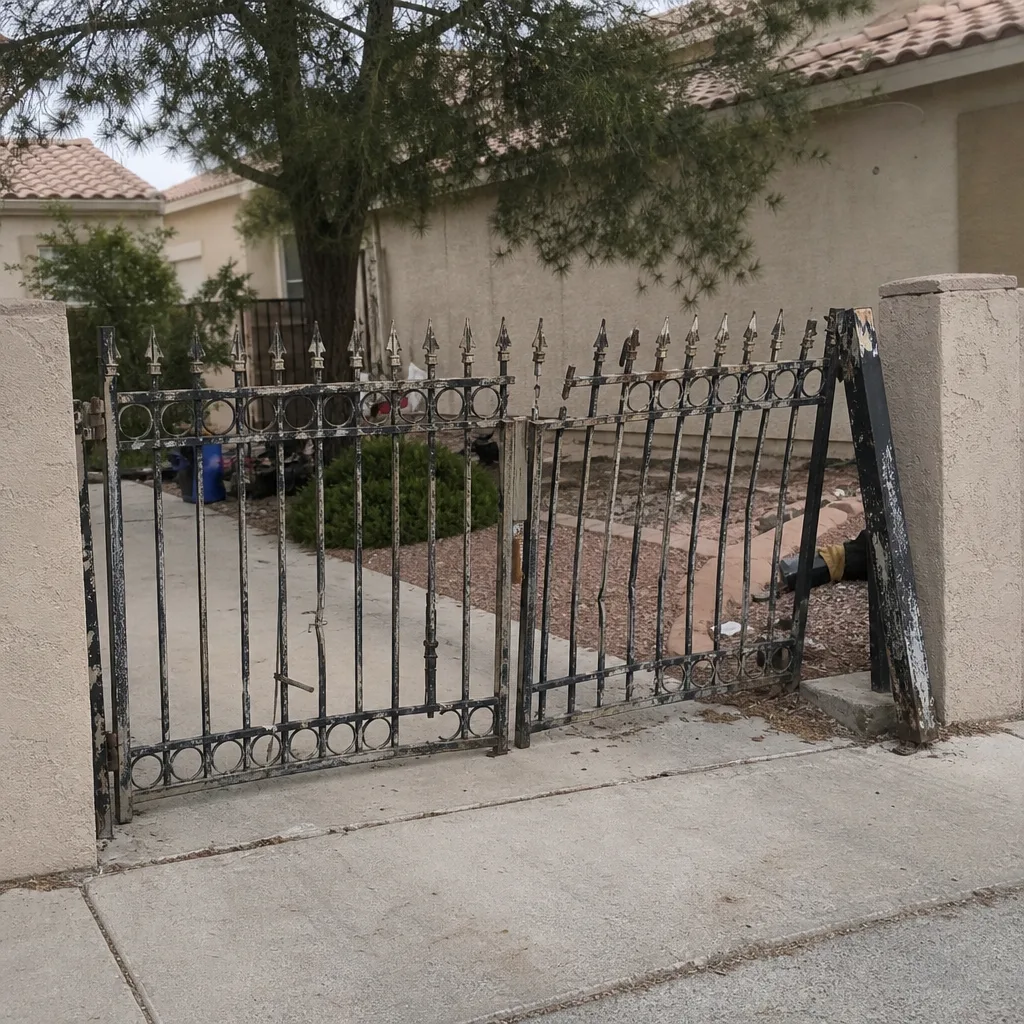
See the difference
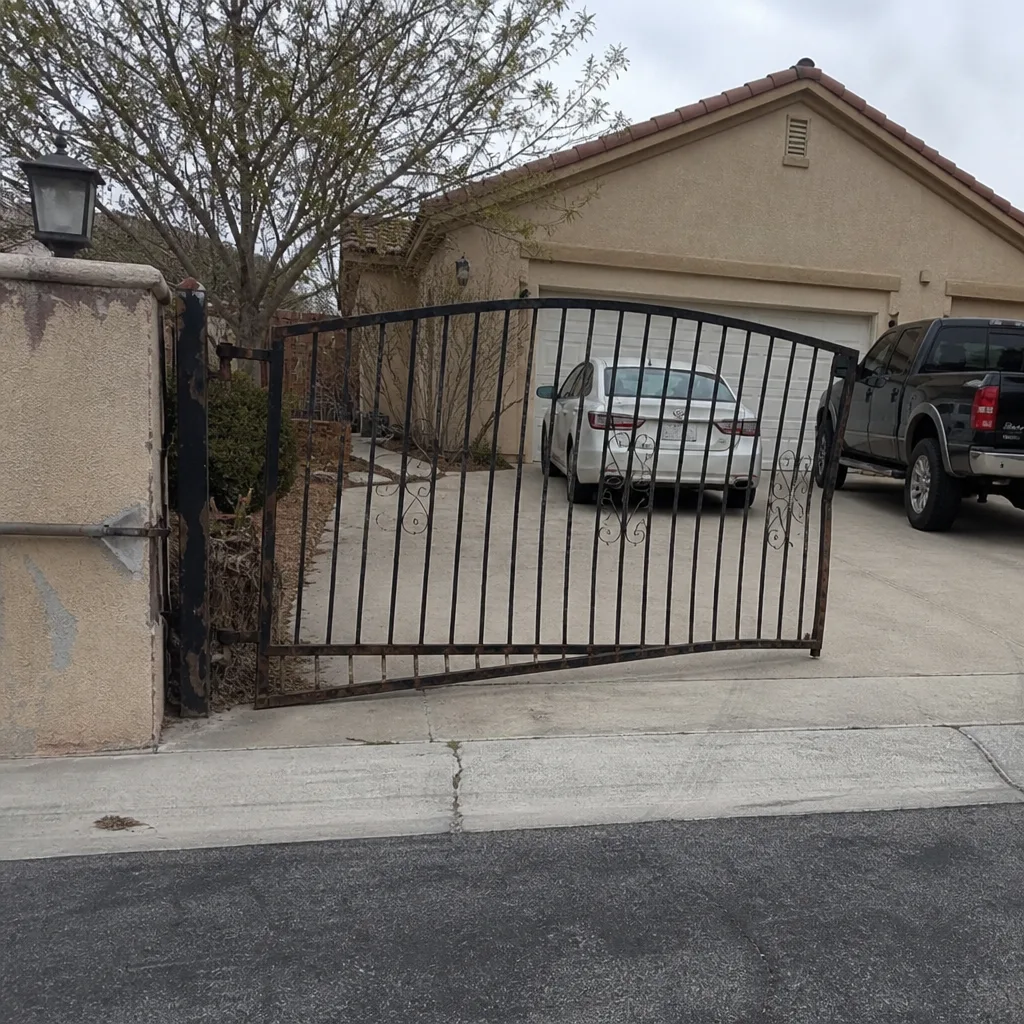 Before
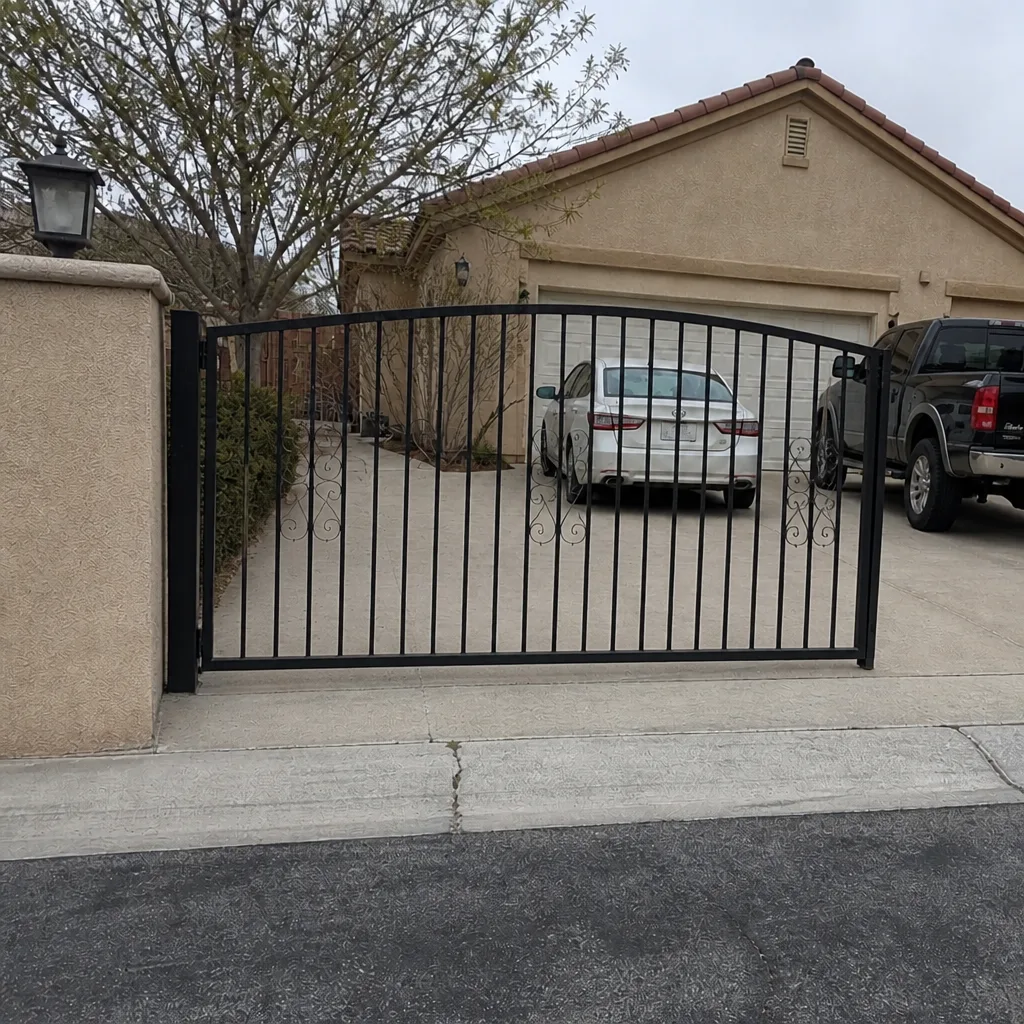 After
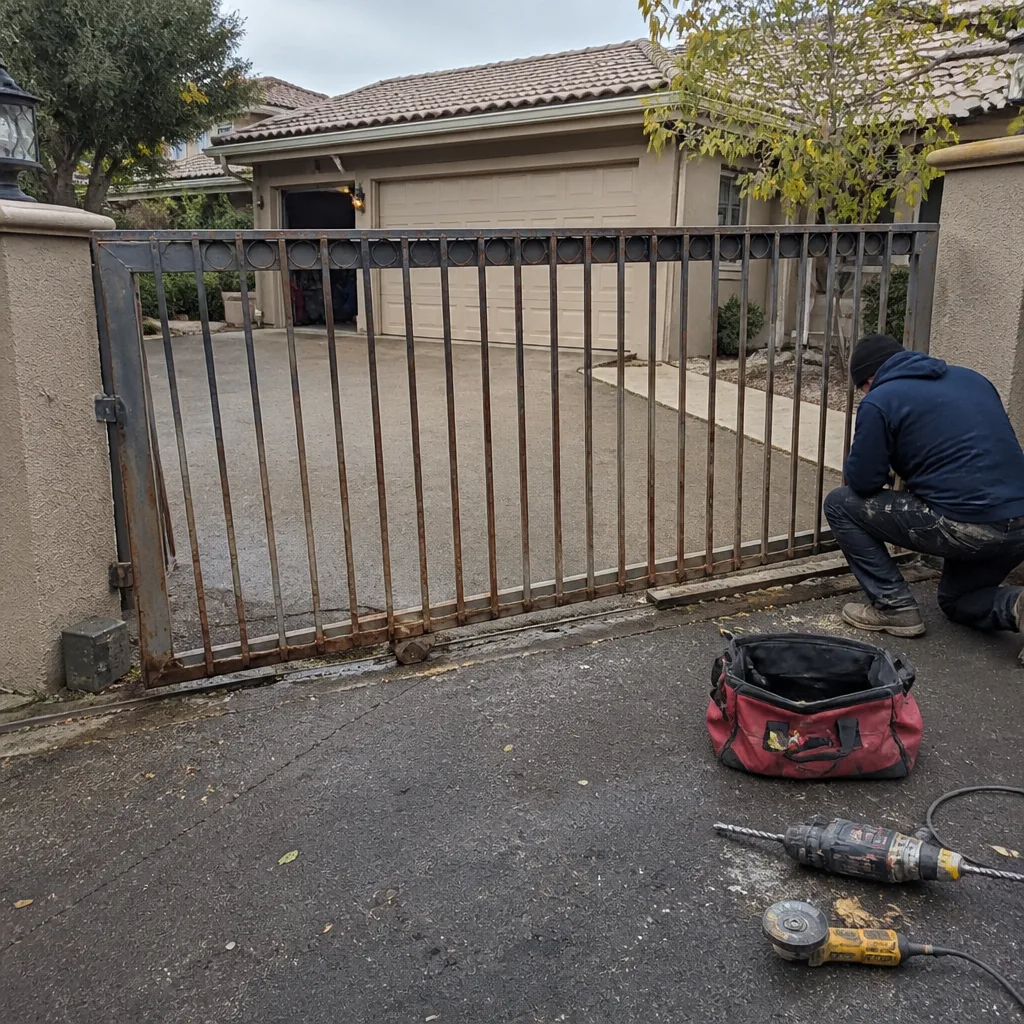 Before
 After
 Before
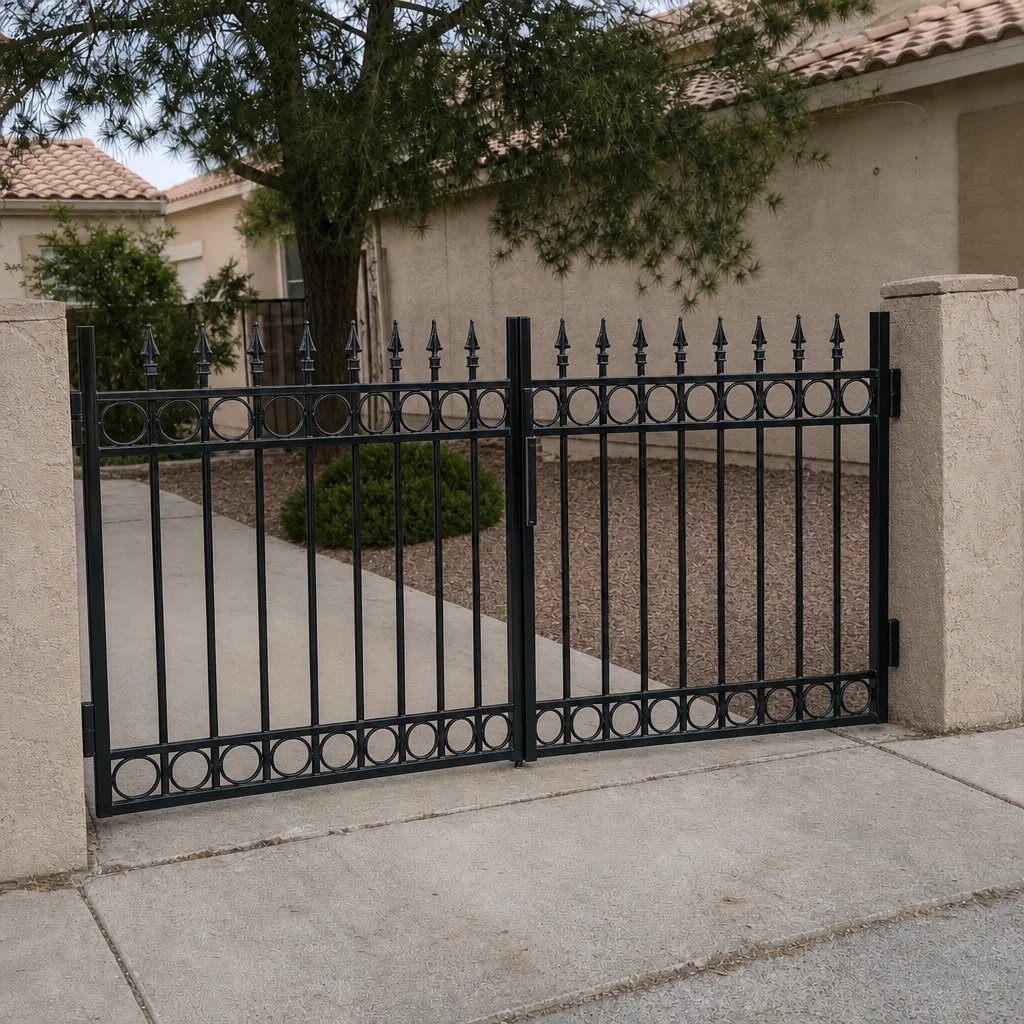 After
When to Call a Professional
Call a gate specialist when you’re past the owner-level list. Specifically: when rust has gone through the wall of a tube, when you can see a crack in a weld at a hinge plate or corner, when the gate sags despite tightened bolts, when the post has shifted in the ground, when the paint film is failing over a large area rather than a spot, or when the automation won’t reverse on an obstacle or won’t respond to commands. On anything electrical – the operator motor, the low-voltage wiring, or an access-control keypad – leave it to a trained technician. High-torque gate motors can cause serious injury, and 110-volt wiring is not a homeowner project.
Ironworks Gate Co. Summerlin offers free estimates in Summerlin – call (866) 623-9848. Every job is backed by our written 90-Day Done Right Promise, and the price is settled before a bolt is turned.
Frequently Asked Questions
About 90 minutes of owner-level work per year, split into four seasonal visits: coating inspection in late spring, rust spot treatment in September after monsoon season, hardware lubrication in October, and hinge and bolt checks in November. Add a professional tune-up on the automation each fall if your gate runs on an operator.
The hinge pins and barrels, followed by the paint film on the top of horizontal rails where monsoon water collects. The hinges fail first from pure mechanical wear; the paint fails first from UV and water pooling. Both are preventable with fall lubrication and a pre-summer coating inspection.
No. WD-40 is a water-displacing solvent that evaporates within days and leaves the hinge drier than it started. Use white lithium grease on hinge pins and barrels instead, and a dry silicone or PTFE spray on latches and strikers.
Yes, if the rust hasn’t perforated the steel and the delamination is a spot rather than a large area. Wire-brush to bare metal past the visible edge, feather the old paint edges smooth, prime with a rust-inhibiting primer, and topcoat with matching enamel within 24 hours. If the rust has gone through, that’s a welder job.
You don’t, from a visual inspection alone. A cracked weld at a hinge plate or corner can look cosmetic for months while it propagates under every swing, then let go without warning. If you see a crack, treat the gate as unsafe to operate and call for an inspection. Call (866) 623-9848 for a free estimate – estimates are free.
Yes, once a year. Seasonal tune-up should cover the safety-reverse obstacle test, limit-switch adjustment, drive gear inspection, and lubrication of the arm pivots. Desert heat and dust wear out operator gear lube faster than in cooler climates. Call (866) 623-9848 for an exact quote on a seasonal tune-up – it’s $89 for standard residential gates, and estimates are free.
The Bottom Line
Iron gate maintenance in Summerlin is not about preventing rust – rust is what shows up when lubrication and paint film work have been deferred for two seasons. The schedule that interrupts it takes about 90 minutes a year: inspect top rails in May, treat rust spots in September, lubricate hinges and arm pivots in October, and torque the bolts in November. Stay on that calendar and a 40-year-old Summerlin gate closes like the day it was hung. Defer any of it by two seasons and you’re looking at a welding and motor repair. Ironworks Gate Co. Summerlin handles the parts, welding, and operator work that goes past the owner list, backed in writing by the 90-Day Done Right Promise. Call (866) 623-9848 for a free estimate.
Written by the team at Ironworks Gate Co. Summerlin.