
Last updated November 17, 2026
 Wrought iron
 Wood & steel frame
 Farm & ranch
 Sliding driveway gates
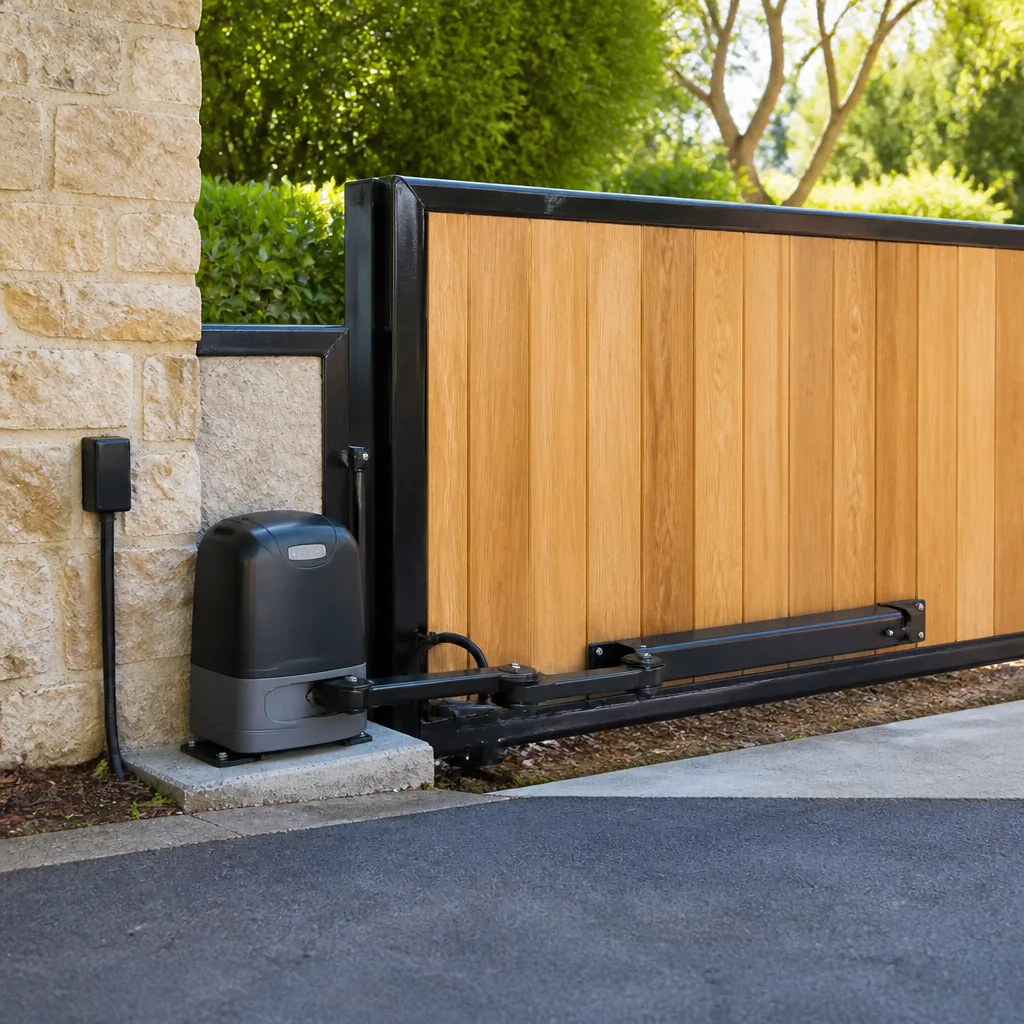 LiftMaster operators
Free on-site gate assessment - hinges, posts, and your LiftMaster or Nice gate operator checked before anything is quoted
The assessment is free and the quote is the invoice.
Get your free estimateGate Parts & Welding Warning Signs Every Homeowner Should Know
Paint bubbling at a weld seam isn’t a cosmetic problem. It’s iron oxide forming beneath the surface, which means the base metal at that joint is already thinning from the inside out. We’ve opened up gates in Summerlin where a bubble the size of a dime sat over a weld that had lost half its thickness. The paint held the shape; the steel underneath was gone. Iron gates don’t fail without warning. They telegraph structural stress months ahead of a breakdown, and every sign is visible to a homeowner who knows where to look. This guide turns a ten-minute walk-around into an early warning system for your gate, your welds, and your operator.
Quick Answer
The most reliable early warning signs on an iron gate are paint bubbling along weld seams, rust streaks running from fastener holes, a hinge gap that has widened, and visible frame flex when the gate moves. On an automated gate, add unusual motor strain or a change in the sound of the cycle. Any of these means the gate is telling you something is moving or corroding before it becomes visible, and most are worth a professional look within the same season.
Styles & brands we work with
- Wrought iron
- Wood & steel frame
- Farm & ranch
- Sliding driveway gates
- LiftMaster operators
Table of Contents
- Why Iron Gates Warn You Before They Fail
- Paint Bubbling at Weld Seams: The Sign Most Homeowners Miss
- Rust Streaking from Fastener Holes and What It Predicts
- Hinge Gap Widening and Frame Movement
- The Racking Test: A Push-and-Hold Check You Can Do Today
- Warning Signs Unique to Automated Gates Under Power
- From First Warning Sign to Failure: What Can Wait and What Can’t
- The Risk of an Unattended Failing Gate in Summerlin
Why Iron Gates Warn You Before They Fail
Iron and steel don’t snap without a story. A gate failure is almost always the end of a slow process: moisture gets into a joint, corrosion thins the metal, a weld cracks under repeated load, or a hinge wears and lets the gate sag a fraction of an inch at a time. Each stage leaves a mark you can see or hear if you know what you’re looking at.
Summerlin’s climate accelerates some of this and slows other parts. The dry air keeps standing water off the metal most of the year, which is good. But the intense sun bakes paint and powder coat until it micro-cracks, and once a coating fails at a seam, the monsoon weeks in late summer push moisture straight into the exposed steel. Our technicians have up to 13 years of experience and have watched this cycle play out across the valley. The gates that fail are rarely the oldest ones. They’re the ones where a small coating failure went unnoticed for two or three summers.
Here’s the part that matters for a homeowner: you don’t need to weld, grind, or diagnose anything to catch these signs early. You need to know the four or five places to look and what each one is telling you. The rest of this guide walks through them one at a time, with the specific failure each sign predicts.
Paint Bubbling at Weld Seams: The Sign Most Homeowners Miss
Paint bubbling along a weld is the single most important sign on an iron gate, and it’s the one most people dismiss as a paint touch-up. It isn’t. A bubble forms when corrosion is happening under the coating and the expanding rust pushes the paint up from below. By the time you can see the bubble, the base metal at that weld is already losing thickness.
Why welds specifically? Two reasons. First, a weld is where the metal was heated and cooled, which can leave it more prone to corrosion if the coating didn’t fully seal over it. Second, a weld is a stress point. It’s where the gate’s weight and motion concentrate, so any weakness there gets worked harder than the surrounding steel.
Check these spots on your gate:
- Where the horizontal rails meet the vertical pickets
- Where the gate frame corners are joined
- Around hinge plates and latch mounts, which are welded or bolted on
- Along the bottom rail, closest to splash and sprinkler spray
The specific failure a weld-seam bubble predicts is a cracked or separating joint. Left alone, that weld can fail outright under load, and a gate that loses a corner joint can drop or twist. If you find bubbling at a weld in Summerlin, it’s worth a professional look rather than a coat of paint over the top. Painting over active corrosion traps the moisture and hides the problem while it gets worse. When a weld needs redoing, that’s real gate repair in Summerlin work, not a cosmetic fix.
Rust Streaking from Fastener Holes and What It Predicts
A rust streak running down from a bolt or screw hole is a message about moisture. It means water is getting behind the fastener and sitting against bare steel, and the fastener or the hole it passes through is corroding. Streaks that appear after a rain and dry out are minor. Streaks that persist, or that you notice growing across a dry week, mean the corrosion has a foothold.
Fastener corrosion matters more than it looks. On a gate, bolts and screws hold hinge plates, latch hardware, and operator brackets. If the fastener itself is thinning, it can shear under the gate’s weight. If the hole around it has corroded, the fastener loses its grip and the whole fitting starts to work loose. We’ve seen a latch bracket come free because two fasteners had corroded through from the inside, and the homeowner had only noticed a faint orange streak months earlier.
Where to look for streaking:
- Hinge plates, top and bottom
- Latch and striker mounts
- Operator mounting brackets on automated gates
- Decorative scrollwork attached with small fasteners
The failure this predicts is hardware working loose and, eventually, a fastener shearing. That can mean a hinge pulling out, a latch that won’t catch, or a bracket that lets the operator push the gate off its line. Catch it early and it’s a fastener and seal job. Ignore it and the fitting it holds may need to be rebuilt. If you’re not sure whether a streak is surface staining or real corrosion, our Ironworks Gate Co. Summerlin home page is a good place to start before you call.
Hinge Gap Widening and Frame Movement
The gap between a hinge and the gate frame, or between the gate and the post, shouldn’t change from one season to the next. If it’s widening, something is moving: the hinge is wearing, the fasteners are loosening, the post is settling, or the gate frame has warped. Each of those has a different remedy, and a widening gap is your cue to find out which one you’re dealing with.
A simple test: pick a fixed point on the hinge plate and a fixed point on the frame, and check the distance between them every few months. If it’s growing, note where the movement is coming from. A hinge that’s wearing shows up as slop at the pin. A settling post shows up as the whole gate leaning slightly toward the post side. A warped frame shows up as a gap that’s tight at the top and wide at the bottom, or the reverse.
What a widening hinge gap predicts depends on the cause, but the outcome tends to be the same: the gate drops slightly and stops hanging square. A dropped gate drags at the latch, stresses the operator, and puts uneven load on the frame. In the worst case a hinge fails entirely and the gate sags hard onto the ground. Addressing a widening gap while the hinge is still sound is a much smaller job than rebuilding a hinge that has torn out of the frame. This is one of the reasons we recommend a seasonal tune-up: a trained eye catches a gap change you might not notice day to day.
The Racking Test: A Push-and-Hold Check You Can Do Today
Racking is a frame going out of square under load, and the racking test reveals it before it becomes visible. It’s a simple push-and-hold check, and you can do it in under a minute. What it tells you is whether the gate is resisting movement the way it should, or whether there’s play in the post, the frame, or the hinges that shouldn’t be there.
- Open the gate partway so it’s free of the latch and clear of the operator, or put the operator in manual if it’s automated.
- Stand at the far edge of the gate and push gently toward the post, then hold for a few seconds.
- Watch the post and the frame. The gate should flex slightly and settle back. The post shouldn’t move, and the frame shouldn’t twist out of square.
- Push the other direction and watch again. Any rocking in the post, any visible warp in the frame, or any looseness at the hinges is a finding.
- Listen. A creak or a pop during the test is a sound of movement somewhere in the structure.
What the racking test catches: post movement (a settling or loose post), frame warp (the gate itself twisting under load), and hinge wear (play at the pivot points). Any of these can be invisible when the gate sits still. They only reveal themselves under load, which is exactly when the gate is working hardest. If the post moves when you push, the gate is already relying on the operator or the latch to hold it in line. That’s the condition that leads to bigger failures. If your gate is automated, the gate motor & opener in Summerlin work is often where a racking problem gets diagnosed, because the operator feels the misalignment before anyone sees it.
Warning Signs Unique to Automated Gates Under Power
An automated gate tells you about structural problems through the operator. The motor feels every bit of resistance the gate offers, so when the gate is fighting its own misalignment, the operator shows the strain before the metal does. If you listen to the cycle, you’ll hear it.
Watch and listen for these on a powered gate:
| Warning Sign | What It Suggests |
|---|---|
| Motor sounds louder or higher-pitched than usual | The operator is working harder against resistance or misalignment |
| Grinding, growling, or a labored tone during the cycle | Binding in the track, hinges, or operator gears |
| Gate speeds up, slows down, or staggers mid-cycle | The operator is losing load or fighting a sag |
| Reverse or safety stop triggering for no visible reason | Sluggish travel from a gate out of alignment |
| Operator housing getting unusually warm, or a burning smell | Strain on the motor or a failing component; stop cycling and call |
What these predict: an automated gate under strain tends to shorten the life of the operator. A gate that drags on a worn hinge forces the motor to push harder on every cycle, and over months that wears down the gears and the control board. We service nine gate-automation brands, including DoorKing, Elite, and Mighty Mule, and the pattern is consistent across all of them: the operator fails because the gate was fighting it, not because the operator was bad. When the motor starts sounding labored in Summerlin, it’s worth diagnosing before the operator is the next thing you replace. A motor that’s misaligned or overworked can be fixed early or replaced later. The choice is yours, but the cost is very different.
From First Warning Sign to Failure: What Can Wait and What Can’t
Not every warning sign is an emergency. Some give you a season. Others need attention before you run the gate again. Here’s how we sort them by urgency, based on what each sign predicts and how fast it tends to progress in a Summerlin climate.
- Paint bubbling at a weld seam: can usually wait a few weeks, but not longer. The corrosion is active, and the monsoon season will push it faster. Get it assessed within the season.
- Rust streaks from fasteners: moderate urgency. If the streak is growing, the fastener is thinned and the fitting may work loose. Address before the next wet season.
- Hinge gap widening: check within days. Once a hinge is wearing, the load shifts quickly. A hinge that tears out of the frame is a much bigger repair.
- Frame flex during operation or the racking test: stop and assess. Continuing to run a gate that racks under power can worsen the alignment on every cycle.
- Motor strain or grinding on an automated gate: stop cycling until it’s looked at. A motor fighting misalignment can fail outright or damage the control board.
- A gate that won’t close fully, or that has dropped at the latch: don’t use it unattended. This is a safety and access issue, not just a repair.
The general rule: anything that’s active corrosion can usually wait a season. Anything that involves movement, misalignment, or motor strain should be looked at before you keep running the gate. When in doubt, a professional assessment is cheap insurance against a bigger repair. If you’re planning a replacement instead of a fix, that’s a scheduling job rather than a same-day call, and our gate installation in Summerlin page lays out what a new gate involves.
The Risk of an Unattended Failing Gate in Summerlin
An unaddressed failing gate in Summerlin carries costs that go beyond the repair itself. The first is the HOA notice. Most Summerlin communities hold homeowners to appearance and maintenance standards, and a gate with bubbled paint, rust streaks, or a visible sag can draw a letter. A notice that asks you to fix the gate is one thing; a notice that flags a safety concern because the gate won’t close properly is a harder problem.
The second is vehicle clearance liability. A gate that has dropped at the hinge or lost its square changes how it swings or slides. A gate that no longer clears a vehicle the way it used to is a risk to your car and to anyone who pulls into the driveway. A gate that won’t close fully becomes a security gap. And a gate that’s fighting an operator can fail at the worst moment, leaving you locked in or out with a car on either side.
We’ve seen homeowners in Summerlin pay for a small weld repair that became a hinge rebuild, or a hinge rebuild that became a full gate replacement, because a visible sign sat unnoticed through two monsoon seasons. The early signs cost the least to fix. The late ones cost the most. If you’re going to watch one or two things, watch the welds and the hinge gaps, because those are the two places where the timeline is shortest.
Common Mistakes to Avoid
- Painting over a bubbling weld. It looks better for a week and traps moisture against active corrosion, which speeds up the very failure you’re trying to avoid.
- Ignoring the streaks because “it’s just a little rust.” A steady streak from a fastener hole means the steel behind it is thinning, and that’s a fitting that can come loose.
- Forcing a gate that’s dropped or dragging. Pushing it manually or running the operator anyway works the hinge and the motor harder, turning a minor alignment issue into a repair.
- Treating the racking test as unnecessary because the gate looks fine sitting still. Movement only shows up under load, and the test is how you find it.
- Assuming the operator is the problem when the motor sounds strained. Most operator failures we see start with a gate that was fighting its own alignment.
- Waiting for an HOA letter before addressing a visible issue. In Summerlin, a small weld-or-hinge repair that could have been done quietly becomes a bigger, time-pressured job.
- Calling a general handyman for a weld or a powered gate. Structural welding and gate automation are specialist work, and a correct fix the first time is cheaper than a repeat of the same repair.
See the difference
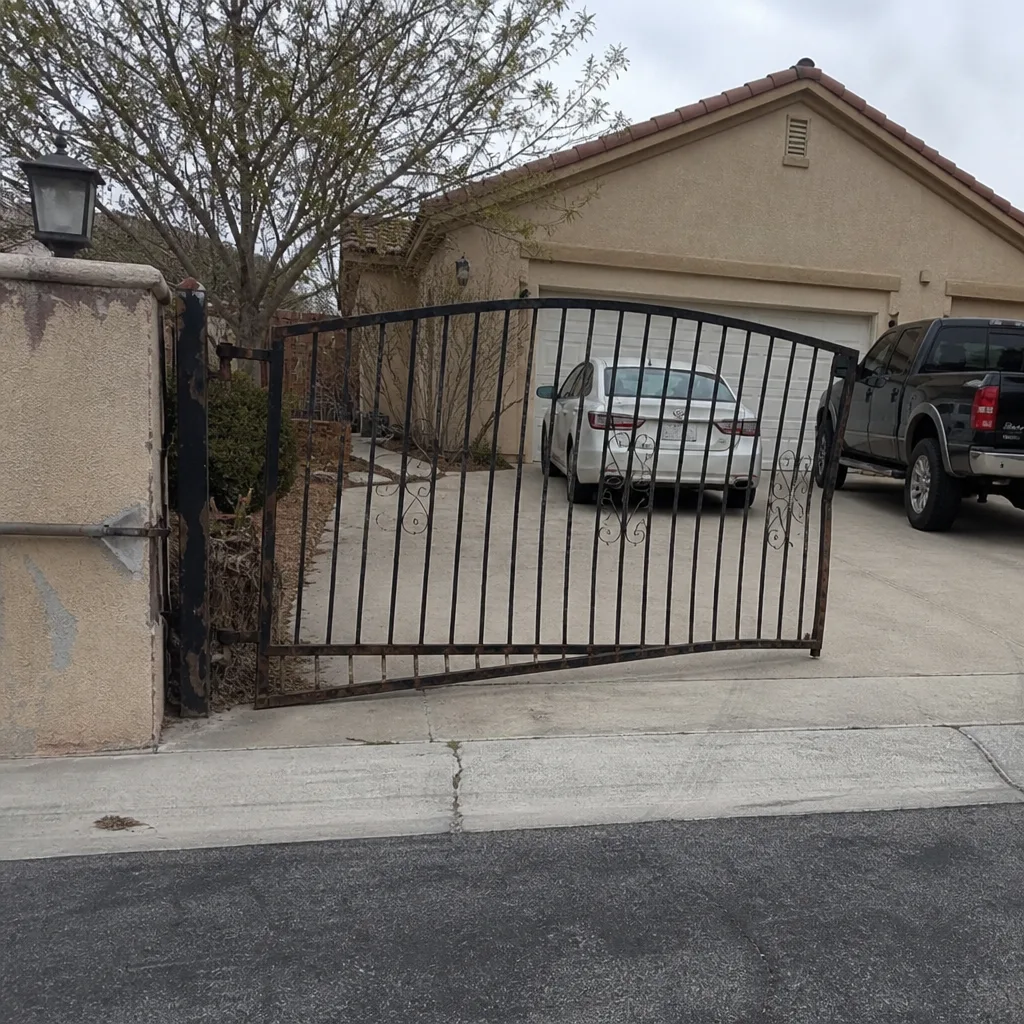 Before
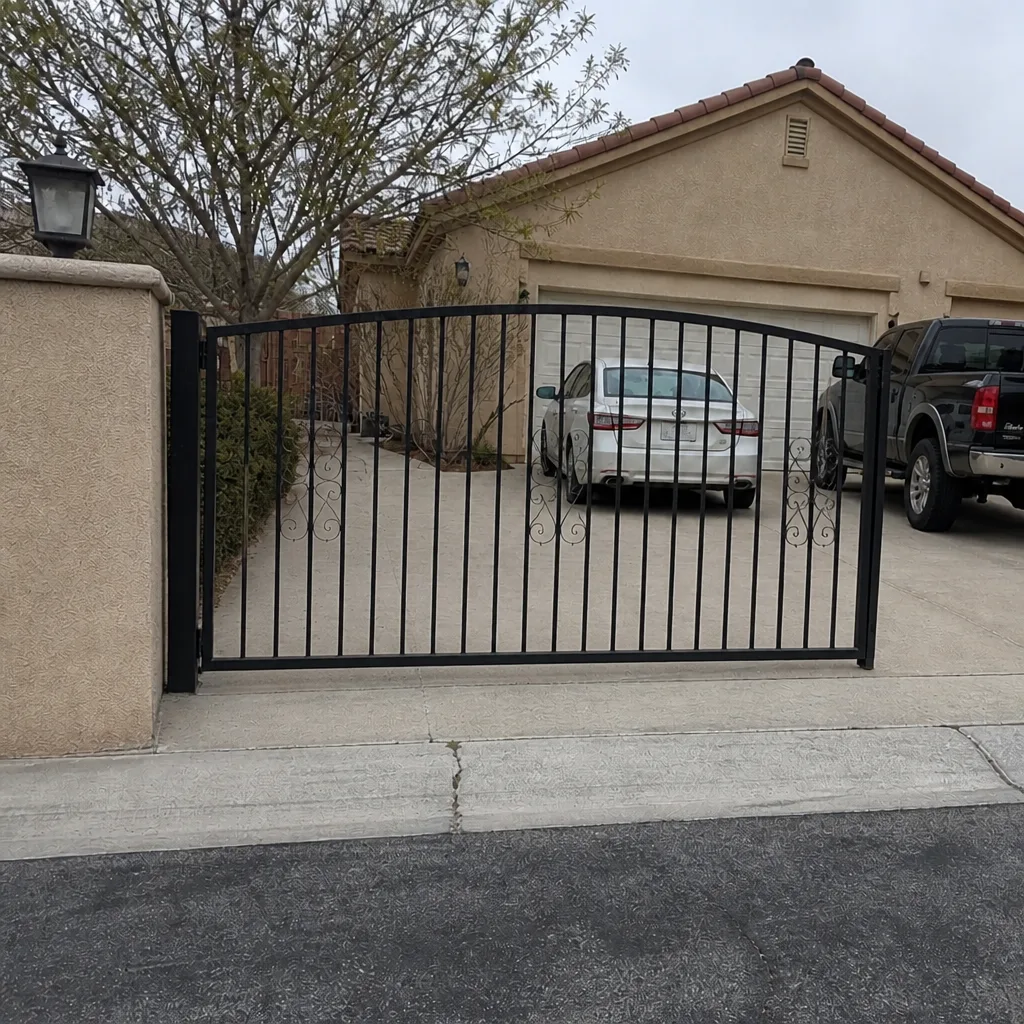 After
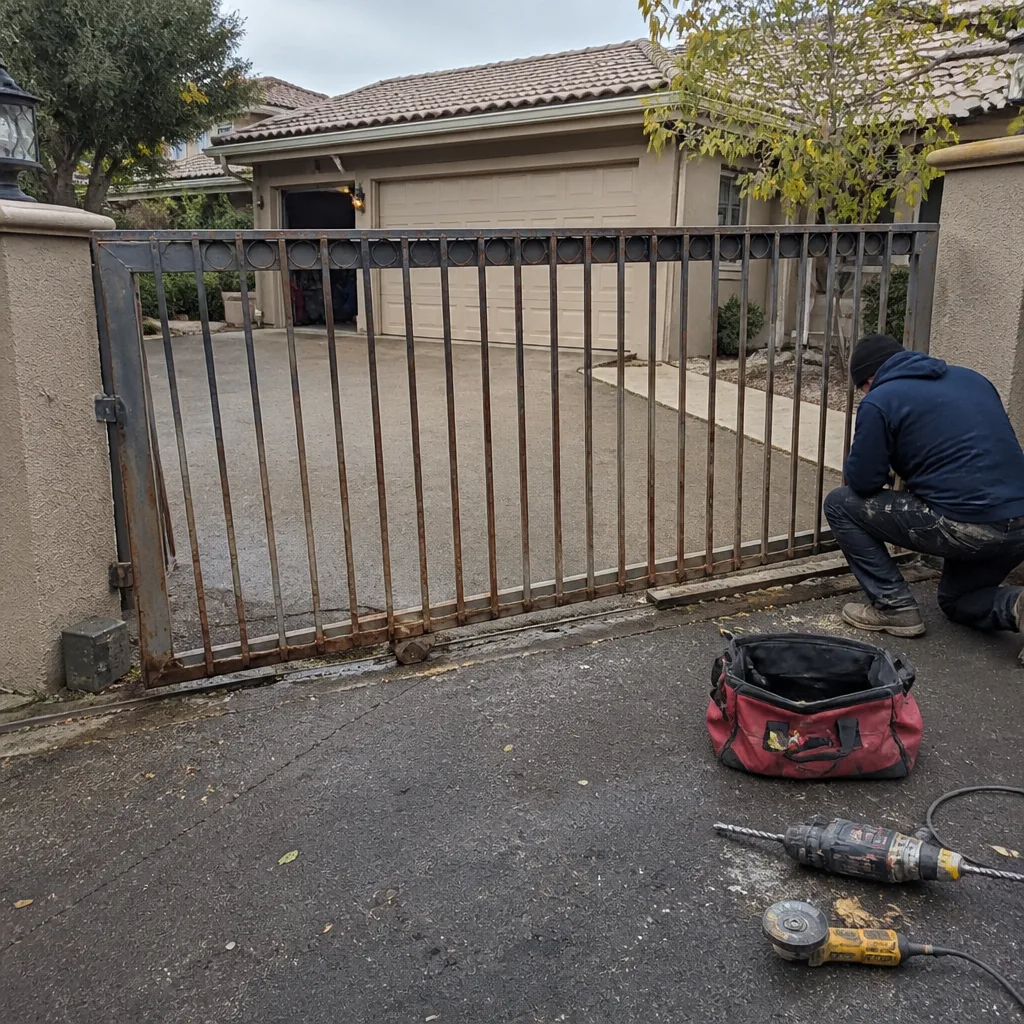 Before
 After
 Before
 After
When to Call a Professional
Some signs are yours to watch, and some are yours to have checked. Call a professional if you find paint bubbling at a weld seam that’s growing, rust streaks that have appeared after a wet season, a hinge gap that has widened since you last looked, or a gate that racks or twitches under the racking test. Call before you run the gate again if the motor sounds strained, if the gate has dropped at the latch, or if it won’t close fully. When a weld does need redoing, that’s a structural repair, not a paint job, and it belongs with someone trained to do it. Ironworks Gate Co. Summerlin offers free estimates in Summerlin – call (866) 623-9848. We’ll take a look, tell you plainly what you’re dealing with, and quote the price before any work starts.
Frequently Asked Questions
The first reliable sign is usually paint bubbling at a weld seam, because it means corrosion is already active under the coating. Rust streaks from fastener holes and a widening hinge gap are close behind. Any of these showing up means it’s worth a professional assessment before the problem grows.
It depends on where it is. A surface tint that wipes off is minor. A rust streak running down from a fastener hole, or a bubble under the paint at a weld, means the steel behind it is thinning. That matters, and it’s worth checking rather than painting over.
Do the racking test: with the gate partway open, push gently toward the post and watch. If the post moves, the frame warps, or the hinges have play, the gate is out of alignment. A gate that’s dropped at the latch or drags during travel is also out of alignment. Call (866) 623-9848 for a free estimate.
Yes. A motor that sounds louder, higher-pitched, or labored is pushing against resistance, which usually means the gate is fighting its own misalignment. We service nine gate-automation brands, so the correct fix is made on the first visit. Call (866) 623-9848 for an exact quote – estimates are free.
Active corrosion can usually wait a season, but movement, misalignment, and motor strain should be looked at before you keep running the gate. A widening hinge gap, a racking frame, or a struggling motor tend to get worse quickly. When in doubt, get it checked sooner rather than later.
Yes. Ironworks Gate Co. specializes in gate parts and welding for driveway and estate gates in Summerlin, from hinges and welds to keypads and automation. Every job is backed by our written 90-Day Done Right Promise. Call (866) 623-9848 for a free estimate in Summerlin.
The Bottom Line
A failing iron gate almost never fails without telling you first. Paint bubbling at a weld seam means the base metal is thinning from the inside. Rust streaks from fastener holes mean moisture has found bare steel. A widening hinge gap and a gate that racks under a push both mean something is moving before it becomes visible. On an automated gate, a strained motor tells you the same thing. Watch the welds and the hinge gaps first, do the racking test a few times a year, and get a professional look at anything that’s active. The early signs cost the least. The late ones cost the most, and in Summerlin, an HOA notice and a malfunctioning gate make the late ones worse. Done right, and backed in writing – that’s what we stand behind.
Written by the team at Ironworks Gate Co. Summerlin.