
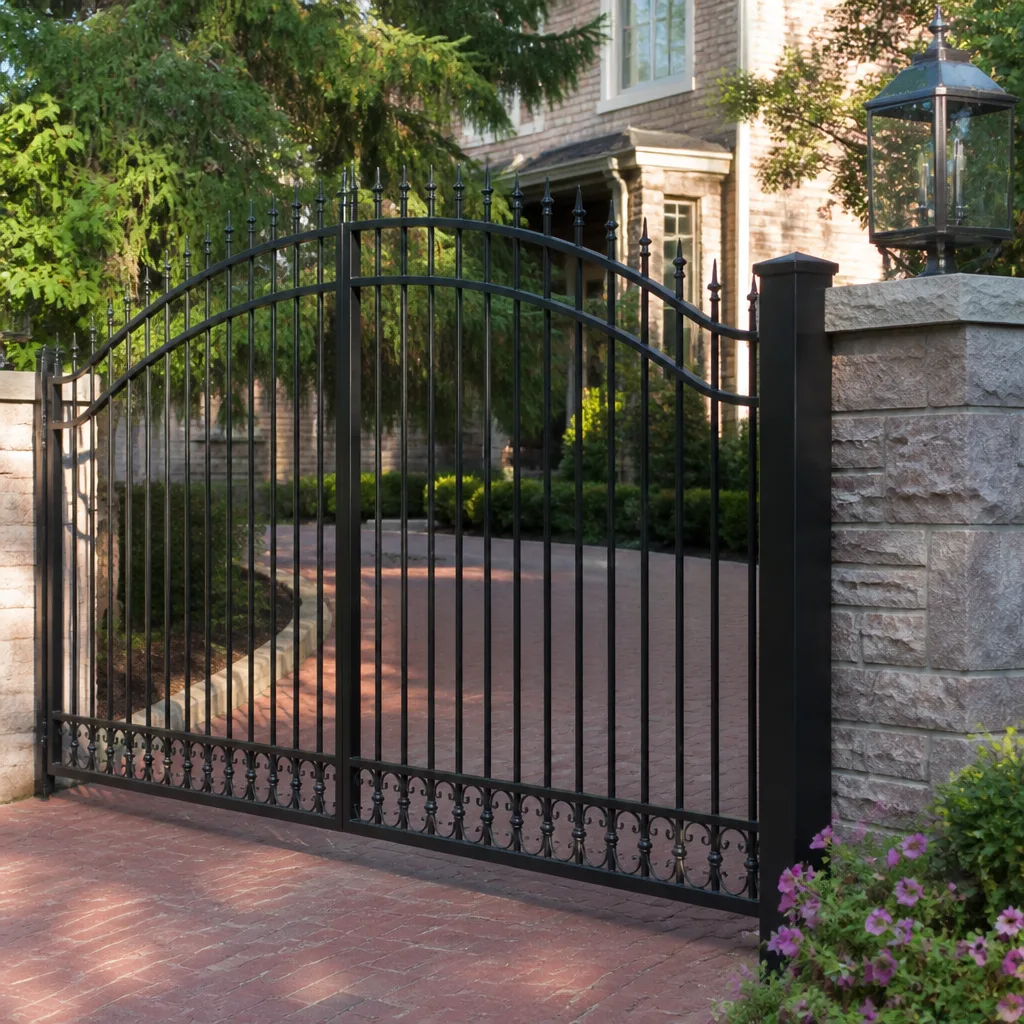
 Wrought iron
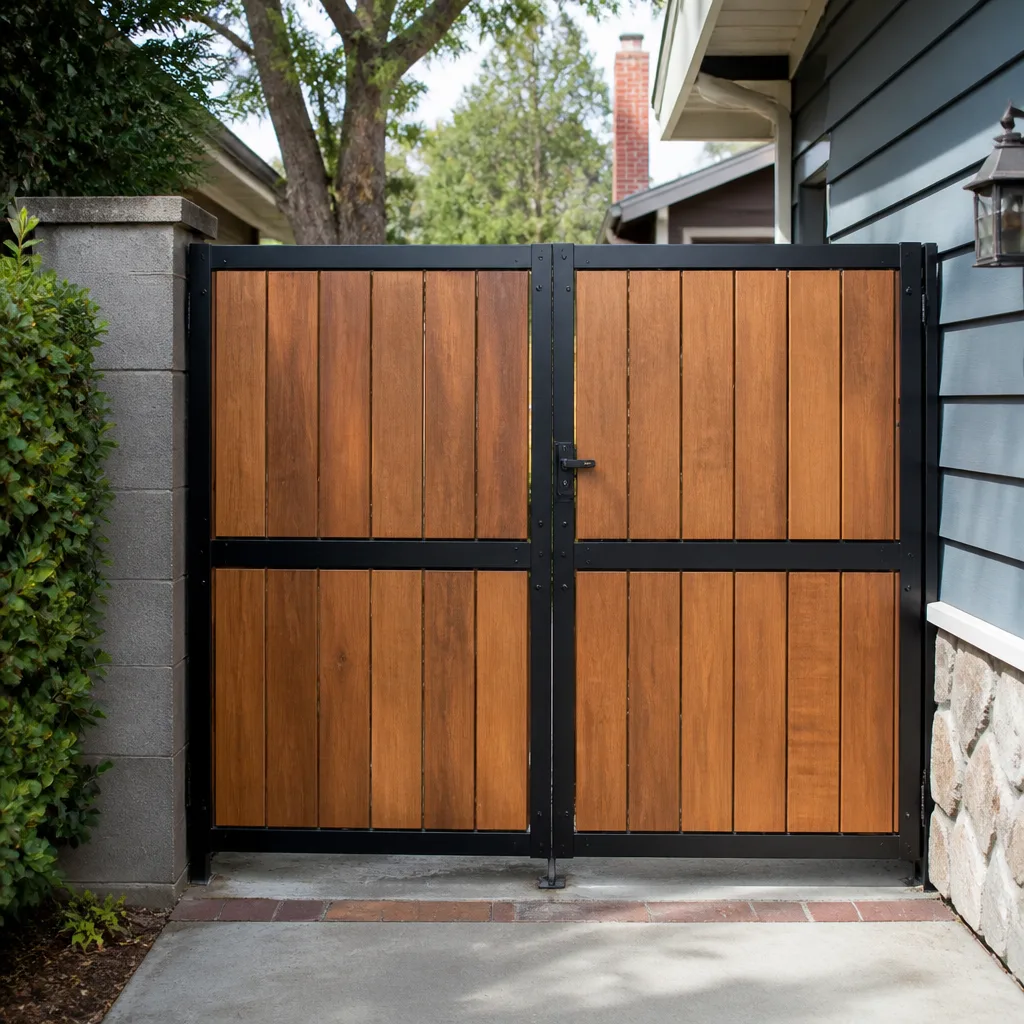 Wood & steel frame
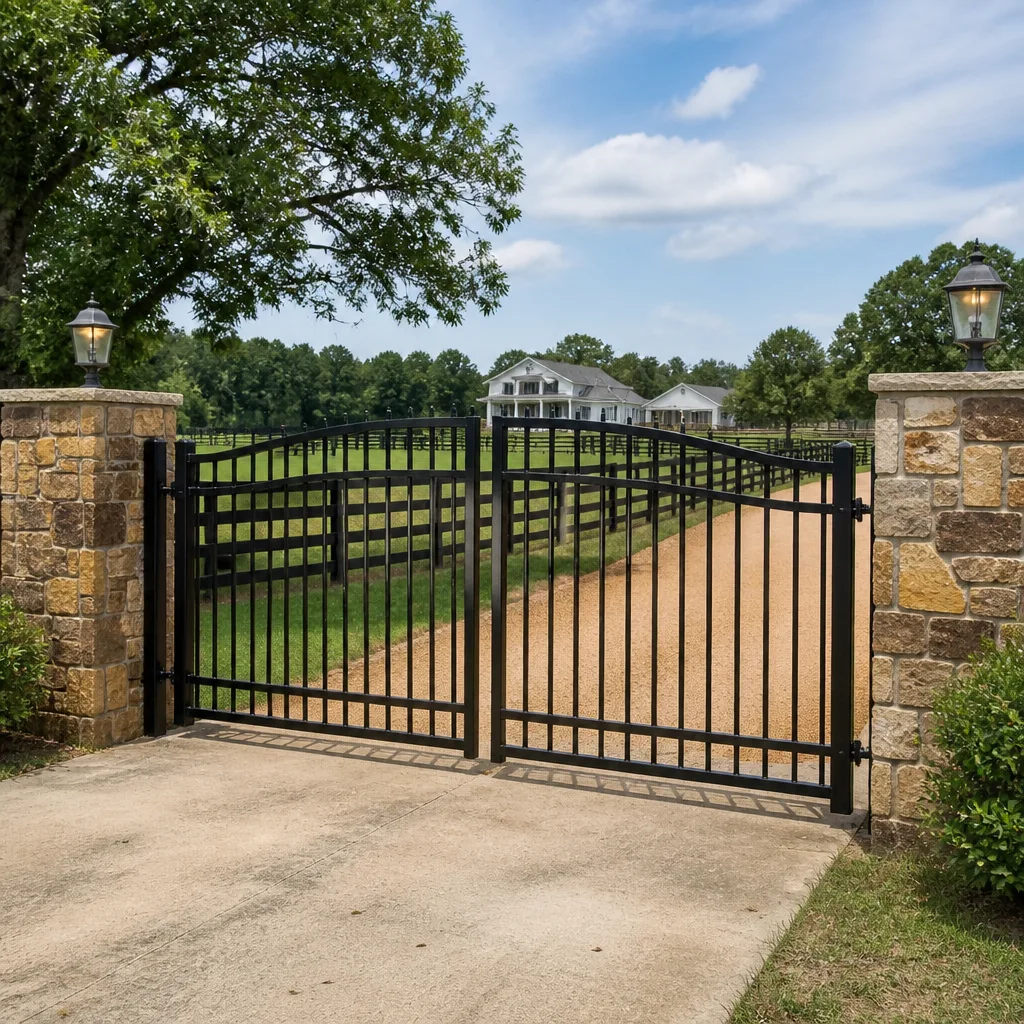 Farm & ranch
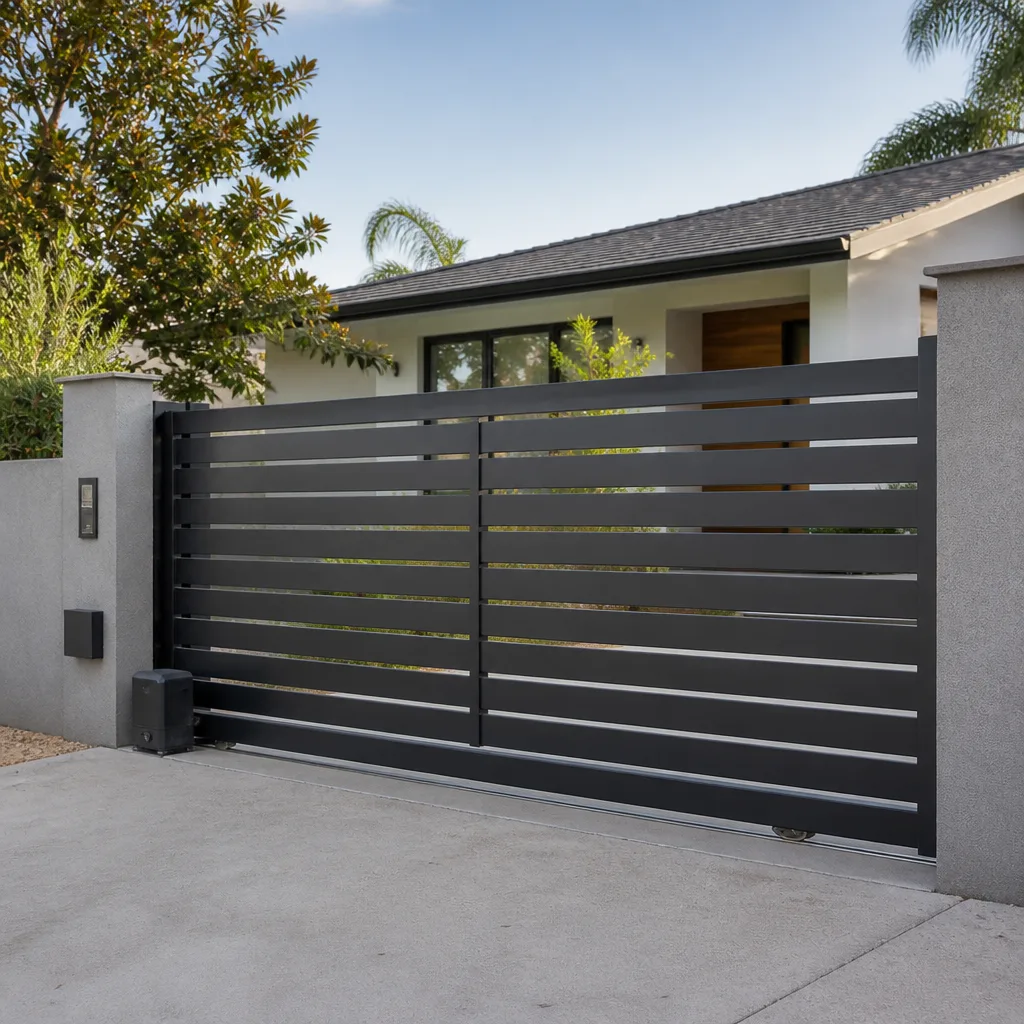 Sliding driveway gates
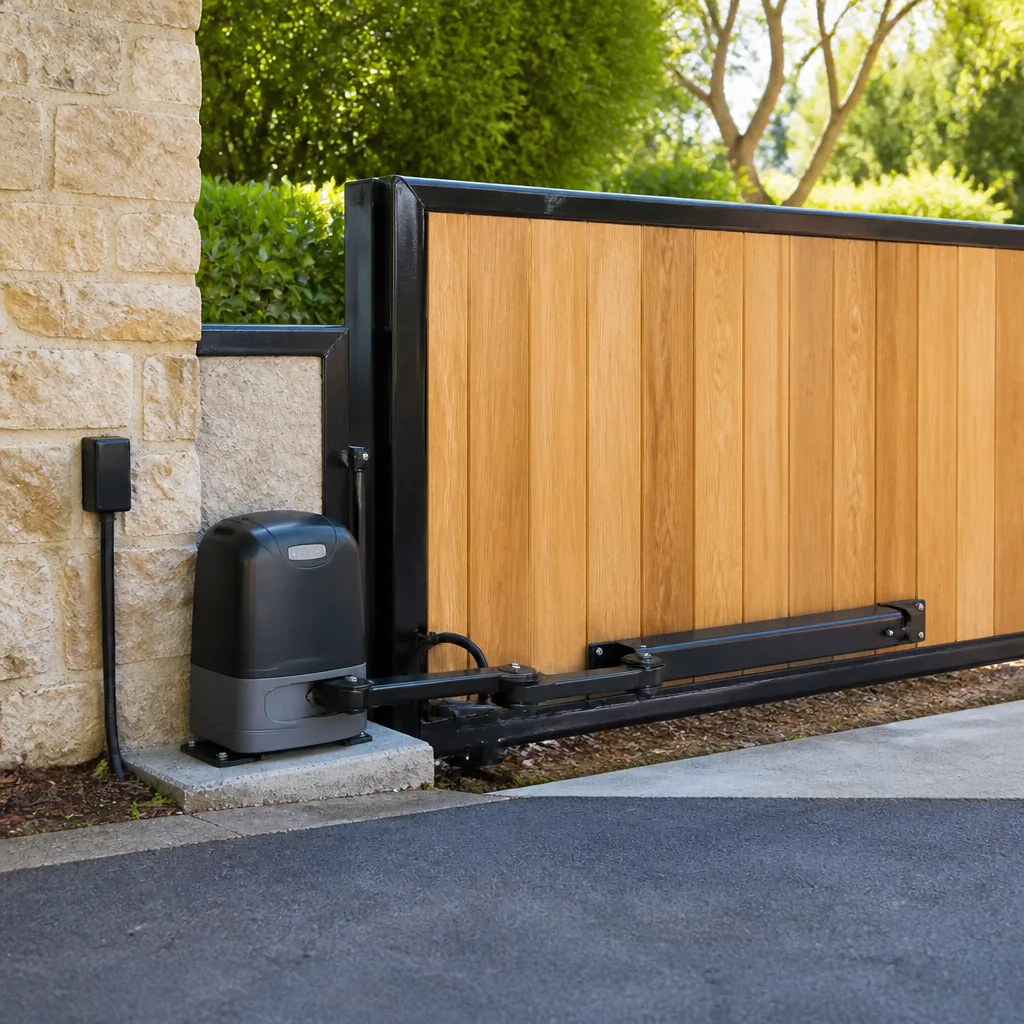 LiftMaster operators
Free on-site gate assessment - hinges, posts, and your LiftMaster or Nice gate operator checked before anything is quoted
The assessment is free and the quote is the invoice.
Get your free estimateStyles & brands we work with
- Wrought iron
- Wood & steel frame
- Farm & ranch
- Sliding driveway gates
- LiftMaster operators
See the difference
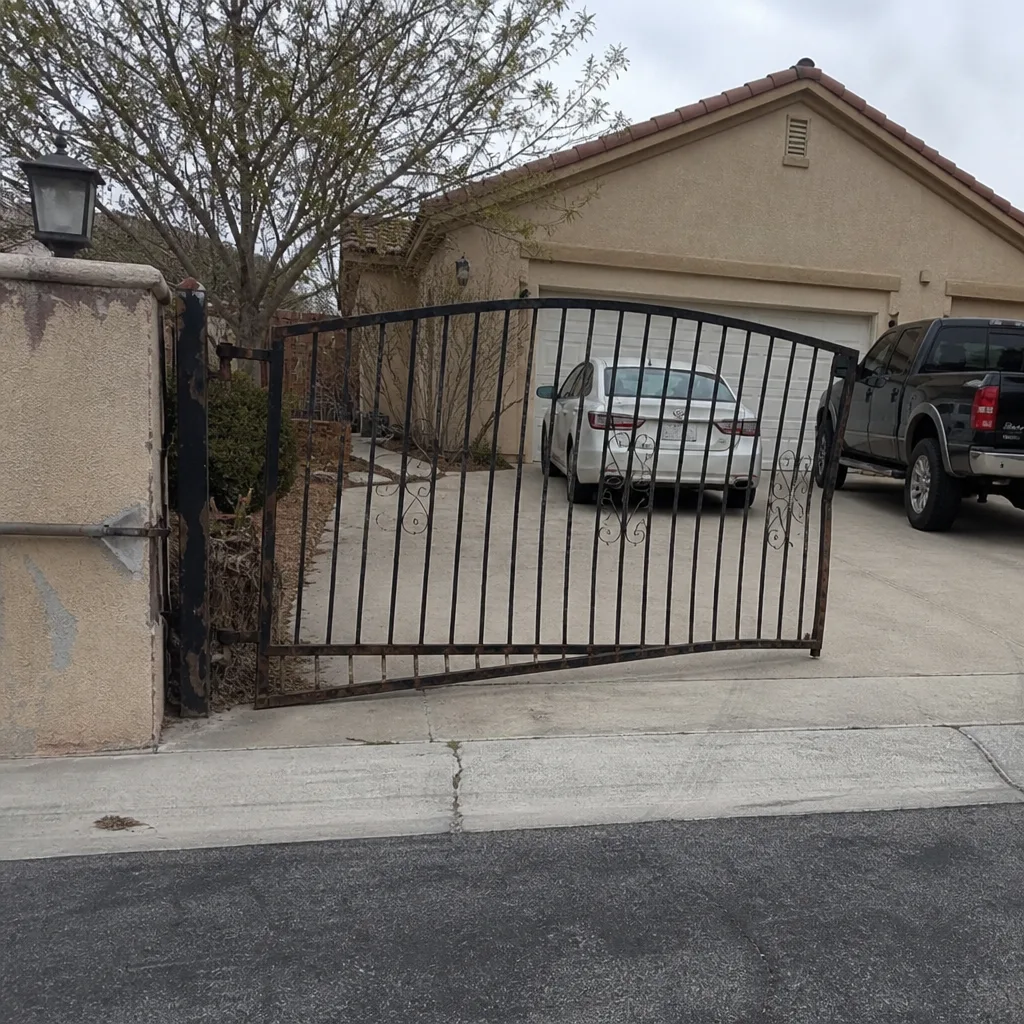 Before
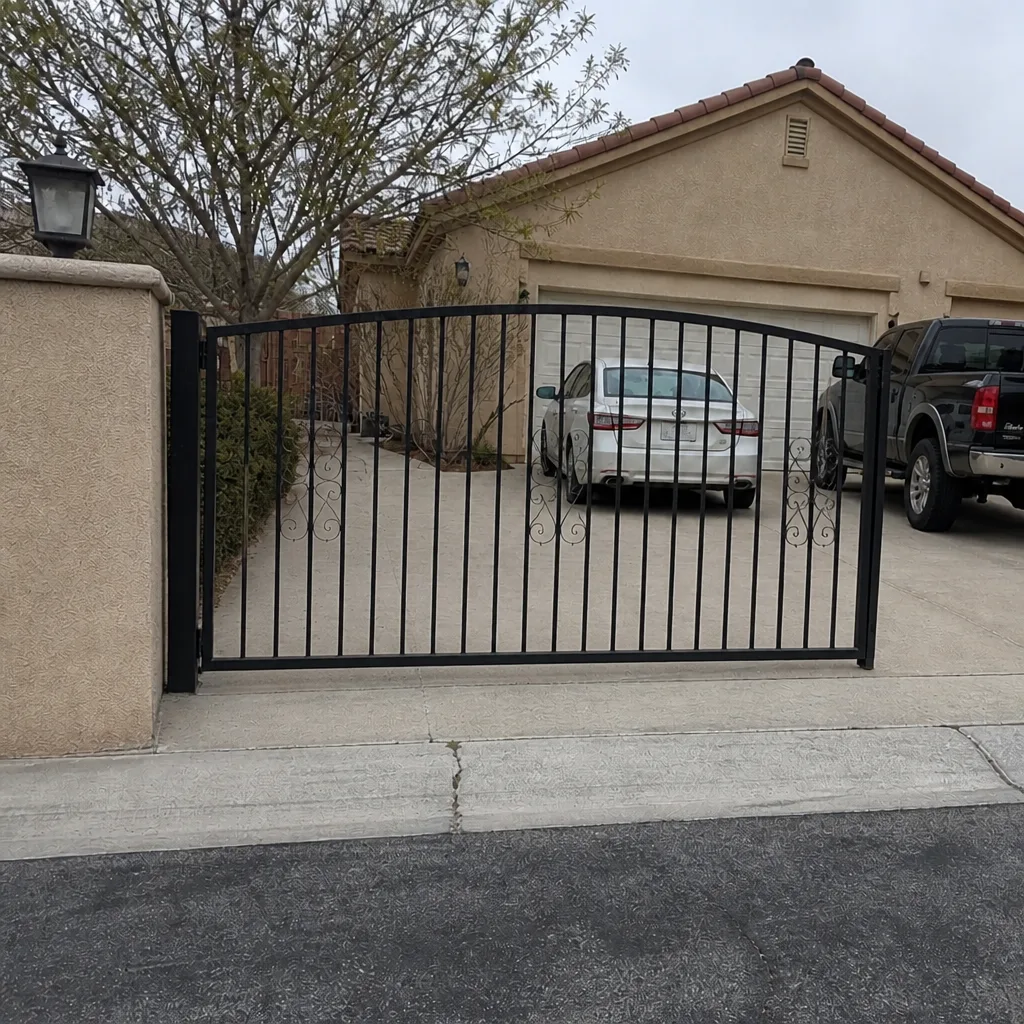 After
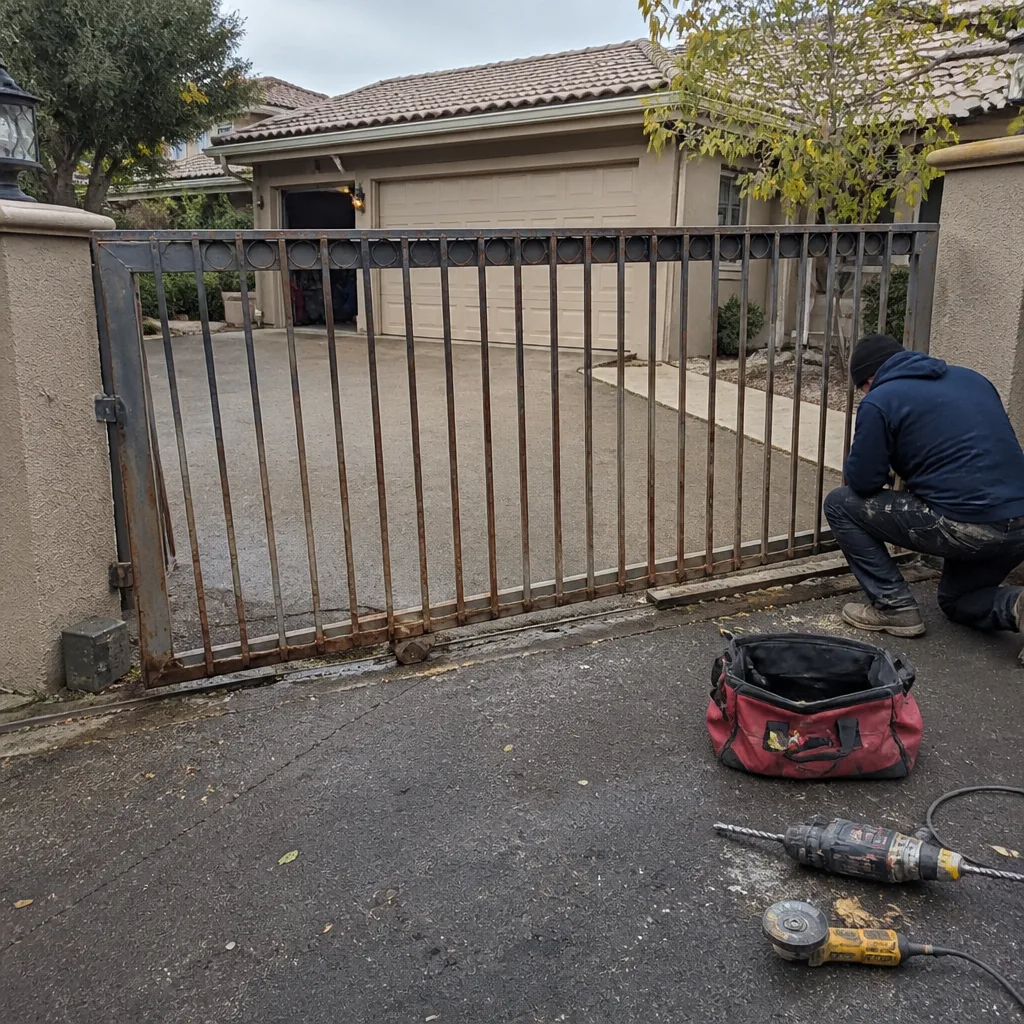 Before
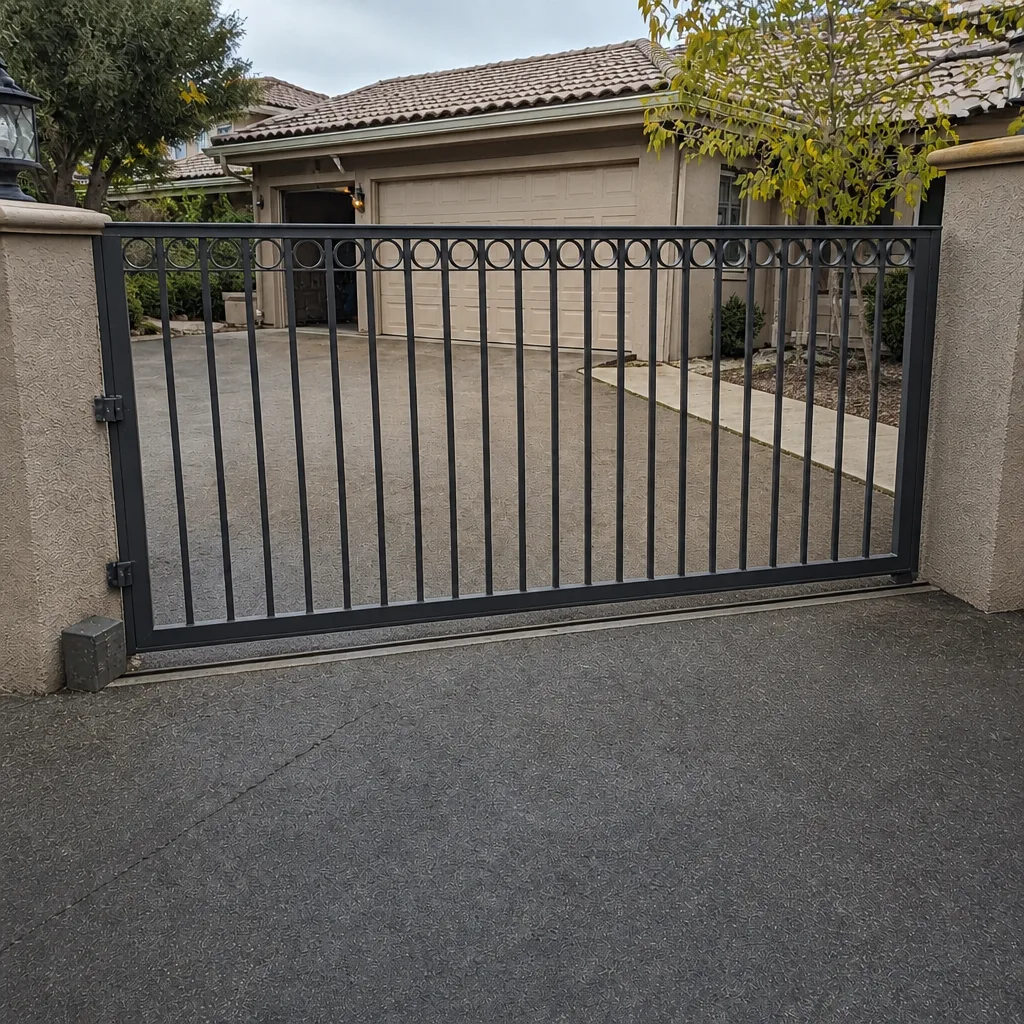 After
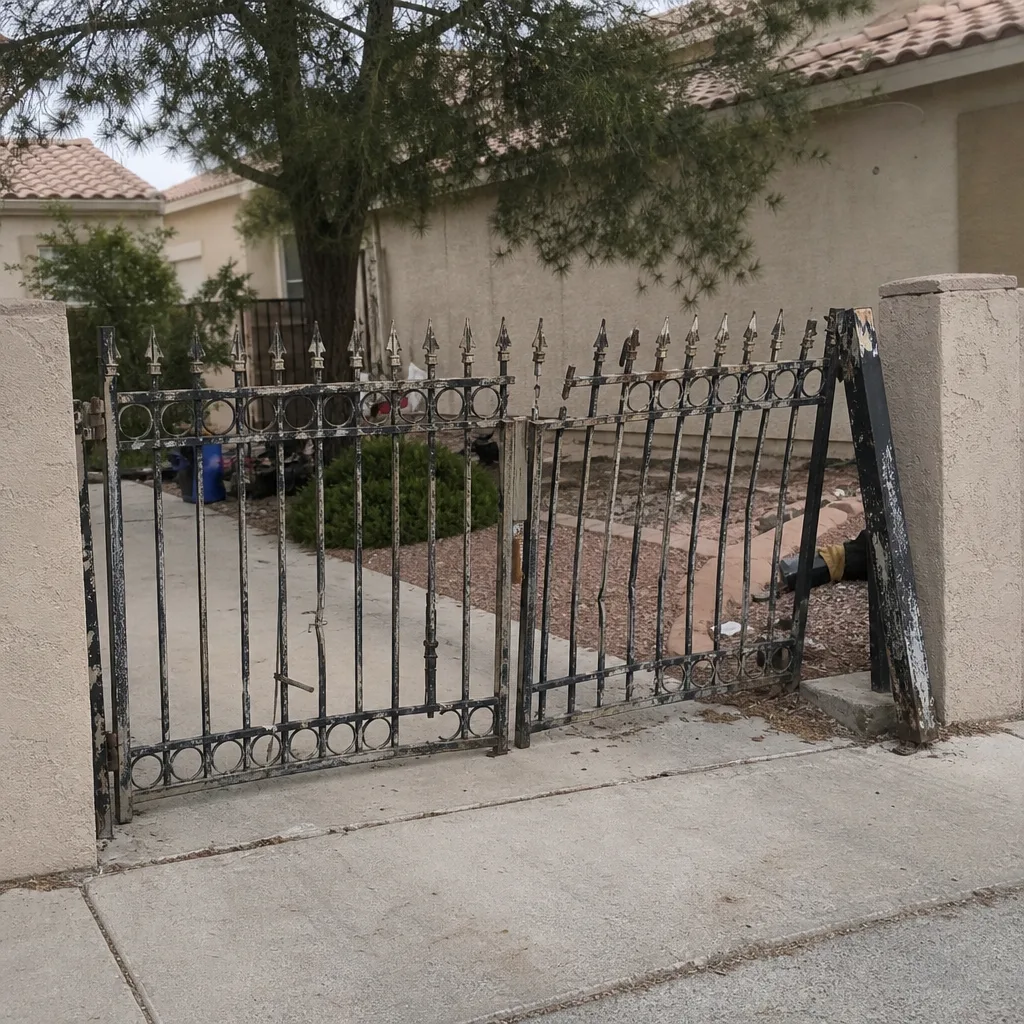 Before
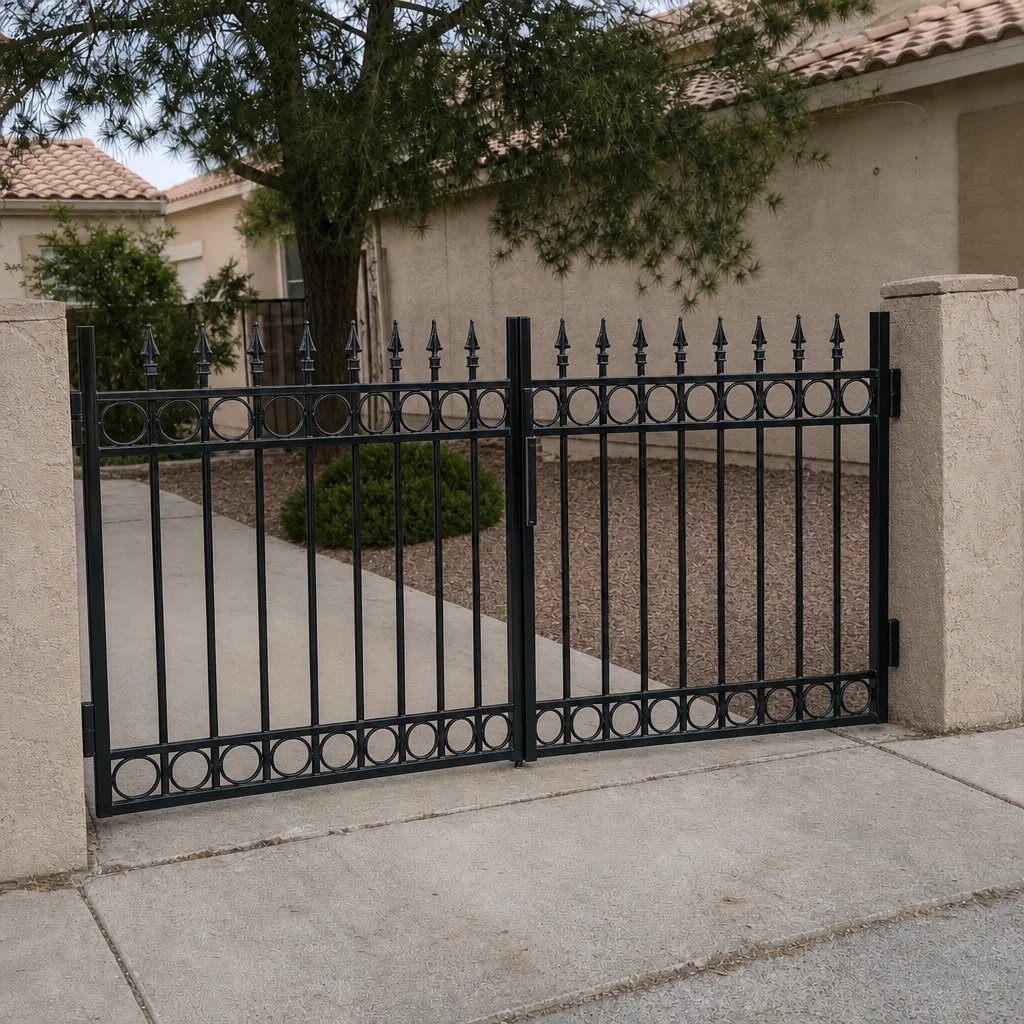 After
How to Reset an Automatic Gate in Summerlin, NV (and Why It Faults Again in 5 Minutes)
The short answer: to reset most automatic gates, cut power at the dedicated breaker or unplug the opener, wait a full 60 seconds, restore power, and let the gate finish its automatic calibration cycle to both limits without interruption. If you reset your Summerlin gate and it faults again within five minutes, the reset didn’t fail. You cleared the error without clearing the cause. In Summerlin’s heat and dust, a reset is step two. Step one is knowing what tripped the gate, because two of the most common causes here stay invisible to the homeowner until they know where to look. If a correct reset keeps failing, call Ironworks Gate Co. Summerlin at (866) 623-9848.
Key Takeaways
- A full 60-second power-off discharge clears the fault memory on control boards in several brands, including LiftMaster and Viking. Most guides tell you to wait 10 or 30 seconds, which isn’t enough.
- If the motor tripped its thermal overload on a hot Summerlin afternoon, the board won’t accept a reset until the motor cools, usually 20 to 30 minutes in shade.
- If a dirty photocell caused the fault, wipe both lens faces with a dry cloth before you reset, or the gate re-trips the sensor the moment it tries to close.
- A successful reset runs a full open-and-close travel cycle with no stopping. A blinking fault code, a gate that stalls mid-travel, or a gate that runs but won’t latch means reset won’t fix it.
Why Summerlin gates fault in the first place
Summerlin sits at the western edge of the Las Vegas Valley against Red Rock, and that geography shapes what goes wrong with gate operators here. Relentless summer sun, low humidity, and gusty winds off the Spring Mountains push a gate mechanism hard. The desert dust and caliche grit that blows off Red Rock and the open lots along the 215 work into gate tracks, rollers, and opener chains. An operator that runs fine in a cooler, damper climate can grind or seize within a season here unless the mechanism is cleaned and re-lubed for abrasive dust rather than moisture.
Two consequences matter for resetting. First, the same heat that degrades finishes and seals also drives the motor toward its thermal limit on a July or August afternoon, so the operator shuts itself down for protection. Second, airborne grit settles on the safety photocells at the gate posts. When that lens face gets coated, the sensor reads the beam as blocked and the interlock stops the gate from closing. In both cases the fault light on the board looks identical to a software glitch, which is why so many homeowners reset in a loop and get nowhere.
The standard reset, done right
This procedure works on the majority of residential driveway operators, including the LiftMaster, FAAC, BFT, and Mighty Mule units common on Summerlin metal gates. Work it in order.
- Find the disconnect. Locate the dedicated breaker feeding the gate operator, or unplug the unit at its power source. Don’t use the remote or the wall keypad; those command the gate, they don’t cut power.
- Wait 60 full seconds. Count it out. Control boards in several brands, LiftMaster and Viking among them, need a full 60-second discharge to clear fault memory. Ten or thirty seconds leaves the old fault sitting in the board, and the gate faults again the moment it powers up.
- Restore power. Flip the breaker back or plug the unit in. Watch the control board for a light sequence or an initialization indication.
- Let the gate self-calibrate. Most operators now run an automatic calibration cycle, traveling to the open limit and back to the closed limit to relearn its positions. Let it complete the full cycle. Don’t touch the remote, don’t step in the beam, and don’t interrupt it partway. A gate that gets interrupted mid-calibration can relearn a wrong limit and start stopping in the wrong place.
If the gate completes both limits without stopping, the reset worked. If it doesn’t, step one is figuring out what actually tripped it, and that’s where the next two sections come in.
Heat overload: the Summerlin afternoon reset
When the motor trips its thermal protection, the control board will not accept a software reset until the motor cools back to operating temperature. In Summerlin summer heat, that’s typically 20 to 30 minutes in the shade. Reset before the motor cools and it just re-trips the overload, which is exactly the five-minute fault loop homeowners describe to us on the phone.
How to tell it’s a heat trip rather than a software fault: the gate stopped after a period of heavy use on a hot day, and the operator housing feels warm to the touch. Give it real shade time, not five minutes in the sun. If the gate trips its overload again after a proper cooldown and a clean reset, the motor or the board is straining for a reason a reset can’t fix, and that’s a job for a technician.
Dust on the photocells: the other invisible cause
If the fault is a contaminated safety sensor, resetting the opener without cleaning the lens face just re-trips the sensor interlock the moment the gate tries to close. Before you reset, walk to the gate posts and find the two photocells, one transmitter and one receiver, usually mounted opposite each other a foot or two off the ground. Wipe both lens faces with a dry cloth. Don’t use a wet rag or a spray cleaner; grit and moisture together make a paste that coats the lens worse than the dust did.
On a metal gate in Summerlin, this cleaning is worth doing on a schedule, not just when the gate faults. A gate that closes on a chain and a photocell that sees a clean beam both stay out of the fault loop. Because the local housing stock from The Trails and The Crossing up to The Ridges and Red Rock Country Club runs mostly decorative wrought iron and steel rather than wood, operators, hinges, and openers on metal gates carry the repair load here, and metal holds grit differently than a wood gate does.
What a successful reset looks like, and what it doesn’t
A successful reset produces a full travel cycle to both limits without stopping. That’s the signal. A fault code blink pattern after the reset, a gate that stops mid-travel, or a gate that runs but won’t latch closed all point to a hardware fault that no amount of resetting will resolve. Blink codes are the board telling you which component it distrusts, and they’re worth reading before you call anyone.
One more Summerlin wrinkle: this is a master-planned community built largely under developer architectural standards and HOA CC&Rs, so gate work here is as much about matching approved iron and steel designs as it is about fixing hardware. If a repair ever turns into a replacement of a gate panel or finish, a generic off-the-shelf panel or a visibly different finish can trigger an HOA violation even when the repair is mechanically sound. That doesn’t affect a reset, but it matters the moment a fault turns into real repair work.
When to stop resetting and call
If the gate faults again after a correct reset, that’s your signal to call. It means the cause is in the hardware, not the software, and more resets won’t change the outcome. Our technicians have up to 13 years of experience and are trained and equipped on nine gate-automation brands, so the correct diagnosis and fix happen on the first visit rather than after a parts-guessing cycle. A live person answers every call, 24 hours a day, 7 days a week. Visit our home page to see the full scope, and our Gate Motor & Opener in Summerlin page covers operator repair in depth.
Any completed repair is protected by our written 90-Day Done Right Promise: if it isn’t right, we come back and make it right, with no paperwork and no arguing. Upfront pricing is settled before a single bolt is turned, and standing offers include $50 off any repair over $250 and a free second opinion on any written estimate. If you’d rather stop guessing at the reset and get the gate working, call (866) 623-9848.
FAQs
Because the reset cleared the error but not the cause. A heat-tripped motor or a dust-coated photocell will re-trip within minutes of a reset in Summerlin summer conditions unless you let the motor cool or clean the lens faces first. If it still faults after both, the fault is in the hardware and needs a technician’s diagnosis.
A full 60 seconds, not 10 or 30. Control boards in several brands, including LiftMaster and Viking, need the full 60-second discharge to clear fault memory; a shorter cut leaves the old fault in the board and the gate re-faults immediately.
Wait for the motor to cool if it tripped on a thermal overload, usually 20 to 30 minutes in shade. Resetting a hot motor just re-trips the overload. If the gate keeps tripping after a proper cooldown, call (866) 623-9848 for an exact diagnosis; estimates are free.
It means a limit or latch adjustment has drifted, and a reset won’t correct it. The gate travels but doesn’t read its closed limit, which points to a hardware setting, not a software fault. That’s a technician’s job, and we confirm the price before any work begins.
If you’d rather have it looked at, Ironworks Gate Co. Summerlin offers a no-pressure assessment in Summerlin – call (866) 623-9848 and a live person will pick up, day or night.
Written by the team at Ironworks Gate Co. Summerlin, serving Summerlin, NV.