
Last updated November 17, 2026
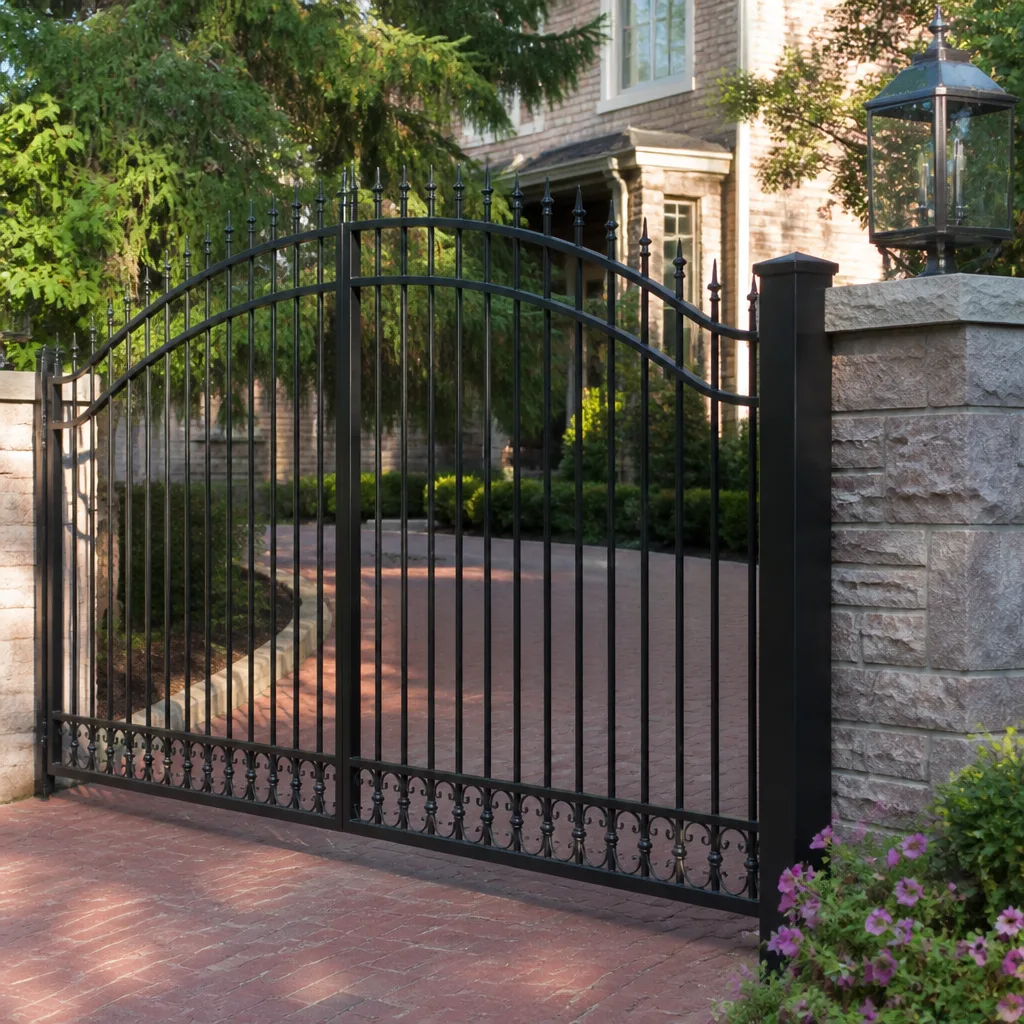 Wrought iron
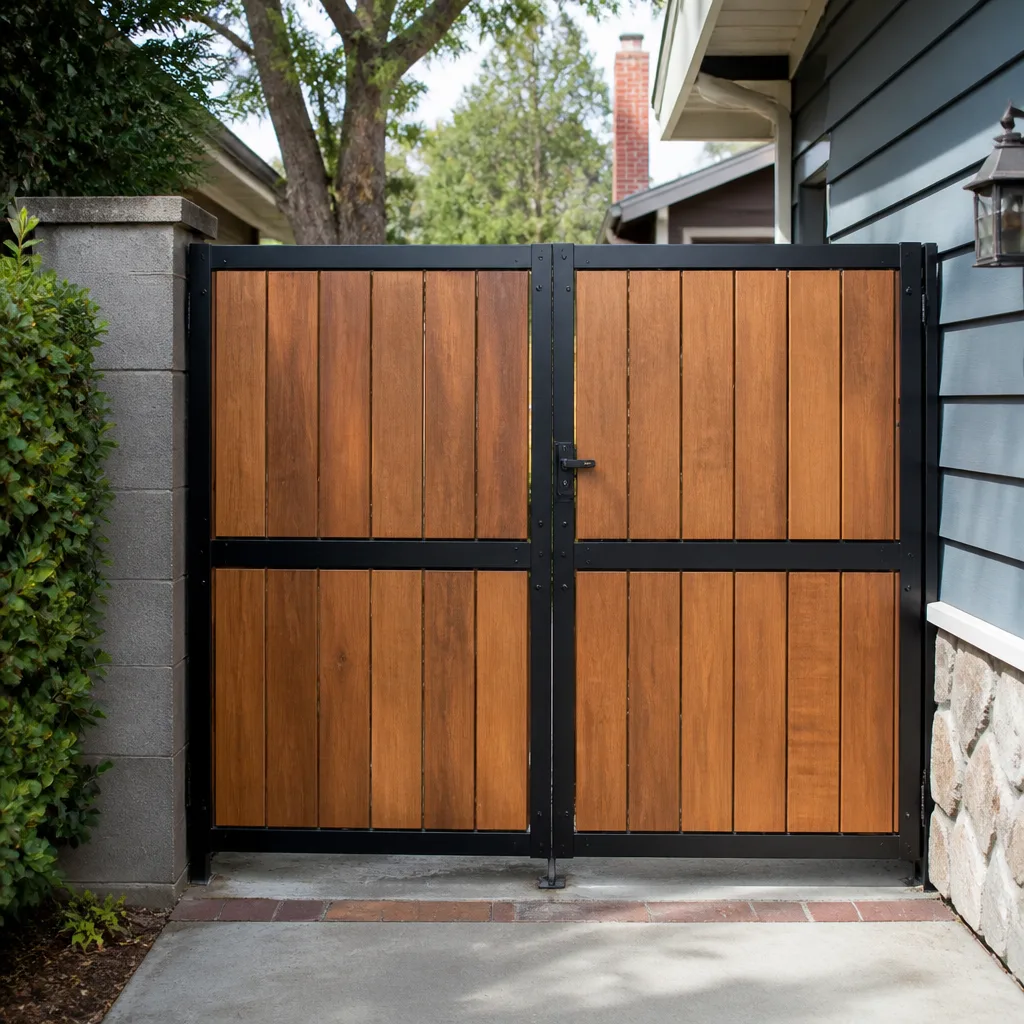 Wood & steel frame
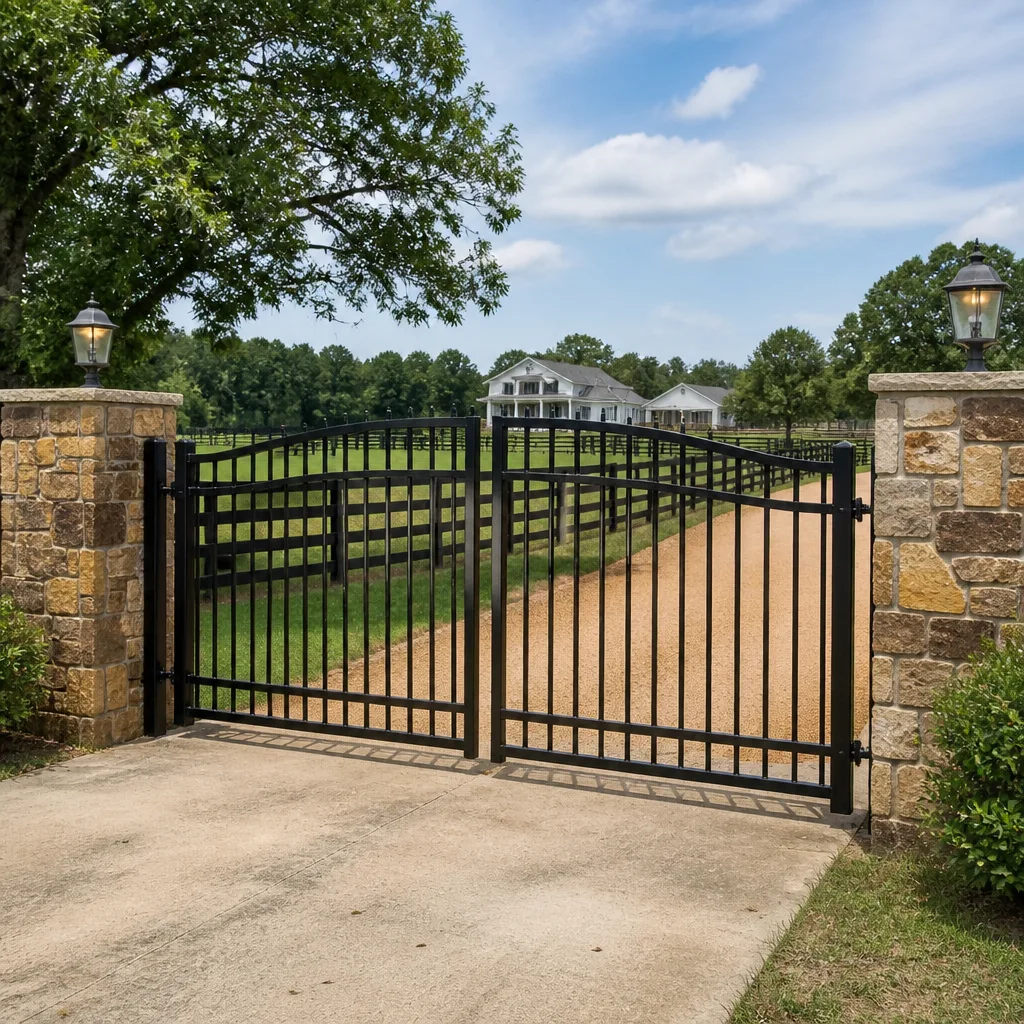 Farm & ranch
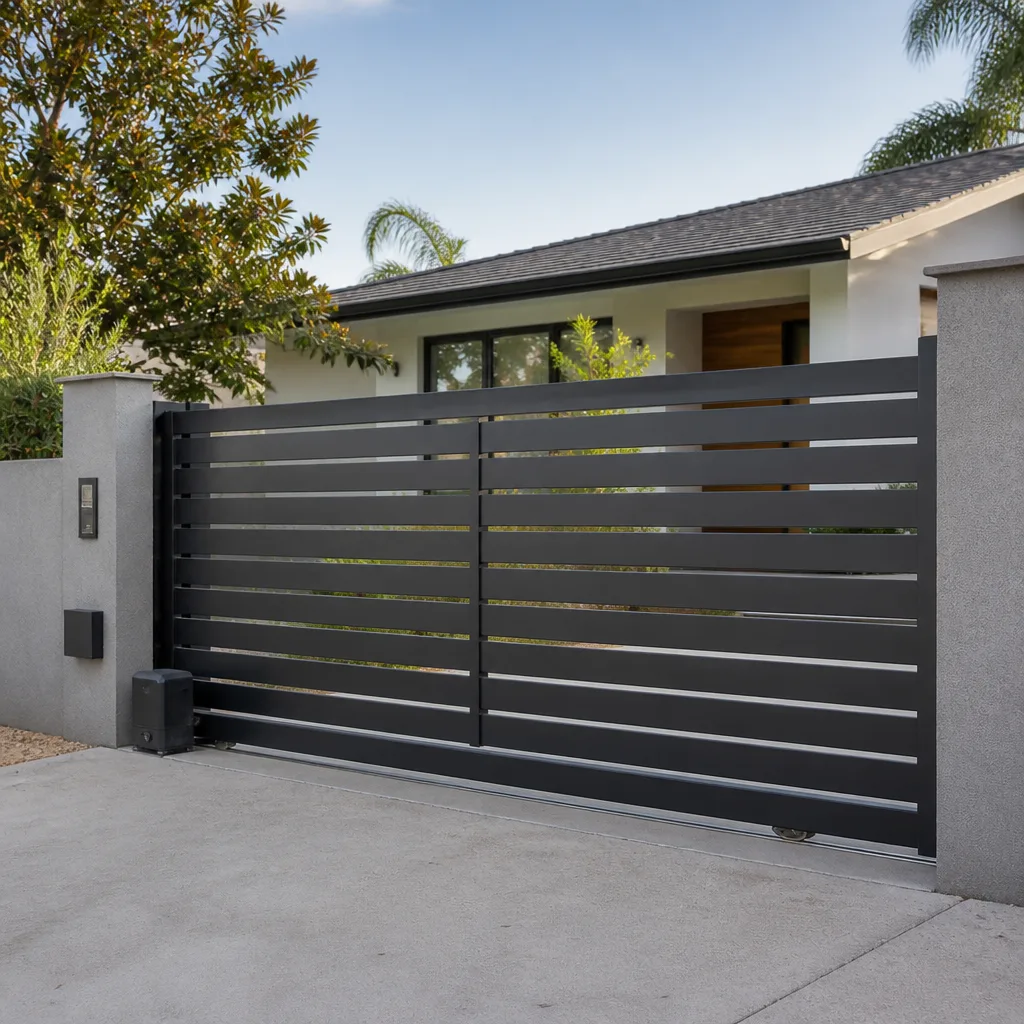 Sliding driveway gates
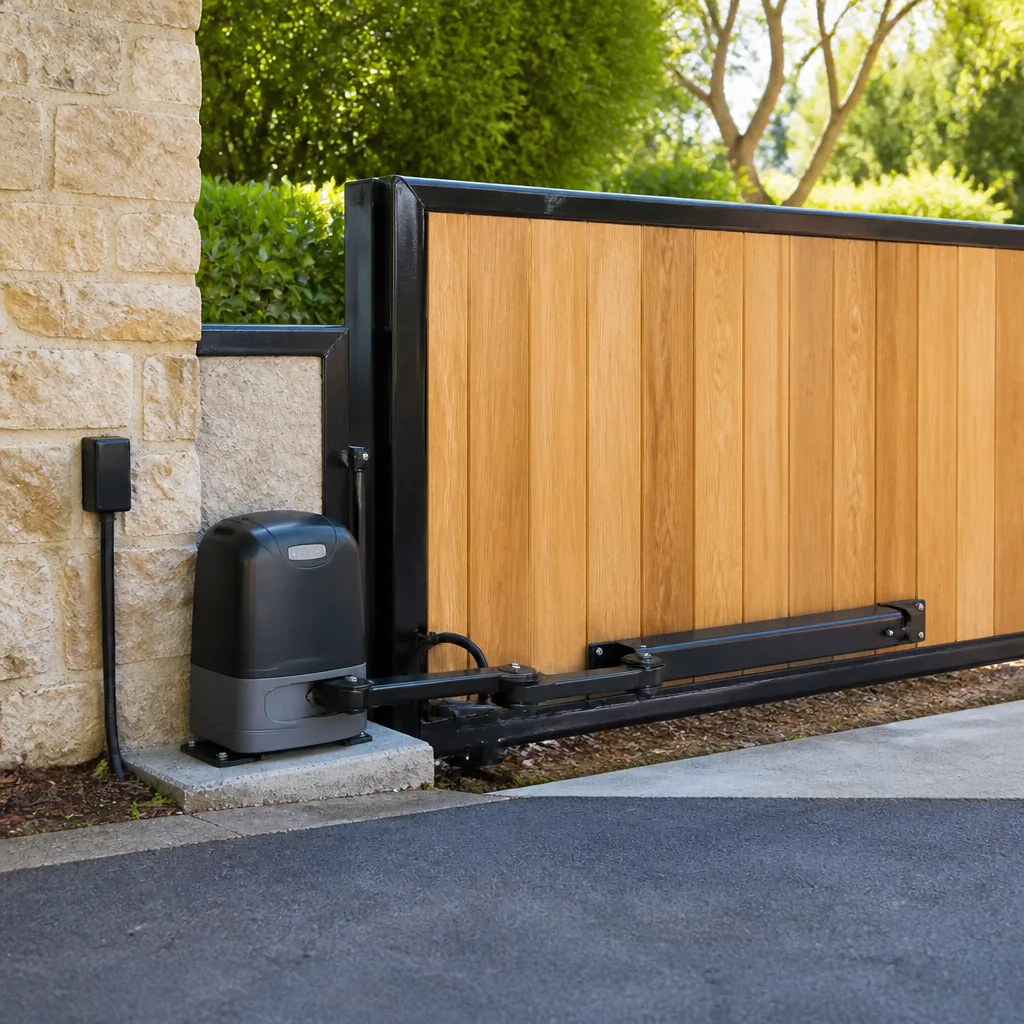 LiftMaster operators
Free on-site gate assessment - hinges, posts, and your LiftMaster or Nice gate operator checked before anything is quoted
The assessment is free and the quote is the invoice.
Get your free estimateHow Long Does Gate Installation Take? Timelines and What to Expect
A gate that swings perfectly on day one and sags by month six wasn’t installed slowly enough. Rushed post footings are the single most common reason Summerlin gates need early realignment, and it’s a problem you can’t see on install day. What you can see is a crew pouring concrete at 8 a.m. and hanging a 400-pound gate by noon, which should tell you something. If your gate serves as your primary vehicle access, every day it’s down is a day you need a plan for parking, packages, and school pickups. Most homeowners are told the “install day” window and nothing else, which is how they end up surprised by the total project length from first call to final remote click.
What follows is the honest, phase-by-phase timeline for driveway and estate gate installation, including the days that don’t involve a single wrench turn. We’ll walk through what actually takes time, why desert conditions around Summerlin change the schedule, and the one question that separates a contractor who plans ahead from one who hopes for the best.
Quick Answer
A standard swinging driveway gate is typically a 1-day install once the concrete is cured, but the full project from assessment to final programming usually runs 5 to 10 days in Summerlin. A sliding gate on a graded track often takes 2 to 4 install days plus curing and permits. The biggest variable most homeowners don’t discuss upfront: post footing cure time, which needs 48 to 72 hours before the gate is hung.
Styles & brands we work with
- Wrought iron
- Wood & steel frame
- Farm & ranch
- Sliding driveway gates
- LiftMaster operators
Table of Contents
- Why Gate Installation Time Is Really About What You Don’t See
- The Five Phases of a Gate Installation, in Order
- Post Footing Cure Time: The Day or Two That Decides Everything
- Summerlin Conditions That Add (or Save) Days
- Swinging vs. Sliding Gates: Different Clocks, Different Crews
- What “Same-Day Install” Outfits Skip
- Questions to Ask About Installation Timelines
- What Happens After Install: The First 90 Days
Why Gate Installation Time Is Really About What You Don’t See
The install day gets all the attention. It’s the noisy, visible part, and it’s the number most contractors quote because it sounds fast. But we’ve seen enough gates in Summerlin to know the install day is the shortest part of the project. The full arc starts with assessment and ends with programming, and everything that determines whether the gate still swings true two years down the road happens before a single hinge is bolted.
A gate is an outdoor structural element. It lives in sun, wind, and fine desert grit. It is anchored by footings that cure on their own schedule, not yours. It’s moved by an opener that has to be load-tested when the sun is high, because a motor that hums along at 70 degrees can strain by 110. The timeline is what it is because somebody calculated all of that. Skipping any of it saves a day and costs you a realignment later.
The good news: a professional gate installer can give you a realistic schedule by phase on the first visit, not just an install date. That’s not a warning sign. It’s the sign of a contractor who’s thinking about your gate in two years, not just this month.
The Five Phases of a Gate Installation, in Order
Here’s the real sequence for a driveway gate install, whether it’s a swing gate or a sliding gate. Times assume a straightforward residential lot; complex sites add days in the middle, not at the end.
- Site assessment and measure (1 visit, roughly 60 to 90 minutes). We walk the property, check grade and drainage, verify the driveway width, note utilities running near the planned footing locations, and confirm whether the property line and HOA rules affect where the gate can sit. This is also where you get a written estimate and a proposed schedule.
- Permitting and scheduling (typically 3 to 10 business days). In Summerlin and the surrounding communities, HOA architectural review can add a week or more depending on the board’s meeting calendar. Some projects need a city permit for footings, driveways, or electrical work. We say this upfront because the queue is real and there’s no honest way to skip it.
- Site prep and post footings (1 to 2 days of work, plus the cure). Crews locate utilities, excavate the footing holes to the depth the load demands, set anchor posts, and pour. This is the part that most affects long-term performance, and it’s the part often rushed.
- Mechanical hang and automation wiring (1 day for swing, 2 days for sliding). The gate is hung, leveled, and adjusted for clearance. The opener is mounted, wiring run, and safety edges set. Sliding gates also require the track to be set and graded so the gate rides level and drains.
- Programming and load-testing (half a day). This is where a certified installer programs the remote, keypad, and any access control, and then runs the gate through full cycles in the middle of the day and late afternoon heat to confirm the opener handles the actual load. We carry brands like Linear, Viking, and DoorKing so the programming matches the opener rather than fighting it.
For most Summerlin lots, that works out to 5 to 10 days from the first phone call to final handoff. A full gate installation in Summerlin will always include this sequence, in this order, because the phases can’t safely be swapped.
Post Footing Cure Time: The Day or Two That Decides Everything
Concrete cures on its own clock. In the middle of a Las Vegas summer, that clock runs hot and deceptive: the surface dries fast while the core is still green. Pour a footing and hang a gate the next morning and it will hold for a while, maybe six months, maybe a year, before the post starts to lean and the gate stops hitting latch. That slow drift is what sends a homeowner to our gate repair in Summerlin page wondering why their two-year-old gate sagging.
The honest number: post footings need 48 to 72 hours before the gate is hung. That’s it. Not a week. Not a catch to pad the bill. But 48 to 72 hours is exactly the amount that gets skipped when a contractor promises a whole project in a single day.
How desert heat changes the cure
Summer temperatures in Summerlin push concrete work toward either early-morning pours or cool-season scheduling. Concrete poured at 105 degrees sets faster on the surface and slower in the core, so the cure window is a range, not a fixed 48. A crew that understands this either pours in the early hours or uses precisely the right mix and damp-cures the footing to keep moisture in. We’ve seen jobs where post cure got compressed because the crew wanted to wrap before the weekend. Those gates came back to us a year later. Ask any installer how they adjust their cure window for summer temps and watch what happens to the answer.
Summerlin Conditions That Add (or Save) Days
Summerlin is not a flat-lot subdivision with cookie-cutter access. The terrain, the soil, and the HOA rules all affect how long a gate install actually takes. Here are the local variables that move the schedule:
- Caliche hardpan. Much of the soil in Summerlin and into the foothills sits on top of caliche, a cement-like layer that ignores a shovel and laughs at a post-hole digger. Excavating footings can add a half day on the back of a slow dig, and it’s a variable that honest estimators check for either on the first visit or by asking the right questions.
- HOA architectural review queues. Summerlin is built and governed by homeowner associations, and the architectural committees review gate plans. Some meet monthly; some meet every few weeks. That queue can be the single longest addition to your schedule, and there’s nothing an installer can do to move the board’s calendar. What a good installer can do is fill out the paperwork correctly the first time so the plan isn’t sent back.
- Stucco pillar ties. Many Summerlin properties have stucco on the pillars or flanking walls. Tying the gate hardware into stucco requires planning the anchor points before the finish is drilled, or the job adds repair work. That planning happens at assessment, not install day.
- Grade and drainage. Sloped driveways or lots that drain toward the street may require the gate to sit higher or a track to be graded to drain. Flat-lot installation times don’t apply here.
- Utility location. Call before you dig is not optional on properties with irrigation and landscape lighting running near the fence line. Scheduling that locate adds a couple of days on paper and saves you a much larger problem on install day.
None of these are dealbreakers. All of them are reasons a contractor who plans in advance is worth waiting for.
Swinging vs. Sliding Gates: Different Clocks, Different Crews
These two styles are not just different mechanisms; they’re different job structures. Here’s how the timelines break down side by side:
- Swinging gate, single leaf, residential: 1 install day for the hang and wiring, plus half a day for programming and load-test. Typically easier on site staging and post footing.
- Swinging gate, double leaf (dual swing): 1 to 2 install days. Two leaves means two footings, two alignment adjustments, and often two openers or a matched pair. Cure window still applies to both.
- Sliding gate, grade-level track: 2 to 3 install days. The track must be set and graded to the correct fall so the gate drains and rolls true. That grading takes time, and the track can’t be released for use until it holds a level.
- Sliding gate, cantilever or overhead track: 2 to 4 install days. More robust structure, more alignment, more emphasis on the base. These are common on wider Summerlin estate driveways.
The mistake homeowners make is treating sliding gate work like swinging gate work with a different number of days. A sliding gate needs more of everything: more base prep, more grading, more alignment work, more attention to the opener’s tension and limit settings. That’s why we’re careful with gate motor and opener work in Summerlin on sliding gates; getting the operator right the first time is what keeps you off the phone for years.
What “Same-Day Install” Outfits Skip
A same-day full gate install is possible to advertise. It’s also possible to do with cut corners, and you usually don’t find out which until after the crew is gone. This is where the total project timeline question gets a bit uncomfortable, but it’s worth understanding before you sign.
Here is what gets skipped to hit a one-day install:
- Footing depth and cure time. One-day jobs either pour shallow and hang quickly, or accept a hung gate on an uncured footing. Both are the number one reason a gate sags within a year.
- Load-testing under heat. A motor spec sheet quotes pull weight, not summer heat. A gate that cycles fine at 10 a.m. may be sluggish by 3 p.m. in mid-July. Real load-testing means cycling the gate multiple times across the heat of the day, which takes hours.
- Utility locate and site assessment. Both take time before the install, and both get squeezed when the timeline is a single day.
- Programming the full access system. Keypads, remotes, video intercoms, and safety photo-eyes take a half day to configure correctly. Rushed programming is the second most common reason a homeowner calls within a month.
An honest contractor will tell you their fastest realistic timeline and then explain why. If a single-day install is the answer from the first call, ask what they do about curing, and see what happens.
Questions to Ask About Installation Timelines
The most useful question you can ask any gate installer is specific, and it tells you almost everything:
“What’s your footing cure window, and how do you adjust it for summer temperatures?”
If the answer is anything like “we typically pour in the afternoon and hang tomorrow morning,” that’s a red flag. A professional answer includes a number, a season, and a method. Here are the other questions worth asking at the estimate:
- What does the schedule look like phase by phase, from first visit to final handoff?
- How long will the HOA architectural review add, based on where you live in Summerlin?
- Do you load-test the opener across the heat of the day, or just once at commissioning?
- How deep are the footings on a lot like mine, and do you have to break through caliche?
- What brands of opener are you trained on, and which one fits this gate?
- What’s the written warranty, and what does it cover?
A company that answers all six without flinching, in plain language, is worth the extra days.
What Happens After Install: The First 90 Days
The gate is hung, programmed, and on the driveway. The crew is gone. The first 90 days are where you find out whether the installation timeline was realistic or optimistic. Here’s what to watch for:
- Week 1: Cycle the gate a few times a day. Any grinding at the hinge or stutter at the opener is worth a call. It’s often a small adjustment.
- Weeks 2 to 4: Watch for any drift at the latch point. Small drift is normal as the footing finishes its own settling; large drift is a sign of something else.
- Months 2 and 3: This is when desert heat really tests the opener. A gate that was smooth in April may need its force limits reset by July. That’s not a failure, it’s a tuning step.
This is exactly what a written 90-Day Done Right Promise is for. If the gate isn’t doing what it should during that first season, we come back and make it right. No paperwork, no arguing. The Keystone Standard isn’t a slogan; it’s the reason we plan the timeline the way we do. A gate installed on a proper cure schedule rarely needs the warranty in the first 90 days, but if it does, the company that planned for it is the one that shows up.
If you’re exploring options before committing to a project, an Ironworks Gate Co. Summerlin home visit is a good place to start. We’re a gate specialist, not a general handyman outfit, and the questions we ask at the first visit reflect that. You can also see how the phases compare across styles on the installation page.
Common Mistakes to Avoid
- Accepting a footings-and-hang-in-one-day promise. In Summerlin’s heat, concrete needs 48 to 72 hours minimum. A one-day install saves the contractor a return trip and costs you a footing that sags within a year.
- Not calling out HOA review early. Summerlin’s architectural committees meet on their own schedule, and starting the paperwork after the install date is booked can push the project back weeks. Submit those forms the day the design is finalized.
- Ignoring caliche at the estimate stage. If the estimate doesn’t mention caliche excavation, and your lot is in the foothills, ask. It adds a half day and needs to be in the price before work begins.
- Skipping the load-test. A gate programmed at 9 a.m. and left alone is not tested. Insist the crew cycles it at 3 or 4 p.m. in the summer before they pack up. That’s when the opener really works for its money.
- Picking an opener with no local service reputation. If the installer isn’t trained on brands like Linear, Viking, or DoorKing, the fix on a warranty call may require the manufacturer, and that can be a two-week wait in the middle of summer.
- Choosing a handyman outfit for a full gate install. Gate work combines welding craft and automation. Two trades, one project. If both aren’t on the same crew, one of them is going to be a subcontractor, and the schedule never quite lands.
- Forgetting to ask about drainage. Summerlin properties on a slope need the gate to drain somewhere it can actually drain. Skipping this on the plan means water pooling at the footing in every storm.
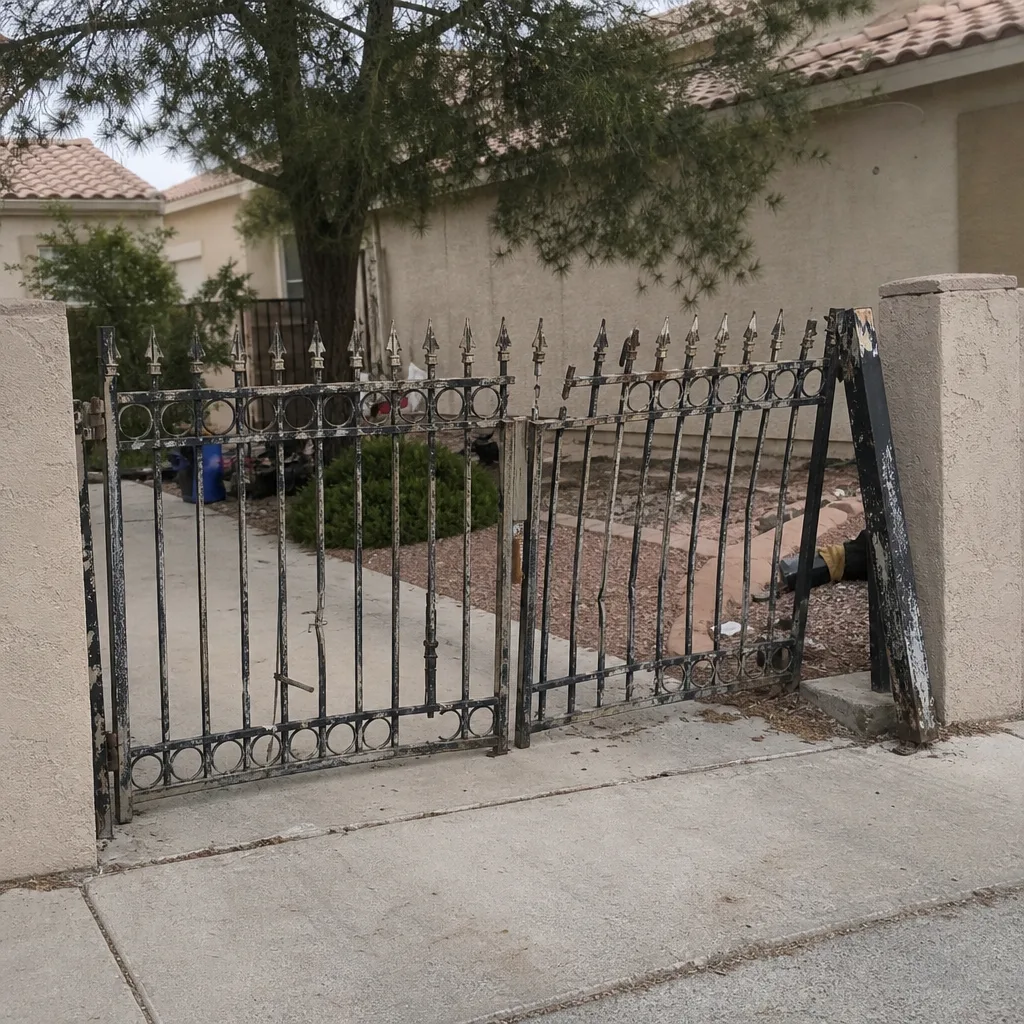
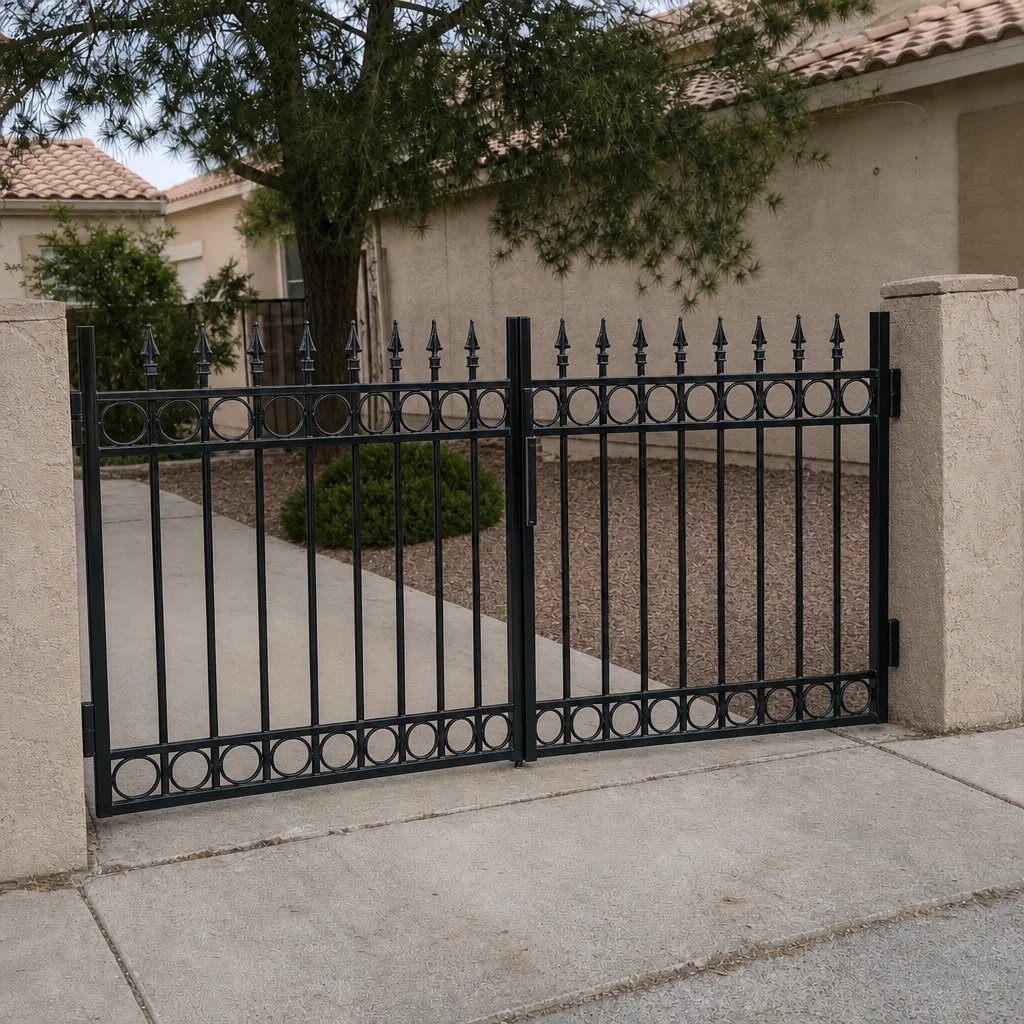
See the difference
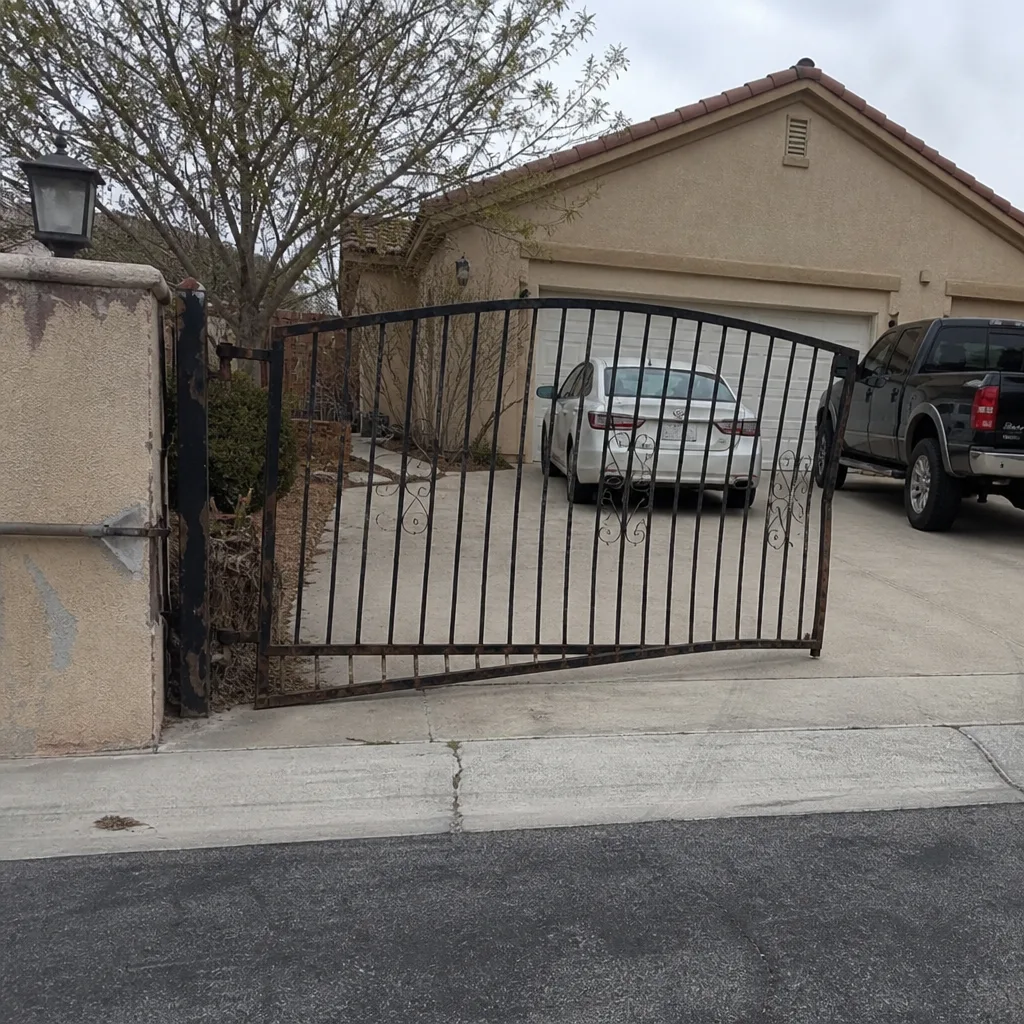 Before
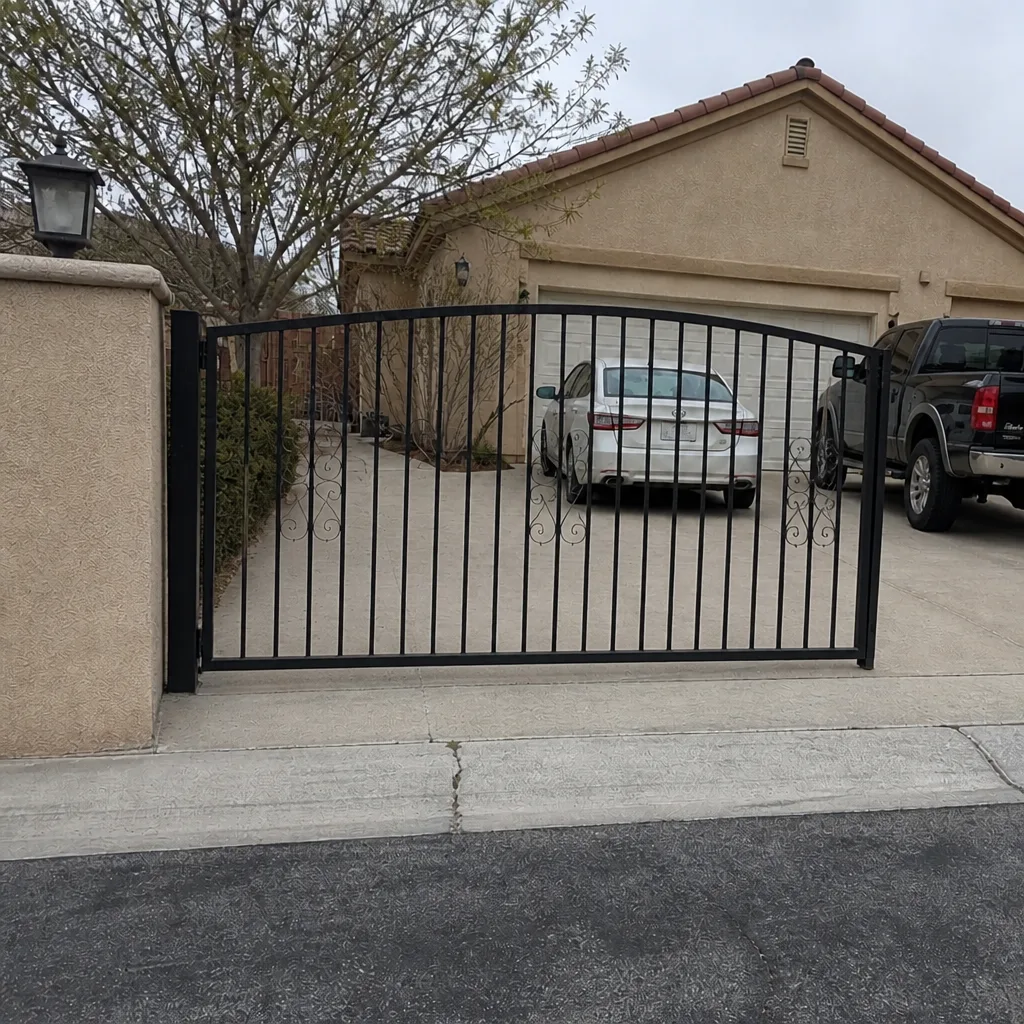 After
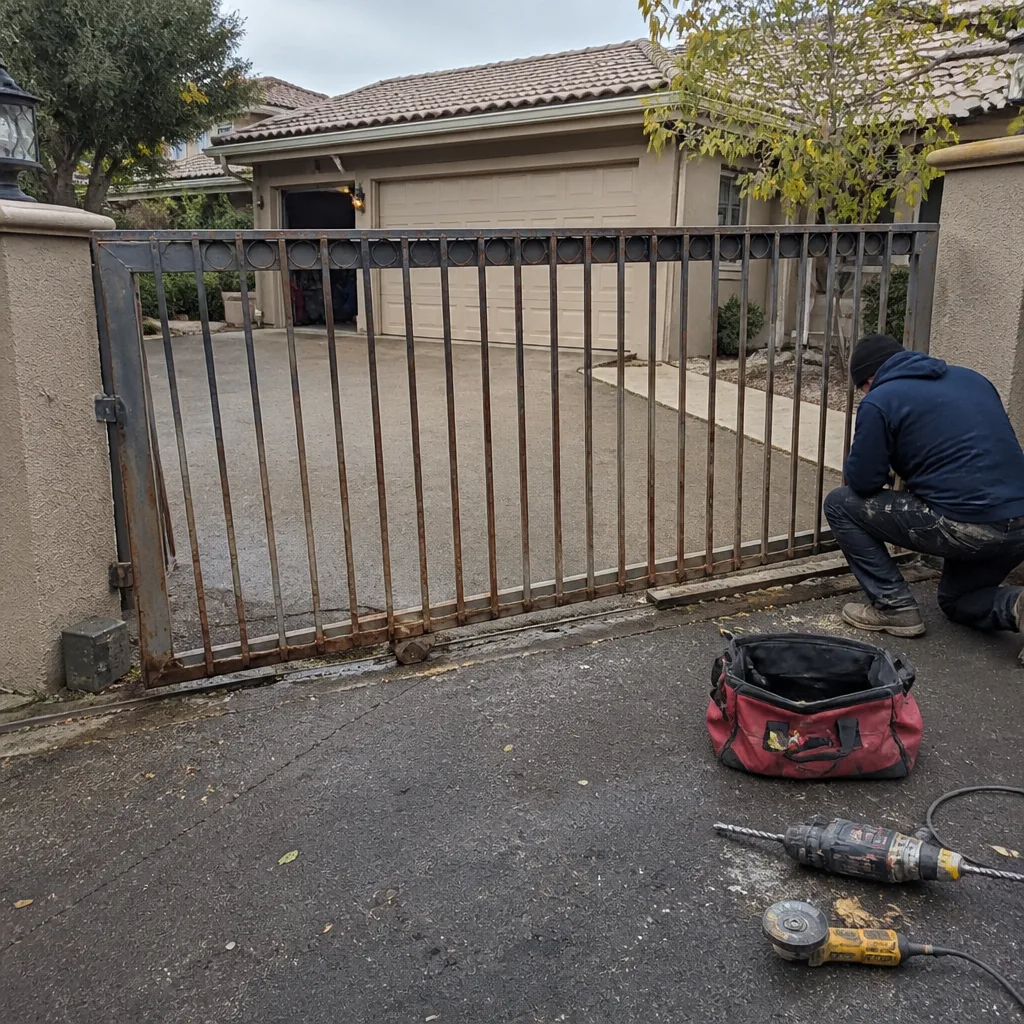 Before
 After
 Before
 After
When to Call a Professional
If the gate is pitted, the post is leaning, or the opener is clicking and not opening, the timeline question becomes a repair question, not an install question. Full gate installation is a multi-trade project: welding, structural anchoring, electrical work for the opener, and programming. That’s why a licensed, insured, and bonded gate specialist should be the one handling the job, even when the fix looks small. If you’re in Summerlin and you’re measuring the driveway for a new gate, or you’ve got a gate that’s “mostly fine,” call us before you buy anything. The honest answer about timeline often saves a homeowner a much larger bill down the road. Ironworks Gate Co. Summerlin offers free estimates in Summerlin. Call (866) 623-9848 to schedule a visit and get a written, no-surprise schedule.
Frequently Asked Questions
The full project from first visit to final handoff typically runs 5 to 10 days for a swinging gate, or 7 to 14 days for a sliding gate, once HOA review and curing are accounted for. The install day itself is usually one day for a swing gate and two to three days for a sliding gate. Call (866) 623-9848 for a schedule specific to your property; estimates are free.
The mechanical hang and wiring can happen in a single working day for a basic swinging gate, but a same-day full install that pours footings and hangs the gate in one day is not a safe or durable install. The footing needs 48 to 72 hours of cure. Any contractor promising a one-day full install is either skipping the cure or planning to come back, and you should ask which.
Concrete doesn’t reach full strength in 24 hours, and a 400-pound gate hanging on a green footing will twist the anchor post. The first 48 to 72 hours are when the concrete gains the most strength, and that window is what keeps the gate true for years instead of months. In Summerlin’s heat, that window can be affected by the mix and the pour time, which is why we schedule around it.
Yes, HOA architectural review can add one to four weeks depending on the committee’s meeting schedule. Summerlin’s many associations each run their own calendar, and the fastest schedule is the one where the forms are submitted correctly on day one. We can help you prepare the submission, but the board sets the review date.
A swinging gate is a one-day hang plus programming, typically a half-day. A sliding gate needs a graded track, which adds at least one day to grade and set, and often two to three install days total. The grading is what makes a sliding gate drain and ride level; it can’t be skipped to speed up the job.
Ask two questions: what’s the footing cure window, and do you load-test the opener in the heat of the day before you leave? A real answer gives numbers and method. A vague or defensive answer is a sign the timeline is being compressed beyond what the gate can support. You can also ask what happens if the gate drifts in the first 90 days; the company with a written promise is the one that will come back.
The Bottom Line
A gate installation is a phased project, and the days that matter most are the ones with no crew on site: curing, permitting, and programming. A realistic timeline tells you the installer is thinking ahead. Rushed footings are the root cause of most early gate realignment in Summerlin. If you’re shopping for a gate, use the phases in this guide to ask better questions and to price-compare on the correct scope. And if the job is a repair on a gate you already have, get the same upfront answer on timeline before the first bolt is turned. Ironworks Gate Co. Summerlin is a gate specialist, not a generalist, and we’re happy to give you a written schedule and an honest answer on either one. Call (866) 623-9848 for a free estimate.
Written by the team at Ironworks Gate Co. Summerlin.