
Last updated November 17, 2026
 Wrought iron
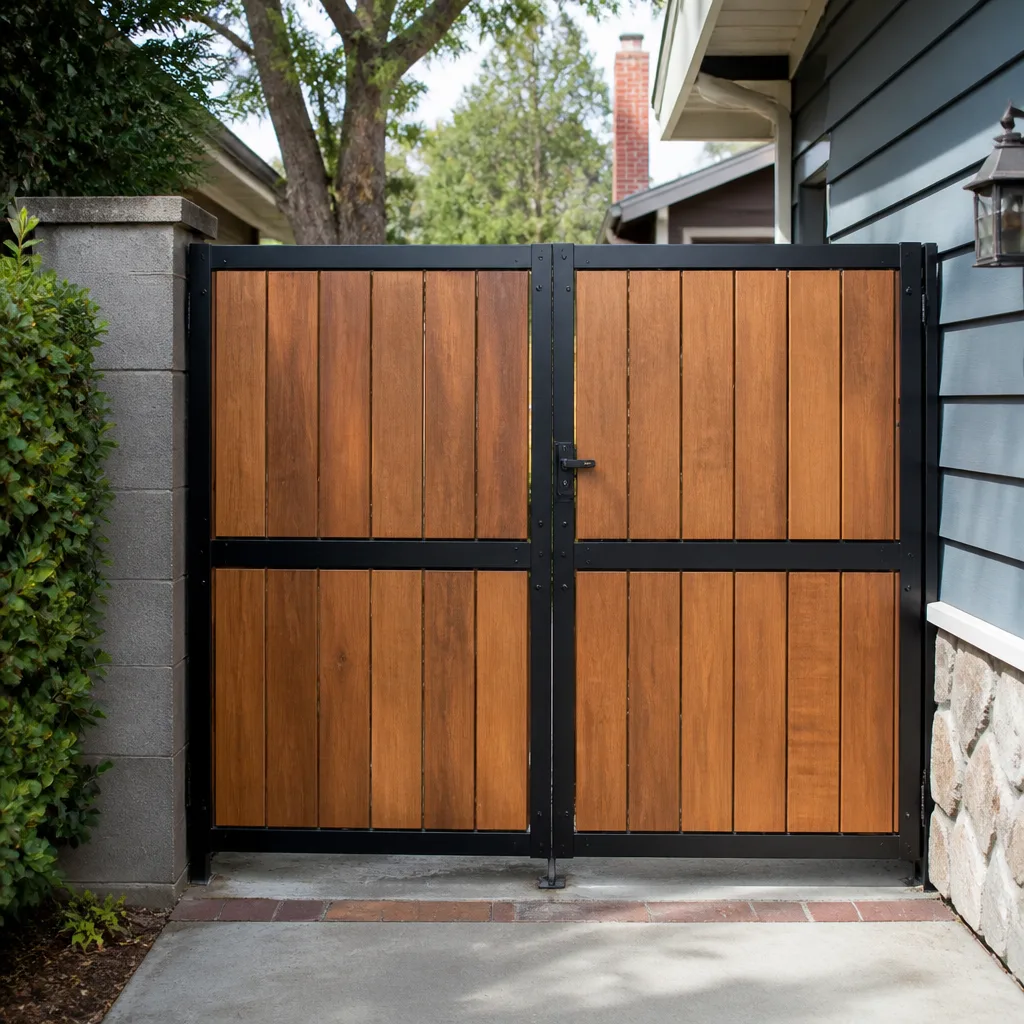 Wood & steel frame
 Farm & ranch
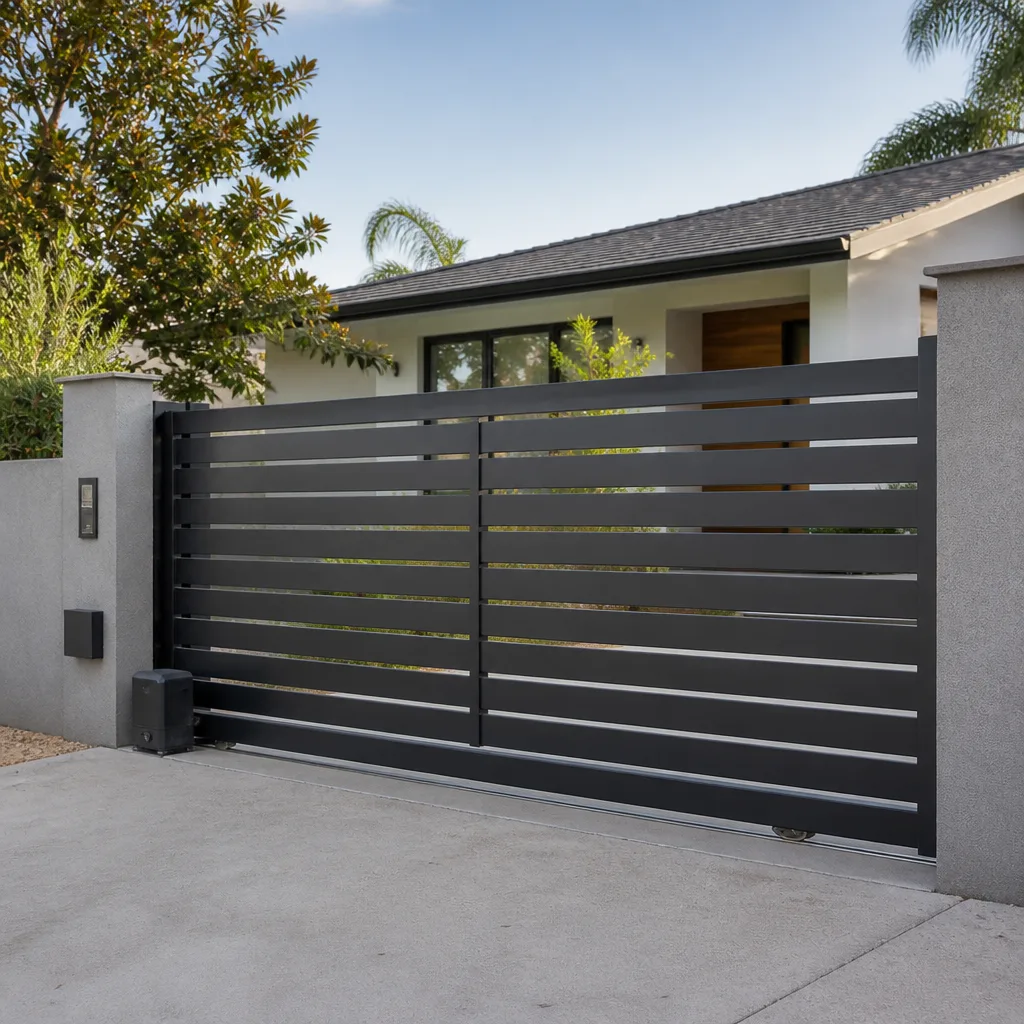 Sliding driveway gates
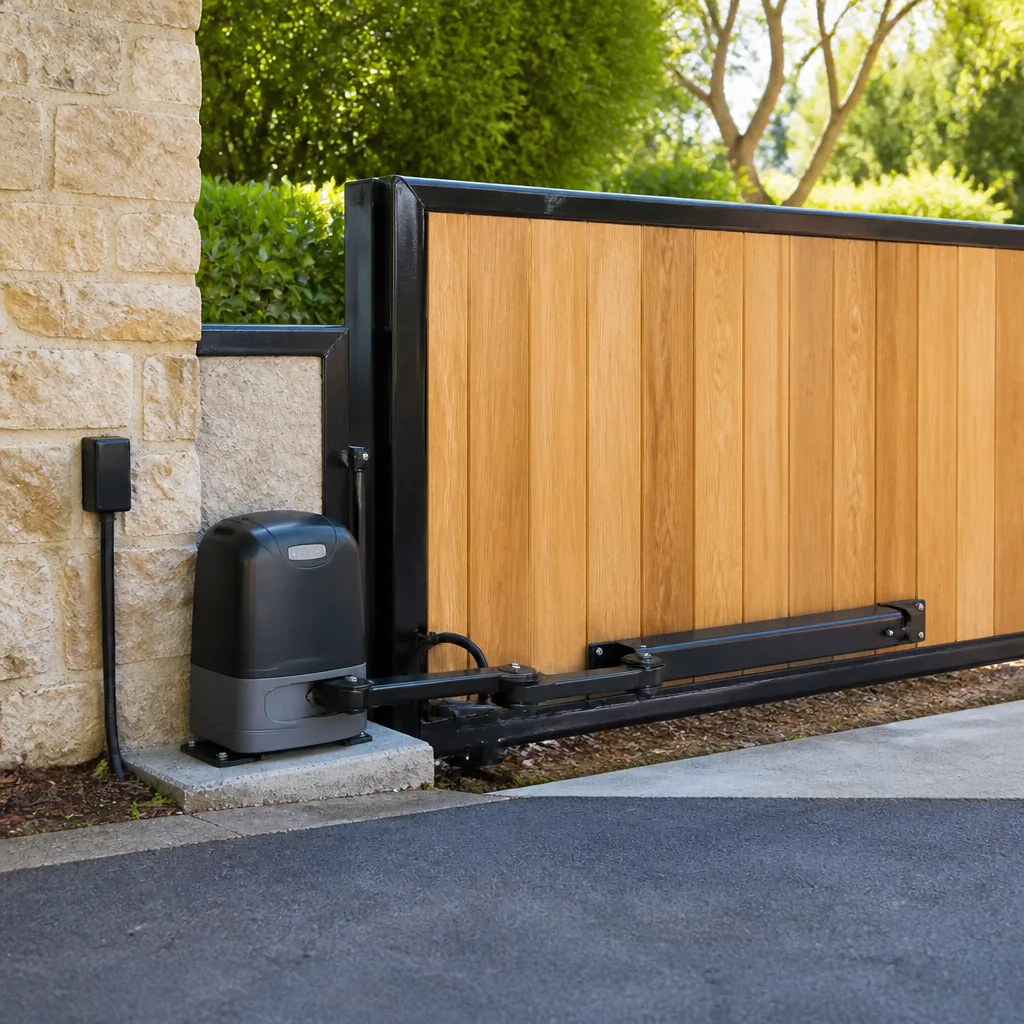 LiftMaster operators
Free on-site gate assessment - hinges, posts, and your LiftMaster or Nice gate operator checked before anything is quoted
The assessment is free and the quote is the invoice.
Get your free estimateGate Motor & Opener Maintenance Schedule: What to Do and When
The number-one killer of gate openers in the Las Vegas valley isn’t wear. It’s caliche dust. Every spring, wind events lift fine alkaline grit off the desert and drive it straight into motor housings, limit switches, and chain tracks. Fifteen minutes of cleaning in April prevents the seized operator you’d otherwise be replacing in July. In our experience across Summerlin, the gates that last fifteen years are rarely the most expensive ones. They’re the ones on a schedule. What follows is that schedule: a twelve-month rhythm built around Summerlin’s real seasons, the specific products to use at each lubrication point, and the checks that separate a gate that works from a gate that works when the power is out.
Quick Answer
A gate motor and opener should be serviced on a calendar, not on failure: clean the housing and track every spring before wind season, lubricate moving parts in spring and late fall, test the battery backup every 90 days, and have a professional inspect torque, limits, control board, and safety reverse once a year. In Summerlin, two dates matter more than any other: a pre-summer heat check in May and a monsoon-prep check in June.
Styles & brands we work with
- Wrought iron
- Wood & steel frame
- Farm & ranch
- Sliding driveway gates
- LiftMaster operators
Table of Contents
- Why a Calendar Beats a Repair Call
- Spring: The Caliche Dust Cleanout (March – April)
- Pre-Summer Heat Check (May)
- Monsoon-Prep Check (June)
- Post-Storm Inspection (August – September)
- Lubrication Points: What Goes Where
- Battery Backup: Testing and Replacement Triggers
- What a Professional Annual Inspection Covers
- The One-Page Maintenance Log
Why a Calendar Beats a Repair Call
Openers rarely fail without warning. They give months of small signals: a slight hesitation at the limit, a relay that clicks a little louder, a battery that reads full on the panel but hasn’t actually moved the gate in a year. Those signals are easy to miss when no one is looking for them. They’re impossible to miss when there’s a date on the calendar.
The economics are simple. A worn drive gear caught at an annual inspection is a modest repair. The same gear run until it strips takes the motor and often the control board with it. We see that pattern constantly in Summerlin, where heat and dust accelerate wear on anything exposed. The older neighborhoods near the edge of the valley, where lots run larger and gates get more daily cycles, are where the difference shows up fastest.
A calendar also gives you something a repair call never does: a record. When you can tell a technician that the gate has been sluggish since the last wind event, or that the battery was replaced two seasons ago, the diagnosis gets sharper and the first visit is more likely to be the only visit. That’s the whole point of preventive work. Not to spend money on the gate, but to stop spending it twice.
Spring: The Caliche Dust Cleanout (March – April)
This is the task most homeowners don’t know exists, and it’s the one that saves the most money. Caliche dust is fine, alkaline, and abrasive. After a windy spring, it collects in the motor housing vents, the chain track, and around the limit switches. Left there, it acts like sandpaper on every moving surface and insulates the motor against the little cooling it gets.
A homeowner can handle the exterior portion. Here’s the sequence we recommend:
- Turn the operator off at the breaker before touching anything inside the housing.
- Blow dust out of the housing vents and the track with low-pressure compressed air, working away from the motor, not toward it.
- Wipe the track and rail down with a dry cloth. Don’t use water; it turns the dust into a paste that dries like cement.
- Check the chain tension by hand. It should have a small, even amount of slack, not a sagging loop.
- Look at the gate hinges and posts for dust buildup in the joints, and clear them before they bind.
What you shouldn’t do is open the control board enclosure or spray cleaner into the motor housing. Those are sealed compartments for a reason, and the desert dust that gets in through a loosened cover does more damage than the dust you were trying to remove. This is the point where a service call is worth it. If the gate has run a full year in Summerlin without a professional look, book the tune-up now, before the heat arrives and every technician in the valley is booked solid. A Gate Motor & Opener in Summerlin service visit this month covers the parts of the cleanout you can’t safely reach.
Pre-Summer Heat Check (May)
May is when Summerlin’s afternoon temperatures start climbing past the point where a tired motor becomes an overheated motor. The pre-summer check is about heat management: making sure the operator can shed the heat it generates during the long, hot months ahead.
What to verify in May:
- Housing and vents are clear. Dust left in place from spring now traps heat. This is the single most common cause of mid-June thermal shutdowns we see.
- Shade and sun exposure. A south- or west-facing operator box bakes all afternoon. Fans and shade panels help; so does confirming the operator is rated for the ambient temperature it actually sees.
- Duty cycle. If your household cycles the gate many times a day, the operator needs a rest cycle between runs. Check that the control board isn’t set to a duty cycle beyond what the motor can handle in heat.
- Belt and chain condition. Heat hardens rubber and stretches metal. A belt that’s starting to crack in May becomes a snapped belt in July.
- Photocell and safety edge alignment. Heat warps small mounts. A beam that’s a fraction off can cause intermittent stops that look like motor faults.
This is also the right month for the seasonal tune-up. Summerlin homeowners who book in May get their gates squared away before the summer rush, when a failed operator means a week without a working gate. Every job we do is settled at an upfront price before a bolt is turned, so there are no surprises when the bill arrives.
Monsoon-Prep Check (June)
June is monsoon preparation. The valley’s summer storms arrive fast, dump a lot of water in a short time, and then the sun comes back out and cooks whatever got wet. That wet-then-hot cycle is hard on electrical enclosures, gate posts, and anything with a seal.
Summerlin’s newer communities are graded for drainage, but a driveway gate sits right where runoff wants to pass. In our experience, the gates that fail in August are the ones that sat in standing water in July without anyone noticing. Before the first storm:
- Walk the gate line and clear any debris from the base of the posts and the operator pad.
- Check the seal around the control board enclosure. A cracked gasket is the difference between a dry board and a fried one.
- Confirm the gate sits above the anticipated runoff line. If it doesn’t, that’s a conversation worth having before the water arrives.
- Test the safety reverse and the safety edge under load, not just by hand.
- Verify the battery backup holds a charge, since monsoon outages are the most common time you’ll need it.
None of this is dramatic work. It’s the kind of low-cost preparation that keeps a monsoon from turning into a repair. We service nine major automation brands, including FAAC, BFT, Linear, and Viking, so whatever operator is on your driveway, the correct fix gets made on the first visit.
Post-Storm Inspection (August – September)
After a storm, the gate may work fine. That doesn’t mean it is fine. The August – September inspection is about catching what the storm left behind: water that got into a housing, grit that washed into a track, a post that shifted a fraction under saturated soil.
What to check after a monsoon:
- Listen first. Run the gate and listen for grinding, a change in pitch, or a relay clicking more than usual. Sound is the cheapest diagnostic there is.
- Look at the gate’s level. A gate that’s suddenly dragging at the latch has likely had a post settle. That’s a hinge and post issue, not a motor issue, and it gets worse if the motor keeps forcing it.
- Inspect the track and rail for gravel and grit. Storm runoff deposits it, and it wears the rollers fast.
- Check the electrical enclosure for moisture. Any sign of water inside means the board needs a professional look before it’s powered again.
- Test the battery backup under load. A storm is exactly when you want to know it works.
If the gate has started to hesitate or reverse on its own, don’t keep cycling it hoping the problem clears. That’s how a small adjustment becomes a motor replacement. This is the time of year when Gate Repair in Summerlin calls spike, and the earlier you call, the sooner it’s sorted.
Lubrication Points: What Goes Where
This is where most homeowners go wrong, and it’s not their fault. Lubricant is not one product. The wrong one on the wrong surface attracts dust, gums up in heat, or washes away in the first storm. Here’s what we recommend for each point, tuned for desert conditions.
- Swing-arm operator arms and pivot pins: a lithium-complex grease or a dry PTFE lubricant. In Summerlin, a dry film is usually better because it doesn’t hold dust. Grease on an exposed pivot turns into a dust magnet by June.
- Ram (linear) operator rod: a light coat of silicone-based lubricant on the rod, wiped down so it doesn’t collect grit. Avoid heavy grease here; it traps the caliche dust and scores the rod seal.
- Slide operator nylon rack: silicone spray, applied sparingly, wiped to a thin film. Never use petroleum-based grease on a nylon rack; it can soften the plastic over time.
- Steel chain (slide and chain-driven operators): a chain-specific dry lubricant, not oil and not grease. A dry chain lube penetrates the links and then dries, so dust doesn’t stick. Reapply after any significant rain.
- Hinge pins and gate hinges: a dry graphite or PTFE spray in desert conditions. It gets into the pin without leaving a sticky surface for the dust to find.
- Rollers and track: dry lubricant on the rollers, and nothing on the track itself. A dry track sheds grit; a greasy track collects it.
Apply lubrication in spring and again in late fall, and always wipe off the excess. A thin, even film is the goal. More product is not better; it’s just more surface for the desert to attach to. If you’re unsure which operator you have, a service visit will tell you, and the schedule file we keep for Summerlin homes includes exactly which products were used and when.
Battery Backup: Testing and Replacement Triggers
A backup battery that hasn’t been cycled in eighteen months can show a full charge on the panel and deliver nothing during an outage. That’s the trap. The panel reads voltage, not capacity. A battery that’s been sitting mostly idle can hold its voltage while its ability to push the gate has quietly gone to zero.
The right rhythm:
- Test every 90 days. Cut power at the breaker and run the gate through a full open and close cycle. If it moves slowly, hesitates, or stops, the battery is failing.
- Test under load. A short driveway gate is a light load; a heavy estate gate is not. The test only counts if it’s run under the weight the gate actually carries.
- Replace on a schedule, not on failure. Lead-acid backups in desert heat generally want replacement every three to five years, regardless of what the panel says. Heat is the great battery killer, and Summerlin summers are hard on them.
- Log every test and every replacement. A note in the log with a date is worth more than a memory of “I think we did that last year.”
If the gate fails to run during your quarterly test, don’t assume the battery is the whole story. Sometimes the charging circuit has failed and the battery is the victim, not the cause. That’s a diagnosis for a technician. We test both the battery and the charging system on every service call, so a new battery doesn’t simply mask a dead charger.
What a Professional Annual Inspection Covers
Owner maintenance keeps a gate healthy. It can’t do everything. There are four things a trained technician does that a homeowner can’t safely replicate, and they’re the reason an annual professional inspection is worth scheduling.
Torque testing. The operator’s force output has to be measured, not guessed. Too much force and the gate is a hazard to anyone in its path; too little and it stalls. Neither extreme is visible to the eye. A technician measures it and adjusts it to the manufacturer’s spec.
Limit calibration. The open and close limits drift over months of heat and use. A technician calibrates them against the actual travel of the gate, so the operator isn’t straining against a hard stop or reversing early. Correct limits are what make an opener last.
Control board diagnostics. The board logs fault codes that a homeowner never sees. Reading them tells the technician what the gate has actually been doing between service visits: brownouts, stalled cycles, safety trips. It’s the gate’s own maintenance history.
Safety compliance check. Photocells, safety edges, and the reverse-on-obstruction function all have to actually work, not just be present. A technician tests them under real conditions. This is also where an aging Gate Installation in Summerlin is evaluated for whether it still meets current safety standards, or whether it’s time to plan for replacement.
We perform all four on every annual inspection, alongside the routine clean and lubricate. The inspection takes less time than a failed gate costs.
The One-Page Maintenance Log
You don’t need software. You need one sheet, either taped inside the operator housing or kept with your home’s service records. The purpose is simple: when a technician arrives, they see the gate’s actual history instead of guessing from the outside.
What the log should capture, one line per entry:
- Date and what was done (clean, lube, battery test, professional inspection)
- Who did it (owner or service)
- Any symptom noted at the time (“slight hesitation at limit,” “relay clicking,” “battery test slow”)
- Any part replaced, with the date
- Any service offered or scheduled for next time
Five columns, one sheet, one line per event. That’s the whole thing. When you sit down with a technician and can say “the battery was replaced two summers ago” or “it’s been sluggish since the last wind event,” the diagnosis is faster and the first visit is more likely to be the only one. We keep the same records for every Summerlin home we’ve worked on, so the history travels with the gate. If you’ve moved or lost your copy, we can pull it from the job file.
Common Mistakes to Avoid
- Skipping the spring dust cleanout. This is the one that costs the most. A motor housing left packed with caliche dust in April runs hot all summer and fails first.
- Greasing the track. A greasy track collects grit and wears rollers faster. Keep it clean and dry, not lubricated.
- Using heavy grease on exposed pivots in Summerlin. It holds the dust and turns the pivot into a grinding paste. Use dry lubricant instead.
- Trusting the panel’s battery charge reading. A backup that hasn’t been cycled under load isn’t tested. Cut the breaker and run the gate; that’s the real test.
- Ignoring intermittent stops. Photocell and safety edge misalignment starts as an occasional hiccup and becomes a gate that won’t close at all. Catch it in June, not September.
- Forcing a dragging gate. A dragging gate is usually a post, hinge, or level issue. Forcing the motor to overcome it wears the operator out quickly. Fix the cause.
- No record. Without a log, every service call starts from zero. A one-page sheet saves time and money on every future visit.
See the difference
 Before
 After
 Before
 After
 Before
 After
When to Call a Professional
Some work belongs on your calendar. Some work needs a trained technician. Call us when the gate hesitates, reverses on its own, refuses to close, or stops partway; when the battery backup fails its load test; when a post has settled or a hinge is dragging; or when the gate has run a full year without a professional look. We handle the Ironworks Gate Co. Summerlin home service area, including repair, installation, and automation, and we’ll also take a look at a quote another contractor left you, with no pressure to switch. Every job we do is covered by the 90-Day Done Right Promise, written and honored, so if something isn’t right, we come back and make it right. Ironworks Gate Co. Summerlin offers free estimates in Summerlin. Call (866) 623-9848.
Frequently Asked Questions
Once a year for a professional inspection, with two owner checks built around Summerlin’s seasons: a spring dust cleanout before wind season and a late-fall lubrication and battery check. The annual visit covers torque, limits, control board diagnostics, and safety compliance, which a homeowner can’t safely replicate. Call (866) 623-9848 to book one; estimates are free.
A dry chain-specific lubricant on a steel chain, and nothing on the track itself. In Summerlin, dry lubricants win because they don’t collect the caliche dust that a wet grease attracts. Use a dry PTFE or graphite product on pivots and hinges, and a silicone spray, wiped thin, on a nylon slide rack. If you’re not sure what’s already on the gate, a service call will identify it and recommend the right product.
The panel reads voltage, not capacity. A battery that hasn’t been cycled in eighteen months can hold full voltage while its ability to move the gate has gone to zero, especially after a Summerlin summer. Cut the breaker and run a full open-and-close cycle under load; if it hesitates or stops, the battery needs replacing. Call us and we’ll test both the battery and the charging circuit, since a failed charger is often the real culprit.
The most common cause in Summerlin is a dusty motor housing running hot, or an operator set to a duty cycle it can’t sustain at summer temperatures. Photocell misalignment from heat warp is the other frequent cause. Neither improves on its own. Call (866) 623-9848 for a diagnostic; estimates are free.
Yes, for four tasks in particular: torque testing, limit calibration, control board diagnostics, and the safety compliance check. These require measurement tools and manufacturer specifications a homeowner doesn’t have, and they’re the checks that prevent injury and premature motor failure. Owner maintenance and professional inspection work together; one doesn’t replace the other.
The seasonal tune-up covers the items in our annual service visit, including the cleanout, lubrication, adjustment, battery test, and safety check. It’s priced at $89 because we’d rather a gate be serviced on a schedule than repaired on an emergency call, and the cost reflects that. Call (866) 623-9848 with your gate’s make and model and we’ll schedule a visit at a time that works for you.
The Bottom Line
Gate openers don’t fail without warning. They fail when no one’s watching the warning signs. A twelve-month calendar built around Summerlin’s actual seasons, with the spring caliche dust cleanout, the May heat check, the June monsoon prep, the August inspection, and the late-fall lubrication and battery swap, catches the small things before they become the expensive ones. Add a one-page log, test the battery under load every 90 days, and let a professional handle torque, limits, board diagnostics, and safety once a year. Done right, the gate does its job for decades, and you stop thinking about it. That’s the point.
When a gate needs a real set of hands, we’re one phone call away. A live person answers 24 hours a day, and we’ll quote the price upfront and honor it. No hassles, no surprises.
Call (866) 623-9848 for a free estimate.
Written by the team at Ironworks Gate Co. Summerlin.