
Last updated November 17, 2026
 Wrought iron
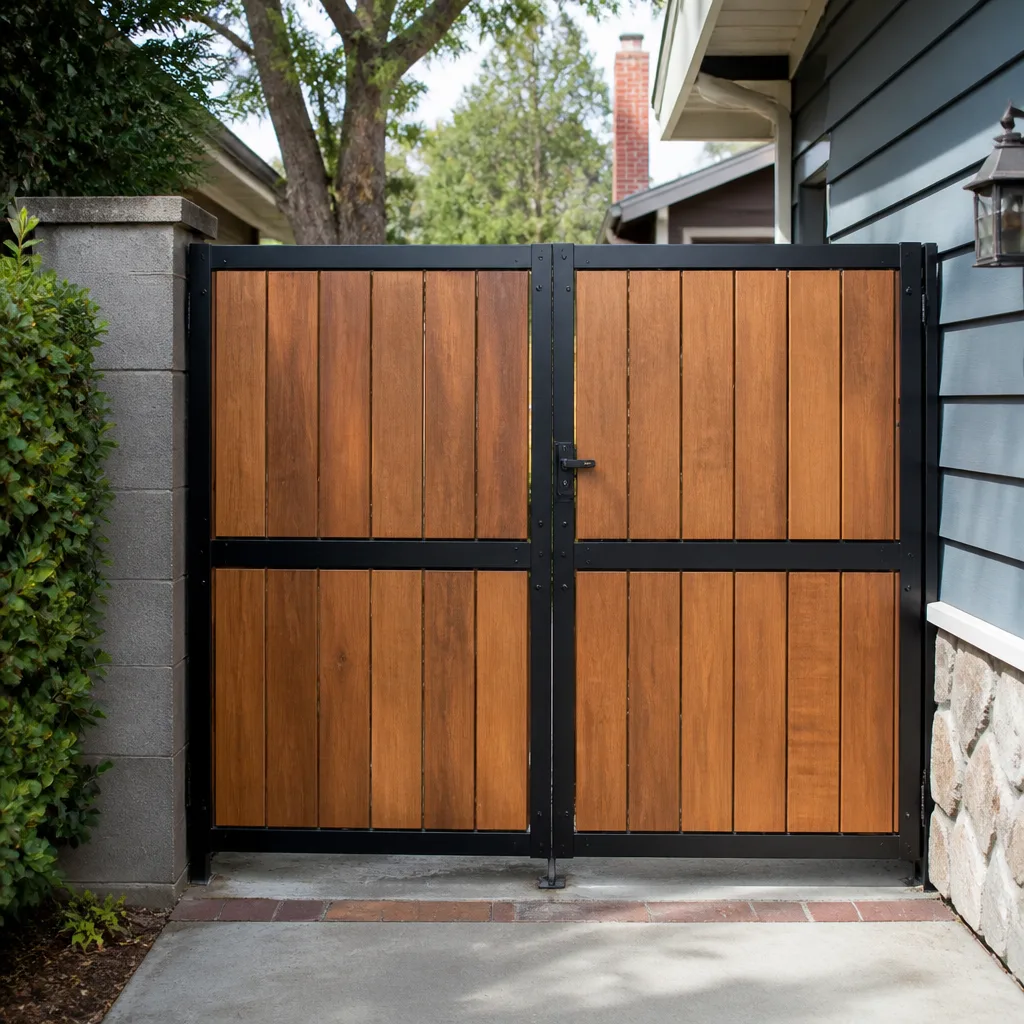 Wood & steel frame
 Farm & ranch
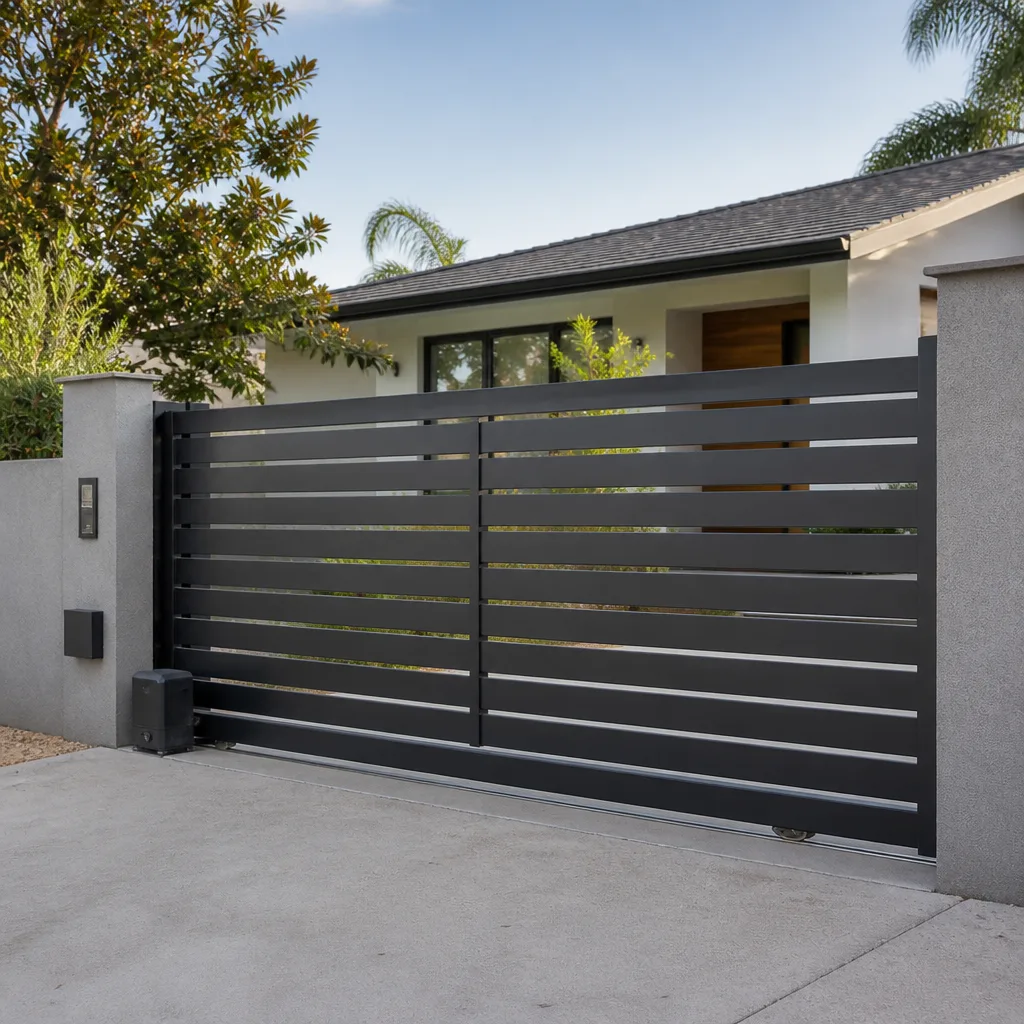 Sliding driveway gates
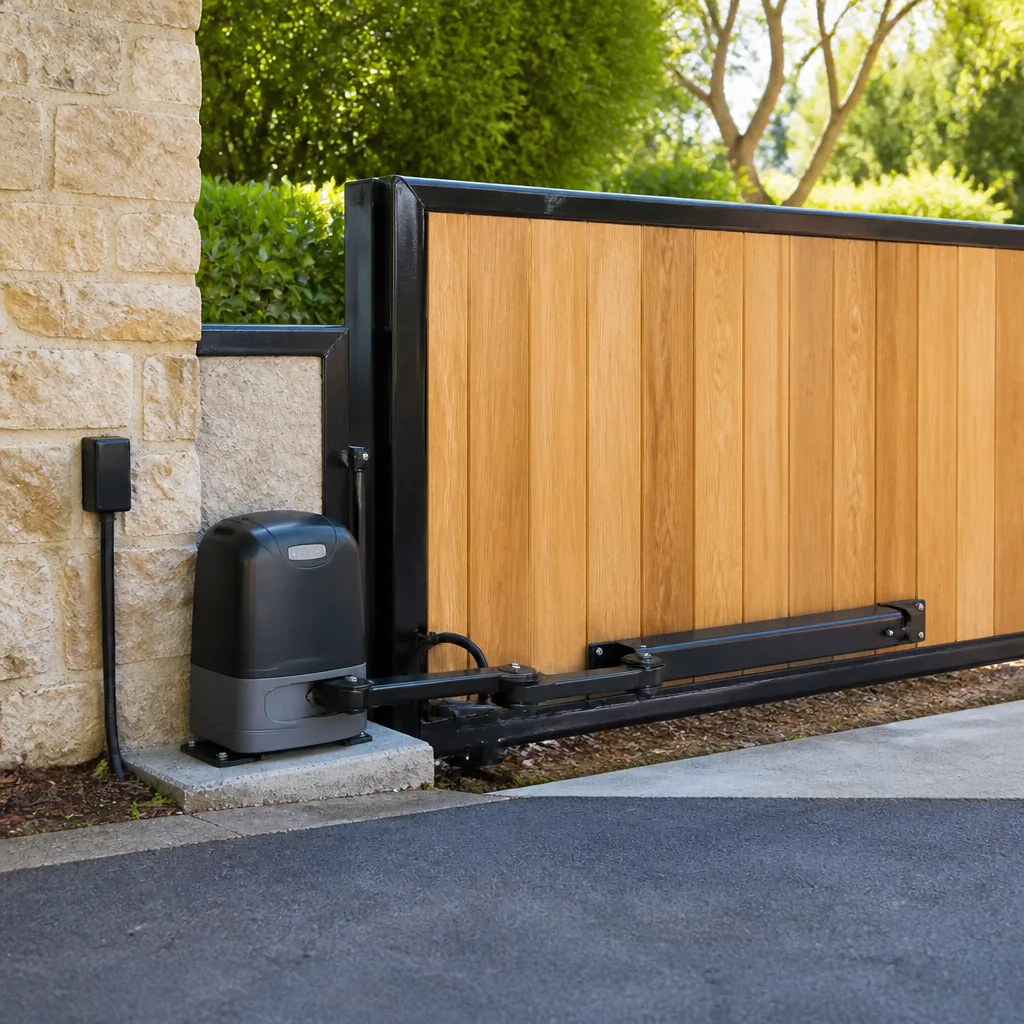 LiftMaster operators
Free on-site gate assessment - hinges, posts, and your LiftMaster or Nice gate operator checked before anything is quoted
The assessment is free and the quote is the invoice.
Get your free estimateGate Access Control Maintenance Schedule: What to Do and When
The average access control board doesn’t fail in January. It fails in September, roughly six weeks after the summer heat has peaked, when the capacitors and relays that absorbed months of stress finally give out. In Summerlin, where July routinely parks above 110°F, that failure pattern shows up on a calendar you can almost set a watch by. The keypad membrane that felt fine in April starts sticking in August. The backup battery that should have lasted three years quits after eighteen months. None of it is random.
This guide lays out a maintenance schedule written for Summerlin’s climate specifically: what you can handle yourself, what needs a technician, and when each task matters most. You’ll get a month-by-month checklist, the battery replacement interval high heat actually demands, and the one step almost every other guide skips.
Quick Answer
Gate access control in Summerlin NV should be serviced on a two-part schedule: homeowner checks monthly (keypad cleaning, manual release test, battery indicator check) and professional service twice a year in spring and fall (board diagnostics, torque testing, wiring inspection, conduit re-sealing). Backup batteries in Summerlin’s heat should be replaced every 18 to 24 months rather than the standard three years, and the full system should get extra attention in late June before monsoon season.
Styles & brands we work with
- Wrought iron
- Wood & steel frame
- Farm & ranch
- Sliding driveway gates
- LiftMaster operators
Table of Contents
- How Summerlin Heat Degrades Access Control, Month by Month
- What the Homeowner Should Do: The Monthly Checklist
- What the Technician Should Do: The Twice-Yearly Service
- Battery Backup Replacement in a High-Heat Climate
- The Step Most Guides Skip: Re-Sealing Conduit Entries
- Before Monsoon Season: The July Prep Checklist
- The Full Twelve-Month Schedule at a Glance
How Summerlin Heat Degrades Access Control, Month by Month
Heat doesn’t break access control in a single dramatic event. It degrades materials on a slow curve, and the curve speeds up past 100°F. In Summerlin, we’ve watched the same sequence play out on gates across The Ridges, Red Rock Country Club, and the older stretches near Summerlin Parkway.
The keypad membrane is the first casualty. Most are rubber or polymer over a circuit contact, and repeated expansion and contraction in 100°F-plus heat makes them stiff and brittle. By late summer, a keypad that was crisp in spring feels mushy, and certain keys stop registering. Composite keypads (we service several façades made from DoorKing components) tend to bind at the edges where the housing meets the frame.
Wiring insulation comes next. The low-voltage cabling running from the keypad to the control board sits in a sun-exposed conduit, and the insulation on it cracks under sustained UV and heat. That’s where intermittent faults start: the gate works fine in the morning, hesitates at 2pm, and the owner assumes it’s the motor.
The control board is the last to fail, but it’s the most expensive. The electrolytic capacitors on the board are rated for a certain temperature, and every hour above that rating shortens their life. A Summerlin board that has run through one full summer has effectively aged more than a board in coastal California would in three. That’s why the September failure is so common: the peak is over, the heat has done its work, and the component gives out when it’s called on again for a routine cycle.
Understanding this sequence is what makes a maintenance schedule useful. You’re not reacting to failures. You’re staying one step ahead of them. If your gate is already showing symptoms, a gate repair in Summerlin visit will usually tell you how far along the decay has run.
What the Homeowner Should Do: The Monthly Checklist
Most access control problems announce themselves long before they become failures. A monthly walkthrough, ten minutes at most, catches them early. These are tasks a homeowner can safely handle, and they don’t require touching a board or a live wire.
- Wipe the keypad with a dry cloth. Desert dust lodges in the seams and the membrane edge, and it holds moisture when it does rain. A dry microfiber cloth once a month clears it. Never spray cleaner into the keypad, and never use a hose.
- Press every key and note any that feel different. A key that’s slower to spring back or requires more pressure is telling you the membrane is going. Write down which ones, so a technician can check them.
- Test the manual release. Every automatic gate is required to have a manual release, and it should move smoothly. If the key or handle won’t turn, stop using the gate and call for service. Don’t force it.
- Watch the gate cycle once. Open and close the gate fully. Listen for grinding, watch for hesitation, and check that it reverses when it hits an obstruction. Any change in sound from last month is worth noting.
- Check the battery indicator. Most access systems have a low-battery warning light or beep. If it’s on, replace the battery rather than waiting. In Summerlin’s heat, that warning is often the last notice before the system stops accepting codes during an outage.
- Clear debris from the gate travel path. Gravel, blown sand, and fallen palm fronds pack into the track or the swing arc. A gate that fights debris strains the motor and the board.
These checks are the homeowner’s half of a maintenance schedule. The other half needs a trained hand on the tools, and it’s where the real money is saved.
What the Technician Should Do: The Twice-Yearly Service
Access control is low-voltage electronics sitting next to a high-torque motor in a hot box. The parts that matter most are the ones a homeowner shouldn’t touch. We recommend two full service visits a year in Summerlin: one in spring (March or April) to prepare for the heat, and one in fall (October or November) to recover from it.
A proper service visit covers:
- Control board diagnostics. Voltage readings at the board, capacitor health, and a review of any fault codes logged since the last visit.
- Torque testing on the motor and operator. Excess torque strains hinges and the board; too little and the gate stalls. The operator needs to be checked against its spec.
- Wiring inspection. Every inch of low-voltage cable, especially where it enters conduit and where it bends. Cracked insulation gets replaced before it causes a fault.
- Keypad and reader cleaning. A technician opens the housing and clears the internal contacts, not just the surface.
- Hinge and pivot lubrication. The right lubricant for the climate, applied where the gate actually bears load.
- Safety edge and photo-eye alignment. The gate must reverse on obstruction. A misaligned photo-eye is the most common cause of a gate that won’t close.
- Conduit re-sealing. More on this below, because it’s the step most schedules leave out.
We service the full range of residential automation on these visits, including Viking and Elite operators, plus LiftMaster, FAAC, and the rest of the nine brands our technicians are trained on. Knowing the specific board and its quirks is what lets a technician spot a failing capacitor before it strands a homeowner. If your operator is due for this level of attention, gate motor and opener service in Summerlin is the place to start.
Battery Backup Replacement in a High-Heat Climate
The standard recommendation for a gate access control backup battery is three years. In Nevada, that recommendation is wrong. Heat is the single biggest killer of sealed lead-acid batteries, and a battery mounted in a west-facing cabinet in Summerlin routinely sees internal temperatures well above ambient. At sustained heat like that, capacity drops faster and the plate chemistry ages years ahead of schedule.
The working interval for Summerlin is 18 to 24 months. If the battery cabinet faces the afternoon sun, plan on 18. If it’s shaded or in a cooler spot, 24 is reasonable. You can also test: a healthy battery holds its voltage under load, and a technician will load-test it on each service visit rather than guessing from a date sticker.
Why this matters beyond convenience: the battery is what keeps your access control working when the power goes out. In a Summerlin summer, grid strain during peak heat means outages happen, and a gate that won’t accept codes during an outage is a problem. Replace the battery on the shorter schedule and the system stays live. If you’re unsure of the age of your current battery, have it tested at your next service.
The Step Most Guides Skip: Re-Sealing Conduit Entries
Conduit entries are where desert dust gets into an access control system. The cable runs from the keypad down into the ground or through a wall, and the entry point is sealed with a fitting or a bead of sealant. In Summerlin, that sealant dries, cracks, and shrinks under the sun. Once it opens, fine desert dust and sand blow into the conduit, and that’s how you get faults that come and go: the gate works, then doesn’t, then works again.
The dust gets onto the contacts at the board end. It holds static and moisture. It causes the kind of intermittent problem that’s hard to diagnose because it never shows up when the technician is standing there. Re-sealing conduit entries at each service visit is a five-minute task that prevents an entire category of ghost faults. It’s also the step most maintenance schedules leave out, which is why access control systems in dry climates develop mysterious behaviors that a board replacement never fully cures.
If your gate has developed a fault that appears and disappears, dust in the conduit is worth ruling out. Our technicians check for it as a matter of course.
Before Monsoon Season: The July Prep Checklist
The Las Vegas valley’s monsoon season runs roughly July through September, bringing sudden heavy rain and gusty winds to Summerlin. Access control is vulnerable in specific, predictable ways during those storms. This is the checklist to run in late June or early July, before the first storm.
- Re-seal every conduit entry. Dry-season sealant has had months of heat to crack. Fresh sealant keeps monsoon rain out of the cable runs.
- Test the battery under load. If the battery’s capacity is marginal, replace it now. Storms and outages go together.
- Clear the gate travel path of debris. Wind brings palm fronds and gravel onto the track. Clear it ahead of the storms so the gate isn’t fighting debris when it cycles.
- Check the photo-eye alignment. Photoelectric sensors in the rain-spray zone need to be clean and aimed. A smudged lens in a storm reads as an obstruction and keeps the gate open.
- Confirm the manual release moves freely. If you ever need to open the gate by hand during a power outage, you want to know the release works before you need it.
- Secure the control cabinet. Check that the door or panel closes and latches. A cabinet that’s been bumped open sits exposed to blowing rain.
- Look for standing water near the cabinet. Monsoon rain pools in low spots. If your cabinet or a cable run sits where water collects, that needs attention before the storms arrive.
Run this checklist once and you’ll go into monsoon season knowing the system will hold. It’s also a good time to have a technician out if the summer heat has already done damage. Summer is a busy season for us for exactly this reason.
The Full Twelve-Month Schedule at a Glance
Here’s how the year lays out for a Summerlin access control system. Homeowner tasks are monthly or seasonal; professional visits are spring and fall.
- January – February: Monthly homeowner checks. Good time to schedule the spring service visit before the heat arrives.
- March – April: Spring professional service: board diagnostics, torque testing, wiring inspection, conduit re-sealing, battery load test. This is the visit that prepares the system for summer.
- May – June: Monthly homeowner checks, with extra attention to keypad membrane feel as heat builds. Late June: run the July prep checklist above.
- July – September: Monsoon season. Monthly checks, plus a look after each significant storm. Watch for the September board failure pattern. If a gate starts acting up now, call rather than wait.
- October – November: Fall professional service: recover from summer. This is when wired insulation cracks are most easily found and when batteries that survived the summer get replaced. Also a good time to plan for the following year.
- December: Monthly homeowner checks. Set a reminder for spring service.
Two professional visits and a few minutes a month is a small cost against the price of a control board replacement or a gate that stops working in the middle of a monsoon storm. If you’ve never had the system professionally serviced, a gate installation in Summerlin or service visit will tell you what’s overdue. Owners with a written estimate from another company can get a free second opinion from us.
Common Mistakes to Avoid
- Waiting for the gate to fail before you service it. Two sentences is all this needs: by the time a gate stops working, you’ve usually already paid for the damage in a stranded gate and a rushed repair. Preventive service is cheaper than repair in almost every case.
- Replacing the battery on the national three-year cycle. Summerlin heat ages batteries years ahead of schedule. Eighteen to twenty-four months is the real interval here. Waiting for three years means you’re running on borrowed capacity through a summer outage.
- Hosing the keypad or spraying cleaner into it. Desert-dusted keypads tempt people to blast them with a hose or spray. Water and cleaner get into the membrane and cause the exact failures you were trying to prevent. A dry cloth is all you need.
- Ignoring a manual release that won’t turn. A stuck release is a safety concern and often a sign of corrosion at the pivot. Don’t force it, and don’t assume it’ll free up on its own.
- Skipping the conduit re-seal. It’s the least glamorous maintenance task and the most commonly skipped. It’s also the fix for most intermittent faults in a desert climate.
- Lubricating hinges with whatever’s in the garage. The wrong lubricant attracts dust or gums up in the heat. The right product for the climate matters more than the brand of spray can.
- Assuming a hesitation is always the motor. In Summerlin, a gate that hesitates in late summer is often a failing capacitor on the board or cracked wiring insulation, not a motor problem. Diagnosing it correctly the first time saves the cost of an unnecessary motor replacement.
See the difference
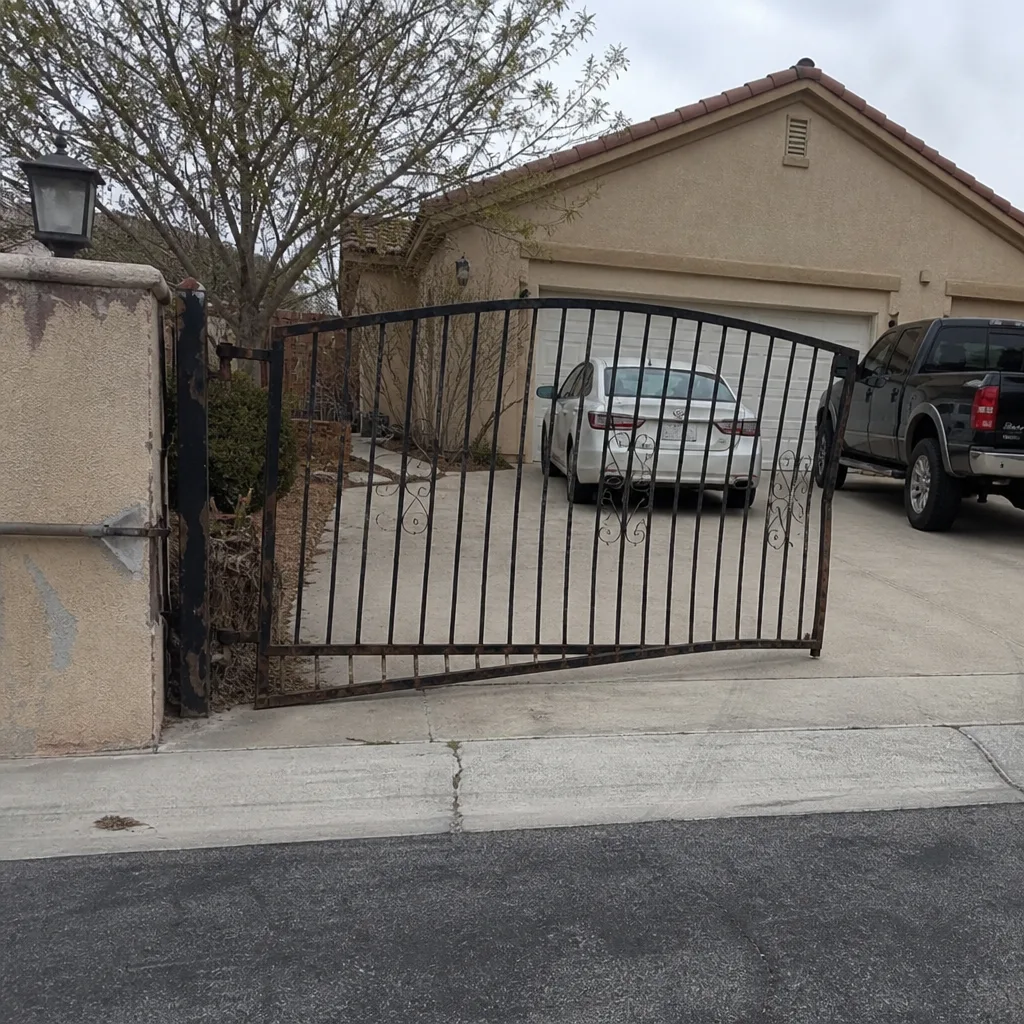 Before
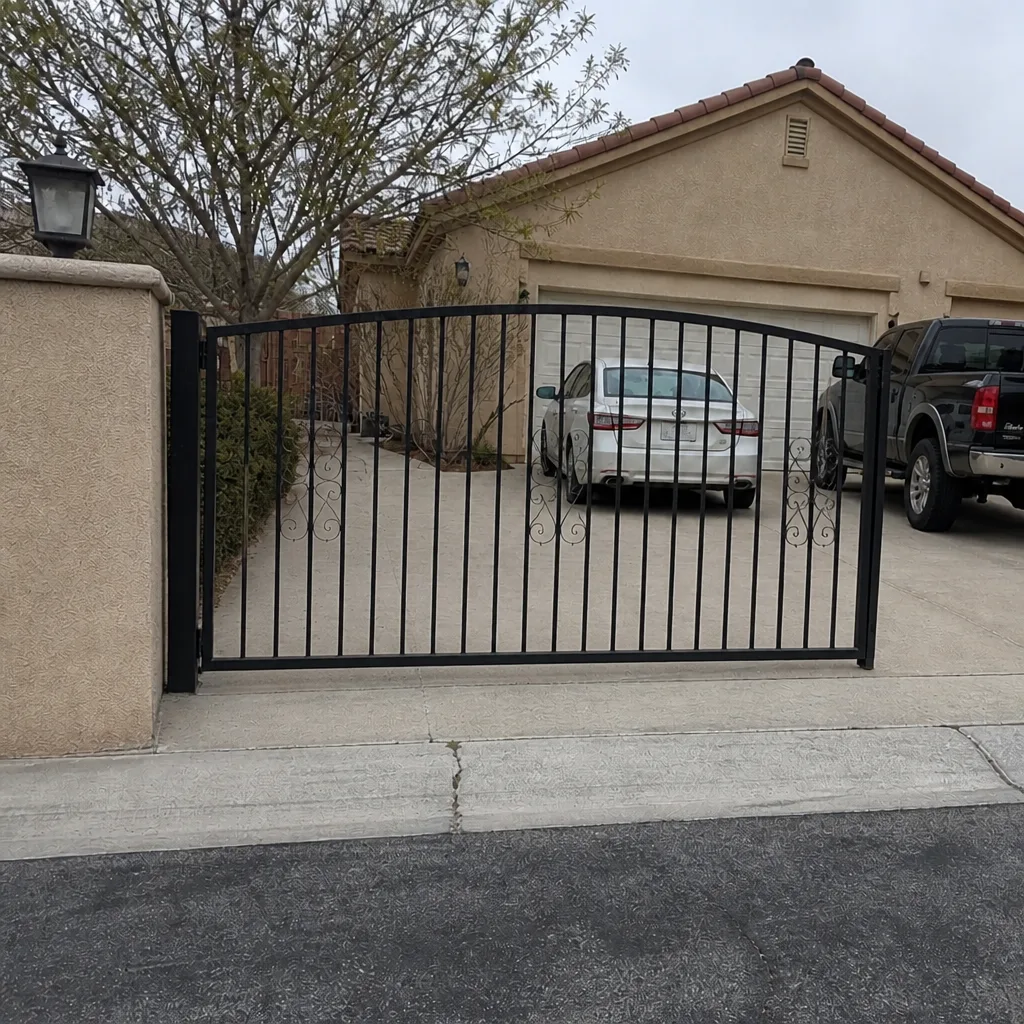 After
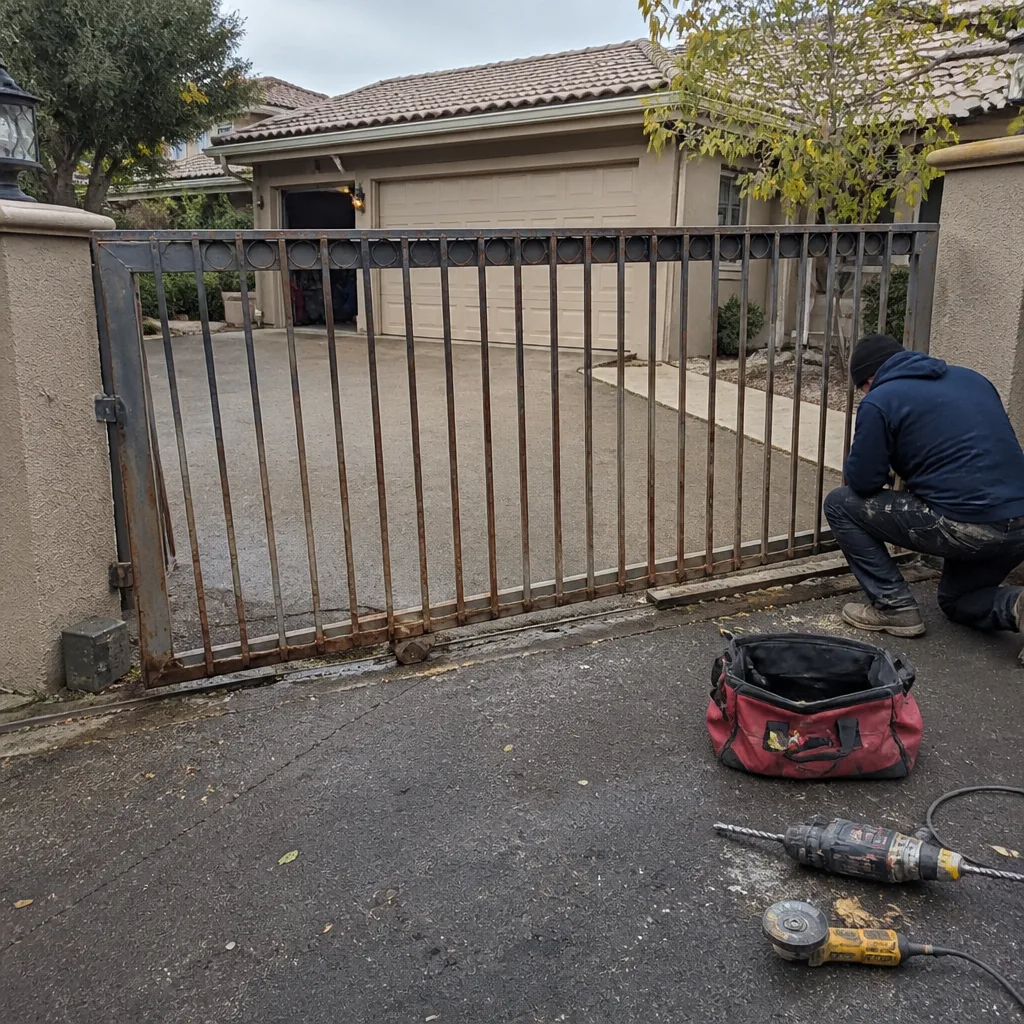 Before
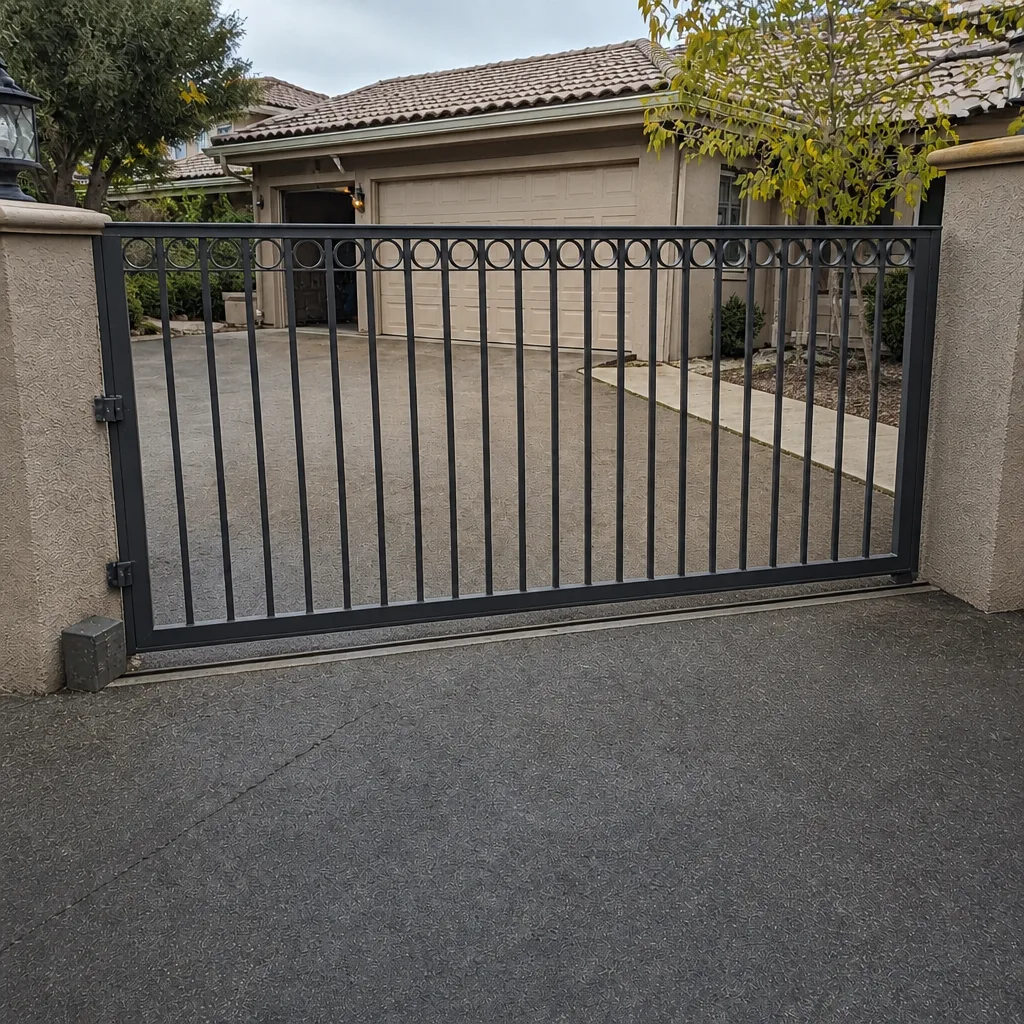 After
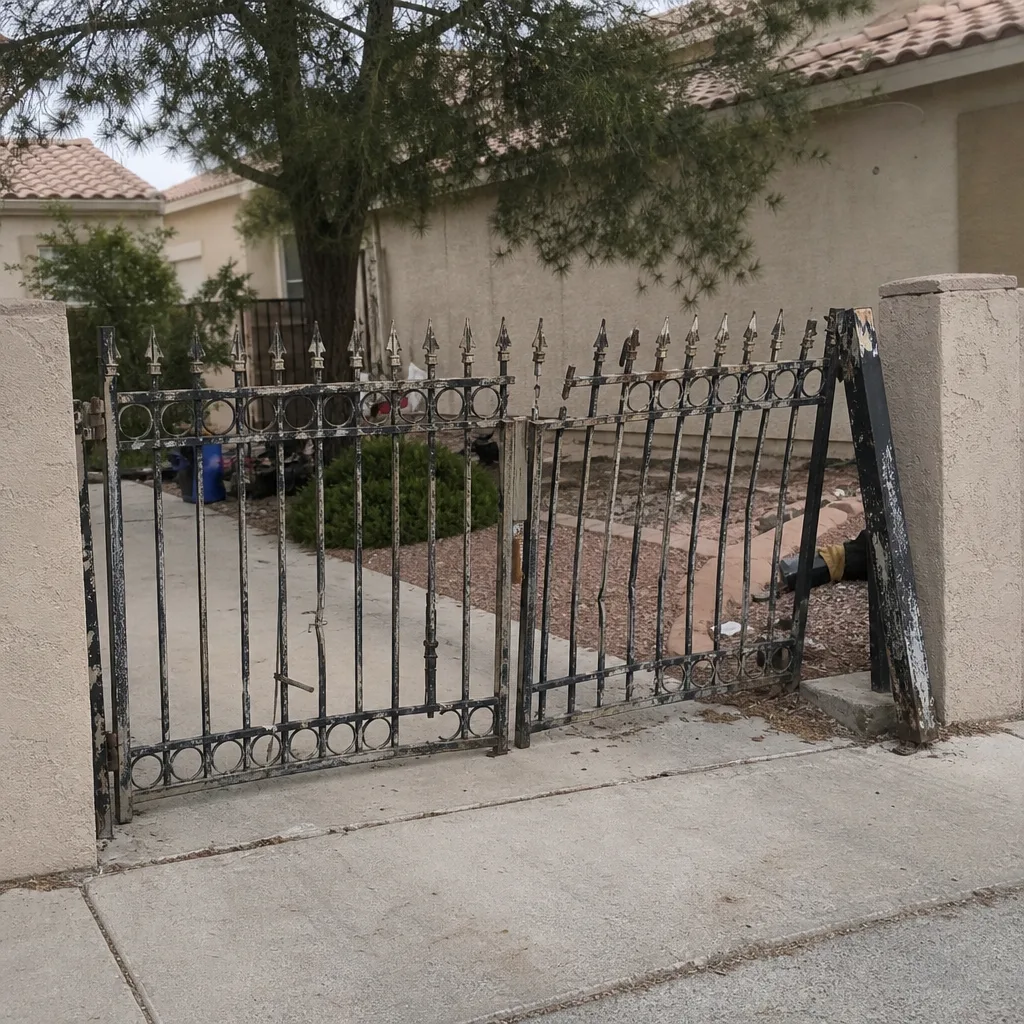 Before
 After
When to Call a Professional
Some maintenance is homeowner work; some genuinely isn’t, and access control is close kin to electrical work, so we treat it with the same caution. Call a professional if the keypad stops accepting codes, if the gate reverses or stops for no clear reason, if the manual release won’t move, if the battery warning comes on, or if you smell burning from the control cabinet. Call immediately and don’t open the cabinet. If the gate has developed a fault that comes and goes, dust infiltration or failing board components are likely culprits, and both need a technician’s diagnostic. Ironworks Gate Co. Summerlin offers free estimates in Summerlin, call (866) 623-9848. A live person answers the phone around the clock, and every job is backed by our written 90-Day Done Right Promise.
Frequently Asked Questions
Twice a year professionally, in spring and fall, with monthly homeowner checks in between. Summerlin’s heat is the reason for the twice-yearly cadence: the spring visit prepares the system for 110°F summer, and the fall visit catches the damage the heat caused. Homeowners should test the manual release, clean the keypad, and check the battery indicator every month. Call (866) 623-9848 to schedule a service visit, estimates are free.
Because the capacitors and relays on the control board absorb months of heat stress and give out once the peak has passed. In Summerlin, the board runs above its rated temperature for weeks each summer, and the electrolytic components that carry that load fail weeks or months later. A September failure is usually an accumulated-heat failure, not a sudden one. A technician can test the board before it fails, so call us for a free estimate.
Every 18 to 24 months, not the three years most manuals recommend. Heat ages sealed lead-acid batteries faster than any other factor, and a battery in a sun-exposed cabinet sees temperatures well above ambient. If your cabinet gets afternoon sun, plan on 18 months. A technician will load-test the battery at each service visit and can replace it on the spot. Call (866) 623-9848 to have yours tested, estimates are free.
Yes, run a short checklist in late June or early July: re-seal every conduit entry, load-test and replace the battery if it’s marginal, clear the gate path of debris, check photo-eye alignment, confirm the manual release moves freely, and secure the control cabinet against blowing rain. Monsoon storms bring sudden rain and wind, and each of these steps keeps the system working through them. Call us if you’d rather have a technician handle it, estimates are free.
Yes, for the surface-level tasks: wiping the keypad with a dry cloth, watching the gate cycle, testing the manual release, and checking the battery indicator are all safe for a homeowner. Don’t open the control cabinet, don’t spray cleaner or water into the keypad, and don’t force a stuck manual release. Anything inside the cabinet or involving wiring should go to a trained technician. Call (866) 623-9848 for any access control issue, estimates are free.
Most often it’s desert dust infiltrating cracked conduit entries and getting onto the contacts, or a control board with a failing component that only misbehaves under heat. In Summerlin, dry-season sealant cracks, dust blows in, and the gate starts working one minute and not the next. Neither cause is fixed by replacing a part at random, so a proper diagnostic matters. If your gate has a fault that comes and goes, call us at (866) 623-9848, and we’ll diagnose it and quote you an upfront price before any work starts.
The Bottom Line
Access control failures in Summerlin follow a predictable sequence, and a calendar-based schedule stays ahead of them. Two professional service visits a year (spring and fall) plus monthly homeowner checks catch the heat damage before it turns into a failure. Replace the backup battery every 18 to 24 months, not three years. Re-seal your conduit entries at every service visit, because dust infiltration causes most intermittent faults. And run the July prep checklist before monsoon season. If you’re not sure where your system stands, a service visit will tell you. Call (866) 623-9848 for a free estimate. A live person answers around the clock, and we stand behind every job with our written 90-Day Done Right Promise.
Written by the team at Ironworks Gate Co. Summerlin.