
Last updated November 17, 2026
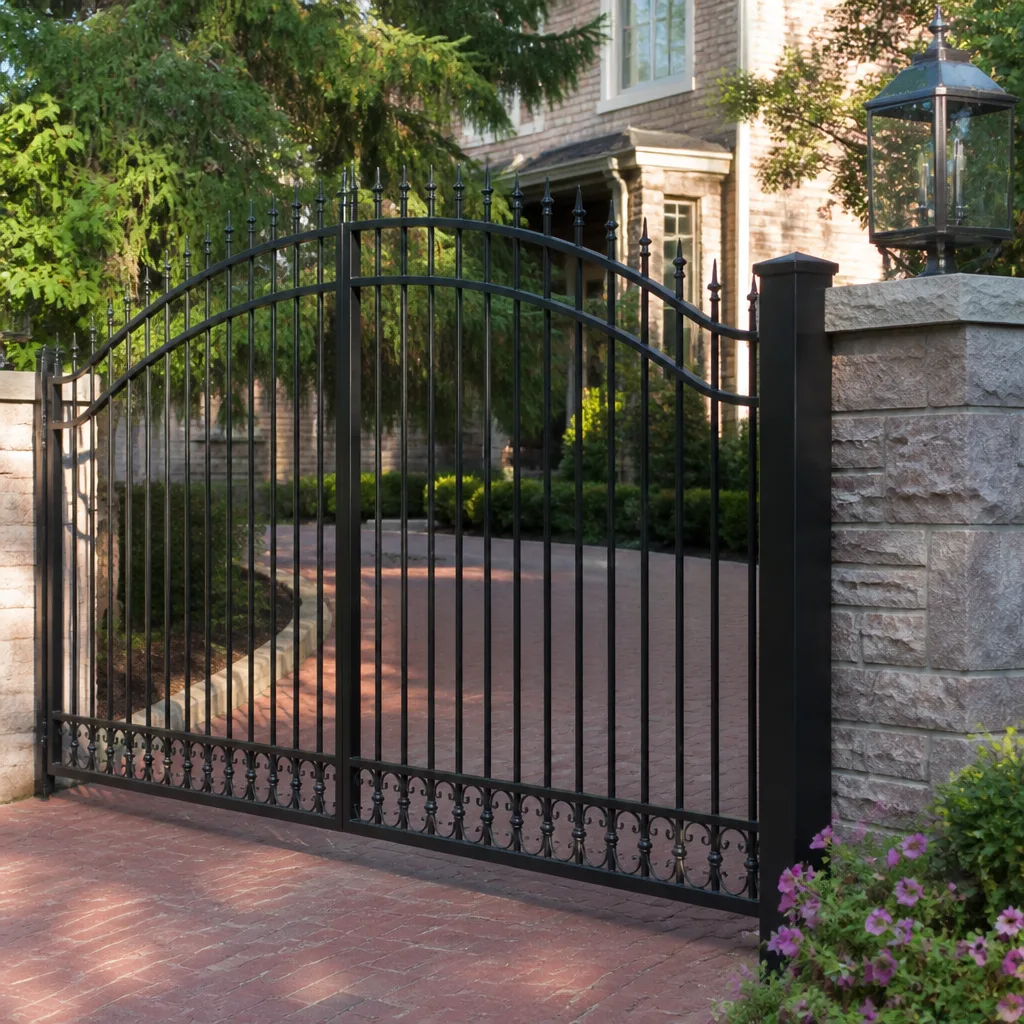 Wrought iron
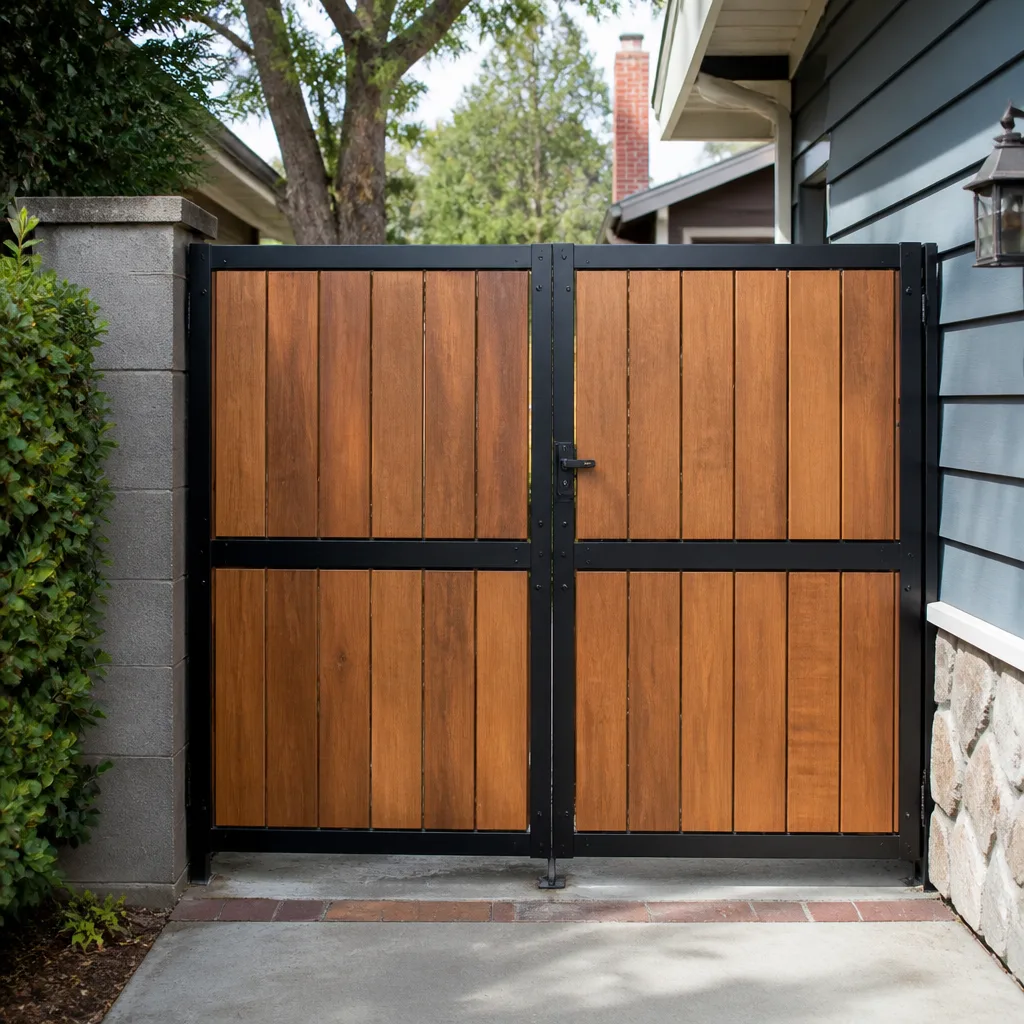 Wood & steel frame
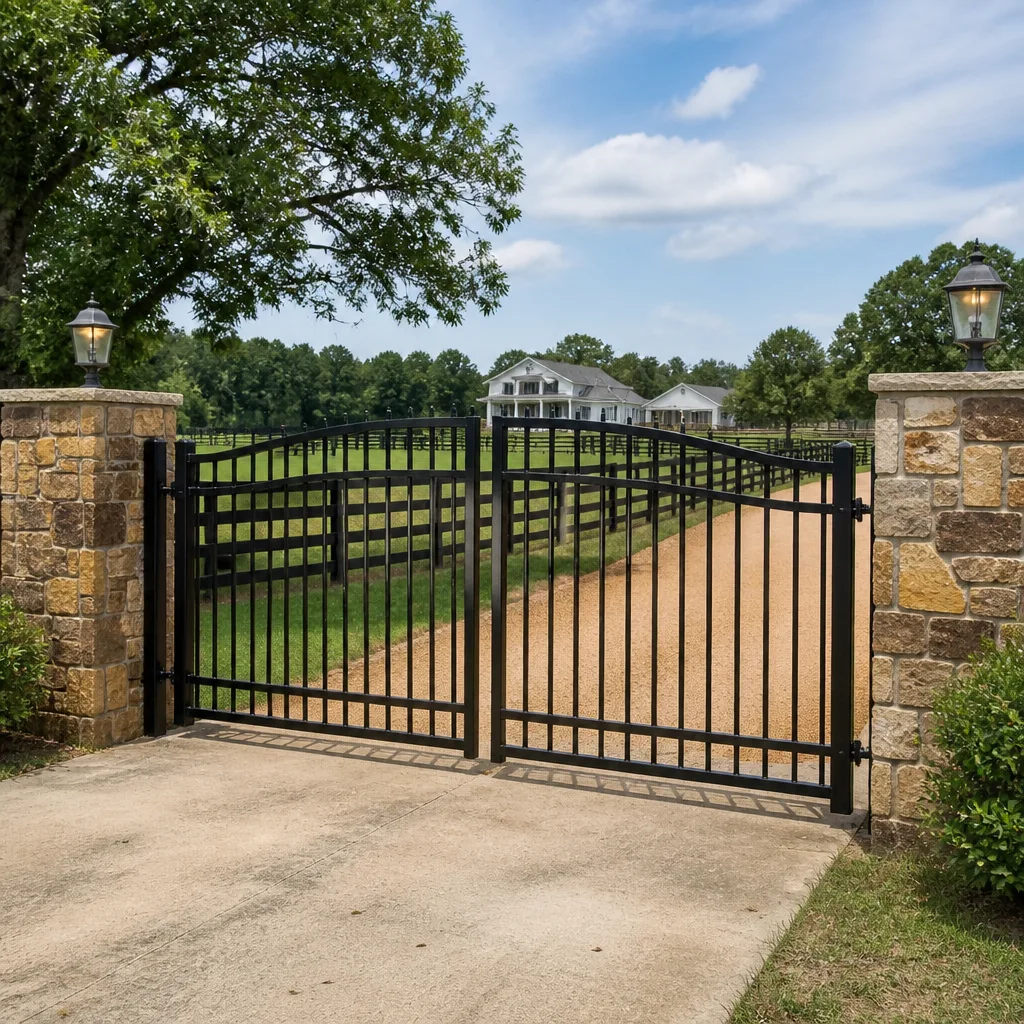 Farm & ranch
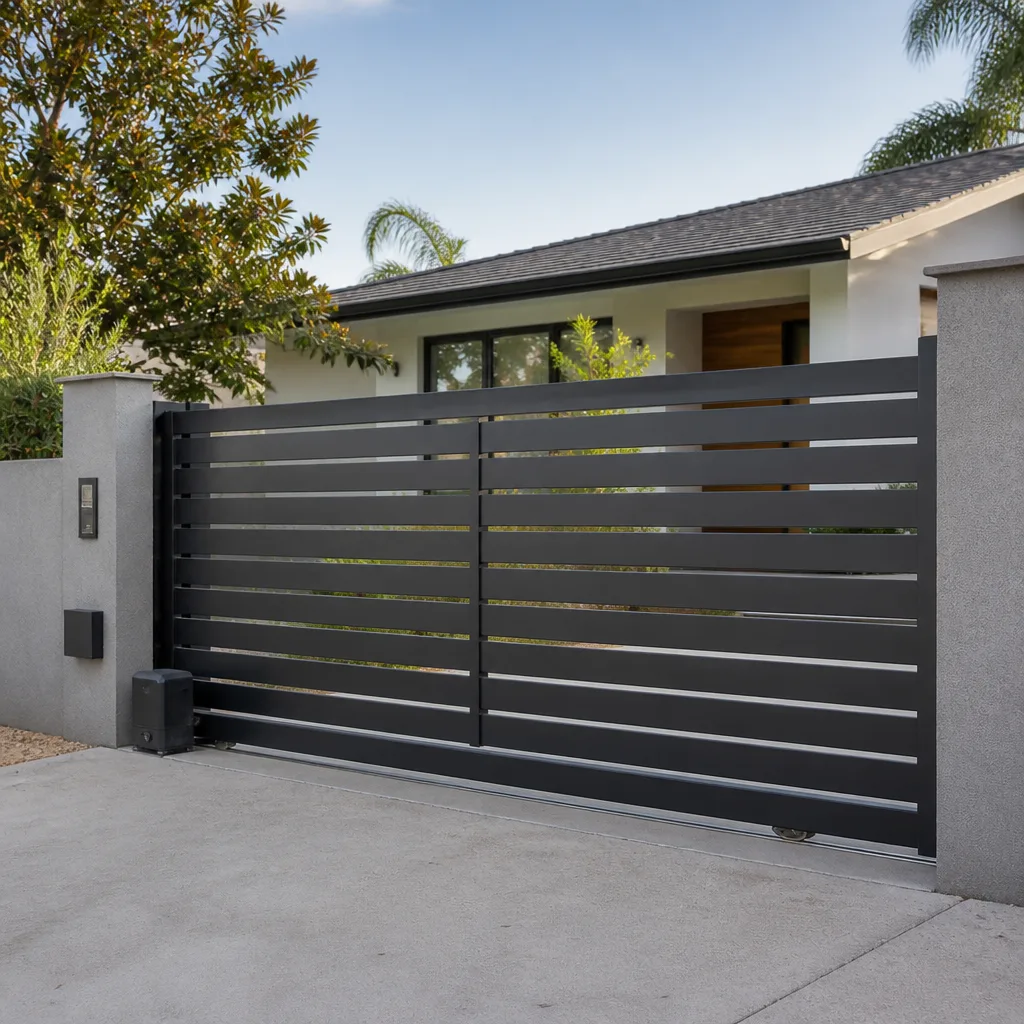 Sliding driveway gates
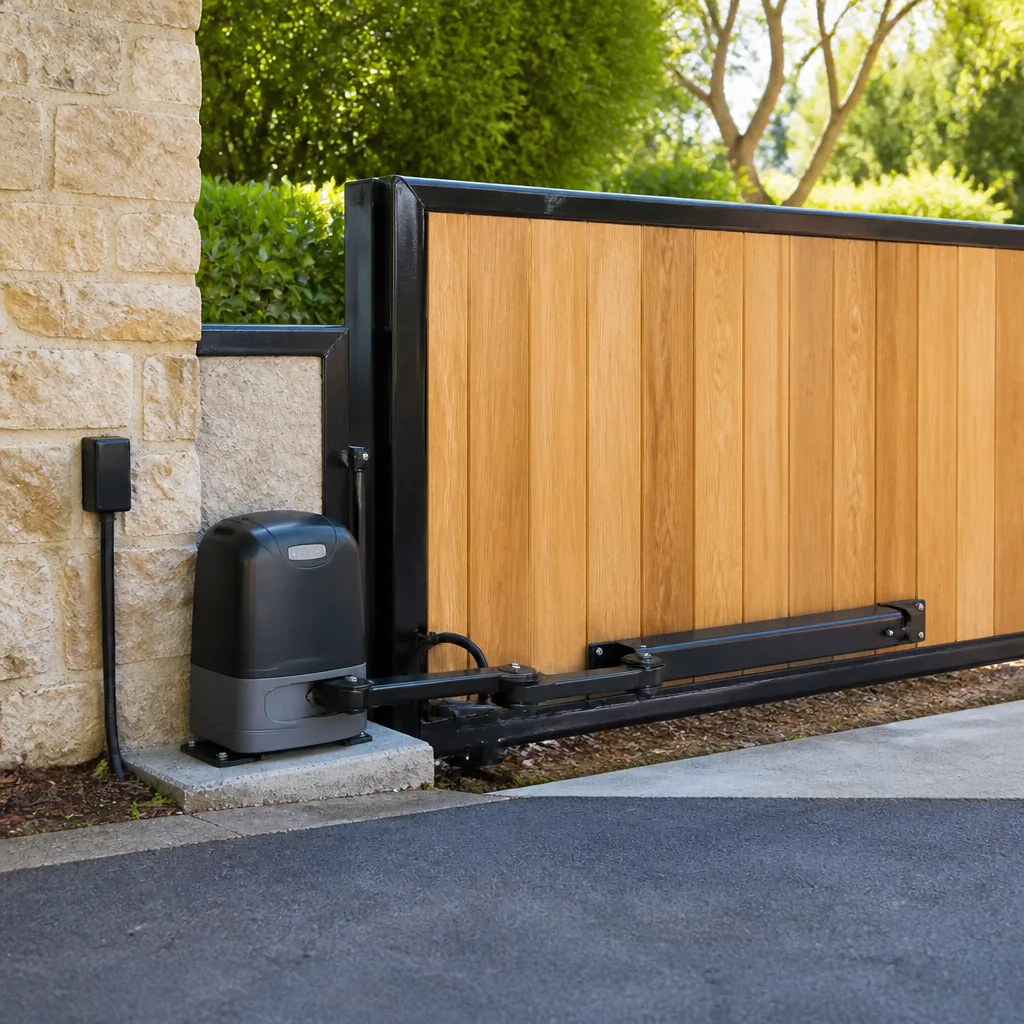 LiftMaster operators
Free on-site gate assessment - hinges, posts, and your LiftMaster or Nice gate operator checked before anything is quoted
The assessment is free and the quote is the invoice.
Get your free estimateGate Access Control Warning Signs Every Homeowner Should Know
A gate that hesitates for two seconds before it swings open isn’t “a little slow.” That pause is a control board pulling more current than it should, and in our experience it usually comes before a full failure – often within 30 to 60 days. Gate access control systems rarely die without warning. They send five or six signals first: a stutter, a partial open, a keypad that needs two presses, an intercom that crackles. Each one points to a specific cause you can name without picking up a tool. This guide translates those signals into plain language, sorts the ones you can schedule from the ones you shouldn’t wait on, and covers the warnings that only show up in Summerlin heat and monsoon season. By the end you’ll know what your gate is telling you and when to act.
Quick Answer
Gate access control warning signs include hesitation before opening, gates that stop partway, keypads that ignore the first press, intercom static, random triggering, and a gate that fails to close and reopens on its own. Most of these trace to a failing control board, a misaligned sensor, moisture in the wiring, or a weakening motor – not to the keypad or remote itself. Any sign that involves the gate sticking open or opening on its own is a security issue and warrants a same-week service call.
Styles & brands we work with
- Wrought iron
- Wood & steel frame
- Farm & ranch
- Sliding driveway gates
- LiftMaster operators
Table of Contents
- Hesitation Before Opening: The Two-Second Warning
- Partial Opens and Gates That Stop Halfway
- Random Triggering and Gates That Open on Their Own
- Unresponsive Keypads and Intercom Static
- Summerlin Climate Warnings: Heat, Monsoon, and UV
- Why a Gate That “Mostly Works” Is a Security Problem
- Which Signs Can Wait and Which Can’t
- How to Keep a Warning Log Your Technician Can Use
Hesitation Before Opening: The Two-Second Warning
The single most common early warning we see on gate motor and opener systems in Summerlin is hesitation. You press the remote, and there’s a beat – a second, sometimes two – before the motor engages and the gate starts to move. Homeowners tend to read this as the remote being weak or the battery being low. It almost never is. A short delay means the control board is drawing excess current to start the motor, and that excess current has a cause.
Here’s what typically sits behind a hesitation:
- Aging motor brushes or windings. As the motor wears, it needs more current to overcome its own friction. The board compensates, then eventually can’t.
- A failing start capacitor. The capacitor gives the motor its initial push. When it weakens, the push comes late – hence the pause.
- Binding hardware. A dry hinge, a worn roller, or a gate that’s settled a quarter inch can add enough resistance to slow the start.
- Voltage drop on the supply line. Long wire runs or corroded connections bleed voltage before it reaches the motor.
The reason hesitation matters is that it’s the cheapest stage to fix. A capacitor or a hinge adjustment is a small job. Ignored, the same fault cooks the control board, and that’s a replacement. In Summerlin’s heat, where gate motors run in full sun for much of the year, that progression happens faster than homeowners expect. On a LiftMaster or Linear operator we serviced in The Ridges, a two-second hesitation turned into a hard failure in about five weeks. Acting on the first sign would have been the smaller bill.
Partial Opens and Gates That Stop Halfway
A gate that opens partway and stops – or opens fully but refuses to close – is sending a different message. This one is usually about the safety system, not the motor. Modern operators use safety edges, photo-eye sensors, or loop detectors to know whether something is in the path. When one of those reports a false obstacle, the gate does the safe thing: it stops, or it reverses. The system thinks it’s protecting someone.
Common causes of a partial open or a gate that won’t close:
- Misaligned photo-eye sensors. The beam between the two sensors is broken by a shifted post, a spiderweb, or debris. Realignment is often a quick fix.
- A damaged safety edge. The rubber strip on the gate’s leading edge loses continuity when it’s crushed, sun-cracked, or full of water, and the operator reads that as an obstruction.
- A vehicle loop stuck “active.” The in-ground loop that tells the gate a car is present can fail or hold a false signal, so the gate thinks the driveway is never clear.
- Limit switch drift. The switches that tell the operator where “fully open” and “fully closed” are can shift out of adjustment over time.
This is the category to watch most closely in Summerlin. A gate that won’t close is a gate that’s standing open, and an open gate on a residential street in Summerlin is an invitation. If your gate is stopping partway or refusing to close, treat it as a security event, not a maintenance item. Schedule it this week, not next month.
Random Triggering and Gates That Open on Their Own
A gate that opens when nobody asked it to is the most alarming sign on this list, and it’s also the one most often dismissed. “It did it once and then stopped,” we hear. Once is enough. Random triggering splits into two families of cause: signal interference and wiring faults.
On the signal side, a stray remote code, a neighbor’s opener on the same frequency, a failing receiver, or a remote with a stuck button can all command the gate to open. Older fixed-code remotes are especially prone to this; newer rolling-code systems from brands like DoorKing and Linear are far more resistant. If your gate has old remotes and opens at random, code interference is the first thing to rule out.
On the wiring side, moisture or a frayed conductor in the low-voltage control line can create a phantom “open” command. This is the one we see most around Summerlin after a monsoon. Water finds its way into a conduit, the control pair shorts across, and the gate cycles on its own – often at the worst possible hour. A gate that opens itself at 2 a.m. isn’t haunted. It’s a wiring fault with a predictable cause and a fix.
Either way, this sign can’t wait. An unattended gate that opens on command from an unknown source is a genuine access control failure, and it should be diagnosed and corrected before it cycles again.
Unresponsive Keypads and Intercom Static
The keypad is where most homeowners first notice trouble, and it’s also where the true cause is most often misdiagnosed. A keypad that needs two or three presses, or that works for some codes and not others, is usually the symptom – not the fault. DoorKing and Linear keypads are robust units, and they fail far less often than the control board, the power supply, or the wiring feeding them.
What an unresponsive keypad actually points to:
- Degraded power supply. Keypads need steady voltage. When the supply sags, the keypad goes deaf before anything else does.
- Corroded connections. At the keypad terminals, moisture and road dust build a resistive film that weakens the signal.
- A failing control board input. The keypad is fine; the board isn’t reading its output reliably anymore.
- UV-cracked buttons. On a keypad in direct Summerlin sun, the membrane can dry and crack, so a press doesn’t always register.
Intercom static follows a similar logic. Crackling, a weak voice, or a call button that rings but doesn’t connect usually traces to moisture in the intercom’s wiring or a failing handset, not the speaker. Static that gets worse after rain is a wiring-seal problem. Static that’s constant points to the intercom unit itself. Either way, it’s a fixable fault – and worth fixing before guests or deliveries can’t reach you.
Summerlin Climate Warnings: Heat, Monsoon, and UV
Summerlin has two seasons that push on gate equipment harder than most of the country: a long, hot summer and a short, violent monsoon. Each leaves its own signature on access control, and knowing those signatures helps you read your gate’s behavior with real precision.
Heat-Induced Sensor Drift
Summerlin summer temperatures regularly push well past 100°F, and that heat does quiet work on sensors and control boards. Photo-eye sensors can drift out of alignment as their housings expand, so a gate that behaved all spring starts stopping halfway in July. Control boards can overheat inside a closed housing in full sun, causing intermittent faults that vanish once the gate cools. If your gate misbehaves only in the afternoon, heat is the likely culprit.
Monsoon Moisture in Conduit
When the monsoon arrives, water gets into the places it was never supposed to reach: outdoor keypad enclosures, low-voltage conduit runs, and junction boxes. The result is phantom triggering, dead keypads, and intercom static that appear within days of a storm. If a fault shows up right after a monsoon, moisture is the first thing to check – and the fastest path to a real fix.
UV Degradation on Exposed Keypads
Summerlin’s sun is relentless on anything mounted outdoors. Keypad membranes crack, plastic housings chalk and embrittle, and wire insulation breaks down faster than in milder climates. A keypad that’s five or six years old and in full sun is a candidate for UV damage even when the electronics are sound. If you’ve replaced a keypad more than once on the same post, it’s worth having the exposure assessed, not just swapping the unit.
Whichever of these you’re seeing, the fix is the same logic: identify the specific cause and correct it. For a full walk-through of the service, our Gate Repair in Summerlin page covers what we check on a diagnostic visit.
Why a Gate That “Mostly Works” Is a Security Problem
A gate that hesitates, opens partway, or opens on its own isn’t just an annoyance. It’s a security system telling you it’s losing control of itself. The failure modes that follow a “mostly working” gate are specific, and every one of them leaves you exposed.
- The stuck-open gate. A safety sensor that’s failing can trip mid-cycle and hold the gate open. On a Summerlin street where a gate is the only thing between the driveway and the road, that’s a direct access problem.
- The phantom open. A gate that opens on an unknown signal can open while you’re away – and stay open until someone closes it.
- The dead keypad. A keypad that only sometimes works means guests, deliveries, and family have to wait at the curb or find another way in. If that “other way” is a gap, an intruder has the same option.
- The unlatched gate. An operator that stops short can leave the gate ajar, unlatched, and moving freely by hand.
- The silent intercom. An intercom that fails when it matters – at the gate, when someone’s arriving – takes away your ability to screen who comes onto your property.
Access control is a single system: motor, board, sensors, keypad, intercom, and the mechanical gate itself. When one part starts to fail, the others are usually running harder to compensate. A gate that mostly works is a system in transition, and the transition goes one direction. Caught early, you’re replacing a capacitor and realigning a sensor. Caught late, you’re replacing a board, a motor, and possibly a gate section. On gate installation in Summerlin, we build for long service life, but the care that keeps any gate healthy is the same: act on the first sign.
Which Signs Can Wait and Which Can’t
Not every warning requires the same urgency, and homeowners deserve a straight answer on what to schedule versus what to jump on. We sort every call we take into two piles.
Signs you can schedule (not urgent)
- An occasional short hesitation when opening
- A keypad that needs the code entered twice
- Mild intercom static that doesn’t affect connection
- A gate that runs slightly slower than it used to
- Minor cosmetic wear on a keypad or housing
Signs that need a same-week service call
- The gate stops partway or refuses to close
- The gate opens on its own
- The gate fails to latch
- The keypad stops working entirely
- The intercom no longer connects calls
- You hear grinding, straining, or repeated clicking at the motor
The distinction is simple: if the gate can be left in a secure closed position and the fault is just inconvenient, it can go on the calendar. If the gate can’t be closed, or opens without command, it’s a security issue and it needs attention before the next night. In our experience, roughly half the “it just started” calls we take in Summerlin had an earlier warning the homeowner noticed. Catching the early warning turns a replacement into a repair. Our Gate Motor & Opener in Summerlin service is built for exactly that kind of catch.
How to Keep a Warning Log Your Technician Can Use
A technician is only as good as the information they’re working with. If you can tell them when the fault happens, at what temperature, and how often, they can often diagnose without doing the whole diagnostic from scratch. Here’s a simple log you can keep in a notebook or on your phone – five columns, nothing more.
- Date and time. Note the exact time, not “the other day.” Patterns by time of day matter.
- What happened. Hesitation, partial open, random open, keypad failure, intercom static – write the plain description.
- Temperature and weather. Hot afternoon, cool morning, after rain. Summerlin heat faults show up in the afternoon; monsoon faults show up after storms.
- Frequency. Every time, every third time, once. A single event and a recurring one lead to different diagnoses.
- What you did. Was the gate operational after a second attempt? Did you reset anything? Did it clear on its own?
Bring that log to the call and hand it to the technician. It’s the fastest way for a trained professional to skip the guesswork and go straight to the cause. If you’d like a second opinion on an estimate you’ve already received, we’ll look at it with your log in hand – it’s a free service we offer, and it’s often saved homeowners a full replacement.
Common Mistakes to Avoid
- Assuming the keypad is the problem. Most “keypad failures” are actually a power supply or control-board fault. Replacing the keypad before diagnosing is money spent twice.
- Ignoring a hesitation “because it still works.” A hesitation that’s been present for weeks is a control board running beyond spec. The longer you run it, the more expensive the repair.
- Resetting a gate that opens on its own without understanding why. A phantom open after a Summerlin monsoon is a wiring fault. Resetting the operator doesn’t fix it, and it will open again.
- Letting a gate stand open “just for now.” A gate that won’t close is a security gap. If it can’t be fixed this week, it still needs to be fixed before you leave the property unattended.
- Diagnosing in the cool of the morning. Summerlin heat faults are intermittent because heat is the variable. Test the gate in the heat of the day if you’re trying to confirm a pattern.
- Calling a general handyman for an access-control fault. Gate automation is a specific trade. A generalist can change a battery; they can’t diagnose a failing control board on a DoorKing, Linear, or LiftMaster system. Call the specialist first.
- Waiting until the gate is stuck open. The most expensive repairs we see are the ones that start as a two-second pause and end as a stuck gate. Catching it early is the whole point of knowing the signs.
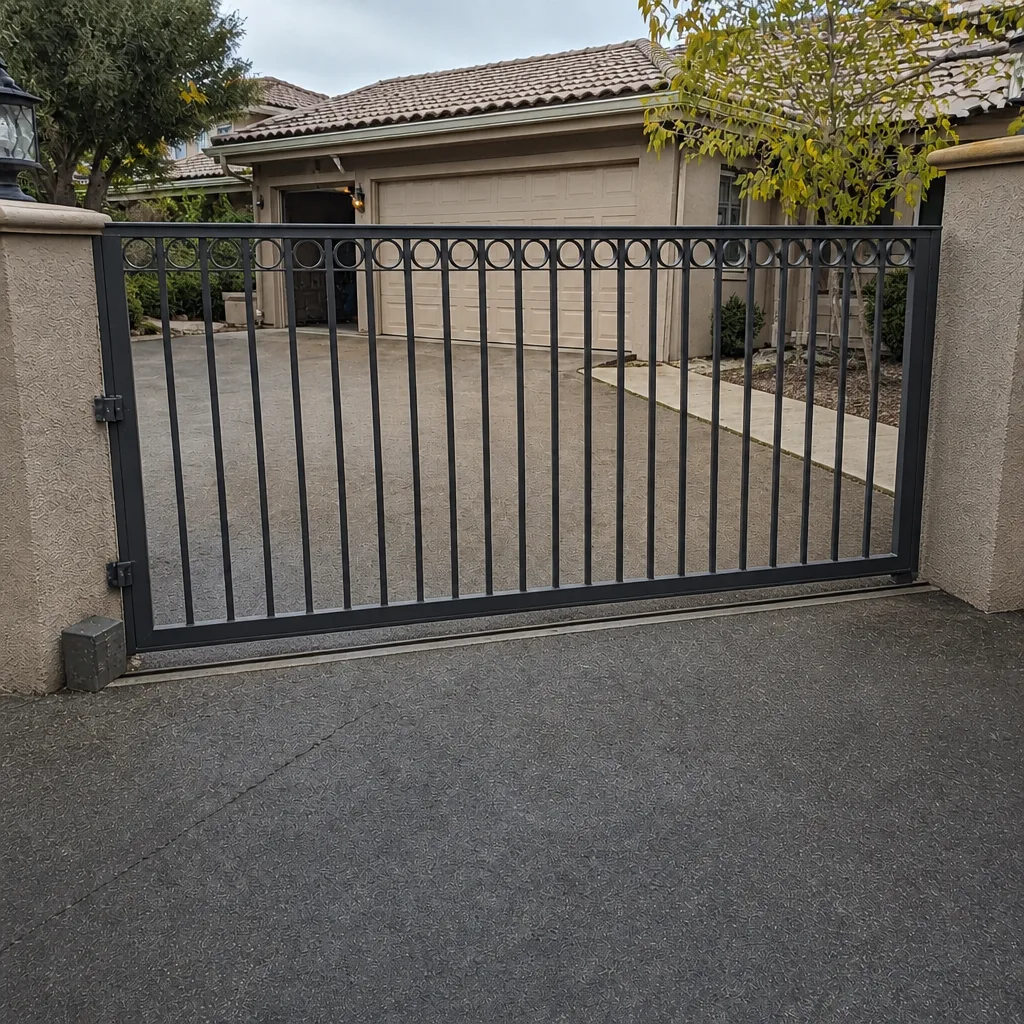
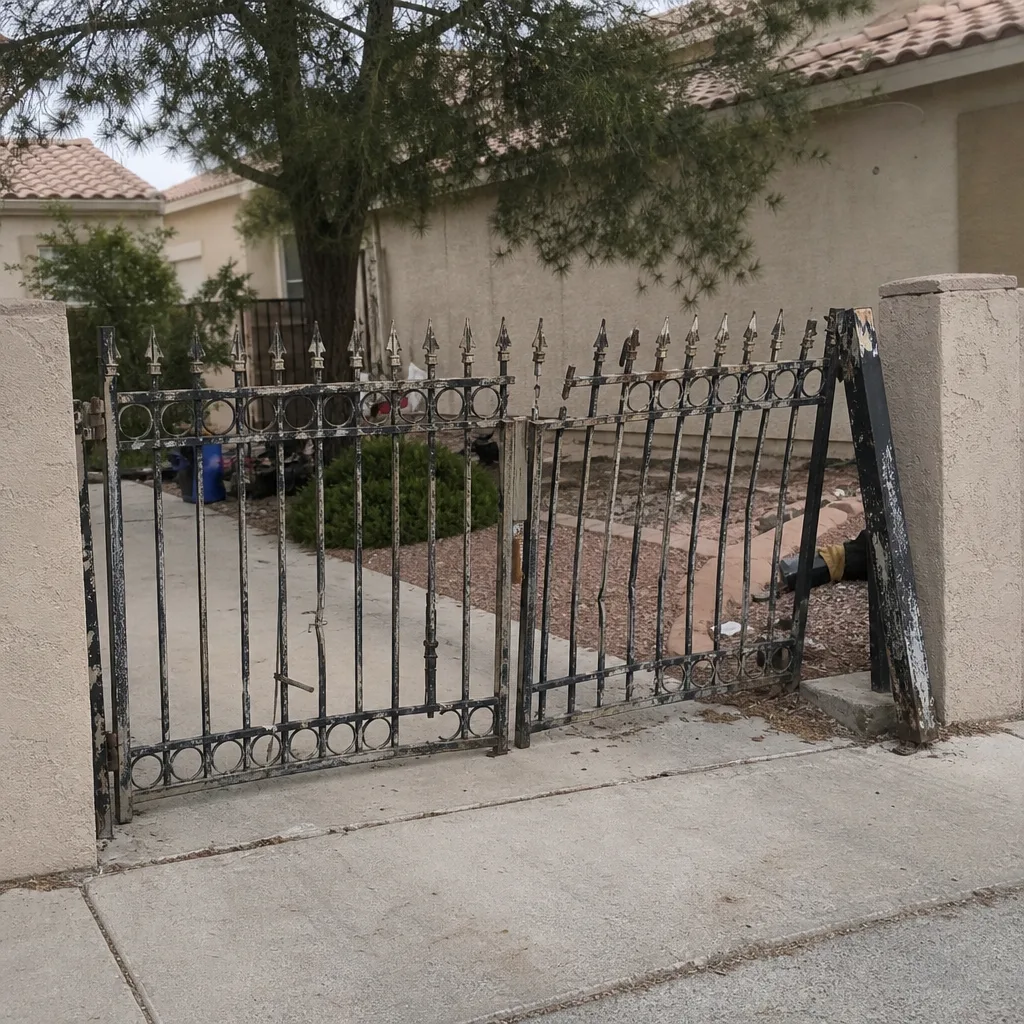
See the difference
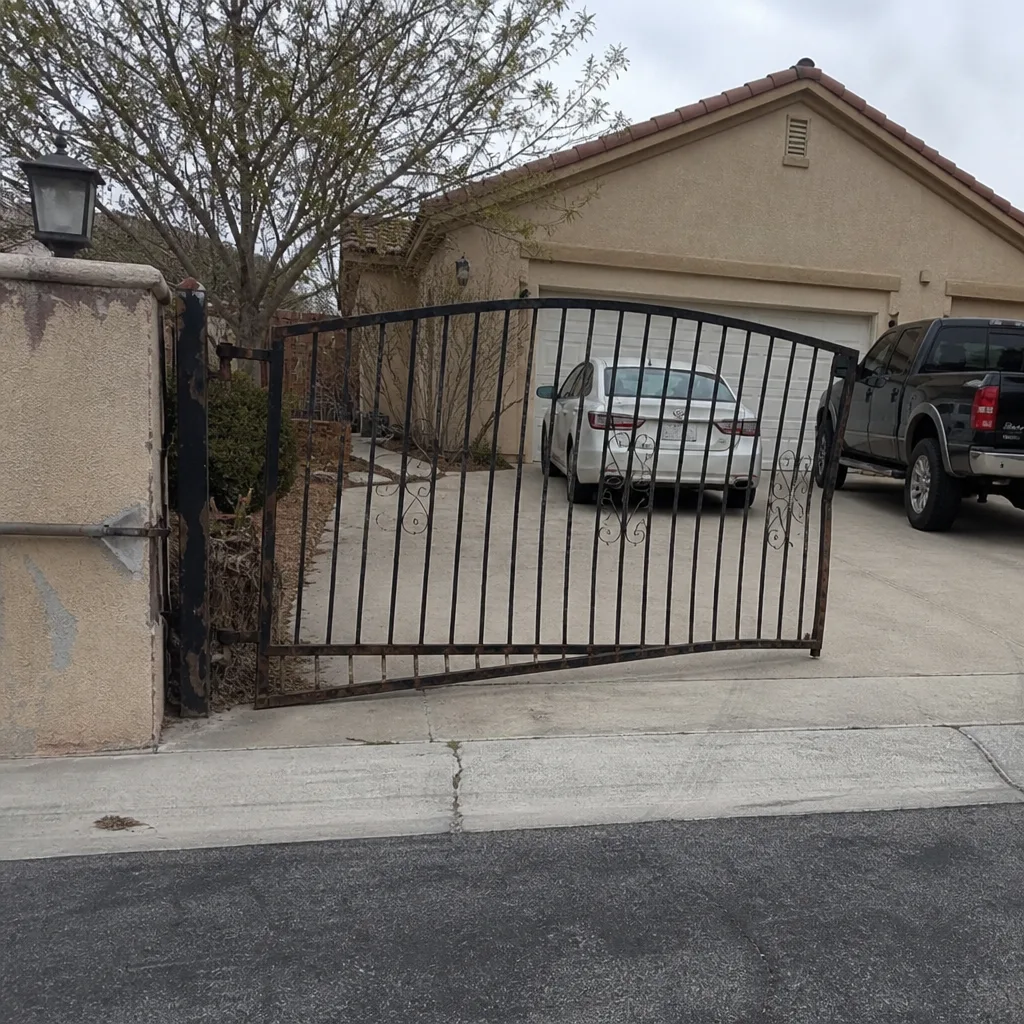 Before
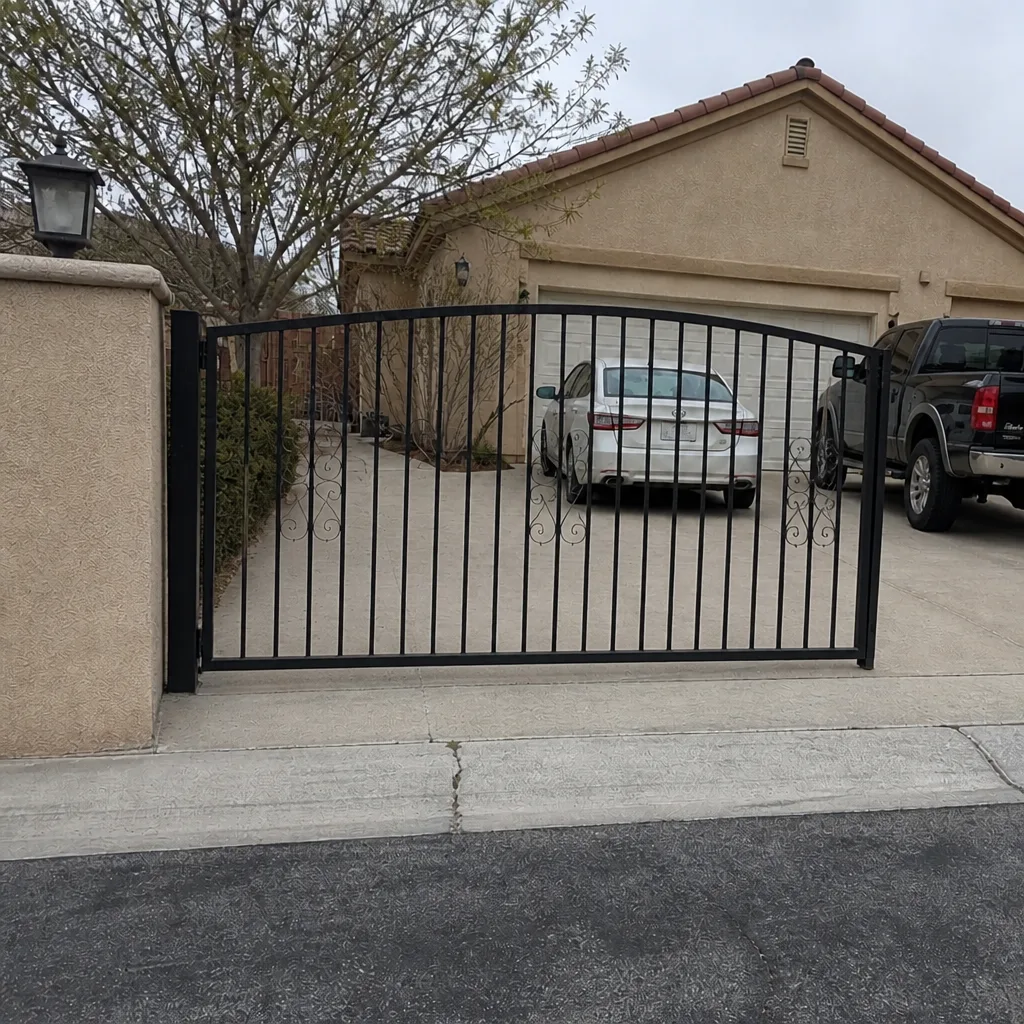 After
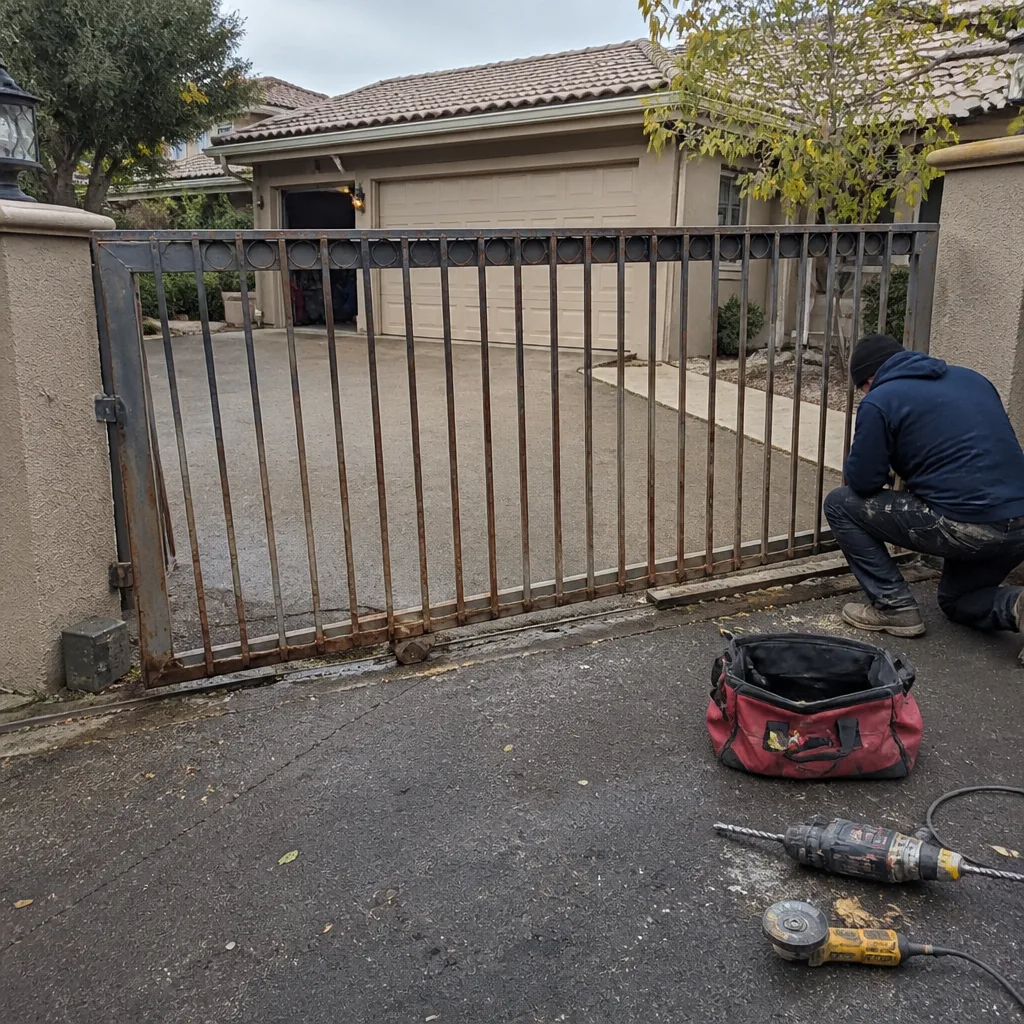 Before
 After
 Before
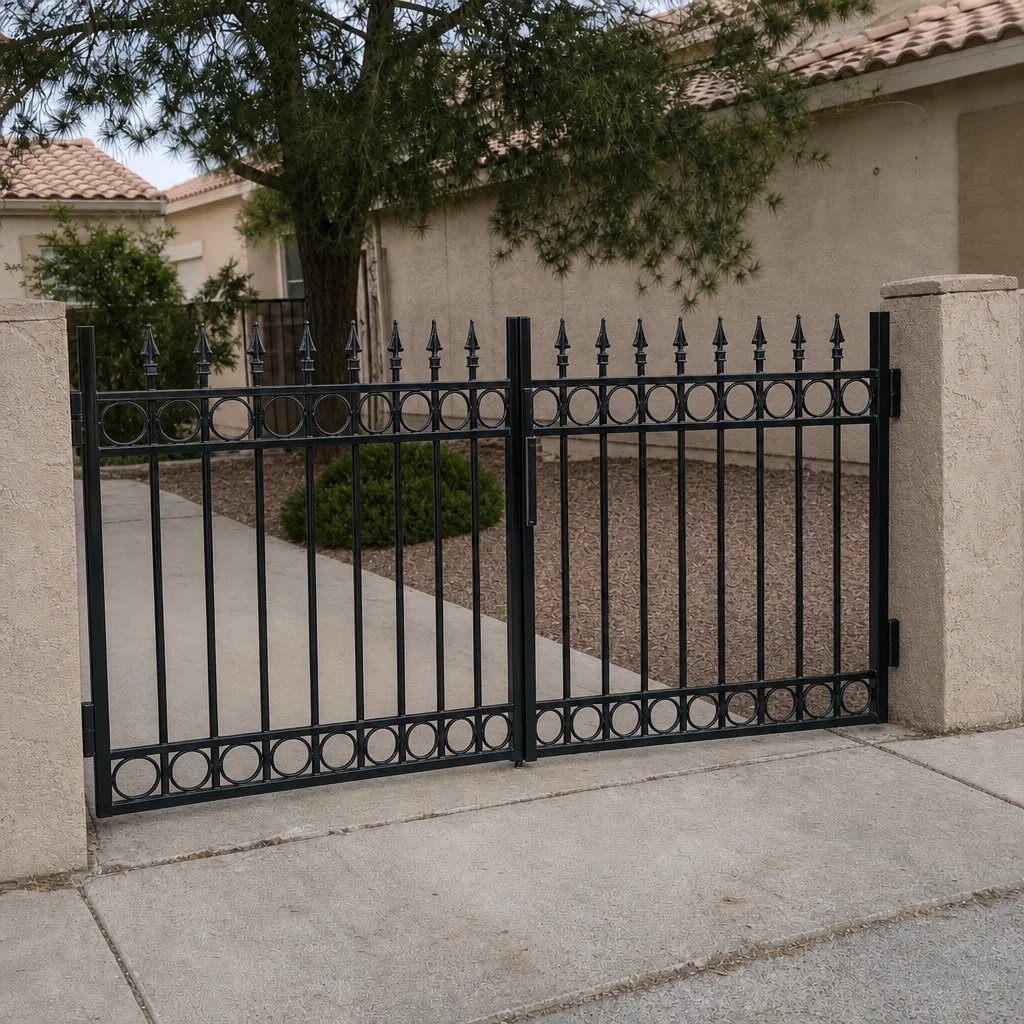 After
When to Call a Professional
Call a professional the moment a warning sign points at the control system rather than the mechanics. That includes hesitation that repeats, a gate that stops or reverses mid-cycle, random opening, a keypad that won’t accept codes, intercom static that worsens after rain, and any fault that appears only in the heat of a Summerlin afternoon. These are diagnostic jobs, not hardware replacements, and they need someone trained on the specific brand in front of them. We service nine major brands – LiftMaster, FAAC, BFT, Linear, Viking, Ghost Controls, DoorKing, Elite, and Mighty Mule – so the correct diagnosis happens on the first visit. Ironworks Gate Co. Summerlin offers free estimates in Summerlin – call (866) 623-9848. We’ll come out, find the cause, and give you a written price before a single bolt is turned. Every job we complete is backed by our written 90-Day Done Right Promise, and a live person answers the phone around the clock, every day of the week.
Frequently Asked Questions
The first sign is usually hesitation before the gate opens, followed by a keypad that needs the code entered twice. Both indicate the control board is losing efficiency before the gate actually fails. If you notice either, get it checked in the next few weeks – it’s the cheapest stage to fix.
Most gate access control repairs in Summerlin run from roughly $150 to $450, depending on the fault and the part. A sensor realignment or capacitor replacement sits at the low end, while a control board or keypad replacement is higher. We quote and agree on the price before any work starts, so the bill matches the estimate. Call (866) 623-9848 for an exact quote – estimates are free.
Yes – a gate stuck open is a security call and we prioritize it. We answer the phone 24 hours a day, every day, and we’ll get a technician out to you as fast as we can. Call (866) 623-9848 and describe exactly what the gate is doing when you call.
Water in the low-voltage control wiring is the most common cause of random triggering after a summer storm in Summerlin. Moisture shorts the control pair, and the gate reads that as an open command. It’s a wiring-seal fault, and it’s fixable – but it shouldn’t be left alone, because an unattended gate that opens on command is an access control failure.
Yes – keypad power supply, low-voltage wiring, sensor realignment, and control board diagnosis are all part of our access control service. We don’t just swap the keypad; we find out why it failed. On a DoorKing or Linear system that’s the difference between a proper repair and a repeat visit.
Yes, it does. A gate that mostly works is a system telling you it’s losing control, and the failure modes that follow – a stuck-open gate, a phantom open, an unlatched gate – are security problems, not inconveniences. In our experience in Summerlin, the repair that starts with a hesitation is always smaller than the one that starts with a stuck-open gate.
The Bottom Line
Gate access control systems send five or six warnings before they fail, and every one has a specific cause you can name. Hesitation means excess current at the board. Partial opens mean the safety system is misreading an obstacle. Random triggering means signal interference or moisture in the wiring. Keypad and intercom faults are usually power or connection issues, not the unit itself. In Summerlin, heat, monsoon moisture, and UV exposure each leave their own signature on the system. Act on the first sign, keep a simple log, and call the trade specialist rather than a generalist – the repair is smaller the earlier you catch it. Summerlin homeowners who want the job done right, once, should call Ironworks Gate Co. Summerlin at (866) 623-9848 for a free estimate and a written price before any work starts. Our technicians have up to 13 years of experience, and every completed job is backed by our 90-Day Done Right Promise.
Written by the team at Ironworks Gate Co. Summerlin.