
Last updated November 17, 2026
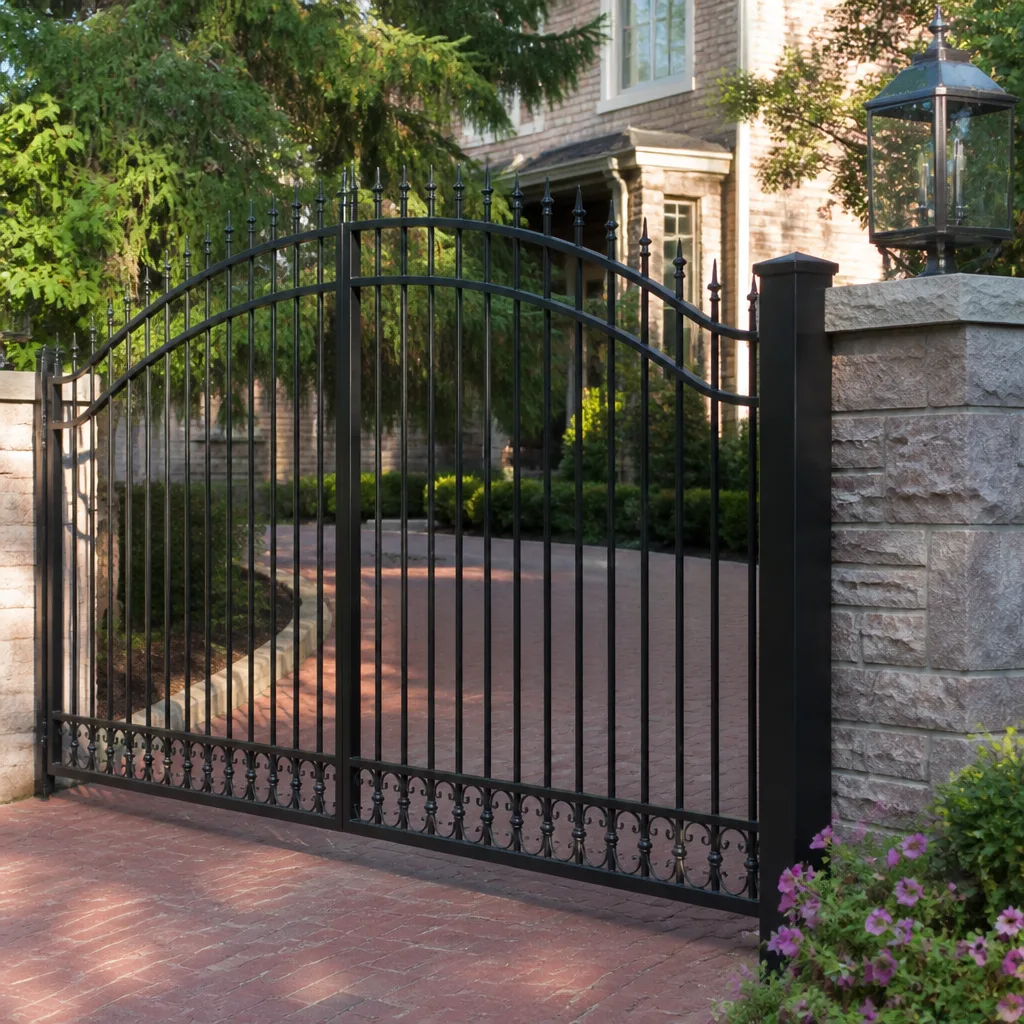 Wrought iron
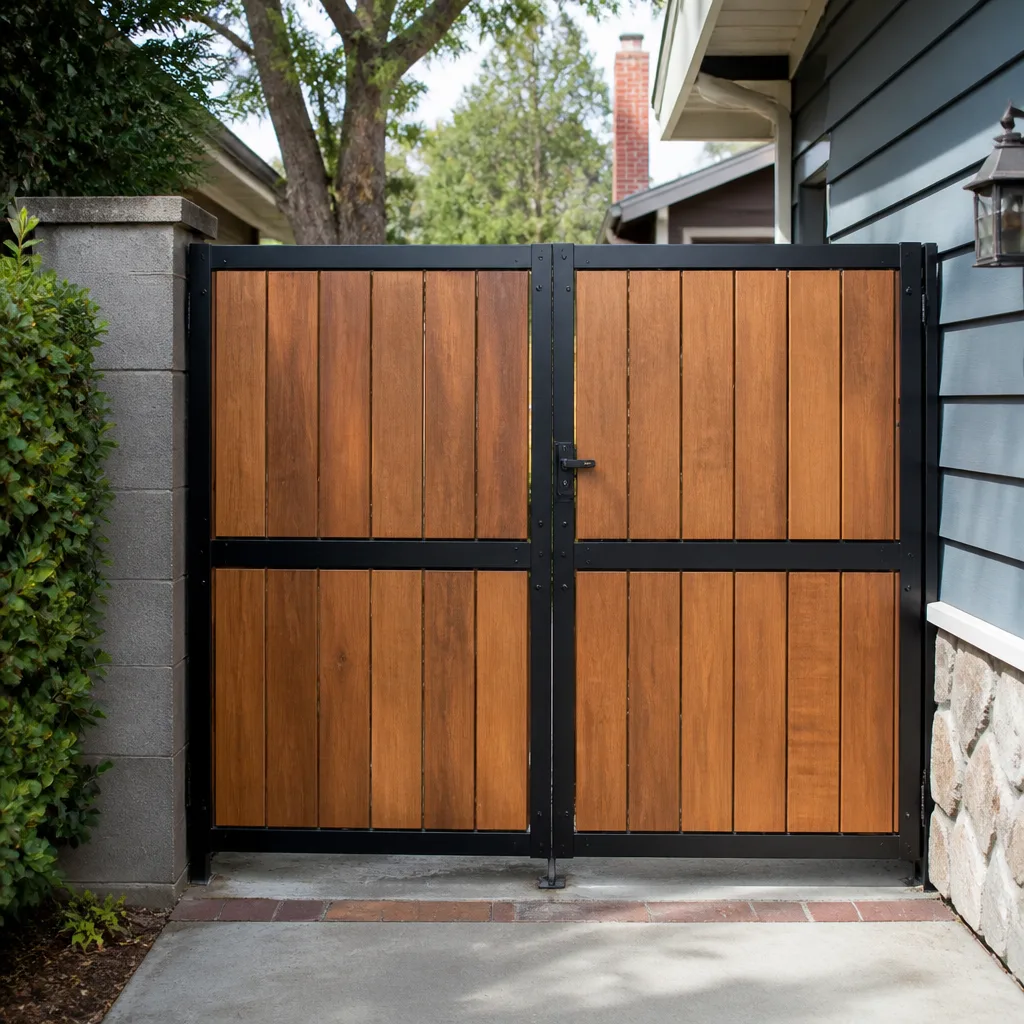 Wood & steel frame
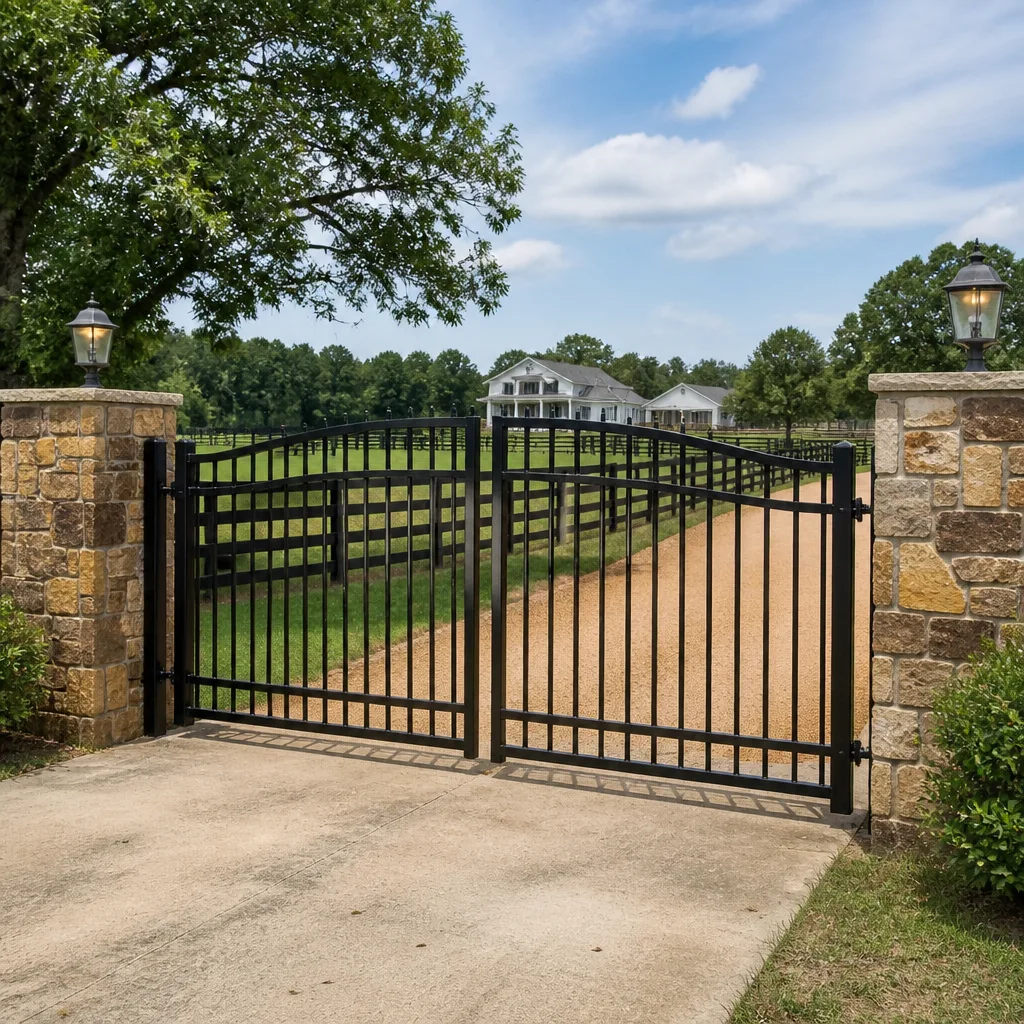 Farm & ranch
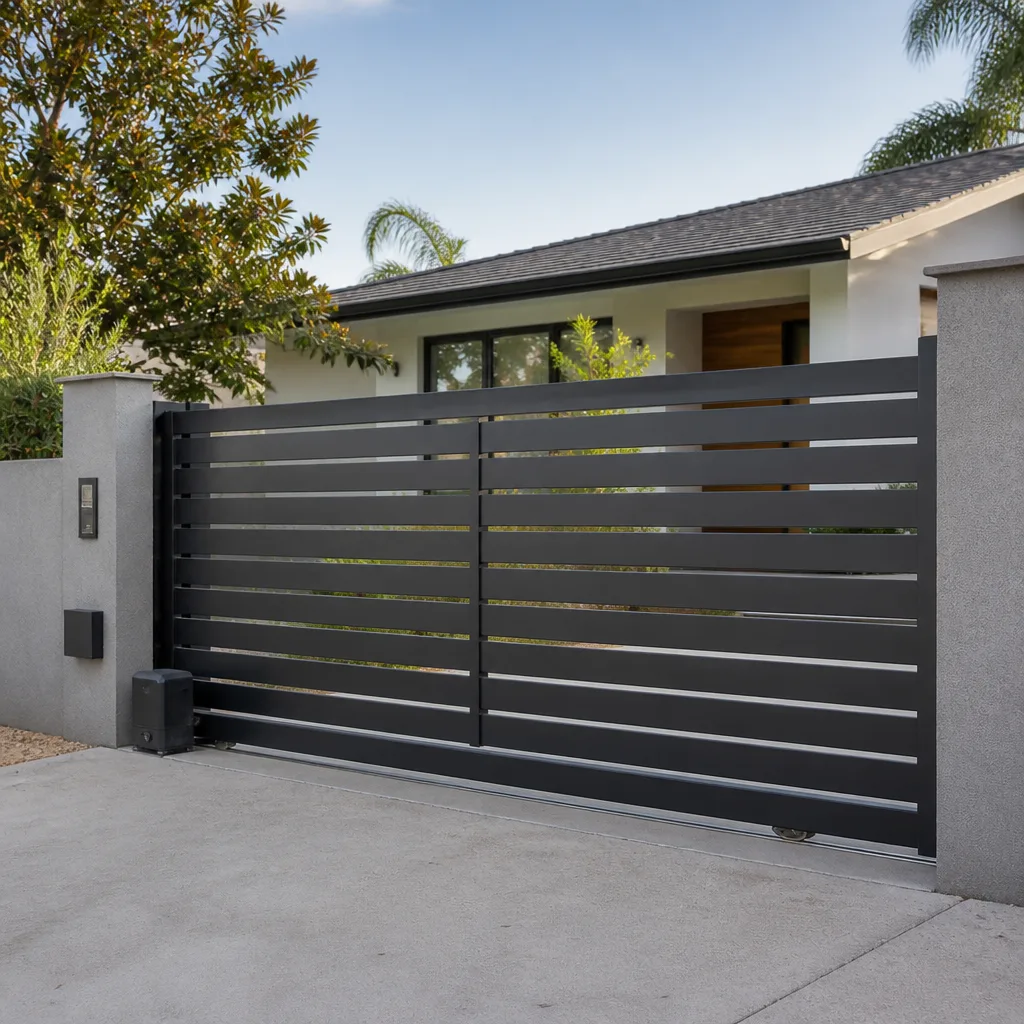 Sliding driveway gates
 LiftMaster operators
Free on-site gate assessment - hinges, posts, and your LiftMaster or Nice gate operator checked before anything is quoted
The assessment is free and the quote is the invoice.
Get your free estimateGate Parts & Welding Troubleshooting: Common Problems and How to Fix Them
If your gate sags on the latch side, nine out of ten times the weld is fine. The hinge pin has worn oval, the metal around it has opened up, and the entire repair costs under $200 to fix correctly. We’ve pulled apart hundreds of driveway gates across Summerlin, and the pattern holds: homeowners are quoted for torch work and re-welding when the real problem was hardware that gave out years ago. This guide teaches you to read the failure before anyone touches it with a grinder. You’ll learn how to tell a weld failure from hinge wear, when a cracked weld is cosmetic versus structural, and why re-welding without fixing the root cause is money thrown away.
Quick Answer
Most gate structural problems aren’t weld failures. They’re worn hinge pins, loose fasteners, frame miters pulling apart, or a concrete footing that has shifted. Diagnose the actual failure first – wiggle test, visual inspection, footing check – because welding a cracked joint without fixing the misalignment or footing movement behind it will crack again within a season. A correct diagnosis usually means a hardware repair, not torch work.
Styles & brands we work with
- Wrought iron
- Wood & steel frame
- Farm & ranch
- Sliding driveway gates
- LiftMaster operators
Table of Contents
- The 7-Step Visual Inspection Sequence
- Weld Failure or Hinge Wear? How to Tell the Difference
- Cracked Welds: Cosmetic vs. Structural
- The Four Parts That Fail Most Often on Residential Iron Gates
- Post Movement vs. Gate Problem: Diagnosing the Footing
- Why Grinding and Re-Welding Without Root Cause Wastes Money
- What Summerlin Conditions Do to Gate Hardware
- When It’s Time to Bring in a Gate Specialist
The 7-Step Visual Inspection Sequence
Before anyone quotes you for welding, walk the gate yourself. This sequence takes ten minutes and tells you more than a glance from the driveway ever will. Do it with the gate in its resting position, and put a glove on before you run your hands along the joints.
- Open and close the gate by hand. Disengage the opener (most operators have a manual release lever or key). If the gate binds, drags, or scrapes the ground at any point in the swing, you have an alignment problem before you have a weld problem.
- Grab the gate at the latch end and lift it up and down. Any vertical play over a quarter inch points to hinge pin wear, not metal failure.
- Push the gate in and out at the latch end. Side-to-side slop means either the hinge has opened up or the hinge post has moved.
- Inspect every weld joint on the frame. Look for rust bloom (the brown line that follows a hairline crack), visible separation, and paint that has flaked off in a straight line.
- Check the hinge plates and pins. Look for oval-shaped holes, shiny wear rings on the pin, and any daylight creeping between the hinge strap and the gate frame.
- Examine the miter joints at the frame corners. A gap that widens at the top or bottom of the corner tells you the gate has racked.
- Look at the base of both posts. Hairline cracks in the concrete, a post that leans, or a visible gap where the post meets the footing all suggest footing movement.
Write down what you see at each step. That record is what lets a specialist quote you correctly over the phone, and it stops the conversation that starts with “we’ll just re-weld it and see.”
Weld Failure or Hinge Wear? How to Tell the Difference
This is the diagnosis that saves the most money, so let’s get it right. Hinge wear and weld failure look alike from six feet away. Up close they are completely different problems, and only one of them needs a welding machine.
Here’s the test. Disengage the opener, swing the gate to roughly 45 degrees, and hold it still. Now lift the latch end with steady pressure and watch the hinge.
- Hinge wear looks like: the hinge pin rocks inside its hole, the hole has gone oval rather than round, there’s a shiny wear ring on the pin, and the latch end rises maybe a quarter to half an inch as the top hinge takes the load. The weld joint itself may look perfectly intact.
- Weld failure looks like: a visible crack with a rust line following it, paint flaking in a straight line along the joint, and movement that happens at the weld itself rather than at the hinge pivot. The gate may flex or creak at the joint as you move it.
- Post movement looks like: the whole post leans slightly, the gap between gate and post closes or opens as you push the free end, and there’s a crack at the concrete collar. This is neither a weld nor a hinge problem.
In our experience, worn hinge pins account for the large majority of drop and sag complaints on residential iron gates. The hinge is the moving part, and moving parts wear. A welded joint, done right, does not. If a gate is only a few years old and the latch end is dragging, the hinge is the first suspect and the weld is the last. For a broader look at how these calls play out on a driveway, our Gate Repair in Summerlin service page breaks down the most common field calls.
Cracked Welds: Cosmetic vs. Structural
Not every crack in a weld is an emergency, and knowing which one you have keeps you from paying for torch work you didn’t need – or from ignoring a joint that will fail the moment a gust hits it.
A weld on an ornamental scroll, a decorative picket, or a non-load-bearing panel is doing no structural work. A hairline crack there is cosmetic. It’s worth repairing to stop rust from creeping in, but the gate will not fall apart without it. This is the most over-quoted repair in the trade.
A structural weld is one that carries load. On a typical residential gate, that means:
- The hinge-side vertical frame member where the hinge is welded or bolted
- The top and bottom rails along the hinge side
- The miter joints at the corners of the perimeter frame
- Any weld where the opener arm or operator bracket attaches
- The point where the latch meets the strike plate
A structural weld showing a rust line, continuous crack, or visible gap needs prompt attention. If the gate is motorized, that weld is fighting the operator every time the gate moves, and cracks propagate fast under cyclical load. Call it in. A cosmetic crack on a scroll can wait for a scheduled visit. Our technicians have up to 13 years of experience reading exactly this distinction, and they’d rather tell you a weld is fine than sell you a repair you don’t need.
The Four Parts That Fail Most Often on Residential Iron Gates
Owners often arrive at a quote expecting “welding” and leave with hardware. That’s the right outcome. These are the four parts that fail most often on residential iron gates, and what causes each.
Hinge pins
Hinge pins wear oval inside the strap over time. Every swing introduces a tiny amount of play, and that play compounds until the latch end is sagging a half inch or more. Cause: cyclical wear and moisture that chews through whatever grease was there. Replacement is straightforward and cheap.
Drop rods
Drop rods are the vertical rods that anchor a swing gate into a receiver in the ground. The rod bore, the receiver sleeve, or the guide bracket wears or bends. Cause: gate misalignment or the gate settling, which forces the rod in at an angle it was never meant to take. A worn guide bracket will make a new rod fail in months.
Latch mechanisms
Latch barrels, strike plates, and the bolt on a slide gate all wear. The latch starts “chattering” or requires a lift to close, and eventually the gate stops latching at all. Cause: repeated impact as the gate swings or drives home, aggravated by any alignment drift. A latch rarely fails on its own.
Frame miters
Miter joints are the 45-degree corners where the top and bottom rails meet the vertical members. A miter that’s opening at one edge and tight at the other means the gate has racked – usually because the hinge side has dropped or the footing has moved. Welding the miter closed without fixing the rack will crack it again the first dry season. If the gate is on a LiftMaster or Mighty Mule operator, misfiring limit switches often trace back to a racked frame the operator can no longer detect reliably.
Post Movement vs. Gate Problem: Diagnosing the Footing
Half the gate problems that get quoted as “welding” are actually footing problems, and you can spot them before anyone opens a toolbox. Here’s the check.
Hold a straightedge or a spirit level against the hinge post. It should be plumb. Next, watch the gap between the gate’s free end and the latch post as you push the gate gently toward the closed position – if the gap closes or opens by more than a quarter inch without the gate itself moving, one of the posts has shifted. Then look at the concrete collar at the base of each post. A hairline crack where the post meets the slab is the tell.
Why does this matter? A gate that’s binding because the hinge post leans in by half an inch needs a different repair than a gate with worn hinges. Welding anything on a gate whose post is out of plumb is wasted money – the new weld will fight the same misalignment that cracked the old one. The same applies in Summerlin, where caliche-heavy soil, shrink-swell cycles after monsoon season, and irrigation leaking near a footing all shift posts over time. If you’re seeing a post move in a neighborhood like The Ridges or Red Rock Country Club, the fix is often resetting or rebuilding the footing, then re-hanging the gate square. For new installations, our Gate Installation in Summerlin page covers footing depth and anchoring.
Why Grinding and Re-Welding Without Root Cause Wastes Money
Here is the part of this trade that gets under our skin: a cracked weld gets ground out and filled, the gate is closed, and six weeks later the crack is back. Same spot. Same rust line. The homeowner paid for a repair that was never a repair.
A weld crack is a symptom. It has a cause, and the cause is nearly always one of four things:
- Misalignment – the gate has racked, and the joint is working against a load it wasn’t designed for
- Footing movement – the post has shifted, so the gate is hinging on an angle
- Overloaded span – an ornate gate too wide for its frame, with no intermediates holding the rails
- Worn hardware – hinge play that puts cyclical load on the welded joint
Re-welding doesn’t fix any of these. The new weld is often harder than the parent metal and cracks sooner under the same repeated load. A correct diagnosis costs a phone call and a walk around the gate. A wrong one costs you the original quote and the re-repair, and sometimes a frame that can no longer be salvaged because too much metal has been ground out. When a gate needs welding, our team quotes the actual cause along with the weld so you’re not back next season with the same crack. For gates on operators from DoorKing to Elite, the operator itself often outlives two or three frames – that’s a signal to look hard at the frame’s health.
What Summerlin Conditions Do to Gate Hardware
Summerlin’s climate punishes gate hardware in specific ways, and knowing them helps you read the failure correctly.
The dry heat is hard on grease. Factory grease in a hinge pin cooks off over a few summers, and once it’s gone the pin grinds metal on metal until it goes oval. That’s why we see more hinge wear on west- and south-facing driveways in Summerlin – the sun load is highest and the grease cooks fastest. Summer monsoon season then pushes water into any open crack, feeding rust along the weld line. And because caliche sits under much of the valley floor, footing movement after a wet season is common, especially on gates whose irrigation runs too close to the post. None of these are weld quality problems, and all of them get misdiagnosed as one. A quick visual pass over the hinge pins and post bases each spring will catch most of these early, before the gate starts to sag.
When to Call a Professional
Bring in a gate specialist when the gate is out of plumb, when a structural weld on a motorized gate shows a crack, when there’s more than a quarter inch of play at the latch end, or when the gate has been binding against its operator. Springs, cables, and electrical circuits on operators are genuinely dangerous – don’t try to troubleshoot those yourself. Same for anything involving a gas line or a post whose footing has cracked. Ironworks Gate Co. is trained on nine gate-automation brands, so we can read both the frame and the operator at the same visit. Ironworks Gate Co. Summerlin offers free estimates in Summerlin. Call (866) 623-9848.
Common Mistakes to Avoid
- Grinding a cracked weld before diagnosing it. Once the weld is gone, so is the evidence. Diagnose the cause first, then decide whether to weld or replace hardware.
- Re-welding a miter joint that’s cracking because the footing moved. The weld will look fine for a few weeks, then fail again the first time the gate swings under load. Fix the footing first.
- Assuming every drop is a hinge problem. Drop is a symptom. Test the hinge, the miter joint, and each post base before you commit to a repair.
- Patching a structural weld with epoxy or body filler and calling it done. Cosmetic patches hide the crack, they don’t fix the load path, and they make the diagnosis harder on the next visit.
- Over-greasing a worn hinge. If the pin is already oval, fresh grease only hides the play until it gets worse. The hinge needs replacement.
- Ignoring the operator when the frame is misaligned. A binding gate will burn out a LiftMaster or Ghost Controls motor over time. Fix the frame, then service the opener.
- Letting irrigation run against a footing in Summerlin. Shrink-swell soil around a post base is one of the most common causes of a gate that “suddenly” won’t close, and it’s completely avoidable.
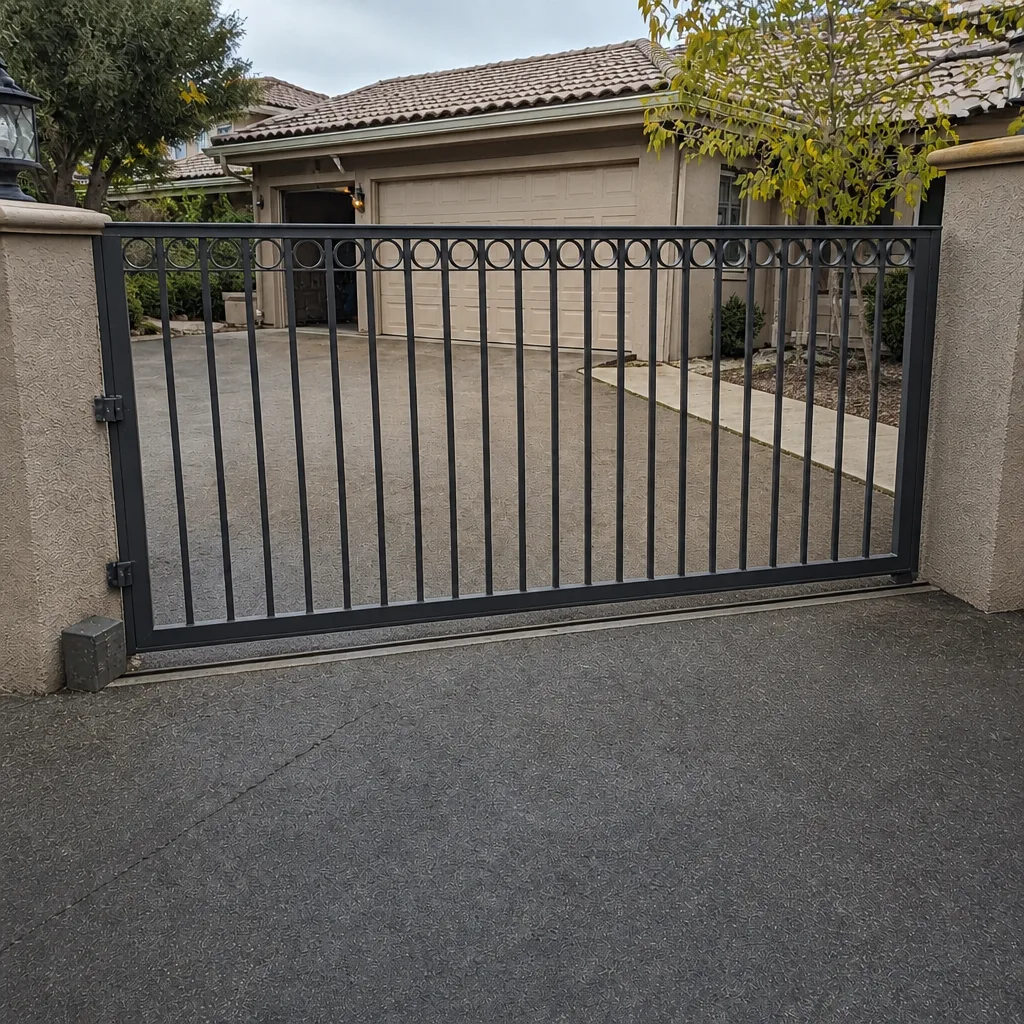
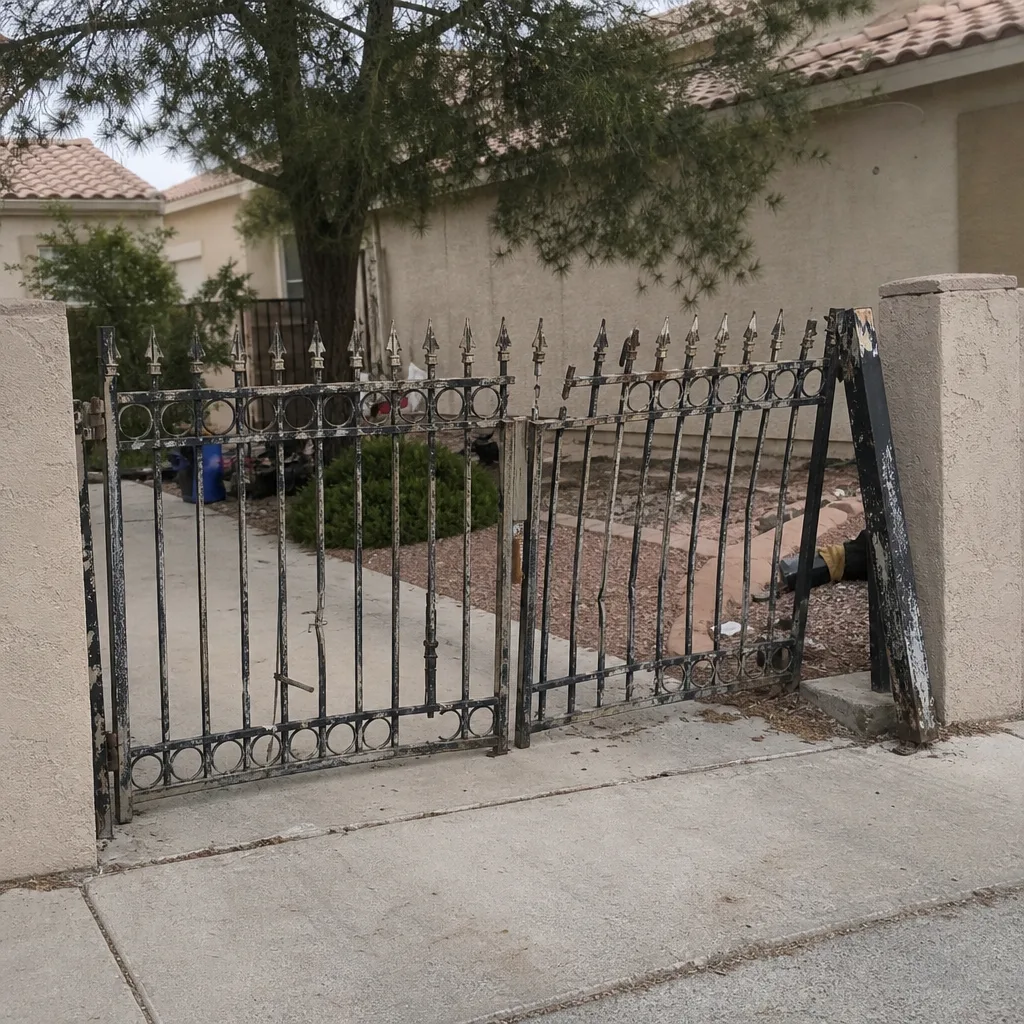
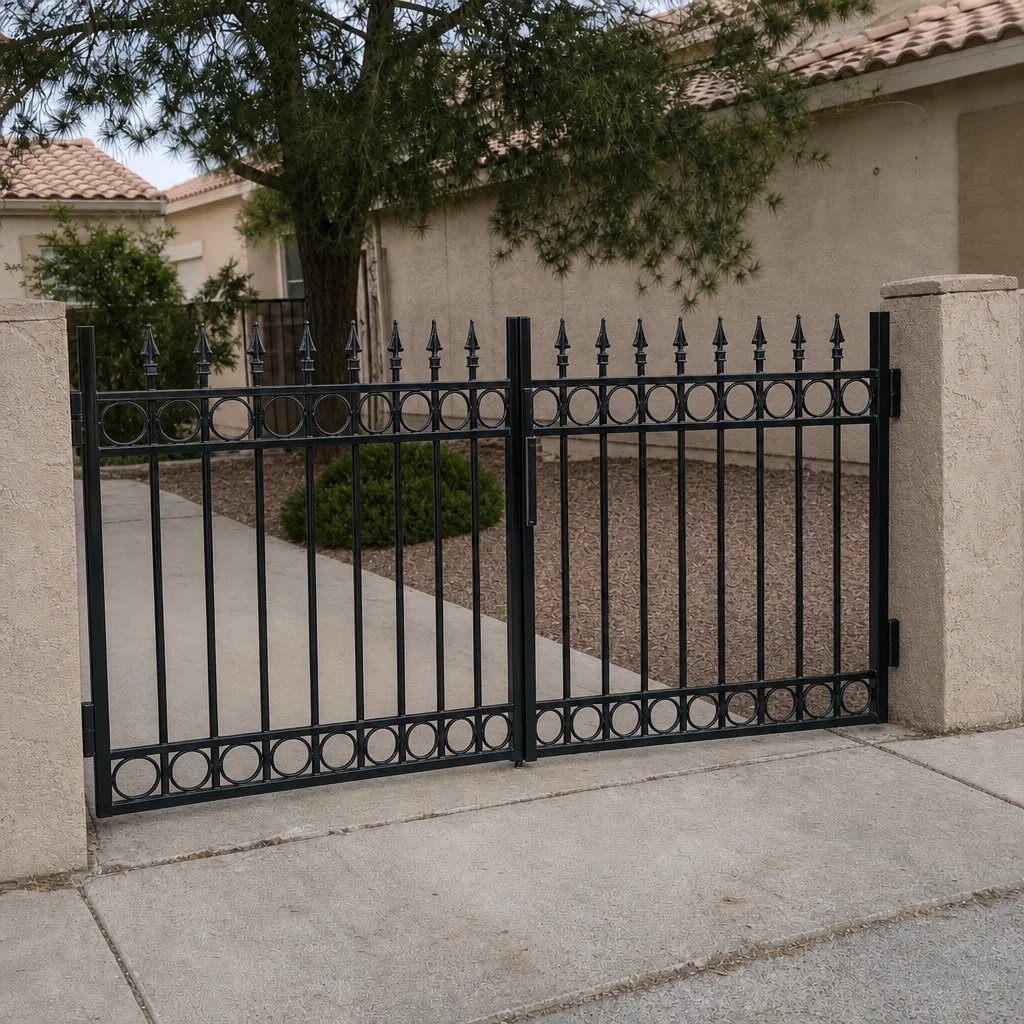
See the difference
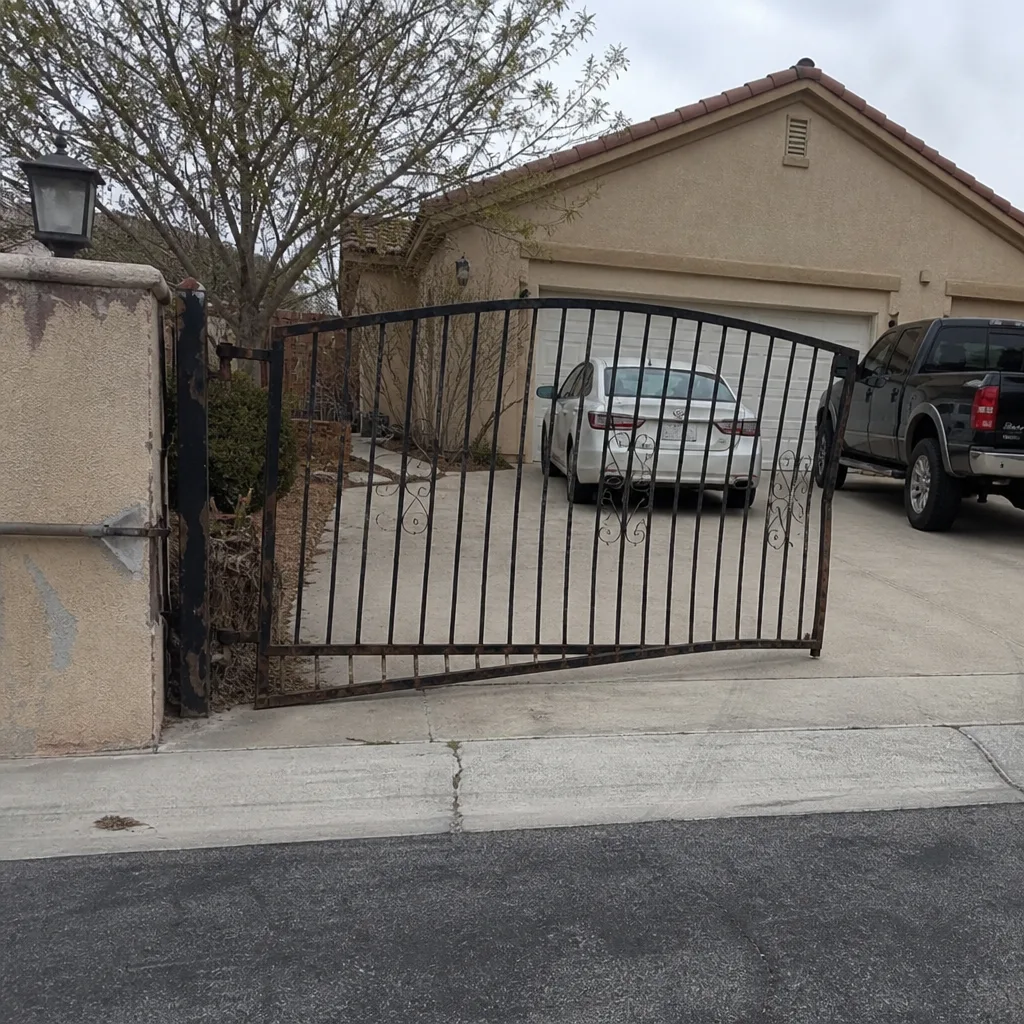 Before
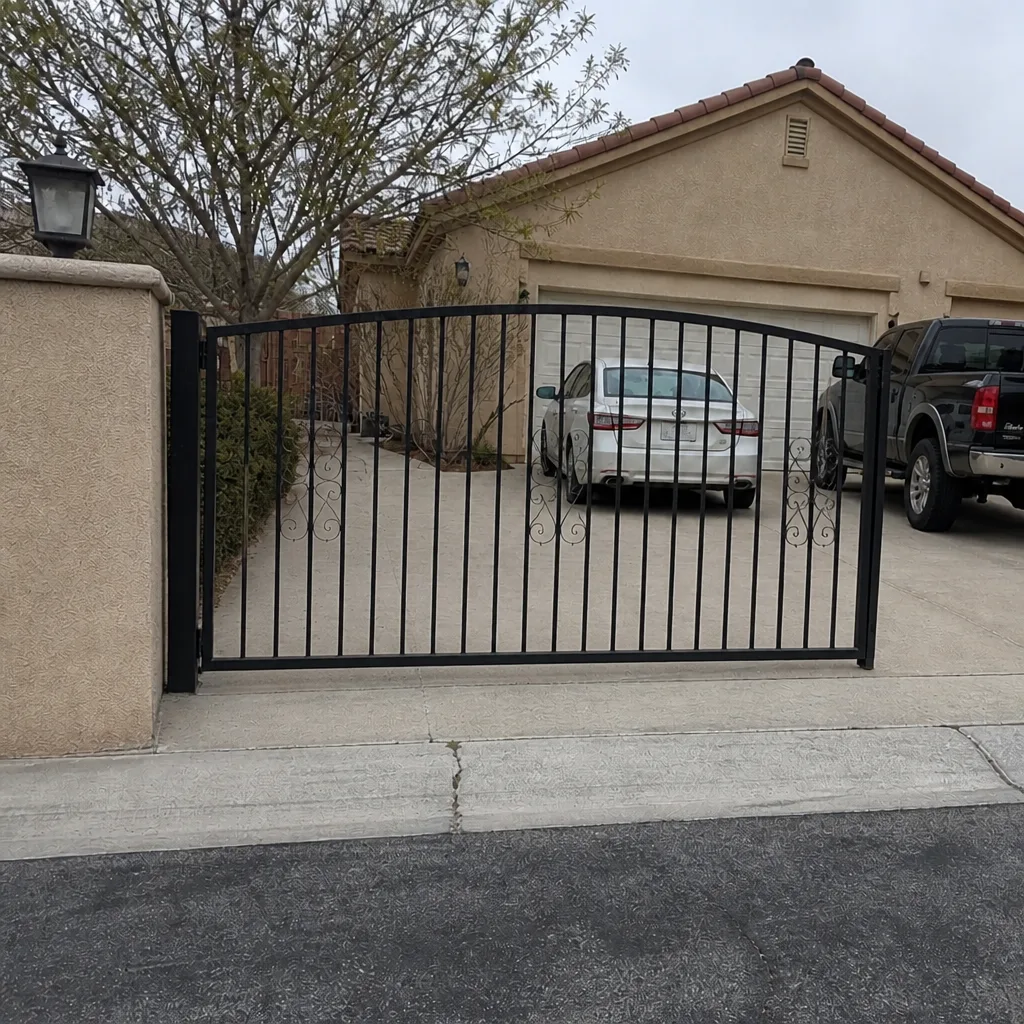 After
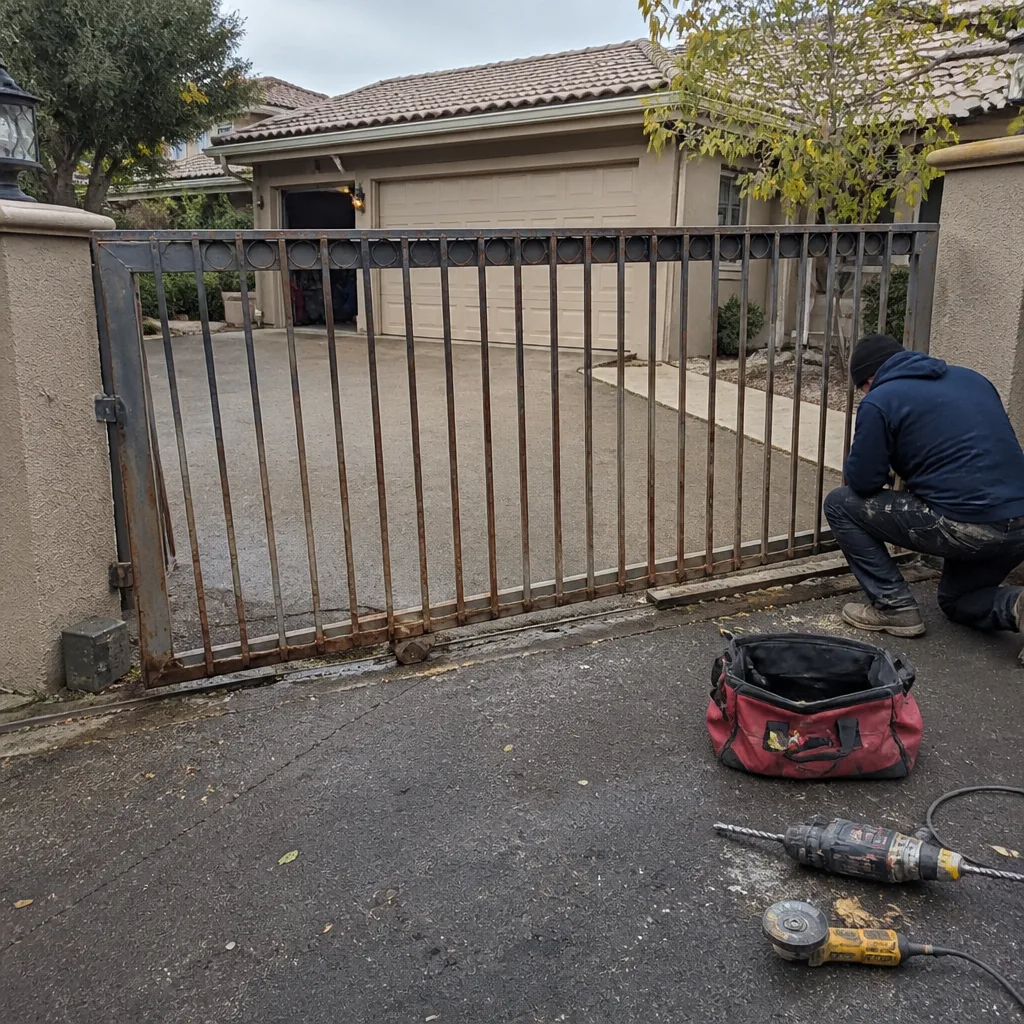 Before
 After
 Before
 After
Frequently Asked Questions
Usually not. More often the hinge pin has worn oval, which you can confirm by lifting the latch end and watching for vertical play at the hinge. If the gate has more than a quarter inch of play and no visible crack at the weld joints, it’s a hardware repair, not a welding job. Call (866) 623-9848 for a free estimate.
Weld repair on a residential gate typically runs a fraction of a full replacement, and the correct repair often costs less than welding because it’s a hinge or hardware replacement. The exact price depends on which joint and what caused the crack. We quote and agree the price before we start, so there’s no surprise on the bill. Call (866) 623-9848 for an exact quote – estimates are free.
Yes, in most cases. A structural weld can be ground, re-welded, and reinforced, but only after the root cause – misalignment, footing movement, hinge wear, or an overloaded span – is corrected. Re-welding without fixing the cause will crack again.
Check the hinge post with a level, watch the gap between the gate and latch post as you push the gate, and look for a hairline crack at the concrete collar. If any of those signals is present, the problem is the footing, not the gate metal, and the repair is resetting the post before re-hanging the gate. This is a different repair entirely.
Yes, because the heat cooks grease out of hinge pins faster on west- and south-facing driveways, and monsoon moisture then rusts the joints. Seasonal inspection in Summerlin catches most hinge wear before it drops the gate. Call (866) 623-9848 to schedule an inspection.
Ironworks Gate Co. handles gate parts, welding, motors, and access control across Summerlin, and we’re trained on nine gate-automation brands including DoorKing, Elite, LiftMaster, and Mighty Mule. Every job is backed by our written 90-Day Done Right Promise. Call (866) 623-9848 for a free estimate and a square deal – upfront price, no surprises on the bill.
The Bottom Line
Most gate problems that get quoted as welding aren’t weld failures. They’re worn hinge pins, loose or failed drop rods, misaligned latches, racked miters, or a footing that has shifted. The seven-step inspection sequence up top takes ten minutes and tells you which one you have. Re-welding without fixing the root cause is money wasted, and a structural weld on a motorized gate should never be left cracked. When a job is genuinely beyond a hardware repair – welding, footing work, operator diagnosis – bring in a specialist who reads the cause, not just the symptom. In Summerlin, that’s the kind of diagnosis we make on the first visit, and we stand behind it in writing.
Call (866) 623-9848 to speak with our gate specialists. Our team is available to answer questions and provide free estimates for repair, installation, and motor service throughout Summerlin. Every job backed by a written 90-Day Done Right Promise.
Related Services
Written by the team at Ironworks Gate Co. Summerlin.
What happens when you call
- 1
A real person answersNo phone trees – you reach a local pro.
- 2
You get an upfront price rangeHonest numbers before anyone is dispatched.
- 3
A background-checked tech heads outLicensed & insured, dispatched right away.
- 4
You approve before work beginsNothing starts until you say go.