
Last updated November 17, 2026
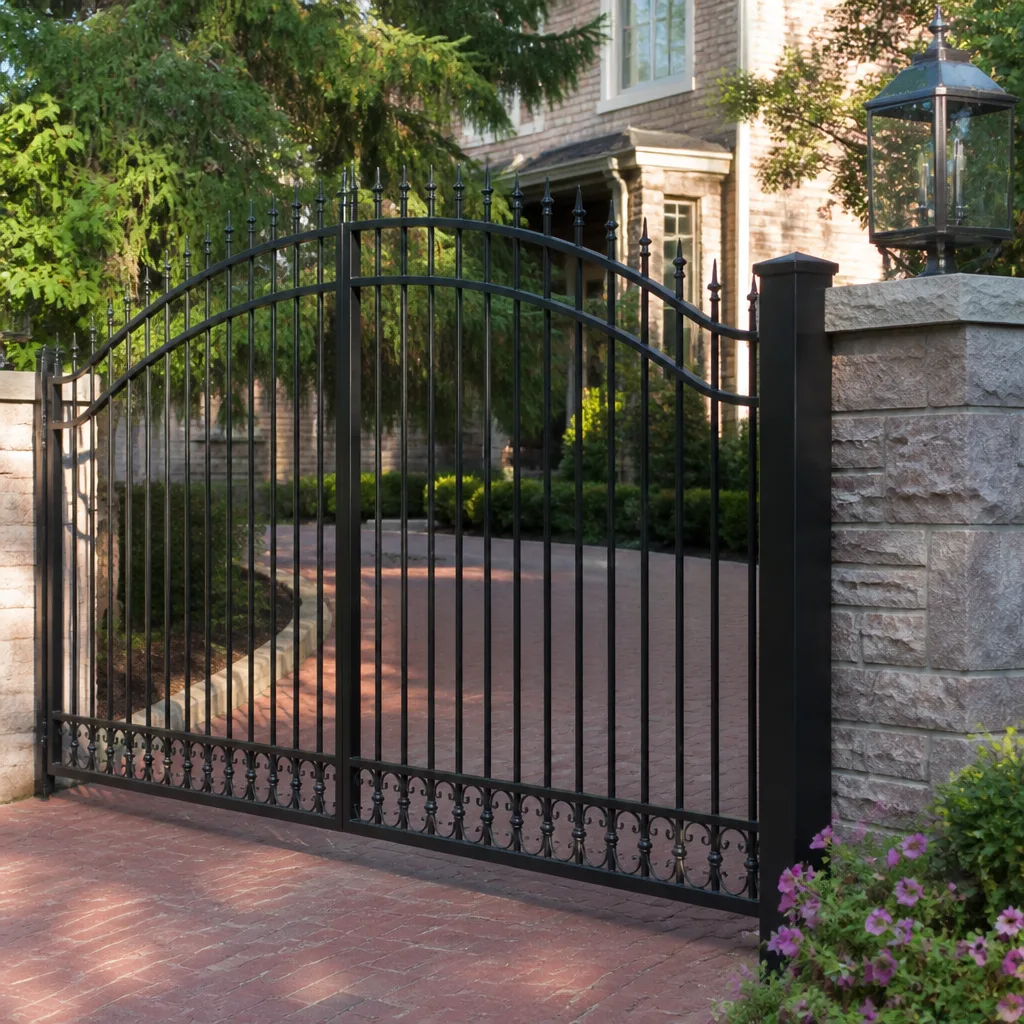 Wrought iron
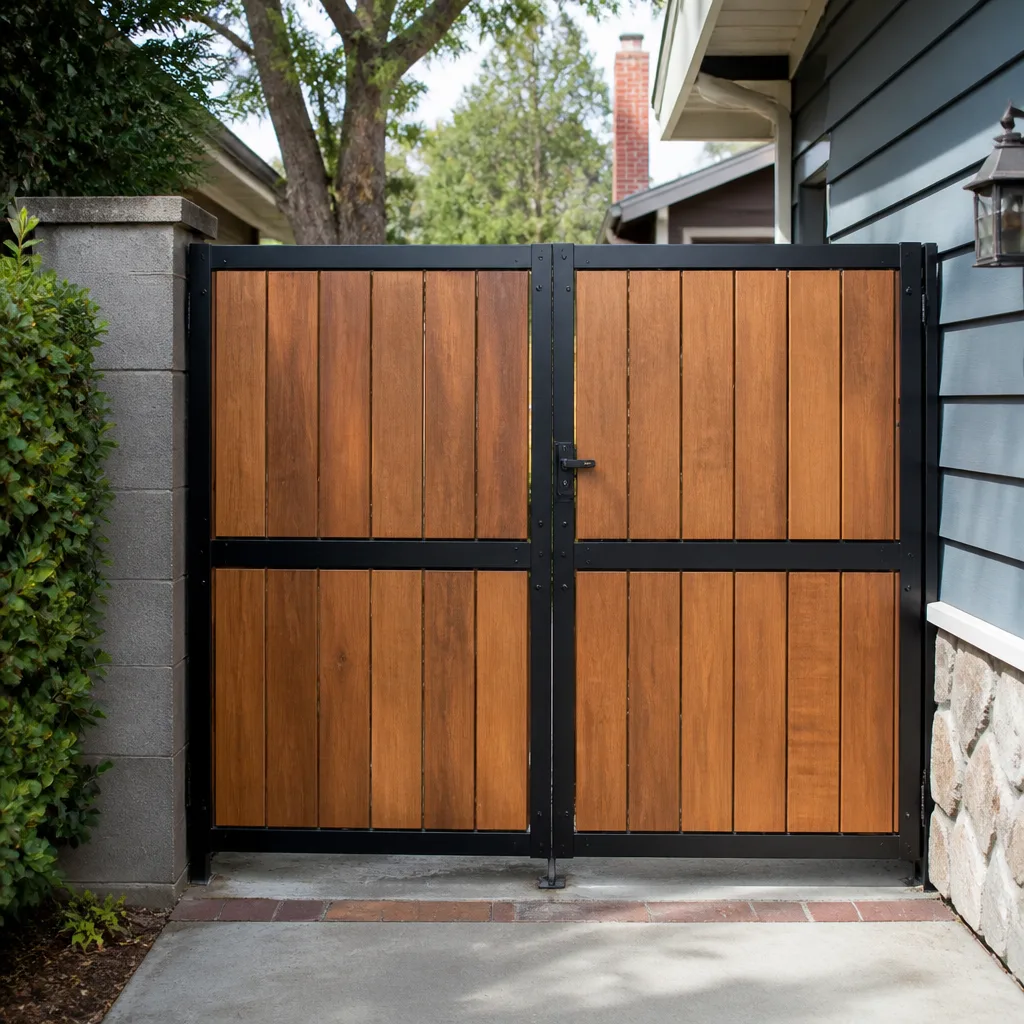 Wood & steel frame
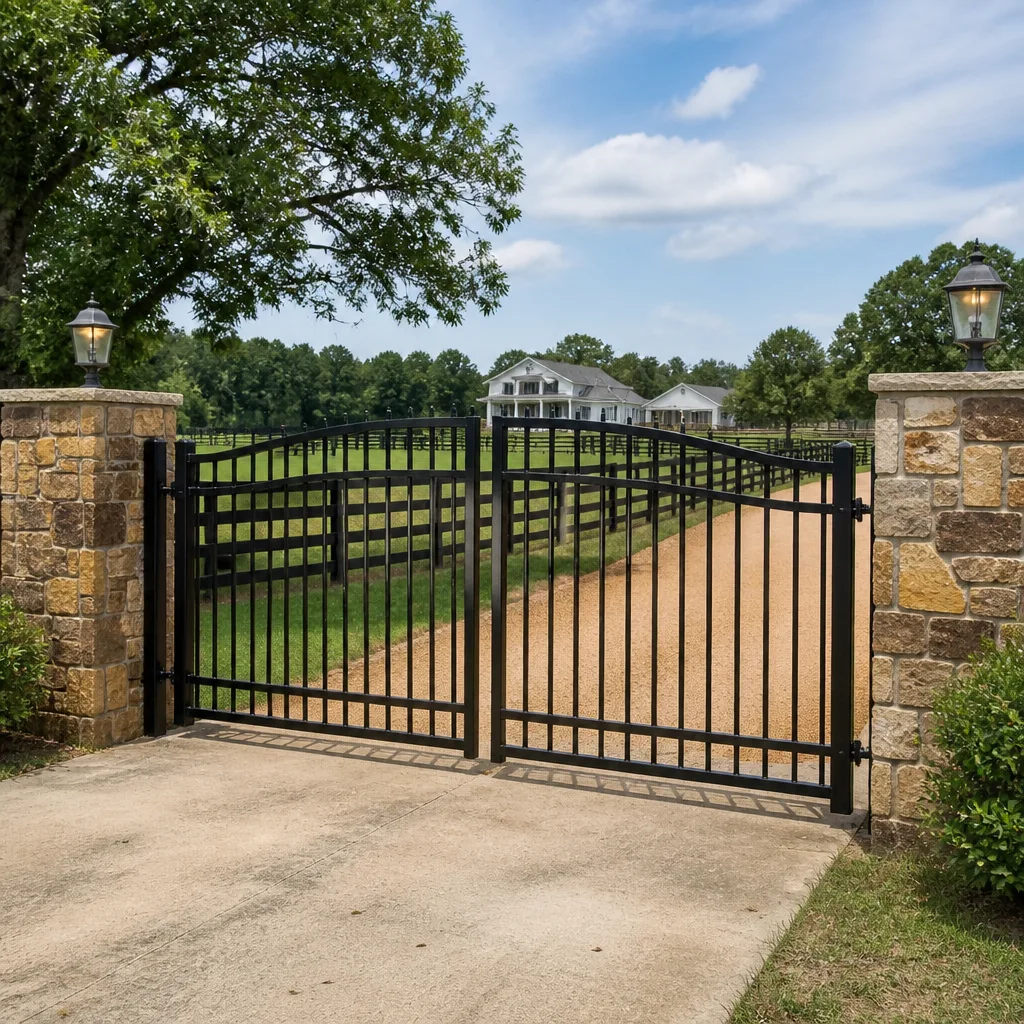 Farm & ranch
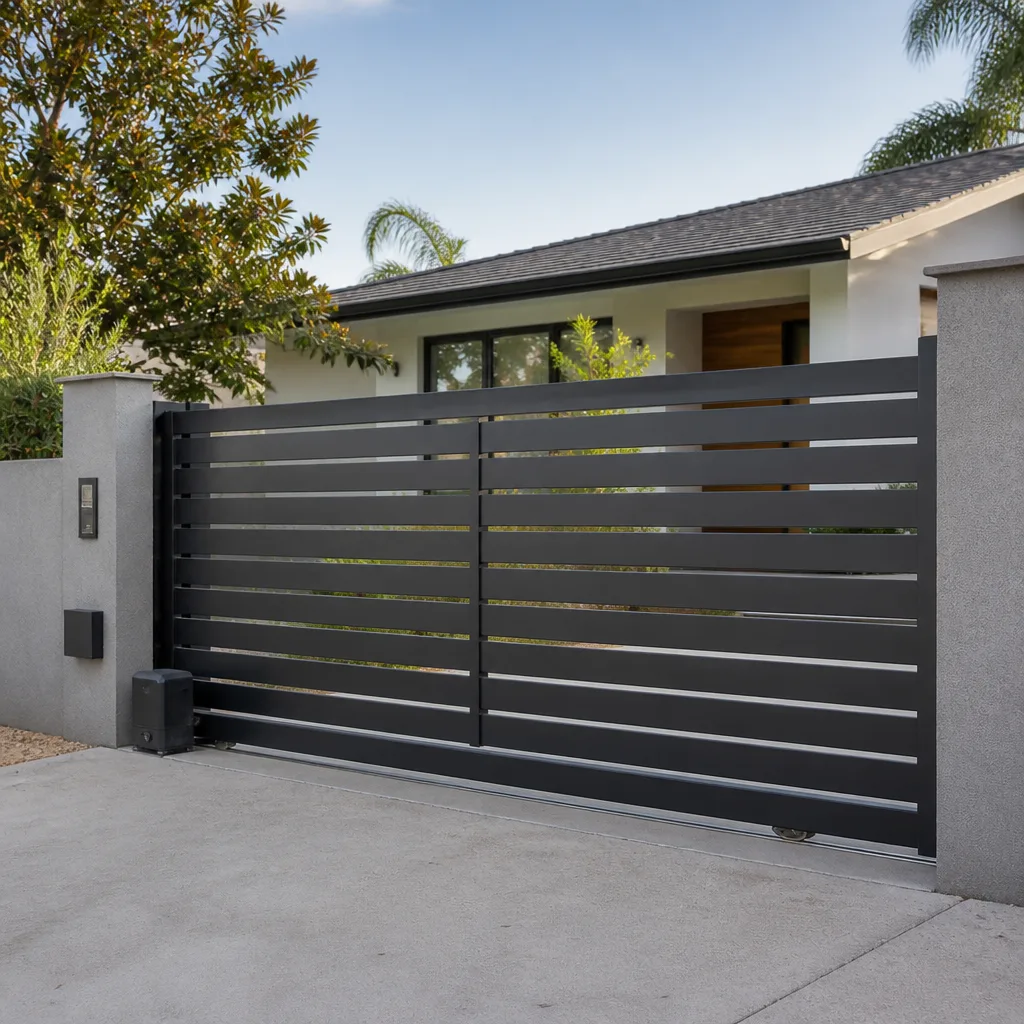 Sliding driveway gates
 LiftMaster operators
Free on-site gate assessment - hinges, posts, and your LiftMaster or Nice gate operator checked before anything is quoted
The assessment is free and the quote is the invoice.
Get your free estimateDIY vs Professional Gate Parts & Welding: What’s Safe to Do Yourself
A $150 flux-core welder from a big-box store can lay a bead on mild steel. Plenty of homeowners in Summerlin have done exactly that, and the bead looked fine. What that welder cannot guarantee is fusion depth on a load-bearing hinge plate that cycles twenty times a day, in a desert climate that swings from 105-degree afternoons to near-freezing winter mornings. The weld that fails isn’t the one that cracks on day one. It’s the one that holds for eighteen months and then lets go while a car is rolling through. This guide is about the difference between tool access and craft skill, and where that line sits on your own gate.
Quick Answer
Decorative reattachment, ornamental repair, and surface prep are reasonable DIY work for a careful homeowner with the right equipment. Any weld on a load-bearing joint – hinge plates, post collars, frame corner miters – belongs to a trained welder, full stop. And if the gate moves under power, the job involves electrical risk as well as structural risk, which puts it firmly in professional territory.
Styles & brands we work with
- Wrought iron
- Wood & steel frame
- Farm & ranch
- Sliding driveway gates
- LiftMaster operators
Table of Contents
- The three structural joints you should never weld yourself
- Why an amateur weld looks fine and then fails
- The legitimate DIY scope: what you can safely handle
- Weld certification and your insurance claim
- Fire, wiring, and irrigation: the hazard unique to automated gates
- A plain framework: is this professional work?
- What Summerlin conditions do to welds and hardware
- Common mistakes to avoid
The three structural joints you should never weld yourself
Not every weld on a gate carries the same load. A scroll welded to a picket is decoration. A hinge plate welded to a gate frame holds the entire weight and swing force of the gate, every time it opens. Those are different jobs, and only one of them can be safely attempted by someone learning as they go.
The three joints that should never see a DIY weld:
- Hinge plates. A hinge plate transfers the full mass of the gate into the post. On a typical 12-foot double-drive gate, that’s several hundred pounds cycling on two or three small weld points. Fusion depth here is everything.
- Post collars. A post collar joins the gate post to the ground anchor or to an upper section. It carries both weight and lateral load from wind. Underbuilt collars are the most common cause of a leaning gate we see in Summerlin.
- Frame corner miters. The 45-degree joints at each corner of the gate frame. These are where the frame resists racking – the twisting force that happens when one side of the gate is heavier or the ground isn’t level. A cold weld at a miter corner doesn’t fail dramatically. It lets the frame flex, which stresses every other joint downstream.
Each of these joints on an automated gate also sits near motor wiring, limit switches, and often an underground power run. Welding near those without disconnecting and isolating power is a separate problem entirely, and we cover it below.
Why an amateur weld looks fine and then fails
Here’s the part that catches people. A weld can look correct and be structurally wrong. The bead profile is visible. The penetration isn’t.
Proper fusion means the weld metal has melted into the base metal on both sides of the joint, not just sat on top of it. On a hinge plate, that requires enough amperage for the steel thickness, the right travel speed, clean metal with no mill scale or paint, and correct joint fit-up before the arc even starts. A homeowner with a 120-volt flux-core machine working on 1/4-inch plate is often running at the top of the machine’s capacity, which is exactly where penetration gets unreliable.
Then thermal cycling does the rest. Every open and close flexes the joint slightly. Summerlin’s temperature swing – triple digits in July, freezing mornings in January – expands and contracts the steel daily. A weld with partial penetration becomes a stress riser. Cracks start at the toe of the weld, invisible under paint, and grow slowly. Eighteen months is a realistic timeline for a marginal weld on a heavily used gate to reach the point where it lets go under load.
And the failure is sudden, not gradual. That’s why the risk isn’t primarily to the person welding. It’s to whoever is standing or parked near the gate when the joint gives.
The legitimate DIY scope: what you can safely handle
We’re not going to tell you to put the welder away entirely. There’s real work a careful homeowner can do, and doing it well saves money without adding risk.
- Decorative element reattachment. A loose scroll, a finial, a piece of ornamental lattice that’s come free from a picket. These carry no structural load. If it falls off, nothing collapses.
- Non-structural ornamental repair. Filling a cosmetic gap, reattaching a decorative ring, closing a small cosmetic crack in a non-load-bearing section.
- Surface prep before professional finishing. Wire-brushing rust, removing old paint from a joint area, cleaning mill scale before a welder arrives. This is genuinely useful and cuts professional time.
- Hardware swaps that don’t touch structure. Replacing a latch, a handle, a decorative cap, a rubber bumper – provided the mounting holes aren’t in a load path and you’re not drilling into the hinge plate or post collar.
Two rules apply to everything on that list. First, disconnect power to the gate operator before any work near the gate, not just before welding. Second, if you’re not sure whether a joint is structural, treat it as structural. When we handle gate repair in Summerlin, the joints we’re called out to fix most often are the ones somebody already had a go at.
Weld certification and your insurance claim
This is the part most DIY guides skip, and it’s the part that can cost you more than the repair.
Homeowner’s insurance policies typically exclude damage caused by faulty workmanship performed by the homeowner or an unlicensed contractor. Read that again. If a gate you welded fails and drops onto a neighbor’s car, or a hinge plate lets go and the gate falls on a visitor, the liability question turns on who did the work and whether it was done to a professional standard.
A certified welder working through a licensed company gives you something a DIY weld cannot: a paper trail. The work was performed by a trained technician, to a documented standard, with a company standing behind it in writing. That’s the difference between an insurance claim that gets paid and one that gets denied with a letter citing homeowner workmanship.
For the structural joints on your gate – hinge plates, post collars, corner miters – that paper trail is the real product. The weld is the visible part.
Fire, wiring, and irrigation: the hazard unique to automated gates
An automated gate is a structural object and an electrical object at the same time, and that combination creates hazards a plain fence doesn’t have.
Welding throws sparks and slag. Around an automated gate, that means:
- Motor and control wiring. Low-voltage control runs and higher-voltage motor feeds often route through the gate post or along the frame. Slag burns through insulation in a second, and a damaged control wire can cause the gate to behave unpredictably – opening when it shouldn’t, failing to reverse on obstruction.
- Underground power and irrigation conduit. Most Summerlin properties have irrigation lines running near the gate line, and the gate’s power feed is typically buried too. Heat travels down metal and through soil. We’ve seen melted irrigation conduit and scorched low-voltage landscape wiring from welding done too close to the ground line.
- Safety devices. Photo eyes, safety edges, and loop detectors are part of the gate’s safety system. Heat damage or a knocked-out photo eye can disable the reverse function, and that’s a serious safety failure, not a nuisance.
Proper practice means the operator is powered down and isolated, the control board is protected, safety devices are checked before the gate goes back into service, and the welder knows where the buried lines run before striking an arc. That’s routine for a gate specialist and easy to miss for anyone else.
A plain framework: is this professional work?
We get asked some version of “can I just do this myself” constantly. Here’s the framework we give homeowners, and it holds up on every gate we’ve seen in Summerlin.
- Is the joint load-bearing? Hinge plate, post collar, frame corner miter, or anything the gate’s weight passes through: professional. No exceptions.
- Does the gate move under power? If yes, the job touches the automation system, and the electrical and safety-device risks are professional territory even when the weld itself looks simple.
- Is the piece decorative only? A loose scroll or finial with nothing hanging from it: reasonable DIY.
- Is there rust at the joint? Rust at a structural weld means the section may need replacement, not re-welding. That’s a professional call.
- Would a failure put a person or vehicle in the path? If yes, the answer is professional work. Full stop.
Roughly speaking, that puts structural welding, motor and opener work, and anything involving the safety devices in professional hands. The gate motor & opener in Summerlin side of the trade is its own specialty, and it’s why we’re trained on LiftMaster, FAAC, and BFT systems – each has its own wiring layout and safety logic, and guessing costs more than calling.
What Summerlin conditions do to welds and hardware
Summerlin sits at elevation on the west side of the valley, and the conditions here are harder on gate steel than most of the country.
Summer afternoons run past 105 degrees, and winter mornings drop near freezing. That’s a daily thermal cycle of roughly 70 degrees or more on exposed steel, which means every hinge plate and post collar on your gate is expanding and contracting constantly. Marginal welds fail faster here than in a mild climate because the cycling comes every day.
Add the dust. Summerlin’s spring winds carry fine grit that works into hinges, latches, and every moving joint. That grit acts like lapping compound over time, wearing hinge pins and stressing the welds that hold them. Neighborhoods closer to the open desert edge – The Ridges, Reverence, areas backing onto the conservation land – see more of it than the more sheltered streets. If your gate squeaks and hesitates in spring, worn hinges are usually part of the story, and that’s a hardware job before it becomes a weld failure.
And then there’s the sun. UV degrades paint and powder coat, and once coating fails, rust starts at the weld toe first, where the surface is roughest. A rusted structural weld is not a re-weld job; it’s an inspection-and-replacement call. We’ve seen that play out on the same gates year after year in Summerlin. When a full gate installation in Summerlin is the better answer, we’ll say so plainly rather than patch something that’s past saving.
Common Mistakes to Avoid
- Welding over paint or mill scale. Welding on dirty metal traps contaminants in the weld and kills penetration. Clean to bare steel before anything else, and if that means a wire wheel and an hour of work, that’s the job.
- Welding with the operator still powered. Live control wiring and a welding arc in the same metal is a recipe for fried control boards and unpredictable gate behavior. Isolate power first.
- Assuming a bead “looks good” means it is good. Bead appearance says nothing about fusion depth. A neat-looking weld with poor penetration is more dangerous than an ugly one, because it inspires false confidence.
- Drilling into a hinge plate to mount a new latch. Every hole in a load-bearing plate is a stress riser. Mount hardware to the frame where it belongs, not through the structure.
- Skipping the safety-device check after any work near the gate. Photo eyes and safety edges need testing after every welding or wiring job. A gate that doesn’t reverse on obstruction is a hazard, and it’s the first thing we check.
- Re-welding rusted structural steel. Rust at a structural joint usually means the section is compromised. Cleaning and re-welding over rusted metal hides the problem instead of fixing it.
- Not checking buried lines before striking an arc. Summerlin properties often have irrigation and low-voltage runs near the gate line. A five-minute check saves a repair bill and a scorched landscape.
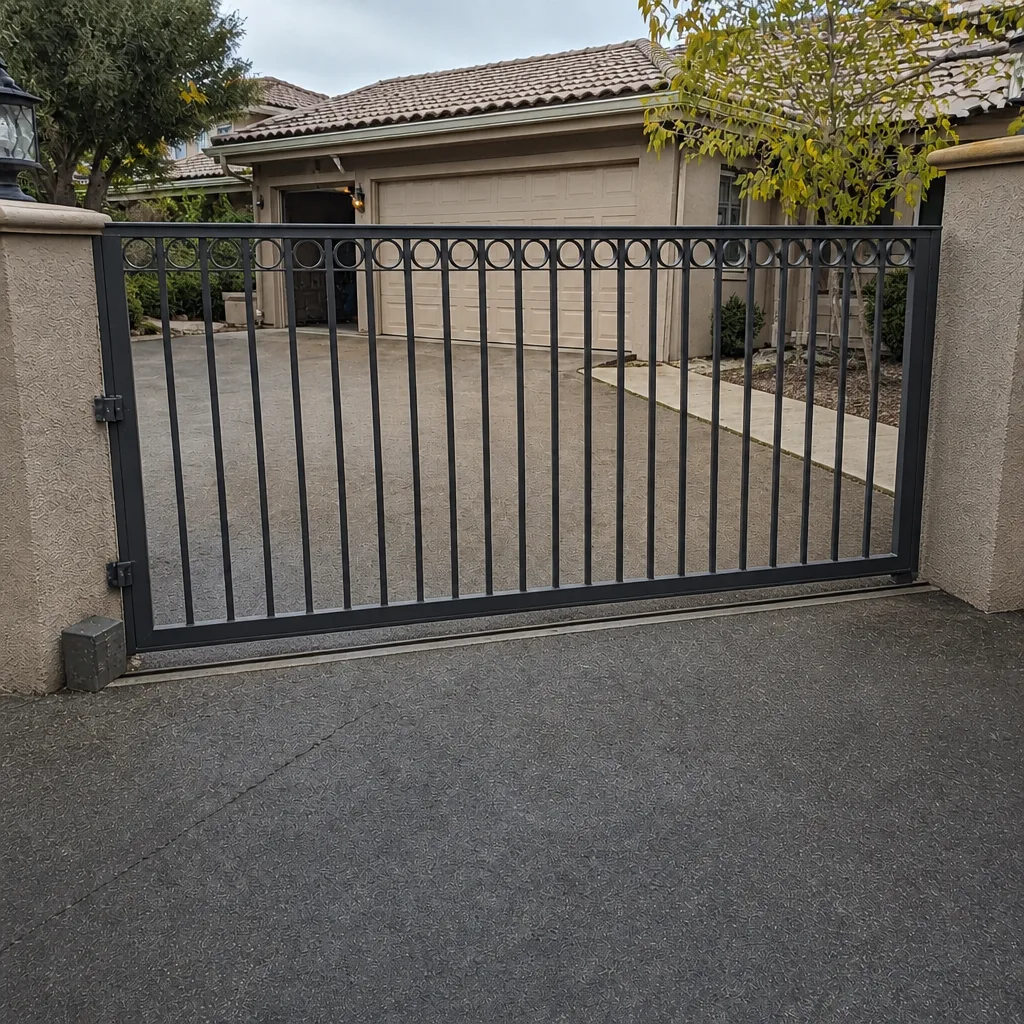
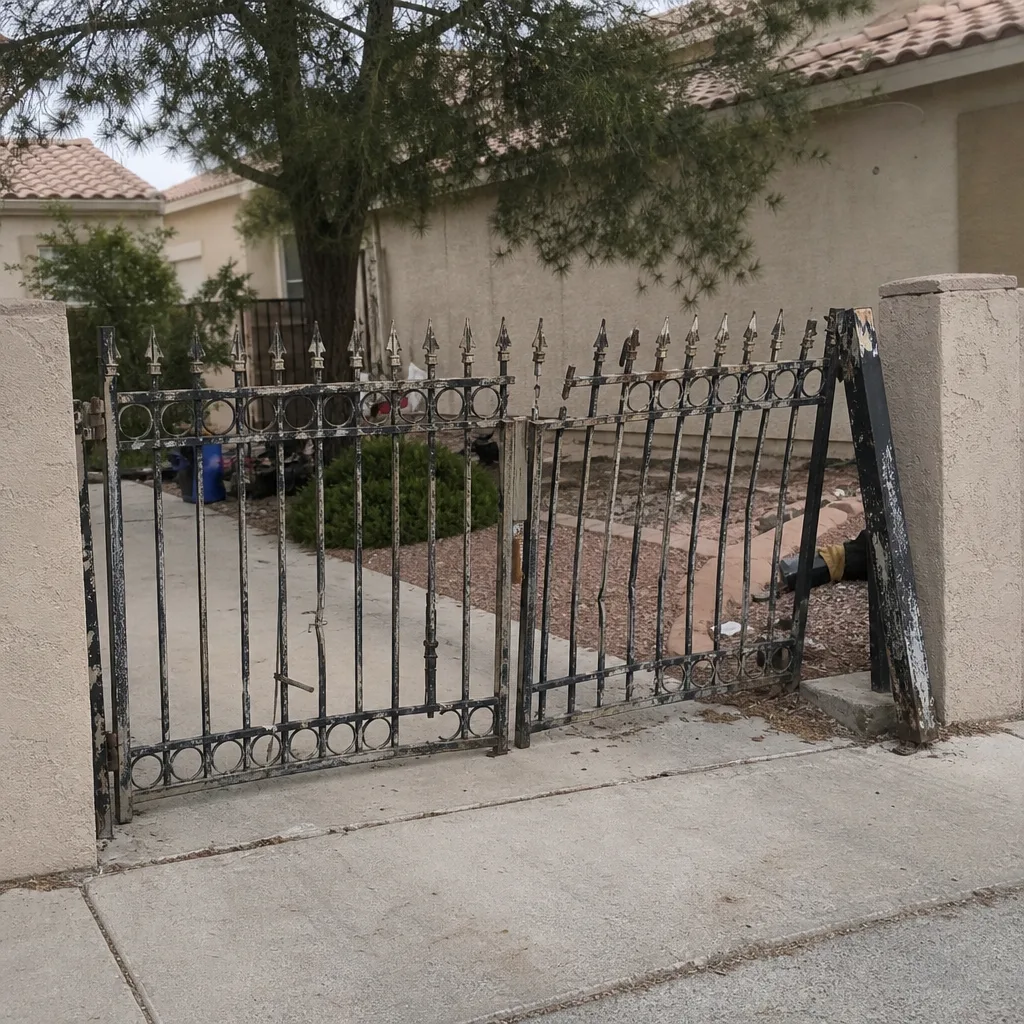
See the difference
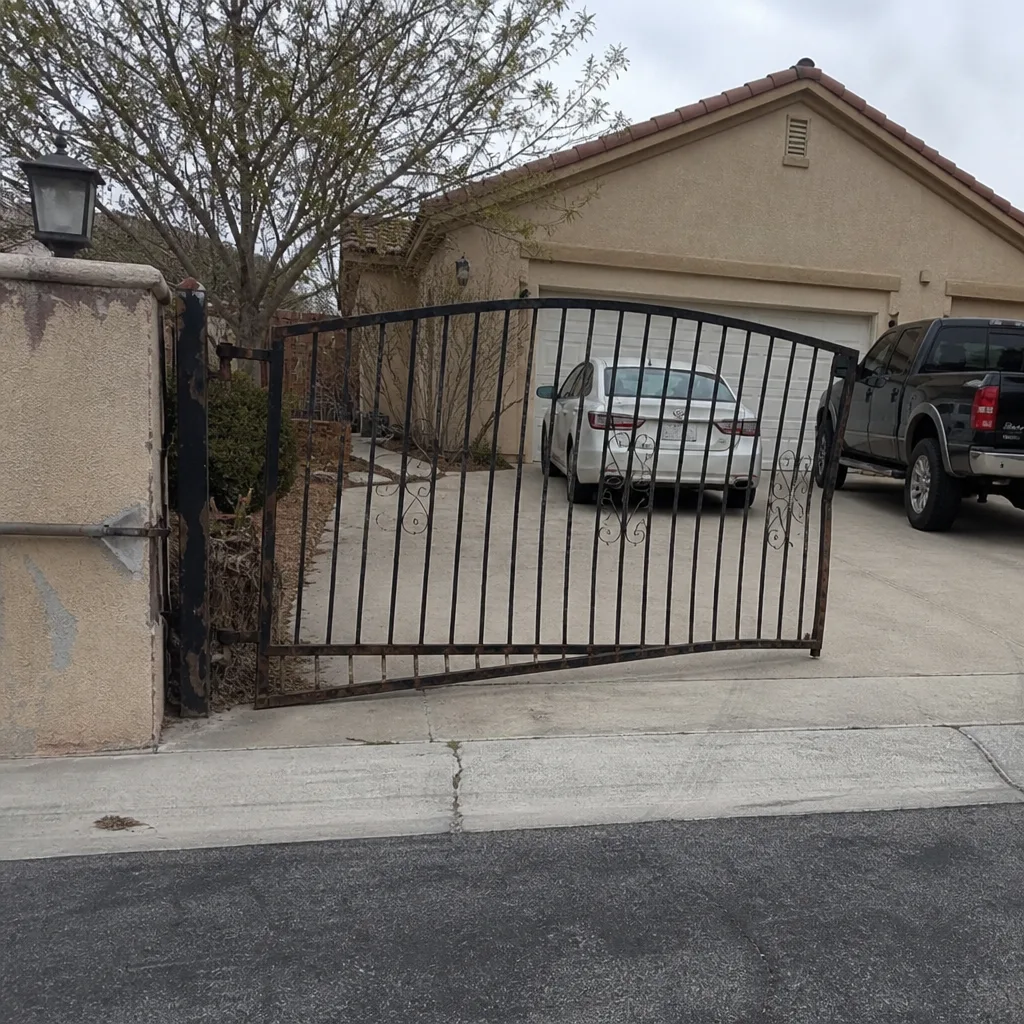 Before
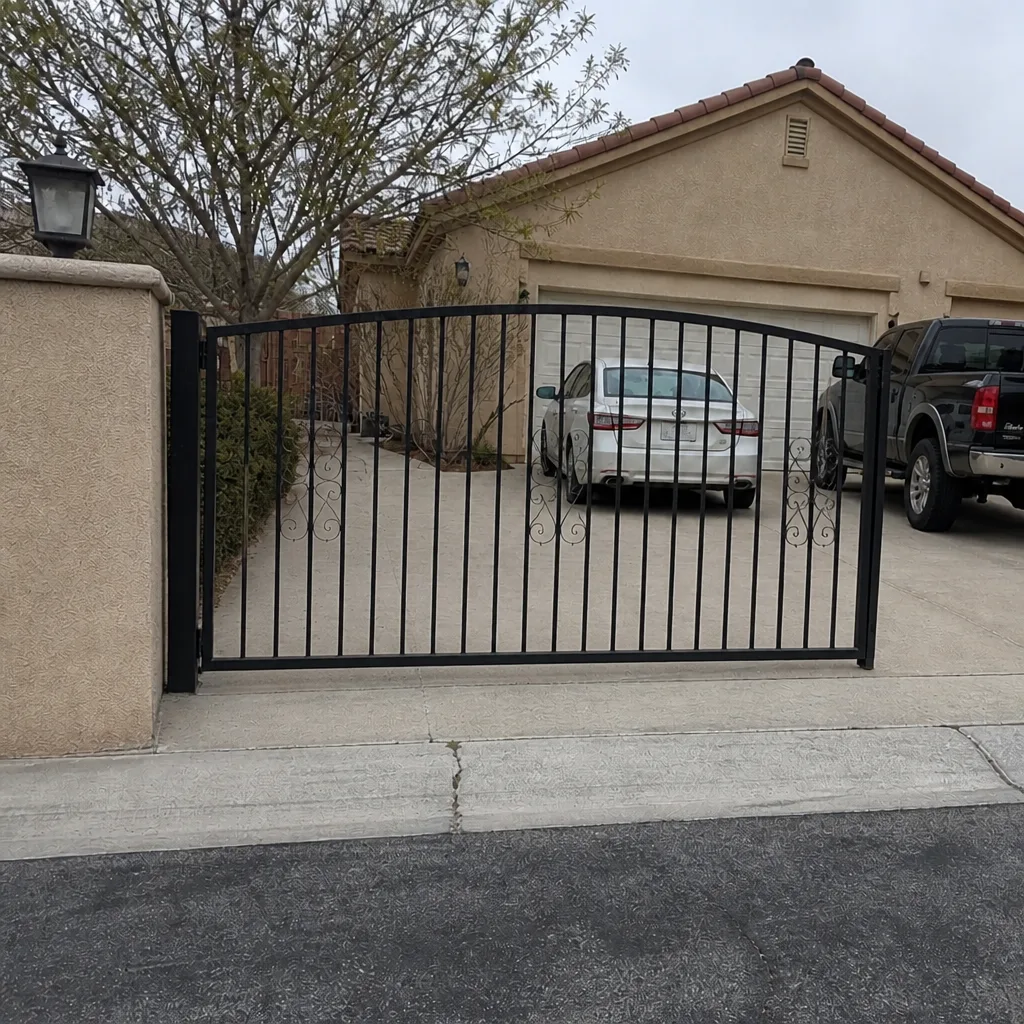 After
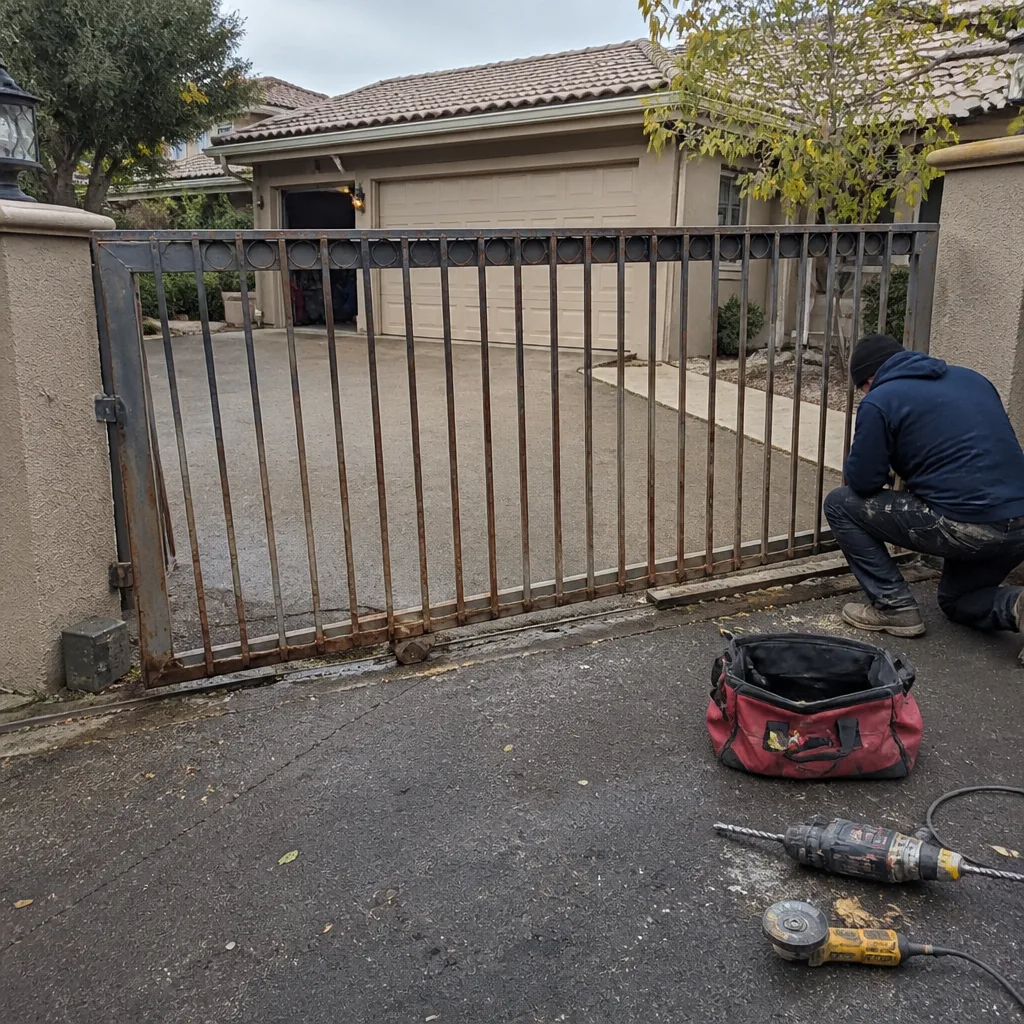 Before
 After
 Before
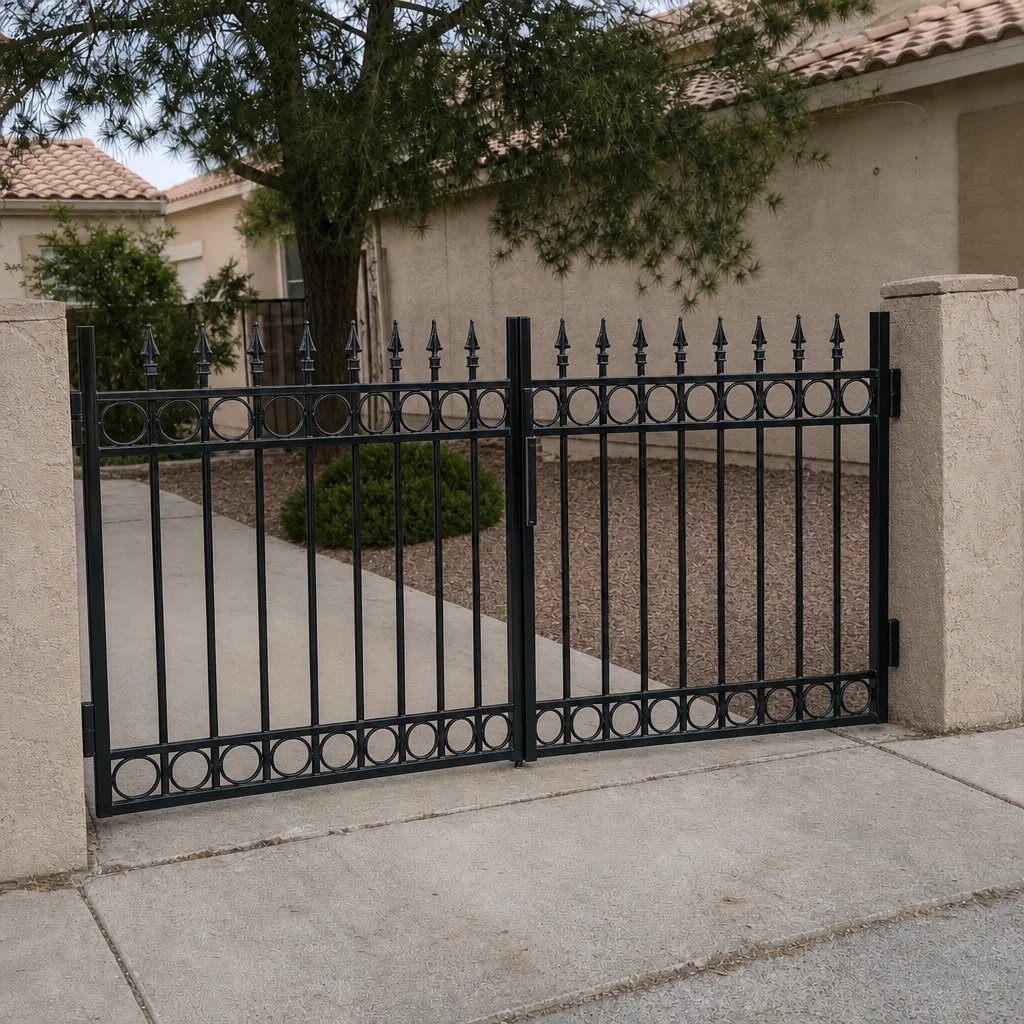 After
When to Call a Professional
Call a professional in any of these situations: a hinge plate, post collar, or frame corner miter needs welding; the gate sags, drags, or leans; the gate moves under power and the work touches the frame or post; there’s rust at a structural joint; a safety device isn’t working; or you’ve already had a go at it and the weld failed. Those are all jobs where the risk isn’t to your pride, it’s to whoever’s near the gate when a joint lets go. For everything else, use the framework above and trust your judgment. Ironworks Gate Co. Summerlin offers free estimates in Summerlin – call (866) 623-9848. Every job is quoted before a single bolt is turned, and backed in writing by our 90-Day Done Right Promise.
Frequently Asked Questions
No. A hinge plate is a load-bearing joint that carries the full weight of the gate, and a DIY weld there can look fine and fail months later. Hinge welding requires proper fusion depth on structural steel, and it’s professional work on every gate we’ve seen. Call (866) 623-9848 for a free estimate on hinge repair in Summerlin.
Decorative reattachment, non-structural ornamental repair, and surface prep are reasonable DIY work. If the piece carries no load and nothing structural depends on it, a careful homeowner with the right equipment can handle it. Anything on a load path, or anything near the gate’s wiring, belongs to a trained welder. Call (866) 623-9848 if you’re not sure which category your repair falls into – estimates are free.
Usually not. Homeowner’s policies typically exclude damage from faulty homeowner workmanship, and a failed DIY structural weld is exactly that scenario. Professional work from a licensed company gives you the documentation an insurer needs. Call (866) 623-9848 to have a structural weld inspected and quoted in writing before a failure happens.
Most residential gate repairs in Summerlin run in the range of a few hundred dollars for hardware, hinge, and welding work, with full structural replacement costing more. The exact figure depends on the joint and the gate’s condition, and we quote it in writing before any work starts. Call (866) 623-9848 for an exact quote – estimates are free.
Yes, if the operator isn’t isolated first. Welding sends slag and heat into control wiring, safety devices, and sometimes buried conduit near the gate line, and damage there can cause the gate to behave unpredictably. A gate specialist powers down and isolates the operator before any welding. Call (866) 623-9848 to have automation work handled correctly.
Look for rust streaks at the weld toe, a gate that sags on one side, or a hinge that pops or squeaks under load. Those are early signs, and they’re worth inspecting by a trained eye before the joint fails. Call (866) 623-9848 for a free second opinion on any written estimate you’ve received, or to have a suspect weld looked at in Summerlin.
The Bottom Line
The gap between a DIY weld and a professional one isn’t tool access. It’s fusion depth, joint prep, correct isolation of the automation system, and a paper trail if something goes wrong. Decorative repair is fair game for a careful homeowner. Hinge plates, post collars, and frame corner miters are not – and any joint on a powered gate carries electrical and safety-device risk on top of the structural risk. If the part is load-bearing, or the gate moves under power, it’s professional work. Anything else, use your judgment and check the buried lines first.
Our technicians have up to 13 years of experience, and we work on LiftMaster, FAAC, BFT, and Linear systems with the same care on every job. When you’re ready to have a structural joint checked or a worn hinge replaced, we’ll give you a square deal: an upfront price, no surprises on the bill, and a written 90-Day Done Right Promise behind the work. Call Ironworks Gate Co. Summerlin at (866) 623-9848 for a free estimate, or start at Ironworks Gate Co. Summerlin home. A live person answers the phone any hour, any day.
Written by the team at Ironworks Gate Co. Summerlin.