
Last updated November 17, 2026
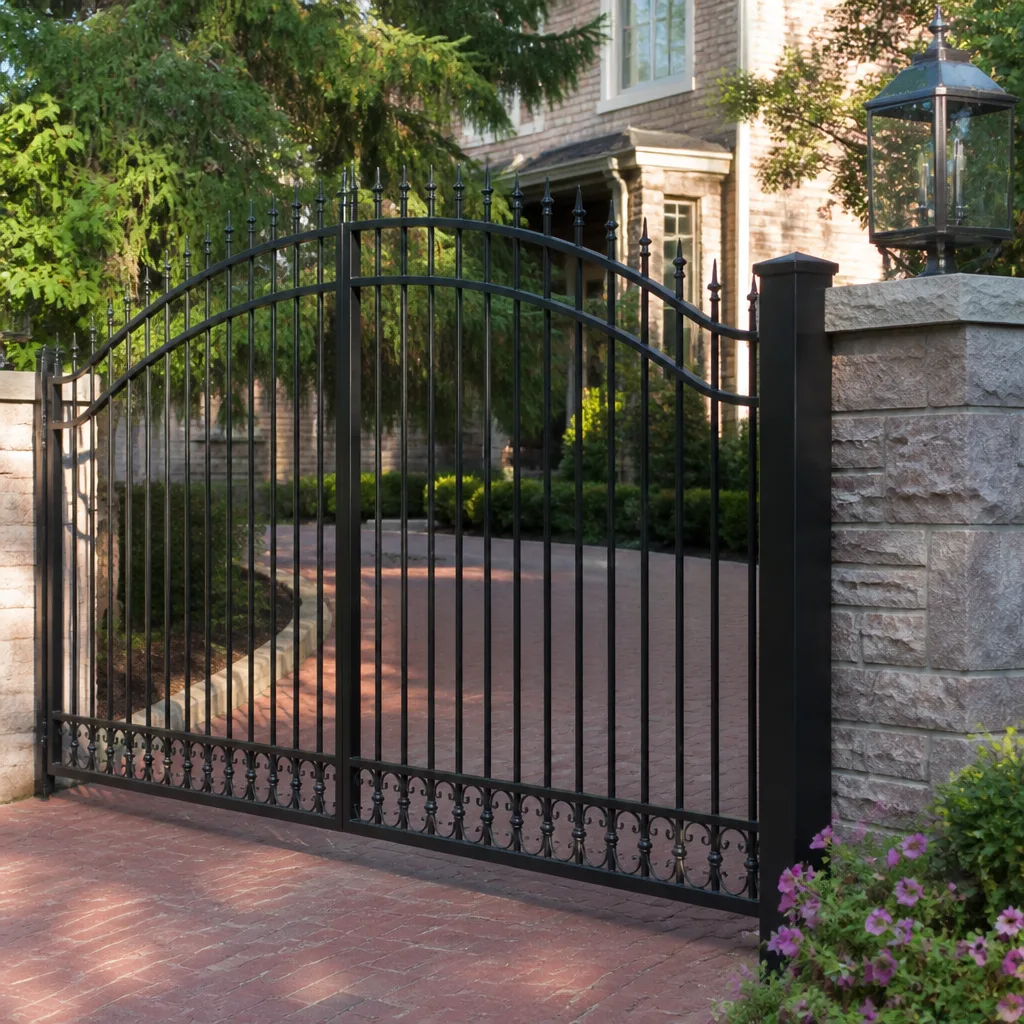 Wrought iron
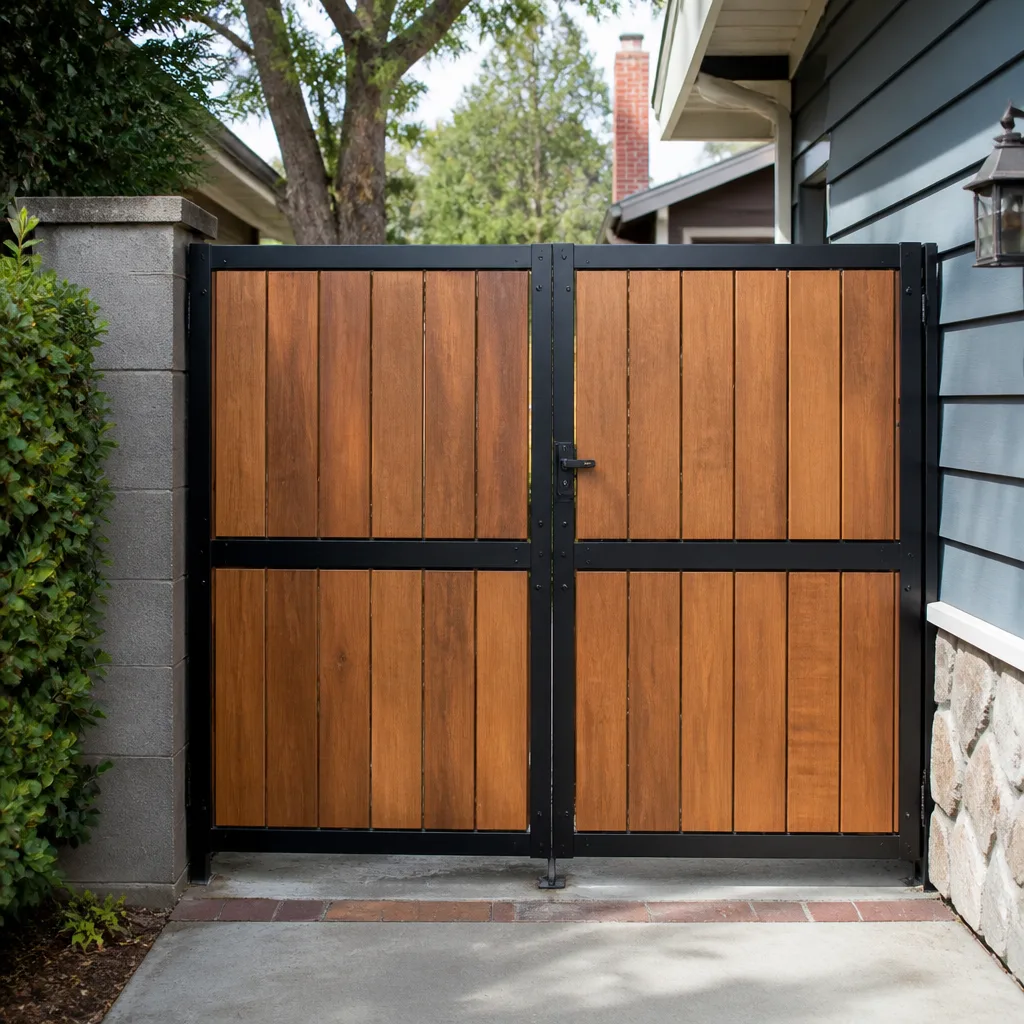 Wood & steel frame
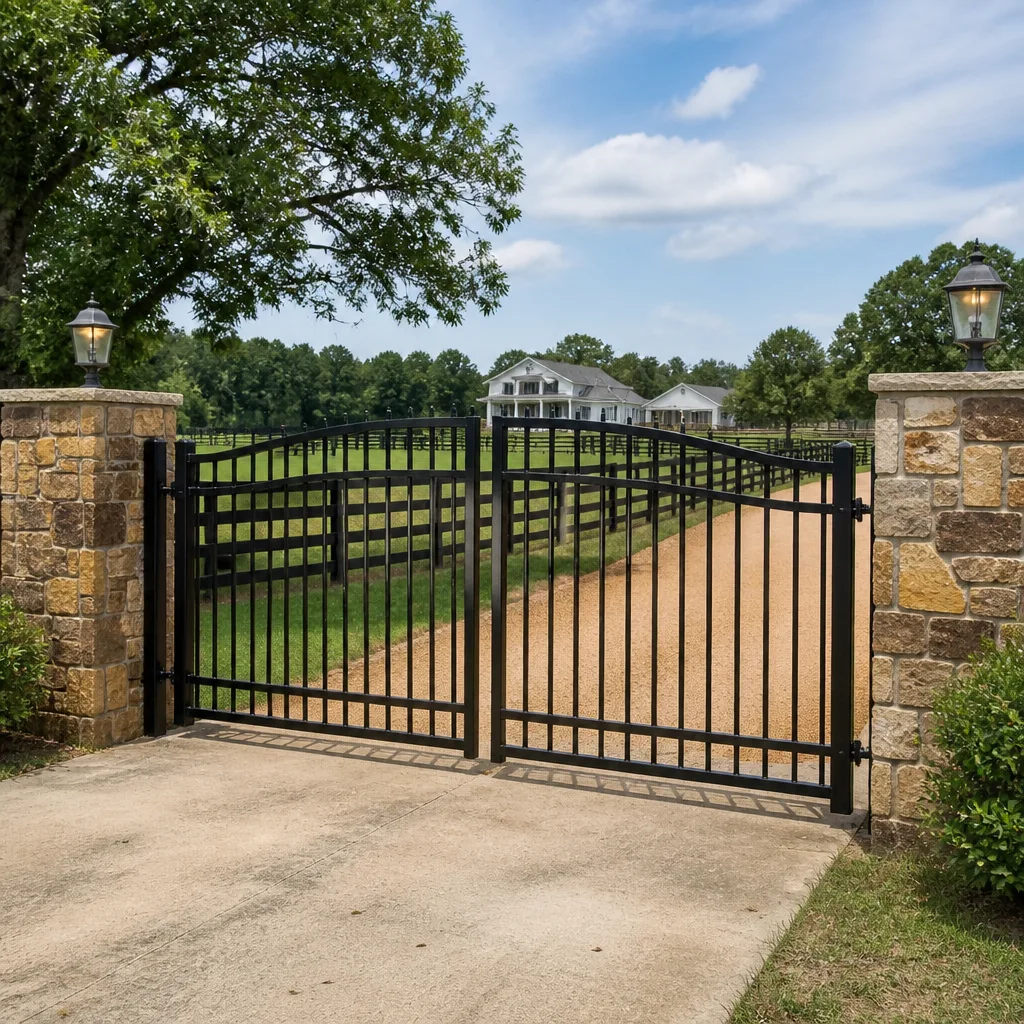 Farm & ranch
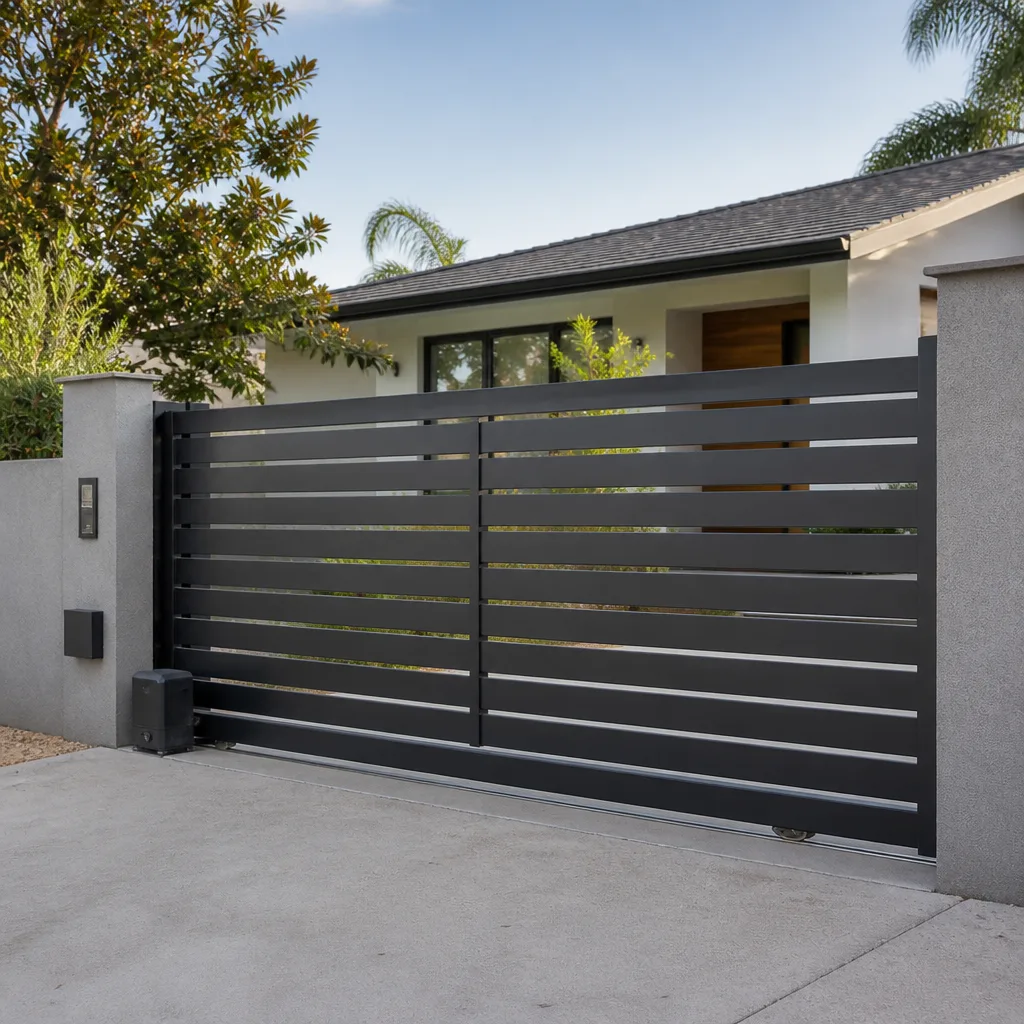 Sliding driveway gates
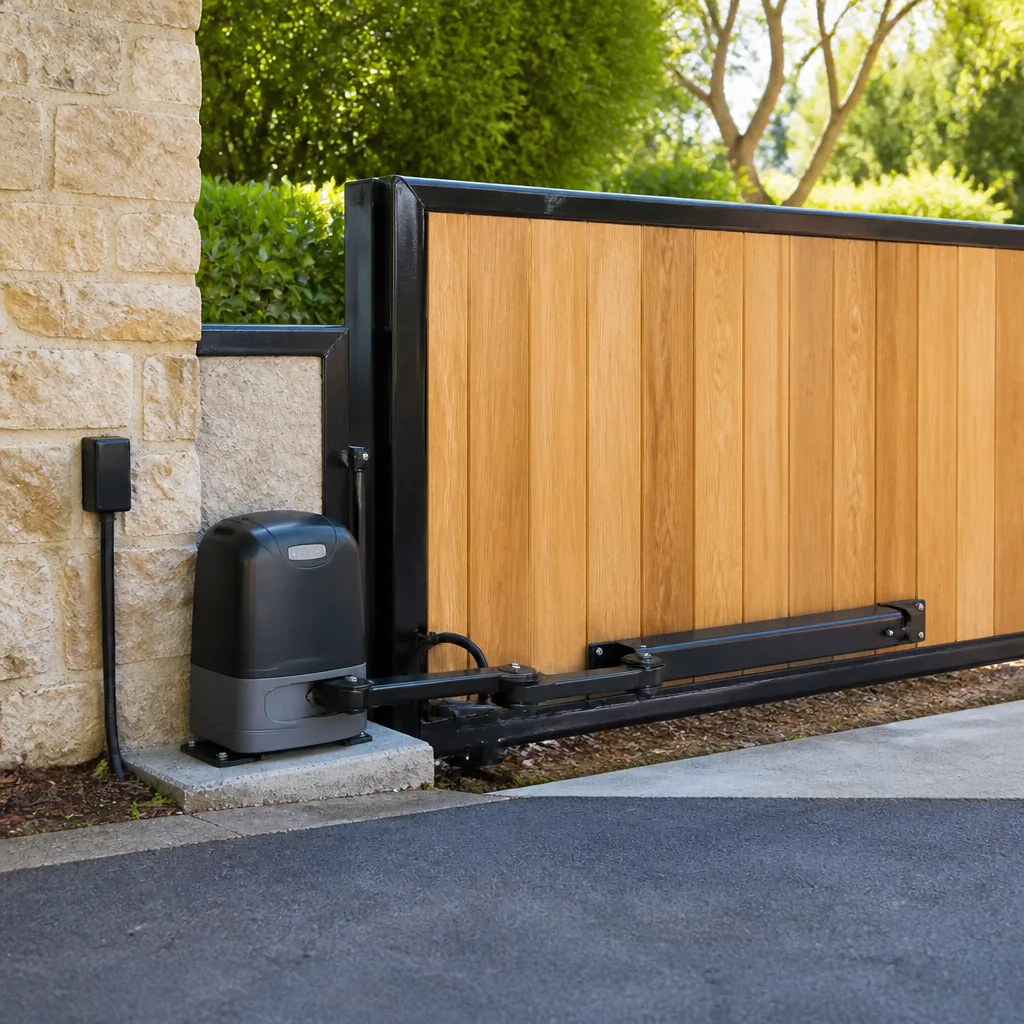 LiftMaster operators
Free on-site gate assessment - hinges, posts, and your LiftMaster or Nice gate operator checked before anything is quoted
The assessment is free and the quote is the invoice.
Get your free estimateDIY vs Professional Gate Repair: What’s Safe to Do Yourself
A residential gate operator can hold enough stored spring tension to break a wrist. That isn’t a scare tactic – it’s the plain physics of the machine sitting at the end of your driveway. The same homeowner who can confidently reset a tripped breaker in the garage panel should still hand off certain gate repairs, not because they lack skill, but because some tasks carry injury risk, insurance exposure, and Clark County code implications that make amateur work quietly dangerous. In this guide, we’ll walk through what’s genuinely safe to tackle yourself in Summerlin and what deserves a trained hand.
Quick Answer
You can safely reprogram remotes, clean and realign safety sensors, lubricate hinges and tracks, and replace batteries in most residential gate operators. You should not touch spring tensioning, heavy-gate hinge adjustments that require supporting the leaf, or any wiring inside the operator enclosure – those jobs carry real injury risk and can affect code compliance and insurance coverage if done wrong.
Styles & brands we work with
- Wrought iron
- Wood & steel frame
- Farm & ranch
- Sliding driveway gates
- LiftMaster operators
Table of Contents
- Safe DIY Tasks You Can Do Yourself
- Tasks That Look Simple but Aren’t
- The Code and Permit Reality in Clark County
- How Bad Repairs Can Void Insurance Coverage
- The Honest Cost Comparison: Pro vs. DIY Mistake
- When a Repair Turns Into a Replacement Decision
- Summerlin Conditions That Affect Gate Wear
- When to Call a Professional
Safe DIY Tasks You Can Do Yourself
Some gate maintenance is genuinely within reach for a careful homeowner with basic tools and a little patience. These jobs don’t involve stored energy, mains voltage, or anything that can swing or drop on you unexpectedly. We’ve seen Summerlin homeowners handle all of the following without issue.
- Reprogramming remotes and keypads. Adding a new remote or changing an access code is a menu-and-button job on most operators. The manual for your unit – LiftMaster, Ghost Controls, Elite, or whichever brand sits on your operator – walks through the sequence in a few steps. No tools required.
- Cleaning and realigning safety sensors. Photocell sensors fail more often from dust and spider webs than from any mechanical fault. Wipe the lens with a soft cloth, check that the two sensors face each other squarely, and confirm the alignment light is steady. A leaning post or a bumped sensor bracket causes most false reversals.
- Lubrication. A light coat of silicone-based lubricant on hinges, rollers, and the track keeps a swing or slide gate moving quietly. Avoid grease on exposed tracks in Summerlin’s dusty spring months – it collects grit and accelerates wear.
- Battery replacement. Backup batteries in the operator housing and batteries in wireless keypads are user-serviceable on most models. Match the voltage and chemistry from the old battery exactly, and don’t substitute a car battery for a sealed lead-acid unit.
- Visual inspection. Walk the gate line once a month. Look for cracks at weld points, sagging hinges, loose bolts, or frayed wires at the operator. Catching a worn hinge before it shears off its post saves real money.
If any of these steps reveal something you can’t fix with a wrench and a manual, that’s the point to stop. More on that below.
Tasks That Look Simple but Aren’t
The dangerous repairs are the ones that look like they belong on the safe list. A hinge adjustment sounds like turning two bolts. A spring tension adjustment sounds like tightening a nut. Both can go badly wrong in a fraction of a second.
Hinge Adjustment on a Heavy Iron Gate
A steel or wrought-iron gate leaf on a Summerlin estate property can weigh 300 to 600 pounds or more. Loosening a hinge bolt without supporting the leaf means the full weight drops or swings free. We’ve seen gates come off the post entirely, crushed fingers, and worse. If the gate sags, the fix usually involves re-welding a hinge plate or replacing the hinge itself – both jobs that need the leaf supported and, in most cases, removed.
Spring Tensioning on Slide and Swing Gates
Extension and torsion springs store enormous energy. A torsion spring under load can release with enough force to break a bone or cause a serious laceration. There is no safe way to tension a gate spring without proper winding bars, the correct technique, and someone spotting you. This is the single task we most strongly discourage homeowners from attempting.
Any Wiring Inside the Operator Enclosure
Low-voltage control wiring sits next to 120V line voltage inside the operator housing on many units. A miswired control board can fry an expensive circuit, and contact with line voltage is a genuine electrocution hazard. Even swapping a control board – which sounds like a plug-and-play job – requires disconnecting power at the source and confirming dead circuits before touching anything.
If your gate needs one of these repairs, we’d rather you call than try it. That’s not upselling; it’s the honest answer. Our Gate Repair in Summerlin page outlines how we handle this category of work.
The Code and Permit Reality in Clark County
Nevada and Clark County don’t require a licensed contractor for every small repair, but certain work crosses a line into regulated territory. Electrical work on the 120V circuit feeding a gate operator falls under Clark County electrical code and generally requires a licensed electrician or a specialty contractor qualified to perform it. If your repair involves running a new circuit, replacing a damaged conduit, or working inside the line-voltage side of the operator, the work needs to be done by someone licensed to do it.
Here’s what most homeowners don’t realize: even a repair that doesn’t strictly require a license can create a compliance problem down the road. If you sell the home and an inspector finds unpermitted electrical work at the gate, that becomes a negotiation issue. If the gate later fails and causes damage, the lack of permitted work becomes an insurance question. For Summerlin properties in HOAs – and most of Summerlin is governed by one – unapproved modifications to a gate on a shared wall or common-access point can also trigger HOA enforcement.
The practical takeaway: any repair touching electricity, structural welding, or the gate’s anchorage should be done by a licensed professional. Cosmetic and routine maintenance work usually doesn’t cross that line.
How Bad Repairs Can Void Insurance Coverage
This is the part of the conversation that rarely gets said out loud. If a gate you repaired improperly later fails and injures someone, damages a vehicle, or allows unauthorized access that leads to a theft or worse, your homeowner’s policy may deny the claim on grounds of negligent workmanship. Standard homeowner policies exclude damage caused by faulty workmanship performed by the insured or an unlicensed party.
Consider two scenarios:
- A homeowner adjusts a hinge, doesn’t tighten it properly, and three weeks later the gate leaf drops onto a child walking up the driveway. The medical claim goes to insurance, and the adjuster asks who did the repair.
- A homeowner splices wiring at the operator, the splice fails in a monsoon storm, the gate opens during the night, and a theft follows. The insurer may treat this as owner-caused loss.
Professional work changes the equation because the liability shifts to the contractor. Every job we complete is covered by our 90-Day Done Right Promise – a written guarantee that if something isn’t right, we come back and make it right. That guarantee is worth more than the repair itself when the stakes are this high.
The Honest Cost Comparison: Pro vs. DIY Mistake
DIY looks cheaper until it isn’t. We’ve been called out to Summerlin homes where a homeowner tried to fix a problem, ordered the wrong part, installed it backwards, and now the operator needs more work than if we’d been called first. Here’s the realistic math:
- Remote reprogramming: DIY free, pro visit typically $75-$125. Straightforward either way – we recommend DIY.
- Sensor cleaning and alignment: DIY free, pro visit $95-$150. Worth DIY first.
- Lubrication and tune-up: DIY under $20 in supplies, pro seasonal tune-up $89 at our current offer. Roughly even; the pro adds adjustment of the operator and a full safety check.
- Hinge replacement on a heavy gate: Pro $200-$450 depending on the gate type. DIY attempt frequently ends with a damaged gate post, which turns into a $600-$1,200 weld-and-rehang job.
- Spring tensioning: Pro $180-$380. DIY attempt risks a hospital visit and, in the worst cases, an operator replacement that adds $400-$900 to the bill.
- Control board replacement: Pro $275-$500 including the board. DIY misdiagnosis – replacing the board when the actual fault was a $40 limit switch – is common and expensive.
- Misdiagnosed opener failure: A homeowner replaces a $350 motor when the real problem was a $60 capacitor. Pro diagnostics identify the true fault on the first visit; our technicians carry service parts for all nine major brands.
Every price we quote is settled upfront and agreed before a single bolt is turned. No surprises on the bill. If you’re curious what a specific repair costs on your gate, start with our Gate Motor & Opener in Summerlin page or call for a free second opinion on any written estimate you’ve already received.
When a Repair Turns Into a Replacement Decision
Not every failing gate should be repaired. Sometimes the honest call is that the old operator has reached the end of its service life and the next repair money is better spent toward a new unit. Here’s the rule we use:
- Age past ten years. Most residential operators have a service life of 10-15 years. Past that, parts availability thins out and each repair is a temporary patch.
- Two or more motor or control board failures in a single year. That’s not coincidence. It’s a sign the unit is on its way out.
- Repeated safety-sensor faults. If sensors keep tripping after professional alignment, the board or the sensor wiring is usually the culprit and often not worth chasing.
- Gate structure needs re-welding on more than one hinge. At that point, a new gate or a full rehang is more cost-effective than patching.
If you’re weighing a repair against a replacement in Summerlin, our Gate Installation in Summerlin page covers what a proper replacement involves, and we’re glad to walk you through the numbers in plain terms.
Summerlin Conditions That Affect Gate Wear
Local conditions matter when you’re deciding what to DIY. Summerlin’s specific climate accelerates wear in ways homeowners moving from wetter regions don’t always expect.
- Dust in spring. Summerlin gets regular wind events from March through May that push fine desert dust into every moving part. Track lubricant becomes a liability during this window because it captures the grit and grinds the track. Clean first, then use a dry silicone spray.
- UV exposure. The sun here degrades plastic housings, sensor lenses, and remote casings faster than most manufacturers’ timelines assume. Cosmetic cracking around sensor bodies often leads to actual failures.
- Monsoon season. July and August storms bring wind and sudden water into places it hasn’t been all year, exposing wiring faults and loose enclosures. A month before monsoon season is the right time for a proper tune-up.
- Temperature swings. Summerlin’s winter nights drop into the 30s while July afternoons push 110. Metal expands and contracts, and weld points take stress. A gate that worked in April may show fresh cracks by November.
- HOA requirements. Many Summerlin communities have specific rules about gate appearance, operator brands, and approved installers for shared-access points. Checking your HOA’s rules before any major repair or replacement saves headaches.
Common Mistakes to Avoid
- Buying a replacement operator before diagnosing the real fault. Nine out of ten “dead” operators we see in Summerlin are a failed capacitor, a blown fuse, or a bad sensor. Ordering a motor before checking those is money burned.
- Lubricating tracks in spring. Summerlin dust sticks to grease. Use the wrong product in the wrong month and you’ll accelerate wear instead of preventing it.
- Ignoring a sagging gate until it won’t close. A small hinge issue is a $200 fix. A post or gate leaf that’s been twisting for months is a $1,200 repair. Address sag when you first notice it.
- Buying third-party remotes that don’t match the receiver. Cheap universal remotes frequently don’t work with DoorKing or Elite systems, and returning them costs time most homeowners don’t want to spend.
- Splicing wiring with wire nuts in an outdoor enclosure. Exterior splices corrode. Any wiring fault you try to “fix” this way in Summerlin will be back within the year.
- Assuming a noisy motor needs replacing. A well-built operator that’s just growling is often a gear wear issue that can be repaired for a fraction of a replacement.
- Ignoring HOA notification requirements. Some Summerlin communities require prior notice before a gate repair is done on a shared property line. Skipping this step can trigger a fine.
When to Call a Professional
Call a professional for any repair involving spring tension, heavy-gate hinge work that needs the leaf supported, wiring inside the operator enclosure, structural welding, or a diagnostic problem you’ve already tried to solve once without success. Also call if the gate is on an HOA-regulated shared access point, if your insurance has ever asked about the repair history of the gate, or if the existing fix you attempted is now worse than the original problem. Our technicians have up to 13 years of experience with the full range of residential gate systems, and we handle every brand from Ghost Controls and Mighty Mule to DoorKing and Elite.
Ironworks Gate Co. Summerlin offers free estimates in Summerlin – call (866) 623-9848. A live person answers 24 hours a day, 7 days a week. No voicemail trees, no callback queues, no waiting until Monday morning.
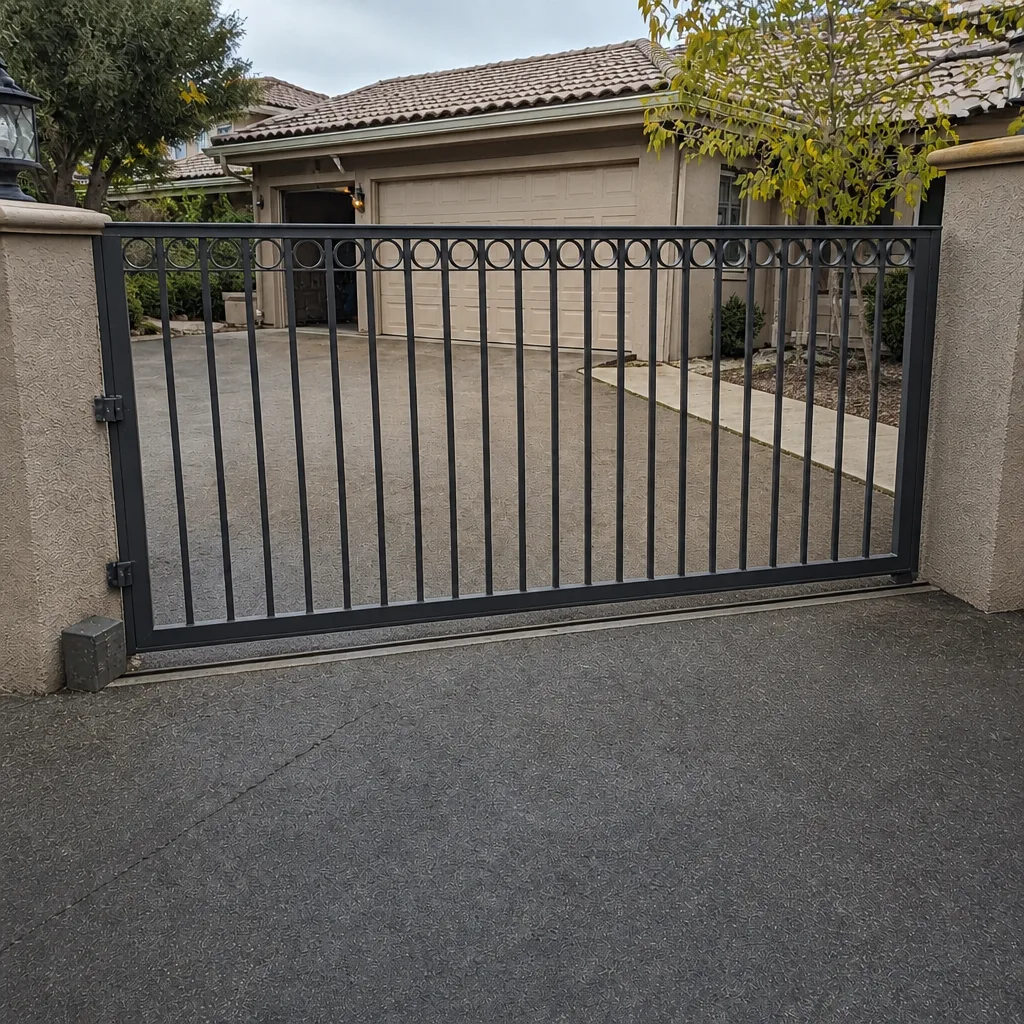
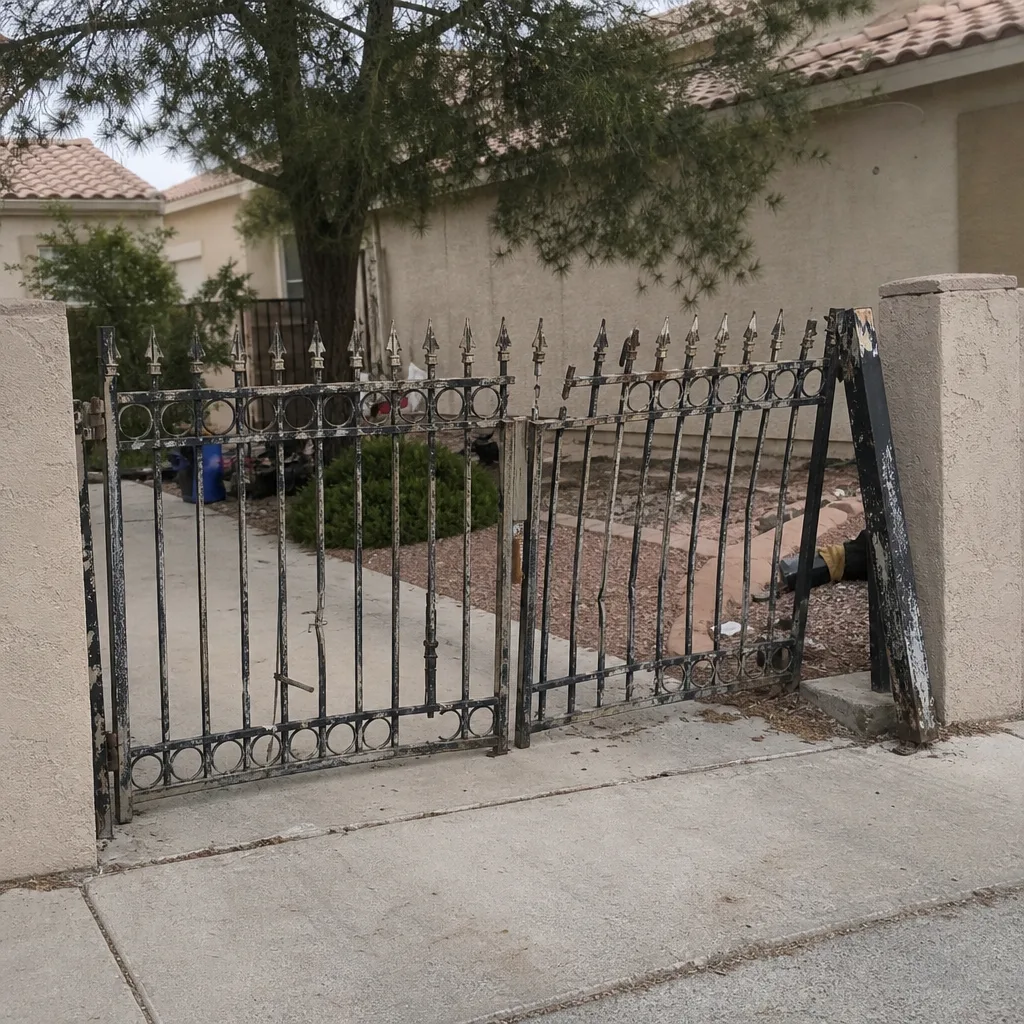
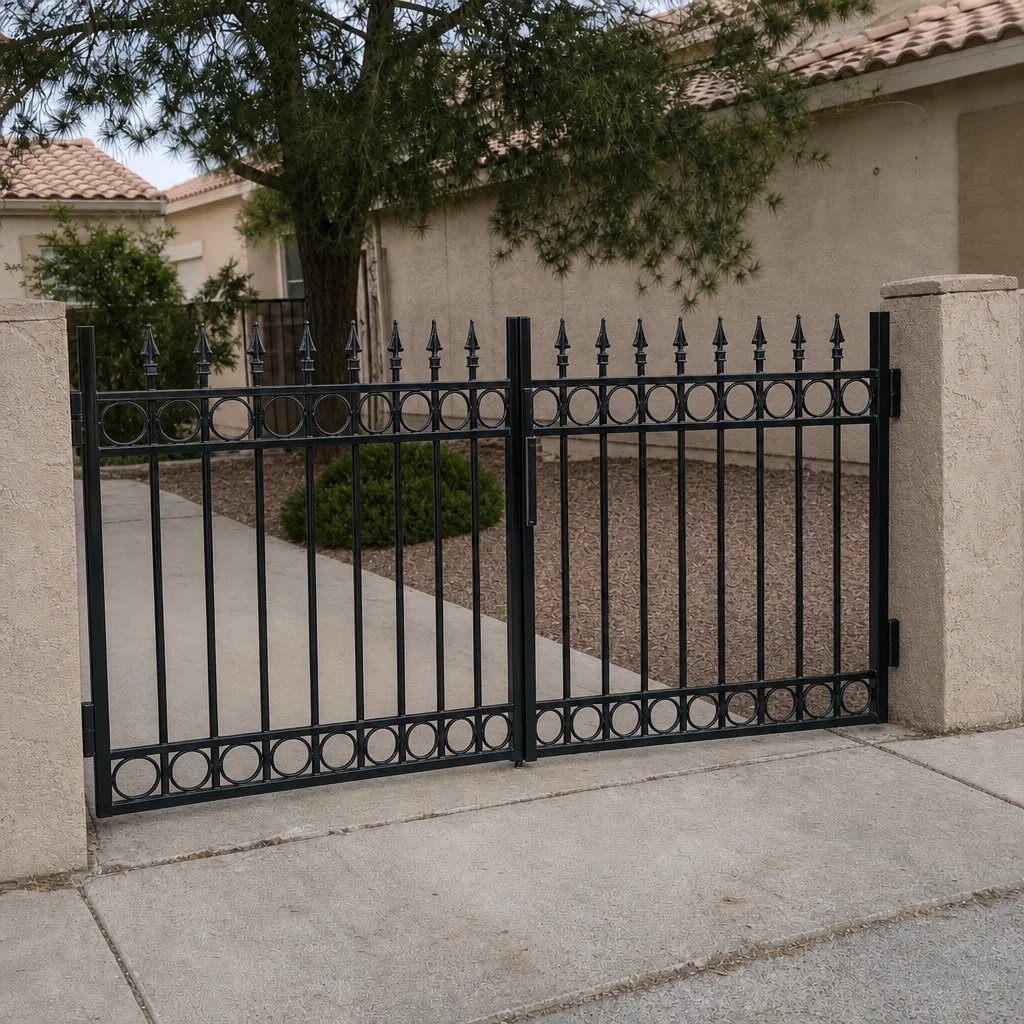
See the difference
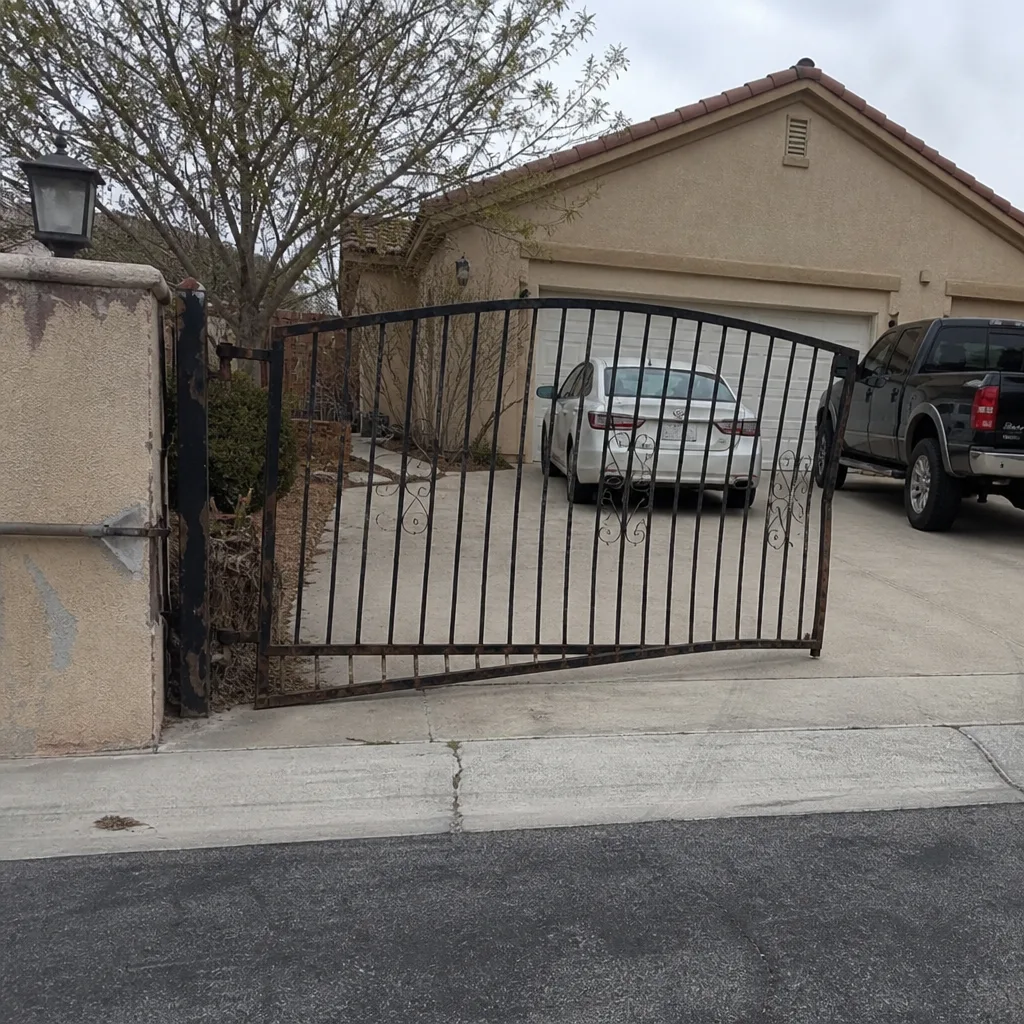 Before
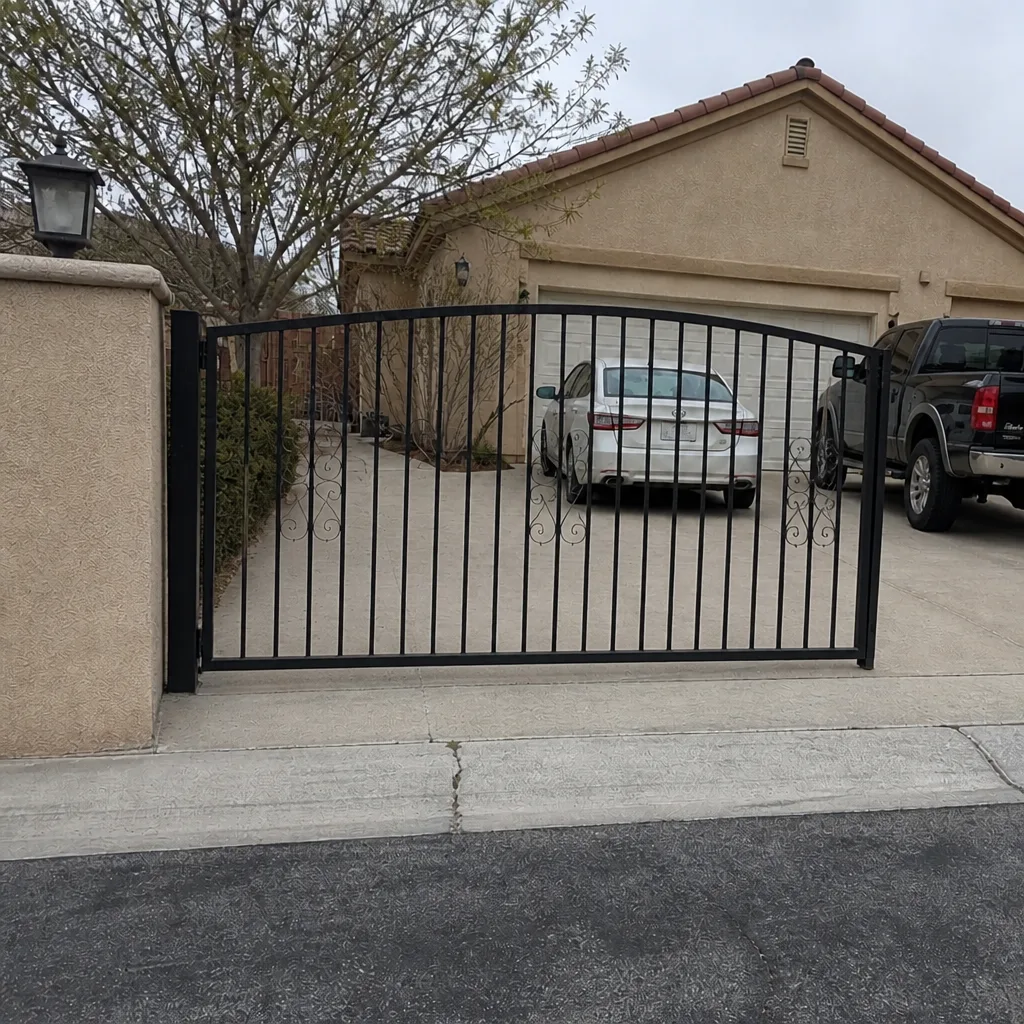 After
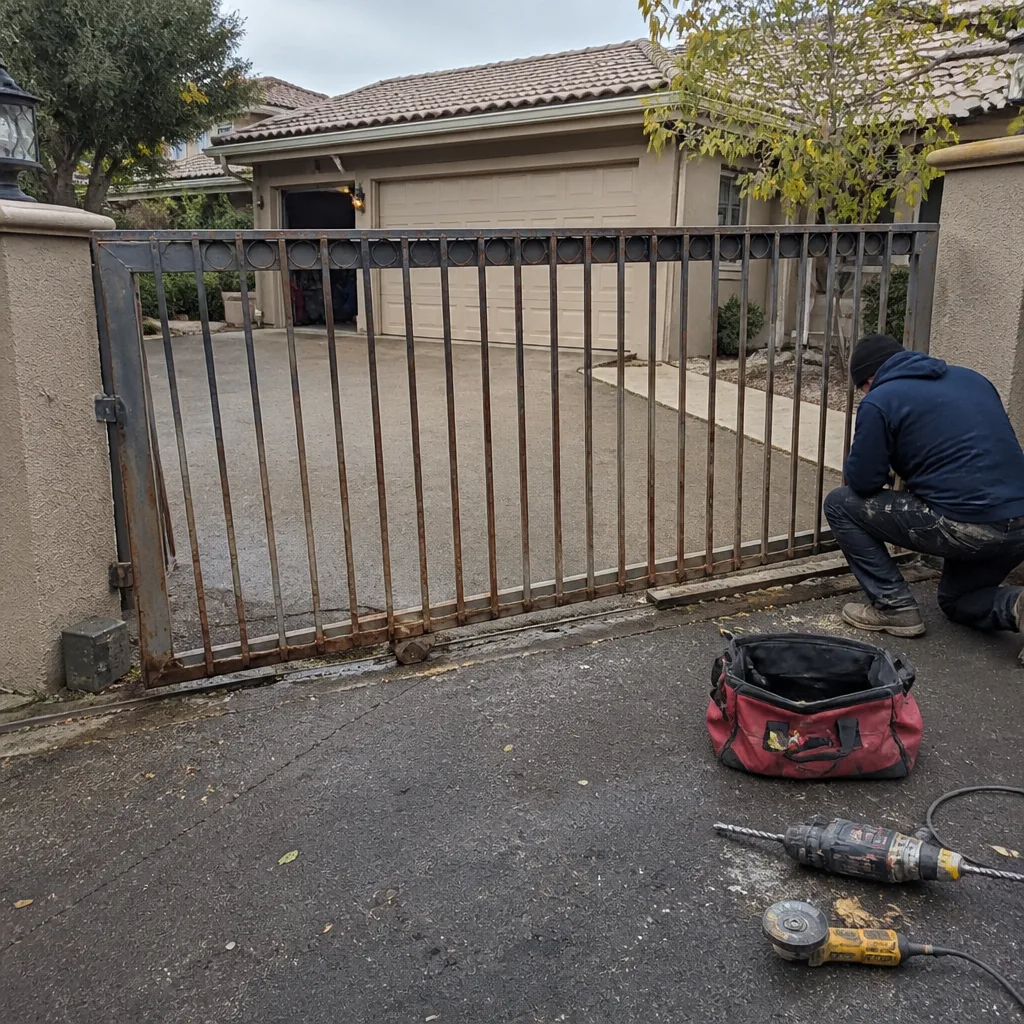 Before
 After
 Before
 After
Frequently Asked Questions
Yes. Remote programming is the safest DIY gate task there is. You’ll need the operator brand’s manual (or a quick call to us for the sequence), the new remote, and about five minutes. If the remote won’t program after a couple of tries, the receiver or the remote’s compatibility is usually the issue, and a licensed technician can sort it quickly.
The best case is that you don’t succeed. The realistic worst cases involve serious injury from stored spring tension releasing suddenly, or a gate that fails under load later because the spring was improperly wound. Never attempt this yourself; there’s no safe shortcut around the proper tools and technique. Call (866) 623-9848 for a quote – our spring repairs are typically completed in a single visit.
Usually not. Most policies exclude damage caused by the insured’s own faulty workmanship. If the repair was done by a licensed professional and that professional’s work later causes damage, the liability shifts. That’s a big part of why we back every job with our written 90-Day Done Right Promise.
For most routine repairs, no permit is needed. For electrical work on the 120V feed to the operator, or structural changes to the gate anchorage, Clark County electrical code generally requires licensed work. If you’re unsure whether your repair crosses that line, call us and describe the situation – we’ll tell you straight.
On many units the motor can be replaced independently of the control board and housing, which is a meaningful cost saving. On older operators past the ten-year mark, though, a full replacement often makes more financial sense because other components are near failure too. Diagnosis first, then decision – that’s how we approach it in Summerlin.
Once a year for standard residential gates, and twice a year for gates on shared access points or in dusty neighborhoods. The seasonal tune-up is the single highest-return maintenance step a Summerlin homeowner can take, because it catches wear before it becomes a repair. Our tune-up offer runs $89 and includes operator adjustment, lubrication, and a full safety check.
The Bottom Line
Some gate work belongs in your hands: remote programming, sensor cleaning, lubrication, and battery swaps are all genuinely safe and genuinely worth doing yourself. The rest – springs, hinges on heavy gates, wiring, structural welding – carries real risk to your body, your code compliance, and your insurance coverage. The DIY-vs-pro call isn’t really about whether you’re capable. It’s about whether the stakes justify the attempt. For the repairs where a mistake costs more than the fix, call a professional and sleep well. Ironworks Gate Co. Summerlin is here for the Ironworks Gate Co. Summerlin home and every driveway in between, with upfront pricing agreed before we touch a bolt.
Contact
If you’ve read this far and you’re still not sure which side of the line your repair sits on, that’s a good reason to call. We’ll ask a few questions, tell you honestly whether it’s a DIY job or one for us, and if it’s ours, we’ll quote it upfront before any work begins. Reach Ironworks Gate Co. Summerlin at (866) 623-9848 for a free estimate. Live person answers every call, 24 hours a day, 7 days a week. Free second opinion on any written estimate, $50 off any repair over $250, and a permanent 5% senior and veteran discount. Done right – and backed in writing.
Written by the team at Ironworks Gate Co. Summerlin.