
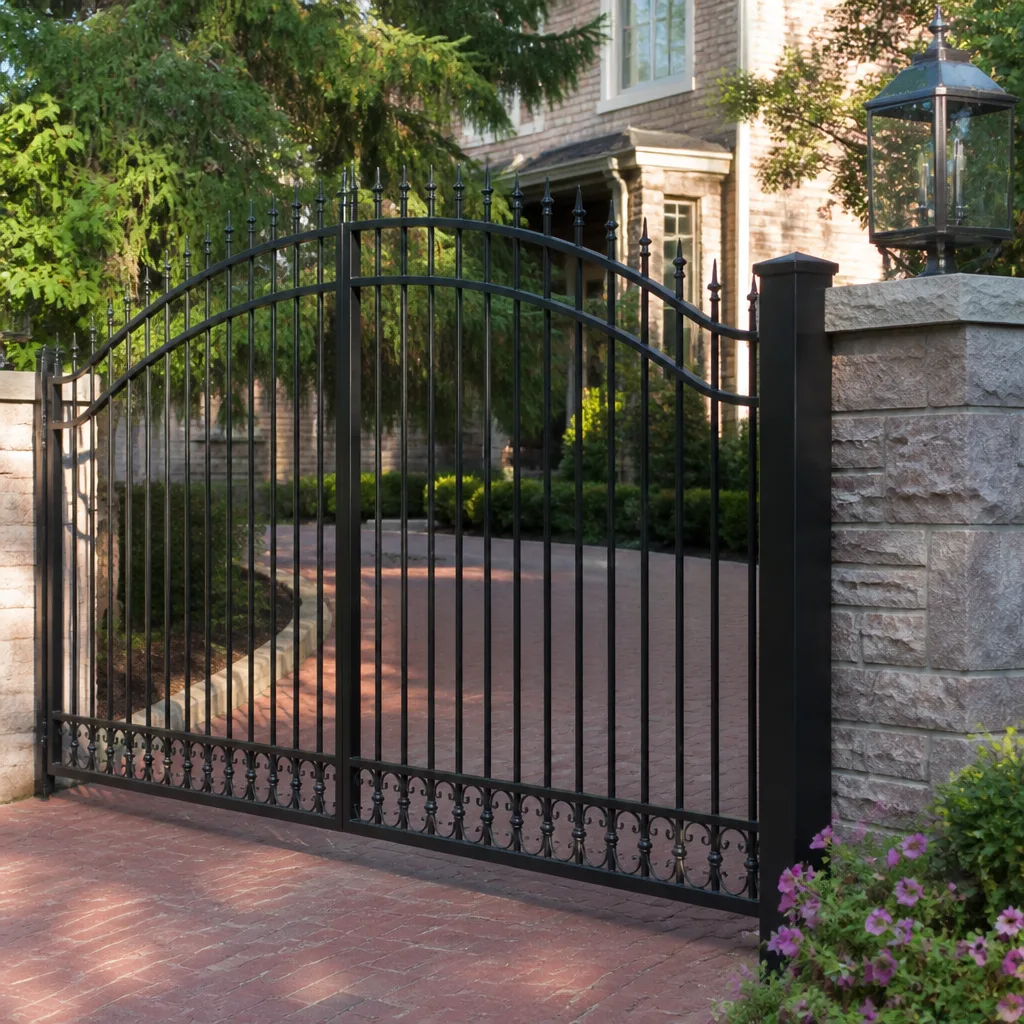
 Wrought iron
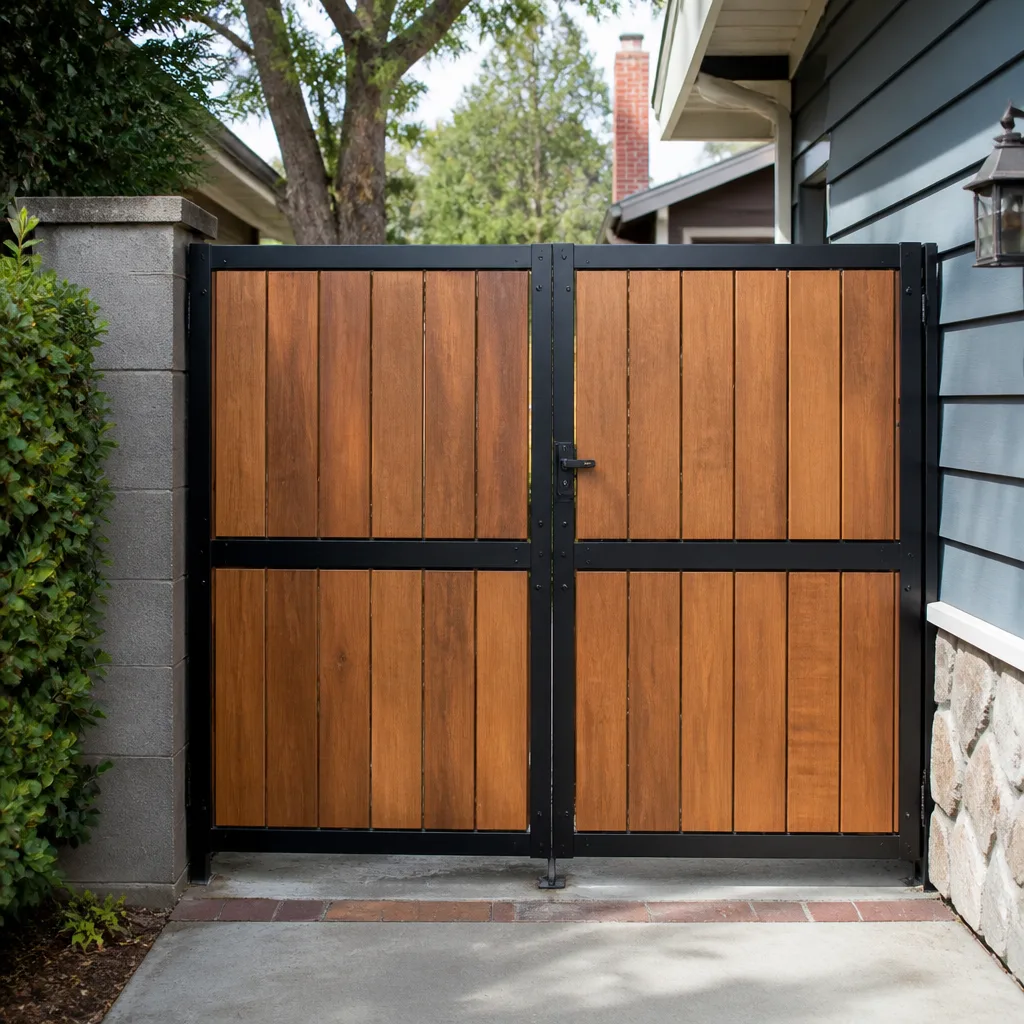 Wood & steel frame
 Farm & ranch
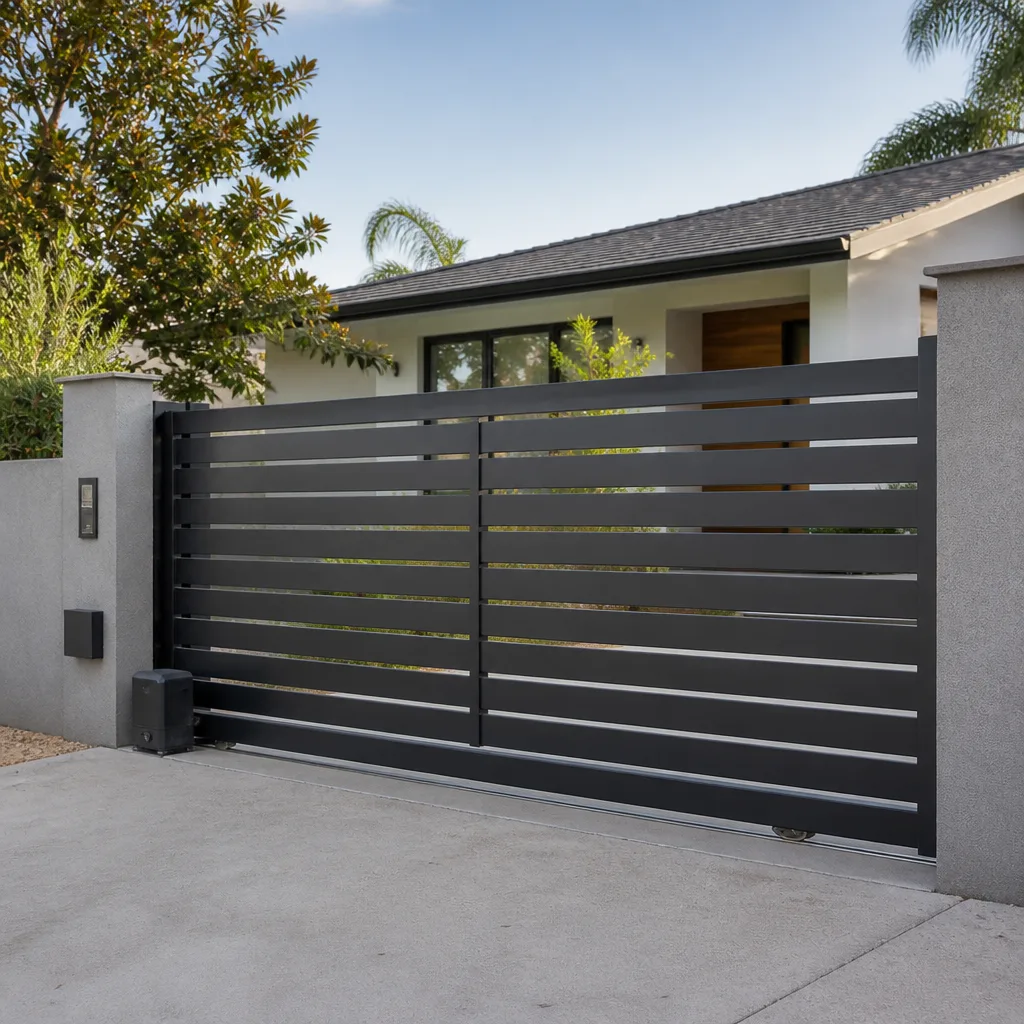 Sliding driveway gates
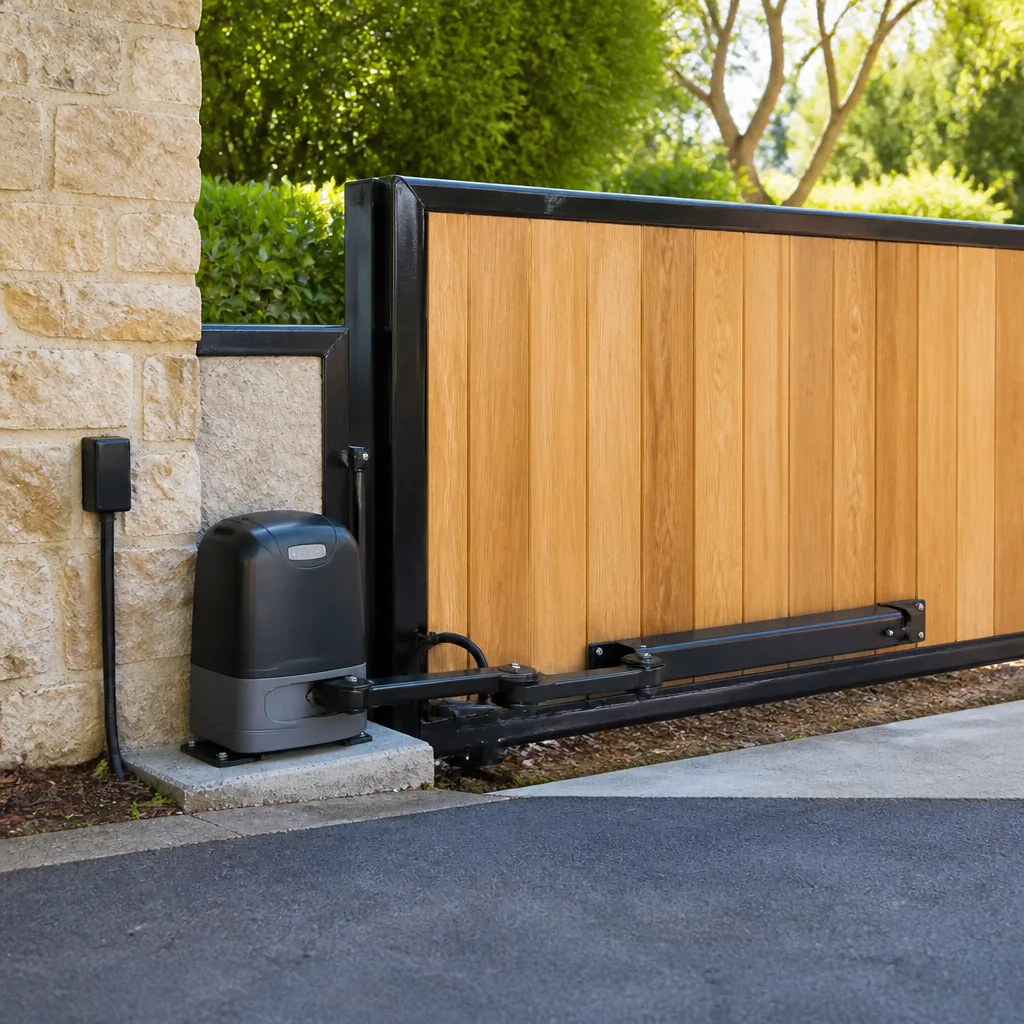 LiftMaster operators
Free on-site gate assessment - hinges, posts, and your LiftMaster or Nice gate operator checked before anything is quoted
The assessment is free and the quote is the invoice.
Get your free estimateStyles & brands we work with
- Wrought iron
- Wood & steel frame
- Farm & ranch
- Sliding driveway gates
- LiftMaster operators
See the difference
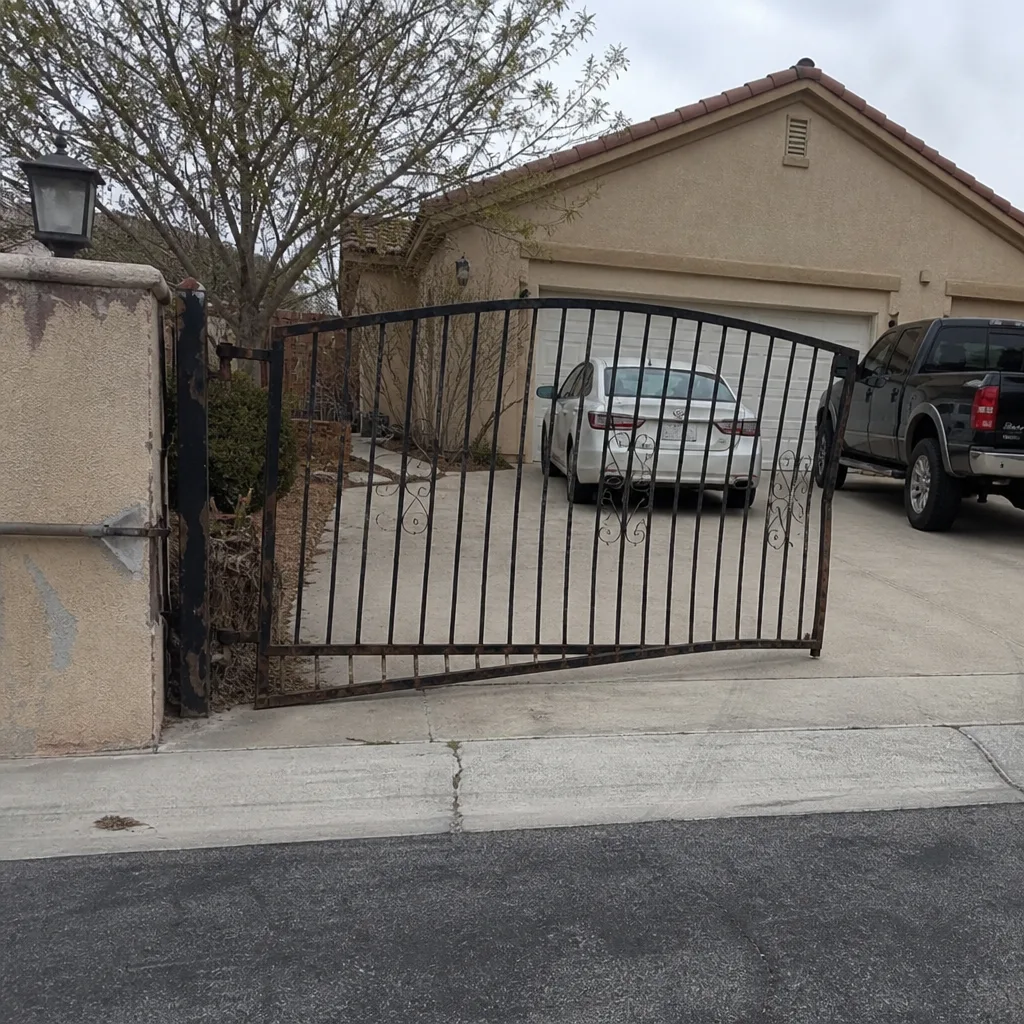 Before
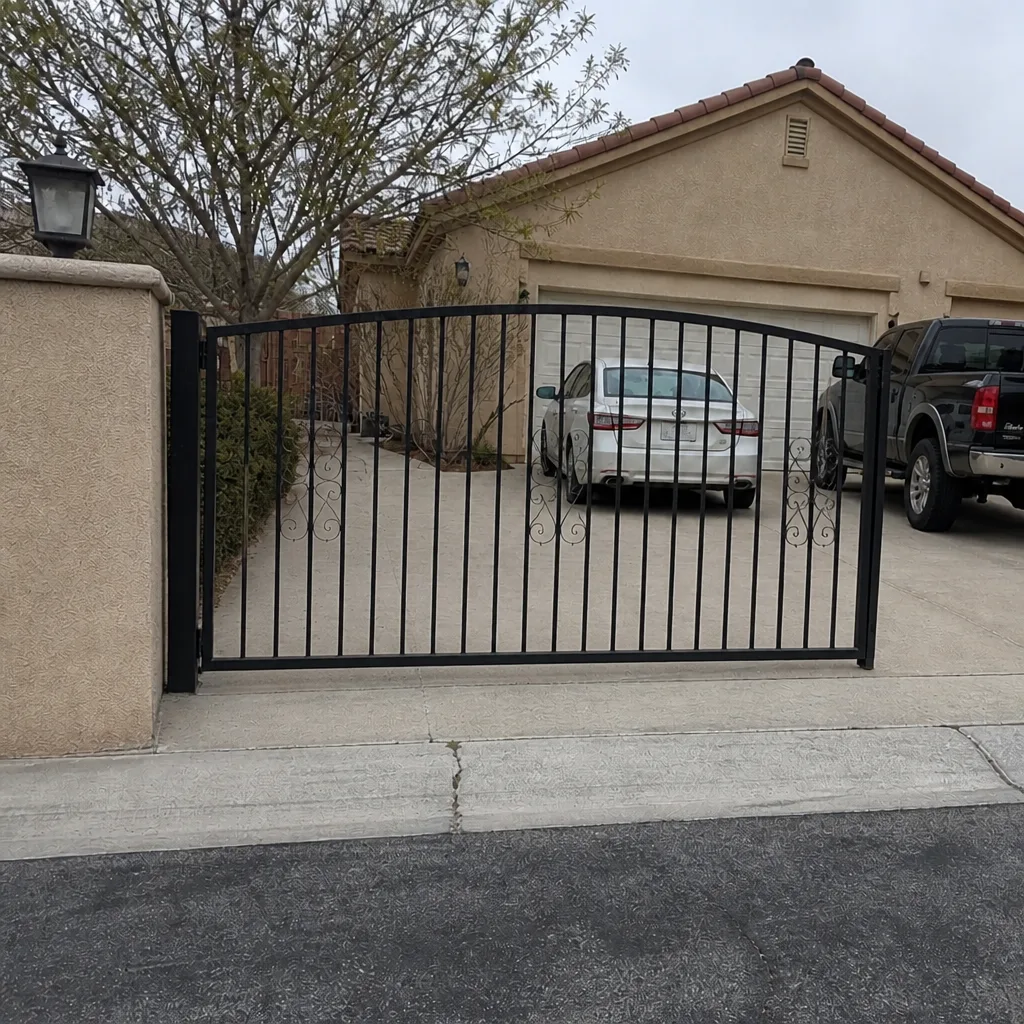 After
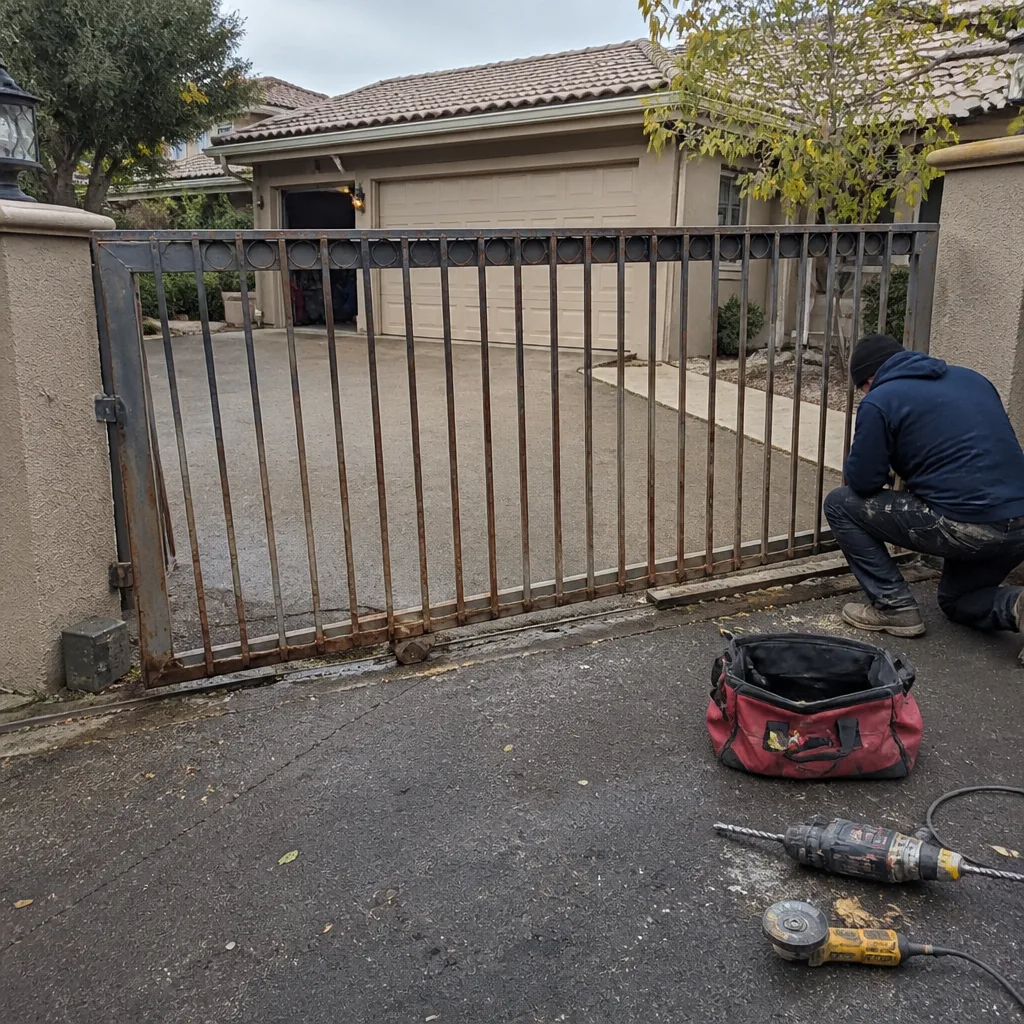 Before
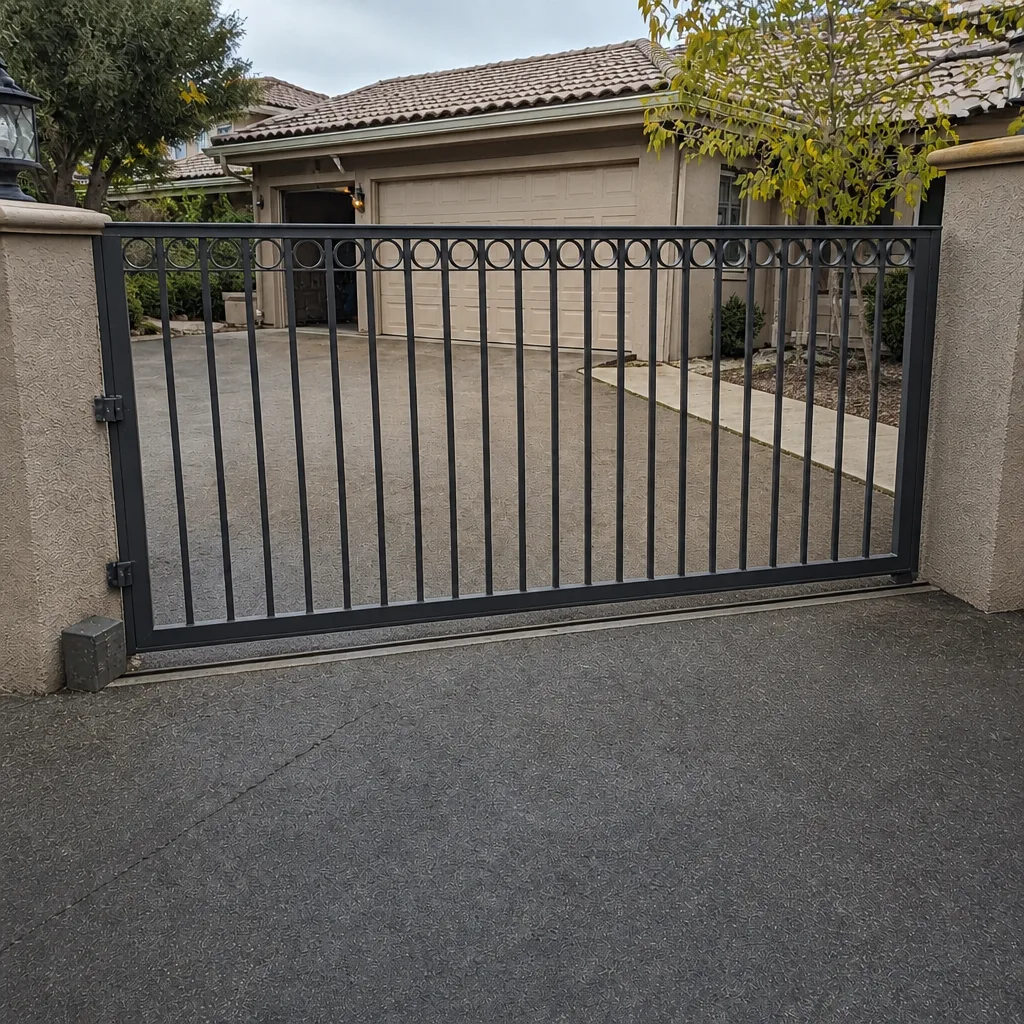 After
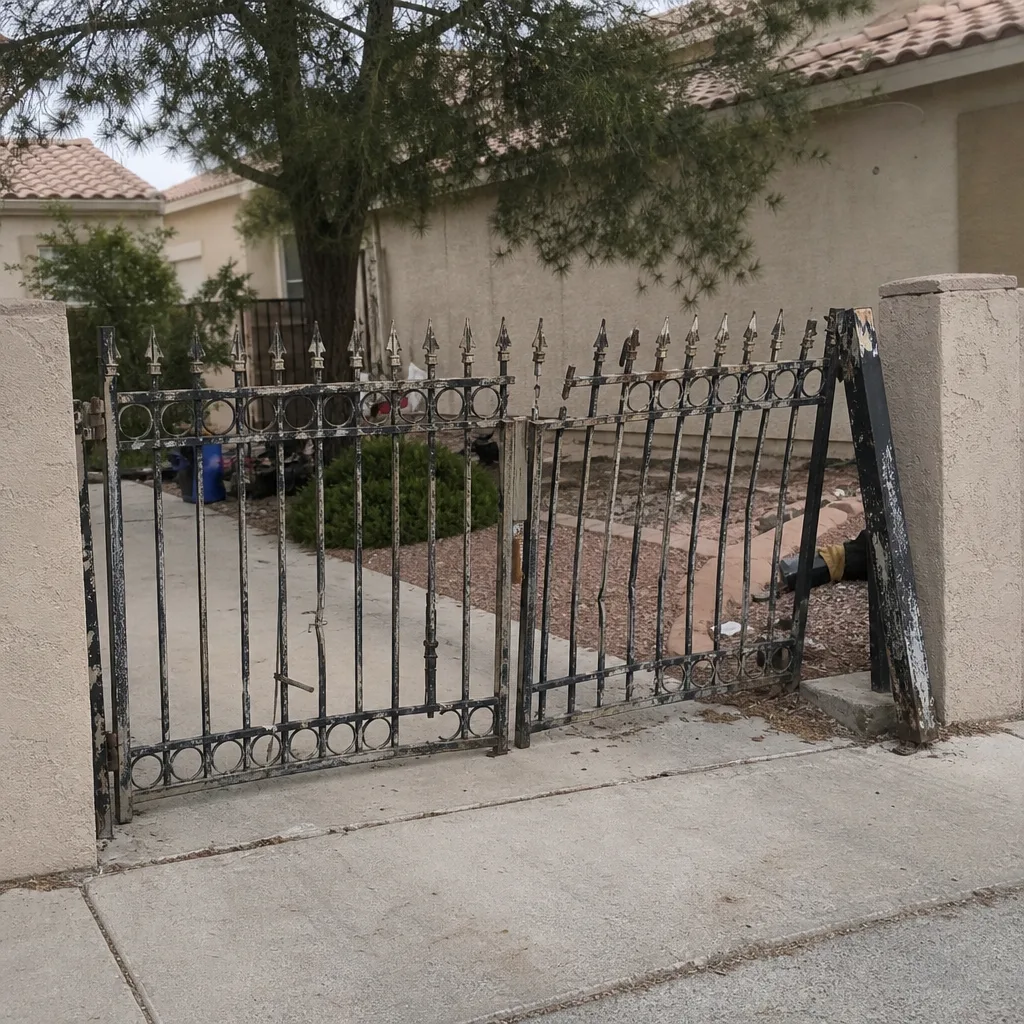 Before
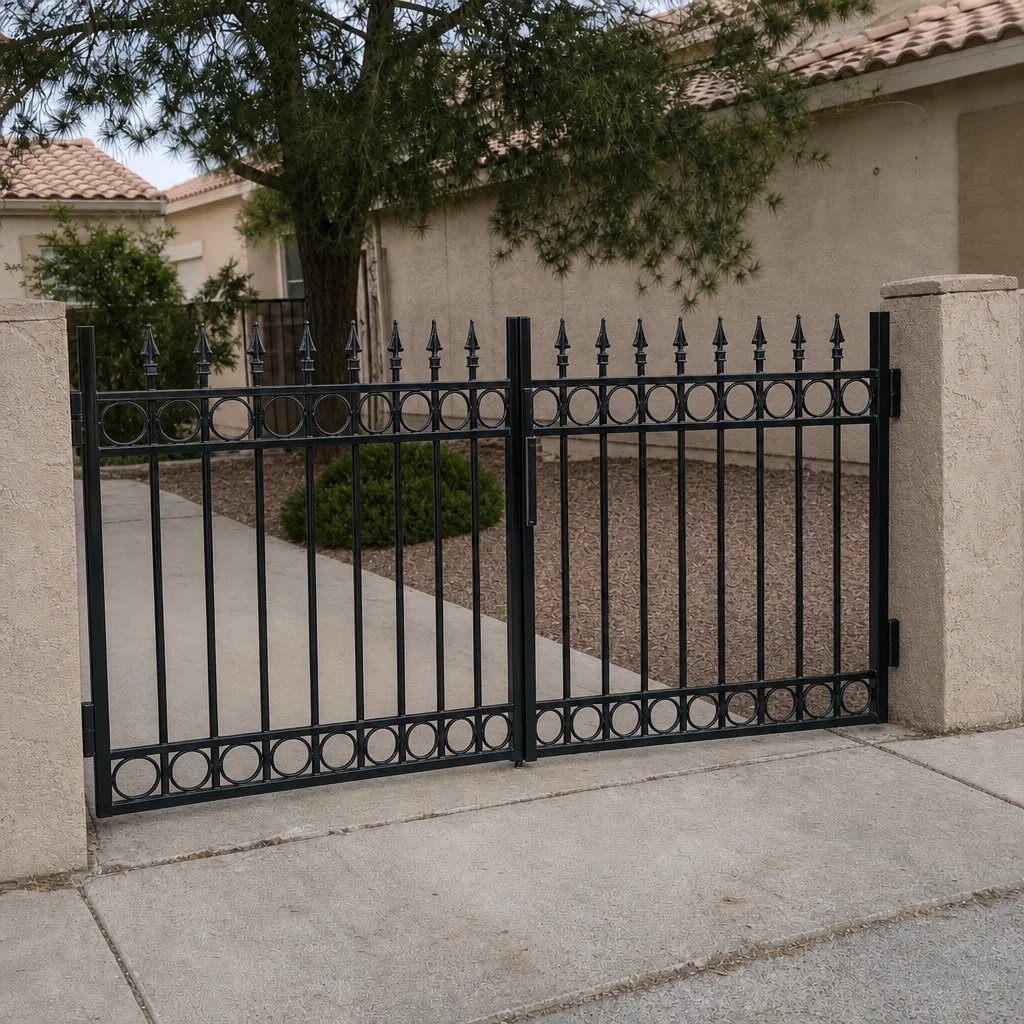 After
How Does an Automatic Gate Opener Work? A Desert-Side Answer for Summerlin, NV
An automatic gate opener works by turning a small electric motor into controlled, repeatable motion: the motor drives a chain, belt, or articulated arm that pulls the gate leaf along its track or swing path; a control board tells the motor when to start and stop; limit switches tell it where the gate’s fully open and fully closed positions are; and safety sensors - usually a pair of photocells - reverse the gate if something breaks the beam. In Summerlin, the parts that wear out first are almost never the motor itself. They’re the control board capacitor, the drive chain packed with caliche grit, and the dusty photocell lenses - three components under desert stress that a generic diagram never warns you about. If your gate has given you a new sound or a shorter cycle lately, we can talk it through at (866) 623-9848. No charge to help you understand it.
The Seven Parts of an Automatic Gate Opener, in Plain Language
Every residential driveway opener, from a LiftMaster slide unit to a Mighty Mule swing arm, comes down to the same seven jobs. Once you know what each part does, you can describe almost any problem accurately.
- Motor - the electric workhorse that spins the drive. On its own, it’s rarely what fails.
- Drive mechanism - the chain, belt, or arm that transfers motor motion to the gate leaf.
- Control board - the small brain that runs the sequence: open, pause, close, reverse.
- Safety sensors - the photocell pair that breaks a beam across the gate path and forces a reverse if something crosses.
- Limit switches - physical stops that tell the board where “fully open” and “fully closed” actually are.
- Power supply - the panel, transformer, or solar-and-battery setup that feeds the whole system.
- Manual release - the bypass (usually a red-handled cord or key) that lets you move the gate by hand when power or the mechanism fails.
That’s the whole toolkit. It isn’t complicated once you can name the parts. It is Gate Motor & Opener work - and we do plenty of it across Summerlin homes.
Where Summerlin Gate Openers Actually Fail First
Here’s the part the manufacturer’s manual doesn’t map for you. Red Rock sun, dry air, and the grit that blows off the 215 and the empty lots west of the valley put three components under stress earlier than any design life anticipates. In Summerlin, we see it season after season.
1. The control board capacitor
Heat is the enemy. A capacitor on a control board that sits inside a metal housing, baking on a south-facing block wall through June, July and August, dries out ahead of its rated life. The classic symptom is a board that behaves like it’s confused - random reverses, a gate that ignores the remote, or a cycle that just quits. People assume the motor is bad. Often it’s the capacitor or a fried relay on the board. Swapping a board we don’t need to swap is not how we work.
2. The drive chain or rack, filled with caliche grit
Desert dust and the fine calcium grit that comes off the west-side caliche beds get into a slide gate’s chain or a swing gate’s rack. That grit acts like sandpaper along the drive. A chain that runs smooth in a coastal climate will grind and seize out here within a season unless it’s cleaned and re-lubed for abrasive dust - not just moisture. The grinding you may hear on a calm morning is the grit, not the motor.
3. The photocell safety sensors, blinded by dust
The laser-style photocells that guard the gate path look dirty after any windy stretch. A dust-coated lens reads to the control board as an obstruction. That’s why your gate keeps reversing near the end of its close cycle - the board thinks something’s in the way. Cleaning the lenses is a five-minute check. If it reverses anyway, the issue is the sensor alignment or the board, and that’s a call.
The fourth stress point worth knowing: limit switch wiring
The limit switch wiring on south-facing gate posts takes UV year after year. The jacket cracks and the conductor corrodes, so the control board loses its “fully closed” reference. The gate stops short or overshoots. If your gate has suddenly stopped mid-travel, that wiring is one of the first things we test.
| Component | Desert failure cause | Typical repair range |
|---|---|---|
| Control board / capacitor | Heat soak and UV | $180-$420 |
| Chain or rack service | Caliche grit, dry lube | $120-$260 |
| Photocell sensor pair | Dust fouling, sun glare | $140-$350 |
| Limit switch / wiring | UV degradation | $150-$310 |
| Manual release | Seized linkage | $90-$200 |
Those ranges are honest, Summerlin-real numbers. We confirm the exact figure before a bolt is turned - upfront pricing, no surprises on the bill.
How the Safety Interlock Works (And Why You Should Never Force a Stuck Gate)
The photocell pair sends an invisible beam across the gate path. If the beam is broken while the gate is closing, the control board reverses the gate. That’s the whole design: stop, reverse, don’t crush anything. What confuses homeowners is that a dirty lens looks exactly like an obstruction to the board, so the gate reverses even when nothing is there. Clean the lenses first. If the reversing continues, the board or the alignment is the issue.
Now the manual release. When a summer monsoon knocks out power, or the wind off the Spring Mountains jams the gate mid-cycle, the manual release is the only safe way to move the gate without forcing the drive mechanism. On a swing or slide gate, the release (usually a red-handled cord near the motor housing) disengages the gear so you can push the leaf by hand. Do not force a gate that won’t move. On a seized roller system, forcing it bends the track and can warp the gate leaf - a bug turns into a repair. Read your anchor method before you need it, not during the storm.
This is why knowing your gate matters. A new sound, a slower cycle, a mid-travel stop - each one is a specific component telling you something. Describe it accurately when you call and we can usually tell you what to expect before we ever arrive. Our technicians have up to 13 years of experience with this exact conversation.
Three Summerlin Situations We See Every Week
The homes here range from 1990s Mediterranean stucco in The Trails and The Crossing to custom estates in The Ridges and Red Rock Country Club - and nearly all of them hang decorative wrought iron or steel gates rather than wood. That means operator, hinge and opener wear is the dominant repair profile. Here’s how the system fails in those homes specifically.
- The gate won’t close on a windy morning. Photocell lenses dust-fouled by Red Rock grit. The board sees an obstruction every cycle. Clean and realign, or replace the sensor pair.
- The gate grinds and slows. Drive chain packed with caliche. Clean, inspect, re-lube for abrasive dust. Caught early, it’s a tune-up. Caught late, it’s chain replacement.
- The gate reverses near the end. Usually the limit switch wiring on the south-facing post - the jacket has cracked and the board has lost its “closed” reference. Test, re-terminate, reseal.
One Summerlin-specific wrinkle: because the community runs on developer architectural standards and HOA CC&Rs, swapping a driveway gate for an off-shelf panel - or a visibly different finish - can trigger an HOA violation even when the repair is mechanically sound. We match approved iron and steel designs as part of the job. That’s not a feature list, it’s just how it works here.
What To Do When Something Changes
You don’t need to diagnose the board yourself. You do need to notice the pattern, so you can describe it. Here’s the sequence we’d walk you through on a call.
- Write down the symptom. Won’t open? Won’t close? Reverses mid-travel? Reverses at the very end? Different problems, different components.
- Clean the photocell lenses. One soft cloth pass on each. If the reversing stops, it was dust.
- Check that the manual release is engaged (in the “operate” position). A release that got bumped will leave the gate unable to move.
- Note the sound. Grinding, clicking, humming - each points a trained ear toward a specific part.
- Call us before you force anything. If the gate is stuck and the release won’t disengage, stop. Forcing it bends the track and warps the leaf.
We work on nine major brands - LiftMaster, DoorKing, Elite and six more - so the correct fix is made on the first visit, whatever is on your driveway. We answer the phone live 24 hours a day, 7 days a week. Not a voicemail tree. Not a callback queue. And every completed job is backed by our 90-Day Done Right Promise in writing: if it isn’t right, we come back and make it right. Standing offers here include $50 off any repair over $250, a free second opinion on any written estimate, an $89 seasonal tune-up, and a permanent 5% senior and veteran discount.
You can also read more about home gate service if you’d like the broader picture. If your gate has given you that new sound or slow cycle, and you’d like a trained set of eyes on it, please call the team that handles Gate Motor & Opener in Summerlin and describe what you’re hearing. We’ll sort it out together.
FAQs
Your safety photocells are almost certainly fouled with dust, and the control board is reading the dirty lens as an obstruction in the gate path. Clean both lenses with a soft cloth and try again. If the reversing continues, the sensor alignment or the control board is the culprit, and that’s worth a proper diagnostic.
Yes - that’s exactly what the manual release is for. On most Summerlin openers, a red-handled cord or a key near the motor housing disengages the gear so you can push the gate leaf manually. Find yours before you need it, and never force a gate that won’t move; forcing it on a seized roller system bends the track.
Most summer gate opener repairs in Summerlin land between $120 and $420 depending on the component - a chain and grit service runs lower, a control board or photocell pair runs higher. We settle the price upfront before a bolt is turned, so there are no surprises on the bill, and $50 off any repair over $250 is currently standing. Call (866) 623-9848 for a free estimate.
It depends on the age and which component failed. A capacitor or a photocell pair on an otherwise healthy opener is nearly always worth repairing. A board that’s failed twice and a motor that’s straining against a caliche-packed chain - that’s when replacement becomes the fair answer. Our technicians have up to 13 years of experience and will tell you plainly which way makes sense for your gate.
If you’d rather have it looked at, Ironworks Gate Co. Summerlin offers a no-pressure assessment in Summerlin - call (866) 623-9848.
Written by the team at Ironworks Gate Co. Summerlin, serving Summerlin, NV.